Deponit
Italy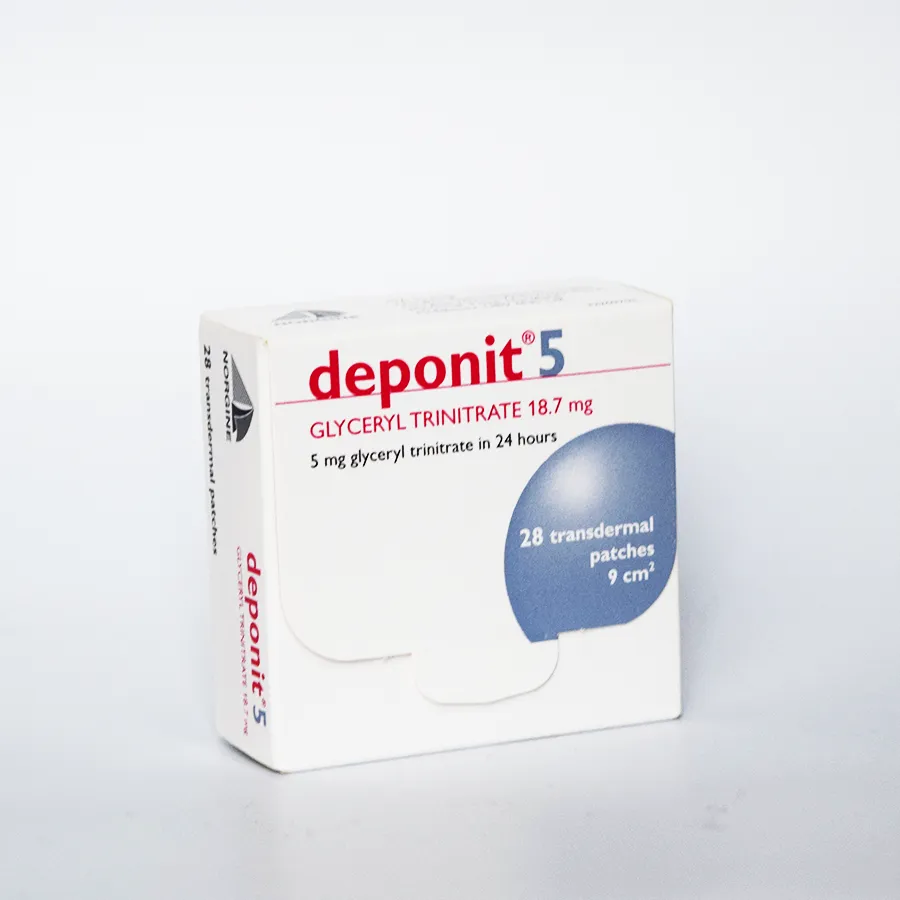
Instructions for Use
Table of Contents
- Deponit 5 mg/24 h transdermal patches, 10 mg/24 h transdermal patches, 15 mg/24 h transdermal patches
- 1. What Deponit is and what it is used for
- 2. What you should know before using Deponit
- 3. How to use Deponit
- 4. Possible side effects
- 5. How to store Deponit
- 6. Package contents and other information
Package leaflet: Information for the patient
Deponit 5 mg/24 h transdermal patches, 10 mg/24 h transdermal patches, 15 mg/24 h transdermal patches
nitroglycerin
Please read this leaflet carefully before using this medicine because it contains important information for you.
- Keep this leaflet. You may need to read it again.
- If you have any questions, ask your doctor or pharmacist.
- This medicine has been prescribed for you only. Do not give it to other people, even if their symptoms are the same as yours, because it could be harmful.
- If you experience any adverse reaction, including those not listed in this leaflet, contact your doctor or pharmacist. See section 4.
Contents of this leaflet:
- What Deponit is and what it is used for
- What you need to know before using Deponit
- How to use Deponit
- Possible side effects
- How to store Deponit
- Contents of the pack and other information
1. What Deponit is and what it is used for
Deponit contains the active substance nitroglycerin and belongs to a group of medicines called organic nitrates.
Organic nitrates work by dilating both venous and arterial peripheral vessels, thereby reducing the workload of the heart. They also act by dilating the blood vessels of the heart, thus increasing blood supply to the area in need.
Deponit is used for the prevention and treatment of rest and exertional angina pectoris, as monotherapy or in combination with other medications such as β-blockers, calcium antagonists, etc., both during stable and unstable phases associated with or consequent to coronary insufficiency, coronary artery disease, coronary subocclusion, and subacute myocardial infarction.
Angina typically presents as a pressing, constricting pain in the chest, neck, and/or left arm, caused by reduced blood flow to the walls of the heart.
2. What you should know before using Deponit
Do not use Deponit
- If you are allergic to nitroglycerin, other nitrates, or any of the other ingredients of this medicine (listed in section 6).
- If you have a disease that severely impairs the heart's ability to pump blood adequately, such as cardiogenic shock (severe impairment of heart function), narrowing of heart valves (aortic or mitral stenosis), obstructive hypertrophic cardiomyopathy (thickening of the heart walls leading to reduced ability to contract and pump blood), constrictive pericarditis (inflammation of the pericardium, the sac surrounding the heart), or pericardial tamponade (fluid accumulation in the pericardium that prevents the heart from functioning properly).
- If you have any condition in which blood pressure is very low (systolic pressure < 90 mmHg).
- Acute circulatory failure associated with very low blood pressure (shock, collapse).
- If you have conditions associated with increased pressure in the head (elevated intracranial pressure), have had bleeding in the brain (cerebral hemorrhage), head injury or other head trauma (cranial trauma), or if you suffer from increased pressure inside the eye (closed-angle glaucoma).
- If you have severe anemia (reduced red blood cells in the blood).
- If you have reduced blood volume (hypovolemia).
- If you are taking any other medicine used for erectile dysfunction (phosphodiesterase inhibitors such as sildenafil (Viagra), tadalafil, vardenafil)—see section "Warnings and Precautions" and "Other medicines and Deponit".
- If you are taking medicines used for pulmonary hypertension (such as riociguat, a soluble guanylate cyclase stimulator)—see section "Other medicines and Deponit".
- If you are experiencing an acute angina attack.
Warnings and precautions
Talk to your doctor or pharmacist before using Deponit.
Particular caution is required under the following conditions:
- If you have a heart condition with severe impairment of the heart's pumping function (myocardial infarction with left ventricular failure).
- If you have recently had a heart attack (myocardial infarction) or if you have heart failure.
- If you suffer from anemia (reduced red blood cells in the blood).
- If you have orthostatic hypotension (a condition causing drop in blood pressure upon standing).
- If you suffer from arterial hypoxia and ventilation/perfusion imbalance due to lung disease or ischemic heart failure. Inform your doctor if you are using products containing phosphodiesterase inhibitors (e.g., sildenafil, tadalafil, vardenafil). The Deponit patch does not contain aluminum or other metals and therefore does not need to be removed if undergoing magnetic resonance imaging (MRI). Children and adolescents The safety and efficacy of Deponit have not yet been established in children.
Other medicines and Deponit
Inform your doctor or pharmacist if you are taking, have recently taken, or might take any other medicine.
Do not use Deponit with:
- Phosphodiesterase inhibitors such as sildenafil, vardenafil, and tadalafil, used for erectile dysfunction. Using Deponit with these medicines may cause blood pressure to drop to dangerously low levels. Do not stop or interrupt treatment with Deponit in order to take phosphodiesterase inhibitors, as this may increase the risk of an angina attack.
- Soluble guanylate cyclase stimulators such as riociguat, used for pulmonary hypertension. Using Deponit with this medicine may cause a drop in blood pressure. Inform your doctor if you are taking:
- Medicines used to lower blood pressure (e.g., beta-blockers, calcium antagonists, ACE inhibitors, monoamine oxidase inhibitors, diuretics), as they may cause further lowering of blood pressure.
- Medicines used to treat depression (tricyclic antidepressants) or other mental illnesses (such as neuroleptics and major tranquilizers). These medicines may also cause further lowering of blood pressure.
- Medicines used to treat migraine (dihydroergotamine). If taken together, excessive increase in blood pressure may occur.
- Aspirin, as it may cause further lowering of blood pressure.
- Anti-inflammatory medicines (excluding aspirin), which may reduce the effectiveness of Deponit.
- Medicines used, for example, to reduce side effects of certain cancer treatments or radiotherapy (amifostine).
- Medicines containing sapropterin (used, for example, in the treatment of a disease called phenylketonuria).
Deponit with food, drinks, and alcohol
Alcohol may enhance the blood pressure-lowering effect. Do not consume alcohol during treatment with Deponit.
Pregnancy, breastfeeding, and fertility
If you are pregnant, suspect you may be pregnant, planning to become pregnant, or breastfeeding, consult your doctor or pharmacist before using this medicine.
Pregnancy
Deponit should be used during pregnancy only if strictly necessary and under medical prescription and continuous medical supervision.
Breastfeeding
Since the active ingredient of Deponit is excreted in breast milk and may cause problems in the newborn, inform your doctor if you are breastfeeding.
Fertility
There are no data available on the effect of Deponit on male fertility.
Driving and using machines
Deponit may affect your reaction ability or rarely cause low blood pressure (orthostatic hypotension), nausea, dizziness, and lightheadedness, to the extent that your ability to drive or operate machinery may be impaired. This effect is enhanced by alcohol (see section "Deponit with food, drinks, and alcohol"). Do not drive or operate machinery until you have determined whether this medicine affects your ability to perform these activities.
3. How to use Deponit
Use this medicine exactly as directed by your doctor or pharmacist. If you have any doubts, consult your doctor or pharmacist.
You will usually start treatment with a low dose, which your doctor may adjust, if necessary, until the appropriate dose is reached.
You must change the Deponit patch once daily. To achieve the required dose, different Deponit patches are available, each releasing a different amount of active substance per day: 5 mg/24 h, 10 mg/24 h, and 15 mg/24 h.
Adults
The recommended starting dose is one 5 mg patch per day. If needed, based on your doctor’s judgment, the dose may be increased in the following days. Two patches may be used simultaneously. The maximum recommended daily dose is 15 mg. For the management of acute angina attacks, concomitant administration of fast-acting nitroglycerin is recommended.
Elderly
There is no evidence suggesting the need for dose adjustment in elderly patients.
Use in children
This medicine is not suitable for children. If you have further questions about the use of this medicine, consult your doctor.
Instructions for using Deponit:
The Deponit patch is effective wherever it is applied, provided it is not placed on an area of thick skin (e.g., the feet) or with poor circulation. To avoid skin irritation, the patch should be applied daily to a different site. A previous application site should not be reused for at least 2–3 days. The best areas for application are easily accessible, relatively immobile areas on the front or side of the chest. However, the patch may also be applied to the upper arm, thigh, abdomen, or shoulder. (Figure 1)
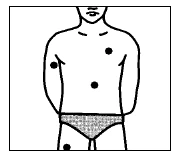
Figure 1
Skin at the application site
The skin at the application site must be healthy, intact, relatively free of folds, and hairless.
- Do not apply the patch to damaged or diseased skin.
- The patch will adhere better if applied to an area of skin that does not undergo significant movement when the patient moves.
- Do not apply the patch to heavily hairy skin. Shaving the area or cutting hairs with scissors is not recommended, as regrowing hairs may lift the patch from the skin. The application site must be cleaned and dried before applying the patch.
- Before applying the patch, wash the skin with soap in the usual way. Strong detergents such as alcohol are not necessary.
- Do not apply the patch immediately after a shower or bath, until the body has returned to normal temperature and is dry. If the patch has already been applied before showering, bathing, or swimming, it generally remains firmly attached and continues to work. However, to be safe, avoid prolonged immersion in water. Skin care products should not be used before applying the patch.
- Oils, creams, or lotions should not be used at the application site before applying the patch, as the patch does not adhere well to oily skin. The invisible layer of fat that protects the skin does not affect patch adhesion.
Applying the Deponit patch: Each patch comes in an individual pouch and should remain in it until ready for use. The sealed pouch can be easily opened using one of the notches on its edge. (Figure 2)
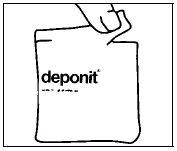
Figure 2
Remove the patch from the pouch and hold it with both hands, the protective liner facing upwards.
Bend the patch so that the central S-shaped perforation opens. (Figure 3)
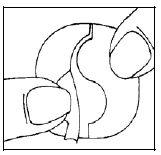
Figure 3
Peel off half of the protective liner, taking care not to touch the adhesive surface with your fingers.
Apply the patch to the prepared skin area and then remove the other half of the protective liner. (Figure 4)
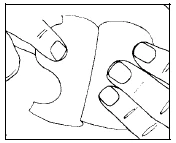
Figure 4
Press the patch firmly with the palm of your hand to ensure that the entire adhesive surface is securely attached to the skin. (Figure 5)
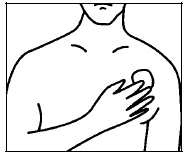
Figure 5
Do not cut the patch into pieces.
To avoid the development of tolerance, the patch should remain on the skin for approximately 10–14 hours only, ensuring a nitrate-free interval of 10–12 hours. During the nitrate-free period, your doctor may prescribe additional antianginal therapy with non-nitrate medications.
If you use more Deponit than you should
Possible symptoms of Deponit overdose include: a drastic drop in blood pressure, pallor, sweating, weak pulse, rapid heartbeat, collapse, fainting (syncope), dizziness when standing, headache, weakness, nausea, vomiting, and diarrhea.
An increase in pressure within the skull (intracranial pressure) may also occur, leading to symptoms of brain distress.
Cases of altered hemoglobin (methemoglobinemia) have also been reported, resulting in a bluish discoloration of the lips, nails, and skin (cyanosis), increased respiratory rate (tachypnea), anxiety, loss of consciousness, and cardiac arrest.
If you have any doubts about using this medicine, consult your doctor or pharmacist.
However, in case of low blood pressure, it is important to lie down with your head slightly lowered and your legs slightly raised.
If you forgot to replace the patch at the usual time
If you forgot to replace the patch at the usual time, remove the old patch and inform your doctor.
If you stop using Deponit
Do not stop using Deponit suddenly, even if you feel better. Stopping treatment may worsen your condition. Continue using Deponit until your doctor tells you to stop. If your doctor decides you should stop treatment with Deponit, your dose will be gradually reduced.
4. Possible side effects
Like all medicines, this medicine can cause side effects, although not everybody gets them.
Very common (may affect more than 1 in 10 people)
- Headache (especially at the beginning of treatment)
- Nausea
- Vomiting
Common (may affect up to 1 in 10 people)
- Dizziness (including dizziness upon standing)
- Drowsiness
- Fast heartbeat (tachycardia)
- Sudden drop in blood pressure when standing up from a sitting or lying position (orthostatic hypotension)
- Feeling weak (asthenia)
Uncommon (may affect up to 1 in 100 people)
- Worsening of angina symptoms (e.g. chest pain)
- Circulatory collapse, sometimes with slow heartbeat and fainting (syncope)
- Allergic skin reactions (e.g. rash)
- At the application site: redness, itching, burning, irritation. After removal of the transdermal patch, mild skin redness, itching or burning usually disappear within a few hours. The application site should be changed regularly to prevent local irritation.
Rare (may affect up to 1 in 1,000 people)
- Flushing
- Increased heart rate
Very rare (may affect up to 1 in 10,000 people)
- Heartburn (pyrosis)
Not known (frequency cannot be estimated from the available data)
- Palpitations
- Decrease in blood pressure (hypotension)
- Thickening of the skin surface with peeling (exfoliative dermatitis)
During treatment with Deponit, a decrease in oxygen levels in the blood (hypoxaemia) may occur.
Reporting of side effects
If you experience any side effects, including those not listed in this leaflet, talk to your doctor or pharmacist. You can also report side effects directly via the national reporting system at https://www.aifa.gov.it/content/segnalazioni-reazioni-avverse
By reporting side effects, you can help provide more information on the safety of this medicine.
5. How to store Deponit
Keep this medicine out of the sight and reach of children.
Do not use this medicine after the expiry date stated on the carton after: Exp.
The expiry date refers to the last day of that month.
Do not store above 25°C. Store in the original packaging.
Do not dispose of any medicine via wastewater or household waste. Ask your pharmacist how to dispose of
medicines you no longer use. This will help protect the environment.
6. Package contents and other information
What Deponit contains
- The active substance is nitroglycerin. Each Deponit 5 mg/24 h patch releases 5 mg of nitroglycerin over 24 hours. Each 9 cm patch contains 18.7 mg of nitroglycerin. Each Deponit 10 mg/24 h patch releases 10 mg of nitroglycerin over 24 hours. Each 18 cm patch contains 37.4 mg of nitroglycerin. Each Deponit 15 mg/24 h patch releases 15 mg of nitroglycerin over 24 hours. Each 27 cm patch contains 56.2 mg of nitroglycerin.
- The other components are: acrylic-vinyl acetate copolymer (adhesive matrix). Backing layer: BOPP sheet (biaxially oriented polypropylene).
Description of the appearance of Deponit and contents of the pack
Deponit is a transdermal patch. The patches are individually packaged in sachets and placed into cardboard boxes containing:
5 mg/24 h: 15 patches
10 mg/24 h: 15 patches
15 mg/24 h: 15 patches
Marketing Authorization Holder
MERUS LABS LUXCO II S.A.R.L, 26-28 Rue Edward Steichen, L2540 Luxembourg (Luxembourg)
Manufacturer
Aesica Pharmaceuticals GmbH, Alfred-Nobel-Strasse 10, Monheim, Germany
Similar Medications
-
Adesitrin
Form: patch, transdermal
Active substance Dosage NITROGLYCERIN — Manufacturer: Merus Labs Luxco II S.a.r.l.
-
Dermatrans
Form: patch, transdermal
Active substance Dosage NITROGLYCERIN — Manufacturer: Viatris Healthcare Limited
-
Epinitril
Form: patch, transdermal
Active substance Dosage NITROGLYCERIN — Manufacturer: Viatris Healthcare Limited
-
Keritrina
Form: patch, transdermal
Active substance Dosage NITROGLYCERIN — Manufacturer: LAVIPHARM PHARMACEUTICAL PRODUCTS COMMERCIAL AND INDUSTRIAL SOCIETE ANONYME
-
Niglina
Form: patch, transdermal
Active substance Dosage NITROGLYCERIN — Manufacturer: IBSA FARMACEUTICI ITALIA S.R.L.
-
Niredil
Form: patch, transdermal
Active substance Dosage NITROGLYCERIN — Manufacturer: SPA SOCIETA' PRODOTTI ANTIBIOTICI S.P.A.
-
Nitroderm TTS
Form: patch, transdermal
Active substance Dosage NITROGLYCERIN — Manufacturer: SANDOZ S.P.A.
-
Nitroglycerin Doc Generici
Form: patch, transdermal
Active substance Dosage NITROGLYCERIN — Manufacturer: DOC GENERICI SRL
-
Nitroglycerin Eg
Form: patch, transdermal
Active substance Dosage NITROGLYCERIN — Manufacturer: EG S.P.A.
-
Nitroglycerin Eg Stada
Form: patch, transdermal
Active substance Dosage NITROGLYCERIN — Manufacturer: LAVIPHARM PHARMACEUTICAL PRODUCTS COMMERCIAL AND INDUSTRIAL SOCIETE ANONYME
-
Nitroglycerin Teva
Form: patch, transdermal
Active substance Dosage NITROGLYCERIN — Manufacturer: TEVA ITALIA S.R.L.
-
Nitroglycerin Zentiva
Form: patch, transdermal
Active substance Dosage NITROGLYCERIN — Manufacturer: ZENTIVA ITALIA S.R.L.
This page has been machine-translated and may contain inaccuracies. The original data is available in the manufacturing country's language.
Last data check: May 11, 2026 · Data source: Agenzia Italiana del Farmaco (AIFA)