Nitroglycerin Eg
Italy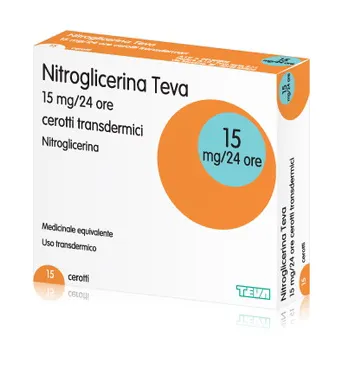
Instructions for Use
Table of Contents
- NITROGLICERINA EG 5 mg/24 hours transdermal patch, 10 mg/24 hours transdermal patch, 15 mg/24 hours transder mal patch
- 1. What NITROGLICERINA EG is and what it is used for
- 2. What you need to know before using NITROGLICERIN EG
- 3. How to use NITROGLICERIN EG
- 4. Possible side effects
- 5. How to store NITROGLICERIN EG
- 6. Package contents and other information
Patient Information Leaflet
NITROGLICERINA EG 5 mg/24 hours transdermal patch, 10 mg/24 hours transdermal patch, 15 mg/24 hours transder mal patch
Generic medicine
Please read this leaflet carefully before using this medicine, as it contains important information for you.
- Keep this leaflet. You may need to read it again.
- If you have any questions, ask your doctor or pharmacist.
- This medicine has been prescribed for you only. Do not give it to others, even if their symptoms are the same as yours, as it could be harmful.
- If you experience any adverse reaction, including those not listed in this leaflet, contact your doctor or pharmacist. See section 4.
Contents of this leaflet:
- What NITROGLICERINA EG is and what it is used for
- What you need to know before using NITROGLICERINA EG
- How to use NITROGLICERINA EG
- Possible side effects
- How to store NITROGLICERINA EG
- Contents of the pack and other information
1. What NITROGLICERINA EG is and what it is used for
NITROGLICERINA EG patches contain the active substance nitroglycerin, a vasodilator used in cardiac conditions, belonging to a group of medicines called organic nitrates.
NITROGLICERINA EG patches are applied to the skin, and the active substance passes through the skin and enters the body.
NITROGLICERINA EG is indicated for the prevention of angina attacks, taken either as monotherapy or in combination with other anti-anginal therapies.
Angina typically manifests as pain or a feeling of pressure in the chest that may spread to the neck or arm. The pain occurs when the heart is not sufficiently oxygenated.
Consult your doctor if you do not feel better or if you feel worse.
2. What you need to know before using NITROGLICERIN EG
Do not use NITROGLICERIN EG:
- if you are allergic to nitroglycerin or to similar substances (related organic nitrates) or to any of the other ingredients of this medicine (listed in section 6);
- if you have recently had collapse (acute circulatory failure associated with a marked drop in blood pressure);
- if you suffer from severe anemia;
- if you have conditions associated with increased intracranial pressure or cerebral hemorrhage;
- if you have increased intraocular pressure (closed-angle glaucoma);
- if you suffer from heart failure due to narrowing of the aortic or mitral valve orifice (aortic stenosis or mitral stenosis, respectively), or from fibrous thickening of the thin sac-like membrane surrounding the heart (constrictive pericarditis);
- if you are taking phosphodiesterase type 5 (PDE-5) inhibitors. The combination of a nitrate with sildenafil (Viagra) or other medicines used to treat erectile dysfunction may cause a sudden and severe drop in blood pressure, which could lead to fainting and loss of consciousness (see section “Other medicines and NITROGLICERIN EG”);
- if you have low blood pressure (values below 90 mmHg);
- cardiogenic shock, unless adequate end-diastolic pressure is maintained through appropriate measures;
- toxic pulmonary edema;
- severe hypovolemia;
- if you are taking riociguat (a medicine used to reduce blood pressure in the lungs);
- head trauma;
- generally contraindicated in pediatric patients;
- generally contraindicated during pregnancy and breastfeeding (see Special Warnings).
Warnings and precautions
Talk to your doctor or pharmacist before using NITROGLICERIN EG:
- if your blood oxygen level is insufficient (hypoxemia) due to severe anemia, lung disease, or reduced blood supply to the heart (ischemic heart failure);
- if your angina is caused by thickening of the heart muscle (hypertrophic cardiomyopathy). Nitrates may worsen this type of angina;
- if you are taking other nitrates (e.g., sublingual nitroglycerin), as repeated exposure may lead your body to develop resistance to their effects (cross-tolerance);
- if you have recently had a heart attack (myocardial infarction) or acute heart failure;
- if your blood pressure values are below normal (hypotension); if you experience collapse while being treated with NITROGLICERIN EG, removal of the patch should be considered;
- if you suffer from closed-angle glaucoma.
Talk to your doctor or pharmacist:
- if you are stopping treatment or switching to another treatment. Discontinuation of treatment with NITROGLICERIN EG should be done gradually and under close medical supervision;
- if you notice an increased frequency of anginal attacks during periods without the patch (intermittent therapy). Your doctor may wish to reassess your coronary condition and consider adjusting treatment by adding another antianginal drug.
Patients with nitroglycerin-induced hypotension may develop paradoxical bradycardia and increased frequency of anginal episodes.
NITROGLICERIN EG is not indicated for the treatment of acute angina episodes.
Prolonged use, especially, of topical products may lead to sensitization reactions; in such cases, treatment must be discontinued and appropriate therapeutic measures adopted.
Children and adolescents
NITROGLICERIN EG must not be used in children and adolescents under 18 years of age.
Other medicines and NITROGLICERIN EG
Inform your doctor or pharmacist if you are taking, have recently taken, or might take any other medicines.
Do not use NITROGLICERIN EG together with medicines used for erectile dysfunction, such as sildenafil or others, as these increase the blood pressure-lowering effect (see section “Do not use NITROGLICERIN EG”).
Inform your doctor if you are taking:
• medicines used to regulate blood pressure or heart function, such as other vasodilators, calcium antagonists, beta-blockers, ACE inhibitors, and other antihypertensives;
• medicines used to increase urine elimination (diuretics);
• medicines for anxiety or depression (e.g., tricyclic antidepressants, tranquilizers);
• dihydroergotamine, used, for example, for migraine;
• non-steroidal anti-inflammatory drugs (NSAIDs) e.g., acetylsalicylic acid and indomethacin (used to treat pain and inflammation).
Nitroglycerin may alter laboratory test results for catecholamines and vanillylmandelic acid (with higher values in urine).
SPECIAL WARNINGS
The patch must be removed in case of collapse or shock.
NITROGLICERIN EG must be removed before defibrillation or cardioversion to avoid the risk of arcing electrical effects, and before diathermy treatment.
NITROGLICERIN EG and alcohol
Alcohol consumption may enhance the hypotensive effects of NITROGLICERIN EG.
Pregnancy, breastfeeding and fertility
If you are pregnant, suspect you may be pregnant, planning to become pregnant, or are breastfeeding, consult your doctor or pharmacist before using this medicine.
Do not use this medicine if you are pregnant or breastfeeding, unless absolutely necessary and only after your doctor has evaluated the risks and benefits for you and your baby.
Driving and use of machines
NITROGLICERIN EG, especially at the beginning of treatment, may impair reaction ability or may rarely cause postural hypotension, nausea, and dizziness. Patients experiencing these effects, particularly under the concomitant influence of alcohol, should refrain from driving vehicles or operating machinery.
3. How to use NITROGLICERIN EG
Use this medicine exactly as instructed by your doctor or pharmacist. If you have any doubts, consult your doctor or pharmacist.
The recommended starting dose is 5 mg (one patch 5 mg/24 hours) per day. Your doctor may subsequently increase the dose to 10 mg (one patch 10 mg/24 hours) per day or, if necessary, to 15 mg (one patch 15 mg/24 hours) per day.
The maximum allowed daily dose is 15 mg of nitroglycerin.
The daily duration of application should be determined by your doctor. Depending on the individual case, the transdermal patch may be applied continuously for 24 hours or removed for several hours (e.g., during the night) in order to prevent the development of drug tolerance.
NITROGLICERIN EG must be administered intermittently, with a daily nitrate-free interval to avoid the development of nitrate tolerance. This nitrate-free interval should correspond to a period free of angina attacks in the patient. Concomitant antianginal therapy (beta-blockers and/or calcium antagonists) should be used to maintain therapeutic coverage during the nitrate-free interval.
The nitrate-free interval must be at least 8 hours.
The development of nitrate tolerance is a well-known phenomenon in the preventive treatment of angina, and an appropriate dosing regimen including a daily nitrate-free interval ensures therapeutic efficacy.
Patients suffering from nocturnal angina may benefit from nighttime treatment with a nitrate-free interval during the day. In these patients, additional antianginal therapy may be necessary during daytime hours.
Patients with severe forms of angina may also require additional antianginal therapy during nitrate-free intervals.
Apply the patch to a clean, dry, intact area of skin without residues of creams or ointments, on the chest or on the outer upper part of the arms.
If necessary, you may shave the application site to improve patch adhesion.
Avoid areas of skin that form folds or that are subject to friction during movement.
It is advisable to change the application site daily.
Apply the patch according to the following instructions:
- Wash your hands;
- Open the sachet by tearing it (do not use scissors, to avoid damaging the patch) and remove the patch;
- Hold the patch between your thumb and index finger;
- With the other hand, peel off the protective liner and discard it;
- Avoid touching the adhesive side of the patch and apply it to the skin, holding the part still covered by the protective liner between your thumb and index finger;
- Remove the remaining protective liner and press firmly for about 10 seconds over the entire surface of the patch;
- Press along the edges with a finger to ensure good adhesion;
- Wash your hands after applying the patch;
- After use, fold the patch with the adhesive side inward and dispose of it properly.
If you use more NITROGLICERIN EG than you should
In case of accidental overdose, contact your doctor immediately or go to the nearest hospital.
Symptoms
High doses of nitroglycerin may cause:
- Drop in blood pressure ≤90 mmHg
- Syncope
- Pallor
- Sweating
- Weak pulse
- Tachycardia
- Mental confusion in upright position
- Headache
- Cyanosis
- Coma
- Seizures
- Weakness
- Dizziness
- Nausea
- Vomiting
- Diarrhea
Methemoglobinemia (abnormal presence of oxidized hemoglobin in the blood) has also been reported following accidental overdose.
Treatment
In case of accidental overdose, the effect of nitroglycerin can be rapidly reversed by removing the patch from the skin.
In case of accidental ingestion or overdose of NITROGLICERIN EG, contact your doctor immediately or go to the nearest hospital.
If you forget to change the patch
If you have any doubts about using this medicine, consult your doctor or pharmacist.
If you stop treatment with NITROGLICERIN EG
Discontinue treatment gradually and under close medical supervision.
If you have any doubts about using this medicine, consult your doctor or pharmacist.
4. Possible side effects
Like all medicines, this medicine can cause side effects, although not everybody gets them.
Very common (may affect more than 1 in 10 people):
- headache
Common (may affect up to 1 in 10 people):
- confusion, dizziness; drowsiness;
- reflex tachycardia;
- orthostatic hypotension;
- mild and transient irritation at the application site;
- feeling of weakness.
Uncommon (may affect up to 1 in 100 people):
- worsening of angina pectoris symptoms;
- collapse (sometimes accompanied by bradyarrhythmia and syncope), tachycardia, palpitations, hot flushes;
- nausea, vomiting;
- skin allergic reactions (e.g. rash, itching or burning sensation at the application site, redness), allergic contact dermatitis.
Very rare (may affect up to 1 in 10,000 people):
- heartburn
Not known (frequency cannot be estimated from the available data):
- exfoliative dermatitis.
Headache may occur at the beginning of treatment, which usually disappears after a few days and can be controlled with mild analgesics.
Adverse effects may occur more frequently in cases of overdose or patient hypersensitivity.
Sometimes mild itching, burning sensation and skin redness at the patch application site have been observed, which disappear spontaneously after removal of the patch.
Severe hypotensive reactions have been reported with organic nitrates, including nausea, vomiting, restlessness, pallor, and excessive sweating.
During treatment with NITROGLYCERIN EG, temporary hypoxaemia may occur due to a relative redistribution of blood flow to hypoventilated alveolar areas. This may lead to myocardial hypoxia, particularly in patients with coronary artery disease.
Reporting of side effects
If you experience any side effect, including those not listed in this leaflet, talk to your doctor or pharmacist. You may also report side effects directly via the national reporting system at the website http://www.aifa.gov.it/content/segnalazioni-reazioni-avverse
By reporting side effects, you can help provide more information on the safety of this medicine.
5. How to store NITROGLICERIN EG
Keep this medicine out of the sight and reach of children both before and after use.
Store in the original packaging.
Do not use this medicine after the expiry date stated on the carton and on the sachets following
Exp. The expiry date refers to the last day of that month.
Do not dispose of any medicine via wastewater or household waste. Ask your pharmacist how to
dispose of medicines no longer required. This will help protect the environment.
6. Package contents and other information
What NITROGLICERINA EG contains
NITROGLICERINA EG 5 mg/24 hours transdermal patches
One patch with a surface area of 6.670 cm² contains:
Active substance: nitroglycerin 26.60 mg (releases 5 mg of nitroglycerin over 24 hours, approximately 0.2 mg/hour)
NITROGLICERINA EG 10 mg/24 hours transdermal patches
One patch with a surface area of 13.285 cm² contains:
Active substance: nitroglycerin 53.00 mg (releases 10 mg of nitroglycerin over 24 hours, approximately 0.4 mg/hour)
NITROGLICERINA EG 15 mg/24 hours transdermal patches
One patch with a surface area of 20.035 cm² contains:
Active substance: nitroglycerin 80.00 mg (releases 15 mg of nitroglycerin over 24 hours, approximately 0.6 mg/hour)
Other components are: Acrylic acid copolymer (durotak 87-2852), sorbitan oleate, propylene glycol, low-density polyethylene, polyester
Description of the appearance of NITROGLICERINA EG and contents of the pack
NITROGLICERINA EG transdermal patch is a transdermal patch supplied in packs of 15 patches.
Marketing Authorization Holder
EG S.p.A., via Pavia 6, 20136 Milano, Italy
Manufacturer
IBSA FARMACEUTICI ITALIA S.r.l.,
S.S. n. 11, Padana Superiore Km 160, Cassina de' Pecchi (MI)
ALTERGON Italia S.r.l., Zona Industriale A.S.I., 83040 Morra De Sanctis (AV)
Similar Medications
-
Adesitrin
Form: patch, transdermal
Active substance Dosage NITROGLYCERIN — Manufacturer: Merus Labs Luxco II S.a.r.l.
-
Deponit
Form: patch, transdermal
Active substance Dosage NITROGLYCERIN — Manufacturer: Merus Labs Luxco II S.a.r.l.
-
Dermatrans
Form: patch, transdermal
Active substance Dosage NITROGLYCERIN — Manufacturer: Viatris Healthcare Limited
-
Epinitril
Form: patch, transdermal
Active substance Dosage NITROGLYCERIN — Manufacturer: Viatris Healthcare Limited
-
Keritrina
Form: patch, transdermal
Active substance Dosage NITROGLYCERIN — Manufacturer: LAVIPHARM PHARMACEUTICAL PRODUCTS COMMERCIAL AND INDUSTRIAL SOCIETE ANONYME
-
Niglina
Form: patch, transdermal
Active substance Dosage NITROGLYCERIN — Manufacturer: IBSA FARMACEUTICI ITALIA S.R.L.
-
Niredil
Form: patch, transdermal
Active substance Dosage NITROGLYCERIN — Manufacturer: SPA SOCIETA' PRODOTTI ANTIBIOTICI S.P.A.
-
Nitroderm TTS
Form: patch, transdermal
Active substance Dosage NITROGLYCERIN — Manufacturer: SANDOZ S.P.A.
-
Nitroglycerin Doc Generici
Form: patch, transdermal
Active substance Dosage NITROGLYCERIN — Manufacturer: DOC GENERICI SRL
-
Nitroglycerin Eg Stada
Form: patch, transdermal
Active substance Dosage NITROGLYCERIN — Manufacturer: LAVIPHARM PHARMACEUTICAL PRODUCTS COMMERCIAL AND INDUSTRIAL SOCIETE ANONYME
-
Nitroglycerin Teva
Form: patch, transdermal
Active substance Dosage NITROGLYCERIN — Manufacturer: TEVA ITALIA S.R.L.
-
Nitroglycerin Zentiva
Form: patch, transdermal
Active substance Dosage NITROGLYCERIN — Manufacturer: ZENTIVA ITALIA S.R.L.
This page has been machine-translated and may contain inaccuracies. The original data is available in the manufacturing country's language.
Last data check: May 11, 2026 · Data source: Agenzia Italiana del Farmaco (AIFA)