Nitroglycerin Teva
Italy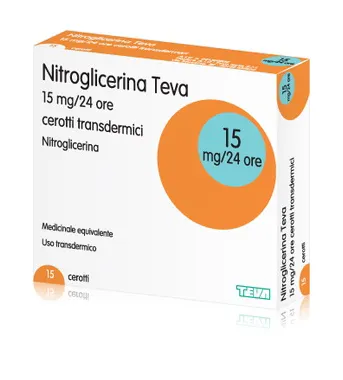
Table of Contents
- Package leaflet: Information for the patient
- Nitroglycerin Teva 5 mg/24 hours transdermal patches, 10 mg/24 hours transdermal patches, 15 mg/24 hours transdermal patches
- 1. What Nitroglicerina Teva is and what it is used for
- 2. What you should know before using Nitroglycerin Teva
- 3. How to use Nitroglycerin Teva
- Instructions for use
- 4. Possible side effects
- 5. How to store Nitroglycerin Teva
- 6. Package Contents and Other Information
Package leaflet: Information for the patient
Nitroglycerin Teva 5 mg/24 hours transdermal patches, 10 mg/24 hours transdermal patches, 15 mg/24 hours transdermal patches
Generic medicine
Please read this leaflet carefully before using this medicine because it contains important information for you.
- Keep this leaflet. You may need to read it again.
- If you have any questions, ask your doctor or pharmacist.
- This medicine has been prescribed for you only. Do not give it to other people, even if their symptoms are the same as yours, as it could be harmful.
- If you experience any side effect, including those not listed in this leaflet, contact your doctor or pharmacist. See section 4.
Contents of this leaflet:
- What Nitroglycerin Teva is and what it is used for
- What you need to know before using Nitroglycerin Teva
- How to use Nitroglycerin Teva
- Possible side effects
- How to store Nitroglycerin Teva
- Contents of the pack and other information
1. What Nitroglicerina Teva is and what it is used for
Nitroglicerina Teva contains nitroglycerin, a substance with vasodilatory properties used for the
preventive treatment of angina pectoris, a cardiac disorder caused by a temporary reduction in
oxygen supply.
Angina typically presents as pain or a feeling of pressure in the chest, which may radiate to the
shoulder and left arm, extending to the fingers.
Nitroglicerina Teva may be used alone or in combination with other medications capable of
preventing the onset of angina pectoris.
Consult your doctor if you do not feel better or if you feel worse.
2. What you should know before using Nitroglycerin Teva
Do not use Nitroglycerin Teva
- if you are allergic to nitroglycerin or to similar substances (related organic nitrates), or to any of the other ingredients of this medicine (listed in section 6);
- if your blood pressure is very low (severe hypotension; systolic blood pressure below 90 mm Hg);
- if you suffer from severe anemia (reduced red blood cells);
- if you are taking medicines for erectile dysfunction (e.g. sildenafil, vardenafil or tadalafil), as they may cause a severe drop in blood pressure (see section “Other medicines and Nitroglycerin Teva”);
- during pregnancy and breastfeeding (see section “Pregnancy, breastfeeding and fertility”);
- to administer to a child;
- to treat acute angina attacks requiring rapid relief;
- to treat unstable angina;
- to treat myocardial infarction;
Nitroglycerin Teva must also not be used under the following conditions:
- in case of collapse associated with a marked drop in blood pressure (acute circulatory failure; see also “Warnings and precautions”);
- when the heart is unable to pump blood effectively (cardiogenic shock), unless your doctor closely monitors your ventricular pressure;
- in case of heart failure due to narrowing of the heart's atrioventricular valve (mitral stenosis), thickening of the thin membrane surrounding the heart (constrictive pericarditis), or any other obstruction to blood flow (e.g. aortic stenosis, hypertrophic cardiomyopathy or pericardial tamponade);
- in case of pulmonary edema (excess fluid accumulation in the lungs);
- in case of increased pressure in the eye (closed-angle glaucoma) or in the brain, cerebral hemorrhage, or head trauma;
- in case of severe reduction in blood volume (severe hypovolemia);
- if you are taking riociguat, a medicine used to treat pulmonary hypertension (see section “Other medicines and Nitroglycerin Teva”).
Warnings and precautions
Talk to your doctor or pharmacist before using Nitroglycerin Teva.
Pay special attention and consult your doctor before using Nitroglycerin Teva if:
- your cardiac blood pressure is low, for example in acute myocardial infarction, or if you have impaired function of one of your heart's ventricles (left ventricular failure);
- you experience a sudden drop in blood pressure at the beginning of treatment following a rapid change from sitting or lying down to standing up (orthostatic hypotension), especially if you are elderly;
- your heart function is impaired (recent acute myocardial infarction, congestive heart failure, hypertrophic cardiomyopathy);
- you have previously developed hypersensitivity reactions to other nitrates;
- you are being treated with diuretic medicines (used to treat high blood pressure) or if you are a patient with low systolic blood pressure (values below 90 mmHg);
- you suffer from a condition characterized by insufficient oxygen supply to tissues (hypoxemia) due to severe anemia, lung disease, or impaired heart function (ischemic heart failure);
- you have or are predisposed to develop a disease characterized by a sharp increase in eye pressure (closed-angle glaucoma).
In addition, you must stop treatment, remove the patch, and immediately inform your doctor if:
- you develop signs of sensitization (skin rashes, itching, burning, or redness at the application site), particularly after prolonged use of the patch;
- you experience a significant drop in blood pressure; in case of shock or collapse;
- you need to undergo electrical stimulation of the heart (defibrillation or cardioversion) to restore normal heart rhythm, procedures involving magnetic fields (magnetic resonance imaging), or therapeutic heat application (diathermy treatment);
During treatment with Nitroglycerin Teva, consult your doctor:
-
if you develop a severe drop in blood pressure, manifested by symptoms such as nausea, vomiting, agitation, pallor, and excessive sweating, as this increases the risk of impaired heart function (paradoxical bradycardia and increased angina episodes). Note that you may experience a sudden drop in blood pressure, particularly after rapidly changing from a sitting or lying position to standing. Therefore, avoid sudden changes in posture;
-
if you develop headaches, which typically disappear after a few days and can be managed with painkillers. Your doctor will assess whether a dose reduction or discontinuation of treatment is necessary if headaches persist;
-
if you notice an increase in angina symptoms during patch-free intervals. Your doctor may decide to reassess your therapy.
It is important to know that after stopping treatment with this medicine, withdrawal symptoms typical of vasodilator drugs, including nitroglycerin, may occur.
Since such symptoms are more likely to occur when treatment is abruptly discontinued, it is recommended to gradually reduce the dose over a period of 4–6 weeks, replacing the patch with decreasing doses of long-acting oral nitrates until treatment is completely stopped.
Always follow your doctor’s instructions exactly regarding treatment discontinuation.
Tolerance
You may develop tolerance (i.e. reduced or lost effectiveness) to nitroglycerin or to similar products.
To prevent the medicine from losing its effectiveness in preventing angina pectoris and to avoid increased frequency of angina attacks during patch-free intervals, always strictly follow your doctor’s instructions regarding the required intervals between patch applications (see also section 3 “How to use Nitroglycerin Teva”).
Other medicines and Nitroglycerin Teva
Inform your doctor or pharmacist if you are taking, have recently taken, or might take any other medicines.
Pay particular attention and inform your doctor if you are taking any of the following medicines:
- sildenafil (used to treat erectile dysfunction) and other drugs belonging to the family of 5-PDE inhibitors and other vasodilators, as concomitant use of Nitroglycerin Teva and any of these drugs may cause a severe drop in blood pressure, potentially leading to temporary loss of consciousness (syncope), general malaise due to transient cerebral circulation disturbances without fainting (presyncope), and heart-related complications (myocardial ischemia and consequently acute coronary attack);
- riociguat, a soluble guanylate cyclase stimulator (used to treat pulmonary hypertension), as concomitant use may cause hypotension (see section “Nitroglycerin Teva must also not be used under the following conditions”);
- medicines to lower blood pressure, for fluid retention, or heart problems, such as calcium channel blockers, ACE inhibitors, beta-blockers, and diuretics;
- medicines for anxiety or depression (e.g. antihypertensives, tricyclic antidepressants, tranquilizers);
- non-steroidal anti-inflammatory drugs (NSAIDs) (used to treat pain and inflammation), e.g. indomethacin;
- amifostine or acetylsalicylic acid as they may enhance the hypotensive effect (strong drop in blood pressure) already caused by Nitroglycerin Teva;
- dihydroergotamine (used to treat headache), as when taken together with nitroglycerin, it may reduce the effect of Nitroglycerin Teva and increase the risk of coronary artery constriction.
Laboratory tests
Nitroglycerin Teva may interfere with the detection of catecholamines and vanillylmandelic acid in urine. Inform your doctor that you are being treated with Nitroglycerin Teva if you are scheduled for these tests.
Nitroglycerin Teva and alcohol
Avoid alcohol consumption during treatment with this medicine, as alcohol may enhance the blood pressure-lowering effect that may occur when using the patch.
Pregnancy, breastfeeding and fertility
If you are pregnant, suspect you may be pregnant, plan to become pregnant, or are breastfeeding, consult your doctor or pharmacist before taking this medicine.
Pregnancy
Do not use Nitroglycerin Teva during pregnancy, especially during the first three months, unless your doctor considers it strictly necessary.
If you become pregnant while regularly using this medicine, inform your doctor immediately. Your doctor will decide whether and how to continue your treatment.
Breastfeeding
Do not use Nitroglycerin Teva during breastfeeding, as nitroglycerin may pass into breast milk. Your doctor will help you decide whether to discontinue treatment with this medicine or stop breastfeeding.
Fertility
No data are available on the effect of Nitroglycerin Teva on male fertility.
Driving and using machines
Nitroglycerin Teva may impair your ability to drive vehicles or operate machinery.
Nitroglycerin Teva may cause a marked drop in blood pressure upon standing, nausea, or dizziness, which could affect your reflexes. Therefore, exercise particular caution if you need to drive or operate machinery.
Finally, remember that consuming alcohol during treatment with this medicine may further reduce your level of alertness.
Nitroglycerin Teva contains propylene glycol: may cause skin irritation.
3. How to use Nitroglycerin Teva
Use this medicine exactly as directed by your doctor or pharmacist. If you have
any doubts, consult your doctor or pharmacist.
Nitroglycerin Teva is indicated for the prevention of angina and not for the treatment of an acute attack. In case
of an acute angina attack, your doctor will prescribe another medicine for you.
The recommended starting dose at the beginning of treatment is 1 patch of Nitroglycerin Teva 5 mg/24 hours applied to the skin
once daily (with a minimum patch-free interval of 8 hours between patches*).
Subsequently, your doctor may adjust the dose according to your clinical condition, possibly prescribing
Nitroglycerin Teva 10 mg/24 hours or Nitroglycerin Teva 15 mg/24 hours. The maximum daily dose is 15 mg of nitroglycerin.
The optimal therapeutic dose will be reached gradually to avoid the onset of severe headache and marked lowering of blood pressure.
*Your doctor will indicate the patch-free interval (usually at night) that you must follow between
the application of one patch and the next. This is necessary to prevent the development of tolerance to the treatment. The minimum interval between applications is 8 hours.
During the patch-free interval, your doctor may prescribe an additional therapy for the prevention of angina pectoris, for example based on beta-blockers or calcium antagonists.
Always follow your doctor's instructions exactly.
Instructions for use
- Open the sachet by tearing it from the marked notch (do not use scissors to avoid damaging the patch) and remove the patch.
- The adhesive side of the patch is covered by a protective liner which must be removed before use. Hold the patch between the thumb and index finger. With the other hand, peel off the protective liner. Do not touch the adhesive side of the patch.
- Apply the patch to the skin, holding the part still covered by the protective liner between the thumb and index finger. Remove the remaining part of the protective liner and press firmly for approximately 10 seconds over the entire surface of the patch.
- Run a finger along the edges to ensure good adhesion.
Hands must be washed before and after applying Nitroglycerin Teva.
After use, the patch must be folded with the adhesive side turned inwards and then discarded.
Apply Nitroglycerin Teva transdermal patches to clean, dry, intact skin, free from redness or irritation, on the chest or the outer and upper part of the arm.
Do not apply the patch in the same location each time; alternate application sites. The application area may be shaved if necessary.
Avoid areas that form folds or that are subject to friction during movement.
Use in children
Do not administer Nitroglycerin Teva to paediatric patients, as it is contraindicated in this age group.
If you use more Nitroglycerin Teva than you should
In case of accidental overdose, consult your doctor immediately or go to the nearest hospital without delay.
Symptoms of overdose may include:
severe drop in blood pressure (≤ 90 mmHg), temporary loss of consciousness (syncope), collapse, pallor, excessive sweating, abnormal pulse, changes in heart rhythm (tachycardia), mental confusion when standing upright, headache, bluish discolouration of the skin and mucous membranes (cyanosis), coma, seizures, weakness, dizziness, nausea, vomiting, diarrhoea, and possible changes in blood haemoglobin.
In cases of severe overdose (hyperdosage), increased intracranial pressure may occur, potentially leading to cerebral symptoms.
Treatment
In case of accidental overdose, while awaiting medical assistance, the effect of nitroglycerin can be rapidly stopped by removing the patch from the skin and thoroughly washing the area where the patch was applied.
Additionally, while awaiting medical assistance, keep the legs elevated to counteract low blood pressure, and if necessary, compress them with a bandage.
If you forget to use Nitroglycerin Teva
Do not use a double dose to make up for a forgotten patch.
If you stop using Nitroglycerin Teva
Do not stop treatment with Nitroglycerin Teva suddenly or without first discussing it with your doctor, as withdrawal symptoms typical of vasodilator drugs, including nitroglycerin, may occur (see section "Warnings and precautions").
If you have any questions about the use of this medicine, consult your doctor or pharmacist.
4. Possible side effects
Like all medicines, this medicine can cause side effects, although not everyone experiences them.
Stop taking the medicine and contact your doctor immediately if you experience:
- severe drop in blood pressure, manifested by symptoms such as nausea, vomiting, agitation, paleness and excessive sweating, as this may increase the risk of heart function disturbances (paradoxical bradycardia and increased anginal episodes);
- hypersensitivity reactions manifested by symptoms such as skin rashes, itching, burning and redness at the application site.
At the beginning of treatment, you may experience mild headache, which usually disappears after a few days.
Other possible side effects include:
Very common (may affect more than 1 in 10 people)
- headache;
- nausea;
- vomiting.
Common (may affect up to 1 in 10 people)
- mental confusion;
- dizziness, particularly at the beginning of treatment;
- drowsiness;
- disturbances in heart function (tachycardia), particularly at the beginning of treatment;
- drop in blood pressure after sudden change from sitting or lying down to standing (orthostatic hypotension), particularly at the beginning of treatment;
- mild and temporary irritation at the application site;
- feeling of weakness.
Uncommon (may affect up to 1 in 100 people)
- worsening of symptoms associated with angina pectoris;
- collapse, sometimes accompanied by changes in heart rhythm (bradyarrhythmia) and temporary loss of consciousness (syncope);
- tachycardia;
- palpitations;
- hot flushes, particularly at the beginning of treatment;
- skin allergic reactions (rashes, erythema, itching, burning and redness at the application site);
- contact dermatitis.
Rare (may affect more than 1 in 1,000 people)
- increased heart rate, particularly at the beginning of treatment.
Very rare (may affect up to 1 in 10,000 people)
- stomach burning (dyspepsia).
Not known (frequency cannot be estimated from the available data)
- itching, urticaria, generalized skin rash, skin irritation, blistering of the skin and mucous membranes (exfoliative dermatitis);
- temporary reduction in oxygen levels in the blood (hypoxemia), which may cause myocardial hypoxia (reduced oxygen supply to the heart), especially in patients with impaired heart function (coronary artery disease);
- temporary disturbance of cerebral circulation, which does not lead to fainting (pre-syncope), particularly at the beginning of treatment;
- temporary loss of consciousness (syncope).
Reporting of side effects
If you experience any side effect, including those not listed in this leaflet, talk to your doctor or pharmacist.
You can also report side effects directly via the national reporting system at: www.agenziafarmaco.gov.it/content/come-segnalare-una-sospetta-reazione-avversa.
By reporting side effects, you can help provide more information on the safety of this medicine.
5. How to store Nitroglycerin Teva
Keep this medicine out of the sight and reach of children.
Store in the original packaging.
Do not use this medicine after the expiry date stated on the carton after “Exp”. The expiry date refers to the last day of that month.
Do not dispose of medicines via wastewater or household waste. Ask your pharmacist how to dispose of medicines you no longer use. This will help protect the environment.
6. Package Contents and Other Information
What Nitroglycerin Teva Contains
Nitroglycerin Teva 5 mg/24 hours Transdermal Patches
The active substance is nitroglycerin. One patch with a surface area of 6.670 cm² contains 26.60 mg of
nitroglycerin (releases 5 mg of nitroglycerin over 24 hours, approximately 0.2 mg/hour).
Nitroglycerin Teva 10 mg/24 hours Transdermal Patches
The active substance is nitroglycerin. One patch with a surface area of 13.285 cm² contains 53 mg of
nitroglycerin (releases 10 mg of nitroglycerin over 24 hours, approximately 0.4 mg/hour).
Nitroglycerin Teva 15 mg/24 hours Transdermal Patches
The active substance is nitroglycerin. One patch with a surface area of 20.035 cm² contains 80 mg of
nitroglycerin (releases 15 mg of nitroglycerin over 24 hours, approximately 0.6 mg/hour).
The other components are acrylic acid copolymer (Durotak 87-2852), sorbitan oleate, propylene glycol,
low-density polyethylene, polyester.
Description of the Appearance of Nitroglycerin Teva and Contents of the Package
Nitroglycerin Teva is supplied in a box containing 15 transdermal patches individually packaged in sealed pouches.
Marketing Authorization Holder and Manufacturer
Marketing Authorization Holder
Teva Italia S.r.l. – Piazzale Luigi Cadorna, 4 – 20123 Milan, Italy
Manufacturer
S.p.A. Italiana Laboratori Bouty - S.S. No. 11 Padana Superiore, Km 160 - 20060 - Cassina de' Pecchi (MI)
Altergon Italia S.r.l., Zona Industriale ASI, 83040 Morra De Sanctis (AV)