Paramax comp
Poland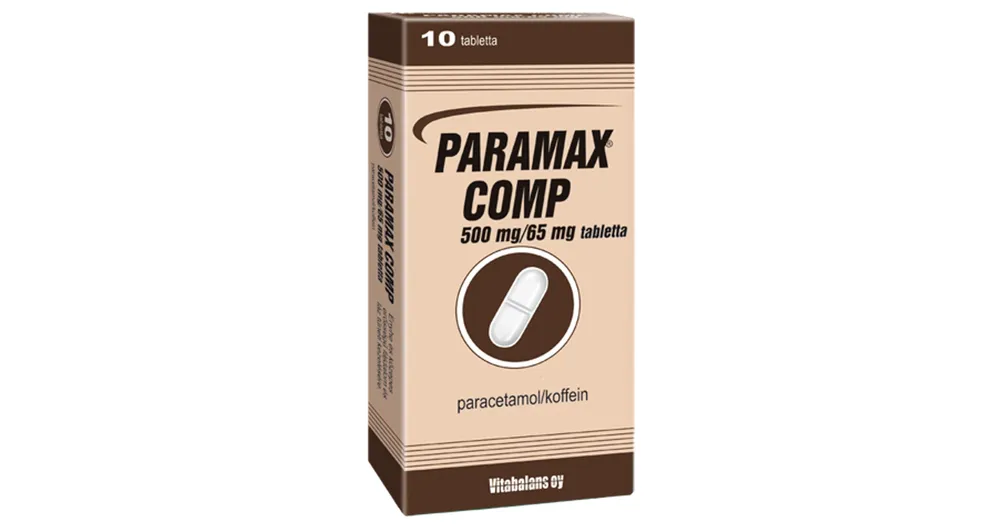
Instructions for Use
Patient Information Leaflet
Paramax Comp, 500 mg + 65 mg, tablets
Paracetamolum + Coffeinum
Please read the entire leaflet carefully before using the medicine, as it contains
important information for the patient.
This medicine should always be used exactly as described in this patient leaflet or as directed by a
physician or pharmacist.
- Keep this leaflet for future reference.
- If you need advice or further information, consult your pharmacist.
- If you experience any adverse reactions, including any possible side effects not listed in this leaflet, inform your doctor. See section 4.
- If there is no improvement after 3 days, or if your condition worsens, consult your doctor.
Table of Contents
- What Paramax Comp is and what it is used for
- Important information before taking Paramax Comp
- How to take Paramax Comp
- Possible side effects
- How to store Paramax Comp
- Contents of the pack and other information
1. What Paramax Comp is and what it is used for
Paramax Comp is an analgesic and antipyretic medicine (a pain reliever and fever reducer). Paramax Comp contains two active substances: paracetamol and caffeine. Paracetamol relieves pain and reduces fever, while caffeine enhances its analgesic effect.
Paramax Comp is used for symptomatic treatment of mild to moderate pain, such as headache, toothache, menstrual pain, and/or fever.
2. Information before using Paramax Comp
When not to use Paramax Comp
- if the patient is allergic to paracetamol or caffeine, or to any of the other ingredients of this medicine (listed in section 6).
- in children under 12 years of age.
- if the patient has severe hepatic insufficiency (>9 points on the Child-Pugh scale).
Warnings and precautions
Before using Paramax Comp, discuss with your doctor:
- if the patient has severe liver or kidney impairment (including alcoholic liver damage).
- if the patient consumes large amounts of coffee or tea containing caffeine. Concurrent use may cause irritability and nervousness due to caffeine.
- if the patient has problems with alcohol or has liver disease. Do not use Paramax Comp together with alcohol; the effects of alcohol are not enhanced by taking Paramax Comp.
- if the patient has chronic malnutrition and glucose-6-phosphate dehydrogenase deficiency.
- if the patient suffers from Gilbert's syndrome (familial non-haemolytic jaundice).
During treatment with Paramax Comp, inform your doctor immediately:
- if the patient develops severe conditions, including severe kidney dysfunction or sepsis (when bacteria and their toxins circulate in the blood, leading to organ damage), malnutrition, chronic alcoholism, or if the patient is also taking flucloxacillin (an antibiotic). Cases of a serious condition called metabolic acidosis (abnormality in blood and body fluids) have been reported in patients taking regular doses of paracetamol over a prolonged period or when paracetamol is taken together with flucloxacillin. Symptoms of metabolic acidosis may include: severe breathing difficulties, including rapid deep breathing, drowsiness, nausea and vomiting.
Precautions should be taken:
- when using medicinal products affecting liver function
- if the patient is dehydrated
- in chronic nutritional disorders
- if the patient suffers from asthma and is allergic to acetylsalicylic acid.
Do not use Paramax Comp without consulting a doctor if the patient is taking other painkillers containing paracetamol. Never take more paracetamol than recommended. Doses higher than recommended do not provide stronger pain relief but increase the risk of serious liver damage. Symptoms of liver damage usually appear within a few days after taking an excessive dose of paracetamol. It is therefore important to contact a doctor immediately after taking an overdose, even if the patient feels well, due to the risk of liver damage (see “If you take more Paramax Comp than you should” in section 3).
Paramax Comp and other medicines
Tell your doctor or pharmacist about all medicines currently taken or recently used, as well as any medicines the patient plans to take, including those available without prescription, because medicines may affect each other’s actions.
Particular caution is required when using:
- anticoagulants (medicines preventing blood clots)
- metoclopramide and domperidone (medicines for nausea and vomiting)
- chloramphenicol (an antibiotic)
- cholestyramine (a medicine that lowers cholesterol levels)
- phenobarbital, phenytoin, and carbamazepine (medicines used in epilepsy treatment)
- rifampicin (a medicine used in tuberculosis treatment)
- probenecid (a medicine used in gout treatment)
- zidovudine (a medicine used in HIV infection treatment)
- St John's wort (an ingredient in some herbal preparations)
- flucloxacillin (an antibiotic), due to a serious disorder of blood and body fluids (called metabolic acidosis), which requires urgent treatment (see section 2).
As with other migraine treatments, overuse of Paramax Comp may lead to daily headaches or worsening of migraines. Consult your doctor if you think this applies to you. To resolve the problem, you may need to stop taking Paramax Comp.
If the patient is taking any of the above medicines or herbal preparations, they should consult their doctor before using Paramax Comp.
Occasionally, Paramax Comp may be used together with anticoagulants, but if long-term pain relief is needed, the patient should consult their doctor.
Paramax Comp with food and drink
Do not take this medicine with alcohol. Limit consumption of beverages containing caffeine (coffee, tea, cola).
Pregnancy and breastfeeding
If the patient is pregnant or breastfeeding, suspects she may be pregnant, or is planning to have a baby, she should consult her doctor or pharmacist before using this medicine.
PARAMAX Rapid may be administered to pregnant women if necessary. The lowest effective dose for relieving pain or reducing fever should be used, and the medicine should be taken for the shortest possible duration. If pain is not relieved or fever does not subside, or if more frequent dosing becomes necessary, consult a doctor.
Paramax Comp may be used during breastfeeding, provided it is used according to standard conditions of use.
Nevertheless, it should only be used after careful assessment by a doctor of the benefit-risk balance.
Driving and using machines
Paramax Comp has no known effect on the ability to drive or operate machinery.
3. How to use Paramax Comp
This medicine should always be taken exactly as described in this patient information leaflet or as directed by a physician.
If in doubt, consult a doctor or pharmacist.
For oral use, for a short period of time.
Adults and children above 12 years of age:
The usual dose is 1-2 tablets up to 3 times daily or as needed.
The 1-2 tablet dose should not be taken more frequently than every 6 hours. The appropriate interval between doses depends on symptoms and the maximum daily dose.
Do not exceed the recommended daily dose of 6 tablets within 24 hours.
If symptoms persist for more than 3 days, consult a doctor.
Elderly patients:
Same as for adults.
Use in children:
This medicine is not recommended for use in children under 12 years of age.
Taking more than the recommended dose of Paramax Comp
In case of overdose or poisoning, seek immediate medical attention from a doctor or go to the emergency department, even if the patient feels well, due to the risk of delayed, severe liver damage. Symptoms of overdose include pallor, nausea, vomiting, loss of appetite, abdominal pain, tremor, nervousness, agitation, increased urination, gastrointestinal disturbances, tachycardia, or cardiac arrhythmia.
Missed dose of Paramax Comp
Do not take a double dose to make up for a missed dose. Continue treatment according to the prescribed schedule.
If in doubt about how to use this medicine, consult a doctor or pharmacist.
4. Possible adverse effects
Like all medicines, this medicine can cause adverse effects, although not everyone will experience them.
Paramax Comp may reduce the number of white blood cells, thereby weakening the body's resistance
to infections. The treatment with Paramax Comp must be stopped immediately and the patient should
contact a doctor if symptoms of infection occur, such as fever and severe deterioration in general health,
or fever with signs of local infection such as sore throat/oral cavity ulcers or urinary tract disturbances.
Laboratory blood tests will be performed to check for a possible reduction in white blood cell count (agranulocytosis).
The following adverse effects reported to date are listed below according to their frequency of occurrence:
Common (may affect up to 1 in 10 patients):
- nausea
- insomnia
- restlessness
- increased heart rate (tachycardia)
Uncommon (may affect up to 1 in 1,000 patients):
- hypersensitivity reactions (including rash)
Rare (may affect up to 1 in 10,000 patients):
- blood cell formation disorders, including thrombocytopenia (low platelet count manifesting as increased bleeding or bruising) and agranulocytosis (reduced white blood cell count)
- anaphylactic shock (severe allergic reaction), angioedema (sudden swelling of the skin and mucous membranes, which may be life-threatening)
- very rare cases of severe skin reactions have been reported.
Frequency not known (cannot be estimated from available data):
- serious condition causing blood to become more acidic (so-called metabolic acidosis), in patients with severe disease taking paracetamol (see section 2).
Reporting of adverse effects
If any adverse effects occur, including any adverse effects not listed in this leaflet, inform a doctor. Adverse effects can be reported directly to the Department of Monitoring Adverse Drug Reactions of the Office for Registration of Medicinal Products, Medical Devices and Biocidal Products, Al. Jerozolimskie 181C, PL-02 222 Warsaw, tel.: + 48 22 49 21 301, fax: + 48 22 49 21 309, website: https://smz.ezdrowie.gov.pl .
Adverse effects can also be reported to the marketing authorization holder.
Reporting adverse effects helps to provide more information on the safety of the medicine.
5. How to store Paramax Comp
There are no special requirements for storing this medicine.
Keep the medicine in a place out of sight and reach of children.
Do not use the medicine after the expiry date stated on the packaging and blister after EXP.
The expiry date refers to the last day of the stated month.
Medicines should not be disposed of via wastewater or household waste. Ask your pharmacist how to dispose of medicines no longer in use. This will help protect the environment.
6. Contents of the package and other information
What Paramax Comp contains
- The active substances are paracetamol and caffeine. One tablet contains 500 mg of paracetamol and 65 mg of caffeine.
- The other ingredients are: microcrystalline cellulose, povidone 29-32, stearic acid, and magnesium stearate.
What Paramax Comp looks like and contents of the pack
White, capsule-shaped tablet with a break line on one side, measuring 7.5 mm in width and 18 mm in length.
The tablet can be divided into two equal parts.
Pack sizes: 10, 20, 30, 60, and 100 tablets.
Not all pack sizes may be marketed.
Marketing Authorisation Holder and Manufacturer:
Vitabalans Oy
Varastokatu 8
13500 Hämeenlinna
Finland
Tel.: +358 3 615 600
This medicinal product is authorised for marketing in the European Economic Area countries under the following trade names:
Paracut Comp: Sweden
Paramax Comp: Finland, Hungary, Poland, Slovenia
Paramax Extra: Estonia, Lithuania, Latvia, Slovakia
Para-Caf: Germany
Paramax Combi: Czech Republic
Arax Extra: Denmark
Similar Medications
-
Antidol 15
Form: tablets
Active substance Dosage paracetamol 500 mg codeine phosphate 15 mg Manufacturer: LEK S.A.
-
Apap nbg
Form: tablets
Active substance Dosage Paracetamol 500 mg Caffeine 50 mg Manufacturer: US Pharmacia Sp. z o.o.
-
Cefalgin migraplus
Form: tablets
Active substance Dosage Paracetamol 250 mg Propyphenazone 150 mg Caffeine 50 mg Manufacturer: Adamed Pharma S.A.
-
Coldrex maxgrip c
Form: tablets
Active substance Dosage paracetamol 500 mg caffeine 25 mg phenylephrine hydrochloride 5 mg terpin hydrate 20 mg ascorbic acid 38 mg Manufacturer: Omega Pharma International NV
-
Fervex pain and fever duo
Form: tablets
Active substance Dosage Paracetamol 500 mg Caffeine 65 mg Manufacturer: Medinfar Manufacturing S.A.
-
Panacit extra
Form: tablets
Active substance Dosage Paracetamol 500 mg Caffeine 65 mg Manufacturer: Saneca Pharmaceuticals a.s.
-
Paracod
Form: tablets
Active substance Dosage paracetamol 500 mg codeine 30 mg Manufacturer: Vitabalans Oy
-
Saridon
Form: tablets
Active substance Dosage Paracetamol 250 mg Propyphenazone 150 mg Caffeine 50 mg Manufacturer: UAB Bayer
-
Saridon
Form: tablets
Active substance Dosage Paracetamol 250 mg Propyphenazone 150 mg Caffeine 50 mg Manufacturer: UAB Bayer
-
Saridon
Form: tablets
Active substance Dosage Paracetamol 250 mg Propyphenazone 150 mg Caffeine 50 mg Manufacturer: Bayer B.V.
-
Saridon
Form: tablets
Active substance Dosage Paracetamol 250 mg Propyphenazone 150 mg Caffeine 50 mg Manufacturer: Bayer B.V.
-
Saridon
Form: tablets
Active substance Dosage Paracetamol 250 mg Propyphenazone 150 mg Caffeine 50 mg Manufacturer: Bayer B.V.
This page has been machine-translated and may contain inaccuracies. The original data is available in the manufacturing country's language.
Last data check: June 04, 2026 · Data source: Rejestr Produktów Leczniczych (URPL)