Antidol 15
Poland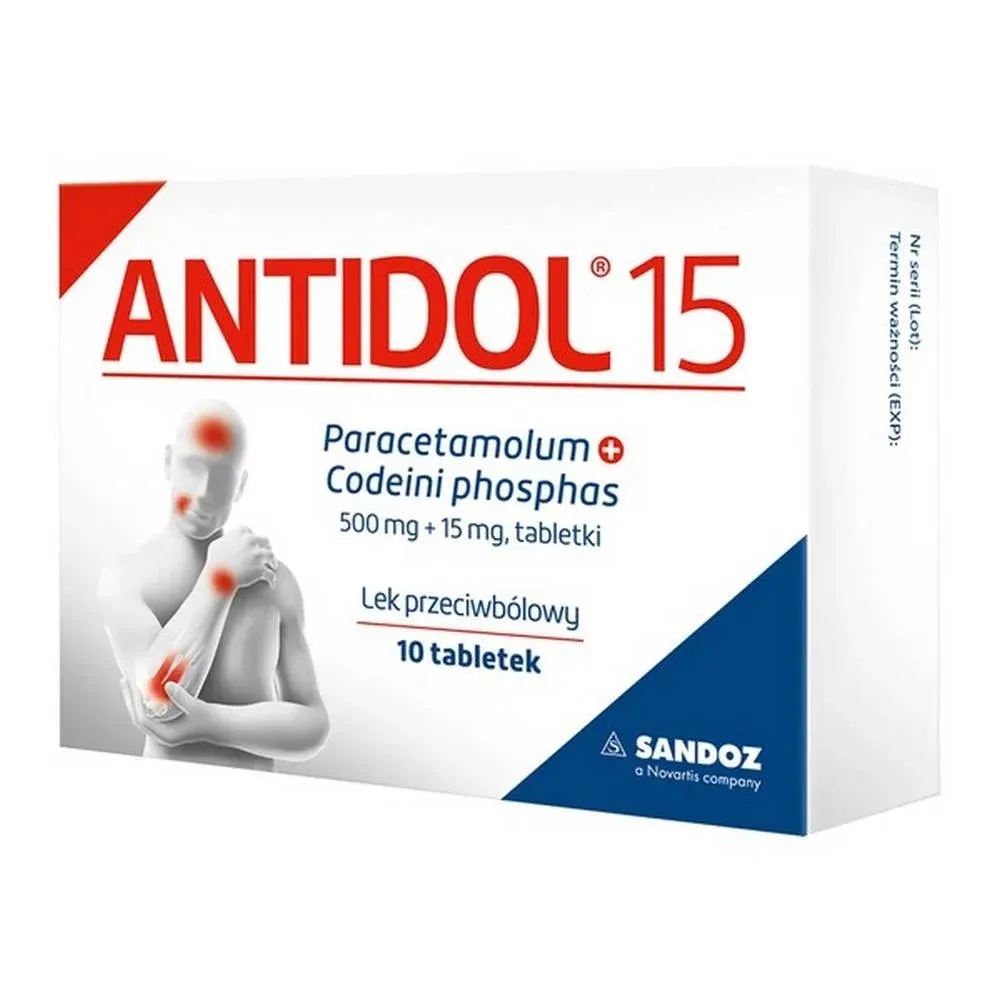
Table of Contents
Package leaflet: Information for the patient
ANTIDOL 15, 500 mg + 15 mg, tablets
Paracetamolum + Codeini phosphas
Please read the entire leaflet carefully before taking this medicine, as it contains
important information for the patient.
This medicine should always be used exactly as described in this patient leaflet or as advised
by a doctor or pharmacist.
- Keep this leaflet, as you may need to read it again.
- If you need advice or further information, please consult your pharmacist.
- If you experience any side effects, including any possible side effects not listed in this leaflet, inform your doctor or pharmacist. See section 4.
- If there is no improvement after 3 days, or if you feel worse, contact your doctor.
Contents of the leaflet
- What Antidol 15 is and what it is used for
- Important information before taking Antidol 15
- How to take Antidol 15
- Possible side effects
- How to store Antidol 15
- Contents of the pack and other information
1. What Antidol 15 is and what it is used for
Antidol 15 is a combination analgesic and antipyretic medicine in tablet form. It contains
paracetamol, which reduces pain and fever, and codeine, which relieves pain and belongs
to a group of medicines called opioid analgesics. Codeine may be used alone (in monotherapy) or together with other analgesics, such as paracetamol. The analgesic effect of Antidol 15 lasts approximately 4 hours.
Codeine may be used in patients aged 12 years and older for short-term relief of moderate pain not adequately controlled by other analgesics (such as paracetamol or ibuprofen) used alone.
The indication for Antidol 15 is moderate to severe pain of various origins, e.g.: headache, pain after tooth extraction, bone and joint pain (including post-traumatic), soft tissue injury pain, menstrual pain.
2. Important information before taking Antidol 15
When not to take Antidol 15
Do not take Antidol 15:
- if you are allergic to paracetamol, codeine, opioids, or any of the other ingredients of this medicine (listed in section 6),
- in patients with severe liver or kidney impairment,
- in patients with alcoholic liver disease,
- concurrently with MAO inhibitors (medicines used, among others, in the treatment of depression) or within 2 weeks after discontinuation of such treatment,
- in patients with respiratory insufficiency,
- in patients with congenital glucose-6-phosphate dehydrogenase deficiency or methemoglobin reductase deficiency (enzymes present in humans),
- in children under 12 years of age,
- for pain relief in children and adolescents after tonsillectomy or adenoidectomy due to the risk of obstructive sleep apnoea syndrome,
- if you know you are a rapid metabolizer of codeine to morphine,
- during breastfeeding.
Warnings and precautions
While taking Antidol 15 tablets, do not take other medicines containing codeine or paracetamol.
Before taking Antidol 15, discuss with your doctor or pharmacist if you:
- have bronchial asthma (avoid using the medicine during an acute asthma attack),
- have severe kidney or liver dysfunction,
- have alcoholic liver disease (without cirrhosis),
- have intestinal obstruction or acute abdominal disease,
- have undergone cholecystectomy.
Particular caution during treatment with this medicine should be observed in patients:
- with Addison's disease,
- with hyperthyroidism,
- with benign prostatic hyperplasia and impaired urine flow,
- with chronic obstructive pulmonary disease (COPD),
- in elderly patients, especially with impaired liver and/or kidney function,
- with head injury (risk of increased respiratory depression and elevated intracranial pressure),
- with alcohol dependence (increased risk of liver damage),
- with a history of alcohol or drug abuse,
- after recent gastrointestinal surgery.
Long-term use of this medicine may lead to dependence, manifesting as anxiety, and discontinuation may result in increased irritability.
Prolonged use of analgesics for headache may worsen the symptoms.
In patients with kidney impairment, dose adjustment may be necessary due to reduced elimination of codeine and paracetamol metabolites.
Codeine may increase intracranial pressure.
Codeine is metabolized to morphine by liver enzymes. Morphine is the substance that relieves pain. Some individuals have altered enzyme activity, which may affect them differently.
In some people, morphine is not produced or is produced in very small amounts, resulting in inadequate pain relief. Others are at higher risk of severe adverse effects due to excessive morphine production. If you experience any of the following side effects, discontinue use of this medicine and contact your doctor immediately: slow or shallow breathing, confusion, drowsiness, pinpoint pupils (constricted pupils), nausea or vomiting, constipation, or loss of appetite.
During treatment with Antidol 15, inform your doctor immediately if:
you have severe medical conditions, including severe kidney dysfunction or sepsis (bacteria and their toxins circulating in the blood, leading to organ damage), malnutrition, chronic alcoholism, or if you are also taking flucloxacillin (an antibiotic). In these situations, severe metabolic acidosis (a blood and body fluid imbalance) has been reported in patients taking paracetamol regularly over a long period or taking paracetamol with flucloxacillin. Symptoms of metabolic acidosis may include: severe breathing difficulties, including rapid deep breathing, drowsiness, nausea, and vomiting.
Children and adolescents
Do not give this medicine to children under 12 years of age (see "When not to take Antidol 15").
Use in children and adolescents after surgery
Codeine should not be used for pain relief in children and adolescents after tonsillectomy or adenoidectomy due to the risk of life-threatening adverse effects associated with obstructive sleep apnoea syndrome.
Use in children and adolescents with respiratory disorders
Codeine is not recommended in children and adolescents with respiratory disorders (including neuromuscular disorders, severe heart or respiratory conditions, upper respiratory or lung infections, multiple organ injuries, or after extensive surgical procedures), as they may experience increased morphine toxicity symptoms.
If you are unsure whether any of the above conditions apply to you, consult your doctor or pharmacist.
Antidol 15 and other medicines
Inform your doctor or pharmacist about all medicines you are currently taking, have recently taken, or plan to take.
This especially includes:
- sedatives, hypnotics, including barbiturates. Concurrent use of Antidol 15 with sedatives, e.g. benzodiazepines or related drugs, increases the risk of drowsiness, breathing difficulties (respiratory depression), or coma, which may be life-threatening. Therefore, combination therapy should only be considered when no other treatment options are available. If Antidol 15 is used together with sedatives, the doctor should limit the dose and duration of concurrent use. The patient should inform the doctor about all sedatives being taken and strictly follow the prescribed dosage. Informing a relative or close friend about the possibility of the above symptoms may be helpful. If the described symptoms occur, consult a doctor.
- antiepileptic drugs, including lamotrigine,
- antidepressants (tricyclics and MAO inhibitors),
- warfarin (anticoagulant),
- metoclopramide (antiemetic and prokinetic agent),
- domperidone (used, among others, in gastrointestinal disorders),
- chloramphenicol (used in bacterial infections),
- flucloxacillin (antibiotic), due to the serious risk of blood and body fluid disturbances (called metabolic acidosis), which require urgent treatment (see section 2),
- propanteline (slows intestinal peristalsis and delays gastric emptying),
- cholestyramine (bile acid sequestrant),
- probenecid (used in gout treatment),
- cimetidine, ranitidine (used to reduce gastric acid secretion),
- rifampicin (antibiotic),
- metyrapone (used in diagnosis of certain diseases),
- phenazone, salicylamide (analgesic, antipyretic, anti-inflammatory drugs),
- isoniazid (used in tuberculosis treatment),
- propranolol (used in cardiac rhythm disorders).
Codeine enhances the central nervous system depressant effects of anaesthetics.
If you are unsure whether you are taking any of these medicines, consult your doctor or pharmacist.
Antidol 15 with food, drink, and alcohol
See also section 3.
Do not consume alcoholic beverages while taking this medicine.
Pregnancy and breastfeeding
If you are pregnant or breastfeeding, think you may be pregnant, or are planning to have a child, consult your doctor or pharmacist before taking this medicine.
Pregnancy
Do not use Antidol 15 during pregnancy or childbirth unless your doctor considers it absolutely necessary. Evidence suggests that codeine use during pregnancy increases the risk of respiratory developmental defects.
Breastfeeding
Use of this medicine during breastfeeding is contraindicated. Paracetamol, codeine, and its active metabolite, morphine, pass into breast milk (see above "When not to take Antidol 15").
Driving and operating machinery
This medicine may cause dizziness and drowsiness. Do not drive or operate machinery while taking Antidol 15.
3. How to use Antidol 15
This medicine should always be used exactly as described in this patient leaflet or as advised by your doctor or pharmacist. If in doubt, consult your doctor or pharmacist.
The medicine should be used at the lowest effective dose for the shortest possible duration. Do not use
higher doses than recommended.
To avoid the risk of overdose, check whether other medicines being taken concurrently (including those prescribed or available without a prescription) contain paracetamol or codeine.
To prevent tolerance, this medicinal product should only be administered on an as-needed basis.
Regular and prolonged use of codeine (the active substance in this medicine) may lead to dependence and misuse, which in turn may result in overdose and/or death. Do not use this medicine for longer than necessary. This medicine must not be passed on to other people.
Do not use this medicine for longer than 3 days.
Adults and adolescents over 15 years of age
If necessary, 1–2 tablets up to 4 times daily (maximum 6 tablets per day, corresponding to 3 g of paracetamol and 90 mg of codeine phosphate per day), with intervals of at least 6 hours between doses.
Adolescents aged 12 to 15 years
If necessary, 1 tablet every 6 hours (maximum 4 tablets per day, corresponding to 2 g of paracetamol and 60 mg of codeine phosphate per day).
Note for adolescents aged 12 to 18 years (see also section 2, "Children and adolescents")
The codeine dose in adolescents aged 12 to 18 years depends on body weight (0.5 to 1 mg/kg body weight), and the maximum daily dose of codeine should not exceed 240 mg.
Codeine is not recommended in adolescents aged 12 to 18 years with impaired respiratory function for symptomatic treatment of colds.
Method of administration
Oral administration. The medicine should be taken after food, with a large amount of liquid.
Do not use this medicine for longer than 3 days. If pain persists after 3 days, consult a doctor.
Children under 12 years of age
Antidol 15 must not be used in children under 12 years of age due to the risk of opioid toxicity and severe respiratory disturbances.
Dosing in patients with severe renal impairment
In patients with severe renal impairment, the intervals between doses should be at least 8 hours.
Dosing in patients with hepatic impairment
Patients with hepatic impairment or Gilbert's syndrome should use a lower dose or extend the intervals between doses.
Dosing in elderly patients
There is insufficient data on the effects of the recommended dose of this medicine in elderly patients. Dose reduction may be necessary.
Taking more Antidol 15 than recommended
If you take more Antidol 15 than recommended, seek immediate medical advice from a doctor or go to the nearest hospital, even if you feel well, due to the risk of severe liver damage, which may be delayed. Take the medicine packaging with you.
Concurrent alcohol consumption and use of psychotropic medicines may intensify overdose symptoms.
Initial symptoms of overdose may include nausea, vomiting, dizziness, drowsiness, loss of appetite, pallor, abdominal pain, bronchospasm, skin reactions such as rash or urticaria.
Pupillary constriction may be observed. Hypotension and tachycardia are possible but unlikely. Liver damage may become apparent 12 to 48 hours after ingestion. Glucose metabolism disturbances may occur. In severe poisonings, liver failure may lead to metabolic acidosis, haemorrhage, hypoglycaemia, cerebral oedema, and death. Even in the absence of severe liver damage, acute renal failure with acute tubular necrosis may develop, presenting with lumbar pain, haematuria, and proteinuria.
Cardiac arrhythmias and pancreatitis have also been observed.
Missing a dose of Antidol 15
Do not take a double dose to make up for a missed dose.
Stopping Antidol 15
Regular, long-term use of codeine may lead to dependence, which may cause feelings of anxiety and irritability upon discontinuation of treatment.
If you have any further questions about the use of this medicine, consult your doctor or pharmacist.
4. Possible adverse reactions
Like all medicines, this medicine can cause adverse reactions, although not everybody will experience them.
You must stop taking the medicine immediately and consult a doctor if any of the following adverse reactions occur:
- symptoms of an allergic reaction: skin rash, hives, itching, swelling of the face, lips, tongue, or throat, which may cause difficulty in swallowing or breathing
- sudden high fever, sore throat, and mouth ulcers – symptoms of a very serious blood disorder (low white blood cell count)
- bleeding, hemorrhage, easy bruising, petechiae (due to reduced platelet count)
- severe skin reactions such as: toxic epidermal necrolysis (large blisters, extensive skin erosions, peeling of large areas of the epidermis, and fever), Stevens-Johnson syndrome (blisters and erosions on the skin, inside the mouth, eyes, and genital organs, fever, and joint pain); acute generalized exanthematous pustulosis
- shock (life-threatening allergic reaction causing failure of the body's autoregulatory mechanisms to maintain adequate blood flow to vital organs and tissues; symptoms include confusion, weakness, and fainting).
The following adverse reactions may occur during treatment with this medicine:
Common (may occur in less than 1 in 10 people):
fatigue, dizziness, headache, decreased blood pressure, fainting*, nausea,
vomiting (especially at the beginning of treatment), constipation.
Uncommon (may occur in less than 1 in 100 people):
sleep disturbances, rash, itching, skin redness, hives.
Rare (may occur in less than 1 in 1,000 people):
visual disturbances or miosis*, tinnitus, shortness of breath, dry mouth, allergic rash.
Very rare (may occur in less than 1 in 10,000 people):
decreased platelet count (thrombocytopenia), decreased white blood cell count (leukopenia),
severe deficiency or absence of a type of white blood cells – neutrophils
(agranulocytosis), isolated cases of reduced white blood cells, red blood cells,
and platelets (pancytopenia), hypersensitivity reactions such as angioedema, dyspnea,
profuse sweating, malaise, decreased blood pressure up to shock**, respiratory center depression***,
euphoria or dysphoria* (mood disturbances with irritability, aggression, and inappropriate outbursts),
visual-motor coordination disturbances*, bronchospasm, pulmonary edema* (especially in patients with impaired lung function), severe skin reactions.
Frequency not known (cannot be estimated from available data):
very severe allergic reaction (anaphylactic reaction), acute pancreatitis (in patients after cholecystectomy), increased liver enzyme activity, excessive sweating.
A serious condition that may cause blood acidification (so-called metabolic acidosis) in patients with severe disease taking paracetamol (see section 2).
* after administration of high doses
** isolated cases
*** after administration of higher doses or in patients with increased intracranial pressure or head injury
Reporting of adverse reactions
If any adverse reactions occur, including any not listed in this leaflet, inform your doctor, pharmacist, or nurse. Adverse reactions can be reported directly to the Department of Monitoring Adverse Drug Reactions of the Office for Registration of Medicinal Products, Medical Devices and Biocidal Products: Al. Jerozolimskie 181C, 02-222 Warsaw
tel.: + 48 22 49 21 301, fax: + 48 22 49 21 309, website: https://smz.ezdrowie.gov.pl
Adverse reactions can also be reported to the marketing authorization holder.
Reporting adverse reactions helps to provide more information on the safety of this medicine.
5. How to store Antidol 15
Keep the medicine out of sight and reach of children.
Store below 25 °C.
Do not use this medicine after the expiry date stated on the packaging after EXP.
The expiry date refers to the last day of the stated month.
The batch number on the packaging is marked as "Lot".
Medicines must not be disposed of via wastewater or household waste. Ask your pharmacist how to dispose of medicines that are no longer required. This will help protect the environment.
6. Contents of the package and other information
What Antidol 15 contains
One tablet contains 15 mg of codeine phosphate and 500 mg of paracetamol (as Compap L 90%
composed of: paracetamol, pregelatinized corn starch, stearic acid, povidone, crospovidone).
The other ingredients are: microcrystalline cellulose, colloidal anhydrous silica, and magnesium stearate.
What Antidol 15 looks like and contents of the pack
Aluminum/PVC blisters in a cardboard box containing 10 tablets.
Marketing Authorisation Holder
Sandoz GmbH
Biochemiestrasse 10
A-6250 Kundl, Austria
Manufacturer
Lek S.A.
ul. Podlipie 16
95-010 Stryków
Lek S.A.
ul. Domaniewska 50 C
02-672 Warszawa
For further information about this medicine, please contact:
Sandoz Polska Sp. z o.o.
ul. Domaniewska 50 C
02-672 Warszawa
tel. 22 209 70 00
{Logo of the marketing authorisation holder}