Coldrex maxgrip c
Poland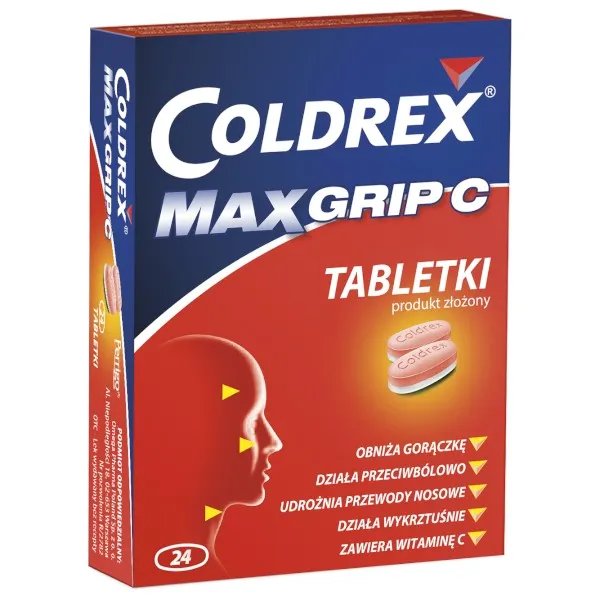
Table of Contents
Package leaflet: Information for the user
COLDREX MAXGRIP C, tablets
Please read all of this leaflet carefully before taking this medicine, because it contains
important information for the patient.
This medicine should always be used exactly as described in this patient leaflet or as directed by
the doctor, pharmacist, or nurse.
- Keep this leaflet so that you can read it again if necessary.
- If you need advice or further information, consult your pharmacist.
- If the patient experiences any adverse reactions, including any possible adverse reactions not listed in this leaflet, inform a doctor, pharmacist, or nurse. See section 4.
- If there is no improvement after 3 days, or if the patient feels worse, consult a doctor.
Contents of the leaflet
- What Coldrex MaxGrip C is and what it is used for
- What you need to know before taking Coldrex MaxGrip C
- How to take Coldrex MaxGrip C
- Possible side effects
- How to store Coldrex MaxGrip C
- Contents of the pack and other information
1. What Coldrex MaxGrip C is and what it is used for
Coldrex MaxGrip C tablets contain the following active substances: paracetamol, phenylephrine hydrochloride, caffeine, terpin hydrate, and vitamin C.
- paracetamol – provides analgesic and antipyretic effects
- phenylephrine – constricts blood vessels and clears nasal passages
- caffeine – enhances the analgesic effect of paracetamol
- terpin hydrate – acts as an expectorant
- vitamin C – a vitamin whose deficiency may occur during the early days of cold and flu.
Therapeutic indications
Treatment of symptoms of cold and flu, such as fever, chills, headache, sore throat, muscle and bone pain, and nasal congestion.
2. Important information before using Coldrex MaxGrip C
When not to use Coldrex MaxGrip C:
- if the patient is allergic to paracetamol, caffeine, phenylephrine, ammonium chloride, vitamin C or any of the other ingredients of this medicine (listed in section 6),
- in patients with liver failure or severe renal failure,
- in patients with alcoholic liver disease,
- in patients taking zidovudine (used in the treatment of HIV infection),
- in patients taking monoamine oxidase inhibitors (MAO inhibitors) or within 2 weeks after discontinuation of such treatment,
- in children under 12 years of age.
Warnings and precautions
Do not use together with other medicinal products containing paracetamol
and/or sympathomimetics (such as nasal decongestants, appetite suppressants, or psychostimulants with amphetamine-like activity) or other cold and flu remedies.
This medicine contains paracetamol.
Paracetamol overdose can lead to severe liver damage.
This medicine should not be taken concurrently with other medicines containing paracetamol, such as painkillers, antipyretics, cold and flu remedies, or sleep aids.
Read the package leaflet carefully before use and follow the instructions provided.
Consult a doctor before use if the patient has:
- liver or kidney disease, as liver disorders increase the risk of paracetamol-induced liver damage,
- underweight or malnutrition,
- regular alcohol consumption – in such cases, use of this medicine may be contraindicated or dose reduction may be necessary,
- hypertension, heart disease or vascular disorders such as Raynaud’s syndrome (characterized by episodic finger pain triggered by cold or stress),
- diabetes,
- hyperthyroidism,
- glaucoma (a condition characterized by progressive optic nerve damage leading to impaired vision or blindness),
- pheochromocytoma,
- benign prostatic hyperplasia,
- concurrent use of beta-blockers or other antihypertensive drugs (e.g. bretylium, guanethidine, reserpine, methyldopa),
- respiratory disorders (e.g. pulmonary emphysema, chronic bronchitis),
- certain enzyme deficiencies (glucose-6-phosphate dehydrogenase deficiency, methemoglobin reductase deficiency),
- severe infection, which may increase the risk of metabolic acidosis, manifested by:
- deep, rapid and labored breathing,
- nausea, vomiting and/or loss of appetite,
- general malaise. Seek immediate medical attention if these symptoms occur simultaneously.
During treatment with Coldrex MaxGrip C, immediately inform a doctor if the patient develops severe illness, including severe renal dysfunction or sepsis (bacterial infection with toxins circulating in the blood, leading to organ damage), malnutrition, chronic alcoholism, or is taking flucloxacillin (an antibiotic). In such cases, severe metabolic acidosis (a disturbance in blood and body fluid balance) has been reported in patients taking paracetamol regularly over a prolonged period or taking paracetamol concomitantly with flucloxacillin. Symptoms of metabolic acidosis may include: severe breathing difficulties, including rapid deep breathing, drowsiness, nausea, vomiting.
Do not drink alcohol while taking this medicine due to increased risk of liver damage. Liver damage is possible in individuals who ingest 10 g or more of paracetamol at once. A dose of 5 g of paracetamol may cause liver damage in patients with the following risk factors:
- Patients taking long-term treatment with carbamazepine, phenobarbital, phenytoin, primidone (medicines used e.g. in epilepsy), rifampicin (used e.g. in tuberculosis), St. John’s wort (used e.g. in depression), or other drugs that induce liver enzymes.
- Patients with chronic alcohol abuse.
- Patients at risk of glutathione deficiency, e.g. those with eating disorders, cystic fibrosis, HIV infection, fasting or malnutrition. Patients with pre-existing liver disease have an increased risk of paracetamol overdose.
This medicine contains caffeine. Avoid excessive consumption of coffee, tea or other caffeine-containing beverages during treatment.
Children
Do not give this medicine to children under 12 years of age.
Coldrex MaxGrip C and other medicines
Inform your doctor about all medicines you are currently taking, including those available without a prescription.
Consult your doctor before use if you are taking any of the following medicines:
- metoclopramide, domperidone (used to treat nausea and vomiting),
- cholestyramine (used to lower high blood cholesterol levels),
- anticoagulants (e.g. warfarin), especially if long-term pain relief is required,
- sedatives, antiepileptic drugs, rifampicin (an antituberculosis drug),
- MAO inhibitors (used e.g. in depression) and other antidepressants (tricyclic antidepressants),
- estrogens and progesterone (sex hormones),
- lithium salts (used e.g. in depression, mania),
- disulfiram (used e.g. in alcoholism treatment),
- non-steroidal anti-inflammatory drugs (including acetylsalicylic acid),
- ergot alkaloids (used e.g. in migraine),
- certain medicines used for heart conditions or hypertension (e.g. digoxin, beta-blockers, methyldopa),
- appetite suppressants, nasal decongestants, and psychostimulants derived from amphetamines (e.g. used in attention deficit hyperactivity disorder),
- flucloxacillin (an antibiotic), due to the serious risk of blood and body fluid disturbances (metabolic acidosis), which require urgent treatment (see section 2).
Paracetamol may cause false results in certain laboratory tests (e.g. blood glucose measurement).
Phenylephrine may enhance the blood pressure-raising effect of drugs used to accelerate labor.
Ascorbic acid increases the absorption of iron and aluminium from medications containing these substances.
Food, drink and alcohol
Excessive intake of coffee or tea during treatment may cause nervousness and irritability. Alcohol should not be consumed during treatment – see "Warnings and precautions" above.
Pregnancy, breastfeeding and fertility
If the patient is pregnant, breastfeeding, suspects she may be pregnant, or is planning to have a baby, she should consult a doctor or pharmacist before using this medicine.
This medicine should not be used during pregnancy or breastfeeding without medical advice. Administration of phenylephrine hydrochloride during pregnancy may cause congenital malformations and fetal hypoxia. Phenylephrine may pass into breast milk.
There is no data available on the effect of Coldrex MaxGrip C on fertility.
Driving and using machines
This medicine may cause dizziness. If this occurs, do not drive or operate machinery.
Coldrex MaxGrip C contains Eurocol Sunset Yellow (a mixture of Eurocol Sunset Yellow E110 and sodium chloride).
It may cause allergic reactions.
Coldrex MaxGrip C contains sodium
Each tablet contains less than 1 mmol (23 mg) of sodium, meaning the medicine is considered "sodium-free".
3. How to use Coldrex MaxGrip C
This medicine should always be taken exactly as described in the patient leaflet or as advised by
your doctor, pharmacist, or nurse. If in doubt, consult your doctor,
pharmacist, or nurse.
Use in adults and adolescents over 12 years of age
Orally, 2 tablets, up to 4 times daily. Do not take the medicine more frequently
than every 4 hours or use more than 8 tablets in 24 hours.
Do not take a higher dose than recommended.
Always use the lowest effective dose of the medicine.
Do not use the medicine for longer than 3 days without consulting a doctor.
If symptoms persist, consult a doctor.
If you feel the medicine's effect is too strong or too weak, consult your doctor.
Taking more Coldrex MaxGrip C than recommended
If you take more than the recommended dose, seek immediate medical advice,
even if no adverse symptoms are present, due to the risk of delayed, severe liver damage.
If you forget to take Coldrex MaxGrip C
Do not take a double dose to make up for a missed dose.
4. Possible adverse effects
Like all medicines, this medicine can cause adverse effects, although not everyone experiences them.
You should stop taking the medicine immediately and consult a doctor if any of the following occur:
- allergic reactions (hypersensitivity), such as: skin rash or itching, sometimes accompanied by difficulty breathing or swelling of the lips, tongue, throat or face,
- skin rash or severe skin reaction manifesting as acute generalized pustular rash or blisters and erosions on the skin, in the mouth, eyes and genital organs, fever and joint pain, or bursting giant blisters under the epidermis, extensive skin erosions, peeling of large epidermal sheets, and fever,
- breathing difficulties, especially if similar problems occurred previously during use of acetylsalicylic acid or other non-steroidal anti-inflammatory drugs,
- unexplained bruising or bleeding,
- loss of vision, which may be caused by abnormally high intraocular pressure. This is very rare, but there is a possibility of such an event in patients with glaucoma,
- abnormally rapid heartbeat or sensation of irregular heart rhythm,
- difficulty urinating, urinary retention. This is more likely in men with benign prostatic hyperplasia,
- liver function disorders.
The above reactions occur rarely (more than 1 in 10,000 patients but less than 1 in 1,000 patients) or very rarely (less than 1 in 10,000 patients).
Coldrex MaxGrip C may also cause the following adverse effects:
very rare (affecting less than 1 in 10,000 patients)
- headache,
- dizziness,
- insomnia,
- nervousness,
- increased blood pressure,
- nausea and vomiting.
Frequency not known (cannot be estimated from available data)
- serious condition which may lead to acidification of the blood (so-called metabolic acidosis), in patients with severe disease taking paracetamol (see section 2).
Excessive consumption of coffee or tea during treatment with this medicine may cause feelings of tension, irritability, insomnia, anxiety, headache, gastrointestinal disturbances, abnormally rapid heartbeat or sensation of irregular heart rhythm.
Reporting of adverse effects
If any adverse effects occur, including any adverse effects not listed in this leaflet, inform your doctor, pharmacist or nurse. Adverse effects can be reported directly to the Department of Monitoring of Adverse Drug Reactions of the Office for Registration of Medicinal Products, Medical Devices and Biocidal Products, Al. Jerozolimskie 181c, 02-222 Warsaw, tel.: + 48 22 49 21 301, fax: + 48 22 49 21 309
Website: https://smz.ezdrowie.gov.pl
Adverse effects can also be reported to the marketing authorization holder.
Reporting adverse effects helps to provide more information on the safety of the medicine.
5. How to store Coldrex MaxGrip C
Keep the medicine out of sight and reach of children.
Do not use this medicine after the expiry date stated on the packaging.
Store below 25°C.
Medicines must not be disposed of via wastewater or household waste. Ask your pharmacist how to dispose of medicines no longer required. This will help protect the environment.
6. Contents of the package and other information
What Coldrex MaxGrip C contains
- The active substances in this medicine are: paracetamol, caffeine, phenylephrine hydrochloride, terpin hydrate and ascorbic acid (vitamin C). Each tablet contains 500 mg of paracetamol, 25 mg of caffeine, 5 mg of phenylephrine hydrochloride, 20 mg of terpin hydrate and 30 mg of ascorbic acid (vitamin C).
- Other ingredients include: maize starch, soluble starch, talc, stearic acid, povidone, potassium sorbate, sodium lauryl sulfate, Eurocol Sunset Yellow: a mixture (Eurocol Sunset Yellow E110) + sodium chloride.
What Coldrex MaxGrip C looks like and contents of the pack
Coldrex MaxGrip C is an oval, two-layer tablet.
The pack contains 12 or 24 tablets.
Marketing Authorisation Holder:
Perrigo Poland Sp. z o.o.
ul. Domaniewska 48
02-672 Warsaw
tel.: +48 (22) 852 55 51
Importer:
Omega Pharma International NV
Venecoweg 26
Nazareth, 9810
Belgium
Perrigo Supply Chain International Designated Activity Company
The Sharp Building
Hogan Place
Dublin 2
Dublin, D02 TY74, Ireland
Detailed information on this medicine is available on the website of the Office for Registration of Medicinal Products, Medical Devices and Biocidal Products.