Aster
Ukraine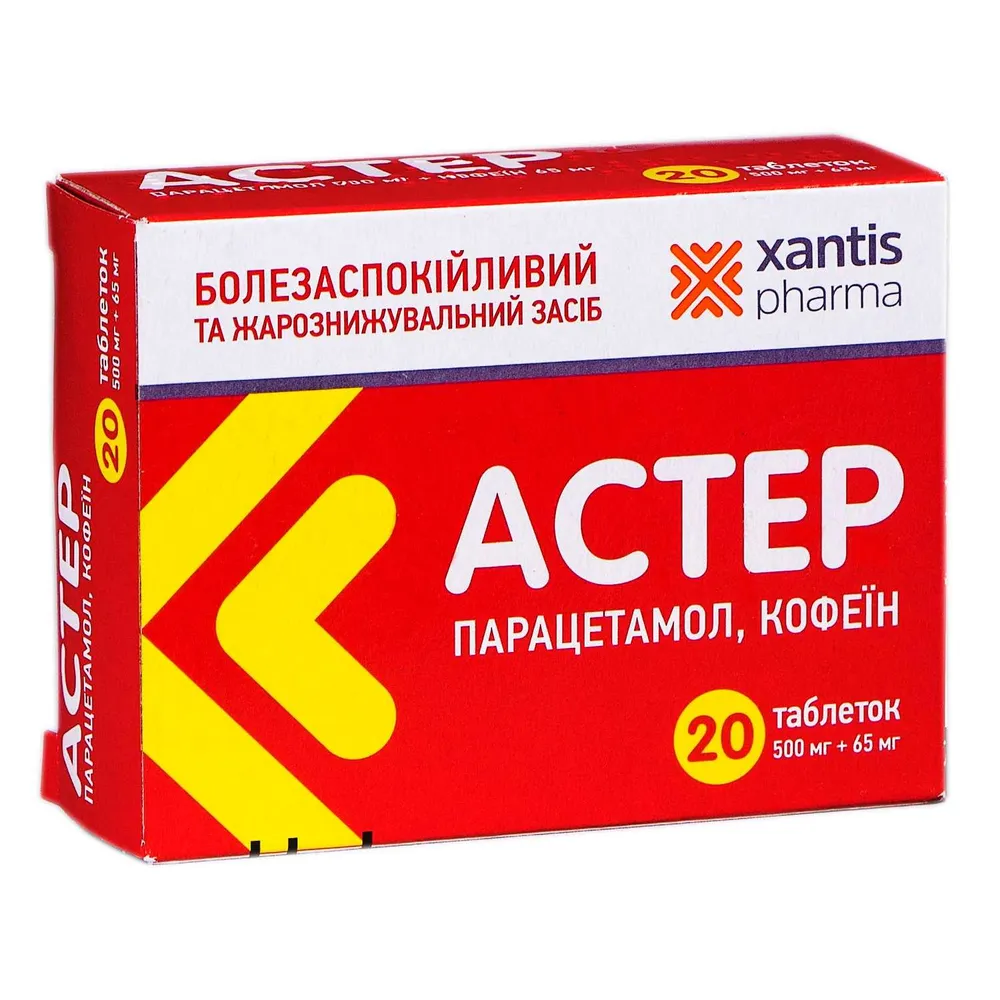
Instructions for Use
INSTRUCTIONS FOR MEDICAL USE OF THE MEDICINAL PRODUCT ASTER (ASTER)
Composition:
Active substances: paracetamol, caffeine;
1 tablet contains 500 mg of paracetamol and 65 mg of caffeine;
Excipients: pregelatinized starch, povidone, sodium croscarmellose, microcrystalline cellulose, colloidal anhydrous silicon dioxide, magnesium stearate.
Pharmaceutical form. Tablets.
Main physicochemical properties: capsule-shaped tablets, white or almost white.
Pharmacotherapeutic group. Analgesics and antipyretics. Paracetamol combinations without psychotropic agents. ATC code N02BE51.
Pharmacological properties.
Pharmacodynamics.
The medicinal product exerts a moderate analgesic and antipyretic effect.
Paracetamol is an analgesic-antipyretic. Its action is based on inhibition of prostaglandin synthesis in the central nervous system. Paracetamol is somewhat suitable for patients contraindicated to salicylates.
Caffeine acts as a stimulant, enhancing the analgesic effect of paracetamol.
Pharmacokinetics.
Paracetamol and caffeine are rapidly absorbed in the gastrointestinal tract and distributed into most body tissues. Plasma protein binding of paracetamol is minimal when administered at therapeutic doses.
Paracetamol and caffeine are metabolized primarily in the liver and excreted in urine as metabolites.
Clinical characteristics.
Indications.
For symptomatic treatment of fever and moderate to severe pain, such as headache, including migraine, toothache, neuralgia, rheumatic pain, menstrual pain; for relief of symptoms of cold and flu, sore throat.
Contraindications.
Hypersensitivity to paracetamol, caffeine, or any other component of the drug in medical history; severe impairment of liver and/or kidney function; congenital hyperbilirubinemia; glucose-6-phosphate dehydrogenase deficiency; alcoholism; blood disorders; marked anemia; leukopenia; conditions of increased excitation; sleep disorders; pronounced increase in blood pressure; organic cardiovascular diseases; glaucoma; epilepsy; hyperthyroidism; decompensated heart failure; severe atherosclerosis; severe hypertension; acute myocardial infarction; paroxysmal tachycardia; acute pancreatitis; severe forms of diabetes mellitus. Patient age over 60 years.
Do not use concomitantly with monoamine oxidase inhibitors (MAOIs) or within 2 weeks after discontinuation of MAOIs; contraindicated in patients taking tricyclic antidepressants or beta-blockers.
Interaction with other medicinal products and other forms of interactions.
Prolonged concomitant use of the drug with acetylsalicylic acid or other nonsteroidal anti-inflammatory agents may lead to kidney damage.
Concomitant use of paracetamol with hepatotoxic agents increases the risk of accumulation and overdose of paracetamol and enhances the toxic effects of the drugs on the liver. Concurrent use of high doses of paracetamol with isoniazid increases the risk of developing hepatotoxic syndrome.
Anticonvulsant drugs (including barbiturates, phenytoin, carbamazepine), which stimulate the activity of hepatic microsomal enzymes, may enhance the hepatotoxic effect of paracetamol due to increased conversion of the drug into hepatotoxic metabolites.
The absorption rate of paracetamol may increase when used concomitantly with metoclopramide and domperidone, and decrease when used concomitantly with cholestyramine. The anticoagulant effect of warfarin and other coumarins may be enhanced (with increased risk of bleeding) during long-term, regular daily use of paracetamol. Single doses do not show significant effects.
Barbiturates reduce the antipyretic effect of paracetamol.
Paracetamol reduces the efficacy of diuretics.
Caution should be exercised when using paracetamol concomitantly with flucloxacillin, as such concomitant use has been associated with metabolic acidosis with a high anion gap due to pyroglutamic acidosis, especially in patients with risk factors (see section "Special precautions").
Paracetamol increases plasma levels of acetylsalicylic acid and chloramphenicol.
Probenecid affects the elimination of paracetamol and its plasma concentration.
Inducers of hepatic microsomal enzymes (rifampicin and phenobarbital) increase the toxicity of paracetamol, as during its biotransformation a larger amount of toxic epoxide is formed. Reduced efficacy of lamotrigine together with increased hepatic clearance has been observed in patients receiving concomitant therapy with paracetamol.
When paracetamol and zidovudine are used concomitantly, increased susceptibility to neutropenia has been reported.
Concomitant use of caffeine with MAO inhibitors may cause a dangerous increase in blood pressure. Caffeine enhances the effect (improves bioavailability) of analgesic-antipyretic agents, potentiates the effects of xanthine derivatives, alpha- and beta-adrenomimetics, and psychostimulants.
Cimetidine, hormonal contraceptives, and isoniazid enhance the effect of caffeine.
Caffeine reduces the effect of opioid analgesics, anxiolytics, hypnotics, and sedatives; it is an antagonist of anesthetic agents and other drugs that depress the central nervous system; it acts as a competitive antagonist of adenosine and adenosine triphosphate preparations. Concomitant use of caffeine with ergotamine improves the absorption of ergotamine from the gastrointestinal tract; with thyroid-stimulating agents, the thyroid effect is enhanced. Caffeine may increase the excretion of lithium from the body. Therefore, concomitant use of the drug with lithium preparations is not recommended.
Do not use concomitantly with alcohol.
Special precautions for use.
The medicinal product contains paracetamol; therefore, it should not be taken together with other medications containing paracetamol, which are used, for example, to reduce fever, relieve pain, treat flu or cold symptoms, or insomnia, as this may lead to overdose. Paracetamol overdose can cause liver failure, which may necessitate liver transplantation or result in death.
Patients with liver or kidney disease should consult a physician before using this medication. Restrictions on the use of this drug in such patients are primarily due to the presence of paracetamol. In patients with liver disease, the risk of hepatotoxic effects of paracetamol is increased.
Alcoholic beverages must not be consumed during treatment. Paracetamol may be hepatotoxic at doses exceeding 6–8 g per day. However, adverse effects on the liver are possible even with low doses of the drug when used concomitantly with alcohol, enzyme inducers of the liver, or other substances toxic to the liver. Moreover, the harmful effect is higher in patients with non-cirrhotic alcoholic liver disease. Chronic alcohol abuse significantly increases the risk of paracetamol-induced hepatotoxicity. In patients with impaired liver function, as well as in those taking high doses of the drug over a prolonged period, regular monitoring of liver function tests is recommended.
Prothrombin time should be monitored in patients taking oral anticoagulants and higher doses of paracetamol.
The drug may affect laboratory test results for blood glucose and uric acid levels. Patients who take analgesics daily for mild forms of arthritis should consult a physician before using the medicinal product Aster.
Cases of liver function impairment / liver failure have been reported in patients with reduced glutathione levels, such as in severe malnutrition, anorexia, low body mass index, sepsis, or chronic alcoholism.
In patients with reduced glutathione levels, the use of paracetamol increases the risk of metabolic acidosis. Symptoms of metabolic acidosis include deep, rapid, or labored breathing, nausea, vomiting, and loss of appetite. Immediate medical attention should be sought if these symptoms occur.
If symptoms persist, consult a physician.
Cases of high anion gap metabolic acidosis (HAGMA) due to 5-oxoproline (pyroglutamic) acidosis have been reported in patients with severe underlying conditions such as renal failure and sepsis, or in patients with inadequate nutrition or other sources of glutathione deficiency (e.g., chronic alcoholism), who were treated with paracetamol at therapeutic doses for prolonged periods or in combination with flucloxacillin. If HAGMA due to pyroglutamic acidosis is suspected, immediate discontinuation of paracetamol is recommended, along with careful monitoring. Measurement of 5-oxoproline levels in urine may be useful in identifying pyroglutamic acidosis as the underlying cause of HAGMA in patients with multiple risk factors.
During treatment with this drug, excessive consumption of beverages containing caffeine (such as coffee, tea, and certain other drinks) is not recommended. This may lead to sleep disturbances, tremor, palpitations with discomfort behind the sternum, nervousness, and irritability.
Keep the medicinal product out of sight and reach of children.
Use during pregnancy or breastfeeding.
The use of this medicinal product during pregnancy is not recommended, as caffeine intake increases the risk of spontaneous abortion.
Paracetamol and caffeine pass into breast milk, but in clinically insignificant amounts when taken at recommended doses. The use of this drug during breastfeeding is not recommended. Caffeine may exert a stimulatory effect on infants during breastfeeding, although significant toxicity has not been observed.
Ability to affect reaction speed when driving vehicles or operating machinery.
The likelihood of effect is very low.
Method of Administration and Dosage.
The medicinal product is intended for oral administration.
Do not exceed the recommended dose.
The lowest effective dose required to achieve therapeutic effect should be used for the shortest possible duration.
The interval between doses should be at least 4 hours.
Adults (including elderly patients) and children aged 15 years and older: 1–2 tablets every 4–6 hours as needed (1 tablet for patients weighing 34–60 kg, 2 tablets for patients weighing more than 60 kg). Do not take more than 8 tablets (4000 mg paracetamol / 520 mg caffeine) within 24 hours.
For prolonged therapy (more than 10 days), the daily dose should not exceed 2.5 g of paracetamol.
The maximum single dose is 1 g of paracetamol (2 tablets).
Children aged 12–15 years: 1 tablet as needed, up to a maximum of 6 times daily, with a minimum interval of 4–6 hours.
Do not take more than 6 tablets (3000 mg paracetamol / 390 mg caffeine) within 24 hours. The maximum single dose is 1 tablet.
Children.
The medicinal product is indicated for children aged 12 years and older.
Overdose.
Paracetamol overdose can cause liver failure, which may necessitate liver transplantation or result in death. Acute pancreatitis has been reported, usually in conjunction with liver function abnormalities and hepatotoxicity. Liver damage may occur in adults who have ingested 6–8 g or more of paracetamol and in children who have ingested more than 150 mg/kg body weight. In patients with risk factors [long-term treatment with carbamazepine, phenobarbital, phenytoin, primidone, rifampicin, St. John’s wort, or other drugs that induce liver enzymes; chronic excessive alcohol consumption; glutathione depletion (malnutrition, cystic fibrosis, HIV infection, fasting, cachexia)], ingestion of 5 g or more of paracetamol may lead to liver injury.
In case of overdose, immediate medical attention is required. Treatment must be initiated promptly. The patient should be taken to a hospital even if early symptoms of overdose are absent.
Symptoms within the first 24 hours: pallor, nausea, vomiting, loss of appetite, and abdominal pain. Clinical signs of liver damage may become evident 24–48 hours after overdose and typically peak at 4–6 days. Glucose metabolism disturbances and metabolic acidosis may occur. In severe poisoning, liver failure may progress to encephalopathy, hemorrhage, hypoglycemia, coma, and may be fatal. Acute kidney injury with acute tubular necrosis may present with severe flank pain, hematuria, proteinuria, and may develop even in the absence of severe liver damage. Cardiac arrhythmias have also been reported.
With prolonged use of the drug in high doses, hematological disorders such as aplastic anemia, pancytopenia, agranulocytosis, neutropenia, leukopenia, and thrombocytopenia may develop. High-dose intake may also cause central nervous system (CNS) effects such as dizziness, psychomotor agitation, and disorientation; and urinary system effects such as nephrotoxicity (renal colic, interstitial nephritis, capillary necrosis).
Symptoms may be limited to nausea and vomiting or may not reflect the severity of overdose or risk of organ damage. Immediate medical assistance is essential in case of overdose, even if no symptoms are present. If overdose is confirmed or suspected, the patient must be taken immediately to the nearest medical facility capable of providing emergency medical care and appropriate treatment. This should be done even in the absence of symptoms due to the risk of delayed liver injury. Activated charcoal treatment should be considered if excessive paracetamol intake occurred within the past hour. Plasma paracetamol concentration should be measured at least 4 hours or later after ingestion (earlier concentrations are not reliable). Treatment with N-acetylcysteine can be administered within 24 hours after paracetamol ingestion, but maximum protective effect is achieved when administered within 8 hours after ingestion. The efficacy of the antidote decreases sharply after this time. If required, N-acetylcysteine should be administered intravenously according to the recommended dosage. In the absence of vomiting, oral methionine may be used as an alternative in remote areas outside hospital settings.
Caffeine overdose may cause epigastric pain, vomiting, diuresis, rapid breathing, tachycardia, or cardiac arrhythmia, and CNS effects (dizziness, insomnia, restlessness, nervous excitation, irritability, emotional lability, anxiety, agitation, tremor, seizures). Clinically significant symptoms of caffeine overdose may also be associated with severe paracetamol-induced liver injury, which may occur when the amount of the drug ingested causes caffeine overdose. There is no specific antidote, but supportive measures such as beta-adrenergic antagonists may help alleviate cardiotoxic effects. Gastric lavage is indicated; oxygen therapy is recommended, and diazepam should be administered in case of seizures. Treatment is symptomatic.
Adverse reactions
The information on the adverse reactions listed below was obtained from post-marketing surveillance. It is reported voluntarily and refers to a patient population of unknown size. Therefore, the frequency of these adverse reactions is unknown, but they are likely to be rare (< 1/10,000).
Adverse reactions associated with paracetamol
Blood and lymphatic system disorders: thrombocytopenia, neutropenia, leukopenia, agranulocytosis, pancytopenia.
Immune system disorders: anaphylaxis, skin hypersensitivity reactions including skin rash, angioedema, Stevens-Johnson syndrome, toxic epidermal necrolysis, and acute generalized exanthematous pustulosis.
Respiratory, thoracic and mediastinal disorders: bronchospasm in patients sensitive to acetylsalicylic acid and other nonsteroidal anti-inflammatory drugs.
Hepatobiliary disorders: liver function abnormalities, hepatic failure, liver necrosis, jaundice.
Metabolism and nutrition disorders: frequency unknown – metabolic acidosis with high anion gap.
Description of selected adverse reactions
Metabolic acidosis with high anion gap
Cases of metabolic acidosis with high anion gap, resulting from pyroglutamic acidosis, have been observed in patients with risk factors who were taking paracetamol (see section "Special precautions"). Pyroglutamic acidosis may occur due to low glutathione levels in these patients.
Adverse reactions associated with caffeine
Central nervous system disorders: nervousness, dizziness.
Cardiovascular disorders: tachycardia, edema.
Gastrointestinal disorders: gastrointestinal discomfort, abdominal pain, diarrhea, nausea, vomiting.
Psychiatric disorders: insomnia, restlessness, anxiety and irritability, nervousness.
Skin and subcutaneous tissue disorders: pruritus, rash, sweating, purpura, urticaria.
Additionally, adverse reactions observed after taking medicinal products containing similar active substances include: headache, multiform exudative erythema, heartburn, epigastric pain, hypoglycemia up to hypoglycemic coma, anemia, sulfhemoglobinemia and methemoglobinemia (cyanosis, dyspnea, chest pain), hemolytic anemia, bruising or bleeding, tachycardia, arrhythmia, increased blood pressure, increased liver enzyme activity, usually without development of jaundice.
Concomitant use of this medicinal product at recommended doses with caffeine-containing products may enhance caffeine-related adverse effects.
Reporting of suspected adverse reactions
Reporting suspected adverse reactions after a medicinal product is authorized is important. It allows continued monitoring of the benefit/risk balance of the medicinal product. Healthcare professionals and pharmacists, as well as patients or their legal representatives, are encouraged to report any suspected adverse reactions and lack of efficacy via the Automated Pharmacovigilance Information System at the following link: https://aisf.dec.gov.ua.
Shelf life. 5 years.
Storage conditions. No special storage conditions are required for this medicinal product.
Keep out of reach and sight of children.
Packaging. 10 tablets in a blister; 1, 2, or 3 blisters per cardboard pack; or 12 tablets in a blister, 1 or 2 blisters per cardboard pack.
Supply category. Over-the-counter.
Manufacturer. Saneca Pharmaceuticals AT.
Manufacturer's address and place of business.
Nitrianska 100, 920 27 Glogovec, Slovak Republic.
Marketing Authorization Holder. AT "Farmak".
Address of the Marketing Authorization Holder. 63 Kyrylivska St., Kyiv, 04080, Ukraine.
Frequently Asked Questions
What is Aster prescribed for?
The drug is used for the symptomatic treatment of moderate to severe pain (e.g., headache, migraine, toothache, menstrual pain, rheumatic pain, neuralgia) and fever. It also helps relieve symptoms of the common cold, flu, and sore throat.
How to take Aster correctly?
The drug is taken orally. Adults and children aged 15 and older: 1–2 tablets every 4–6 hours depending on body weight (1 tablet if weight is 34–60 kg; 2 tablets if weight is over 60 kg). Do not take more than 8 tablets per day. Children aged 12 to 15 years: 1 tablet, no more than 6 times a day, at intervals of 4–6 hours.
Who should not take this drug?
Contraindicated in cases of hypersensitivity to the components, severe liver or kidney impairment, alcoholism, blood disorders, epilepsy, glaucoma, cardiovascular diseases (e.g., myocardial infarction or severe hypertension), as well as in patients over 60 years of age. Not recommended during pregnancy and breastfeeding.
What are the possible side effects of Aster?
Possible reactions include the nervous system (nervousness, dizziness, insomnia, anxiety), cardiovascular system (rapid heartbeat, edema), gastrointestinal tract (nausea, abdominal pain, diarrhea), and skin (rash, itching). Serious liver damage and blood disorders are also possible.
Can Aster be combined with other medicines or alcohol?
Consumption of alcohol is strictly prohibited during treatment. The drug should not be taken with other products containing paracetamol to avoid overdose. Interactions with anticoagulants, antidepressants, beta-blockers, and other medicinal products are also possible; therefore, consult a doctor before combining them.
What to do in case of overdose?
In case of overdose, seek medical attention immediately, even if symptoms (nausea, abdominal pain) have not yet appeared, as liver damage may develop later.
Similar Medications
-
Aficycl
Form: tablets
Active substance Dosage paracetamol 250 mg propyphenazone 210 mg caffeine 50 mg Manufacturer: ALKALOID AD Skopje
-
Askopar
Form: tablets
Active substance Dosage acetylsalicylic acid 200 mg paracetamol 200 mg caffeine 40 mg Manufacturer: LLC "Corporation "Zdorovya"
-
Caffetin
Form: tablets
Active substance Dosage paracetamol 250 mg propyphenazone 210 mg caffeine 50 mg codeine 7.1 mg Manufacturer: ALKALOID AD Skopje
-
Citramon extra
Form: tablets
Active substance Dosage paracetamol 500 mg caffeine 50 mg Manufacturer: PJSC «Pharmaceutical Company «Darnitsa»
-
Coldivel
Form: tablets
Active substance Dosage paracetamol 500 mg caffeine 30 mg phenylephrine 10 mg pheniramine 2 mg Manufacturer: Precise Chemipharm Pvt. Ltd.
-
Combigrin dexta®
Form: tablets
Active substance Dosage paracetamol 500 mg caffeine 30 mg phenylephrine 10 mg chlorpheniramine 2 mg dextromethorphan 10 mg Manufacturer: Evertoxgen Life Sciences Limited
-
Combigrup®
Form: tablets
Active substance Dosage paracetamol 500 mg caffeine 30 mg phenylephrine 10 mg chlorpheniramine 2 mg Manufacturer: Evertoxgen Life Sciences Limited
-
Combispasm®
Form: tablets
Active substance Dosage paracetamol 500 mg dicyclomine 20 mg Manufacturer: Evertoxgen Life Sciences Limited (full production cycle)
-
Dolaren
Form: tablets
Active substance Dosage diclofenac 50 mg paracetamol 500 mg Manufacturer: Nabros Pharma Pvt. Ltd.
-
Flucold®
Form: tablets
Active substance Dosage paracetamol 500 mg caffeine 30 mg phenylpropanolamine 25 mg chlorpheniramine 2 mg Manufacturer: Nabros Pharma Pvt. Ltd.
-
Flucold®-n
Form: tablets
Active substance Dosage paracetamol 500 mg caffeine 30 mg phenylephrine 5 mg chlorpheniramine 2 mg Manufacturer: Nabros Pharma Pvt. Ltd.
-
Gripaut
Form: tablets
Active substance Dosage paracetamol 500 mg chlorpheniramine 2 mg phenylephrine 5 mg caffeine 15 mg Manufacturer: FDS Limited
This page has been machine-translated and may contain inaccuracies. The original data is available in the manufacturing country's language.
Last data check: July 21, 2026 · Data source: Державний реєстр лікарських засобів України