Combigrup®
Ukraine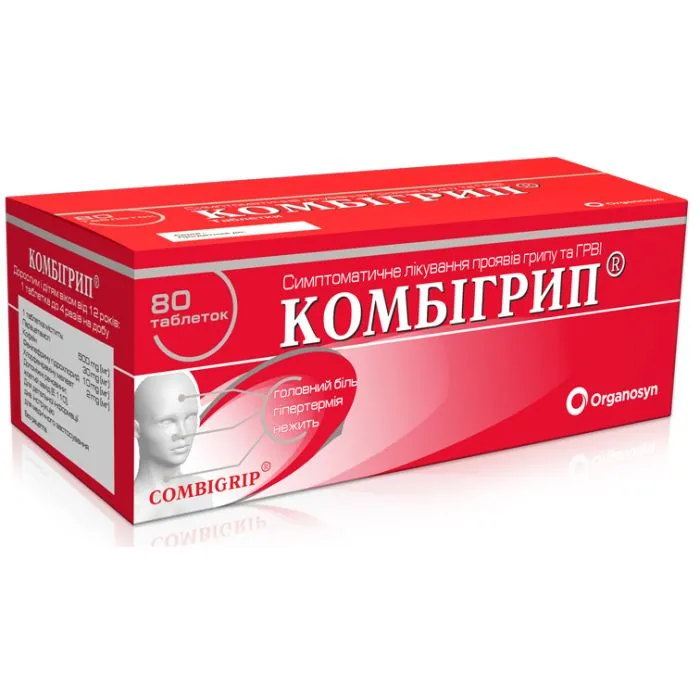
Table of Contents
INSTRUCTIONS FOR MEDICAL USE OF THE MEDICINAL PRODUCT COMBIGRIP®
Composition:
Active ingredients: paracetamol, caffeine, phenylephrine hydrochloride, chlorpheniramine maleate;
One tablet contains: paracetamol 500 mg, caffeine 30 mg, phenylephrine hydrochloride 10 mg, chlorpheniramine maleate 2 mg;
Excipients: maize starch, microcrystalline cellulose, calcium hydrogen phosphate, povidone, magnesium stearate, talc, sodium starch glycolate (type A), sunset yellow (E 110), sodium croscarmellose.
Pharmaceutical form. Tablets.
Main physicochemical properties: uncoated tablets, orange or light orange in colour with specks, elongated oval in shape, with a break line, and indentations "S" and "L" on the side with the break line.
Pharmacotherapeutic group.
Analgesics and antipyretics. Paracetamol combinations without psycholeptics.
ATC code N02B E51.
Pharmacological properties.
Pharmacodynamics.
The pharmacological effect is due to the action of all components of the medicinal product.
Paracetamol acts as an analgesic and antipyretic agent. The analgesic and antipyretic effects of paracetamol are associated with its influence on the thermoregulatory center in the hypothalamus and its ability to inhibit prostaglandin synthesis.
Phenylephrine hydrochloride acts as a vasoconstrictor, reducing nasal mucosa and paranasal sinus edema and diminishing exudative manifestations.
Chlorpheniramine maleate has antiallergic effects, relieving lacrimation and nasal itching.
Caffeine exerts a stimulant effect on the central nervous system, primarily on the cerebral cortex, respiratory and vasomotor centers, enhances mental and physical performance, reduces drowsiness, fatigue, and attenuates the effects of agents that depress the central nervous system.
Pharmacokinetics.
Paracetamol is rapidly absorbed from the gastrointestinal tract; maximum plasma concentration is reached within 1 hour. It is minimally bound to plasma proteins (28–50% in therapeutic doses). The elimination half-life from plasma is 1–4 hours. The duration of analgesic effect is 4–6 hours, antipyretic effect lasts 6–8 hours. The main elimination pathway is transformation in the liver with formation of paracetamol glucuronide and sulfate.
In adults, the primary metabolite of paracetamol (90%) is the conjugate with glucuronic acid, whereas in children it is the sulfate conjugate. It is excreted by the kidneys, mainly as conjugation products; less than 5% is excreted unchanged.
Caffeine and its water-soluble salts are rapidly absorbed in the intestine (including the large intestine). The elimination half-life from plasma is approximately 5–10 hours. The majority is demethylated and oxidized. About 10% is excreted unchanged by the kidneys.
Phenylephrine hydrochloride has low bioavailability due to uneven absorption and the effect of monoamine oxidase (MAO) in the gastrointestinal tract and liver during the "first-pass" metabolism. It is excreted by the kidneys in the form of metabolites. Acidification of urine accelerates its elimination from the body.
Chlorpheniramine maleate is slowly absorbed from the gastrointestinal tract; maximum plasma concentration is reached within 2.5–6 hours. Approximately 70% is bound to plasma proteins. Bioavailability ranges from 25% to 50% of the administered dose. Chlorpheniramine undergoes extensive first-pass metabolism in the liver and is significantly metabolized in the liver to form desmethyl- and didesmethylchlorpheniramine metabolites. Chlorpheniramine is distributed throughout the body and crosses the blood-brain barrier. The drug and its metabolites are primarily excreted unchanged in urine within 4–6 hours. Elimination depends on urine pH and the degree of ionization. In children, more rapid and extensive absorption, excretion, and shorter elimination half-life are observed.
Clinical characteristics.
Indications.
Treatment of symptoms of influenza and acute respiratory viral infections (hyperthermia, headache, rhinitis, cough) in adults and children aged 12 years and older.
Contraindications.
Hypersensitivity to any component of the medicinal product, other xanthine derivatives (theophylline, theobromine), opioids, antihistamines, sympathomimetic amines. Severe cardiovascular diseases, including uncompensated heart failure, conduction disorders, arrhythmias, pronounced atherosclerosis, tendency to vascular spasm, severe form of ischemic heart disease; severe arterial hypertension. Marked impairment of liver and kidney function, benign prostatic hyperplasia with difficult urination, bladder neck obstruction. Stenosing gastric and duodenal ulcers, pyloroduodenal obstruction; acute pancreatitis, epilepsy. Blood disorders (including severe anemia, leukopenia), hyperthyroidism, diabetes mellitus, bronchial asthma, closed-angle glaucoma, glucose-6-phosphate dehydrogenase deficiency, alcoholism, increased excitability, sleep disorders, congenital hyperbilirubinemia. Advanced age. Concurrent use with tricyclic antidepressants, ß-blockers; intake concomitantly with MAO inhibitors and within 2 weeks after discontinuation of their use. Contraindicated in patients at risk of developing respiratory failure.
Interaction with other medicinal products and other types of interactions.
Metoclopramide and domperidone increase, whereas cholestyramine decreases the absorption rate of paracetamol. When used concomitantly with paracetamol, the following interactions may occur: elimination of antibiotics from the body may be slowed; tetracycline increases the risk of anemia and methemoglobinemia caused by paracetamol; antacids and food reduce paracetamol absorption. With prolonged concomitant use, the anticoagulant effect of coumarins (e.g., warfarin) is enhanced. Barbiturates reduce the antipyretic activity of paracetamol. Anticonvulsant drugs (phenytoin, barbiturates, carbamazepine) that stimulate hepatic microsomal enzymes and isoniazid may enhance the hepatotoxicity of paracetamol. When paracetamol is used concomitantly with hepatotoxic agents, the toxic effect of the drugs on the liver is increased. Paracetamol reduces the effectiveness of diuretics.
Caution should be exercised when using paracetamol concomitantly with flucloxacillin, as such concomitant administration is associated with metabolic acidosis with a high anion gap due to pyroglutamic acidosis, especially in patients with risk factors (see section "Special precautions").
Phenylephrine hydrochloride, when used with indomethacin and bromocriptine, may cause severe arterial hypertension; with sympathomimetic amines, digoxin, and cardiac glycosides, increases the risk of arrhythmias and myocardial infarction.
It may reduce the effectiveness of ß-blockers and other antihypertensive agents (reserpine, methyldopa), increasing the risk of arterial hypertension and cardiovascular adverse reactions.
Alkaloids of Rauwolfia reduce the therapeutic effect of phenylephrine hydrochloride;
α-adrenergic blockers (phentolamine), phenothiazines, furosemide, and other diuretics counteract vasoconstriction.
Phenylephrine combined with other sympathomimetics increases the risk of cardiovascular adverse reactions.
Interaction of phenylephrine hydrochloride with MAO inhibitors causes a hypertensive effect; with tricyclic antidepressants (amitriptyline) – increases the risk of cardiovascular adverse effects.
Chlorpheniramine maleate enhances the anticholinergic effect of atropine, spasmolytics, agents that suppress the central nervous system (tranquilizers, barbiturates), anti-Parkinson drugs.
Do not use concomitantly with alcohol. Chlorpheniramine maleate, when used concomitantly with alcohol, potentiates the effect of each other.
Concomitant use with hypnotics, barbiturates, sedatives, neuroleptics, tranquilizers, anesthetics, narcotic analgesics, and alcohol enhances the effect of chlorpheniramine maleate.
Maprotiline (tetracyclic antidepressant) and other agents with anticholinergic action: the anticholinergic effect of these agents or antihistamines such as chlorpheniramine may be intensified.
Caffeine, when used concomitantly, enhances the effect of analgesic-antipyretics (improves bioavailability), xanthine derivatives, α- and β-adrenomimetics, psychostimulants, thyrotropic agents, ergotamine (absorption of ergotamine from the gastrointestinal tract is improved).
Cimetidine, hormonal contraceptives, isoniazid enhance the effect of caffeine.
Caffeine increases the likelihood of liver damage caused by hepatotoxic drugs.
Caffeine reduces the effect of opioid analgesics, anxiolytics, hypnotics and sedatives, acts as an antagonist of anesthetic agents and other drugs that suppress the central nervous system, and as a competitive antagonist of adenosine, adenosine triphosphate (ATP) preparations; reduces blood lithium concentration.
Ototoxic and photosensitizing agents, when used concomitantly, may potentiate adverse effects.
Special precautions for use.
Do not exceed recommended doses.
Do not use simultaneously with medications containing paracetamol or other cold remedies, sedatives, or hypnotics. The risk of overdose is increased in patients with alcoholic liver disease. Alcohol consumption should be avoided during treatment, as alcohol enhances the sedative effect of chlorpheniramine maleate and increases the hepatotoxicity of paracetamol.
If symptoms of illness do not resolve or if headache becomes persistent, consult a physician.
During treatment, avoid excessive intake of coffee, strong tea, other stimulant beverages, and medicinal products containing caffeine. This may cause sleep disturbances, tremor, tension, irritability, and palpitations.
Use with caution in patients with compensated heart failure, patients at risk of seizures, patients with chronic obstructive respiratory diseases, persistent or chronic cough due to smoking or pulmonary emphysema, or when cough is associated with excessive sputum production. Also use with caution in patients with congenital prolonged QT interval or in cases of prolonged use of drugs that may prolong the QT interval.
The drug may affect laboratory test results for blood glucose levels. Use of the drug may result in a positive analytical finding in doping control tests.
Before using the drug, consult a physician if the patient is taking warfarin or similar anticoagulant drugs, or has impaired kidney or liver function.
If arterial hypertension, epilepsy, prostate adenoma, cardiac arrhythmias, pheochromocytoma, or urinary disorders are present, the drug should be prescribed by a physician only after careful assessment of the risk-benefit ratio.
If the drug is used long-term as directed by a physician, monitoring of liver function and peripheral blood picture is necessary.
In patients with alcoholic liver disease, the risk of hepatotoxic effects of paracetamol is increased.
The drug may affect laboratory test results for blood glucose and uric acid levels.
Phenylephrine may cause increased pulse rate, dizziness, or strong palpitations; therefore, patients should be warned about these possible effects.
In patients with severe infections such as sepsis, associated with reduced glutathione levels, the use of paracetamol increases the risk of metabolic acidosis. Symptoms of metabolic acidosis include deep, rapid, or labored breathing, nausea, vomiting, and loss of appetite. If these symptoms occur, seek immediate medical attention.
Cases of high anion gap metabolic acidosis due to 5-oxoproline (pyroglutamic) acidosis have been reported in patients with severe conditions such as severe renal failure and sepsis, as well as in patients with malnutrition or other causes of glutathione deficiency (e.g., chronic alcoholism) who received paracetamol at therapeutic doses for prolonged periods or in combination with flucloxacillin. If high anion gap metabolic acidosis due to pyroglutamic acidosis is suspected, immediate discontinuation of paracetamol is recommended, along with close monitoring of the patient. Measurement of 5-oxoproline levels in urine may be helpful in identifying pyroglutamic acidosis as the underlying cause of high anion gap metabolic acidosis in patients with multiple risk factors.
In case of accidental overdose, immediate medical attention is required, even if the patient feels well.
The medicinal product contains the azo dye sunset yellow (E 110), which has allergenic potential. If the patient is allergic to azo dyes, the drug is contraindicated.
Use during pregnancy or breastfeeding.
Do not use during pregnancy or breastfeeding.
Ability to affect reaction speed when driving or operating machinery.
During treatment, avoid driving, operating machinery, and other potentially hazardous activities.
Dosage and Administration.
For adults and children aged 12 years and older: 1 tablet 4 times daily, no more frequently than every 4–6 hours. The medication should be taken at least 30 minutes after a meal. The duration of treatment without prior medical consultation should not exceed 3 days.
Children.
This medicinal product is indicated for children aged 12 years and older.
Overdose.
Symptoms of overdose.
In case of paracetamol overdose, symptoms such as pallor, nausea, vomiting, anorexia, and abdominal pain may develop within the first 24 hours. Increased activity of hepatic transaminases, elevated bilirubin concentration, and decreased prothrombin levels may occur. Additional symptoms may include excessive sweating, psychomotor excitation, or central nervous system (CNS) depression, dizziness, sleep disturbances, somnolence, cardiac arrhythmias, tachycardia, extrasystoles, tremor, hyperreflexia, seizures, and pancreatitis. In isolated cases, acute renal failure with acute tubular necrosis has been reported, manifesting as lumbar pain, hematuria, proteinuria, and nephrotoxicity (renal colic, interstitial nephritis, papillary necrosis).
Ingestion of 10 g or more of paracetamol by adults or more than 0.15 g/kg of paracetamol by children may lead to hepatocellular necrosis, resulting in encephalopathy with impaired consciousness, hepatic coma, and potentially fatal outcomes.
First clinical and biochemical signs of liver damage may appear 12–48 hours after overdose. Disturbances in glucose metabolism and metabolic acidosis may occur. With prolonged use of high doses, aplastic anemia, pancytopenia, agranulocytosis, neutropenia, leukopenia, and thrombocytopenia are possible.
In patients with risk factors (long-term treatment with carbamazepine, phenobarbital, phenytoin, primidone, rifampicin, St. John’s wort, or other drugs inducing liver enzymes; alcoholism; glutathione deficiency due to malnutrition, cystic fibrosis, HIV infection, fasting, or cachexia), ingestion of 5 g or more of paracetamol may cause liver damage.
Symptoms of overdose due to phenylephrine and chlorpheniramine maleate include headache, hyperhidrosis, somnolence, impaired consciousness, insomnia, behavioral changes, psychomotor excitation or CNS depression (restlessness, irritability, tremor, seizures, hyperreflexia), dizziness, nausea, vomiting, arterial hypertension, tachycardia, arrhythmias, and extrasystoles.
Overdose of chlorpheniramine maleate may present with symptoms ranging from CNS depression to excitation (restlessness and seizures). Anticholinergic (atropine-like) effects may occur, including mydriasis, photophobia, dryness of skin and mucous membranes, elevated body temperature, and intestinal atony. CNS depression may be accompanied by respiratory depression and cardiovascular disturbances (decreased pulse rate, reduced arterial pressure up to circulatory failure).
Overdose of caffeine may cause dehydration, hyperthermia, tinnitus, epigastric pain, increased diuresis, extrasystoles, tachycardia, rapid breathing, arrhythmia, and CNS effects (dizziness, insomnia, excitement, irritability, psychomotor agitation, affective disturbances, anxiety, tremor, vomiting, seizures, convulsions, agitation, restlessness, delirium, and increased tactile or pain sensitivity).
In severe poisoning with combination drugs (paracetamol, chlorpheniramine, phenylephrine, caffeine), liver dysfunction may progress to encephalopathy with impaired consciousness, hemorrhages, hypoglycemia, cerebral edema, and in some cases, death. Acute renal dysfunction with acute tubular necrosis may manifest as severe lumbar pain, hematuria, and proteinuria, and may develop even in the absence of severe liver damage. Cardiac arrhythmias and pancreatitis have also been reported.
Treatment of overdose.
In case of suspected overdose, the patient should be taken to a hospital immediately. Symptoms may be limited to nausea and vomiting and may not reflect the severity of overdose or risk of organ damage. Administration of activated charcoal should be considered if excessive paracetamol was ingested within the past hour. Gastric lavage should be performed within the first 6 hours after suspected overdose. In cases of severe hypertension, α- and β-adrenergic blockers may be indicated. Plasma paracetamol concentration should be measured 4 hours or later after ingestion (earlier measurements are unreliable). Intravenous acetylcysteine (antidote for paracetamol poisoning) should be administered within 24 hours after ingestion, with maximum efficacy achieved within the first 8 hours. Within the first 8 hours after overdose, if vomiting is absent, oral methionine may be used as an alternative in remote areas outside hospitals. The effectiveness of antidotes decreases significantly after this period. Intravenous acetylcysteine should be administered according to current guidelines if required.
Side effects.
Skin and subcutaneous tissue disorders: skin rashes, mucosal rash (usually generalized, erythematous rash), pruritus, urticaria, erythema multiforme, Stevens–Johnson syndrome, toxic epidermal necrolysis (Lyell’s syndrome).
Immune system disorders: hypersensitivity reactions, including anaphylaxis, anaphylactic shock, angioneurotic edema.
Central nervous system disorders: psychomotor agitation and disorientation, restlessness, behavioral changes, feelings of fear, anxiety, irritability, sleep disturbances, insomnia, somnolence, dizziness, confusion, hallucinations, depressive states, tremor, nervous agitation, sensations of tingling and heaviness in the limbs, tinnitus, headache; in isolated cases – coma, seizures, dyskinesia.
Respiratory system disorders: bronchospasm in patients sensitive to aspirin and other nonsteroidal anti-inflammatory drugs.
Eye disorders: visual disturbances and accommodation disorders, mydriasis, increased intraocular pressure, dry eyes.
Gastrointestinal disorders: decreased appetite, nausea, vomiting, dry mouth, hypersalivation, heartburn, epigastric discomfort and pain, exacerbation of peptic ulcer disease, flatulence, diarrhea, constipation.
Hepatobiliary disorders: liver function abnormalities, increased liver enzyme activity, usually without development of jaundice, hepatonecrosis (with high-dose use), hepatotoxicity.
Endocrine system disorders: hypoglycemia, up to hypoglycemic coma.
Blood and lymphatic system disorders: anemia, including hemolytic anemia, bruising or bleeding; sulfhemoglobinemia and methemoglobinemia (cyanosis, dyspnea, chest pain).
With prolonged use at high doses – aplastic anemia, pancytopenia, agranulocytosis, neutropenia, leukopenia, thrombocytopenia.
Renal and urinary system disorders: with high-dose use – nephrotoxicity (including papillary necrosis), disturbances in urination, urinary retention and difficulty in micturition, dysuria, interstitial nephritis, increased creatinine clearance, increased excretion of sodium and calcium, sterile pyuria, renal colic.
Cardiovascular disorders: arterial hypertension, tachycardia or reflex bradycardia, arrhythmia, dyspnea, chest pain.
Metabolism and nutrition disorders: metabolic acidosis with high anion gap (frequency unknown).
Other: general weakness, increased sweating, hypoglycemia which may progress to hypoglycemic coma, nasal congestion, possible false elevation of blood uric acid levels when measured by the Bittner method; slight increase in 5-hydroxyindoleacetic acid, vanillylmandelic acid, and catecholamines in urine.
Description of individual side effects
Metabolic acidosis with high anion gap. Cases of metabolic acidosis with high anion gap due to pyroglutamic acidosis have been observed in patients with risk factors taking paracetamol (see section "Special precautions"). Pyroglutamic acidosis may occur due to low glutathione levels in these patients.
Reporting of adverse reactions following marketing authorization is of great importance. It allows continuous monitoring of the benefit-risk balance of the medicinal product. Healthcare professionals and patients, as well as their legal representatives, are encouraged to report all suspected adverse reactions and lack of efficacy via the automated pharmacovigilance information system at: https://aisf.dec.gov.ua
Shelf life. 4 years.
Storage conditions. Store in the original packaging at a temperature not exceeding 25 °C.
Keep out of reach and sight of children.
Packaging.
8 tablets in a blister of aluminum foil and polyvinyl chloride film or 8 tablets in an aluminum foil blister; 1 blister per cardboard box.
8 tablets in a blister of aluminum foil and polyvinyl chloride film or 8 tablets in an aluminum foil blister; 1 blister per cardboard box; 10 boxes per outer cardboard carton.
4 tablets in an aluminum foil blister; 1 blister per paper envelope; 20 paper envelopes per outer cardboard carton.
4 tablets in an aluminum foil blister; 1 blister per cardboard box; 20 boxes per outer cardboard carton.
Supply classification. Over-the-counter.
Manufacturer.
Evertogen Life Sciences Limited.
Manufacturer's address and place of business:
Plot No: S-8, S-9, S-13/P & S-14/P TSIIC, Pharma SEZ, Green Industrial Park, Polepally (V), Jadcherla (M), Mahabubnagar, Telangana, IN-509 301, India