Combispasm®
Ukraine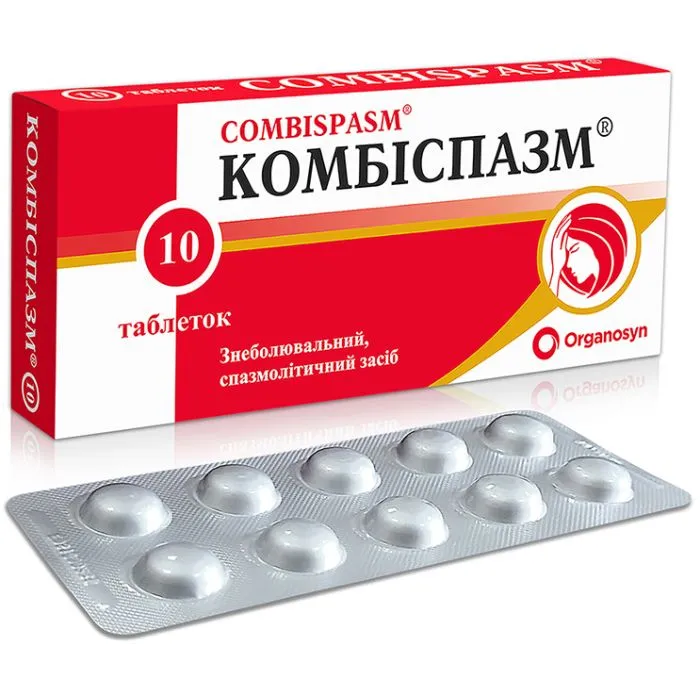
Table of Contents
INSTRUCTIONS for medical use of the medicinal product COMBISPASM®
Composition:
Active substances: paracetamol, dicycloverine hydrochloride;
One tablet contains paracetamol 500 mg, dicycloverine hydrochloride 20 mg;
Excipients: maize starch, microcrystalline cellulose, povidone, magnesium stearate, talc, colloidal anhydrous silicon dioxide, sodium starch glycolate (type A).
Pharmaceutical form. Tablets.
Main physico-chemical properties: uncoated tablets, white, round-shaped, with a score line.
Pharmacotherapeutic group.
Analgesics and antipyretics. Paracetamol, combinations without psychotropic agents.
ATC code N02B E51.
Pharmacological properties.
Pharmacodynamics.
A combination drug with analgesic and spasmolytic effects.
Paracetamol acts as an analgesic and antipyretic agent. The analgesic and antipyretic effects of paracetamol (a non-opioid, non-salicylate analgesic) are associated with the drug's effect on the thermoregulatory center in the hypothalamus and its ability to inhibit prostaglandin synthesis.
Hydrochloride dicyclomine – a tertiary amine. It has anticholinergic activity, reduces smooth muscle tone, relieves pain, and blocks antagonistic activity. Hydrochloride dicyclomine selectively paralyzes M-cholinoreactive structures by blocking the transmission of impulses from postganglionic cholinergic nerves to the effector organs they innervate. It causes relaxation of smooth muscles, producing a spasmolytic effect in spasms of the smooth muscles of the stomach, intestines, biliary tract, urogenital and vascular systems.
Pharmacokinetics.
Paracetamol is well absorbed in the gastrointestinal tract, with peak plasma concentrations reached within 30 minutes to 2 hours after administration.
After oral administration, dicyclomine is rapidly absorbed in the gastrointestinal tract and reaches maximum concentration within 60–90 minutes. The main excretion pathway is via urine.
Clinical characteristics.
Indications.
Pain syndromes with spastic component of various origins:
- headache;
- dental pain;
- muscle pain, neuralgia;
- rheumatic pain, radiculitis;
- renal colic;
- menstrual pain.
Contraindications.
Hypersensitivity to the components of the drug. Glaucoma, tachycardia, urinary tract obstruction, benign prostatic hyperplasia with tendency to urinary retention, severe renal and/or hepatic impairment, glucose-6-phosphate dehydrogenase deficiency, alcoholism, blood disorders, anemia (including hemolytic anemia), leukopenia. Dynamic intestinal obstruction, paralytic ileus, pyloric stenosis with gastrointestinal tract obstruction, severe ulcerative colitis, obstructive gastrointestinal and biliary tract diseases with impaired patency, peptic ulcer of the stomach or duodenum, reflux esophagitis; acute bleeding; congenital hyperbilirubinemias (Gilbert’s, Dubin–Johnson, and Rotor syndromes), myasthenia gravis, thyrotoxicosis, heart failure.
Interaction with other medicinal products and other types of interactions.
Features of drug interactions are determined by the properties of its components.
Paracetamol, included in the composition of the drug, reduces the efficacy of diuretics.
Concomitant use of paracetamol with anticonvulsants (barbiturates, phenytoin, carbamazepine), rifampicin, which stimulate hepatic microsomal enzyme activity, may enhance the hepatotoxic effect of paracetamol due to increased formation of hepatotoxic metabolites. Concomitant use of high doses of paracetamol with isoniazid increases the risk of hepatotoxic syndrome. Concomitant use of paracetamol with hepatotoxic agents increases the hepatotoxic effects of the drugs. Do not use concomitantly with alcohol.
Barbiturates reduce the antipyretic effect.
The absorption rate of paracetamol may increase when used concomitantly with metoclopramide and domperidone, and decrease when used concomitantly with cholestyramine.
The effect of paracetamol is enhanced when combined with codeine, ascorbic acid, scopolamine, chlorphenamine, propyphenazone, and caffeine.
Concomitant use of paracetamol with azithromycin may lead to the development of neutropenia.
The anticoagulant effect of warfarin and other coumarins is enhanced during prolonged regular use of paracetamol, also increasing the risk of bleeding. Occasional use has no significant effect.
Concomitant use of paracetamol with nonsteroidal anti-inflammatory drugs increases the risk of renal complications.
Caution should be exercised when using paracetamol concomitantly with flucloxacillin, as such concomitant administration is associated with metabolic acidosis with a high anion gap due to pyroglutamic acidosis, especially in patients with risk factors (see section "Special precautions").
Dicyclomine hydrochloride may enhance the effects of monoamine oxidase inhibitors (imipramine, amitriptyline), sedatives (sodium bromide, valerian tincture), and ethyl alcohol.
The effects of dicyclomine hydrochloride may be enhanced by medicinal products with anticholinergic activity, such as amantadine, antiarrhythmics (e.g., quinidine), neuroleptic antihistamines (phenothiazines), benzodiazepines, MAO inhibitors, narcotic analgesics (meperidine), nitrates and nitrites, sympathomimetics, tricyclic antidepressants.
Since antacids may reduce the absorption of dicyclomine hydrochloride, their concomitant use should be avoided.
Dicyclomine hydrochloride reduces the effect of metoclopramide when used concomitantly.
The inhibitory effect of dicyclomine on gastric hydrochloric acid secretion may neutralize medicinal products used for the treatment of achlorhydria and for studying gastric secretion.
Dicyclomine hydrochloride enhances the effects of digoxin and cholinoblocking agents. Concomitant use of dicyclomine with other cholinoblocking agents is not recommended.
Dicyclomine hydrochloride may affect the gastrointestinal absorption of various extended-release formulations, such as digoxin, potentially leading to increased urinary concentration of the latter.
The drug enhances the effects of salicylic acid, pyrazolone, codeine, caffeine. Potentiates the effects of spasmolytics.
Dicyclomine hydrochloride reduces the effects of anti-glaucoma agents, therefore the drug should be prescribed with caution in patients with elevated intraocular pressure and concomitant use of corticosteroids.
Special precautions for use.
Since the formulation contains paracetamol, monitoring of peripheral blood picture and liver function is required during treatment.
The product contains paracetamol; therefore, it should not be used concomitantly with other medicinal products containing paracetamol, such as those used for fever reduction, pain relief, flu and cold symptoms, or insomnia. Concurrent use with other paracetamol-containing products may lead to overdose. Paracetamol overdose can cause liver failure, which may necessitate liver transplantation or result in fatal outcome.
Do not exceed the recommended doses.
If symptoms of illness do not resolve, consult a physician.
Patients who chronically use analgesics for mild forms of arthritis should consult a physician before using this product.
Use of the product for more than 3 days requires mandatory medical supervision.
In case of development of persistent headache, medical advice should be sought.
It should be noted that patients with liver disease have an increased risk of hepatotoxic effects of paracetamol; the product may also affect laboratory test results for blood glucose and uric acid levels.
Use with caution in elderly patients. Dose adjustment is not required in elderly individuals. Exercise caution in patients with urinary hesitancy, benign prostatic hyperplasia without urinary retention, ulcerative colitis, or renal or hepatic disorders; medical advice should be sought before use.
Cases of impaired liver function / liver failure have been reported in patients with reduced glutathione levels, such as those with severe malnutrition, anorexia, low body mass index, or chronic alcoholism.
In patients with reduced glutathione levels, for example, in severe infections such as sepsis, the use of paracetamol increases the risk of metabolic acidosis. Symptoms of metabolic acidosis include deep, rapid, or labored breathing, nausea, vomiting, and loss of appetite. Immediate medical attention should be sought if these symptoms occur.
Cases of high anion gap metabolic acidosis due to 5-oxoprolinuria (pyroglutamic acidosis) have been reported in critically ill patients, such as those with severe renal failure or sepsis, or in patients with inadequate nutrition or other causes of glutathione deficiency (e.g., chronic alcoholism), who were treated with therapeutic doses of paracetamol over a prolonged period or in combination with flucloxacillin. If high anion gap metabolic acidosis due to pyroglutamic acidosis is suspected, immediate discontinuation of paracetamol is recommended, along with close monitoring of the patient. Measurement of 5-oxoproline levels in urine may be helpful in identifying pyroglutamic acidosis as the underlying cause of high anion gap metabolic acidosis in patients with multiple risk factors.
Dicycloverine hydrochloride may exacerbate gastroesophageal reflux.
The product should be prescribed with caution to patients with autonomic neuropathy, arterial hypertension, ischemic heart disease with tachyarrhythmias, tachycardia, bronchospasm predisposition, or increased individual sensitivity to nonsteroidal anti-inflammatory drugs.
It should be noted that patients receiving anticholinergic agents, including dicycloverine, may develop psychosis, confusion, disorientation, ataxia, coma, euphoria, weakness, insomnia, agitation, inappropriate emotional responses, or affective disturbances (symptoms usually subside within 12–24 hours after dose reduction).
Dicycloverine should be used with caution in patients with hiatal hernia associated with reflux esophagitis.
In high environmental temperatures, dicycloverine hydrochloride, by reducing sweating, may cause elevated body temperature and increase the risk of heat stroke. If such symptoms occur, the drug should be discontinued and medical advice sought.
Medical consultation is necessary before using the product if the patient is taking warfarin or similar anticoagulant agents.
Use during pregnancy or breastfeeding.
The product is not recommended for women during pregnancy or breastfeeding.
Effect on ability to drive or operate machinery.
Since dicycloverine hydrochloride may cause adverse reactions affecting the nervous system and visual organs, patients should refrain from driving or operating machinery while taking this product.
Method of Administration and Dosage
The medication should be taken orally, swallowed with a small amount of liquid (200 ml).
Adults: 1–2 tablets depending on the severity of pain, 1–4 times daily. For adult therapy, it is advisable to start with 4 tablets per day. The maximum dose may be increased up to 8 tablets per day, provided the drug is well tolerated and no adverse effects occur.
The duration of treatment should be determined individually, depending on the patient's condition and response. If therapeutic efficacy is not achieved within 2 weeks, or if signs of adverse effects occur at a dose lower than 4 tablets per day, the medication should be discontinued.
Children aged 7 to 13 years: ½ tablet 1–2 times daily; aged 13 to 15 years: 1 tablet 1–3 times daily; aged 15 years and older: 1–2 tablets depending on the severity of pain, 1–4 times daily.
Children
The medication is contraindicated in children under 7 years of age.
Overdose
Symptoms of overdose are due to the properties of individual components of Combispazm®.
Symptoms of Overdose
Paracetamol. Hepatic injury is possible in adults who have ingested 10 g or more of paracetamol, and in children who have ingested more than 150 mg/kg body weight. The risk of paracetamol overdose is higher in patients with non-cirrhotic alcoholic liver disease. In patients with risk factors (long-term treatment with carbamazepine, phenobarbital, phenytoin, primidone, rifampicin, St. John's wort, or other drugs inducing liver enzymes; regular excessive ethanol intake; glutathione depletion due to malnutrition, cystic fibrosis, HIV infection, starvation, or cachexia), ingestion of 5 g or more of paracetamol may cause severe liver damage.
Symptoms within the first 24 hours include pallor, anorexia, nausea, vomiting, diarrhea, epigastric discomfort (lasting up to 1 day), and abdominal pain. Liver damage may become apparent 12–48 hours after overdose. Glucose metabolism disturbances and metabolic acidosis may occur.
The following symptoms may be observed: increased activity of liver transaminases, lactate dehydrogenase, bilirubin levels, and decreased prothrombin levels (lasting 1–2 days); hepatotoxic effects characterized by general symptoms (pain, weakness, adynamia) and specific symptoms (hepatomegaly, jaundice, elevated liver enzyme activity).
In severe poisoning, liver failure may progress to hepatic encephalopathy (impaired thinking, depression of higher nervous activity, agitation, and stupor), disseminated intravascular coagulation (DIC), hypoglycemia, hemorrhage, arrhythmias, seizures, respiratory depression, coma, cerebral edema, hypocoagulation, collapse, and may lead to fatal outcome. Rarely, liver dysfunction may develop rapidly and may be complicated by renal failure.
Acute renal failure with acute tubular necrosis may manifest as severe lumbar pain, hematuria, proteinuria, and may develop even in the absence of severe liver injury. Cardiac arrhythmias and acute pancreatitis have been reported, usually associated with liver dysfunction and hepatotoxicity.
With prolonged use of the drug in high doses, blood-forming organs may develop aplastic anemia, pancytopenia, agranulocytosis, neutropenia, leukopenia, and thrombocytopenia.
When large doses are taken, the central nervous system may exhibit dizziness, psychomotor agitation, and disorientation; the urinary system may show nephrotoxicity (renal colic, interstitial nephritis, capillary necrosis).
Hyoscine N-butylbromide. Tachycardia, bradycardia, arrhythmia, changes in respiratory rate, dry mouth, agitation, drowsiness, loss of accommodation, photophobia, seizures, dryness of skin and mucous membranes, increased intraocular pressure, headache, dizziness, central nervous system excitation, urinary retention, psychomotor agitation, disorientation.
Overdose develops in two phases: initially, central nervous system excitation is observed, characterized by restlessness, hallucinations, persistent mydriasis, tachycardia, and arterial hypertension. This is then replaced by a phase of central nervous system depression progressing to coma.
In the first hours (up to 1 day), pallor of the skin, nausea, anorexia, vomiting, and abdominal pain may occur. During the second to third day, kidney and liver injury may develop, leading to liver failure (increased activity of liver transaminases, dehydrogenase, elevated bilirubin and prothrombin levels), as well as tachycardia, arrhythmias, changes in respiratory rate, and pancreatitis.
Treatment
In case of overdose, prompt medical attention is required. Treatment must be initiated immediately. The patient should be taken to a hospital immediately, even in the absence of early symptoms of overdose.
Symptoms may be limited to nausea and vomiting or may not reflect the severity of the overdose or risk of organ damage. Gastric lavage and administration of activated charcoal (if excessive paracetamol dose was taken within 1 hour) are indicated. Paracetamol concentration should be measured 4 hours or later after ingestion (earlier concentrations are unreliable). Treatment with N-acetylcysteine may be administered within 24 hours after drug intake, but the maximum protective effect is achieved when administered within 8 hours after intake under monitoring of respiratory and cardiovascular systems (adrenaline must not be used). The efficacy of the antidote decreases sharply after this period. In case of seizures, diazepam should be administered. If necessary, N-acetylcysteine should be administered intravenously according to current guidelines. In the absence of vomiting, methionine may be given orally as an appropriate alternative in remote areas outside the hospital.
There is no specific antidote for hyoscine N-butylbromide.
If necessary, symptomatic therapy and peritoneal dialysis should be performed.
General supportive measures should also be implemented.
Adverse Reactions
The drug is usually well tolerated. Adverse effects related to the active ingredients contained in the drug generally occur with prolonged use of the drug in high doses.
Paracetamol
Gastrointestinal disorders: nausea, vomiting, decreased appetite, constipation, diarrhea, or flatulence. With prolonged use of high doses – epigastric pain, metabolic acidosis with high anion gap (frequency unknown).
Hepatobiliary disorders: increased liver enzyme activity, usually without development of jaundice, liver function abnormalities, hepatonecrosis (dose-dependent effect), hepatotoxic effect.
Endocrine system disorders: hypoglycemia (up to hypoglycemic coma).
Blood and lymphatic system disorders: hemolytic anemia, thrombocytopenia; aplastic anemia, pancytopenia, sulfhemoglobinemia, and methemoglobinemia (cyanosis, dyspnea, chest pain), neutropenia, agranulocytosis, leukopenia, bruising, bleeding.
Renal and urinary disorders: difficulty urinating, renal colic, aseptic pyuria, interstitial glomerulonephritis; nephrotoxic effect, papillary necrosis.
Immune system disorders: hypersensitivity reactions, allergic reactions including skin rash, mucosal eruptions, pruritus, urticaria, hyperemia, bronchial obstruction, erythema multiforme (Stevens-Johnson syndrome), toxic epidermal necrolysis (Lyell's syndrome), anaphylaxis, generalized rash, angioneurotic edema, angioedema, erythematous rash.
Respiratory, thoracic and mediastinal disorders: bronchospasm in patients sensitive to aspirin and other nonsteroidal anti-inflammatory drugs.
Central nervous system and psychiatric disorders (usually observed with high-dose intake): dizziness, psychomotor agitation and disorientation, tinnitus, psychosis, coma.
Other: general weakness.
Description of specific adverse reactions.
Metabolic acidosis with high anion gap. Cases of metabolic acidosis with high anion gap due to pyroglutamic acidosis have been observed in patients with risk factors taking paracetamol (see section "Special precautions"). Pyroglutamic acidosis may occur due to low glutathione levels in these patients.
Hydrochloride of dicyclomine
Skin and subcutaneous tissue disorders: rash, pruritus, urticaria, severe allergic reactions or drug idiosyncrasy, including anaphylaxis.
Gastrointestinal disorders: dry mouth, thirst, taste disturbances, digestive disorders, anorexia, nausea, vomiting, flatulence, constipation, abdominal pain.
Eye disorders: blurred vision, diplopia, mydriasis, cycloplegia (paralysis of accommodation), increased intraocular pressure.
Central nervous system and psychiatric disorders: dizziness, fatigue, sensory disturbances, impaired gait stability, dyskinesia, tingling sensations, numbness in extremities, tinnitus, headache, dysphasia, dysarthria, ataxia, euphoria, inappropriate emotional responses (symptoms decrease within 12–24 hours after dose reduction), insomnia, somnolence, hallucinations, general weakness, mood changes, nervousness, disorientation, transient memory loss, psychosis, confusion and/or agitation, lethargy, loss of consciousness, coma.
Cardiac disorders: tachycardia, arrhythmia, rapid heartbeat.
Renal and urinary disorders: urinary dysfunction, urinary incontinence, urinary retention.
Musculoskeletal and connective tissue disorders: muscle weakness.
Respiratory, thoracic and mediastinal disorders: dyspnea, apnea, asphyxia, nasal congestion, sneezing, pharyngeal hyperemia.
Endocrine system disorders: suppression of lactation, impotence.
Other: sensation of flushing, decreased sweating.
Reporting of adverse reactions after drug registration is of great importance. It allows continuous monitoring of the benefit-risk balance of the drug. Healthcare and pharmacy professionals, as well as patients or their legal representatives, should report all suspected adverse reactions and lack of drug efficacy through the automated pharmacovigilance information system at: https://aisf.dec.gov.ua
Shelf life: 3 years.
Storage conditions:
Store in original packaging at a temperature not exceeding 25 °C.
Keep out of reach of children.
Packaging:
10 tablets in a blister pack made of aluminum foil and polyvinyl chloride film; 1 blister in a cardboard box.
10 tablets in an aluminum blister; 1 blister in a cardboard box.
10 tablets in an aluminum blister; 2 blisters in a cardboard box.
Dispensing category:
Without prescription – No. 10 and No. 20.
Manufacturer:
Evertogen Life Sciences Limited.
Marifarm d.o.o., Slovenia
Manufacturer's address and place of business:
Plot No: S-8, S-9, S-13/P & S-14/P T.I. I.I.C., Pharma SEZ, Green Industrial Park, Polepally (V), Yedcherla (M), Mahbubnagar, Telangana, IN-509 301, India
Minarikova cesta 8, Maribor, 2000, Slovenia