Gripaut
Ukraine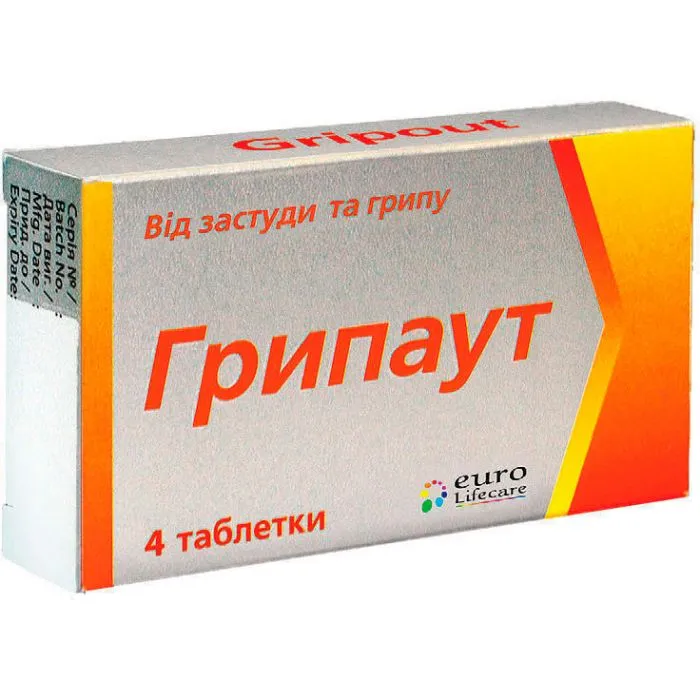
Table of Contents
INSTRUCTION FOR MEDICAL USE OF THE MEDICINAL PRODUCT GRIPOUT
Composition:
Active ingredients: 1 tablet contains paracetamol 500 mg, chlorpheniramine maleate 2 mg, phenylephrine hydrochloride 5 mg, anhydrous caffeine 15 mg;
Excipients: maize starch, lactose monohydrate, methylparaben (E 218), propylparaben (E 216), sodium starch glycolate (type A), magnesium stearate, talc, tartrazine (E 102), povidone K-30.
Medicinal form. Tablets.
Main physicochemical properties: round, flat, yellow tablets; speckles are allowed, with a break line on one side.
Pharmacotherapeutic group. Analgesics and antipyretics. Anilides. Paracetamol, combinations without psychotropic agents. ATC code N02BE51.
Pharmacological Properties
Pharmacodynamics
A combination drug. Paracetamol inhibits cyclooxygenase, thereby blocking the synthesis of prostaglandins, and exerts antipyretic and analgesic effects. Chlorpheniramine maleate blocks H1-histamine receptors, demonstrating antiallergic and anti-edematous effects. It reduces vascular permeability of the mucous membranes of the upper respiratory tract, alleviates nasal mucosal edema and hyperemia, suppresses symptoms of allergic rhinitis, and improves breathing. Phenylephrine hydrochloride is a stimulator predominantly of alpha-1-adrenergic receptors. It produces vasoconstrictive effects, primarily on blood vessels of the upper respiratory tract, reduces excessive mucus secretion, and thus helps relieve nasal congestion. Caffeine exerts a stimulant effect on the central nervous system, enhances the analgesic effect of paracetamol, reduces fatigue and drowsiness, and increases physical and mental performance.
Pharmacokinetics
Paracetamol is rapidly and almost completely absorbed from the gastrointestinal tract, primarily in the small intestine. After a single 500 mg dose, maximum plasma concentration is reached within 10–60 minutes. Paracetamol is rapidly and evenly distributed in most body tissues. Approximately 25% of paracetamol in blood is bound to plasma proteins. Paracetamol is metabolized via the hepatic microsomal enzyme system. About 80–85% of paracetamol in the body undergoes conjugation, mainly with glucuronic acid and to a lesser extent with sulfuric acid. The elimination half-life is 1–3 hours. Paracetamol is excreted in urine mainly as paracetamol-glucuronide, with small amounts of paracetamol-sulfate and mercapturate, as well as unchanged drug.
Phenylephrine is unevenly absorbed from the gastrointestinal tract and is readily metabolized. After oral administration, its effects appear within 15–20 minutes and last for 2–4 hours. Phenylephrine bioavailability is low. It undergoes biotransformation in the intestinal wall during absorption and in the liver. Less than 16% of the administered dose is excreted unchanged, along with metabolites, almost entirely in the urine.
Chlorpheniramine is absorbed relatively slowly from the gastrointestinal tract, with peak plasma concentrations reached 2.5–6 hours after oral administration. Its bioavailability is low (25–50%). Chlorpheniramine undergoes extensive first-pass metabolism. Approximately 70% of chlorpheniramine in systemic circulation is bound to plasma proteins. The elimination half-life ranges from 2 to 43 hours. Chlorpheniramine is widely distributed throughout the body and penetrates into the central nervous system. It is actively metabolized, with metabolites including desmethyl- and didesmethylchlorpheniramine. Unchanged chlorpheniramine and its metabolites are primarily excreted in urine. Duration of action is 4–6 hours. In children, faster and more pronounced absorption, faster clearance, and a shorter elimination half-life have been observed.
Caffeine is well absorbed after oral administration. Maximum plasma concentration is achieved within 15–45 minutes. It has been demonstrated that caffeine enhances the absorption of other components of the drug. Caffeine is rapidly distributed in body tissues and readily crosses the placental and blood-brain barriers. Approximately 17–36% of the dose is bound to plasma proteins. Caffeine metabolism involves the hepatic cytochrome P450 (CYP) isoenzyme 1A2. In adults, the drug is rapidly metabolized in the liver to 1-methyluric acid and 7-methylxanthine. The elimination half-life is approximately 3 hours. Caffeine and its metabolites are excreted by the kidneys; about 1% of the caffeine dose is excreted unchanged.
Clinical characteristics.
Indications.
Symptomatic treatment of influenza and cold symptoms (fever, headache, rhinitis, cough) in adults and children aged 12 years and older.
Contraindications.
Hypersensitivity to paracetamol, caffeine, other xanthine derivatives (theophylline, theobromine), or to any other components of the medicinal product, particularly parabens (methyl- and propylparaben). Severe impairment of liver and kidney function (including hepatic and renal insufficiency); congenital hyperbilirubinemias (including Gilbert’s, Dubin-Johnson, and Rotor syndromes); glucose-6-phosphate dehydrogenase deficiency, rare hereditary forms of fructose intolerance, glucose-galactose malabsorption, or sucrose-isomaltase deficiency.
Alcoholism. Blood dyscrasias, blood disorders, severe anemia, leukopenia, thrombosis, thrombophlebitis. States of increased excitability, sleep disturbances.
Severe cardiovascular diseases. Severe arterial hypertension, marked increase in blood pressure, organic cardiovascular diseases (including atherosclerosis); decompensated heart failure; cardiac conduction disorders; paroxysmal tachycardia, arrhythmia; predisposition to vascular spasm; ischemic heart disease, acute myocardial infarction.
Glaucoma, including closed-angle glaucoma. Acute pancreatitis. Benign prostatic hyperplasia. Pheochromocytoma. Bladder neck obstruction.
Diabetes mellitus. Epilepsy. Hyperthyroidism.
Pyloroduodenal obstruction, gastric and duodenal ulcer in the stage of exacerbation, stenosing gastric ulcer, stenosing duodenal ulcer, acute pancreatitis and hepatitis. Bronchial asthma, chronic obstructive pulmonary disease. Risk of respiratory failure.
Age over 60 years. Pediatric age under 12 years. Pregnancy and breastfeeding.
Do not use concomitantly with monoamine oxidase inhibitors (MAOIs) and within 2 weeks after discontinuation of MAOIs.
Contraindicated in patients taking tricyclic antidepressants or beta-blockers.
Do not use in patients with phenylketonuria. Not recommended in patients with increased blood coagulability or predisposition to thrombosis.
Do not use concomitantly with medicinal products that suppress or enhance appetite, and amphetamine-like psychostimulants.
Interaction with other medicinal products and other forms of interaction.
Concomitant use of the medicinal product Gripaut, tablets, with monoamine oxidase inhibitors (MAOIs), tricyclic antidepressants, or methyldopa is contraindicated due to the possible development of severe arterial hypertension, tachycardia, hyperthermia, and dysfunction of vital organs, which may lead to fatal outcomes.
When used concomitantly with paracetamol, the following interactions may occur: delayed elimination of antibiotics from the body; tetracycline increases the risk of anemia and methemoglobinemia caused by paracetamol; antacids and food reduce paracetamol absorption. Metoclopramide and domperidone accelerate paracetamol absorption, while cholestyramine reduces its absorption rate. Probenecid affects paracetamol plasma concentration and its excretion. Concomitant use of barbiturates, tricyclic antidepressants, and alcohol consumption is contraindicated.
Barbiturates reduce the antipyretic effect of paracetamol. Concomitant use of paracetamol with hepatotoxic agents increases the toxic effect of the drug on the liver. Simultaneous use of high-dose paracetamol with isoniazid increases the risk of hepatotoxic syndrome. Concomitant use with vasoconstrictive agents is not recommended.
The drug enhances the effect of indirect anticoagulants (warfarin, coumarin derivatives), increasing the risk of bleeding during prolonged, regular daily use of paracetamol. These interactions are not clinically significant when used short-term according to the recommended regimen.
Anticonvulsant drugs (including phenytoin, barbiturates, carbamazepine), which stimulate the activity of hepatic microsomal enzymes, may enhance the hepatotoxic effect of paracetamol due to increased conversion of the drug into hepatotoxic metabolites. Concomitant use of paracetamol with chloramphenicol enhances the hepatotoxicity of chloramphenicol.
Long-term use of anticonvulsants may reduce the efficacy of paracetamol.
Concomitant use of paracetamol with zidovudine may cause neutropenia.
Paracetamol reduces the effectiveness of diuretics.
When paracetamol is used concomitantly with flucloxacillin, caution is required, as co-administration has been associated with metabolic acidosis with an increased anion gap as a result of pyroglutamic acidosis, especially in patients with risk factors (see section "Special precautions").
Phenylephrine hydrochloride interaction with MAO inhibitors causes a hypertensive effect; with tricyclic antidepressants (amitriptyline) – increases the risk of cardiovascular adverse effects; with sympathomimetic amines, digoxin, and cardiac glycosides – increases the risk of arrhythmias and myocardial infarction. Phenylephrine with other sympathomimetics increases the risk of adverse cardiovascular reactions, enhances arrhythmogenicity, may reduce the effectiveness of β-blockers and other antihypertensive drugs (reserpine, methyldopa), increasing the risk of arterial hypertension and adverse cardiovascular reactions. Use of phenylephrine hydrochloride with indomethacin and bromocriptine may cause severe arterial hypertension. Alkaloids of Rauvolfia reduce the therapeutic effect of phenylephrine hydrochloride. α-adrenergic blockers (phentolamine), phenothiazines, furosemide, and other diuretics counteract vasoconstriction. Concomitant use of phenylephrine hydrochloride with atropine may result in tachycardia. The drug reduces the hypotensive effect of guanethidine, which, in turn, increases the alpha-adrenergic stimulating activity of phenylephrine.
Antidepressants, antiparkinsonian and antipsychotic drugs, phenothiazine derivatives increase the risk of urinary retention, dry mouth, constipation. Concomitant use with ergot alkaloids (ergotamine, methysergide) increases the risk of ergotism; with haloperidol – increases the risk of ventricular arrhythmia.
The sedative effect of chlorpheniramine maleate may be significantly enhanced by concomitant use with hypnotics, barbiturates, sedatives, neuroleptics, tranquilizers, anesthetics, narcotic analgesics, and ethanol-containing products. Like other antihistamines, chlorpheniramine maleate enhances the sedative effect caused by central nervous system (CNS) depressants when used concomitantly, and enhances the anticholinergic effects of atropine, spasmolytics, tricyclic antidepressants, antiparkinsonian drugs, and agents that depress the central nervous system (tranquilizers, barbiturates). Tricyclic antidepressants enhance the sympathomimetic effect of the drug. Chlorpheniramine, when used concomitantly with MAO inhibitors, may lead to hypertensive crisis, nervous excitation, hyperpyrexia. Use of the drug is not recommended in patients taking monoamine oxidase inhibitors or who have discontinued such therapy less than two weeks prior.
When meprobamate (a tetracyclic antidepressant) or other anticholinergic drugs are used, the anticholinergic effect of these drugs or antihistamines such as chlorpheniramine may be intensified.
Chlorpheniramine maleate inhibits phenytoin metabolism and increases its toxicity.
Glucocorticoids, when used concomitantly with chlorpheniramine maleate, increase the risk of glaucoma development.
Incompatibility of chlorpheniramine maleate with calcium chloride, kanamycin sulfate, noradrenaline, and phenobarbital has been reported.
Do not use concomitantly with alcohol. Chlorpheniramine maleate and alcohol potentiate each other's effects.
Caffeine enhances the effect (improves bioavailability) of analgesic-antipyretics, potentiates the effects of xanthine derivatives, α- and β-adrenomimetics, and psychostimulants.
Caffeine increases the likelihood of liver damage by hepatotoxic drugs.
Cimetidine, hormonal contraceptives, and isoniazid enhance the effect of caffeine. Caffeine reduces the effect of opioid analgesics, anxiolytics, hypnotics, and sedatives; it is an antagonist of anesthetic agents and other drugs that depress the CNS, and a competitive antagonist of adenosine and ATP preparations. When caffeine is used concomitantly with ergotamine, absorption of ergotamine in the gastrointestinal tract is improved; with thyrotropic agents – the thyroid effect is enhanced. Caffeine reduces lithium concentration in blood.
Special precautions for use
Do not exceed the recommended doses.
Use with caution in individuals predisposed to increased arterial pressure.
Patients with impaired renal or hepatic function should consult a physician before using the medication.
Patients with urinary retention or Raynaud's disease (which may manifest as pain in fingers and toes in response to cold or stress) should consult a physician prior to using the medication.
Avoid concomitant use with other drugs intended for symptomatic treatment of cold and flu, medications containing paracetamol, sympathomimetics (phenylephrine, pseudoephedrine), barbiturates, or tranquilizers, as their combined use with paracetamol may lead to liver function disorders.
If symptoms do not resolve, consult a physician. If headache becomes persistent, consult a physician. This medicinal product is not recommended for concomitant use with sedatives or hypnotics.
If the drug is used long-term as directed by a physician, monitoring of liver function and peripheral blood picture is necessary. Prolonged use at high doses may lead to aplastic anemia, pancytopenia, agranulocytosis, neutropenia, leukopenia, or thrombocytopenia.
The risk of overdose is increased in patients with alcoholic liver disease. This medicinal product is not recommended for concomitant use with alcoholic beverages.
Note that in patients with alcoholic non-cirrhotic liver disease, the risk of hepatotoxic effects of paracetamol is increased.
When using the medication, avoid excessive consumption of coffee, strong tea, other stimulant beverages, and medicinal products containing caffeine. This may cause sleep disturbances, tremor, tension, irritability, and palpitations.
Patients who take analgesics daily for mild forms of arthritis should consult a physician.
Cases of high anion gap metabolic acidosis (HAGMA) due to 5-oxoproline (pyroglutamic) acidosis have been reported in critically ill patients, such as those with severe renal impairment or sepsis, or in patients with malnutrition or other sources of glutathione deficiency (e.g., chronic alcoholism), who received prolonged treatment with therapeutic doses of paracetamol or a combination of paracetamol and flucloxacillin.
In suspected cases of HAGMA due to pyroglutamic acidosis, immediate discontinuation of paracetamol and close patient monitoring are recommended. Measurement of 5-oxoproline levels in urine may be useful in identifying pyroglutamic acidosis as the underlying cause of HAGMA in patients with multiple risk factors.
In patients with severe infections such as sepsis, which are associated with reduced glutathione levels, the use of paracetamol increases the risk of metabolic acidosis. Symptoms of metabolic acidosis include deep, rapid, or labored breathing, nausea, vomiting, and loss of appetite. Immediate medical attention should be sought if these symptoms occur.
Use with caution in patients with compensated heart failure, patients at risk of seizures, patients with obstructive respiratory diseases, persistent or chronic cough due to smoking or emphysema, especially when cough is associated with excessive sputum production, and in patients with congenital prolonged QT interval or those receiving long-term treatment with drugs that may prolong the QT interval.
Phenylephrine, an ingredient of the medication, may provoke angina attacks.
The medication may affect laboratory test results for blood glucose and uric acid levels. Use of the medication may result in a positive analytical finding in doping controls. Patients receiving warfarin or similar anticoagulant agents, as well as those with impaired renal or hepatic function, should consult a physician before using the medication.
The medication contains lactose and therefore should not be administered to patients with hereditary galactose intolerance, Lapp lactase deficiency, or glucose-galactose malabsorption syndrome.
Keep the medication out of sight and reach of children.
The excipients methylparaben (E 218) and propylparaben (E 216) may cause allergic reactions (possibly delayed), and in rare cases, bronchospasm.
If signs of illness do not begin to improve within 3 days of treatment with the medication, or if the condition worsens, medical advice should be sought.
Use during pregnancy and breastfeeding
The medicinal product is contraindicated during pregnancy. Breastfeeding should be discontinued during treatment with this medication. Data on the effect of the medication on fertility are lacking.
Ability to affect reaction speed when driving or operating machinery
Given the possible reduction in psychomotor performance and the occurrence of adverse reactions affecting the nervous system and vision, driving vehicles or operating machinery is not recommended during treatment.
Dosage and Administration.
For adults and children aged 12 years and older, the recommended dose is 1 tablet 3–4 times daily. The interval between doses should be at least 4 hours. The medication should be taken at least 30 minutes after food intake.
The maximum daily dose is 4 tablets.
The duration of treatment should be determined by a physician.
Maximum duration of use without medical consultation is 3 days.
Children.
Contraindicated in children under 12 years of age.
Overdose.
Overdose of paracetamol may cause liver failure. Liver damage is possible in adults who have ingested more than 10 g, and in children who have ingested more than 150 mg/kg body weight, potentially leading to hepatocellular necrosis and the development of encephalopathy with impaired consciousness, hemorrhages, hypoglycemia, hypoglycemic coma, hepatic coma, cerebral edema, and in some cases, fatal outcome.
Symptoms of paracetamol overdose within the first 24 hours include increased sweating, psychomotor agitation or central nervous system depression, headache, pallor, dizziness, sleep disturbances, drowsiness, insomnia, general weakness, cardiac rhythm disturbances, tachycardia, reflex bradycardia, extrasystoles, tremor, hyperreflexia, nausea, vomiting, irritability, restlessness, anorexia, and abdominal pain. Increased activity of liver transaminases, elevated bilirubin concentration, and decreased prothrombin levels may occur. In severe cases, impaired consciousness, disorientation, hallucinations, seizures, and arrhythmias may develop. Signs of liver damage may appear 12–72 hours after overdose. Glucose metabolism disturbances and metabolic acidosis may occur. In acute overdose, liver injury may lead to toxic encephalopathy with impaired consciousness, coma, and fatal outcome. Cases of pancreatitis and arrhythmias have been reported.
Acute kidney dysfunction with acute tubular necrosis may present as severe lumbar pain, hematuria, proteinuria, nephrotoxicity (renal colic, interstitial nephritis, papillary necrosis, acute renal failure), and may develop even in the absence of severe liver damage.
With prolonged use at high doses, aplastic anemia, pancytopenia, agranulocytosis, neutropenia, leukopenia, and thrombocytopenia are possible.
It is believed that the additional amount of toxic metabolites formed during overdose binds irreversibly to liver tissues.
Ingestion of 5 g or more of paracetamol may lead to liver damage in patients with risk factors: long-term treatment with carbamazepine, phenobarbital, phenytoin, primidone, rifampicin, St. John's wort, or other drugs inducing liver enzymes; regular excessive ethanol consumption; glutathione depletion (digestive disorders, cystic fibrosis, HIV infection, fasting, cachexia).
Overdose due to phenylephrine may cause increased sweating, psychomotor agitation or central nervous system depression, headache, dizziness, insomnia, drowsiness, restlessness, impaired consciousness, behavioral changes, delirium, cardiac rhythm disturbances, tachycardia, extrasystoles, arrhythmia, tremor, hyperreflexia, seizures, nausea, vomiting, irritability, restlessness, and increased arterial blood pressure.
In overdose of chlorpheniramine maleate, the condition may range from depression (sedation, apnea, collapse) to excitation (insomnia, hallucinations, restlessness, tremor, and seizures). Additional symptoms include dizziness, tinnitus, ataxia, decreased visual acuity, and arterial hypotension. Anticholinergic-like symptoms may occur, including mydriasis, photophobia, dryness of skin and mucous membranes, elevated body temperature, and intestinal atony. Central nervous system depression may be accompanied by respiratory depression and cardiovascular disturbances (decreased pulse rate, reduced arterial pressure up to circulatory failure).
Overdose of caffeine is associated with the following symptoms: dehydration, hyperthermia, tinnitus, epigastric pain, increased frequency of diuresis, extrasystoles, tachycardia, rapid breathing, arrhythmia, and effects on the central nervous system (dizziness, insomnia, excitement, irritability, psychomotor agitation, affective state, anxiety, tremor, vomiting, seizures, convulsions, agitation, apprehension, delirium, increased tactile or pain sensitivity).
Treatment of overdose: in case of suspected overdose, the patient should be taken to a hospital immediately. Intravenous acetylcysteine should be administered within 24 hours after paracetamol ingestion, with maximum efficacy achieved when administered within the first 8 hours. Methionine may be used orally within the first 8 hours after overdose.
Side effects.
Skin and subcutaneous tissue disorders: skin and mucous membrane rashes (usually erythematous), pruritus, urticaria, purpura, allergic and angioneurotic edema, acute generalized exanthematous pustulosis, local drug dermatitis, erythroderma, erythema multiforme, exudative erythema multiforme, Stevens-Johnson syndrome, toxic epidermal necrolysis (Lyell's syndrome), hemorrhages, photosensitization, including fatal outcomes.
Immune system disorders: hypersensitivity reactions (including angioneurotic edema), anaphylaxis, anaphylactic shock.
Psychiatric disorders: psychomotor agitation, nervous excitement, attention and orientation disturbances, restlessness, behavioral changes, euphoria, anxiety, fear, irritability, sleep disturbances, insomnia, somnolence, night terrors, confusion, depression, hallucinations, anxiety, increased fatigue, sedative state.
Nervous system disorders: headache, dizziness, muscle weakness, dyskinesia, tremor, paresthesia, tingling and heaviness in limbs, seizures, epileptic seizures, in isolated cases – coma.
Ear and labyrinth disorders: tinnitus, vertigo.
Eye disorders: visual disturbances and accommodation disorders, mydriasis, increased intraocular pressure, development of glaucoma (closed-angle glaucoma), dry eyes.
Gastrointestinal disorders: nausea, vomiting, diarrhea, constipation, flatulence, dry mouth, oral mucosal ulcers, hypersalivation, discomfort and abdominal pain, heartburn, exacerbation of peptic ulcer disease, decreased appetite, hemorrhages, heartburn, diarrhea.
Metabolism and nutrition disorders: disturbances in zinc and copper metabolism; frequency unknown – metabolic acidosis with high anion gap (HAGMA)*.
Hepatobiliary disorders: liver function abnormalities, increased liver enzyme activity, hepatotoxicity, hepatonecrosis (dose-dependent effect), liver failure, hepatitis, jaundice.
Endocrine disorders: hypoglycemia, up to hypoglycemic coma; hyperglycemia.
Renal and urinary disorders: micturition disorders, urinary retention (more likely in patients with prostate hyperplasia), urine retention and dysuria, difficulty urinating, aseptic pyuria, oliguria, glucosuria, renal colic, interstitial nephritis, papillary necrosis, nephrotoxic effect, increased creatinine clearance, increased excretion of sodium and calcium.
Blood and lymphatic system disorders: bruising, bleeding, anemia, sulfhemoglobinemia and methemoglobinemia, hemolytic anemia, aplastic anemia, erythrocytopenia, thrombocytopenia, hyperprothrombinemia, leukopenia, neutropenia, pancytopenia, agranulocytosis.
Cardiac and vascular disorders: increased blood pressure (mainly in patients with arterial hypertension), tachycardia or reflex bradycardia, palpitations, dyspnea, chest pain, arrhythmia, edema, myocardial dystrophy (dose-dependent effect with prolonged use).
Respiratory, thoracic and mediastinal disorders: bronchospasm in patients sensitive to aspirin and other nonsteroidal anti-inflammatory drugs; nasal dryness, cyanosis, dyspnea.
Other: general weakness, fever, increased sweating, nasal congestion, possible false elevation of blood uric acid levels measured by the Bittner method; slight increase in 5-hydroxyindoleacetic acid (5-HIAA), vanillylmandelic acid (VMA), and catecholamines in urine.
With prolonged use at high doses: glomerular apparatus and kidney damage, crystalluria, formation of urate, cystine and/or oxalate stones in kidneys and urinary tract, renal failure, damage to the islet apparatus and pancreas (hyperglycemia, glucosuria), and impaired glycogen synthesis up to the development of diabetes mellitus. Concurrent intake of the drug at recommended doses with caffeine-containing products may enhance caffeine-related side effects such as dizziness, increased excitability, insomnia, restlessness, anxiety, irritability, headache, gastrointestinal disturbances, and tachycardia.
*Reported in the post-marketing period during concomitant use of paracetamol with flucloxacillin, usually in the presence of risk factors.
Description of individual adverse reactions
High anion gap metabolic acidosis
Cases of high anion gap metabolic acidosis due to pyroglutamic acidosis have been observed in patients with risk factors during paracetamol use (see section "Special precautions"). Pyroglutamic acidosis may occur due to low glutathione levels in these patients.
Shelf life. 3 years.
Storage conditions.
Store at temperatures not exceeding 25 °C. Keep out of reach of children.
Packaging.
4 tablets in a strip or blister; 1 strip or blister in a cardboard box №4 (4x1).
4 tablets in a strip or blister; 1 strip or blister in a cardboard box, 50 cardboard boxes in a cardboard box №200 (4x1x50).
10 tablets in a strip or blister; 1 strip or blister in a cardboard box №10 (10x1).
10 tablets in a strip or blister; 1 strip or blister in a cardboard box, 10 cardboard boxes in a cardboard box №100 (10x1x10).
Prescription category.
Over-the-counter – №4 (4x1), №10 (10x1).
By prescription – №200 (4x1x50), №100 (10x1x10).
Manufacturer.
FDS Limited.
Manufacturer's address and place of business.
L-56/57, Phase II-D, Verna Industrial Estate, Verna, Salcette, Goa - 403 722, India.