Askopar
Ukraine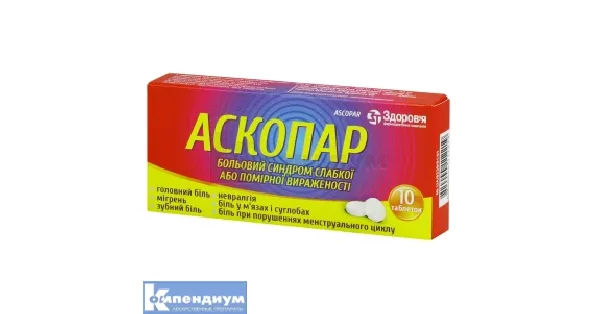
Table of Contents
INSTRUCTION FOR MEDICAL USE OF THE MEDICINAL PRODUCT ASCOPAR (ASCOPAR)
Composition:
Active substances: acetylsalicylic acid, paracetamol, caffeine;
1 tablet contains 200 mg of acetylsalicylic acid, 200 mg of paracetamol, and 40 mg of caffeine;
Excipients: potato starch, calcium stearate, povidone.
Pharmaceutical form. Tablets.
Main physicochemical properties: white or almost white tablets, flat cylindrical in shape with beveled edges and a score line. Marbling on the surface of the tablets is permissible.
Pharmacotherapeutic group. Analgesics and antipyretics. Paracetamol combinations without psychotropic agents. ATC code N02BE51.
Pharmacological properties.
Pharmacodynamics. The drug exerts analgesic, antipyretic, anti-inflammatory, and antiplatelet effects; the components contained in its formulation enhance each other's effects.
The analgesic action of acetylsalicylic acid is associated with inhibition of prostaglandin synthesis in inflamed tissues (peripheral effect) and with its influence on hypothalamic centers (central effect).
Inhibition of thromboxane A₂ synthesis in platelets underlies its antiplatelet effect.
The antipyretic effect is due to suppression of prostaglandin PGF₂ synthesis in the hypothalamus in response to the action of endogenous pyrogens.
Paracetamol exerts analgesic, antipyretic, and weak anti-inflammatory effects, which are related to its influence on the thermoregulatory center in the hypothalamus and its less pronounced ability to inhibit prostaglandin synthesis in peripheral tissues.
Caffeine, in the low dose used in this combination, practically does not exert a stimulant effect on the central nervous system; however, it promotes normalization of cerebral vessel tone and accelerates blood flow, thereby enhancing the action of analgesics and antipyretic agents.
Pharmacokinetics. After oral administration, the components of the drug are rapidly absorbed from the gastrointestinal tract.
Clinical characteristics.
Indications.
Mild to moderate pain (headache, migraine, toothache, neuralgia, muscle and joint pain, pain associated with menstrual disorders); as an antipyretic agent in diseases accompanied by elevated body temperature.
Contraindications.
Hypersensitivity to the components of the drug, hypersensitivity to other xanthine derivatives (theophylline, theobromine), or to other salicylates. Congenital hyperbilirubinemia, severe renal or hepatic insufficiency, Gilbert's syndrome, congenital glucose-6-phosphate dehydrogenase deficiency. Blood disorders, hemophilia, increased tendency to bleeding, hypoprothrombinemia, hemorrhagic diathesis, anemia, leukopenia, thrombosis, thrombophlebitis, hemorrhagic diseases. Acute gastrointestinal ulcers, gastrointestinal bleeding, surgical interventions associated with significant blood loss. Conditions of increased excitability, sleep disorders, elderly age, alcoholism, glaucoma, hyperthyroidism, acute pancreatitis, benign prostatic hyperplasia, severe forms of diabetes mellitus, severe arterial hypertension. Severe cardiovascular diseases, including arrhythmias, paroxysmal tachycardia, severe heart failure, severe form of ischemic heart disease, acute myocardial infarction, tendency to vascular spasm, pronounced atherosclerosis. Bronchial asthma, urticaria, or rhinitis caused by salicylates or other NSAIDs in medical history.
Do not use concomitantly with monoamine oxidase inhibitors (MAOIs) or within 2 weeks after discontinuation of MAOIs. Contraindicated in patients taking tricyclic antidepressants or β-blockers. Combination with methotrexate at doses of 15 mg/week or higher is contraindicated.
Interaction with other medicinal products and other types of interactions.
Contraindicated combinations.
Concomitant use of caffeine with MAO inhibitors may cause dangerous increases in blood pressure; therefore, this combination is contraindicated.
Use of methotrexate at doses of 15 mg/week or higher increases the hematological toxicity of methotrexate (due to reduced renal clearance of methotrexate by anti-inflammatory agents and displacement of methotrexate from plasma protein binding by salicylates); therefore, this combination is contraindicated.
Combinations requiring caution.
Paracetamol.
Anticonvulsant drugs (including phenytoin, barbiturates, carbamazepine), antidepressants, and other stimulators of microsomal oxidation increase the production of hydroxylated active metabolites affecting liver function, increasing the risk of severe intoxication even with minor overdoses of the drug.
Metoclopramide and domperidone may increase the rate of paracetamol absorption, while cholestyramine may reduce it. The anticoagulant effect of warfarin and other coumarins may be enhanced during long-term, regular daily use of paracetamol, increasing the risk of bleeding. Anticonvulsant agents (including phenytoin, barbiturates, carbamazepine), which stimulate hepatic microsomal enzyme activity, may enhance the hepatotoxic effects of paracetamol due to increased formation of hepatotoxic metabolites. Concomitant use of paracetamol with hepatotoxic agents increases the risk of liver toxicity. Simultaneous use of high doses of paracetamol with isoniazid increases the risk of hepatotoxic syndrome. Paracetamol reduces the efficacy of diuretics. Do not use simultaneously with alcohol.
Caution is advised when using paracetamol concomitantly with flucloxacillin, as this combination has been associated with metabolic acidosis with a high anion gap due to pyroglutamic acidosis, particularly in patients with risk factors (see section "Special precautions").
Paracetamol increases the half-life of chloramphenicol fivefold.
Caffeine.
Caffeine enhances the effect (improves bioavailability) of analgesic-antipyretic agents and potentiates the effects of xanthine derivatives, α- and β-adrenergic agonists, and psychostimulants. Cimetidine, hormonal contraceptives, and isoniazid enhance the effects of caffeine. Caffeine reduces the efficacy of opioid analgesics, anxiolytics, hypnotics, and sedatives. It acts as an antagonist of anesthetic agents, a competitive antagonist of central nervous system depressants, and of adenosine and ATP preparations. Concomitant use of caffeine with ergotamine improves ergotamine absorption from the gastrointestinal tract; with thyroid-stimulating agents, it enhances their effect. Caffeine reduces serum lithium concentration.
Acetylsalicylic acid.
Concomitant use with uricosuric agents such as benzbromarone and probenecid reduces uric acid excretion (due to competition for renal tubular excretion of uric acid). When used concomitantly with digoxin, plasma digoxin concentration increases due to reduced renal excretion. Angiotensin-converting enzyme (ACE) inhibitors, when combined with high doses of acetylsalicylic acid, reduce glomerular filtration due to inhibition of vasodilatory prostaglandins and diminished antihypertensive effect. When used with valproic acid, acetylsalicylic acid displaces it from plasma protein binding, increasing its toxicity. When used with selective serotonin reuptake inhibitors (SSRIs), the risk of gastrointestinal bleeding increases due to possible synergistic effects.
The medicinal product enhances the effects of agents that reduce blood coagulation and platelet aggregation, and increases the adverse effects of corticosteroids, sulfonylureas, and methotrexate.
Combinations with barbiturates, anticonvulsants, salicylates, rifampicin, and alcohol should be avoided.
Special precautions for use
Before using the medicinal product, consult a physician.
Do not exceed the recommended doses. For short-term use only.
Do not use this medicinal product in combination with other products containing paracetamol or acetylsalicylic acid.
In patients with moderate hepatic or renal impairment, the dose should be reduced or the dosing interval increased. In cases of impaired renal or hepatic function, the interval between doses should be at least 8 hours.
Since acetylsalicylic acid, like all non-selective nonsteroidal anti-inflammatory drugs (NSAIDs), may irritate the gastrointestinal mucosa, the medicinal product should be taken only after meals, with water, alkaline mineral water, or sodium bicarbonate solution (preferably milk).
During prolonged use, fecal occult blood testing is recommended to detect ulcerogenic effects, and blood tests should be performed (to monitor effects on platelet aggregation and potential anticoagulant activity).
In cases of hyperthermia, the medicinal product should preferably be used only if other antipyretic-analgesics are ineffective, due to the risk of Reye's syndrome. If vomiting occurs after administration, Reye's syndrome should be suspected. Note that patients with alcoholic liver disease have an increased risk of paracetamol-induced hepatotoxicity. Liver diseases increase the risk of liver damage from paracetamol. The risk of overdose is higher in patients with non-cirrhotic alcoholic liver disease.
Cases of high anion gap metabolic acidosis (HAGMA) due to pyroglutamic acidosis have been reported in patients with severe conditions such as severe renal failure and sepsis, or in patients with malnutrition or other causes of glutathione deficiency (e.g., chronic alcoholism), who were treated with therapeutic doses of paracetamol over a prolonged period or with a combination of paracetamol and flucloxacillin. If HAGMA due to pyroglutamic acidosis is suspected, immediate discontinuation of paracetamol is recommended, along with close monitoring of the patient. Measurement of urinary 5-oxoproline levels may be helpful in identifying pyroglutamic acidosis as the underlying cause of HAGMA in patients with multiple risk factors. Symptoms of metabolic acidosis include deep, rapid, or labored breathing, nausea, vomiting, and loss of appetite. Immediate medical attention is required if these symptoms occur.
In patients with allergic complications, including bronchial asthma, allergic rhinitis, urticaria, skin itching, mucosal edema, nasal polyposis, or in combination with chronic respiratory infections, and in patients with hypersensitivity to NSAIDs, treatment with this product may provoke bronchospasm or an asthma attack. Therefore, NSAIDs are contraindicated in these patients.
The use of acetylsalicylic acid-containing drugs during surgical procedures (including dental surgery) may increase the risk or severity of bleeding due to inhibition of platelet aggregation, which persists for some time after administration. The medicinal product should be discontinued 5–7 days before surgery to reduce the risk of excessive bleeding. The patient must inform the physician in advance about taking this medication.
Patients who take analgesics daily for mild forms of arthritis, or those taking warfarin or similar anticoagulant drugs, should consult a physician.
Use with caution in patients with liver or kidney disease, history of gastrointestinal erosive-ulcerative lesions or bleeding, increased bleeding tendency, or when undergoing concurrent anti-inflammatory therapy.
Acetylsalicylic acid, a component of this product, even in small doses, reduces the excretion of uric acid from the body, potentially triggering acute gout attacks in susceptible individuals.
The product should not be used for more than 5 days as an analgesic or more than 3 days as an antipyretic without medical consultation.
Alcohol consumption should be avoided during treatment. Prolonged use requires monitoring of blood coagulation and hemoglobin levels.
The product may affect laboratory test results for blood glucose and uric acid levels. Excessive intake of caffeine-containing beverages (such as coffee or tea) is not recommended during treatment, as it may cause sleep disturbances, tremor, or chest discomfort due to palpitations.
Alcoholic beverages should not be consumed during treatment (increased risk of gastrointestinal bleeding).
If symptoms persist, consult a physician.
If headache becomes persistent, consult a physician.
Do not use in patients with hypersensitivity to analgesic, anti-inflammatory, or antirheumatic agents. Use with caution when co-administering with anticoagulants, or in patients with circulatory disorders (e.g., renal vascular pathology, congestive heart failure, hypovolemia, major surgery, sepsis, or severe bleeding), as acetylsalicylic acid may increase the risk of impaired renal function and acute renal failure.
Ibuprofen may reduce the inhibitory effect of acetylsalicylic acid on platelet aggregation.
If the product is used before starting ibuprofen as an analgesic, the patient should consult a physician.
Contraindicated in patients with bronchial asthma, increased bleeding tendency, and with particular caution during concomitant therapy with anticoagulants (coumarins and heparin), hepatic dysfunction, renal disease, or concurrent anti-inflammatory therapy.
Keep the medicinal product out of sight and reach of children.
Use during pregnancy or breastfeeding
The medicinal product should not be used during pregnancy or breastfeeding.
Acetylsalicylic acid has teratogenic effects: when used during the first trimester of pregnancy, it may cause cleft palate; during the third trimester, it may inhibit labor activity (by inhibiting prostaglandin synthesis), cause closure of the fetal arterial duct, leading to pulmonary vascular hyperplasia and pulmonary hypertension, impair renal function with possible subsequent renal failure and oligohydramnios, and prolong bleeding time due to antiplatelet (antiaggregant) effects, which may occur even after very low doses. Caffeine increases the risk of spontaneous abortion. The medicinal product passes into breast milk, increasing the risk of bleeding in infants due to impaired platelet function.
Ability to influence reaction speed when driving or operating machinery
When high doses are used, avoid driving or engaging in activities requiring high attention and rapid psychomotor reactions due to possible adverse effects on the nervous system (dizziness, increased excitability, impaired orientation, and attention).
Method of Administration and Dosage
For adults, take 1 tablet 2–3 times a day after meals, swallowing with sufficient fluid (preferably milk). The maximum daily dose is 6 tablets in 3 divided doses.
The duration of treatment depends on therapeutic efficacy but should not exceed 5 days when used as an analgesic and 3 days as an antipyretic.
Children.
The medicinal product must not be used in children due to the risk of Reye's syndrome (hyperpyrexia, metabolic acidosis, neurological and psychiatric disturbances, vomiting, liver dysfunction) associated with hyperthermia during viral infections.
Overdose. Symptoms of overdose may occur following prolonged use or administration of doses many times higher than recommended.
Paracetamol overdose symptoms.
Hepatic injury is possible in individuals who have ingested 10 g or more of paracetamol, and in children who have ingested more than 150 mg/kg body weight. In patients with risk factors (long-term treatment with carbamazepine, phenobarbital, phenytoin, primidone, rifampicin, St. John’s wort, or other drugs inducing liver enzymes; chronic excessive alcohol consumption; glutathione deficiency (malnutrition, cystic fibrosis, HIV infection, fasting, cachexia)), ingestion of 5 g or more of paracetamol may lead to hepatic injury.
Symptoms within the first 24 hours: pallor, nausea, vomiting, anorexia, and abdominal pain. Hepatic injury may become apparent 12–48 hours after overdose. Glucose metabolism disturbances and metabolic acidosis may occur. In severe poisoning, liver failure may progress to encephalopathy, hemorrhage, hypoglycemia, coma, and may be fatal. Acute renal failure with acute tubular necrosis may present with severe flank pain, hematuria, proteinuria, and may develop even in the absence of severe kidney damage. Cardiac arrhythmias and pancreatitis have also been reported.
With prolonged high-dose use, hematological disorders may include aplastic anemia, pancytopenia, agranulocytosis, neutropenia, leukopenia, and thrombocytopenia. High doses may cause central nervous system (CNS) effects such as dizziness, psychomotor agitation, and disorientation; urinary system effects may include nephrotoxicity (renal colic, interstitial nephritis, papillary necrosis).
Treatment: Immediate medical attention is required in case of overdose. The patient should be taken to hospital immediately, even if early symptoms are absent. Symptoms may be limited to nausea and vomiting or may not reflect the severity of overdose or risk of organ damage. Administration of activated charcoal should be considered if the excessive dose of paracetamol was ingested within 1 hour. Plasma paracetamol concentration should be measured at least 4 hours after ingestion (earlier measurements are unreliable). Treatment with N-acetylcysteine may be administered within 24 hours after paracetamol ingestion, but maximum protective effect is achieved when given within 8 hours. The efficacy of the antidote decreases sharply after this time. If necessary, N-acetylcysteine should be administered intravenously according to current guidelines. In the absence of vomiting, oral methionine may be used as an alternative in remote areas outside hospital settings. General supportive measures should also be applied.
Acetylsalicylic acid overdose symptoms.
Salicylate overdose may occur due to chronic intoxication resulting from prolonged therapy (administration of more than 100 mg/kg per day for over 2 days may cause toxic effects), or due to acute, life-threatening intoxication (overdose), which may result from accidental ingestion by children or unintentional overdose. In case of overdose, symptoms may include diaphoresis, psychomotor agitation or CNS depression, drowsiness, impaired consciousness, cardiac arrhythmias, tachycardia, extrasystoles, tremor, hyperreflexia, and seizures. Chronic salicylate poisoning may be insidious in nature, as its signs are nonspecific. Moderate chronic intoxication, or salicylism, typically occurs only after repeated ingestion of large doses. Main symptoms include loss of balance, dizziness, tinnitus, hearing loss, increased sweating, nausea and vomiting, headache, and confusion. These symptoms may be managed by dose reduction. Tinnitus may occur at plasma salicylate concentrations above 150–300 µg/mL. More serious adverse reactions occur at plasma salicylate concentrations exceeding 300 µg/mL. Acute intoxication is characterized by marked acid-base imbalance, which may vary depending on age and severity of intoxication. Severity of condition cannot be determined solely by plasma salicylate concentration.
Absorption of acetylsalicylic acid may be delayed due to delayed gastric emptying or formation of concretions in the stomach.
Treatment: Intoxication caused by acetylsalicylic acid overdose is assessed based on severity and clinical symptoms and treated with standard methods used for poisoning. All measures should aim to accelerate drug elimination and restore electrolyte and acid-base balance. Activated charcoal and forced alkaline diuresis are used. Infusion of electrolyte solutions is administered depending on acid-base and electrolyte status. Hemodialysis is indicated in severe cases.
Caffeine overdose symptoms.
High doses of caffeine may cause epigastric pain, vomiting, diuresis, tachypnea, extrasystoles, tachycardia or cardiac arrhythmia, and effects on the central nervous system (dizziness, insomnia, nervousness, nervous excitation, syndrome of increased neuromuscular excitability, headache, irritability, emotional lability, anxiety, restlessness, tremor, seizures). Clinically significant symptoms of caffeine overdose may also be associated with liver injury caused by paracetamol.
Treatment: Immediate medical attention is required in case of overdose, even if symptoms are absent. Oral methionine or intravenous acetylcysteine may be beneficial within 48 hours after overdose. General supportive measures and symptomatic therapy should also be applied, including use of β-adrenoreceptor antagonists, which may counteract cardiotoxic effects. No specific antidote is available.
Adverse Reactions
When using the medicinal product, adverse reactions characteristic of medicinal products containing acetylsalicylic acid, paracetamol, or caffeine may occur in individual patients.
Eye disorders: visual disturbances, which may indicate overdose.
Ear and labyrinth disorders: tinnitus, disorientation.
Cardiac disorders: tachycardia, arrhythmia, palpitations, arterial hypertension.
Blood and lymphatic system disorders: anemia (including hemolytic anemia); with prolonged use in high doses – aplastic anemia, pancytopenia, neutropenia, thrombocytopenia, agranulocytosis; sulfhemoglobinemia, methemoglobinemia (cyanosis, dyspnea, chest pain). Due to the anti-aggregant effect on platelets, the drug may increase the risk of bleeding. Bleeding events observed include intraoperative hemorrhages, bruising, hematomas, bleeding from the genitourinary organs, epistaxis, gingival bleeding, gastrointestinal bleeding, and cerebral hemorrhages, particularly in patients with uncontrolled arterial hypertension and/or concomitant use of antihemostatic agents; in rare cases, these bleeding events have been life-threatening.
Nervous system disorders: headache, dizziness, tremor, paresthesia, fear, restlessness, nervousness, increased excitability, disorientation, irritability, sleep disturbances, insomnia, anxiety, general weakness.
Respiratory, thoracic and mediastinal disorders: rhinitis, nasal congestion, bronchospasm in patients sensitive to acetylsalicylic acid and other NSAIDs.
Gastrointestinal disorders: dyspeptic symptoms (including nausea, vomiting, epigastric discomfort and pain, heartburn, abdominal pain), inflammation and erosive-ulcerative lesions of the gastrointestinal tract (in rare cases may lead to gastrointestinal bleeding and perforation, with corresponding laboratory and clinical manifestations), oral mucosal ulcers.
Skin and subcutaneous tissue disorders: pruritus, skin and mucosal rashes (including erythematous, generalized), urticaria, angioneurotic edema, Stevens-Johnson syndrome (multiform exudative erythema), toxic epidermal necrolysis (Lyell's syndrome).
Endocrine system disorders: hypoglycemia, up to hypoglycemic coma.
Immune system disorders: hypersensitivity reactions, including anaphylaxis and anaphylactic shock. In patients with individual hypersensitivity to salicylates, allergic skin reactions may develop, including symptoms such as skin hyperemia, sensation of warmth, rash, and swelling. In patients with bronchial asthma, increased frequency of bronchospasm may occur; allergic reactions ranging from mild to moderate severity may affect the skin, respiratory tract, gastrointestinal tract, and cardiovascular system.
Hepatobiliary disorders: increased liver enzyme activity, usually without jaundice, hepatonecrosis (dose-dependent effect), transient liver failure with elevated liver transaminases.
Metabolism and nutrition disorders: metabolic acidosis with high anion gap, frequency "unknown" (cannot be estimated from available data).
Renal and urinary disorders: nephrotoxicity (renal colic, interstitial nephritis, papillary necrosis).
Other: bleeding may lead to acute or chronic post-hemorrhagic anemia/iron-deficiency anemia (due to so-called occult microbleeding), with corresponding laboratory findings and clinical symptoms such as asthenia, pallor of the skin, hypoperfusion, non-cardiogenic pulmonary edema.
Description of individual adverse reactions.
Cases of metabolic acidosis with high anion gap, as a result of pyroglutamic acidosis, have been observed in patients with risk factors who used paracetamol (see section "Special precautions"). Pyroglutamic acidosis may occur due to low glutathione levels in these patients.
Shelf life. 3 years.
Storage conditions. Store in the original packaging at a temperature not exceeding 25 °C.
Keep out of reach of children.
Packaging. Tablets, 10 in a blister pack in a box, 10 in a blister pack.
Classification of release. Over-the-counter (without prescription).
Manufacturer. LIMITED LIABILITY COMPANY "CORPORATION "ZDOROV'YA".
Manufacturer's address and location of business activity. 22 Shevchenka Street, Kharkiv, Kharkiv Oblast, 61013, Ukraine.