Pluscard
Poland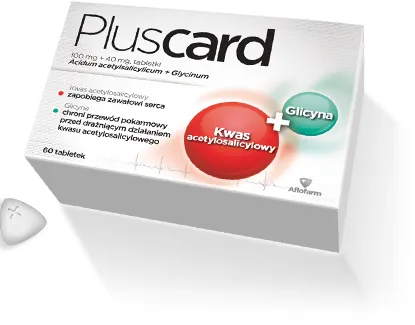
Instructions for Use
Package leaflet: Information for the patient
Pluscard, 100 mg + 40 mg, tablets
(Acetylsalicylic acid + Glycine)
Please read carefully the entire leaflet before taking this medicine, as it contains
important information for the patient.
This medicine should always be taken exactly as described in this patient leaflet or as directed by
your doctor or pharmacist.
- Keep this leaflet, as you may need to read it again.
- If you need advice or further information, please consult your pharmacist.
- If you experience any adverse reactions, including any not listed in this leaflet, inform your doctor or pharmacist. See section 4.
- If your condition does not improve or worsens, contact your doctor.
Table of contents
- What Pluscard is and what it is used for
- Important information before taking Pluscard
- How to take Pluscard
- Possible side effects
- How to store Pluscard
- Contents of the package and other information
1. What Pluscard is and what it is used for
Pluscard contains two active substances: acetylsalicylic acid and glycine.
Acetylsalicylic acid inhibits platelet aggregation (platelet "clumping"), while glycine protects the gastrointestinal tract from the irritating effects of acetylsalicylic acid.
Clinical studies have shown that low doses of acetylsalicylic acid (50 to 325 mg) effectively inhibit platelet aggregation, playing an important role in preventing blood clot formation in blood vessels.
The second active ingredient, glycine, increases the solubility of acetylsalicylic acid and facilitates its absorption.
Pluscard is indicated for:
- Prevention of myocardial infarction in patients with cardiovascular disease;
- In acute myocardial infarction or suspected acute myocardial infarction;
- Prevention of transient ischemic attacks (TIA) and ischemic stroke in patients with TIA;
- Prevention of thromboembolic complications:
- After myocardial infarction,
- After ischemic stroke in patients with TIA,
- After surgical or interventional procedures on blood vessels [e.g. percutaneous transluminal coronary angioplasty (PTCA), coronary artery bypass grafting (CABG), carotid endarterectomy, arterial-venous shunt],
- In stable and unstable angina pectoris;
- In patients with peripheral arterial disease (PAD);
- Prevention of coronary thrombosis in patients with multiple risk factors;
- Prevention of deep vein thrombosis and pulmonary embolism in patients who are immobilized for prolonged periods, e.g. after major surgical procedures, as an adjunct to other prophylactic measures.
2. Important information before taking Pluscard
When not to take Pluscard
- if the patient is allergic to acetylsalicylic acid, glycine, or any of the other ingredients of this medicine (listed in section 6);
- in case of hypersensitivity to salicylates;
- in case of allergic reaction to other non-steroidal anti-inflammatory drugs (NSAIDs), e.g. aspirin-induced asthma, hay fever;
- if the patient has active gastric or duodenal ulcer disease;
- if the patient has increased tendency to bleeding or coagulation disorders (e.g. haemophilia, thrombocytopenia), or if the patient is being treated simultaneously with anticoagulant drugs (e.g. coumarin derivatives, heparin);
- if the patient has gout;
- if the patient has severe liver, kidney, or heart failure;
- if the patient has glucose-6-phosphate dehydrogenase deficiency (a genetic red blood cell disorder), since administration of acetylsalicylic acid may cause haemolysis – destruction of red blood cells, or haemolytic anaemia – anaemia caused by excessive breakdown of red blood cells;
- if the patient is taking acetylsalicylic acid at a dose > 150 mg per day during the third trimester of pregnancy (the last three months of pregnancy);
- if the patient is breastfeeding;
- due to the risk of Reye's syndrome, acetylsalicylic acid should not be used in children and adolescents under 16 years of age.
Warnings and precautions
Before starting to take Pluscard, consult your doctor or pharmacist if:
- there are persistent symptoms of ringing or buzzing in the ears or headache, as with long-term use these may indicate overdose, especially in elderly patients;
- a surgical procedure is planned; the medicine should be discontinued 5–7 days beforehand due to the risk of prolonged bleeding, both during and after the procedure;
- there are uterine bleedings, excessive menstrual bleeding, or an intrauterine contraceptive device is used;
- the patient has a history of gastric or duodenal ulcer disease.
Consult a doctor even if the above warnings refer to conditions that occurred in the past.
Special caution required in certain patient groups using this medicine:
Children and adolescents
Due to the potential role in the development of Reye's syndrome (a disease characterised by damage to multiple organs, mainly the brain and liver), acetylsalicylic acid should not be used in children and adolescents under 16 years of age.
Patients with impaired kidney and/or liver function
Use with caution in patients with renal and/or hepatic impairment.
Elderly patients
Elderly patients (over 65 years of age) should follow the doctor's instructions particularly carefully. The medicine should be used in lower doses and with longer intervals due to increased risk of adverse effects.
Interaction of Pluscard with other medicines
Inform your doctor or pharmacist about all medicines currently or recently taken, as well as any medicines planned for use.
Contact your doctor if the patient is taking any of the following medicines:
- Angiotensin-converting enzyme (ACE) inhibitors (medicines used to treat high blood pressure): acetylsalicylic acid reduces their antihypertensive effect.
- Acetazolamide (a medicine used to treat glaucoma): acetylsalicylic acid may significantly increase the concentration and thus the toxicity of acetazolamide.
- Anticoagulant medicines (e.g. heparin, warfarin): concomitant use of acetylsalicylic acid and anticoagulants may enhance anticoagulant effects, thereby increasing the risk of bleeding.
- Valproic acid (a medicine used, among others, to treat epilepsy): acetylsalicylic acid enhances the toxic effect of valproic acid, while valproic acid enhances the antiplatelet effect of acetylsalicylic acid, increasing the risk of bleeding.
- Diuretics (medicines that increase urine production): acetylsalicylic acid may reduce their effectiveness and enhance the ototoxic effect of furosemide.
- Methotrexate (a medicine used to treat certain cancers and rheumatoid arthritis): acetylsalicylic acid enhances the toxic effect of methotrexate on bone marrow. Pluscard should not be used concomitantly with methotrexate at doses of 15 mg per week or higher.
- Non-steroidal anti-inflammatory drugs (e.g. ibuprofen) or analgesics (e.g. paracetamol): concomitant use of acetylsalicylic acid with these medicines is not recommended due to increased risk of peptic ulcer disease and gastrointestinal bleeding.
- Systemic glucocorticoids (known as steroids, used to treat, among others, rheumatic diseases): except for hydrocortisone (used as replacement therapy in Addison's disease), when used concomitantly with acetylsalicylic acid they increase the risk of peptic ulcer disease and gastrointestinal bleeding, reduce salicylate plasma concentrations during treatment, and increase the risk of salicylate overdose after treatment is stopped.
- Antidiabetic medicines: acetylsalicylic acid enhances the blood glucose-lowering effect of these medicines. Pluscard should not be used concomitantly with sulfonylurea derivatives.
- Uricosuric agents (e.g. probenecid, sulfinpyrazone): salicylates reduce the effect of uricosuric medicines. Pluscard should not be taken concomitantly with medicines used to treat gout.
- Digoxin (a medicine used to treat heart failure and cardiac arrhythmias): acetylsalicylic acid may enhance its effect.
- Thrombolytic medicines (medicines used to prevent blood clot formation): acetylsalicylic acid may enhance the effect of thrombolytic agents such as streptokinase and alteplase.
- Spasmolytic medicines (muscle relaxants): glycine enhances the effect of spasmolytic medicines (e.g. baclofen).
- Metal compounds: glycine may form complexes with metal compounds; therefore, they should not be used simultaneously with Pluscard.
- Metamizole: concomitant use of metamizole with acetylsalicylic acid may reduce the inhibition of blood coagulation by acetylsalicylic acid, resulting in weaker anticoagulant effect. Therefore, metamizole should be used cautiously in patients taking low-dose acetylsalicylic acid for prevention of heart attacks and strokes.
Pluscard with food, drink and alcohol
Pluscard should be taken during or after a meal and swallowed with a glass of liquid.
Alcohol increases the frequency and severity of gastrointestinal bleeding caused by acetylsalicylic acid. Alcohol should not be consumed during treatment.
Pregnancy and breastfeeding
If the patient is pregnant or breastfeeding, suspects she may be pregnant, or plans to become pregnant, she should consult a doctor or pharmacist before using this medicine.
Pregnancy
Pluscard should not be used during pregnancy unless absolutely necessary. Consult a doctor before using the medicine.
Acetylsalicylic acid at a dose > 150 mg per day is contraindicated during the last trimester of pregnancy without specific medical instruction, as acetylsalicylic acid may cause fetal developmental abnormalities and complications during delivery.
Breastfeeding
Acetylsalicylic acid passes into breast milk; therefore, Pluscard is contraindicated during breastfeeding.
Driving and operating machinery
Pluscard has no effect or negligible effect on the ability to drive vehicles and operate machinery.
3. How to take Pluscard
This medicine should always be taken exactly as described in this patient leaflet or as directed by your doctor or pharmacist. If in doubt, consult your doctor or pharmacist.
The decision on initiating treatment and the dose of Pluscard should be made by a doctor.
Recommended dose
Adults and adolescents over 16 years of age
- Prevention of myocardial infarction: usually 1 tablet per day.
- In acute myocardial infarction or suspected acute myocardial infarction: single dose of 3 tablets – these should be chewed thoroughly to accelerate absorption.
- Prevention of transient ischaemic attacks (TIA) and ischaemic stroke in patients with TIA: usually 1 tablet per day.
- Prevention of thromboembolic complications after:
- myocardial infarction: usually 1 tablet per day;
- ischaemic stroke in patients with TIA: usually 1 tablet per day.
- Prevention of thromboembolic complications following surgical or interventional procedures on blood vessels [e.g. percutaneous coronary angioplasty (PTCA), coronary artery bypass grafting (CABG), carotid endarterectomy, arterial-venous shunt]: usually 1 tablet per day.
- In stable and unstable angina pectoris: usually 1 tablet per day.
- In patients with peripheral arterial disease: usually 1 tablet per day.
- Prevention of coronary thrombosis in patients with multiple risk factors: usually 1 tablet per day.
- Prevention of deep vein thrombosis and pulmonary embolism in immobilised patients, e.g. after major surgery, as an addition to other prophylactic measures: 1 to 2 tablets per day.
The tablets should be taken during or after a meal, with water.
The tablets should be swallowed whole (except in the indication: acute myocardial infarction or suspected acute myocardial infarction).
Elderly patients
There are no precise data on the benefit-risk ratio of acetylsalicylic acid use in this patient group. It is recommended that the doctor adjust the dose of the medicine according to renal function in elderly patients.
Patients with renal and/or hepatic impairment
Caution is advised when using this medicine in patients with severe renal and/or hepatic impairment.
Overdose of Pluscard
Symptoms of overdose include: tinnitus, headache, diarrhoea, abdominal pain, confusion, restlessness, dizziness, drowsiness, hyperventilation, nausea, vomiting. Other symptoms observed include: hearing loss, visual disturbances, psychomotor agitation, drowsiness and coma, seizures, hyperthermia. In severe poisoning, acid-base and water-electrolyte imbalances occur (metabolic acidosis and dehydration).
In case of overdose, seek immediate medical advice. The doctor will, if necessary, initiate appropriate treatment (administration of activated charcoal, symptomatic treatment).
Missed dose of Pluscard
If a dose is missed at the scheduled time, it should be taken as soon as possible. However, if it is almost time for the next dose, the missed dose should be skipped. Do not take a double dose to make up for a missed dose.
If you have any further doubts concerning the use of this medicine, consult your doctor or pharmacist.
4. Possible adverse reactions
Like all medicines, this medicine can cause adverse reactions, although not everyone experiences them.
You should immediately inform your doctor or go to the nearest hospital if:
- you experience angioedema (rapid swelling of the skin, subcutaneous tissue, mucous membranes, or submucosal tissues). Swelling in the head and neck area may cause difficulty in swallowing and breathing;
- bleeding occurs, for example, from the gastrointestinal tract (symptoms: black stools) or hemorrhage.
The following adverse reactions may occur:
Frequency unknown (frequency cannot be estimated from the available data):
- abdominal pain, heartburn or indigestion, feeling of fullness in the upper abdomen, nausea with or without vomiting;
- gastric mucosal damage;
- recurrence of peptic ulcer disease;
- gastrointestinal bleeding (black, tarry stools), perforation (perforation of the stomach or intestine);
- focal necrosis of liver cells, liver tenderness and enlargement (especially in patients with juvenile rheumatoid arthritis, systemic lupus erythematosus, rheumatic fever, or history of liver disease);
- transient increases in serum aminotransferase activity, alkaline phosphatase, and bilirubin concentration;
- proteinuria, presence of leukocytes and erythrocytes in urine, renal papillary necrosis, interstitial nephritis;
- heart failure;
- hypertension;
- tinnitus (usually as a sign of overdose), hearing disturbances, dizziness;
- thrombocytopenia (decreased number of platelets), anemia due to microbleeding from the gastrointestinal tract, hemolytic anemia in patients with glucose-6-phosphate dehydrogenase deficiency, decreased number of white blood cells (leukopenia, agranulocytosis, eosinopenia), increased risk of bleeding, prolonged bleeding time, prolonged coagulation time;
- particularly in patients with asthma, hypersensitivity reactions may occur (difficulty breathing, cough, chest tightness, dizziness, skin rash, angioedema, bronchospasm, shock).
Gastric ulceration occurs in 15% of patients on long-term acetylsalicylic acid therapy.
Reporting of adverse reactions
If any adverse symptoms occur, including any adverse effects not listed in this leaflet, inform your doctor or pharmacist.
Adverse reactions can be reported directly to the Department of Monitoring Adverse Drug Reactions of the Office for Registration of Medicinal Products, Medical Devices and Biocidal Products
Al. Jerozolimskie 181C
02-222 Warsaw
Phone: +48 22 49 21 301
Fax: +48 22 49 21 309
Website: https://smz.ezdrowie.gov.pl
Adverse reactions can also be reported to the marketing authorization holder.
Reporting adverse reactions allows the collection of additional information on the safety of the medicine.
5. How to store Pluscard
Keep this medicine out of the sight and reach of children.
Store below 25°C.
Do not use this medicine after the expiry date stated on the blister and carton after:
EXP. The expiry date refers to the last day of the stated month.
Medicines must not be disposed of via wastewater or household waste. Ask your pharmacist how to
dispose of medicines no longer required. These measures will help protect the environment.
6. Contents of the pack and other information
What Pluscard contains
- The active substances in Pluscard are acetylsalicylic acid and glycine. One tablet contains 100 mg of acetylsalicylic acid and 40 mg of glycine.
- Other ingredients are: potato starch, talc.
What Pluscard looks like and contents of the pack
Pluscard is triangular, biconvex tablets, white in colour, with a engraved cross on one side and a break line on the other side.
The break line on the tablet is intended only to facilitate breaking for easier swallowing and does not guarantee equal dosing.
Pack contents: 15, 20, 30, 40 or 60 tablets in blister packs within a cardboard box.
Marketing Authorisation Holder and Manufacturer
Marketing Authorisation Holder
Aflofarm Farmacja Polska Sp. z o.o.
ul. Partyzancka 133/151
95-200 Pabianice
Tel. + 48 42 22-53-100
Manufacturer
Medicofarma S.A.
ul. Tarnobrzeska 13
26-613 Radom
Similar Medications
-
Acard 300 mg
Form: tablets
Active substance Dosage acetylsalicylic acid 300 mg Manufacturer: Polpharma Pharmaceutical Works S.A.
-
Acesan
Form: tablets
Active substance Dosage acetylsalicylic acid 30 mg Manufacturer: mibe GmbH Pharmaceuticals
-
Acesan
Form: tablets
Active substance Dosage acetylsalicylic acid up to 1 ml Manufacturer: mibe GmbH Pharmaceuticals
-
Aspimag
Form: tablets
Active substance Dosage acetylsalicylic acid 150 mg magnesium oxide 21 mg Manufacturer: Chemiczno-Farmaceutyczna ESPEFA Workers' Cooperative
This page has been machine-translated and may contain inaccuracies. The original data is available in the manufacturing country's language.
Last data check: June 04, 2026 · Data source: Rejestr Produktów Leczniczych (URPL)