Acard 300 mg
Poland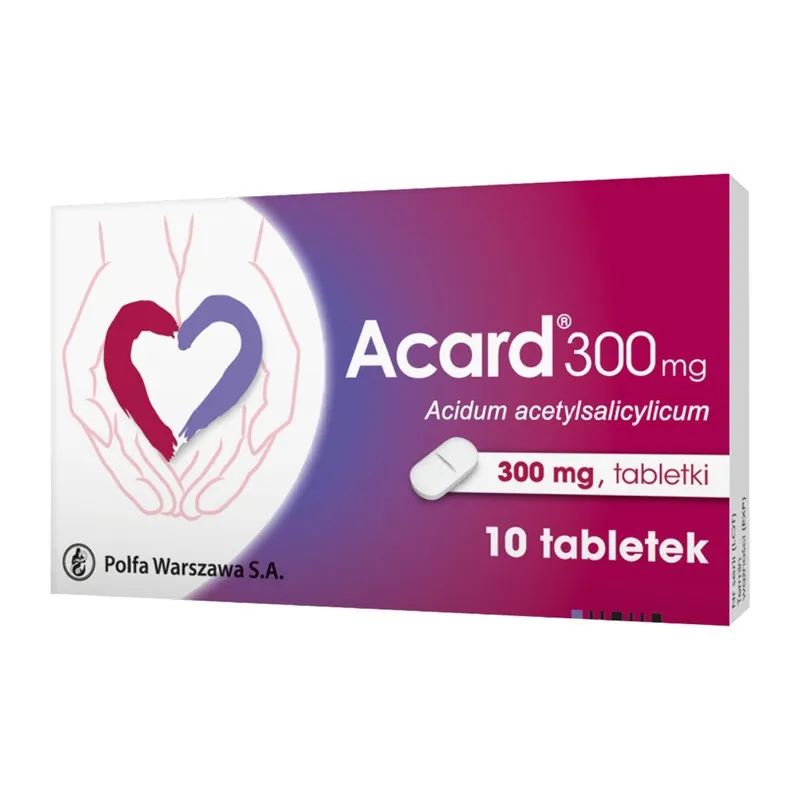
Table of Contents
Package leaflet: Information for the patient
ACARD 300 mg, 300 mg, tablets
Acidum acetylsalicylicum
Please read this leaflet carefully before using the medicine, as it contains important information for the patient.
This medicine should always be used exactly as described in this patient leaflet or as directed by the physician or pharmacist.
- Keep this leaflet for future reference.
- If advice or additional information is needed, consult a pharmacist.
- If any adverse reactions occur, including any not listed in this leaflet, inform a doctor or pharmacist. See section 4.
- If there is no improvement or if the patient feels worse, contact a doctor.
Table of contents
- What is Acard 300 mg and what is it used for
- Important information before taking Acard 300 mg
- How to take Acard 300 mg
- Possible side effects
- How to store Acard 300 mg
- Contents of the pack and other information
1. What is Acard 300 mg and what is it used for
Acard 300 mg contains acetylsalicylic acid, which inhibits platelet aggregation (clumping of blood platelets).
Acard 300 mg is used in myocardial infarction or suspected myocardial infarction.
What is myocardial infarction?
Myocardial infarction results from ischemia (lack of blood supply) to a part of the heart muscle, usually caused by blockage of a coronary artery (a blood vessel supplying the heart) due to mechanical factors (embolism, thrombosis) and platelet aggregation.
The most common symptoms of myocardial infarction are:
- Chest pain (typically lasting more than 20 minutes, a diffuse pressing pain in the chest radiating to the left arm, jaw, or back, not dependent on body position or breathing),
- Heart rhythm disturbances (palpitations),
- Shortness of breath,
- Sweating, anxiety, increased heart rate,
- Nausea and vomiting.
What to do when a myocardial infarction is suspected?
In case of actual or suspected myocardial infarction, the patient should immediately call emergency services and then take Acard 300 mg (see section 3).
Every patient with suspected myocardial infarction must receive specialist care as quickly as possible.
Rapid restoration of blood flow in the blocked coronary artery and prevention of further platelet aggregation and blood clotting help limit the area of heart muscle necrosis, thereby improving the patient's prognosis and future quality of life.
Myocardial infarction is a condition in which immediate initiation of treatment is crucial.
Patients at risk of myocardial infarction should carry a medicine containing acetylsalicylic acid (e.g., Acard 300 mg) with them at all times.
Risk factors for myocardial infarction include, among others:
- Cardiovascular diseases
- Cigarette smoking
- Increased levels of lipids in the body
- Diabetes
- Family history of hypertension or myocardial infarction
- Previous myocardial infarction
- Obesity
- Chest pain occurring during physical exertion or stress
2. Important information before using Acard 300 mg
When not to use Acard 300 mg
- if the patient is allergic to acetylsalicylic acid or any of the other ingredients of this medicine (listed in section 6);
- if the patient is allergic to other non-steroidal anti-inflammatory drugs (NSAIDs), with symptoms such as bronchospasm, rhinitis, or anaphylactic shock;
- if the patient has active peptic ulcer disease of the stomach and/or duodenum, or inflammatory conditions or bleeding from the gastrointestinal tract or other organs (e.g. bleeding in the central nervous system);
- if the patient has severe liver, kidney, or heart failure;
- if the patient has bleeding disorders (e.g. haemophilia, thrombocytopenia);
- if the patient is concurrently taking methotrexate at doses of 15 mg per week or higher, due to its harmful effect on bone marrow;
- if the patient is in the last three months of pregnancy, use of doses exceeding 100 mg per day is not allowed (see section "Pregnancy and breastfeeding");
- in children and adolescents under 16 years of age during viral infections, due to the risk of Reye's syndrome – a rare but serious condition causing liver and brain damage.
Warnings and precautions
Special caution is required when using Acard 300 mg:
- if the patient has bronchial asthma, chronic respiratory disorders, hay fever, or nasal mucosal oedema, as patients with these conditions may react to non-steroidal anti-inflammatory drugs with asthma attacks, skin and mucosal angioedema (angioedema), or urticaria more frequently than other patients;
- in patients with impaired kidney function or chronic renal failure;
- in patients with systemic lupus erythematosus or impaired liver function;
- in cases of uterine bleeding, excessive menstrual bleeding, use of intrauterine contraceptive devices, arterial hypertension, or heart failure;
- in patients with glucose-6-phosphate dehydrogenase deficiency (a rare inherited disorder);
- in elderly patients;
- in patients with a history of peptic ulcer disease or those taking medications that increase the risk of peptic ulcer and gastrointestinal bleeding (such as oral corticosteroids, selective serotonin reuptake inhibitors, and deferasirox); acetylsalicylic acid, even in small doses, reduces uric acid excretion; in predisposed patients, it may trigger gout attacks;
- acetylsalicylic acid used concomitantly with other drugs affecting haemostasis (anticoagulants, thrombolytics, antiplatelet agents, non-steroidal anti-inflammatory drugs, selective serotonin reuptake inhibitors) may increase the risk of bleeding.
Hypersensitivity to acetylsalicylic acid occurs in 0.3% of the population, including 20% of patients with bronchial asthma or chronic urticaria. Hypersensitivity symptoms (urticaria or even shock) may occur within 3 hours of taking acetylsalicylic acid.
Rare cases of severe skin reactions, including Stevens-Johnson syndrome, have been reported in association with acetylsalicylic acid use. If symptoms of skin rash, mucosal lesions, or other hypersensitivity reactions occur, the drug should not be used again.
Acetylsalicylic acid-containing medicines should not be used in women during the first and second trimesters of pregnancy unless absolutely necessary (see below).
Acetylsalicylic acid may cause female fertility impairment (see below).
Acard 300 mg and other medicines
Inform your doctor or pharmacist about all medicines currently used, recently used, or planned to be used.
Medicines contraindicated for concomitant use with acetylsalicylic acid:
- methotrexate at doses of 15 mg per week or higher, due to its toxic effect on bone marrow.
Medicines with which concomitant use with acetylsalicylic acid should be avoided:
- drugs enhancing uric acid excretion (e.g. probenecid, sulfinpyrazone). Salicylates reduce the effectiveness of uricosuric agents.
Use Acard 300 mg with caution when used concomitantly with:
- methotrexate at doses less than 15 mg per week (used in oncological or rheumatoid diseases);
- diuretics (e.g. furosemide, spironolactone);
- antihypertensive drugs (e.g. ACE inhibitors, angiotensin II receptor antagonists, calcium channel blockers);
- anticoagulants (e.g. warfarin, heparin) and other drugs inhibiting platelet aggregation (e.g. ticlopidine);
- thrombolytic agents (e.g. streptokinase, alteplase) (used to dissolve intravascular clots);
- other non-steroidal anti-inflammatory drugs (including those containing ibuprofen);
- selective serotonin reuptake inhibitors (SSRIs) (used in depression treatment);
- digoxin (used in heart failure);
- lithium salts (used in treatment of manic episodes);
- antidiabetic drugs (e.g. insulin, sulfonylurea derivatives);
- systemic glucocorticoids (except hydrocortisone used as replacement therapy in Addison's disease);
- valproic acid (used in epilepsy treatment);
- acetazolamide (used in glaucoma treatment);
- cyclosporine, tacrolimus (used in transplant patients);
- alcohol.
Metamizole (a substance with analgesic and antipyretic effects) may reduce the effect of acetylsalicylic acid on platelet aggregation (clumping of blood cells and clot formation) when these medicines are used together. Therefore, caution is advised when using metamizole in patients receiving acetylsalicylic acid.
Pregnancy, breastfeeding, and effects on fertility
If the patient is pregnant or breastfeeding, suspects she may be pregnant, or is planning to conceive, she should consult a doctor or pharmacist before using this medicine.
Pregnancy
If the patient continues or starts treatment with Acard 300 mg during pregnancy as advised by a doctor, she should use Acard 300 mg according to the doctor's instructions and should not exceed the recommended dose.
Pregnancy – third trimester
Acetylsalicylic acid in doses exceeding 100 mg per day should not be used during the last three months of pregnancy, as it may harm the unborn child or cause complications during delivery. Use of Acard 300 mg may cause kidney and heart problems in the unborn child. It may also increase the risk of bleeding in the mother and her baby and may delay or prolong labour.
If the patient takes acetylsalicylic acid in low doses (up to 100 mg per day), strict obstetric monitoring according to the doctor's recommendations is required.
Pregnancy – first and second trimester
Acard 300 mg should not be taken during the first six months of pregnancy unless absolutely necessary and prescribed by a doctor. If treatment is required during this period or when trying to conceive, the lowest effective dose should be used for the shortest possible duration. Use of Acard 300 mg for longer than a few days starting from the 20th week of pregnancy may cause kidney problems in the unborn child, leading to low levels of amniotic fluid surrounding the baby (oligohydramnios) or narrowing of a blood vessel (ductus arteriosus) in the baby's heart. If longer-term treatment is required, the doctor may recommend additional monitoring.
Breastfeeding
Since acetylsalicylic acid passes into breast milk and there is a risk of Reye's syndrome in the infant, the doctor will decide whether to discontinue breastfeeding, weighing the benefits of breastfeeding for the child against the benefits of treatment for the mother.
Fertility
This medicine belongs to the group of non-steroidal anti-inflammatory drugs which may adversely affect female fertility. This effect is reversible and resolves after discontinuation of treatment.
Driving and operating machinery
The medicine does not impair psychomotor performance.
3. How to use Acard 300 mg
This medicine should always be taken exactly as described in this patient leaflet or as directed by your doctor or pharmacist. If in doubt, consult your doctor or pharmacist.
In case of a heart attack or suspected heart attack, the patient should immediately call emergency services and then take Acard 300 mg.
Acard 300 mg should be taken immediately after the onset of symptoms of myocardial infarction, which typically include chest pain, arrhythmia, shortness of breath, sweating, a feeling of anxiety, increased heart rate, nausea, and vomiting.
Recommended dose
Adults: 150 mg to 300 mg (½ to 1 tablet) as a single dose.
Typically, a dose of 300 mg is administered as a single dose.
Method of administration
The medicine should be taken orally. The tablet should be chewed (to ensure faster action) and then swallowed with water, or it may be dissolved in ½ glass of water.
Use of a higher than recommended dose of Acard 300 mg
If more than the recommended dose has been taken (or if someone else has accidentally taken the medicine), seek immediate medical advice from a doctor or go to the nearest hospital emergency department.
After an overdose of acetylsalicylic acid, the following symptoms may occur:
- nausea, vomiting, rapid breathing, tinnitus.
Other symptoms observed may include:
- hearing loss, visual disturbances, headache,
- motor agitation, drowsiness, and coma,
- seizures, hyperthermia (body temperature above normal values).
4. Possible adverse reactions
Like all medicines, this medicine can cause adverse reactions, although not everyone experiences them.
If any of the following symptoms occur, you should immediately
inform your doctor:
- hypersensitivity reactions such as rash, urticaria, itching;
- swelling of the face, lips, tongue, or throat;
- difficulty breathing or swallowing;
- anaphylactic shock, with symptoms such as dizziness, intense weakness, palpitations, nausea, and vomiting.
The following adverse reactions may occur after administration of acetylsalicylic acid,
with unknown frequency:
- thrombocytopenia (reduced number of blood platelets), anemia due to microbleeding from the gastrointestinal tract, hemolytic anemia in patients with glucose-6-phosphate dehydrogenase deficiency;
- leukopenia (reduced number of white blood cells), agranulocytosis (absence of granulocytes in the blood), eosinopenia (reduced number of eosinophils in the blood);
- increased risk of bleeding, prolonged bleeding time, prolonged prothrombin time, iron deficiency anemia, hemolysis (destruction of red blood cells);
- tinnitus (usually as a symptom of overdose), hearing disturbances, dizziness;
- heart failure, arterial hypertension;
- bruising, hemorrhages (e.g. from the urogenital system, cerebral, intracranial, perioperative, or into muscles);
- nosebleeds, analgesic-induced asthma (triggered by taking painkillers), nasal mucosa inflammation, nasal mucosa congestion;
- dyspepsia, heartburn, feeling of fullness in the upper abdomen, nausea, vomiting, loss of appetite, abdominal pain;
- gastrointestinal bleeding or perforation (which may manifest as vomiting blood or black stools), gastric mucosal damage, exacerbation of peptic ulcer disease, gum bleeding, gastrointestinal inflammatory conditions;
- focal hepatocellular necrosis, liver tenderness and enlargement, particularly in patients with systemic lupus erythematosus, rheumatic fever, or previous liver disease;
- transient increases in blood liver function parameters (aminotransferases, alkaline phosphatase, and bilirubin concentration);
- various skin eruptions;
- proteinuria, presence of leukocytes and erythrocytes in urine, renal papillary necrosis,
interstitial nephritis;
- renal function disorders, acute renal failure.
Reporting of adverse reactions
If any adverse reactions occur, including any not listed in this leaflet, you should inform your doctor, pharmacist, or nurse. Adverse reactions can be reported directly to the Department of Monitoring Adverse Drug Reactions at the Office for Registration of Medicinal Products, Medical Devices and Biocidal Products
Al. Jerozolimskie 181C
02-222 Warsaw
Tel.: +48 22 49 21 301
Fax: +48 22 49 21 309
Website: https://smz.ezdrowie.gov.pl
Adverse reactions can also be reported to the marketing authorization holder.
Reporting adverse reactions helps to provide more information on the safety of the medicine.
5. How to store Acard 300 mg
Keep this medicine out of sight and reach of children.
Do not store above 25°C.
Do not use this medicine after the expiry date stated on the packaging after: EXP.
The expiry date refers to the last day of the stated month.
Medicines must not be disposed of via wastewater or household waste. Ask your pharmacist how to dispose of medicines you no longer use. This will help protect the environment.
6. Contents of the pack and other information
What Acard 300 mg contains
- The active substance is acetylsalicylic acid. Each tablet contains 300 mg of acetylsalicylic acid.
- Other ingredients are: maize starch, powdered cellulose, microcrystalline cellulose.
What Acard 300 mg looks like and contents of the pack
White or almost white, elongated, biconvex tablets with a division line on both sides.
The tablet can be divided into equal doses.
The pack contains 1 tablet or 10 tablets.
Marketing authorisation holder and manufacturer
Zakłady Farmaceutyczne POLPHARMA S.A.
ul. Pelplińska 19, 83-200 Starogard Gdański
tel. + 48 22 364 61 01