Acesan
Poland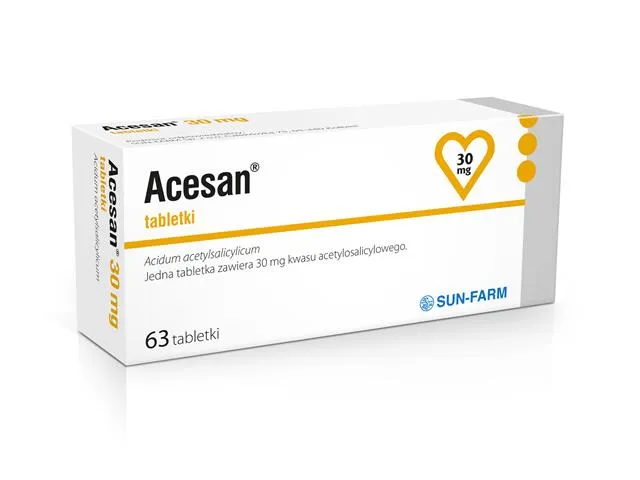
Table of Contents
Package leaflet: Information for the user
ACESAN, 30 mg, tablets
Acidum acetylsalicylicum
Please read the entire leaflet carefully before using this medicine, as it contains
important information for the patient.
This medicine should always be used exactly as described in this patient leaflet or as directed by a
physician or pharmacist.
- Keep this leaflet, so that you may read it again if necessary.
- If you need advice or further information, please consult your pharmacist.
- If you experience any adverse reactions, including any possible adverse reactions not listed in this leaflet, inform your doctor or pharmacist. See section 4.
- If your condition does not improve or worsens, you should contact your doctor.
Table of contents of the leaflet
- What Acesan is and what it is used for
- Important information before taking Acesan
- How to take Acesan
- Possible side effects
- How to store Acesan
- Contents of the pack and other information
1. What Acesan is and what it is used for
The active substance in Acesan is acetylsalicylic acid, which inhibits the ability of blood platelets to aggregate (clump together) and form clots. Acetylsalicylic acid belongs to the group of non-steroidal anti-inflammatory drugs (NSAIDs).
Its mechanism of action involves inhibition of the enzyme cyclooxygenase (COX), which is essential for the synthesis of thromboxane A2 (TXA2) – the main factor causing platelet aggregation.
Indications for use:
- Prevention of myocardial infarction in patients with multiple risk factors
- Prevention of thromboembolic complications following vascular interventions (coronary artery bypass grafting – CABG)
- Prevention of stroke
- In angina pectoris
- Prevention of thromboembolic complications following a recent myocardial infarction
2. Important information before using drug A
When not to use drug A:
- if the patient is allergic to the active substance – acetylsalicylic acid, other salicylates, or any of the other components of this medicine (listed in section 6),
- in patients with haemorrhagic diathesis,
- in patients with active peptic ulcer disease of the stomach and/or duodenum,
- in patients with severe hepatic insufficiency,
- in patients with severe renal insufficiency,
- in patients with severe heart failure,
- in patients who have previously experienced asthma attacks induced by salicylates or substances with similar effects, particularly non-steroidal anti-inflammatory drugs (NSAIDs),
- concomitantly with methotrexate at doses of 15 mg per week or higher,
- if the patient is in the last three months of pregnancy, doses higher than 100 mg per day must not be used (see "Pregnancy and breastfeeding"),
- in children under 12 years of age during viral infections, especially influenza or varicella, due to the risk of Reye's syndrome – a rare but serious condition causing liver and brain damage.
Warnings and precautions
Before starting treatment with drug A, consult a doctor or pharmacist.
Acetylsalicylic acid should be used with caution:
- during the first and second trimesters of pregnancy,
- during breastfeeding,
- in cases of hypersensitivity to non-steroidal anti-inflammatory and anti-rheumatic drugs or other allergenic substances,
- when used concomitantly with anticoagulant drugs,
- in patients with impaired renal function,
- in patients with impaired hepatic function,
- in patients with a history of peptic ulcer disease of the stomach and/or duodenum or gastrointestinal bleeding,
- in patients with glucose-6-phosphate dehydrogenase deficiency,
- before planned surgical procedures, due to the risk of bleeding.
Drug A should not be used as an analgesic or antipyretic.
Acetylsalicylic acid may cause bronchospasm and trigger asthma attacks or other hypersensitivity
reactions. Patients particularly at risk include those with bronchial asthma, chronic respiratory
diseases, hay fever with nasal polyps, or those who experience allergic reactions (e.g. skin rashes, itching, urticaria) to other substances.
Patients undergoing surgical procedures (including minor procedures, e.g. tooth extraction) should
inform their doctor about taking drug A. Discontinuation of the drug is usually recommended 5–7 days
before a planned surgical procedure.
Acetylsalicylic acid, even in low doses, reduces the excretion of uric acid from the body.
In patients predisposed to reduced uric acid excretion, the drug may trigger attacks of gout.
Drug A and other medicines
Inform your doctor or pharmacist about all medicines currently used, recently used, or planned to be used.
Acetylsalicylic acid increases:
-
the toxic effect of methotrexate on bone marrow. Concomitant use of acetylsalicylic acid with methotrexate at doses of 15 mg per week or higher is not recommended; concomitant use of methotrexate at doses lower than 15 mg per week requires special caution;
-
the effect of anticoagulant drugs (e.g. coumarin derivatives, heparin), thrombolytic drugs (fibrinolytics, e.g. streptokinase, urokinase), and antiplatelet agents (e.g. ticlopidine), which may increase the risk of prolonged bleeding time and haemorrhage;
-
the risk of peptic ulcer disease of the stomach and/or duodenum and gastrointestinal bleeding when used concomitantly with corticosteroids, other non-steroidal anti-inflammatory drugs (including other salicylates in high doses), or when alcohol is consumed during treatment;
-
the risk of gastrointestinal bleeding when used concomitantly with selective serotonin reuptake inhibitor (SSRI) antidepressants (e.g. sertraline, paroxetine);
-
the effect of digoxin by increasing its plasma concentration;
-
the effect of antidiabetic drugs, e.g. insulin, sulfonylurea derivatives;
-
the toxic effect of valproic acid, which in turn enhances the antiplatelet effect of acetylsalicylic acid.
Acetylsalicylic acid reduces the effect of:
- uricosuric drugs used in the treatment of gout that increase uric acid excretion (e.g. benzbromarone, probenecid), which may exacerbate gout symptoms;
- diuretic drugs;
- certain antihypertensive drugs (angiotensin-converting enzyme inhibitors, e.g. captopril, enalapril).
Concomitant use of ibuprofen reduces the cardioprotective effect of acetylsalicylic acid.
Concomitant use of metamizole with acetylsalicylic acid may reduce the inhibitory effect of acetylsalicylic acid on platelet aggregation. Therefore, metamizole should be used with caution in patients taking low-dose acetylsalicylic acid for cardiovascular protection.
Drug A may be used concomitantly with the above-mentioned medicines only after consultation
with a doctor (except for methotrexate at doses of 15 mg per week or higher, when the use of drug A is contraindicated).
Drug A with food and drink
The medicine should be taken during meals, with a large amount of fluid.
Pregnancy and breastfeeding
If the patient is pregnant or breastfeeding, suspects she may be pregnant, or is planning to become pregnant, she should consult a doctor or pharmacist before using this medicine.
Pregnancy
If the patient continues or starts treatment with drug A during pregnancy as advised by a doctor, she should use drug A according to the doctor’s instructions and should not take a higher dose than recommended.
Pregnancy – third trimester
Drug A should not be taken in doses exceeding 100 mg per day during the last three months of pregnancy, as it may harm the unborn child or cause complications during delivery.
Use of drug A may cause kidney and heart function disturbances in the unborn child.
It may also affect the tendency of both mother and child to bleed and may delay or prolong labour.
If the patient takes drug A in low doses (up to 100 mg per day inclusive), strict obstetric monitoring according to the doctor’s recommendations is required.
Pregnancy – first and second trimesters
Drug A should not be used during the first 6 months of pregnancy unless absolutely necessary and specifically advised by a doctor. If treatment is required during this period or when trying to conceive, the lowest possible dose should be used for the shortest possible time. If drug A is taken for longer than a few days beyond the 20th week of pregnancy, it may cause disturbances in fetal kidney function, leading to reduced amniotic fluid volume (oligohydramnios) or narrowing of a blood vessel (ductus arteriosus) in the baby’s heart. If treatment is required for longer than a few days, the doctor may recommend additional monitoring.
Breastfeeding
Acetylsalicylic acid passes into breast milk in small amounts. Consult a doctor before using the medicine.
Driving and operating machinery
The medicine has no influence on the ability to drive motor vehicles or operate machinery.
Drug A contains quinoline yellow
Due to the presence of quinoline yellow, the medicine may cause allergic reactions.
Drug A contains sodium
The medicine contains less than 1 mmol (23 mg) of sodium per tablet, meaning the medicine is considered "sodium-free".
3. How to use medicine A
This medicine should always be taken exactly as described in this patient leaflet or as directed by a
physician or pharmacist. If in doubt, consult a physician or pharmacist.
The physician determines the dose of medicine A based on the patient's medical history. The usual dose is
1 tablet once daily.
Tablets should be taken orally, preferably during a meal, with a large amount of fluid.
Taking more than the recommended dose of medicine A
If more than the recommended dose has been taken, seek immediate advice from a physician or
pharmacist. In cases of severe poisoning, the patient must be taken to hospital immediately.
The first symptoms of poisoning include: dizziness, tinnitus, deafness, excessive sweating, nausea and
vomiting, headache, confusion (disturbances of consciousness with disorientation, impaired thinking and
speech, hallucinations, delusions, anxiety, and psychomotor agitation), rapid breathing, abnormally deep
breathing, visual disturbances (spots before the eyes), and fainting.
In severe poisoning, the following may occur: high fever, disturbances in heart and blood vessel function
(from irregular heartbeat and low blood pressure up to cardiac arrest), fluid and electrolyte loss (due to
dehydration, oliguria – reduced daily urine output below 400–500 mL in adults – up to kidney failure),
increased or decreased blood glucose levels (especially in children), ketosis (elevated blood ketone levels),
gastrointestinal bleeding, blood clotting disorders, and neurological disturbances manifesting as lethargy,
confusion progressing to coma and convulsions.
Missed dose of medicine A
If a dose is missed, take the next dose at the usual time.
Do not take a double dose to make up for the missed dose.
If you have any further doubts about the use of this medicine, consult your physician or pharmacist.
4. Possible adverse reactions
Like all medicines, this medicine can cause adverse reactions, although not everybody will experience them.
Treatment must be discontinued and immediate medical advice sought if the patient develops first signs of hypersensitivity (e.g. swelling of the face, lips, tongue, or throat causing difficulty in breathing or swallowing) or experiences bleeding, e.g. gastrointestinal bleeding (symptoms: black stools), or haemorrhage. The physician will then assess the severity of symptoms and decide on further management.
After administration of acetylsalicylic acid, the following adverse reactions have been observed:
Common (in 1 to 10 out of 100 patients):
- Dyspeptic symptoms (heartburn, nausea, vomiting) and abdominal pain.
Uncommon (in 1 to 10 out of 10,000 patients):
- Inflammation of the stomach and intestines, gastric and (or) duodenal ulceration, very rarely leading to haemorrhage and perforation;
- Transient disturbances in liver function (increased aminotransferase activity).
Uncommon or very rare:
- Severe bleeding such as gastrointestinal haemorrhage (symptoms: black stools), intracranial haemorrhage (particularly in patients with uncontrolled arterial hypertension and (or) when used concomitantly with anticoagulant drugs). Haemorrhage may lead to acute or chronic blood-loss anaemia and (or) iron-deficiency anaemia (symptoms: weakness, pallor).
Very rare (less than 1 in 10,000 patients):
- Severe allergic reactions, including anaphylactic shock (symptoms: swelling of the face, eyelids, tongue and larynx, marked decrease in blood pressure, and disturbances in heart rhythm and respiration);
- Impairment of kidney function;
- Decreased blood glucose concentration.
Additionally reported:
- Dizziness and tinnitus (symptoms of overdose);
- Hypersensitivity reactions: rash, urticaria, angioedema, pruritus, cardiac and respiratory disorders (including asthma);
- Increased risk of bleeding, prolonged bleeding time and prothrombin time, decreased platelet count;
- Perioperative haemorrhage, bruising, bleeding (from nose, genitourinary tract, gums).
When using medicines belonging to the group of non-steroidal anti-inflammatory drugs, oedema, hypertension, and heart failure have been reported as adverse reactions.
Reporting of adverse reactions
If any adverse reactions occur, including any not listed in this leaflet, inform your doctor or pharmacist. Adverse reactions can be reported directly to the Department of Monitoring Adverse Drug Reactions, Office for Registration of Medicinal Products, Medical Devices and Biocidal Products
Al. Jerozolimskie 181C
02-222 Warsaw
Tel.: +48 22 49 21 301
Fax: +48 22 49 21 309
Website: https://smz.ezdrowie.gov.pl
Adverse reactions can also be reported to the marketing authorization holder.
Reporting adverse reactions helps to provide more information on the safety of the medicine.
5. How to store medicine A
Keep the medicine out of sight and reach of children.
Store below 25°C.
Keep in the original packaging to protect from moisture.
Do not use medicine A after the expiry date stated on the packaging. The expiry date refers to the last day of the stated month.
Medicines must not be disposed of via wastewater or household waste. Ask your pharmacist how to dispose of medicines no longer in use. This will help protect the environment.
6. Contents of the pack and other information
What Acesan contains
- The active substance is acetylsalicylic acid. One tablet contains 30 mg of acetylsalicylic acid.
- The other ingredients are: microcrystalline cellulose, sodium carboxymethyl starch (type A), stearic acid, quinoline yellow, lake (E 104).
What Acesan looks like and contents of the pack
Acesan is a yellow, round, biconvex tablet with a uniform surface.
Packaging: PVC/PCTFE/Aluminium blisters in a cardboard box
Pack size: 63 tablets
Marketing Authorisation Holder and Manufacturer
Marketing Authorisation Holder
SUN-FARM Sp. z o.o.
ul. Dolna 21
05-092 Łomianki
tel. +48 22 350 66 69
Manufacturer
mibe GmbH Arzneimittel
Münchener Straße 15
06796 Brehna
Germany