Aspimag
Poland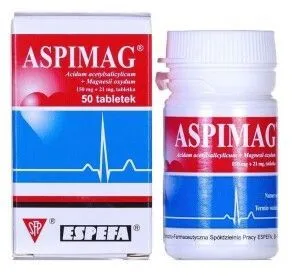
Table of Contents
Patient Information Leaflet
Aspimag, 150 mg + 21 mg, tablets
Acetylsalicylic acid + Magnesium oxide
Please read all of this leaflet carefully before taking this medicine, because it contains
important information for you.
This medicine should always be taken exactly as described in this patient leaflet or as directed
by your doctor.
- Keep this leaflet so that you can read it again if necessary.
- If you need advice or further information, please consult your pharmacist.
- If you experience any adverse reactions, including any possible side effects not listed in this leaflet, inform your doctor or pharmacist. See section 4.
- If your condition does not improve after 7 days, or if it worsens, you should consult your doctor.
Contents of the leaflet
- What Aspimag is and what it is used for
- Important information before taking Aspimag
- How to take Aspimag
- Possible side effects
- How to store Aspimag
- Contents of the pack and other information
1. What Aspimag is and what it is used for
Acetylsalicylic acid, when used according to recommendations, reduces the risk of vascular thrombosis by selectively inhibiting the synthesis of thromboxane – a potent activator of platelet aggregation.
Indications for Aspimag
In ischaemic heart disease and other conditions associated with increased blood coagulability, following vascular recanalization procedures, after myocardial infarction and ischaemic stroke, and following implantation of vascular prostheses and heart valves.
For prophylactic use in individuals at high risk of vascular embolism.
2. Important information before using Aspimag
When not to use Aspimag:
- if the patient is allergic (hypersensitive) to acetylsalicylic acid, salicylates, magnesium oxide, or any of the other ingredients of this medicine (listed in section 6);
- during viral infections in children and adolescents (e.g. influenza, chickenpox);
- if the patient has a bleeding disorder;
- if the patient has a peptic ulcer of the stomach or duodenum;
- during the third trimester of pregnancy.
Warnings and precautions
Before starting treatment with Aspimag, consult your doctor.
The risk-benefit ratio should be considered in cases of allergy to non-steroidal anti-inflammatory drugs (NSAIDs) or other substances, when taking other medicines affecting blood clotting, in significant liver or kidney impairment, and in history of active or past peptic ulcer disease.
Due to the risk of Reye's syndrome—a rare but serious condition—medicines containing acetylsalicylic acid should be used in febrile illnesses in children and adolescents under 12 years of age only on medical advice.
Patients with bronchial asthma, chronic respiratory disorders, hay fever, or mucosal swelling (nasal polyps) may react to non-steroidal anti-inflammatory drugs with asthma attacks, limited skin and mucosal swelling (angioedema), or urticaria more frequently than other patients.
Aspimag and other medicines
Inform your doctor about all medicines currently used, recently used, or planned to be used.
- Acetylsalicylic acid enhances the effect of anticoagulants and increases the risk of gastrointestinal bleeding when used concomitantly with corticosteroids or alcohol.
- It enhances the effects and adverse reactions of non-steroidal anti-inflammatory drugs, sulfonylurea derivatives, methotrexate, sulfonamides and their combinations, and valproic acid.
- It increases serum concentrations of digoxin, barbiturates, and lithium compounds.
- It reduces the effectiveness of aldosterone antagonists and loop diuretics, antihypertensive drugs, and uricosuric agents that increase uric acid excretion.
- Concomitant use of metamizole with acetylsalicylic acid may reduce the blood clotting inhibition effect of acetylsalicylic acid, resulting in weaker anticoagulant action. Therefore, metamizole should be used with caution in patients taking low-dose acetylsalicylic acid for prevention of heart attacks and strokes.
Pregnancy and breastfeeding
If the patient is pregnant or breastfeeding, suspects she may be pregnant, or is planning to have a child, she should consult her doctor before using this medicine.
The medicine may be used during pregnancy only if, in the opinion of the doctor, the benefit to the mother outweighs the potential risk to the fetus. It should not be used during the third trimester of pregnancy, as it may cause fetal abnormalities and complications during delivery.
Acetylsalicylic acid passes into breast milk in small amounts. Therefore, if possible, the medicine should not be used during breastfeeding.
Driving and operating machinery
No studies have been conducted on the effect of the medicine on the ability to drive or operate machinery.
Aspimag contains sucrose
If the patient has previously been diagnosed with intolerance to certain sugars, the patient should consult a doctor before taking this medicine.
3. How to use Aspimag
This medicine should always be taken exactly as described in this patient leaflet or as prescribed by your doctor. If in doubt, consult your doctor or pharmacist.
Recommended doses
Adults:
Unless otherwise advised by your doctor, the usual dose is
/ tablets orally with a meal once daily or 1 tablet every other day.
Taking more Aspimag than recommended
Symptoms of overdose may include: increased breathing rate, nausea, vomiting, disturbances of vision and hearing, headache and dizziness, confusion, decreased blood glucose levels, acid-base and electrolyte imbalances (e.g. potassium loss), and skin rashes.
In case of acute poisoning, symptoms may include delirium, tremors, shortness of breath, excessive sweating, restlessness, high fever, and coma.
If you forget to take Aspimag
Do not take a double dose to make up for a missed dose.
If you have any further questions about the use of this medicine, consult your doctor or pharmacist.
4. Possible adverse reactions
Like all medicines, this medicine can cause adverse reactions, although not everyone will experience them.
The following adverse symptoms may occur:
Rare (occur in 1 to 10 out of 10,000 people):
- nausea;
- diarrhoea;
- vomiting;
- gastrointestinal bleeding (black, tarry stools; iron deficiency anaemia);
- development of peptic ulcers with bleeding and perforation;
- exacerbation of gout symptoms;
- kidney function disorders;
- asthma attack;
- skin reactions, including severe skin reactions;
- liver function disorders (increased aminotransferase activity);
- Reye's syndrome, dizziness, and tinnitus (especially in children and elderly patients, these may be signs of overdose).
Reporting of adverse reactions
If any adverse reactions occur, including those not listed
in this leaflet, inform your doctor or pharmacist.
Adverse reactions can be reported directly to the Department for Monitoring Adverse Drug Reactions of the Office for Registration of Medicinal Products, Medical Devices and Biocidal Products
Al. Jerozolimskie 181C, 02-222 Warsaw
Tel.: +48 22 49 21 301
Fax: +48 22 49 21 309
E-mail: [email protected]
Adverse reactions can also be reported to the marketing authorization holder.
Reporting adverse reactions helps to provide more information on the safety of the medicine.
5. How to store Aspimag
Keep the medicine out of the sight and reach of children.
Do not use this medicine after the expiry date stated on the carton. The expiry date refers to the last day of the stated month.
Store below 25°C.
Keep the container tightly closed to protect from moisture.
Medicines must not be disposed of via sewage systems or household waste. Ask your pharmacist how to dispose of medicines no longer required. Such measures help protect the environment.
6. Contents of the packaging and other information
What Aspimag contains
- The active substances in the medicine are acetylsalicylic acid and magnesium oxide. Each tablet contains 150 mg of acetylsalicylic acid and 21 mg of magnesium oxide.
- Other components (excipients) are: sucrose, potato starch, colloidal anhydrous silica, stearic acid, talc.
What Aspimag looks like and contents of the pack
The pack contains 50 or 100 tablets.
Marketing Authorisation Holder:
Aflofarm Farmacja Polska Sp. z o.o.
ul. Partyzancka 133/151
95-200 Pabianice
Tel. (42) 22 53 100
Manufacturer:
Chemiczno-Farmaceutyczna Spółdzielnia Pracy ESPEFA
ul. J. Lea 208
30–133 Kraków, Poland
tel. 12 639 27 27