Voltadol
Italy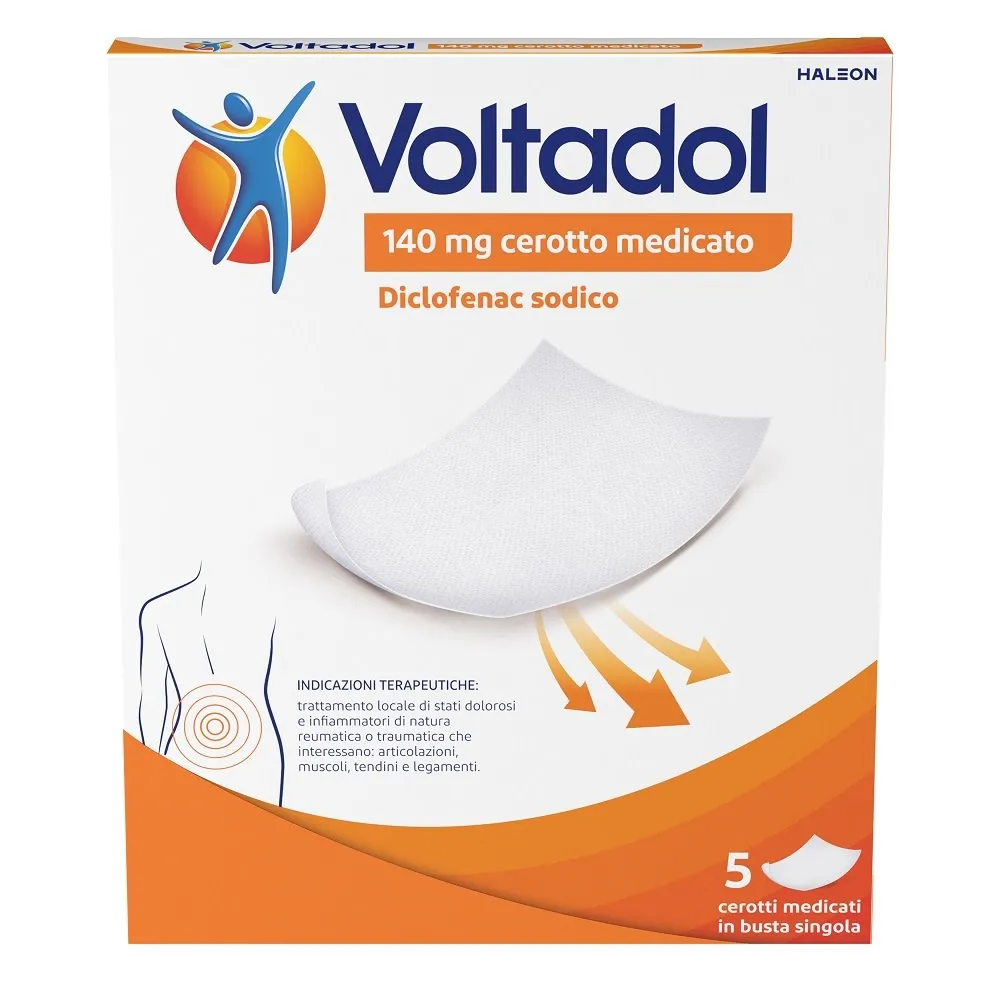
Instructions for Use
Package leaflet: Information for the patient
Voltadol 140 mg medicated patch
diclofenac sodium
Please read all of this leaflet carefully before using this medicine because it contains important information for you.
Always use this medicine exactly as described in this leaflet or as your doctor or pharmacist has told you to.
- Keep this leaflet. You may need to read it again.
- If you need more information or advice, contact your pharmacist.
- If you experience any side effects, including those not listed in this leaflet, contact your doctor or pharmacist. See section 4.
- Contact your doctor if you do not notice any improvement or if your symptoms worsen after 7 days.
Contents of this leaflet:
- What Voltadol is and what it is used for
- What you need to know before using Voltadol
- How to use Voltadol
- Possible side effects
- How to store Voltadol
- Contents of the pack and other information
1. What Voltadol is and what it is used for
Voltadol contains the active substance sodium diclofenac. Diclofenac belongs to the class of medicines known as non-steroidal anti-inflammatory drugs (NSAIDs) and is used to reduce pain and inflammation.
Voltadol is indicated for the local treatment of painful and inflammatory conditions of rheumatic or traumatic origin affecting:
- joints
- muscles
- tendons and ligaments
Consult your doctor if you do not feel better or if you feel worse after 7 days, if the condition recurs repeatedly, or if you notice any recent change in its characteristics.
2. What you should know before using Voltadol
Do not use Voltadol
- if you are allergic to diclofenac sodium, acetylsalicylic acid, other non-steroidal anti-inflammatory drugs (NSAIDs), or to any of the other ingredients of this medicine (listed in section 6);
- if in the past, after taking acetylsalicylic acid or other non-steroidal anti-inflammatory drugs (NSAIDs), you experienced an allergic reaction manifested by asthma (difficulty breathing due to inflammation and narrowing of the airways), angioedema (swelling of the face, lips, tongue and/or throat with difficulty swallowing and/or breathing), urticaria (skin rash with itching), or acute rhinitis (runny nose due to acute inflammation of the nasal mucosa);
- if your skin has any type of lesion, such as exudative dermatitis (skin irritation with exudate, a fluid formed during inflammation), eczema (skin rash), infected lesion, burns, or wounds;
- if you are in the third trimester of pregnancy (see section "Pregnancy, breastfeeding and fertility");
- if you have a lesion of the stomach or upper intestinal mucosa (peptic ulcer);
- if the person to be treated is a child or adolescent under 16 years of age.
Warnings and precautions
Talk to your doctor or pharmacist before using Voltadol.
Talk to your doctor before using Voltadol:
- if you have or have had asthma;
- if you have or have had chronic obstructive bronchial diseases;
- if you have or have had allergic rhinitis (nasal inflammation due to allergy);
- if you have or have had inflammation of the nasal mucosa (nasal polyps); because you may be more likely than other patients to experience asthma attacks, local skin or mucosal inflammation (Quincke's edema), or urticaria.
Take particular care:
- do not swallow Voltadol; wash your hands after use;
- do not apply Voltadol to damaged, diseased, or open-wound skin;
- avoid contact of Voltadol with eyes or mucous membranes, such as the mouth. If this occurs, immediately rinse the area with running water and contact your doctor;
- do not use Voltadol together with other anti-inflammatory medicines taken orally, by injection, rectally, or applied to the skin;
- prolonged or long-term use of topical medicines may cause allergic reactions. If this occurs, stop treatment with Voltadol immediately and consult your doctor for appropriate therapy;
- do not use Voltadol under an occlusive dressing, i.e., do not cover the affected area with an airtight plastic film. You may, however, use Voltadol with a gauze that allows air to pass through;
- avoid exposure to direct sunlight, including sunlamps, for about 1 day after removing the Voltadol patch; this will reduce the risk of sun-induced skin reactions;
- if you use diclofenac for long periods, you may experience systemic adverse effects; do not exceed the recommended dose.
Talk to your doctor if:
- you are elderly;
- you have kidney, heart, or liver problems;
- you have had a peptic ulcer (lesion of the stomach and upper intestinal mucosa);
- you are a woman with fertility issues, undergoing fertility investigations, or planning to become pregnant.
Stop treatment if you develop a skin rash (rash) after applying the medicated patch.
If you use Voltadol together with other medicines containing diclofenac, you may experience skin reactions, even severe ones (Stevens-Johnson syndrome, Lyell syndrome).
Children and adolescents
Voltadol must not be used in children and adolescents under 16 years of age.
Other medicines and Voltadol
Tell your doctor or pharmacist if you are taking, have recently taken, or might take any other medicine.
After applying the patch to the skin, the amount of diclofenac that reaches the bloodstream is low. Nevertheless, avoid using other medicines containing diclofenac or other non-steroidal anti-inflammatory drugs (NSAIDs) taken orally, by injection, rectally, or applied to the skin.
Pregnancy, breastfeeding and fertility
If you are pregnant, suspect you may be pregnant, are planning a pregnancy, or are breastfeeding, consult your doctor or pharmacist before using this medicine.
Do not use Voltadol during the last 3 months of pregnancy. Do not use Voltadol during the first 6 months of pregnancy unless strictly necessary and under medical advice. If treatment is required during this period, the lowest possible dose for the shortest possible time should be used.
Oral forms (e.g., tablets) of diclofenac may cause adverse effects in the newborn. It is not known whether the same risk applies with Voltadol when used on the skin.
After application to the skin, the amount of diclofenac reaching the bloodstream is very low compared to oral administration. Nevertheless, the following is recommended:
Conception, first and second trimesters of pregnancy
Diclofenac should not be used during the first and second trimesters of pregnancy except when strictly necessary, as it may increase the risk of miscarriage and fetal malformations (e.g., affecting the heart and abdominal organs). The risk increases with higher doses and longer duration of diclofenac therapy.
If you wish to become pregnant or are in the first or second trimester of pregnancy and need to use diclofenac, use the lowest possible dose for the shortest possible time.
Third trimester of pregnancy
Diclofenac must not be used during the third trimester of pregnancy because it may cause harm to the fetal heart, lungs, and kidneys. It may also prolong bleeding time in both mother and newborn, even at very low doses, and inhibit uterine contractions in the mother, leading to delayed or prolonged labor.
Breastfeeding
Diclofenac passes into breast milk in small amounts; however, no effects on the infant are expected when Voltadol is used at the recommended doses.
Nevertheless, you must not use Voltadol during breastfeeding without first consulting your doctor.
If you are breastfeeding, do not apply Voltadol to the breast and avoid prolonged use (see section "Warnings and precautions").
Driving and using machines
Voltadol does not affect the ability to drive vehicles or operate machinery.
3. How to use Voltadol
Use this medicine exactly as stated in this leaflet or as directed by your
doctor or pharmacist. If you have any doubts, consult your doctor or pharmacist.
Pay particular attention to the following:
- Use the patch only on intact and healthy skin.
- Do not apply Voltadol if you are going to take a bath or shower.
- Use the entire patch and do not exceed the recommended dose.
Adults and adolescents aged 16 years and over
The recommended dose is one patch applied twice daily, in the morning and evening, to the skin in the area to be treated,
for a period not exceeding 7 days.
Consult your doctor if symptoms do not improve within 7 days of starting treatment with Voltadol or if you notice
worsening of symptoms.
Use in children and adolescents under 16 years of age
Voltadol must not be used in children and adolescents under 16 years of age.
How to apply the Voltadol patch


- Cut the pouch along line 3. Apply the patch to the area indicated and remove the patch to be applied, removing the protective liner. The medicated side should remain dry and usable, and will be active.
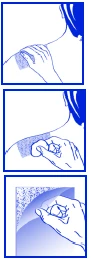
- Press gently with the palm of your hand until the patch adheres completely to the skin.
To apply the patch: To remove the patch:
- Wet the patch with water and
- Remove one of the two protective liners, then gently lift a corner and peel off.
- To remove any residue of the product, wash the area with water using circular motions with your fingers.
If you use more Voltadol than you should
In case of accidental ingestion or overdose of Voltadol, contact your doctor immediately or go to the nearest hospital.
Cases of overdose with Voltadol have been reported, but no systemic adverse effects typically associated with overdose of oral NSAIDs have been reported, such as vomiting, diarrhoea, dizziness, tinnitus (persistent perception of ringing in the ear), gastrointestinal and/or intestinal bleeding, or seizures.
If you accidentally ingest the contents of the Voltadol package or apply too many patches at the same time, you may experience adverse effects similar to those observed after ingestion of an excessive dose of diclofenac tablets.
If you forget to use Voltadol
Do not use a double dose to make up for the missed dose.
If you stop using Voltadol
If you have any doubts about how to use this medicine, consult your doctor or pharmacist.
4. Possible side effects
Like all medicines, this medicine can cause side effects, although not everyone gets them.
Common side effects (may affect up to 1 in 10 people)
- rash (skin eruption), eczema (skin inflammation), erythema (reddening of the skin), dermatitis (including allergic dermatitis and contact dermatitis), pruritus (itching)
- reactions at the site where the patch is applied.
Rare side effects (may affect up to 1 in 1,000 people)
- bullous dermatitis (skin inflammation with blistering)
- dry skin
- burning sensation at the application site.
Very rare side effects (may affect up to 1 in 10,000 people)
- allergic reactions including urticaria, severe allergic reactions (anaphylactoid reactions and angioneurotic edema)
- angioedema (swelling of the face, lips, tongue and/or throat, causing difficulty in swallowing and/or breathing)
- skin rash with appearance of pustules
- asthma (difficulty breathing caused by inflammation and narrowing of the bronchi)
- appearance of spots, swelling or redness on the skin following exposure to sunlight or sunlamps.
Reporting of side effects
If you experience any side effect, including those not listed in this leaflet, talk to your doctor or pharmacist. You can also report side effects directly via the national reporting system at the following website: https://www.aifa.gov.it/content/segnalazioni-reazioni-avverse
By reporting side effects, you can help provide more information on the safety of this medicine.
5. How to store Voltadol
Do not store above 30°C.
Keep this medicine out of the sight and reach of children.
Do not use this medicine after the expiry date stated on the packaging after Exp. The expiry date refers to the last day of that month.
Do not dispose of any medicine via wastewater or household waste. Ask your pharmacist how to dispose of medicines you no longer use. This will help protect the environment.
It is important to always keep the medicine information available; therefore, retain both the packaging and the leaflet.
6. Package contents and other information
What Voltadol contains
- The active substance is sodium diclofenac. Each medicated patch contains 140 mg of sodium diclofenac.
- The other components are basic butyl methacrylate copolymer, acrylate-vinyl acetate copolymer, polyethylene glycol 12 stearate, sorbitan oleate, non-woven fabric, silicone paper.
Description of the appearance of Voltadol and contents of the pack
Voltadol is a medicated, self-adhesive patch, 10 x 14 cm in size.
Each pack contains 5, 10 or 15 medicated patches, each patch individually enclosed in a pouch.
Marketing Authorization Holder
Haleon Italy S.r.l. - Via Monte Rosa 91 - 20149 Milano
Manufacturer
IBSA Farmaceutici Italia S.r.l.
S.S. 11 Padana Superiore km 160
Cassina de’ Pecchi (MI)
Similar Medications
-
Calminemed
Form: patch, transdermal
Active substance Dosage DICLOFENAC SODIUM — Manufacturer: IBSA FARMACEUTICI ITALIA S.R.L.
-
Diclofenac Teva
Form: patch, transdermal
Active substance Dosage DICLOFENAC SODIUM — Manufacturer: TEVA B.V.
-
Dicloreum anti-inflammatory local
Form: patch, transdermal
Active substance Dosage DICLOFENAC — Manufacturer: ALFASIGMA S.P.A.
-
Itami
Form: patch, transdermal
Active substance Dosage DICLOFENAC SODIUM — Manufacturer: FIDIA FARMACEUTICI S.P.A.
-
Voltadol Unidie
Form: patch, transdermal
Active substance Dosage DICLOFENAC SODIUM — BUTYLATED HYDROXYANISOLE — Manufacturer: HALEON ITALY S.R.L.
This page has been machine-translated and may contain inaccuracies. The original data is available in the manufacturing country's language.
Last data check: May 11, 2026 · Data source: Agenzia Italiana del Farmaco (AIFA)