Calminemed
Italy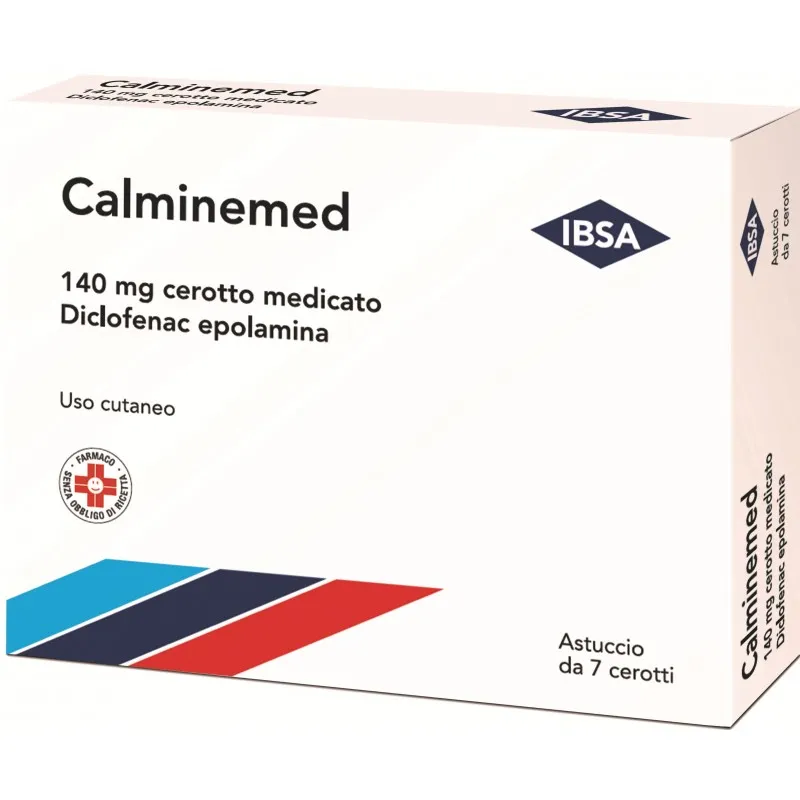
Table of Contents
Package leaflet: Information for the user
Calminemed 140 mg medicated patch
Diclofenac epolamine
Please read all of this leaflet carefully before you start using this medicine because it contains important information for you.
Always use this medicine exactly as described in this leaflet or as your doctor or pharmacist has told you to.
- Keep this leaflet. You may need to read it again.
- If you need more information or advice, consult your doctor or pharmacist.
- If you experience any side effect, including those not listed in this leaflet, tell your doctor or pharmacist. See section 4.
- Consult your doctor if you do not notice any improvement, or if your symptoms worsen after 7 days.
Contents of this leaflet:
- What Calminemed is and what it is used for
- What you need to know before using Calminemed
- How to use Calminemed
- Possible side effects
- How to store Calminemed
- Contents of the pack and other information
1. What Calminemed is and what it is used for
It is indicated in adults and adolescents over 16 years of age.
Calminemed belongs to a group of medicines called non-steroidal anti-inflammatory drugs (NSAIDs).
NSAIDs reduce pain and inflammation.
Calminemed is intended for the short-term local symptomatic treatment of mild painful conditions affecting joints, muscles, tendons, and ligaments.
Children and adolescents under 16 years of age
Calminemed must not be used in children and adolescents under 16 years of age, as the available data on the efficacy and safety of this medicine are insufficient.
2. What you need to know before using Calminemed
Do not use Calminemed:
- if you are allergic to diclofenac epolamine or to any of the other ingredients of Calminemed (listed in section 6)
- if you are allergic to any pain-relieving (analgesic) or anti-inflammatory medicine (NSAIDs)
- if you suffer from asthma, breathing problems, skin rashes, or a runny nose after taking acetylsalicylic acid (aspirin) or other NSAIDs
- if you have damaged skin, including oozing or infected areas, eczema, burns, or wounds
- if you are entering the 6th month of pregnancy or have already passed it
- if you currently have a stomach ulcer (peptic ulcer)
Warnings and precautions
Talk to your doctor or pharmacist before using Calminemed if:
- you suffer from respiratory problems (allergic rhinitis, nasal polyps, asthma, chronic bronchial diseases);
- you have kidney, heart, or liver disease;
- you have previously had stomach or duodenal ulcers;
- you suffer or have previously suffered from an inflammatory bowel disease;
- you are prone to episodes of bleeding;
- you are in the first 6 months of pregnancy or are breastfeeding.
Other important information
To keep symptoms under control, always use the lowest effective dose of Calminemed for the shortest possible time.
Calminemed should be used with caution in elderly patients, who may be more susceptible to adverse effects.
To minimize the occurrence of side effects, it is recommended to use the lowest effective dose for the shortest possible duration.
Do not use Calminemed together with other medicines containing diclofenac or other non-steroidal anti-inflammatory drugs (NSAIDs).
Avoid exposure to direct sunlight or sunbeds for at least one day after removing the patch, in order to reduce the risk of photosensitivity.
Be careful not to use occlusive dressings and avoid bandages that do not allow the skin to breathe.
Stop using the patch and inform your doctor or pharmacist if a skin rash develops at the site of application or if general episodes of sensitization (hypersensitivity) occur, particularly after prolonged treatment.
Children and adolescents
Do not use the patch in children and adolescents under 16 years of age.
Elderly patients
In this case, exercise greater caution when using Calminemed due to the possibility of adverse effects.
Patients with hepatic impairment or renal damage
If you have liver or kidney problems, use Calminemed with greater caution due to the possibility of adverse effects.
Other medicines and Calminemed If the patch is used correctly, the risk of interactions with other medicines is very low. However, inform your doctor or pharmacist if you are using, have recently used, or might use any other medicines.
Pregnancy
If you are pregnant, suspect you may be pregnant, are planning a pregnancy, or are breastfeeding, consult your doctor or pharmacist before using this medicine. You must not use Calminemed if you are entering the 6th month of pregnancy or have already passed it, as this could harm the fetus or cause problems during childbirth.
Breastfeeding
While breastfeeding, mothers must not apply the patch on the breast, nor elsewhere on large areas of skin or for prolonged periods of time.
Fertility
As with other NSAIDs, the use of diclofenac may impair female fertility and should therefore be avoided if you are planning a pregnancy. In women who have difficulty conceiving or who are undergoing fertility investigations, the use of diclofenac should be avoided.
Driving and using machines
Calminemed does not affect the ability to drive or operate machinery.
Calminemed contains
- Propylene glycol, which may cause skin irritation.
- Methyl parahydroxybenzoate and propyl parahydroxybenzoate, which may cause allergic reactions (including delayed reactions).
3. How to use Calminemed
Use this medicine exactly as stated in this leaflet or as directed by your doctor or pharmacist. If you have any doubts, consult your doctor or pharmacist.
Adults and adolescents over 16 years of age
Apply one patch per day for up to 7 days. If during the recommended treatment period you notice no improvement or if your symptoms worsen, you should consult your doctor.
This medicated patch must not be used in children and adolescents under 16 years of age, as there is insufficient data available on the efficacy and safety of this medicine.
Method of administration
Instructions for use for packs containing 2, 5, and 10 medicated patches:
a) Cut the top of the resealable pouch containing the medicated patches along the dotted line.
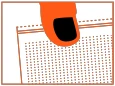
b) Remove one patch and carefully reseal the pouch by pressing the zipper closure together.

c) Remove the plastic protective layer covering the adhesive side of the medicated patch.
d) Apply the medicated patch to the swollen area of skin or where pain is felt.
Instructions for use for the pack containing 7 medicated patches only:
a) Cut the top of the non-resealable pouch along the dotted line and remove the medicated patch.

b) Remove the plastic protective layer covering the adhesive side of the medicated patch.
c) Apply the medicated patch to the swollen area of skin or where pain is felt.
If necessary, secure the patch with a loose-weave gauze bandage, avoiding occlusive dressings, or use the tubular elastic net provided in the package.
The medicated patch must be applied only to intact, undamaged skin, avoiding application on lesions or open wounds. Do not use the patch while bathing or showering.
The medicated patch must be used whole and for the shortest possible duration, as indicated in the instructions for use.
If you forget to use Calminemed
Do not use more than one patch at a time. For further information, consult your doctor or pharmacist.
4. Possible side effects
Like all medicines, Calminemed can cause side effects, although not everyone experiences them.
Some uncommon and very rare side effects can be serious.
If you experience any of the following signs of allergy, STOP using Calminemed and contact your doctor or pharmacist immediately:
- Swelling of the lips, eyes or tongue, wheezing or an asthma attack, which are signs of a severe allergic reaction
- Burning or irritation at the site where the patch was applied. In general, side effects affect the application site.
Common side effects (may occur in up to 1 to 10 users out of 100)
Skin reactions: skin rashes, dermatitis, redness and swelling of the skin, itching.
Other side effects
Uncommon, rare and very rare: skin rashes with blistering or bullae formation, dry skin, allergic reactions even after skin exposure to sunlight or sunlamps (photosensitivity), urticaria.
If medicated patches are used correctly, the risk of side effects is very low. However, prolonged use or concomitant use with other medicines containing diclofenac, especially if taken orally, does not exclude the possibility of generalized side effects.
Reporting of side effects
If you experience any side effect, including those not listed in this leaflet, consult your doctor or pharmacist. You may also report side effects directly via the national reporting system at http://www.aifa.gov.it/content/segnalazioni-reazioni-avverse . By reporting side effects, you can help provide more information on the safety of this medicine.
5. How to store Calminemed
Keep this medicine out of the sight and reach of children.
Do not store above 30 °C.
For packages containing 2, 5, and 10 patches only: do not use this medicine more than 3 months after
first opening the sachet. After removing a patch, ensure the sachet is tightly resealed.
Do not use this medicine after the expiry date stated on the sachet and packaging. The expiry date refers to the last day of that month.
Do not throw away any patches; dispose of them in accordance with local regulations. Used patches must not be flushed down the toilet or disposed of via liquid waste systems.
Ask your pharmacist how to dispose of medicines you no longer use. This will help protect the environment.
6. Package contents and other information
What Calminemed contains
The active substance is diclofenac epolamine. Each medicated patch contains a total of 180 mg of
diclofenac epolamine, equivalent to 140 mg of diclofenac sodium (1% w/w).
The other ingredients are gelatin, povidone (K90), sodium heparin, liquid sorbitol, kaolin, titanium
dioxide (E171), propylene glycol, methyl parahydroxybenzoate (E218), propyl parahydroxybenzoate
(E216), disodium edetate (E385), tartaric acid, aluminum glycinate, sodium carmellose, sodium
polyacrylate, 1,3-butylene glycol, polysorbate 80, fragrance (propylene glycol, benzyl salicylate, phenylethyl alcohol, alpha-amylcinnamaldehyde, hydroxycitronellal, phenylethyl phenylacetate, cinnamyl acetate, benzyl acetate, terpineol, cinnamyl alcohol, cyclamen aldehyde), purified water, and a non-woven polyester support.
Description of the appearance of Calminemed and package contents
Each medicated patch consists of a bandage impregnated with a paste ranging in color from white to pale yellow, with the adhesive layer protected by a removable transparent plastic backing.
Packages containing 2, 5 or 10 medicated patches include 1 or 2 resealable bags, whereas the package containing 7 patches includes 7 non-resealable bags, each containing 1 patch.
Each package contains a tubular net.
Not all pack sizes may be marketed.
Marketing Authorization Holder and Manufacturer
Marketing Authorization Holder
IBSA Farmaceutici Italia srl
Via Martiri di Cefalonia, 2
26900 Lodi, Italy
Manufacturer
Altergon Italia srl
Zona Industriale ASI
83040 Morra De Sanctis (AV), Italy
This medicinal product is authorized in the following European Economic Area Member States under the following names:
Belgium Flalgo/Weavor
Czech Republic Flalgo
Hungary Flectorin
Italy Calminemed
Slovak Republic Flectopar
Spain Flectormed