Nitroderm TTS 10 transdermal patches
Spain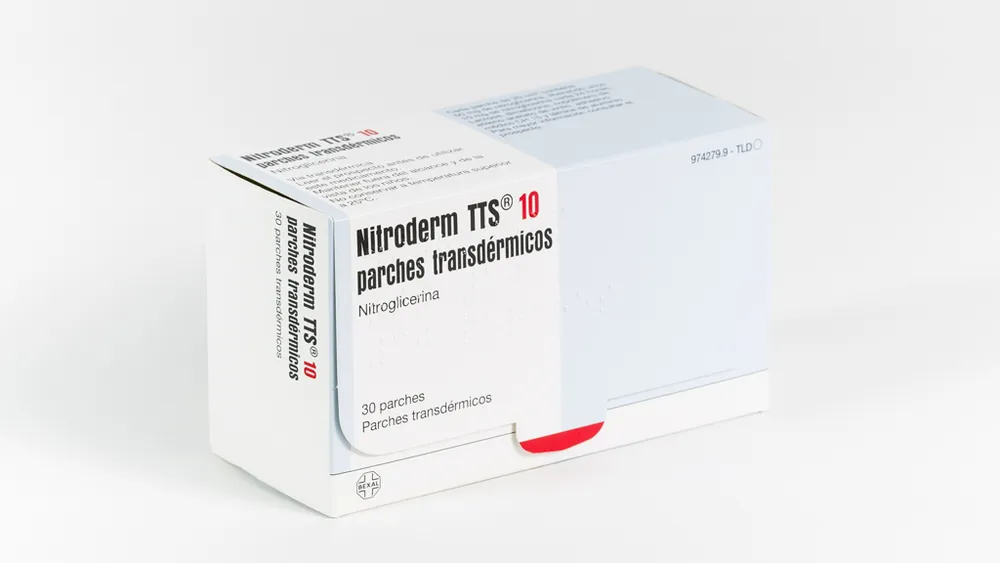
Instructions for Use
Table of Contents
- Introduction
- 1. What Nitroderm TTS 10 Transdermal Patches Are and What They Are Used For
- 2. What you need to know before using NITRODERM TTS 10 transdermal patches
- 3. How to use NITRODERM TTS 10 transdermal patches
- 4. Possible adverse effects
- 5. Storage of NITRODERM TTS 10 transdermal patches
- 6. Contents of the pack and other information
- **Marketing Authorization Holder**
- **Manufacturer**
Package leaflet: Information for the user
Introduction
PACKAGE LEAFLET: INFORMATION FOR THE USER
Nitroderm® TTS 10 transdermal patches
Nitroglycerin
Read the entire leaflet carefully before you start using this medicine, because it contains important information for you.
- Keep this leaflet, as you may need to read it again.
- If you have any questions, ask your doctor or pharmacist.
- This medicine has been prescribed for you and should not be given to other people, even if they have the same symptoms as you, as it may harm them.
- If you experience any adverse effects, consult your doctor or pharmacist, even if they are effects not listed in this leaflet.
Contents of the leaflet:
- What Nitroderm TTS 10 transdermal patches are and what they are used for
- What you need to know before using Nitroderm TTS 10 transdermal patches
- How to use Nitroderm TTS 10 transdermal patches
- Possible side effects
- How to store Nitroderm TTS 10 transdermal patches
- Contents of the pack and other information
1. What Nitroderm TTS 10 Transdermal Patches Are and What They Are Used For
Nitroderm TTS 10 contains nitroglycerin as the active substance, which belongs to a group of medicines called nitrates.
Nitroderm TTS 10 is available as transdermal patches (which release the medicine through the skin into the bloodstream).
Nitroderm TTS 10 is used to prevent or reduce the frequency of angina attacks (chest pain or discomfort). Nitroderm TTS dilates the blood vessels, thereby making the heart's work easier.
If an angina attack has already started, instead of Nitroderm TTS patches, you should use a fast-acting nitrate (sublingual tablets or spray).
2. What you need to know before using NITRODERM TTS 10 transdermal patches
Carefully follow your doctor's instructions. They may differ from the general information provided in this leaflet.
Do not use Nitroderm TTS 10
- If you are allergic (hypersensitive) to nitroglycerin, nitrates or nitrites, or to any of the other components of Nitroderm TTS.
- In cases of reduced blood circulation with very low blood pressure, such as in shock.
- If you have increased intracranial pressure (a condition your doctor will know about and has informed you of).
- If you have a heart valve disease or an inflammatory heart condition.
- If you are currently taking any medication for erectile dysfunction or pulmonary hypertension, belonging to the group of phosphodiesterase type 5 inhibitors, such as sildenafil, tadalafil, or vardenafil.
- If you have very low blood pressure.
- If you have recently lost a significant amount of blood.
Warnings and precautions
Inform your doctor if you have or have had any of the following conditions:
- If you have anemia.
- If you have any lung disease.
- If you have any heart disease or blood vessel disorder other than angina.
- If you have recently had a heart attack or a stroke.
When stopping treatment, the dose and frequency of application of the Nitroderm TTS patch should be gradually reduced over several weeks to avoid withdrawal reactions. If starting another treatment for angina, you may need to use both medications simultaneously for a period of time.
Nitroderm may cause orthostatic hypotension and dizziness upon standing; therefore, sudden changes in posture should be avoided.
Before undergoing surgery, hospitalization, visiting the emergency room, or before any imaging procedure (e.g., magnetic resonance imaging, electrical cardioversion or defibrillation, or diathermy), inform the doctor or nurse that the Nitroderm TTS patch you are using contains aluminum, as it may need to be removed.
Use of other medicines
Inform your doctor or pharmacist if you are taking or have recently taken any other medicines, including those obtained without a prescription.
Your dose may need to be adjusted, or in some cases, one of the medicines may need to be discontinued. It is especially important that you inform your doctor if you are taking or plan to take any of the following medicines:
- Medicines for treating high blood pressure,
- Medicines that dilate blood vessels, such as other nitrates and hydralazine,
- Medicines for treating depression or mood disorders,
- Medicines for treating mental disorders (major tranquilizers),
- Medicines for treating migraines (dihydroergotamine),
- Medicines for treating inflammation, pain, and fever (non-steroidal anti-inflammatory drugs),
- Medicines used to protect against side effects of cancer treatment (amifostine),
- Medicines for treating erectile dysfunction or pulmonary arterial hypertension (phosphodiesterase type 5 enzyme inhibitors, such as sildenafil, vardenafil, or tadalafil). If you are being treated with Nitroderm TTS, you must never take these medicines, even if you have removed the patch.
Use of Nitroderm TTS with food and drinks:
Be cautious when consuming alcoholic beverages, as your blood pressure may drop more than usual.
Use in children
Nitroderm TTS 10 must not be used in children.
Use in elderly patients
Older individuals (65 years of age or older) may be more sensitive to the effects of nitrates. Your doctor will advise you accordingly.
Pregnancy and breastfeeding
Consult your doctor or pharmacist before using any medicine.
Experience with the use of Nitroderm TTS in pregnant women is limited. Inform your doctor if you are pregnant or planning to become pregnant. Your doctor will discuss with you the potential risks of using Nitroderm TTS during pregnancy.
It is unknown whether nitroglycerin passes into breast milk. Inform your doctor if you are breastfeeding.
Driving and use of machines
Nitroderm TTS may cause hypotension and dizziness, especially at the beginning of treatment or when doses are changed. If you experience any of these effects, avoid driving vehicles or operating machinery.
3. How to use NITRODERM TTS 10 transdermal patches
Follow exactly the administration instructions for Nitroderm TTS as given by your doctor. Consult your doctor or pharmacist if you have any doubts.
Your doctor will determine which dose of Nitroderm TTS is best for you (Nitroderm TTS 5, 10, or 15) and how many patches you should use based on your individual needs.
Additionally, your doctor will instruct you when and how often to change the patch and the duration of treatment. Carefully follow your doctor's instructions and do not exceed the recommended dose.
How many Nitroderm TTS 10 patches should be used
Treatment is generally started with the smallest patch size (Nitroderm TTS 5), gradually increasing the dose as needed. For most patients, one Nitroderm TTS 10 patch is sufficient. Do not use more than two Nitroderm TTS 10 patches simultaneously, or one Nitroderm TTS 15 patch combined with one Nitroderm TTS 5 patch. Usually, you should apply a new patch once daily, preferably in the morning. Your doctor may instruct you to remove the patch for 8–12 hours per day, typically at night. If you feel that the effect of Nitroderm TTS is too strong or too weak, inform your doctor.
Depending on your response to treatment, your doctor may increase or decrease your dose.
How and when to use Nitroderm TTS 10
Choose any hairless area of skin on the torso or upper arm. The skin should not be inflamed, cracked, or irritated. To ensure proper adhesion, the skin must be clean, dry, and free of creams, lotions, oils, or powders. Select a different skin area each day and wait several days before reusing the same site.
Each Nitroderm TTS patch is individually packaged in a heat-sealed pouch. Open the pouch by tearing at the notch without using scissors and remove the patch. The patch (pink-colored) has an adhesive surface covered by a white plastic protective liner.
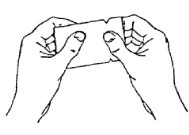
Tear open the pouch at the notch and remove the patch. Hold the patch carefully so that the white protective liner faces you.
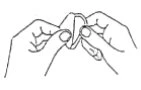
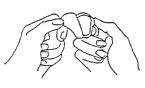
Firmly fold the tab forward with your thumb. Peel off the white protective liner starting from the tab and discard it. Do not touch the adhesive surface.
Press the adhesive side of the patch firmly onto the chosen area of the body (torso or upper arm) using the palm of your hand. Hold it in place for 10–20 seconds. Make sure it is well adhered, especially around the edges. However, do not attempt to reposition it once it has been applied to the skin.
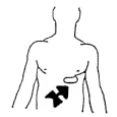
Remove Nitroderm TTS when instructed by your doctor. When replacing the patch, fold it in half, pressing the ends together so that the adhesive sides stick together, before disposing of it properly, as it still contains nitroglycerin. Never cut or tear the patch. Any residual adhesive remaining on the skin can be easily removed with alcohol. When applying the next patch, select a different skin area.
Nitroderm TTS adheres well to the skin, and its effectiveness is not affected by bathing, showering, or physical activity, provided it is correctly applied. If the patch should nevertheless become detached, discard it and apply a new one to a different skin site. If you forget to remove the patch at the scheduled time, remove it as soon as possible and apply the next patch without altering your regular schedule.
If you use more Nitroderm TTS 10 than you should
If you have accidentally used more patches than your doctor prescribed, contact your doctor immediately. Medical attention may be required.
High doses of nitroglycerin can cause a rapid drop in blood pressure. The effect of Nitroderm TTS can be rapidly reversed by removing the patch.
Low blood pressure can be managed by elevating the legs and, if necessary, applying elastic bandages.
In case of overdose or accidental ingestion, contact the Toxicology Information Service. Telephone: 91.562.04.20.
If you forget to use Nitroderm TTS 10
If you forget to change the Nitroderm TTS patch at the correct time, do not worry. Change it as soon as you remember, apply a new patch, and continue with your regular schedule. Do not use a double dose to make up for a missed dose.
If you stop using Nitroderm TTS 10
If you have been using Nitroderm TTS regularly for several weeks, do not stop treatment abruptly, as this may trigger angina attacks. Your doctor will advise you on the best way to discontinue treatment.
If you have any further questions about the use of this product, ask your doctor or pharmacist.
4. Possible adverse effects
Like all medicines, Nitroderm TTS can produce adverse effects, although not everyone will experience them. The following adverse effects may occur and disappear during treatment. Normally, they do not require medical attention, but consult your doctor if they persist or are severe.
Very common (may affect more than 1 in 10 people):
- Nausea
- Vomiting
Common (may affect up to 1 in 10 people):
- Headache, which could be treated with mild analgesics
Uncommon (may affect up to 1 in 100 people):
- Skin irritation: mild redness and itching under the patch may occur. This will disappear within one day after removing the patch. Change the application site regularly to avoid local irritation.
- Skin allergies: the skin under the patch becomes very red, swollen, or develops blisters. If you experience a widespread rash affecting a large area of skin, inform your doctor.
Rare (may affect up to 1 in 1,000 people):
- Flushing of the face
- Dizziness, especially when standing up quickly, due to a drop in blood pressure; therefore, it is recommended to rise slowly and, if you feel dizzy, to sit or lie down
- Increased heart rate
Very rare (may affect up to 1 in 10,000 people):
- Dizziness
Unknown frequency (the number of affected patients cannot be estimated from the available information):
- Palpitations: abnormal awareness of heart rhythm. Inform your doctor if you have a very pronounced sensation.
- Widespread skin rash
If you experience any adverse effects, consult your doctor or pharmacist, even if they are adverse effects not listed in this leaflet.
5. Storage of NITRODERM TTS 10 transdermal patches
Keep out of the reach and sight of children.
Nitroderm TTS should be stored in the original packaging in a cool, dry place. Do not store above 25°C.
Do not use Nitroderm TTS after the expiry date stated on the packaging or on the sachet. The expiry date refers to the last day of the month indicated.
Medicines should not be disposed of via wastewater or household waste. Dispose of unused medicines and their packaging at the Sigre point located in the pharmacy. If in doubt, ask your pharmacist how to properly dispose of unused medicines and their packaging. This will help protect the environment.
6. Contents of the pack and other information
Composition of Nitroderm TTS 10
The active substance is nitroglycerin. Each 20 cm² patch contains 50 mg of nitroglycerin, releasing approximately 10 mg of nitroglycerin per 24 hours.
The other components are: lactose, dimethicone, ethylene-vinyl acetate copolymer, medical adhesive CH 15, and aluminum foil.
Nitroderm TTS 10 is available in packs of 7 and 30 patches.
Marketing Authorization Holder
BEXAL FARMACÉUTICA, S.A.
Parque Norte Business Center
Roble Building
C/ Serrano Galvache, 56
28033 Madrid
Spain
Manufacturer
Novartis Farmacéutica, S.A.
Gran Via de les Corts Catalanes, 764
08013 Barcelona
Spain
or
Novartis Pharma GmbH,
Roonstrasse 25,
90429 Nuremberg,
Germany
or
LTS Lohmann Therapie-Systeme AG,
Lohmannstr. 2
56626 Andernach
Germany
Date of the most recent review of this leaflet: October 2013
Detailed and up-to-date information on this medicinal product is available on the website of the Spanish Agency for Medicines and Health Products (AEMPS) http://www.aemps.gob.es/
Similar Medications
-
Cordiplast 10 mg/24 h transdermal patches
Form: patches, transdermal
Active substance Dosage NITROGLYCERIN 37,4 mg Manufacturer: Merus Labs Luxco Ii S.A.R.L.
-
Cordiplast 5 mg/24 h transdermal patches
Form: patches, transdermal
Active substance Dosage NITROGLYCERIN 18,7 mg Manufacturer: Merus Labs Luxco Ii S.A.R.L.
-
Dermatrans 10 mg/24 h transdermal patch
Form: patches, transdermal
Active substance Dosage NITROGLYCERIN 31,37 mg Manufacturer: Casen Recordati S.L.
-
Dermatrans 15 mg/24 h transdermal patch
Form: patches, transdermal
Active substance Dosage NITROGLYCERIN 47,04 mg Manufacturer: Casen Recordati S.L.
-
Dermatrans 5 mg/24 h transdermal patch
Form: patches, transdermal
Active substance Dosage NITROGLYCERIN 15,7 mg Manufacturer: Casen Recordati S.L.
-
Epinitril 10 mg/24 h transdermal patches
Form: patches, transdermal
Active substance Dosage NITROGLYCERIN 31,37 mg Manufacturer: Viatris Healthcare Limited
-
Epinitril 15 mg/24 h transdermal patches
Form: patches, transdermal
Active substance Dosage NITROGLYCERIN 47,04 mg Manufacturer: Viatris Healthcare Limited
-
Epinitril 5 mg/24 h transdermal patches
Form: patches, transdermal
Active substance Dosage NITROGLYCERIN 15,7 mg Manufacturer: Viatris Healthcare Limited
-
Minitran 10 mg/24 h transdermal patches
Form: patches, transdermal
Active substance Dosage NITROGLYCERIN 36 mg Manufacturer: Viatris Healthcare Limited
-
Minitran 15 mg/24 h transdermal patches
Form: patches, transdermal
Active substance Dosage NITROGLYCERIN 54 mg Manufacturer: Viatris Healthcare Limited
-
Minitran 5 mg/24 h transdermal patches
Form: patches, transdermal
Active substance Dosage NITROGLYCERIN 18 mg Manufacturer: Viatris Healthcare Limited
-
Nitroplast 10 transdermal patches
Form: patches, transdermal
Active substance Dosage NITROGLYCERIN 37,4 mg Manufacturer: Lacer S.A.
This page has been machine-translated and may contain inaccuracies. The original data is available in the manufacturing country's language.
Last data check: May 18, 2026 · Data source: CIMA — AEMPS