Levosert
Poland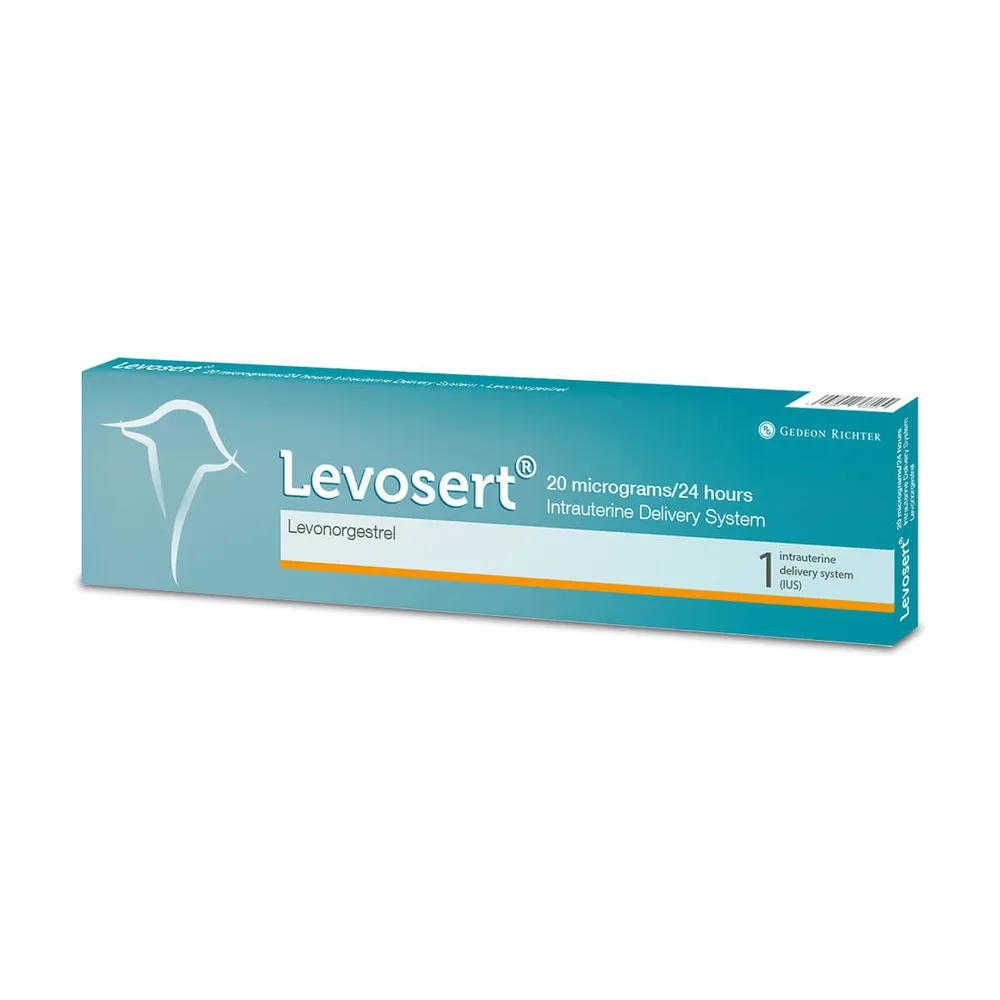
Instructions for Use
Package leaflet: Information for the user
Levosert, 52 mg (20 micrograms/24 hours), intrauterine therapeutic system
Levonorgestrelum
Please read all of this leaflet carefully before using this medicine, because it contains
important information for you.
- Keep this leaflet. You may need to read it again.
- If you have any further questions, ask your doctor or pharmacist.
- If you experience any adverse reactions, including any not listed in this leaflet, tell your doctor or pharmacist. See section 4.
Leaflet contents
- What Levosert is and what it is used for
- Important information before using Levosert
- How to use Levosert
- Possible side effects
- How to store Levosert
- Contents of the pack and other information
1. What Levosert is and what it is used for
Levosert is an intrauterine therapeutic system that gradually releases a hormone called levonorgestrel into the uterus.
It may be used in the following cases:
Contraceptive method (prevention of pregnancy)
The Levosert system is an effective, long-term and temporary (reversible) contraceptive method.
The Levosert system prevents pregnancy by inhibiting the growth of the endometrium (uterine lining), thickening cervical mucus (in the cervical canal), which prevents sperm from reaching the egg, and by suppressing ovulation in some women. There may also be a local effect on the endometrium due to the presence of the T-shaped intrauterine therapeutic system.
Treatment of heavy menstrual bleeding
The Levosert system is also used to reduce the amount of menstrual blood loss and may be used in the treatment of heavy menstrual periods, known as menorrhagia. The hormone contained in the Levosert system inhibits the monthly development of the endometrium, resulting in lighter menstrual bleeding each month.
The Levosert system is effective for eight years for contraceptive indication (prevention of pregnancy) and for five years for the indication of heavy menstrual bleeding. To ensure continued contraceptive protection, the Levosert system must be removed before the end of the eighth year and immediately replaced with a new Levosert system if continued use is required. When replacing the system immediately, no additional contraceptive protection is needed. For the indication of heavy menstrual bleeding, the Levosert system should be replaced before the end of the fifth year. If symptoms have not returned by the end of the fifth year of use, continued use beyond five years may be considered. The system must be removed or replaced no later than after 8 years.
Children and adolescents
The Levosert system is not indicated for use before the onset of first menstrual bleeding (menarche).
2. Important information before using Levosert
Before insertion of the Levosert system, your doctor or nurse may order several tests to
ensure that the Levosert therapeutic system is suitable for the patient.
This includes a pelvic examination, but other tests may also be performed, such as a breast examination,
if your doctor or nurse considers it appropriate.
Before insertion of the Levosert system, patients must have any genital infections effectively treated.
Inform your doctor or nurse if you have epilepsy, as seizures, although rare, may occur during
insertion of the Levosert system.
Some women may feel unwell after the insertion procedure. This is a normal condition, and your doctor
or nurse will advise you to rest for a while.
Not all women can use the Levosert intrauterine therapeutic system.
Do not use the Levosert intrauterine therapeutic system if you:
- are pregnant or suspect you may be pregnant;
- have current or past pelvic inflammatory disease;
- have unusual or unpleasant vaginal discharge or vaginal itching, which may indicate an infection;
- have or have had endometritis (infection of the uterine lining) after childbirth;
- have or have had uterine infections following childbirth or miscarriage within the last 3 months;
- have or have had cervical inflammation;
- have or have had abnormal Pap smear results (cervical cell changes);
- have or have had liver disorders;
- have uterine abnormalities, including fibroids, especially if they distort the uterine cavity;
- have abnormal vaginal bleeding;
- have any condition that makes you more susceptible to infections. Your doctor will inform you if this applies;
- have or have had a hormone-dependent tumor, such as breast cancer;
- have or have had any type of cancer or suspected cancer, including blood cancer (leukemia), cervical or uterine cancer, unless in remission;
- have or have had trophoblastic disease (trophoblast supplies nutrients to the fetus). Your doctor will inform you if this applies;
- are allergic to levonorgestrel or any of the other ingredients of this medicine (listed in section 6).
Warnings and precautions
The Levosert system, like other hormonal contraceptives, does not protect against HIV infection (AIDS)
or other sexually transmitted infections (e.g. chlamydia, genital herpes virus, genital warts, gonorrhea,
hepatitis B virus, syphilis). Only the use of condoms can provide protection against these diseases.
The Levosert system must not be used as emergency contraception (after unprotected sexual intercourse).
Before starting the use of the Levosert intrauterine therapeutic system, discuss with your doctor if:
- you experience migraine, dizziness, vision disturbances, exceptionally severe headaches, or headaches occurring more frequently than before;
- you have yellowing of the skin or whites of the eyes (jaundice);
- you have diabetes (high blood glucose levels), high blood pressure, or abnormal blood lipid levels;
- you have blood cancer (including leukemia) currently in remission;
- you are undergoing long-term steroid therapy;
- you have ever had an ectopic pregnancy (pregnancy outside the uterus) or ovarian cysts;
- you have or have had severe arterial disease, such as heart attack or stroke;
- you have had blood clots (thrombosis) in the past;
- you are taking any other medicines, as some medicines may reduce the effectiveness of the Levosert system;
- you have irregular bleeding;
- you have seizures (epilepsy).
If any of the above conditions are present or have occurred in the past, your doctor will decide whether
the Levosert system can be used.
If you are using the Levosert system and any of the above conditions occur for the first time, you should
also inform your doctor.
The following subjective and objective symptoms may indicate an ectopic pregnancy (pregnancy developing outside the uterus), and in such a case, you should contact your doctor immediately (see also section "Pregnancy, breastfeeding and fertility"):
- Menstrual bleeding has stopped, followed by persistent bleeding or pain.
- You experience severe or persistent lower abdominal pain.
- You have typical pregnancy symptoms but also experience bleeding and dizziness.
- A pregnancy test is positive.
If you experience painful leg swelling, sudden chest pain, or breathing difficulties, you should see your doctor or nurse as quickly as possible, as these may be symptoms of a blood clot. It is important that any blood clots are treated as soon as possible.
You should also contact your doctor immediately if you experience persistent lower abdominal pain, fever, pain during sexual intercourse, or unusual bleeding. If you experience sudden severe pain or fever shortly after insertion of the Levosert system, this may indicate a serious infection that requires immediate treatment.
Spontaneous expulsion
Uterine muscle contractions during menstrual bleeding may sometimes cause displacement or expulsion of the system. This is more likely if the woman is overweight at the time of insertion or has had heavy menstrual bleeding in the past. If the system is not in the correct position, it may not work as intended, increasing the risk of pregnancy. Expulsion of the system results in loss of contraceptive protection.
Possible symptoms of expulsion include vaginal bleeding or lower abdominal pain, but the Levosert system may also be expelled unnoticed. Because the Levosert system reduces menstrual flow, an increase in bleeding may be a sign of expulsion or displacement.
It is recommended to check manually (e.g. during bathing) whether the threads are in the correct position.
See also section 3 "How to use Levosert – Self-checking for correct placement of the Levosert system". If symptoms suggesting expulsion occur or if the threads cannot be felt near the cervical opening, use alternative contraceptive methods (such as condoms) and consult your doctor.
Psychiatric disorders
Some women using hormonal contraceptives, including Levosert, have reported depression or low mood. Depression can be severe and may sometimes lead to suicidal thoughts. If mood changes or symptoms of depression occur, contact your doctor as soon as possible for further medical advice.
Levosert and smoking
Women should stop smoking. Smoking increases the risk of heart attack, stroke, or blood clots.
Use of tampons and menstrual cups
It is recommended to use sanitary pads. If using tampons or menstrual cups, change them carefully to avoid pulling on the Levosert threads.
Levosert and other medicines
Since the mechanism of action of the Levosert system is primarily local, taking other medicines should not increase the risk of pregnancy while using Levosert.
However, it is recommended to inform your doctor about all medicines you are currently taking, have recently taken, or plan to take, including those available without a prescription. This includes the following medicines:
- medicines used to treat epilepsy (such as lamotrigine, barbiturates, phenytoin, primidone, carbamazepine, oxcarbazepine, topiramate, felbamate)
- medicines used to treat tuberculosis (such as rifampicin, rifabutin)
- medicines used to treat HIV and hepatitis C virus infection (such as nevirapine, efavirenz, ritonavir, nelfinavir)
- medicines used to treat fungal infections (such as griseofulvin, itraconazole, ketoconazole)
- medicines used to treat bacterial infections (such as clarithromycin, erythromycin)
- medicines used to treat certain heart conditions and high blood pressure (such as verapamil, diltiazem)
- herbal remedies containing St John's wort (Hypericum perforatum)
- grapefruit juice
The Levosert system must not be used simultaneously with other hormonal contraceptive methods.
Pregnancy, breastfeeding and fertility
The Levosert system must not be used during pregnancy or if pregnancy is suspected.
Can you become pregnant while using the Levosert system?
Women using the Levosert system very rarely become pregnant.
The absence of menstrual bleeding does not necessarily mean you are pregnant. In some women, menstrual bleeding may not occur during use of the intrauterine system.
If you have not had a menstrual period for 6 weeks, a pregnancy test should be considered. If the result is negative, there is no need to repeat the test unless other symptoms suggesting pregnancy occur, such as nausea, fatigue, or breast tenderness.
If you become pregnant with the Levosert system in place, contact your doctor immediately for removal of the Levosert system. Removal may cause miscarriage. However, leaving the Levosert system in place during pregnancy may increase not only the risk of miscarriage but also the risk of premature delivery. If the Levosert system cannot be removed, discuss the benefits and risks of continuing the pregnancy with your doctor. If the pregnancy continues, it should be closely monitored by your doctor, and you should contact your doctor immediately if you experience symptoms such as abdominal cramps, abdominal pain, or fever.
Levosert contains a hormone called levonorgestrel, and there have been isolated reports of effects on the genital organs of female infants exposed to levonorgestrel released from an intrauterine device remaining in the uterine cavity.
What should you do if you want to have a child?
If you wish to become pregnant and have a child, ask your doctor to remove the Levosert system. Fertility returns quickly after removal.
Can you breastfeed while using the Levosert system?
Very small amounts of the hormone in the Levosert system have been detected in breast milk, but at lower concentrations than with other hormonal contraceptive methods. There is no known risk to the newborn. However, if you wish to breastfeed, you should discuss this with your doctor.
Driving and operating machinery
The effect on the ability to drive and operate machinery is unknown.
Levosert contains barium sulfate.
The T-shaped frame of the Levosert system contains barium sulfate, so it may be visible on X-ray imaging.
3. How to use Levosert
The system should only be inserted by a doctor or a specially trained nurse (see:
special insertion instructions included in the package).
These individuals will explain the insertion procedure and any risks associated with using the system.
Before insertion of the Levosert system, the patient will be examined by a doctor or nurse. If
the patient has any concerns regarding the use of the system, she should discuss them with her doctor
or nurse.
During the insertion procedure, the patient may experience mild discomfort. Any pain felt should be
reported to the doctor.
Starting use of the Levosert system
- Before inserting the Levosert system, it must be confirmed that the patient is not pregnant.
- The Levosert system should be inserted within 7 days of the onset of menstruation. When the Levosert system is inserted during this time, it will be effective immediately and will prevent pregnancy.
- If insertion of the Levosert system cannot occur within 7 days after the start of menstruation, or if menstruation occurs at an unpredictable time, the Levosert system may be inserted at any other time. In such cases, unprotected intercourse must not occur since the last menstrual period, and a negative pregnancy test result must be obtained before insertion. Additionally, the Levosert system may not provide immediate contraceptive protection. Therefore, a barrier method of contraception (e.g., condoms) should be used, or sexual intercourse should be avoided during the first 7 days after insertion of the Levosert system.
- The Levosert system is not intended for use as emergency contraception (post-coital contraception).
Starting use of the Levosert system after childbirth
- The Levosert system may be inserted after childbirth once the uterus has returned to its normal size, but not earlier than 6 weeks after delivery (see section 4 "Possible adverse effects - Perforation").
- Further information on the timing of insertion is provided in the section "Starting use of the Levosert system" above.
Starting use of the Levosert system after miscarriage
The Levosert system may be inserted immediately after a miscarriage if the pregnancy lasted less than 3 months,
provided there are no genital tract infections. The Levosert system will then be effective immediately.
Replacing the Levosert system
The Levosert system may be replaced with a new Levosert system at any point during the menstrual
cycle. The system will then be effective immediately.
Switching from another contraceptive method (such as combined hormonal contraceptives, implant)
- The Levosert system may be inserted immediately if there is sufficient assurance that the patient is not pregnant.
- If more than 7 days have passed since the onset of menstrual bleeding, sexual intercourse should be avoided or an additional contraceptive method should be used for the following 7 days.
Insertion of the Levosert system
Examination by a healthcare provider prior to insertion may include:
- Cervical smear test (Pap smear)
- Breast examination
- Other tests if necessary, e.g., for infections including sexually transmitted infections, and a pregnancy test. The healthcare provider will also perform a gynecological examination to determine the position and size of the uterus.
After the gynecological examination
- A speculum is inserted into the vagina, and the cervix may be cleaned with an antiseptic solution. The Levosert system is then placed into the uterus using a thin, flexible plastic tube (insertion tube). Local anesthesia may be applied before inserting the tube into the cervix.
- Some women may experience dizziness or fainting during or after insertion or removal of the Levosert system.
- Pain and bleeding may occur during or shortly after insertion.
After insertion of the Levosert system, the patient should receive a reminder card from the doctor for follow-up examinations. This card should be brought to every scheduled visit.
How quickly should the Levosert system start working?
Contraception
If the Levosert system is inserted during menstruation or within 7 days of its onset, or if the patient already has a system in place and it is time to replace it, or if the patient has just had a miscarriage, the patient is protected against pregnancy at the time of insertion of the intrauterine system. The likelihood of becoming pregnant is approximately 2 cases per 1000 women during the first year of use of the system. The risk of failure may increase if spontaneous expulsion of the Levosert system occurs or if perforation occurs.
Excessive menstrual bleeding
After insertion of the Levosert system, menstrual bleeding usually decreases significantly within 3 to 6 months of treatment.
How often should the system be checked?
A follow-up examination of the Levosert system should be performed 4 to 6 weeks after insertion, and then regularly, at least once a year, until the system is removed. The doctor may determine how often and what type of examinations are required in individual cases. The patient should bring the reminder card received from the doctor to every scheduled follow-up visit. In addition, the patient should contact the doctor if any of the symptoms described in section 2 "Warnings and precautions" occur.
Furthermore, the patient should seek immediate medical attention if she experiences:
- Painful swelling of the leg,
- Sudden chest pain,
- Difficulty breathing, as these may be symptoms of thrombosis.
How can you tell if the system is in place?
After each menstrual period, a woman may check for the presence of two threads attached to the lower edge of the system. The treating doctor will show how to do this.
Do not pull on the threads, as this may accidentally remove the device. If a woman cannot feel the threads, she should see a doctor or nurse as soon as possible, and in the meantime should avoid sexual intercourse or use barrier contraception (such as condoms). The threads may have retracted into the uterus or cervix. If the threads still cannot be found by the doctor or nurse, they may have broken, or the Levosert system may have been spontaneously expelled, and in rare cases may have perforated the uterine wall (uterine perforation, see section 4).
A doctor should also be consulted if the woman feels the lower edge of the device, or if she or her partner experiences pain or discomfort during intercourse.
What happens if spontaneous expulsion of the system occurs?
If the system is expelled completely or partially, it cannot provide protection against pregnancy. Spontaneous expulsion rarely occurs during menstruation without the patient noticing, but it is possible. A symptom may be an unusual increase in bleeding during menstrual bleeding.
The doctor or clinic staff should be informed if any unexpected changes occur in the bleeding pattern.
Removal of the Levosert system
The Levosert system should be removed or replaced after 8 years of use for contraceptive purposes, and after 5 years of use for heavy menstrual bleeding, or earlier if heavy or bothersome menstrual bleeding returns. If symptoms have not returned by the end of the fifth year of use, continued use beyond five years may be considered. The system must be removed or replaced no later than 8 years after insertion. A doctor can easily remove the system at any time, after which pregnancy becomes possible. Some women may experience dizziness or fainting during or after removal of the Levosert system. Pain and bleeding may occur during removal of the Levosert system.
Continuation of contraception after removal of the system
If the patient does not plan pregnancy, the Levosert system should not be removed after the seventh day of the menstrual cycle (menstruation), unless the patient uses another contraceptive method (e.g., condoms) for at least 7 days prior to removal of the intrauterine therapeutic system.
In cases of irregular menstruation or absence of menstruation, barrier contraception should be used for 7 days before removal of the system.
A new Levosert system may also be inserted immediately after removal of the previous one, in which case additional protection is not necessary. If the patient does not wish to continue with the same method, she should consult her doctor about other effective contraceptive methods.
How does the Levosert system affect menstrual bleeding?
For all patients using the Levosert system
In many women, spotting (small amounts of blood) occurs during the first 3–6 months after insertion. In some women, menstrual bleeding may be prolonged or heavier.
Heavy bleeding may occur, typically during the first 2 to 3 months, before blood loss decreases. There may be a gradual reduction in the number of bleeding days and the amount of blood lost each month. This is due to the effect of the hormone (levonorgestrel) on the endometrium.
If the patient has the Levosert system inserted to reduce excessive menstrual bleeding
Levosert usually significantly reduces the heaviness of menstrual bleeding within 3 to 6 months of starting treatment. However, before the bleeding volume decreases, bleeding may be heavier during the first 2 to 3 months of treatment. If there is no significant reduction in bleeding intensity after 3 to 6 months, alternative treatment methods should be considered.
If the Levosert system was inserted some time ago and bleeding disturbances have occurred since then, the patient should consult a doctor or other healthcare professional.
If the patient has any questions about using this medicine, she should consult her doctor.
4. Possible adverse effects
Like all medicines, this medicine can cause adverse effects, although not everyone will experience them.
Adverse effects associated with the Levosert system most commonly occur during the first few months after insertion and decrease over time.
If any of the following serious adverse effects occur,
seek immediate medical advice from your doctor or nurse:
-
Severe pain or fever occurring shortly after insertion of the system may indicate that a serious infection has developed, which requires immediate treatment. In rare cases, a very severe infection (sepsis) may occur.
-
Severe pain and persistent bleeding, as these may be symptoms of damage or perforation of the uterine wall. Perforation is uncommon, but most often occurs during insertion of the Levosert system, although it may not be diagnosed until later. If this happens, the Levosert will need to be removed; very rarely, surgery may be required. The risk of perforation is low, but increases in breastfeeding women and in women who have given birth within 36 weeks prior to insertion. The risk may also be increased in women with a persistently retroverted uterus (retroversion of the uterus). If you suspect uterine perforation, contact your doctor and inform them that you have a Levosert system in place, especially if this is not the doctor who performed the insertion. Possible subjective and objective symptoms of perforation may include:
- severe pain (similar to menstrual cramps) or more intense pain than expected,
- heavy bleeding (occurring after insertion),
- pain or bleeding lasting longer than a few weeks,
- sudden changes in menstrual pattern,
- pain during sexual intercourse,
- inability to feel the Levosert system threads (see section 3 “How to use Levosert – How to check if the system is in place?”).
-
Pain in the lower abdomen, especially if you have a fever or have missed a menstrual period or have unexpected bleeding, as this may indicate an ectopic pregnancy. The overall risk of ectopic pregnancy in women using the Levosert system is small. However, if a woman becomes pregnant while using Levosert, the relative likelihood of ectopic pregnancy is increased.
-
Pain in the lower abdomen or pain or discomfort during sexual intercourse, as this may indicate an ovarian cyst or pelvic inflammatory disease. This is important because pelvic infections may reduce the chances of having a child and may increase the risk of ectopic pregnancy.
Very common (may occur in more than 1 in 10 women) adverse effects:
- changes in menstruation. Spotting, shorter or longer menstrual bleeding, and painful periods may occur. Although a significant reduction in menstrual blood loss is observed within 3 to 6 months of using the Levosert system, during the first 2 to 3 months, bleeding may increase before decreasing. Menstrual bleeding may cease completely. If there is no significant reduction in blood loss within 3 to 6 months, alternative treatments should be considered;
- ovarian cysts. These are fluid-filled sacs in the ovary;
- bacterial or fungal vaginal infections or infections of the external genital organs (vulva);
- skin eruptions (acne);
- pain or bleeding during insertion of the system.
Common (may occur in up to 1 in 10 women) adverse effects:
- depression, nervousness, or other mood changes;
- decreased libido;
- headache;
- migraine;
- feeling of weakness (pre-syncope);
- dizziness;
- abdominal, pelvic, or back pain;
- abdominal discomfort;
- nausea;
- bloating;
- vomiting;
- painful menstruation;
- excessive vaginal mucus discharge;
- vulvovaginitis;
- breast tenderness, breast pain;
- pain during sexual intercourse;
- uterine cramps;
- spontaneous expulsion of the intrauterine Levosert therapeutic system;
- weight gain.
Uncommon (may occur in up to 1 in 100 women) adverse effects:
- genital tract infections, which may cause: vaginal itching, pain during urination, or lower abdominal pain (abdominal pain) associated with inflammation of the uterus, ovaries, or fallopian tubes;
- fainting;
- rash;
- cervical inflammation;
- swelling or edema of legs or ankles;
- increased facial and body hair growth;
- hair loss;
- skin itching (pruritus);
- skin discoloration or increased pigmentation, especially on the face (chloasma);
- ectopic pregnancy;
- perforation (puncture) of the uterine wall (see above “serious adverse effects”).
Rare (may occur in up to 1 in 1000 women) adverse effects:
- rash, itching.
Severe pain or fever occurring shortly after insertion of the system may indicate that a serious infection has developed, which requires immediate treatment. In rare cases, a very severe infection (sepsis) may occur.
Reporting of adverse effects
If any adverse effects occur, including any not listed in this leaflet, inform your doctor, pharmacist, or nurse. Adverse effects can be reported directly to the Department of Monitoring of Adverse Drug Reactions, Office for Registration of Medicinal Products, Medical Devices and Biocidal Products
Al. Jerozolimskie 181C
02-222 Warsaw
Phone: +48 22 49 21 301
Fax: +48 22 49 21 309
Website: https://smz.ezdrowie.gov.pl
Adverse effects can also be reported to the responsible entity.
Reporting adverse effects helps to provide more information on the safety of the medicine.
5. How to store Levosert
Keep the medicine in its original packaging. Store the pouch inside the outer carton to protect it from light. The pouch should be kept tightly closed. The packaging should be opened only by a doctor or a healthcare professional at a clinic.
Keep the medicine out of sight and reach of children.
Do not use this medicine after the expiry date stated on the pouch and outer packaging after: EXP. The expiry date refers to the last day of the stated month.
The batch number is indicated on the packaging following the abbreviation "Lot".
Medicines must not be disposed of via wastewater or household waste. Ask your pharmacist how to dispose of medicines no longer in use. Proper disposal helps protect the environment.
6. Contents of the pack and other information
What Levosert contains
- The active substance in this medicine is 52 mg of levonorgestrel. The hormone is embedded in a substance called polydimethylsiloxane. This is surrounded by a membrane (coating), which is also made of polydimethylsiloxane.
What Levosert looks like and contents of the pack
- The Levosert system consists of a small T-shaped frame made of a synthetic polymer called polypropylene. This structure allows for the gradual release of the hormone into the uterine cavity.
- The system also includes two thin threads made of polypropylene, coloured blue with copper phthalocyanine. The threads are attached to the lower part of the frame. They allow the doctor to easily remove the system and enable the doctor or patient to check whether the system is correctly positioned.
Levosert, an intrauterine therapeutic system with an insertion device, is individually packed in a pouch made of two layers: a transparent polyester-based film and a peelable HDPE cover.
Each pack contains one intrauterine therapeutic system in a sealed pouch, individually packed in a cardboard box with a patient information leaflet and a patient reminder card.
Marketing Authorisation Holder
GEDEON RICHTER POLSKA Sp. z o.o.
ul. Ks. J. Poniatowskiego 5
05-825 Grodzisk Mazowiecki
Poland
Manufacturer
Gedeon Richter Plc.
Gyömrői út 19-21
1103 Budapest
Hungary
Odyssea Pharma SRL
Rue du Travail 16
4460 Grâce-Hollogne
Belgium
For further information about this medicine and its trade names in other European Economic Area countries, please contact:
GEDEON RICHTER POLSKA Sp. z o.o.
Medical Department
ul. ks. J. Poniatowskiego 5
05-825 Grodzisk Mazowiecki
Poland
Tel. +48 (22) 755 96 48
[email protected]
The following information is intended exclusively for medical personnel or healthcare professionals
Healthcare professionals
See: special instructions included in the package
Instructions for use and storage
Levosert, 52 mg (20 micrograms/24 hours), intrauterine system
Levonorgestrel
Checklist for the prescribing physician:
Before prescribing and (or) inserting the Levosert system, ensure that:
- The patient meets all indications for contraception or has excessive menstrual bleeding, and also meets the criteria regarding treatment duration of up to eight or five years.
- The patient card included in the package has been completed and handed to the patient (any case of using the device for longer than eight years for contraception and (or) treatment of excessive menstrual bleeding should be reported as off-label use).
Instructions for insertion of the system
Please read the following instructions carefully, as there may be differences compared to other intrauterine devices previously used.
Insertion must be performed by healthcare professionals using an aseptic technique.
It is recommended that the Levosert system be inserted only by healthcare professionals experienced in the insertion of intrauterine contraceptive systems (IUS) and (or) who have received appropriate training in Levosert system insertion and have thoroughly reviewed these instructions prior to insertion.
The Levosert system is supplied in a sterile package, which should not be opened until the time of use. Do not re-sterilize. The system may be used only once.
The unpacked system should be inserted under aseptic conditions. If the sterile packaging is damaged, the system must be discarded (see section 6.6 of the Summary of Product Characteristics). Do not use if the inner packaging is damaged or open. Do not use after the expiry date stated on the box and pouch after EXP. The expiry date refers to the last day of the stated month.
Further information regarding the timing of insertion is provided in section 4.2 of the Summary of Product Characteristics.
The Levosert system is supplied with a reminder card for patient follow-up examinations, included in the outer packaging. The reminder card for the patient should be completed and given to the patient after insertion of the system.
Preparation for insertion of the system
- Examine the patient to rule out contraindications to insertion of the Levosert system (see section 4.3 and section 4.4 under "Medical examination").
- Insert a speculum, visualize the cervix, and thoroughly clean the cervix and vagina with an appropriate antiseptic solution.
- If necessary, assistance from a nurse or assistant may be used.
- Grasp the anterior lip of the cervix with a tenaculum or other forceps to stabilize the uterus. If the uterus is retroverted, grasping the posterior lip of the cervix may be more appropriate. Gently pull on the cervix with forceps to straighten the cervical canal. The forceps should remain in place, and gentle traction on the cervix should be maintained throughout the insertion procedure.
- Insert a sound through the cervical canal to the fundus of the uterus to measure uterine depth. If uterine depth is < 5.5 cm, discontinue insertion. Confirm correct position of the uterine cavity and rule out any signs of intrauterine abnormalities (e.g., septum, submucosal fibroids) or a previously inserted intrauterine contraceptive device that has not been removed. If difficulties are encountered, consider dilating the cervical canal. If cervical dilation is required, consider using analgesics and (or) cervical block.
Description
a- levonorgestrel reservoir with
Figure 1 membrane
b- horizontal arms
c- threads
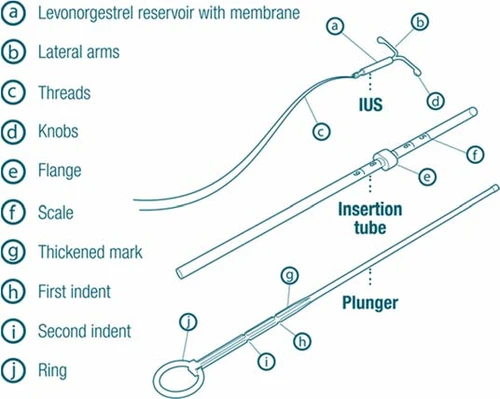
d- bulge
e- collar
f- scale
g- thickened segment
with marking
h- first constriction
i- second constriction
j- ring
IUS - intrauterine system
Insertion tube – insertion tube
Plunger - plunger
Preparation for insertion of the system
Figure 2 Figure 3
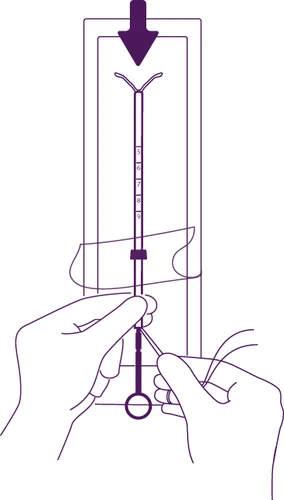
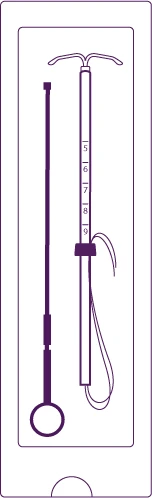
Load the plunger and intrauterine
system into the insertion tube
Partially open the pouch (approximately 1/3
of the length from the bottom) and insert the plunger into the insertion tube. Release the threads from under the collar so they hang freely.
Pull gently on the threads and load the intrauterine
system into the insertion tube. The arms of the
intrauterine system must lie in the same plane as the flat surface of the collar.
Figure 4
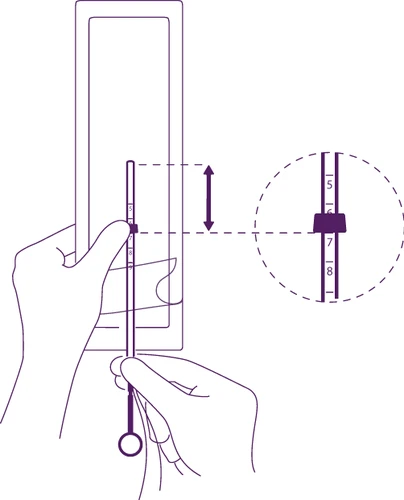
Set the lower edge of the collar to the
uterine depth measured during sounding
Set the blue collar so that its lower edge indicates the measured uterine depth. The flat surfaces of the collar must always remain parallel to the arms.
This will allow proper opening of the arms inside the uterine cavity.
Figure 5 Position the intrauterine system
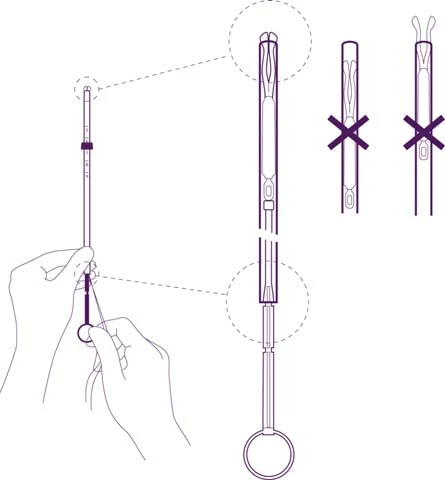
correctly within the insertion tube
While firmly holding the plunger, pull gently on the threads and slide the tube so that the intrauterine system is correctly positioned.
The bulges on the transverse arms must touch each other slightly above the upper edge of the insertion tube (enlargement 1), while the lower edge of the tube should align with the first constriction on the plunger (enlargement 2).
If the tube is not aligned with the first constriction on the plunger, pull more firmly on the threads.
Insertion
Figure 6
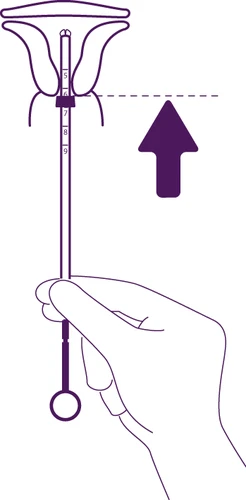
Insert the applicator with the intrauterine
system into the cervical canal until the
blue collar touches the cervix
Remove the applicator with the intrauterine system completely from the pouch, while firmly holding the plunger together with the insertion tube in the correct position.
Insert the assembly into the cervical canal until the blue collar touches the cervix.
Release the arms of the intrauterine system
Figure 7
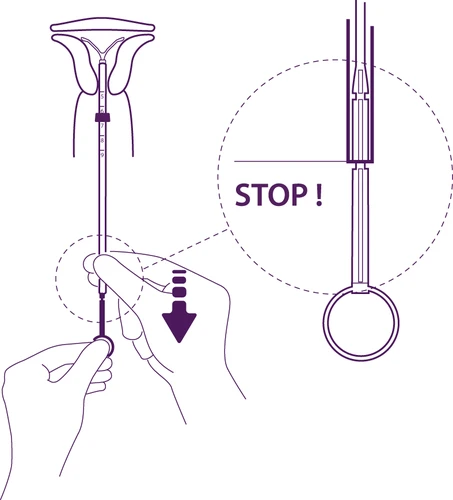
Hold the plunger steady, gently release the threads, and pull back the insertion tube until its lower edge aligns with the second constriction on the plunger.
Figure 8
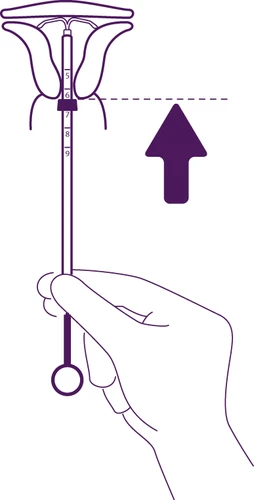
Advance the intrauterine system to the
fundus of the uterus
To position the intrauterine system correctly within the uterine cavity, advance the insertion tube together with the plunger until the blue collar again touches the cervix.
Following these instructions ensures proper placement of the Levosert system within the uterine cavity.
Figure 9
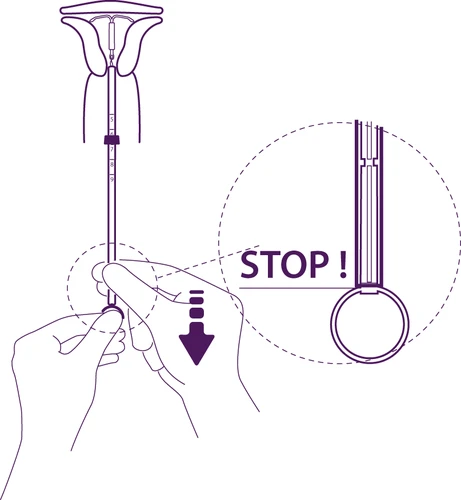
Release the intrauterine system from the
insertion tube into the uterine cavity
While holding the plunger motionless, slide back the insertion tube until it reaches the ring at the end of the plunger.
A slight resistance will be felt when sliding the thickened segment of the plunger. Nevertheless, continue sliding the tube until it reaches the ring at the end of the plunger.
Following these instructions ensures complete release of the Levosert system from the insertion tube.
Figure 10
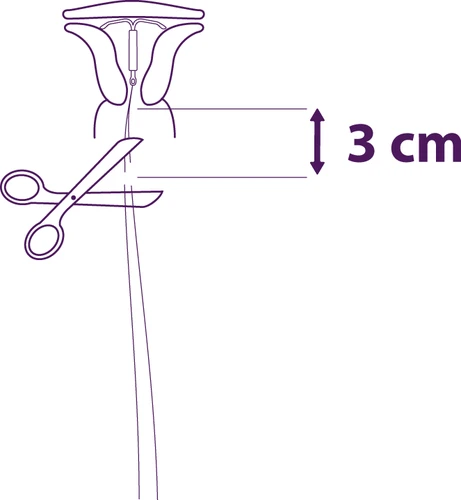
Remove the applicator components sequentially
and trim the threads
Remove first the plunger, then the insertion tube, sequentially.
Trim the threads to approximately 3 cm from the cervical os.
Insertion of the Levosert system is now complete.
Important information to consider during or after insertion:
- If there is suspicion that the intrauterine device is not in the correct position:
- Confirm the position of the inserted device using ultrasound examination or another appropriate radiological method.
- If incorrect placement is suspected, remove the Levosert system. After removal, do not reinsert the same Levosert intrauterine device.
IMPORTANT!
In case of difficulty during insertion and (or) severe pain or bleeding during or after insertion, consider the possibility of perforation and take appropriate steps, such as physical and ultrasound examination. If necessary, remove the system and insert a new, sterile one.
After insertion, patients should be re-examined 4 to 6 weeks later to check the threads and confirm that the system is in the correct position. Physical examination alone (including thread check) may not be sufficient to rule out partial perforation.
All cases of uterine perforation or difficulties during insertion must be reported to the pharmacovigilance authority:
Medical Department
GEDEON RICHTER POLSKA Sp. z o.o.
ul. ks. J. Poniatowskiego 5
05-825 Grodzisk Mazowiecki
Tel.: (22) 755 96 48,
e-mail [email protected]
Removal/replacement
To remove the Levosert system, gently pull on the threads using forceps. If the threads are not visible, but the system is detected in the uterine cavity during ultrasound examination, narrow forceps may be used. This method may require cervical dilation or surgical intervention. After removal of the Levosert system, check whether the system has been damaged.
During particularly difficult removal procedures, isolated cases have been reported where the hormone-containing cylinder has moved above the horizontal arms, concealing them within the cylinder. This situation does not require further intervention, provided the intrauterine system (IUS) remains intact. The bulges on the horizontal arms usually prevent complete detachment of the cylinder from the T-shaped frame.
Similar Medications
-
Kyleena
Form: system for transdermal delivery
Active substance Dosage levonorgestrel 19.5 mg Manufacturer: BAYER Oy
-
Kyleena
Form: system for transdermal delivery
Active substance Dosage levonorgestrel 19.5 mg Manufacturer: Bayer Hispania, S.L.
-
Kyleena
Form: system for transdermal delivery
Active substance Dosage levonorgestrel 19.5 mg Manufacturer: Bayer Healthcare SAS
-
Levosert easy
Form: system for transdermal delivery
Active substance Dosage levonorgestrel 52 mg (20 mcg/24h) Manufacturer: Gedeon Richter Plc., Odyssea Pharma SA
-
Mirena
Form: system for transdermal delivery
Active substance Dosage levonorgestrel 52 mg Manufacturer: Bayer Hellas ABEE
-
Mirena
Form: system for transdermal delivery
Active substance Dosage levonorgestrel 52 mg Manufacturer: Bayer Hellas ABEE
-
Mirena
Form: system for transdermal delivery
Manufacturer: Bayer AG
-
Mirena
Form: system for transdermal delivery
Active substance Dosage levonorgestrel 52 mg, 20 mcg/24 h Manufacturer: Bayer AG
-
Mirena
Form: system for transdermal delivery
Active substance Dosage levonorgestrel 52 mg, 20 mcg/24 h Manufacturer: Bayer Hispania, S.L.
-
Mirena
Form: system for transdermal delivery
Manufacturer: Bayer AG
-
Mirena
Form: system for transdermal delivery
Active substance Dosage levonorgestrel 52 mg/20 mcg/24 h Manufacturer: Bayer AG
-
Mirena
Form: system for transdermal delivery
Active substance Dosage levonorgestrel 52 mg, 20 mcg/24 h Manufacturer: Bayer AG
This page has been machine-translated and may contain inaccuracies. The original data is available in the manufacturing country's language.
Last data check: June 04, 2026 · Data source: Rejestr Produktów Leczniczych (URPL)