Kyleena
Poland
Table of Contents
- Patient Information Leaflet
- 1. What Kyleena is and what it is used for
- 2. Important information before using Kyleena
- 3. How to use Kyleena
- 4. Possible adverse effects
- 5. How to store Kyleena system
- 6. Contents of the pack and other information
- Information intended exclusively for healthcare professionals:
Patient Information Leaflet
Warning! Keep this leaflet! Information on the outer packaging in a foreign language.
Kyleena, 19.5 mg, intrauterine system
Levonorgestrelum
Please read this leaflet carefully before using this medicine, because it contains
important information for you.
- Keep this leaflet so that you can read it again if necessary.
- If you have any questions, please consult your doctor or nurse.
- This medicine has been prescribed for a specific individual. Do not pass it on to others.
- If you experience any adverse reactions, including any not listed in this leaflet, inform your doctor, pharmacist, or nurse. See section 4.
Table of contents:
- What Kyleena is and what it is used for
- What you should know before using Kyleena
- How to use Kyleena
- Possible side effects
- How to store Kyleena
- Contents of the pack and other information
1. What Kyleena is and what it is used for
Kyleena is a T-shaped intrauterine system, also known as a hormonal intrauterine device. It prevents pregnancy for up to five years and is a contraceptive method.
Kyleena contains a hormone called levonorgestrel.
Figure 1: Kyleena hormonal intrauterine system
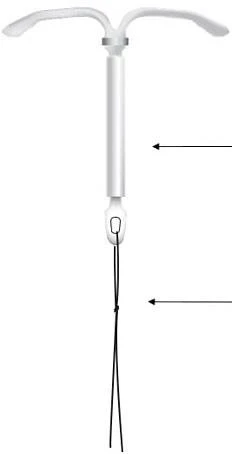
Hormone-containing
core
Removal
threads
How Kyleena works
Your doctor will insert Kyleena into your uterus. After insertion, a small amount of hormone is released continuously.
Kyleena prevents sperm from reaching the egg, thereby preventing pregnancy. It works in the following ways:
- It makes the cervical mucus thicker, which prevents sperm from passing through.
- It keeps the lining of the uterus (endometrium) thin.
Figure 2: Kyleena in the uterus
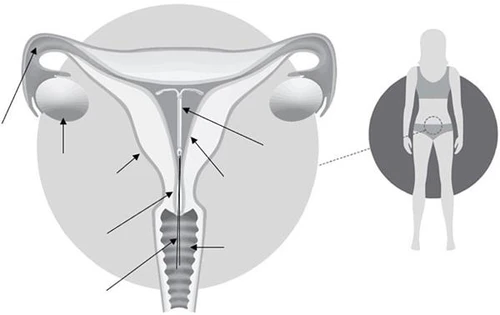
Fallopian tube
Kyleena
Ovary
Uterus
Endometrium
(endometrial lining)
Cervix
Vagina
Removal
threads
2. Important information before using Kyleena
Important information about Kyleena
Your doctor must ensure that this contraceptive method is suitable for you. Therefore, they will first ask several questions about your health. Only then will you be able to receive a prescription.
Kyleena is a contraceptive device that prevents pregnancy. However, no contraceptive method is 100% effective. Each year, approximately 2 to 3 out of 1,000 women using Kyleena become pregnant.
Kyleena does not protect against HIV infection or other sexually transmitted infections (STIs).
Kyleena is not emergency contraception, such as the "morning-after pill." Women who have had unprotected intercourse shortly before Kyleena insertion may become pregnant.
When NOT to use Kyleena:
- if you are pregnant (see section below "Pregnancy, breastfeeding and fertility"),
- if you currently have an infection of the uterus, fallopian tubes, or ovaries (pelvic inflammatory disease), or if you have had repeated episodes of such infections in the past,
- if you have a condition that increases the risk of pelvic infections, such as sexually transmitted infections or diseases that weaken the body's ability to fight infections (e.g. advanced stages of HIV infection),
- if you have a vaginal or cervical infection,
- if you gave birth, had an abortion, or miscarried within the last three months and subsequently developed a uterine infection,
- if your most recent cervical cytology (cervical smear test) results were abnormal,
- if you have or are suspected of having cancer of the uterus or cervix,
- if you have a tumour that is sensitive to progestogens, such as breast cancer,
- if you have unexplained vaginal bleeding,
- if your cervix or uterus has an abnormal shape, for example due to non-cancerous uterine conditions (e.g. fibroids),
- if you have liver disease or liver tumour,
- if you are allergic to levonorgestrel or any of the other ingredients of this medicine (listed in section 6).
Do not use Kyleena if any of the above situations apply to you. If in doubt, speak with your doctor.
Warnings and precautions
Tell your doctor before using Kyleena if:
- you have diabetes. Generally, no changes to your diabetes medication will be needed during use of Kyleena, but your doctor may need to review your treatment,
- you have epilepsy – seizures (epileptic fits) may occur during insertion or removal of Kyleena,
- you have previously had an ectopic pregnancy,
- you suffer from migraines that cause visual disturbances (e.g. sudden loss of vision in one eye) or other neurological symptoms (migraine with aura), or other severe headaches of unknown origin,
- you have jaundice (yellowing of the skin, nails, or whites of the eyes),
- you have high blood pressure,
- you have ever had a stroke or heart attack.
If any of these situations apply to you (or if you are unsure), you should speak with your doctor before Kyleena insertion.
Tell your doctor immediately if, while using Kyleena:
- you experience symptoms of pregnancy or have a positive pregnancy test – see section below "Pregnancy, breastfeeding and fertility";
- you experience symptoms of pregnancy along with abdominal pain, vaginal bleeding, or dizziness. This may indicate an ectopic pregnancy – see section 4, "Ectopic pregnancy";
- you develop abdominal pain, fever, unusual vaginal discharge, or pain during intercourse – these may indicate an infection requiring prompt treatment. See section 4, "Pelvic infection";
- you experience pain during intercourse – this may be due to a fluid-filled cyst (ovarian cyst) in the ovary. See section 4, "Ovarian cyst";
- you experience severe pain, very heavy bleeding, or can no longer feel the Kyleena threads in your vagina – this may indicate uterine perforation. See section 4, "Perforation".
If any of these symptoms occur, contact your doctor immediately.
You should also speak with your doctor about Kyleena if:
- you develop migraines or severe headaches for the first time,
- you notice yellowing of the skin, nails, or whites of the eyes – signs of jaundice,
- you notice an increase in blood pressure,
- you have a stroke or heart attack.
Your doctor will decide whether continued use of Kyleena remains safe for you.
Be aware of signs indicating that Kyleena may not be in the correct position
Signs that Kyleena may not be correctly positioned include:
- you can no longer feel the Kyleena threads with your finger in the vagina – see section 3, "How to check on your own that Kyleena is in the correct position",
- you or your partner can feel the lower plastic end of the Kyleena frame – see section 3, "How to check on your own that Kyleena is in the correct position",
- you experience sudden changes in your menstrual pattern. For example: your periods stopped after Kyleena insertion, and then suddenly returned. These symptoms may indicate that Kyleena has been expelled – see section 4, "Expulsion of Kyleena". They may also indicate perforation – see section 4, "Perforation".
If you experience any of these signs, you should contact your doctor immediately. Avoid sexual intercourse unless using a condom or diaphragm until your doctor confirms that Kyleena is still correctly positioned.
Your partner may feel the Kyleena threads during intercourse. This does not necessarily mean that Kyleena is out of position. However, if your partner feels uncomfortable, your doctor can offer solutions to help.
Hygiene products during menstruation
During your period, sanitary pads are recommended. If you use tampons or menstrual cups, change them carefully to avoid accidentally pulling on the Kyleena threads.
If you suspect that Kyleena has been displaced (see list of possible signs above), avoid sexual intercourse unless using a condom or diaphragm until you have seen your doctor.
Mental health problems
Some women using hormonal contraceptives, including Kyleena, may experience depression or low mood. For more information, see section 4, "Mental health problems".
Children and adolescents
Girls who have not yet started menstruating should not use Kyleena.
Kyleena and other medicines
Tell your doctor about all medicines you are currently taking, have recently taken, or plan to take.
Pregnancy, breastfeeding and fertility
Pregnancy
Kyleena must not be inserted if you are pregnant.
Absence of menstrual bleeding during use of Kyleena
Some women using Kyleena may stop having periods. If your periods stop, this is likely due to Kyleena. For more information, see section 4, "Irregular or infrequent menstrual bleeding".
If you have not had a period for 6 weeks, you may take a pregnancy test.
If the test shows you are not pregnant, there is no need to repeat it.
If you experience symptoms of pregnancy
If you experience symptoms such as missed periods, nausea, or tender breasts:
- take a pregnancy test,
- contact your doctor for an examination.
If you become pregnant
If you become pregnant while using Kyleena, contact your doctor immediately. They will decide whether Kyleena should be removed.
Removal of Kyleena carries a risk of miscarriage. However, leaving Kyleena in place during pregnancy may increase the risk of:
- miscarriage,
- premature delivery.
Discuss the benefits and risks of continuing the pregnancy with Kyleena in place with your doctor. Your doctor will monitor you closely. Contact your doctor immediately if you experience:
- abdominal cramps,
- abdominal pain,
- fever.
Kyleena contains a hormone called levonorgestrel. Ask your doctor about any possible effects this hormone may have on the developing baby. Very few reports have been received regarding the effect of levonorgestrel on the genital organs of female fetuses in the uterus.
Ectopic pregnancy
The risk of pregnancy while using Kyleena is very low. However, if you do become pregnant while using Kyleena, there is an increased risk that the fertilized egg (embryo) will implant outside the uterus, such as in the fallopian tube or abdominal cavity (ectopic pregnancy). This is a serious condition requiring immediate medical intervention. Future fertility may be reduced after an ectopic pregnancy. See section 4, "Ectopic pregnancy".
Breastfeeding
You may use Kyleena while breastfeeding. A small amount of the hormone passes into breast milk. However, Kyleena does not affect the quality or quantity of breast milk or the growth and development of the breastfed infant.
Fertility
If you wish to become pregnant, contact your doctor to have Kyleena removed.
Kyleena does not affect fertility after removal.
Driving and operating machinery
Kyleena has no known effect on the ability to drive or operate machinery.
3. How to use Kyleena
Starting to use Kyleena
- Before inserting Kyleena, it must be confirmed that the woman is not pregnant.
- Kyleena should be inserted within 7 days of the start of menstrual bleeding. If inserted within this time frame, Kyleena will be effective immediately and will prevent pregnancy.
- If Kyleena cannot be inserted within 7 days of the onset of menstrual bleeding, or if menstruation occurs at unpredictable times, it may be inserted at any time. In such cases, the woman must not have had unprotected sexual intercourse since her last menstrual period, and a negative pregnancy test must be performed before insertion. Additionally, Kyleena may not provide reliable contraceptive protection immediately. Therefore, a barrier method of contraception (e.g. condoms) should be used, or sexual intercourse should be avoided, during the first 7 days after insertion.
- Kyleena is not an emergency contraceptive method such as the "morning-after pill".
Starting to use Kyleena after childbirth
- Kyleena may be inserted after delivery once the uterus has returned to its normal size, but not earlier than 6 weeks postpartum (see section 4, subsection "Perforation").
- See also "Starting to use Kyleena" above for further information on timing of insertion.
Starting to use Kyleena after miscarriage
- Kyleena may be inserted immediately after a miscarriage if the pregnancy lasted less than 3 months, provided there is no genital tract infection; it will then be effective immediately.
Inserting a new Kyleena when replacing the current system
- The system may be replaced with a new one at any time during the menstrual cycle and will be effective immediately.
Switching from another contraceptive method (e.g. combined hormonal contraceptives, implant)
- Kyleena may be inserted immediately if it is reasonably certain that the woman is not pregnant.
- If more than 7 days have passed since the start of menstrual bleeding, abstinence or additional contraceptive protection should be used for the next 7 days.
What happens during insertion of Kyleena?
Examination before insertion
Before inserting Kyleena, the doctor may perform certain examinations, such as:
- Cervical smear (cytology),
- Breast examination,
- Other tests if necessary, for example for sexually transmitted infections.
Insertion of Kyleena
First, the doctor will examine the size and position of the uterus (pelvic examination).
The doctor will insert a speculum into the vagina and clean the cervix with an antiseptic solution. Sometimes the doctor may use local anaesthesia of the cervix. The doctor then inserts Kyleena into the uterus through a thin, flexible, plastic tube (the inserter).
Insertion of Kyleena may sometimes cause discomfort. Some women may experience dizziness or fainting. Pain or slight vaginal bleeding may also occur. This is not unusual.
After insertion, the doctor will give the woman a patient reminder card. This card can be used to record the dates of follow-up visits. The card should be brought to every visit.
Follow-up after insertion
Kyleena should be checked by a doctor 4–6 weeks after insertion. The doctor will decide how often follow-up visits should be scheduled. Kyleena should be checked at least once a year. The patient reminder card should be brought to every visit.
How to check yourself that Kyleena is in the correct position
This can be done by gently inserting a finger into the vagina. The threads should be felt at the end of the vagina near the cervix. The cervix is the entrance to the uterus.
Warning: Do not pull on the threads, as this may accidentally dislodge Kyleena.
If the threads cannot be felt, the doctor must check whether Kyleena is still in the correct position. Avoid sexual intercourse unless a condom or diaphragm is used, until you have seen the doctor.
If the woman or her partner feels the lower plastic end of the Kyleena frame
- Kyleena is not in the correct position. Contact the doctor immediately. Avoid sexual intercourse until the visit, unless a condom or diaphragm is used.
Removal of Kyleena
Kyleena is effective for up to 5 years. It should be removed after 5 years, but may also be removed at any time before then. The doctor will remove the system. Fertility may return after removal.
Removal of Kyleena may be uncomfortable. Some women may experience dizziness or fainting during or immediately after removal. Slight pain or vaginal bleeding may also occur. This is not unusual.
Continuation of contraception after removal of Kyleena
If the woman does not wish to become pregnant after removal of Kyleena, it should be noted that:
- It is best to remove Kyleena within 7 days of the start of the menstrual cycle. If removed at any other time than during menstruation, a condom or diaphragm should be used during intercourse for 7 days before removal.
- If the woman has irregular periods or no periods at all, a condom or diaphragm should be used during intercourse for 7 days before removal. Irregular periods mean that the number of days between cycles is not always the same.
- A new Kyleena may also be inserted immediately after removal of the previous one. In this case, no additional contraception is needed. If the woman does not wish to continue with the same method, she should consult her doctor about other reliable contraceptive methods.
4. Possible adverse effects
Like all medicines, this medicine can cause adverse effects, although not everyone will experience them.
Serious adverse effects
There are certain serious adverse effects, meaning that if any of these occur, you should contact your doctor immediately:
- abdominal pain, fever, unusual vaginal discharge, or abnormal vaginal bleeding or pain during sexual intercourse – this may be an infection of the uterus, fallopian tubes or ovaries – see below "Pelvic infection";
- severe pain resembling menstrual cramps, pain greater than expected, or very heavy vaginal bleeding after insertion of the system. If pain or bleeding persists for longer than a few weeks, sudden changes in the menstrual cycle, pain during sexual intercourse occur, or the threads of the system are no longer detectable, these may be symptoms of perforation – see below "Perforation";
- periods have stopped, but vaginal bleeding continues, or there is severe or persistent lower abdominal pain – these may be symptoms of ectopic pregnancy – see below "Ectopic pregnancy";
- mood changes and symptoms of depression – see below "Mental health problems";
- allergic reaction – such as skin rash, hives or swelling of the tongue, lips, face or throat. This type of reaction is very rare.
If you think any of the above points apply to you, you should contact your doctor immediately.
Other adverse effects
Below is a list of other possible adverse effects. The most common adverse effects are listed at the top, and the rarest at the bottom.
Very common adverse effects: occur in more than 1 in 10 women
- headache
- abdominal or pelvic pain
- acne or oily skin
- changes in menstruation, for example:
- heavier or lighter bleeding than usual
- bleeding or light spotting between periods
- irregular or infrequent periods
- absence of periods altogether. More information on this can be found in the section "Irregular or infrequent menstrual bleeding" below
- small fluid-filled cyst on the ovary (ovarian cyst). More information on this can be found in the section "Ovarian cyst" below
- inflammation of the vulva and vagina.
Common adverse effects: occur in less than 1 in 10 women
- decreased sex drive
- migraine
- dizziness
- nausea
- hair loss
- pain during menstruation
- breast pain or tenderness
- spontaneous expulsion of the Kyleena system (complete or partial). More information on this can be found in the section "Expulsion of the Kyleena system" below
- vaginal discharge
- weight gain.
Uncommon adverse effects: occur in less than 1 in 100 women
- increased body hair growth.
Description of selected possible adverse effects:
Ectopic pregnancy
Symptoms of ectopic pregnancy include:
- periods have stopped, but vaginal bleeding reappears and does not stop,
- severe or persistent pain in the lower abdomen,
- normal signs of pregnancy such as nausea or tender breasts, but also vaginal bleeding and dizziness,
- positive pregnancy test.
You should contact your doctor immediately if you experience any of these symptoms.
The risk of becoming pregnant while using the Kyleena system is very low. However, if a woman does become pregnant while using Kyleena, there is an increased risk that the fertilized egg (embryo) will implant outside the uterus, for example in a fallopian tube or abdominal cavity (ectopic pregnancy). Approximately 2 out of 1000 women using the Kyleena system for one year will experience an ectopic pregnancy. This is a serious condition requiring immediate medical intervention. Surgery may be necessary.
Some women are at higher risk of ectopic pregnancy. These include women who:
- have previously had an ectopic pregnancy,
- have had surgery on the fallopian tubes,
- have had a pelvic infection.
Irregular or infrequent menstrual bleeding
Your periods are likely to change due to the use of the Kyleena system. For example:
- You may experience light bleeding between periods. This type of bleeding is called spotting.
- Your periods may become less regular. In this case, the number of days between cycles may vary.
- Your periods may become shorter or longer.
- Bleeding may be lighter or heavier than usual.
- Your periods may stop altogether.
These changes often occur only during the first few months after insertion. For example:
- Bleeding between periods or spotting is most common during the first 3 to 6 months.
- In some women, periods may initially be heavier than usual.
Gradually, bleeding may become lighter each month and periods may become shorter. Eventually, some women may stop having periods altogether.
No periods? This is usually normal. In most cases, it does not mean you are pregnant or going through menopause. Here's why: normally, the lining of the uterus thickens each month in preparation for pregnancy, and then becomes thin again during menstruation. The Kyleena system reduces thickening of the uterine lining. This may cause periods to stop. Hormone levels usually remain normal.
Normal menstruation usually returns after removal of the Kyleena system. If this does not happen, you should contact your doctor.
Pelvic infection
The Kyleena system does not contain bacteria, viruses or fungi (it is sterile), including the inserter. Nevertheless, pelvic infection may still occur during or within the first 3 weeks after insertion of the Kyleena system. This may affect the lining of the uterus, fallopian tubes or ovaries. This may affect fewer than 1 in 10 women.
Symptoms may include:
- abdominal pain,
- fever,
- unusual vaginal discharge,
- pain during sexual intercourse.
The risk of pelvic infection is higher if:
- you have a sexually transmitted infection,
- you or your partner have multiple sexual partners,
- you have had a pelvic infection in the past.
If you develop a pelvic infection, it is important to contact your doctor immediately. A pelvic infection may lead to:
- fertility problems in the future – this may make it more difficult to become pregnant,
- ectopic pregnancy if you do become pregnant,
- severe infection or blood poisoning (sepsis). This is very rare and usually occurs shortly after insertion of the Kyleena system. Sepsis means a life-threatening illness caused by infection.
Sepsis can be fatal if not treated.
The Kyleena system must be removed if the pelvic infection:
- occurs repeatedly,
- is very severe,
- does not resolve despite treatment.
Expulsion of the Kyleena system
The Kyleena system may be displaced or expelled. This is caused by uterine muscle contractions during menstruation. This may occur in fewer than 1 in 10 women, especially if:
- you are overweight at the time of insertion,
- you have previously had heavy periods.
If the Kyleena system is out of place, it may no longer work properly. The risk of pregnancy is then increased. If it is expelled, it will no longer prevent pregnancy.
If the Kyleena system is displaced or expelled, you may experience pain or vaginal bleeding that is different from normal. It is also possible that the Kyleena system is expelled without you noticing.
The Kyleena system usually reduces the amount of blood lost during menstruation. The longer you use it, the less blood you lose during your period. This means that if you suddenly start losing more blood during your period, the Kyleena system may have been expelled.
Section 3 "How to check on your own that the Kyleena system is in the correct position" provides information on how to check whether it is in the correct position and what to do if you suspect it is no longer in place.
Perforation
The Kyleena system may be pushed into or through the uterine wall. This is called perforation. Perforation usually occurs during insertion of the Kyleena system. Perforation does not always cause pain, so it may not be noticed immediately. If the system is no longer in the correct position due to perforation, it will not prevent pregnancy. The doctor must remove it as soon as possible. Sometimes surgery is required.
Perforation occurs in fewer than 1 in 1000 women. The risk of perforation is higher (in fewer than 1 in 100 women) if:
- you are breastfeeding at the time of insertion of the Kyleena system,
- you have given birth within the last 9 months before insertion of the Kyleena system.
Perforation may have occurred if:
- you experience severe pain resembling menstrual pain or pain stronger than expected,
- very heavy vaginal bleeding occurs after insertion,
- pain or bleeding persists for longer than a few weeks,
- sudden changes in the menstrual cycle occur,
- pain during sexual intercourse occurs,
- the threads of the Kyleena system are no longer detectable.
If you suspect perforation, you should contact your doctor immediately. You should inform the doctor about the Kyleena system, especially if it is not the person who inserted it.
Ovarian cyst
Sometimes, while using the Kyleena system, a small fluid-filled "pouch" may appear on the ovary. This pouch is called an ovarian cyst.
Symptoms of an ovarian cyst may include:
- pelvic pain,
- pain or discomfort during sexual intercourse.
An ovarian cyst usually resolves on its own. However, it may require medical treatment. In rare cases, surgery may be necessary. If you suspect you may have an ovarian cyst, you should contact your doctor.
Mental health problems
Some women using hormonal contraceptives, including the Kyleena system, experience depression or low mood.
Depression can be severe and sometimes lead to suicidal thoughts. If you experience mood changes or symptoms of depression, you should contact your doctor as soon as possible. Depression and low mood may occur in fewer than 1 in 100 women using the Kyleena system.
Reporting of adverse effects
If you experience any adverse effects, including any not listed in this leaflet, tell your doctor, pharmacist or nurse.
Adverse effects can also be reported directly to the Department of Monitoring of Adverse Drug Reactions, Office for Registration of Medicinal Products, Medical Devices and Biocidal Products, Al. Jerozolimskie 181C, 02-222 Warsaw, Tel.: +48 22 49 21 301, fax: +48 22 49 21 309, website: https://smz.ezdrowie.gov.pl.
Adverse effects can also be reported to the marketing authorization holder or parallel importer.
By reporting adverse effects, additional information on the safety of the medicine can be collected.
5. How to store Kyleena system
No special storage instructions are required.
The medicinal product should be kept out of sight and reach of children.
Do not open the blister (the plastic container containing the Kyleena system). Only a doctor or nurse may do this.
The system must not be inserted after the expiry date stated on the carton and blister after: Expiry (EXP). The expiry date refers to the last day of the stated month.
6. Contents of the pack and other information
What Kyleena contains
The active substance is levonorgestrel. The intrauterine system contains 19.5 mg of
levonorgestrel.
The other components are:
elastomeric polydimethylsiloxane,
elastomeric polydimethylsiloxane containing 30-40wt% anhydrous colloidal silica,
silver
T-shaped body: polyethylene containing 20-24% barium sulfate
Threads: polypropylene, copper phthalocyanine.
What Kyleena looks like and contents of the pack
Kyleena is a hormonal intrauterine system (intrauterine therapeutic system). It is T-shaped and white in colour. On the vertical stem there is a small hormone reservoir containing levonorgestrel. Attached to the lower end of the system are two blue threads, which allow the doctor to remove Kyleena when necessary. A silver ring located near the horizontal arms of Kyleena is visible to the physician during ultrasound examination.
Pack size:
- 1x1 intrauterine therapeutic system.
For more detailed information, please contact the marketing authorisation holder or the parallel importer.
Marketing authorisation holder in France, the country of export:
Bayer Healthcare SAS
1 Rue Claude Bernard
59000 Lille
France
Manufacturer:
Bayer Oy
Pansiontie 47
20210 Turku
Finland
Parallel importer:
Allpharm Sp. z o.o. sp.k.
ul. M. Zdziechowskiego 11/4
02-659 Warsaw
Repackaged in:
CEFEA Sp. z o.o. Sp. Synoptis Industrial Sp. z o.o. Shiraz Productions Sp. z o.o.
spółka komandytowa ul. Forteczna 35-37 ul. Tymiankowa 24/28
ul. Działkowa 56 87-100 Toruń 95-054 Ksawerów
02-234 Warsaw
Marketing authorisation number in France, the country of export: 34009 300 947 5 4
Parallel import authorisation number:
This medicinal product is authorised for marketing in the Member States of the European Economic Area under the following names: - Austria, Belgium, Czech Republic, Denmark, Estonia, Finland, France, Germany, Iceland, Ireland, Italy, Latvia, Lithuania, Netherlands, Norway, Poland, Portugal, Slovenia, Spain, Sweden: Kyleena
Detailed and up-to-date information on this medicinal product is available by scanning the QR code with a smartphone.
QR code for the Patient Leaflet
The Patient Card can be downloaded by scanning the QR code with a smartphone.
QR code for the Patient Card
Information intended exclusively for healthcare professionals:
INSERTION INSTRUCTIONS
Kyleena, 19.5 mg, intrauterine system
Levonorgestrelum
To be inserted by a physician, using aseptic technique.
The Kyleena system is supplied in a sterile package with an integrated applicator that allows one-handed insertion. Do not open the package until the insertion procedure is about to begin. Do not re-sterilize. The Kyleena system is intended for single use only. Do not use if the blister is damaged or open. Do not insert after the expiry date stated on the cardboard box and blister:
Expiry (EXP).
Any unused portion of the medicinal product or waste material should be disposed of in accordance with local regulations.
The Kyleena system is supplied with a patient reminder card inside the outer packaging. The patient reminder card should be completed and given to the woman after insertion of the system.
Preparation for insertion
- Examine the woman to exclude contraindications to insertion of the Kyleena system (see Summary of Product Characteristics section 4.3 and "Examinations/medical consultations" in section 4.4).
- Insert a speculum, visualize the cervix, and thoroughly clean the cervix and vagina with an appropriate antiseptic solution.
- If necessary, use assistant support.
- Grasp the anterior lip of the cervix with surgical hooks or other forceps to stabilize the uterus. If the uterus is retroflexed, grasping the posterior lip of the cervix may be more appropriate. Gently pulling on the forceps may help straighten the cervical canal. The forceps should remain in place, and gentle traction on the cervix should be maintained throughout the insertion procedure.
- Insert a uterine sound through the cervical canal to the fundus to measure uterine depth, confirm uterine direction, and exclude the presence of intrauterine abnormalities (e.g. septum, submucosal fibroids) or previously inserted intrauterine contraceptive devices that have not been removed. If difficulty is encountered, consider dilating the canal. If cervical dilation is required, consider using analgesics and/or a paracervical block.
Insertion
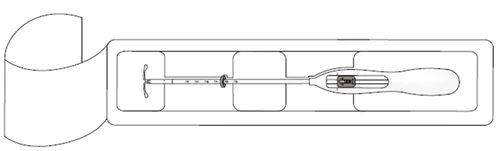
- First, fully open the sterile package (Figure 1). Then apply aseptic technique and wear sterile gloves.
Figure 1
- Slide Figure 2
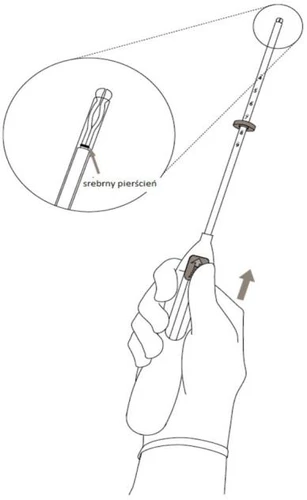
the slider forward in
the direction
indicated by
the arrow until
it stops, in order
to load the
Kyleena system
into the
insertion tube
(Figure 2).
IMPORTANT! Do not push the slider downward, as this may cause premature release of the Kyleena system. Once released, the Kyleena system cannot be reloaded.
- While holding the slider in the furthest position, position the upper
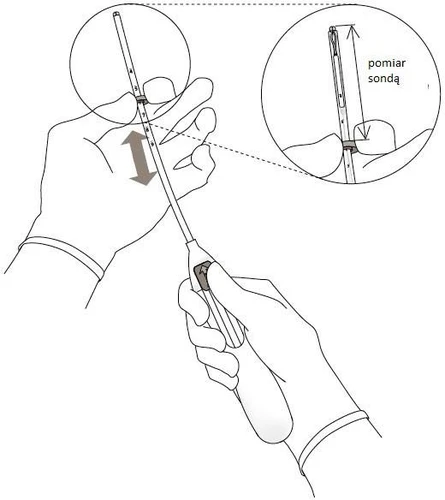
edge of the
stopper so that
it corresponds
to the uterine
depth measured
by sounding
(Figure 3).
Figure 4
- While holding the
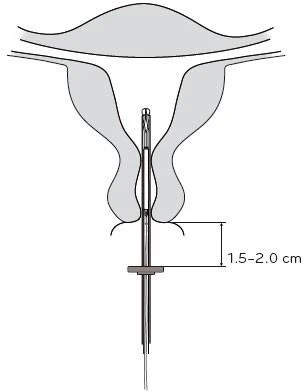
slider in the furthest
position, insert
the insertion
tube through the
cervix until the
stopper is about
1.5–2.0 cm from
the cervix (Figure
4).
IMPORTANT! Do
not force the
insertion of the
applicator. If
necessary, dilate
the cervical canal.
- While holding the applicator steady, Figure 5
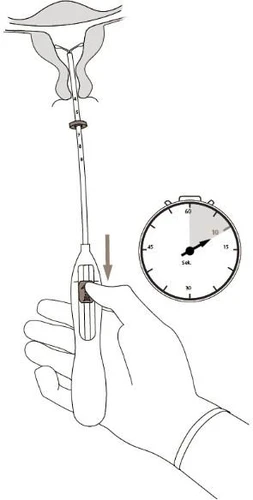
slide the
slider forward
to the line mark
to deploy the
horizontal arms
of the Kyleena
system (Figure
5). Wait 5–10
seconds to allow
complete opening
of the horizontal
arms.
Figure 6
- Gently insert the
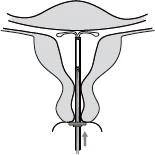
applicator toward
the fundus of the
uterine cavity until
the stopper
touches the
cervix. The
Kyleena system
is then positioned
at the fundus
(Figure 6).
- While holding the applicator in place, release the Kyleena system by sliding the
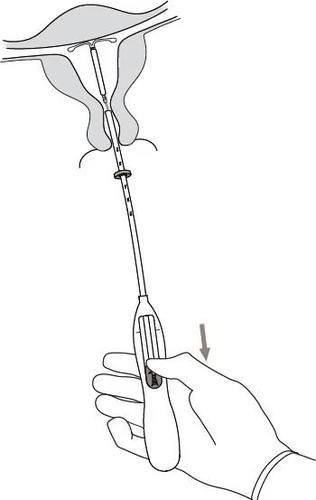
slider
completely
downward
(Figure 7). While
keeping the
slider fully in the
downward position,
gently remove
the applicator by
withdrawing it.
Trim the threads,
leaving 2–3 cm
extending outside
the cervix.
IMPORTANT! If incorrect placement of the system is suspected, verify its location (e.g., by ultrasound). Remove the system if it is not correctly positioned within the uterine cavity. A removed system must not be reinserted.
Removal/replacement of the system
For instructions on removal/replacement of the system, refer to the Product Information Leaflet of Kyleena.
Kyleena system
Figure 8
is removed by
gently
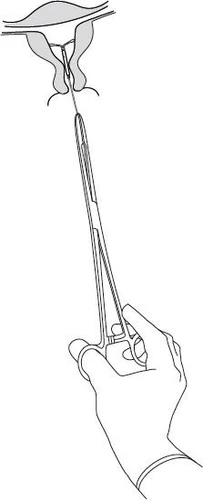
pulling on the
threads with
forceps (Figure 8).
A new Kyleena
system may be
inserted immediately
after removal of
the previous one.
After removal of
the Kyleena system,
inspect it to ensure
it is intact and has
been completely
removed.
Marketing Authorisation Holder in France, country of export:
Bayer Healthcare SAS
1 Rue Claude Bernard
59000 Lille
France
Manufacturer:
Bayer Oy
Pansiontie 47
20210 Turku
Finland
Parallel Importer:
Allpharm Sp. z o.o. sp.k.
ul. M. Zdziechowskiego 11/4
02-659 Warszawa
Repackaged in:
CEFEA Sp. z o.o. Sp. Synoptis Industrial Sp. z o.o. Shiraz Productions Sp. z o.o.
komandytowa ul. Forteczna 35-37 ul. Tymiankowa 24/28
ul. Działkowa 56 87-100 Toruń 95-054 Ksawerów
02-234 Warszawa
Marketing Authorisation Number in France, country of export: 34009 300 947 5 4
Parallel Import Authorisation Number: 377/25
Date of approval of the instructions: 26.11.2025