Xembify
Italy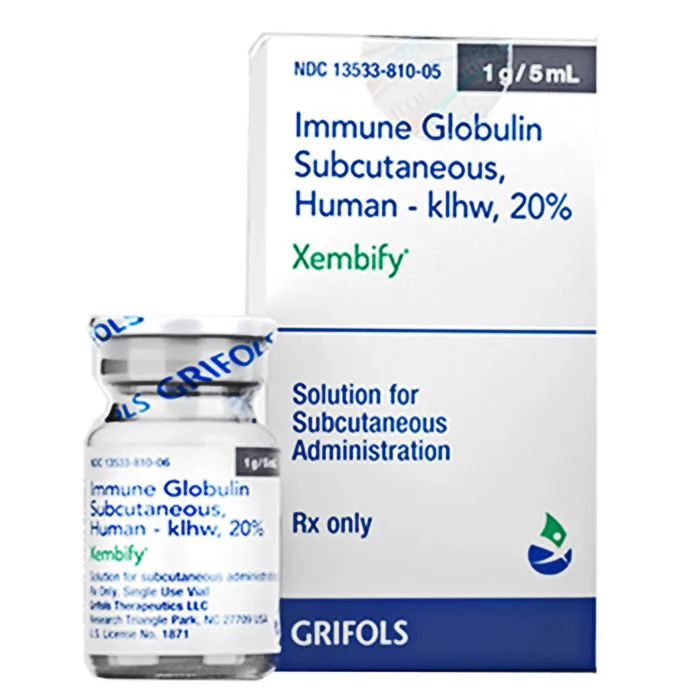
Instructions for Use
Package leaflet: Information for the patient
Xembify 200 mg/mL solution for subcutaneous injection
Normal human immunoglobulin (SCIg)
This medicinal product is subject to additional monitoring. This will allow rapid identification of new safety information. You can help by reporting any side effects you experience while taking this medicine. See the end of section 4 for information on how to report side effects.
Please read all of this leaflet carefully before using this medicine because it contains important information for you.
- Keep this leaflet. You may need to read it again.
- If you have any questions, ask your doctor, pharmacist, or nurse.
- This medicine has been prescribed for you only. Do not give it to other people, even if their symptoms are the same as yours, as it may be harmful.
- If you experience any side effect, including those not listed in this leaflet, tell your doctor, pharmacist, or nurse. See section 4.
Contents of this leaflet:
- What Xembify is and what it is used for
- What you need to know before using Xembify
- How to use Xembify
- Possible side effects
- How to store Xembify
- Contents of the pack and other information
1. What Xembify is and what it is used for
What Xembify is
Xembify is a solution of human immunoglobulins (antibodies, mainly immunoglobulin G)
that helps the body fight infections.
Xembify contains immunoglobulins derived from the plasma of healthy individuals. Immunoglobulins help
the body fight infections caused by bacteria and viruses. The medicine works in exactly the same way as the
immunoglobulins naturally present in human blood, produced by the immune system.
What Xembify is used for
You are using Xembify because you have abnormally low levels of immunoglobulins due to a
medical condition called immunodeficiency. Xembify infusions increase immunoglobulin (antibody) levels in the blood, particularly immunoglobulin G (IgG), restoring them to normal levels.
This medicine is intended for adults, children and adolescents (0–18 years) who do not have sufficient antibodies (replacement therapy):
- Patients with primary immunodeficiency syndromes (PID), with a congenital deficiency of antibodies.
- Hypogammaglobulinemia (a condition involving low levels of immunoglobulins in the blood) and recurrent bacterial infections in patients with chronic lymphocytic leukemia (a blood cancer characterized by excessive production of white blood cells), in whom antibiotic prophylaxis has not been effective.
- Hypogammaglobulinemia and recurrent bacterial infections in multiple myeloma (a cancer composed of cells derived from bone marrow).
- Hypogammaglobulinemia in patients after stem cell transplantation (allogeneic hematopoietic stem cell transplantation (HSCT)), when receiving stem cells from another person.
2. What you need to know before using Xembify
Do not use Xembify
- if you are allergic to normal human immunoglobulin or to any of the other ingredients of this medicine (listed in section 6);
- if you have previously had a severe allergic reaction (e.g. anaphylaxis) to a human immunoglobulin;
- if you have antibodies against immunoglobulin A (IgA) in your blood. This may occur if you have IgA deficiency. Since Xembify contains IgA, you may experience an allergic reaction;
- by injection into a blood vessel (intravenous route) or into a muscle (intramuscular route).
Inform your doctor, pharmacist or nurse before infusion of Xembify if you have previously experienced adverse effects due to an immunoglobulin or one of its components.
Warnings and precautions
Talk to your doctor, pharmacist or nurse before using Xembify.
- Inform your doctor if you have previously had heart disease, blood vessel disease, a blood clot in a blood vessel (e.g. stroke, heart attack or pulmonary embolism), thick blood, diabetes mellitus, high blood pressure, a bleeding or coagulation disorder, or if you have been immobile for a period of time. Inform your doctor if you are taking estrogens, usually as contraceptives. You may have an increased risk of developing a blood clot after infusion of Xembify. Contact your doctor immediately if you experience shortness of breath, chest pain, pain and swelling in an arm or leg, or weakness or numbness on one side of the body. You may have a blood clot in a blood vessel.
- Contact your doctor if you experience severe headache, neck stiffness, drowsiness, fever, extreme sensitivity to light, nausea or vomiting. These adverse effects may occur hours or even several days after infusion of Xembify. You may have aseptic meningitis syndrome.
- Xembify may cause kidney problems, including kidney failure. Inform your doctor if you have reduced kidney function.
- Xembify may interfere with certain blood tests (serological tests). Always inform your doctor about treatment with Xembify before undergoing blood tests. Allergic reactions
Allergic reactions are rare. However, you may be allergic to immunoglobulins without knowing it. Allergic reactions such as sudden drop in blood pressure or anaphylactic shock (marked reduction in blood pressure with other symptoms such as throat swelling, breathing difficulties and skin rash) are rare, but may occasionally occur even if you have not previously experienced adverse effects with immunoglobulins. The risk of allergic reactions is higher if you have IgA deficiency with anti-IgA antibodies. Make sure to inform your doctor if you have IgA deficiency. Xembify contains IgA, which may increase the risk of an allergic reaction.
Refer to section 4 of this leaflet (Possible side effects) for signs and symptoms of an allergic reaction.
Risk of transmission of diseases
Xembify is purified from human blood obtained from healthy donors. When biological medicines are administered, the possibility of infectious diseases due to transmission of pathogens cannot be completely ruled out. However, for products prepared from human plasma, the risk of transmission of pathogens is reduced by: (1) epidemiological monitoring of the donor population and selection of individual donors through medical interviews; (2) screening of individual donations and plasma pools for viral infection markers; and (3) manufacturing processes with demonstrated capacity to inactivate/remove pathogens.
Despite these measures, when medicines prepared from human blood or plasma are administered, the possibility of transmitting an infection cannot be completely excluded. This also applies to unknown or emerging viruses or other types of infections.
The measures taken are considered effective against enveloped viruses such as human immunodeficiency virus (HIV), hepatitis B virus and hepatitis C virus, and against the non-enveloped hepatitis A virus. The measures taken may have limited effectiveness against non-enveloped viruses such as parvovirus B19.
Immunoglobulins have not been associated with hepatitis A or parvovirus B19 infections, probably because the antibodies against these infections contained in the product have a protective effect.
It is strongly recommended that each time you receive a dose of this medicine, you record the name and batch number of the medicine (shown on the label and packaging after “batch”) to maintain a record of the batches used.
Children and adolescents
The warnings and precautions apply to adults, children and adolescents.
Other medicines and Xembify
Inform your doctor or pharmacist if you are taking, have recently taken or might take any other medicines.
Xembify must always be infused alone, without being mixed with other medicines.
If you need to be vaccinated, inform your doctor that you are being treated with Xembify. Xembify may interfere with certain vaccines (vaccines containing live viruses), such as measles, mumps, rubella and varicella. You may need to wait up to 3 months after administration of Xembify before being vaccinated. For the measles vaccine, the waiting period may be up to 1 year.
These interactions apply to children, adults and elderly people.
Pregnancy, breastfeeding and fertility
If you are pregnant, think you may be pregnant or are planning to become pregnant, or if you are breastfeeding, ask your doctor or pharmacist for advice before taking this medicine.
Xembify has not been studied in pregnant women or during breastfeeding, and therefore your doctor or pharmacist will advise you. Clinical experience with immunoglobulins suggests that harmful effects on the course of pregnancy or on the fetus or infant are not expected. If you are breastfeeding, the immunoglobulins contained in Xembify may also be present in breast milk. These may protect the infant from certain infections.
Clinical experience with immunoglobulins suggests that harmful effects on fertility are not expected.
Driving and using machines
The ability to drive vehicles and use machinery may be impaired by certain adverse reactions, such as dizziness, associated with Xembify. If adverse reactions occur during treatment, wait until they resolve before driving vehicles or using machinery.
3. How to use Xembify
Use this medicine exactly as instructed by your doctor. If you have any doubts, consult your doctor.
Xembify must be infused under the skin (subcutaneous administration or s.c.).
Treatment with Xembify will be initiated by your doctor or nurse. Do not start treatment with Xembify at home until you have received complete instructions.
Dose
The recommended dose and dosing schedule are determined by your doctor. Your doctor will calculate the correct dose for you based on your body weight, any previous treatments you have received, and your response to treatment. Always use this medicine exactly as stated in this leaflet or as instructed by your doctor, pharmacist, or nurse. If you have any doubts, consult them.
The first dose may be a so-called "loading dose," intended to rapidly increase immunoglobulin levels in your blood. Your doctor will decide whether you require a "loading dose" (for adults or children) ranging from at least 1 to 2.5 mL/kg body weight. This loading dose may be divided over several days.
You will receive Xembify regularly, from once daily to once every two weeks; the cumulative monthly dose will range between approximately 1.5 and 5 mL/kg body weight. Your doctor may adjust the dose depending on your response to treatment.
Do not change this dose or the interval between doses without first consulting your doctor. If you believe you need a different dose or wish to modify the dosing schedule, consult your doctor first. Contact your doctor if you miss a dose.
You will need routine blood tests to measure immunoglobulin levels in your blood. Discuss the schedule with your doctor.
There are no differences between the dose for adults, including elderly patients (65 years of age and older), and that for children and newborns, since the amount of Xembify infused is based on body weight.
Method of administration
You will receive Xembify by slow infusion under the skin into fatty tissue (subcutaneous infusion). Xembify will be administered using a pump or injector. Subcutaneous infusion for home treatment must be initiated and monitored by a healthcare professional experienced in patient training for home therapy.
You (or the person caring for you) must receive instructions on:
- use of a delivery device, such as a syringe pump, if necessary
- aseptic infusion techniques (germ-free)
- completion of a treatment diary, and
- recognition of serious adverse reactions and actions to take in such cases.
Carefully follow your doctor’s instructions regarding dose, infusion rate, and infusion schedule for Xembify to ensure effective treatment.
Infusion sites
Xembify is for subcutaneous infusion only. Xembify must be infused into subcutaneous tissue at sites such as:
- abdomen,
- thighs,
- upper arms, and
- lateral hip.
When selecting infusion sites, avoid areas with bones, visible blood vessels, scars, or any areas of inflammation (irritation) or infection. Rotate sites with each administration.
For the first two infusions, the infusion rate will start at 10 mL per hour per infusion site. If you do not experience any adverse reaction (see section 4), the rate may be increased every 10 minutes up to a maximum of 20 mL per hour per infusion site for children and adolescents, and 25 mL per hour per infusion site for adults. After two infusion sessions, the infusion rate may be gradually increased up to 35 mL per hour per infusion site. Consult your doctor before increasing the infusion rate.
It is possible to infuse simultaneously at more than one site, provided the sites are at least 5 cm apart. Adults may divide the dose among multiple sites, especially if the volume exceeds 30 mL. There is no limit to the number of sites you may use. You may use more than one pump to achieve this.
Instructions for use
Subcutaneous infusion for home treatment must be initiated and monitored by a healthcare professional experienced in training patients for home therapy. Appropriate infusion pumps may be used for subcutaneous administration of immunoglobulins. The patient or caregiver must receive training on the use of the infusion pump, infusion techniques, completion of a treatment diary, recognition of severe adverse reactions, and actions to take if they occur.
Follow the steps below and use an aseptic technique when administering Xembify.
Before use, allow the solution to reach room or body temperature (from 20°C to 37°C). This may take 60 minutes or longer.
Do not apply heat or use a microwave.
Step 1: Gather materials
Gather the Xembify vial(s), accessories, sharps container, patient treatment diary/log, and infusion pump(s).
Step 2: Clean the surface
Prepare the infusion area on a clean, flat, non-porous surface, such as a kitchen countertop. Avoid porous surfaces such as wood. Clean the surface with an alcohol wipe, using circular motions from the center outward.
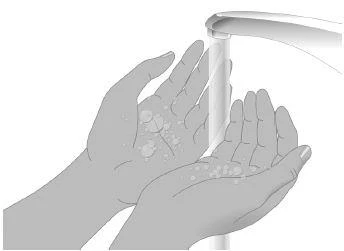
Step 3: Wash hands
Wash your hands thoroughly and dry them before using Xembify.
Your healthcare provider may recommend using antibacterial soap or wearing gloves.
Step 4: Check vials
The liquid in the vial should be clear to slightly opalescent and colorless or pale yellow or light brown.
Do not use the vial if:
- the solution is cloudy or there are changes in color. The solution must be clear to slightly opalescent and colorless or pale yellow or light brown;
- the closure cap is missing or there are visible signs of tampering. Inform your healthcare provider immediately;
- the expiration date has been exceeded.
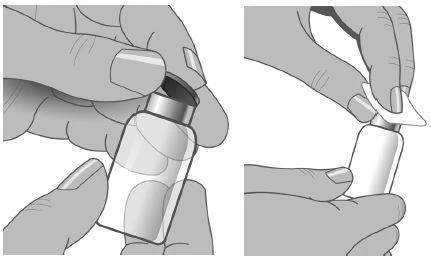
Step 5: Remove protective closure cap
Remove the protective closure cap from the vial to expose the center of the stopper. Clean the stopper with alcohol and allow it to dry.
Step 6: Transfer Xembify from vial(s) to syringe
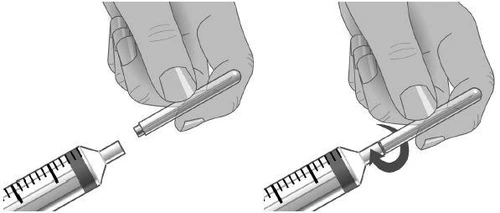
Avoid touching the inner plunger rod, syringe tip, or other areas that may come into contact with the Xembify solution with fingers or other objects. Ensure needles remain capped until use and that needles and syringes remain in the clean area prepared in Step 2. This is called "aseptic technique" and helps prevent germs from entering Xembify.
Using an aseptic technique, attach each needle to the syringe tip.
Step 7: Prepare the syringe and draw up Xembify solution
Remove the cap from the needle.
Pull back the syringe plunger to the level corresponding to the amount of Xembify to be withdrawn from the vial.
Place the Xembify vial on a clean, flat surface and insert the needle into the center of the vial stopper.
Inject air into the vial. The amount of air should equal the amount of Xembify to be withdrawn.
Invert the vial and withdraw the correct amount of Xembify. If multiple vials are needed to obtain the correct dose, repeat Steps 4–7.
Administer immediately after transferring Xembify from the vial to the syringe.
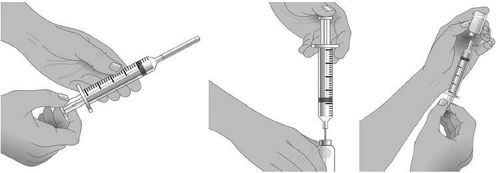
Step 8: Prepare the infusion pump
Follow the manufacturer’s instructions for preparing the infusion pump, administration set, and Y-connector administration set, if required.
Prime the administration set with Xembify to remove any air remaining in the set or needle.
To do this, hold the syringe in one hand and the needle covered by the administration set cap in the other. Gently press the plunger until a drop of Xembify appears at the needle tip.
Step 9: Choose number and location of infusion sites
Select one or more infusion sites as instructed by your healthcare provider.
The number and location of infusion sites depend on the total dose volume.
Suitable infusion sites are: abdomen, thighs, upper arms, and lateral hip.
Avoid: areas with bones, visible blood vessels, scars, or any areas of inflammation (irritation) or infection.
Rotate sites between future infusions.
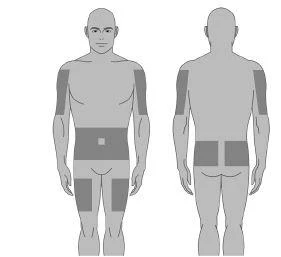
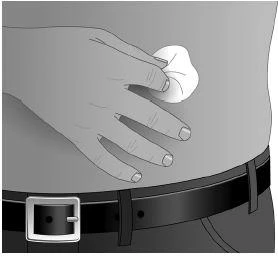
Step 10: Prepare the infusion site(s)
Clean the infusion site(s) with a sterile alcohol swab, starting from the center of each site and moving outward in a circular motion. Allow the site(s) to dry (at least 30 seconds).
Before infusion, sites must be clean, dry, and at least 5 cm apart.
Step 11: Insert the needle
Grasp the skin between two fingers (grasp at least 2.5 cm of skin) and insert the needle at a 90-degree angle into the tissue beneath the skin (subcutaneous tissue).
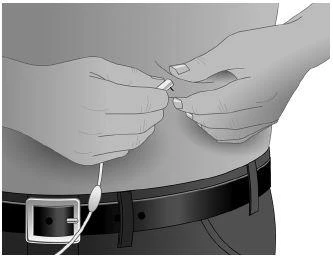
Step 12: Ensure the needle is not in a blood vessel
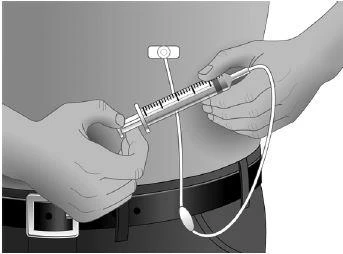
After inserting each needle into the tissue (and before starting the infusion), ensure the needle has not accidentally entered a blood vessel. To check, connect a sterile syringe to the end of the primed administration set. Pull back on the syringe plunger and observe whether blood appears in the administration set.
If blood is visible, remove and discard the needle and administration set.
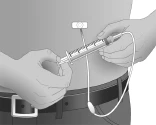
Repeat the priming and needle insertion steps using a new needle and administration set, and select a different infusion site.
Secure the needle in place by applying a sterile gauze or transparent dressing over the site.
Step 13: Repeat for additional sites, if needed
Step 14: Infuse Xembify
Infuse Xembify as soon as possible after preparation.
Follow the manufacturer’s instructions for filling the administration set and operating the infusion pump.
Step 15: After infusion
Follow the manufacturer’s instructions to turn off the pump.
Remove and discard any dressings or tape.
Gently remove the inserted needles or catheters.
Dispose of any unused solution in an appropriate sharps or medical waste container as instructed.
Dispose of used administration equipment in an appropriate medical waste container.
Store materials safely.
Follow the manufacturer’s instructions for syringe pump maintenance.
Step 16: Record each infusion
Remove the product lot number label from the Xembify vial and use it to complete the patient diary. Include information for each infusion, such as:
- time and date
- dose
- lot number(s)
- infusion sites, and
- any reactions.
Remember to bring your diary to your doctor’s appointments. Your doctor may ask to see your treatment diary/log.
Inform your doctor of any problems encountered during infusions. Contact your healthcare provider for medical advice regarding adverse reactions.
Use in elderly patients
The dose for elderly patients is not considered different from that for patients aged 18 to 65 years.
Use in children and adolescents
The dose in children and adolescents (0–18 years) is not different from that in adults. In newborns and children, the infusion site may be changed every 5–15 mL.
If you use more Xembify than you should
Contact your doctor for instructions.
If you forget to use Xembify
Do not take a double dose to make up for the missed dose. Contact your doctor for instructions.
If you have any questions about the use of this medicine, consult your doctor.
4. Possible side effects
Like all medicines, this medicine can cause side effects, although not everybody gets them.
Rarely, normal human immunoglobulins may cause a sudden drop in blood pressure and, in isolated cases, anaphylactic shock, even when the patient has not shown hypersensitivity to a previous administration.
Signs or symptoms of these rare allergic reactions include:
- feeling faint, dizzy or lightheaded
- skin rash and itching, swelling in the mouth or throat, difficulty breathing, wheezing
- abnormal heart rate, chest pain, bluish discoloration of the lips or fingers and toes
If you notice signs of an allergic reaction or anaphylactic-type reaction during infusion of Xembify, stop the infusion immediately and contact your doctor or go to the nearest hospital. See section 2 of this leaflet (Warnings and precautions). If you notice any of these signs during Xembify infusion when administered by a healthcare professional, inform your doctor or nurse immediately, who will decide whether to slow down or completely stop the infusion.
Local reactions at the infusion site may occur, such as swelling, soreness, redness, hardening (hard nodule), localized warmth, itching, bruising and skin rash.
Xembify may occasionally cause chills, headache, dizziness, fever, vomiting, allergic reactions, feeling unwell (nausea), joint pain, low blood pressure and moderate lower back pain.
The following side effect is very common with Xembify (may affect 1 or more people in 10):
- Local reaction at the infusion site
The following side effects are common with Xembify (may affect 1 or more people in 100):
- Headache
- Arthralgia (joint pain)
- Back pain
- Rhinitis (runny nose, sneezing and nasal congestion)
- Diarrhoea
- Nausea
- Pyrexia (fever)
- Decreased blood immunoglobulin G
- Pruritus
- Papule (small raised area of skin)
Adverse reactions reported after marketing authorization
The following adverse reactions have been identified and reported during use of Xembify after marketing authorization (all non-serious): dyspnoea (shortness of breath), fatigue, pain, nausea, headache and local reaction at the infusion site, such as erythema (redness) and swelling.
It is not always possible to reliably estimate the frequency of these reactions.
Reporting of adverse reactions
If you get any side effects, including ones not listed in this leaflet, talk to your doctor, pharmacist or nurse. You can also report side effects directly via [national reporting system].
By reporting side effects, you can help provide more information on the safety of this medicine.
5. How to store Xembify
Keep this medicine out of the sight and reach of children.
-
Store in a refrigerator (2°C - 8°C). Xembify may be stored at temperatures not exceeding 25°C for a maximum period of 6 months at any time before the expiry date.
- On the day the product is removed from the refrigerator, write in the designated space “Date of disposal” on the packaging the date corresponding to 6 months from that day, or, if earlier, the expiry date printed on the packaging flap.
- If stored at room temperature, do not return the product to the refrigerator. Use the product before the “Date of disposal” or discard it.
-
Do not freeze.
-
Keep the vial in the outer packaging to protect the medicine from light.
-
Administer as soon as possible after Xembify has been transferred from the vial to the syringe.
Do not use this medicine after the expiry date stated on the label and carton.
Do not use this medicine if you notice any change in colour, cloudiness, presence of deposits, or if it has been frozen.
Do not dispose of any medicine via wastewater or household waste. Ask your pharmacist how to dispose of medicines no longer required. This will help protect the environment.
6. Package contents and other information
What Xembify contains
- The active substance is human normal immunoglobulin (SCIg); one mL contains 200 mg of human normal immunoglobulin, of which at least 98% is IgG. The percentage distribution of IgG subclasses is approximately 62% IgG1, 30% IgG2, 4.3% IgG3, and 3.2% IgG4. Contains IgA (not more than 160 micrograms/mL).
- The other components are glycine (E 640), polysorbate 80 (E 433), and water for injections.
Description of the appearance of Xembify and contents of the pack
Xembify is a solution for subcutaneous injection. The solution is from clear to slightly opalescent and colourless or pale yellow or light brown.
Xembify is packaged in a box and contained in a clear glass vial with a stopper, aluminium seal, plastic cap, and heat-shrinkable band to ensure packaging integrity.
Xembify is available in packs of:
1 or 10 vials containing 1 g of human normal immunoglobulin in 5 mL solution for subcutaneous injection
1, 10 or 20 vials containing 2 g of human normal immunoglobulin in 10 mL solution for subcutaneous injection
1 or 20 vials containing 4 g of human normal immunoglobulin in 20 mL solution for subcutaneous injection
1 or 10 vials containing 10 g of human normal immunoglobulin in 50 mL solution for subcutaneous injection
Each pack contains 1, 10 or 20 vials of Xembify and 1 patient information leaflet.
Not all pack sizes may be marketed.
Marketing Authorisation Holder and Manufacturer
Instituto Grifols, S.A.
Can Guasch, 2 - Parets del Vallès
08150 Barcelona - Spain
Other sources of information
More detailed information on this medicinal product is available on the website of the Italian Medicines Agency (Agenzia Italiana del Farmaco): https://www.aifa.gov.it
Similar Medications
-
Cutaquig
Form: solution for injection
Active substance Dosage NORMAL HUMAN IMMUNOGLOBULIN — Manufacturer: OCTAPHARMA ITALY S.P.A.
-
Cuvitru
Form: solution for injection
Active substance Dosage NORMAL HUMAN IMMUNOGLOBULIN — Manufacturer: BAXALTA INNOVATIONS GMBH
-
Hizentra
Form: solution for injection
Active substance Dosage NORMAL HUMAN IMMUNOGLOBULIN — Manufacturer: CSL BEHRING GMBH
-
Octanorm
Form: solution for injection
Active substance Dosage NORMAL HUMAN IMMUNOGLOBULIN — Manufacturer: OCTAPHARMA ITALY S.P.A.
This page has been machine-translated and may contain inaccuracies. The original data is available in the manufacturing country's language.
Last data check: May 11, 2026 · Data source: Agenzia Italiana del Farmaco (AIFA)