Cuvitru
Italy
Table of Contents
- Package leaflet: Information for the user
- Cuvitru 200 mg/ml solution for subcutaneous injection
- 1. What Cuvitru is and what it is used for
- 2. What you need to know before using Cuvitru
- 3. How to use Cuvitru
- 4. Possible side effects
- Cuvitru at home.
- 5. How to store Cuvitru
- 6. Package contents and other information
Package leaflet: Information for the user
Cuvitru 200 mg/ml solution for subcutaneous injection
Normal human immunoglobulin
Please read all of this leaflet carefully before you start using this medicine because it contains important information for you.
- Keep this leaflet. You may need to read it again.
- If you have any questions, ask your doctor, pharmacist, or nurse.
- This medicine has been prescribed for you only. Do not give it to other people, even if their symptoms are the same as yours, as it may be harmful.
- If you experience any side effects, including those not listed in this leaflet, tell your doctor, pharmacist, or nurse. See section 4.
Contents of this leaflet
- What Cuvitru is and what it is used for
- What you need to know before using Cuvitru
- How to use Cuvitru
- Possible side effects
- How to store Cuvitru
- Contents of the pack and other information
1. What Cuvitru is and what it is used for
What Cuvitru is
Cuvitru belongs to a class of medicines called "normal human immunoglobulins".
Immunoglobulins are also known as antibodies and are present in the blood of healthy individuals.
Antibodies are part of the immune system (the body's natural defences) and help the body fight infections.
How Cuvitru works
Cuvitru is prepared from the blood of healthy individuals. The medicine works in exactly the same way as the immunoglobulins naturally present in blood.
What Cuvitru is used for
Cuvitru is used in patients who have a weakened immune system and do not have enough antibodies in their blood, making them more susceptible to frequent infections. Regular and adequate doses of Cuvitru can increase abnormally low levels of immunoglobulins in the blood to normal levels (replacement therapy).
Cuvitru is prescribed to:
- Patients with a congenital deficiency in antibody production (primary immunodeficiency syndromes).
- Patients with a blood cancer (chronic lymphocytic leukemia) causing deficient antibody production and recurrent infections, when antibiotic prevention is not possible.
- Patients with a bone marrow cancer (multiple myeloma) and deficient antibody production with recurrent infections.
- Patients with reduced antibody production following allogeneic bone marrow transplantation.
2. What you need to know before using Cuvitru
Do NOT use Cuvitru:
- if you are allergic to immunoglobulins or to any of the other components of this medicine (listed in section 6).
- if you have anti-immunoglobulin A (IgA) antibodies in your blood, for example, if you have IgA deficiency. Since Cuvitru contains traces of IgA, you may develop an allergic reaction.
- into a blood vessel (intravenous route) or into a muscle (intramuscular route).
Warnings and precautions
Talk to your doctor, pharmacist, or nurse before using Cuvitru.
If Cuvitru remains in silicone-coated syringes for more than two hours, visible particles may form.
The detailed instructions provided in section 3 of this leaflet under “How and where to administer” must be carefully followed.
Allergic reactions
You may be allergic to immunoglobulins without knowing it. Allergic reactions such as sudden drop in blood pressure or anaphylactic shock (a sudden drop in blood pressure accompanied by other symptoms such as swelling of the throat, breathing difficulties, and skin rash) are rare but may occasionally occur even if you have not previously had problems with similar treatments. You are at higher risk of allergic reactions if you have IgA deficiency and have anti-IgA antibodies. If you have IgA deficiency, consult your doctor or nurse before treatment. Cuvitru contains residual IgA which may increase the risk of an allergic reaction. Signs or symptoms of these rare allergic reactions include:
- feeling confused, dizzy, or fainting
- skin rash and itching, swelling of the mouth or throat, difficulty breathing, wheezing
- abnormal heart rate, chest pain, bluish color of lips or fingers and toes
- blurred vision.
Your doctor or nurse will administer Cuvitru slowly the first time and will closely monitor you during the initial infusions to detect and treat any possible allergic reaction promptly. ► If you notice any of these signs during the infusion, inform your doctor or nurse immediately; they will decide whether to slow down the infusion rate or stop the infusion completely.
Monitoring during infusion
Certain adverse effects may occur more frequently if:
- you are using Cuvitru for the first time.
- you have recently switched to Cuvitru from another immunoglobulin.
- a long interval has passed since your last Cuvitru administration. ► In these cases, you will be closely monitored during the first infusion and for one hour after the infusion ends. In all other cases, monitoring during the infusion and for at least 20 minutes after administration of Cuvitru is recommended.
Special patient groups
Your doctor will exercise particular caution if you are overweight, elderly, diabetic, or if you have high blood pressure, low blood volume (hypovolemia), or have blood vessel problems (vascular diseases). In these conditions, immunoglobulins may increase the risk of heart attack, stroke, pulmonary embolism, or deep vein thrombosis, although only very rarely.
Your doctor will also exercise particular caution if you have or have previously had kidney problems, or if you are taking medicines that may damage the kidneys (nephrotoxic medicines), as there is a very rare possibility of developing acute kidney failure.
Inflammation of the membranes covering the brain (aseptic meningitis, AMS)
Infusions of immunoglobulin-containing products, including Cuvitru, may cause inflammation of the layers covering the brain. Discontinuing immunoglobulin treatment may lead to a reduction in AMS within a few days. The syndrome usually begins within a few hours to 2 days after immunoglobulin treatment.
If you experience any of the following signs and symptoms, consult your doctor: severe headache, neck stiffness, drowsiness, fever, nausea, vomiting, and sensitivity or discomfort to light, after taking Cuvitru. Your doctor will decide whether further tests are needed and whether you should continue taking Cuvitru.
Destruction of red blood cells (hemolysis)
Cuvitru contains antibodies against blood groups that may cause destruction of red blood cells and hemolytic anemia.
Effects on blood tests
Cuvitru contains many different antibodies, some of which may affect blood tests (serological analyses).
► Before undergoing any blood test, inform your doctor about your treatment with Cuvitru.
Home treatment
You and/or the person caring for you will be trained to recognize early signs of adverse effects, especially allergic reactions. During the infusion, you or the caregiver must carefully watch for early signs of adverse effects (for further information, see section 4, “Possible side effects”).
► If adverse effects occur, the patient or caregiver must stop the infusion immediately and contact the doctor.
► In case of a serious adverse effect, the patient or caregiver must immediately seek emergency medical treatment.
Information about the source material of Cuvitru
Cuvitru is manufactured from human plasma (the liquid part of blood). When medicines are made from human blood or plasma, certain measures are taken to prevent transmission of infections to patients, including:
- careful selection of blood and plasma donors to ensure exclusion of those at risk of carrying infections, and
- testing of each donation and plasma pools for signs of viruses/infections.
- inclusion of manufacturing steps that can inactivate or remove viruses.
Despite these measures, when medicines derived from human blood or plasma are administered, the possibility of transmitting infections cannot be completely ruled out. This also applies to unknown or emerging viruses or other types of infections.
The measures taken are considered effective against enveloped viruses, such as human immunodeficiency virus (HIV), hepatitis B virus, and hepatitis C virus, as well as non-enveloped viruses such as hepatitis A and parvovirus B19.
Immunoglobulins have not been associated with hepatitis A or parvovirus B19 infections, possibly because the antibodies against these infections contained in Cuvitru exert a protective effect.
It is strongly recommended that each time Cuvitru is used, the following information be recorded in the treatment diary:
- the date of administration
- the batch number of the medicine, and
- the volume injected, infusion rate, number and location of injection sites.
Children and adolescents
The warnings and precautions listed apply to both adults and children.
Other medicines and Cuvitru
Inform your doctor, pharmacist, or nurse if you are taking, have recently taken, or might take any other medicines.
Vaccinations
Cuvitru may reduce the effect of certain antiviral vaccines such as those against measles, rubella, mumps, and varicella (live virus vaccines). Therefore, a 3-month interval should be observed after administration of Cuvitru before receiving certain vaccines.
For measles, it may be necessary to wait up to 1 year after the last dose of Cuvitru.
► Inform the doctor or nurse administering the vaccine that you are being treated with Cuvitru.
Pregnancy, breastfeeding, and fertility
If you are pregnant, think you may be pregnant, are planning to become pregnant, or are breastfeeding, consult your doctor or pharmacist before taking this medicine.
Clinical trials with Cuvitru have not been conducted in pregnant or breastfeeding women.
Experience with immunoglobulins suggests that harmful effects on pregnancy or the unborn child are not expected.
If you are breastfeeding and taking Cuvitru, antibodies from the medicine may pass into breast milk and may protect the baby from certain infections.
Experience with immunoglobulins suggests that harmful effects on fertility are not expected.
Driving and using machines
Patients may experience adverse effects (e.g., dizziness or nausea) during treatment with Cuvitru, which may affect their ability to drive vehicles or operate machinery. In such cases, wait until these reactions have subsided.
3. How to use Cuvitru
Use this medicine exactly as your doctor has instructed you. If you have any doubts, consult your doctor.
Cuvitru must be infused under the skin (subcutaneous administration or SC).
Treatment with Cuvitru will be initiated by your doctor or nurse. However, after the first infusions have been administered under medical supervision and once you (and/or your caregiver) have received adequate training, you may be allowed to use the medicine at home. You and your doctor will decide whether you can use Cuvitru at home (e.g., using an infusion pump or manual administration with a syringe). Do not begin treatment with Cuvitru at home without having received complete instructions.
Dosage
Your doctor will calculate the correct dose for you based on your body weight, any previous treatments you may have received, and your response to therapy.
Your doctor will determine whether a loading dose (for adults or children) of at least 1.0–2.5 ml/kg body weight, divided over several days, is required. Subsequently, Cuvitru will be administered at regular intervals, ranging from once daily to once every two weeks; the cumulative monthly dose will be approximately 1.5–5 ml/kg body weight. Your doctor may adjust the dose based on your response to treatment.
Do not change the dose or the interval between doses without contacting your doctor. If you think you need to take Cuvitru more or less frequently, contact your doctor. If you think you have missed a dose, contact your doctor as soon as possible.
Starting treatment
Treatment will be initiated by a doctor or nurse experienced in managing patients with a weakened immune system and in training such patients for home therapy. You will be closely monitored during the entire infusion and for at least 1 hour after the infusion is stopped to assess how well you tolerate the medicine. Initially, the doctor or nurse will use a slow infusion rate and gradually increase it during the first infusion and subsequent infusions. Once the doctor or nurse has established the correct dose and infusion rate for you, you may be allowed to self-administer the treatment at home independently.
Home treatment
You may self-administer Cuvitru or have it administered by your caregiver. You will be trained by a doctor or nurse experienced in training and managing patients like you. The doctor or nurse will be present during your initial treatments.
You or the healthcare provider will be taught:
- how to use germ-free (aseptic) infusion techniques,
- how to use an administration device (if necessary),
- how to maintain a treatment diary, and
- what actions to take in case of serious adverse effects.
You must carefully follow your doctor’s instructions regarding the dose, infusion rate, and infusion schedule of Cuvitru to ensure effective treatment.
Method and route of administration
Selection of infusion site(s):
Recommended areas for subcutaneous infusion of Cuvitru are the abdomen, thighs, upper arms, or lower back. Cuvitru may be infused at multiple sites. Infusion sites should be at least 10 cm apart. Avoid bony areas, visible blood vessels, scars, and inflamed (irritated) or infected areas. Rotate sites with each administration according to your doctor’s or nurse’s instructions.
When using infusion with a device:
With a multi-needle system, it is possible to use multiple subcutaneous infusion sites simultaneously. The amount of product infused at a single site may vary, and doses exceeding 30 ml can be divided according to your preference.
When using manual administration:
Cuvitru can be administered via syringe at a single infusion site. If administration at additional sites is required, a new sterile injection needle must be used. The volume infused at a single site may vary, and doses exceeding 30 ml can be divided according to your preference.
Infusion rate:
Your doctor will determine the appropriate infusion technique and infusion rate for you, taking into account your individual dose, administration frequency, and product tolerability.
When using infusion with a device:
The recommended initial infusion rate is 10 ml/hour per infusion site. If well tolerated, this may be increased at intervals of at least 10 minutes up to 20 ml/hour per site during the first two infusions. For subsequent infusions, the infusion rate may be increased based on tolerability.
If you have any questions about the use of this medicine, consult your doctor, pharmacist, or nurse.
When using manual administration:
Consult your doctor. Begin with an infusion rate that does not cause you discomfort. The infusion must not be painful under any circumstances. The maximum recommended infusion rate is approximately 1–2 ml per minute. Larger infusion volumes may be tolerated at certain injection sites compared to others.
If you have any questions about the use of this medicine, consult your doctor, pharmacist, or nurse.
Detailed instructions for use are provided in the section below:
Do not use Cuvitru at home before receiving instructions and training from your doctor or nurse.
To prepare the Cuvitru vial(s):
- Remove Cuvitru from the carton. If the product has been stored in the refrigerator, allow the vials to reach room temperature. This may take up to 90 minutes.
- Do not heat or place in a microwave.
- Do not shake the vial(s).
| 1.Check the vial(s): Do not use after the expiration date. Do not use if the protective cap is missing or broken. Check the color: it should be clear and colorless or pale yellow or light brown. Do not use if the solution is cloudy or contains particles. | |
| 2.Gather all necessary supplies: Gather all necessary supplies: namely: Cuvitru vial(s), infusion materials (infusion set with subcutaneous needle, transfer device(s), syringe(s), sterile needle caps, sterile transparent dressing, adhesive tape, gauze, sharps container, infusion pump (if used), tubing, infusion log). Prepare a clean work area. When using an infusion pump: program the infusion pump according to the prescribed infusion rates and manufacturer's instructions. Wash hands thoroughly and allow them to dry. Open materials as instructed by the doctor or nurse. | 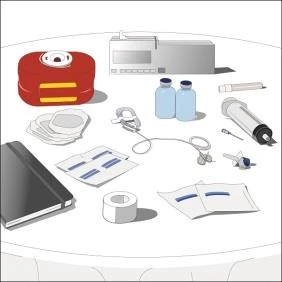  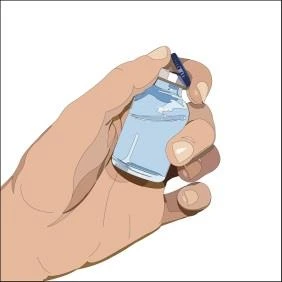 |
| 3.Prepare the syringe(s): Remove the cap from the vial. Wipe each stopper with a sterile alcohol swab and allow it to dry. Attach a sterile syringe to a vented spike. Insert the vented spike into the center of the vial. Invert the vial and pull back the plunger to draw the solution into the syringe(s). Repeat these steps if using multiple vials to obtain the desired dose. Infusion must be started immediately after transferring Cuvitru into the syringe. If administration is expected to last longer than two hours, the required dose should be divided and administered at different infusion sites. If Cuvitru remains in silicone-coated syringes for more than two hours, visible particles may form. If using a sterile needle: attach a sterile syringe to the sterile needle and pull back the plunger of the syringe to draw air equal to the volume of solution to be withdrawn from the vial. Insert the needle into the center of the stopper and inject air. Pull back the plunger to withdraw the desired volume. |  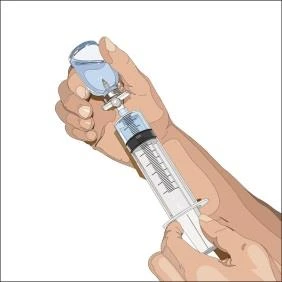 |
| 4.Prepare for infusion: a. When using an infusion pump: Follow the manufacturer's instructions to prime the tubing and operate the pump. Connect the syringe containing the solution to the needle set. Point the syringe tip upward and gently push the plunger to remove air; prime the needle set up to its connector. b. When using manual administration: follow the instructions provided by the nurse or healthcare professional. Connect the syringe containing the solution to the needle set. Point the syringe tip upward and gently push the plunger to remove air; prime the needle set up to the needle connector. | 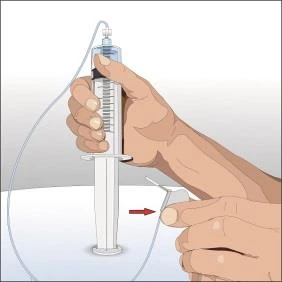 |
| 5.Prepare the infusion site(s): Determine the number of infusion sites based on the total dose volume. Choose the infusion site(s): upper arms, abdomen, thighs, or lower back. Avoid bony areas, visible blood vessels, scars, and inflamed (irritated) or infected areas. Infuse the solution from 1 or more sites simultaneously. Select sites at least 10 cm apart from each other. Alternate sites between successive infusions. Clean the infusion site(s) with a sterile alcohol swab, starting from the center of each site and moving outward in a circular motion. Allow the site(s) to dry (at least 30 seconds). | 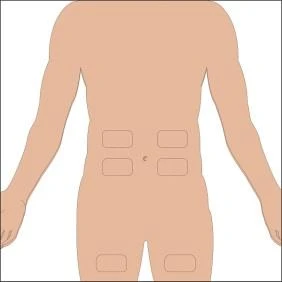 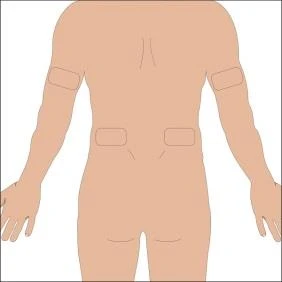  |
| 6.Insert and secure the subcutaneous needle: Remove the needle cap. Firmly grasp and pinch at least 2.5 cm of skin between two fingers. Insert the needle into the skin with a quick motion at a 90-degree angle. Secure the needle with sterile tape (included in the transparent dressing). If using more than one site, repeat the steps. Secure the needle in place by applying a sterile protective dressing over the site(s). | 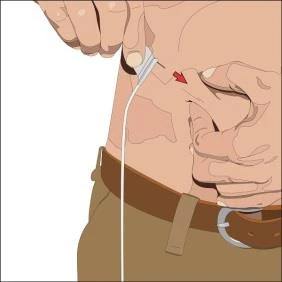 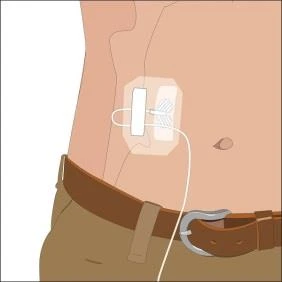 |
| 7.Start the infusion: For infusion with pump: follow the manufacturer's instructions to turn on the pump and start the infusion. For manual infusion: gradually push the syringe plunger as demonstrated by the doctor or nurse, until all liquid in the syringe is injected or as directed by the doctor or nurse. During infusion, periodically check the infusion site(s). | |
| 8.At the end of the infusion, remove the subcutaneous needle(s) from the site(s): Remove the needle by loosening the tape on all edges. Pull the needle wings upward and outward. Gently press a piece of gauze over the needle site and cover with a dressing. Dispose of the needle(s) in a sharps container. | 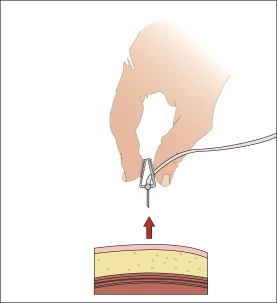 |
| 9.Record the infusion: Remove the detachable label showing the product batch number and expiration date from the vial(s), and attach it to the treatment diary/infusion log. Record the date, time, dose, infusion site(s) (to facilitate site rotation), and any reactions after each infusion. Dispose of single-use materials, vials, and unused solution according to the instructions of the doctor or nurse. |
Use in children and adolescents
The same indications, dose, and infusion frequency as in adults apply to children and adolescents (aged 0 to 18 years).
If you use more Cuvitru than you should
If you think you have used more Cuvitru than you should, contact your doctor as soon as possible.
If you forget to use Cuvitru
Do not infuse a double dose of Cuvitru to make up for a forgotten dose. If you think you have missed a dose, contact your doctor as soon as possible.
4. Possible side effects
Like all medicines, this medicine can cause side effects, although not everybody gets them. These side effects may include chills, headache, dizziness, fever, vomiting, allergic reactions, nausea, joint pain, low blood pressure, and moderate back pain.
Some side effects, such as headache, chills, or body aches, may be reduced by slowing the rate of infusion.
Serious side effects
Infusions of medicines like Cuvitru may sometimes cause severe, but rare, allergic reactions. A sudden drop in blood pressure may occur and, in isolated cases, anaphylactic shock. Physicians are aware of these possible side effects and will monitor you during and after initial infusions.
If you notice any of the following signs or symptoms, inform your doctor or nurse immediately:
- feeling confused, dizzy, or fainting
- skin rash and itching, swelling of the mouth or throat, difficulty breathing, wheezing
- abnormal heart rate, chest pain, blue colouring of the lips or fingers and toes
- blurred vision
When using Cuvitru at home, you may have the infusion administered in the presence of a caregiver who can help you watch for signs of allergic reactions, stop the infusion, and seek help if necessary. See also section 2 of this leaflet for information on the risks of allergic reactions and the use of
Cuvitru at home.
The following adverse reactions are very common (may affect more than 1 in 10 people):
- headache
- diarrhea and nausea
- redness and pain at the infusion site
- fatigue
The following adverse reactions are common (may affect up to 1 in 10 people):
- dizziness, migraine, and somnolence
- low blood pressure
- abdominal pain
- itching and hives
- muscle pain
- swelling, itching, rash, and bruising at the infusion site
- pain
The following adverse reactions are uncommon (may affect up to 1 in 100 people):
- burning sensation
- lower abdominal pain
- edema at the infusion site
- positive blood test for antibodies
The frequency of the following adverse reaction is unknown (cannot be estimated based on available data):
- inflammation of the membranes covering the brain (aseptic meningitis)
Adverse reactions observed with similar medicines
The following adverse reactions have been observed with subcutaneous administration of normal human immunoglobulin. Although these adverse reactions have not so far been observed with Cuvitru, they may occur in some individuals using Cuvitru.
- tingling
- tremor
- rapid heartbeat
- shortness of breath
- vocal cord dysfunction
- chest pain
- hardening and/or warmth at the infusion site
Reporting of adverse reactions
If you experience any adverse reaction, including those not listed in this leaflet, talk to your doctor, pharmacist, or nurse. You can also report adverse reactions directly via
https://www.aifa.gov.it/content/segnalazioni-reazioni-avverse .
By reporting adverse reactions, you can help provide more information on the safety of this medicine.
5. How to store Cuvitru
Keep this medicine out of the sight and reach of children.
Do not use this medicine after the expiry date stated on the label and the carton after
Exp. The expiry date refers to the last day of that month.
Do not use this medicine if you notice that the solution appears cloudy, contains deposits or has an abnormal colour.
Keep the vials in the outer packaging to protect the medicine from light.
Do not store above 25 °C.
Do not freeze.
If the product has been stored in the refrigerator, the closed vials must be removed from the refrigerator and allowed to reach room temperature for at least 90 minutes before use. Do not use heating devices, including microwave ovens.
6. Package contents and other information
What Cuvitru contains
- The active substance is normal human immunoglobulin.
- 1 ml of Cuvitru contains 200 mg of human protein, of which at least 98% is immunoglobulin G (IgG).
- The other components (excipients) are glycine and water for injections.
Description of the appearance of Cuvitru and contents of the pack
Cuvitru is an injectable solution in vials of 5, 10, 20, 40 or 50 ml. The solution is clear and
colourless, or pale yellow or light brown.
A 5 ml vial contains: 1 g of normal human immunoglobulin
A 10 ml vial contains: 2 g of normal human immunoglobulin
A 20 ml vial contains: 4 g of normal human immunoglobulin
A 40 ml vial contains: 8 g of normal human immunoglobulin
A 50 ml vial contains: 10 g of normal human immunoglobulin
Pack sizes:
1, 10 or 20 vial(s) containing 5 ml of solution for injection
1, 10, 20 or 30 vial(s) containing 10 ml of solution for injection
1, 10, 20 or 30 vial(s) containing 20 ml of solution for injection
1, 5, 10 or 20 vial(s) containing 40 ml of solution for injection
1 vial containing 50 ml of solution for injection
Not all pack sizes may be marketed.
Marketing Authorisation Holder
Baxalta Innovations GmbH
Industriestrasse 67, A - 1221 Vienna
Manufacturer
Baxalta Belgium Manufacturing SA
Boulevard René Branquart 80
7860 Lessines
Belgium
This medicinal product is authorised in the European Economic Area Member States under the
following names:
Austria: Cuvitru 200 mg/ml Injektionslösung zur subkutanen Anwendung
Belgium, France: Cuvitru 200 mg/ml solution injectable par voie sous-cutanée
Czech Republic, Denmark, Finland, Germany, Greece, Italy, Norway, Poland: Cuvitru
Ireland, United Kingdom: Cuvitru 200 mg/ml solution for subcutaneous injection
Netherlands: Cuvitru 200 mg/ml, oplossing voor subcutane injectie
Slovakia, Sweden: Cuvitru 200 mg/ml
Spain: Cuvitru 200 mg/ml, solución inyectable subcutánea