Cefuroxime 1.5 g
Ukraine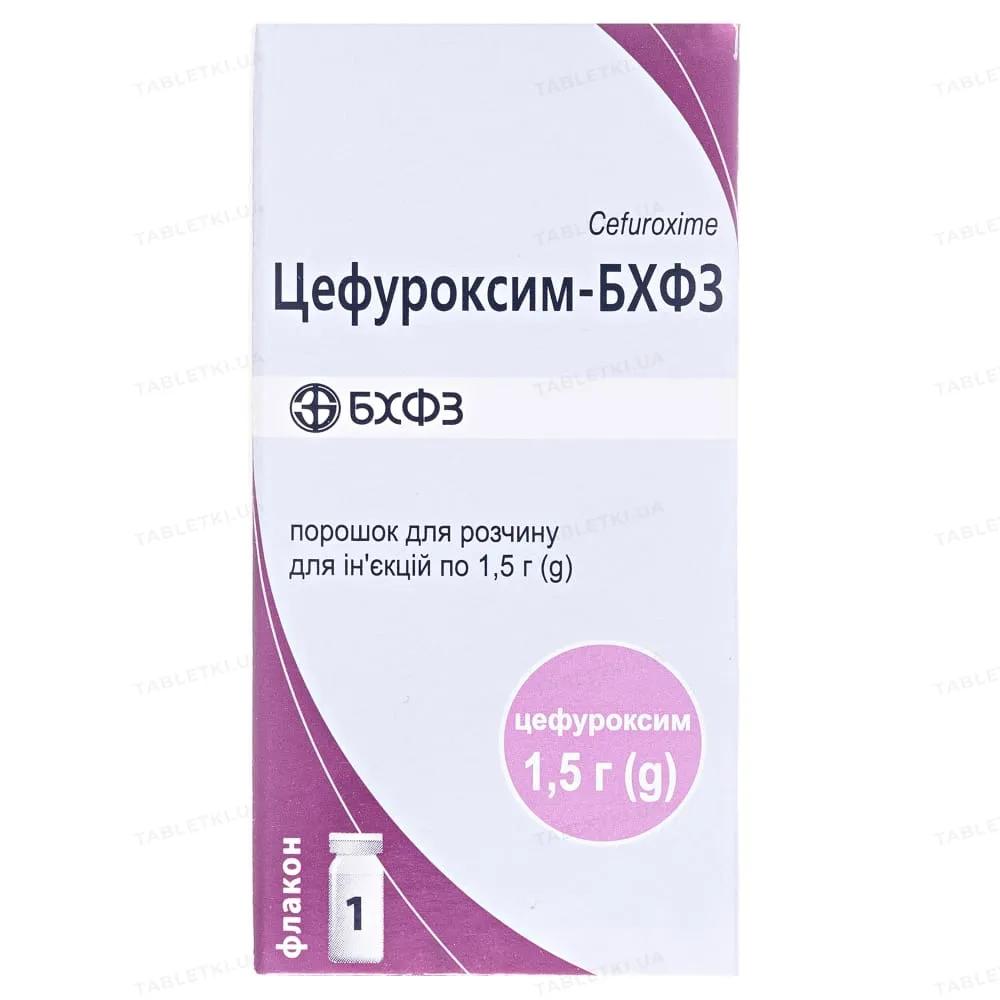
Instructions for Use
INSTRUCTIONS FOR MEDICAL USE OF THE MEDICINAL PRODUCT CEFUROXIME 1.5 g (CEFUROXIME 1.5 g)
Composition:
Active substance: cefuroxime;
1 vial contains sodium cefuroxime equivalent to cefuroxime 1500 mg.
Pharmaceutical form. Powder for solution for injection.
Main physicochemical properties: crystalline powder, white to light yellow in color.
Pharmacotherapeutic group. Antibacterial agents for systemic use. Second-generation cephalosporins. ATC code J01D C02.
Pharmacological Properties
Pharmacodynamics
Cefuroxime is a bactericidal cephalosporin antibiotic with high activity against a broad spectrum of Gram-positive and Gram-negative bacteria, including strains producing β-lactamases. Cefuroxime is resistant to the action of β-lactamases and therefore exhibits activity against many ampicillin- or amoxicillin-resistant strains. The primary mechanism of bactericidal action is inhibition of bacterial cell wall synthesis.
Acquired resistance to the antibiotic varies across different regions and may change over time, with significant differences observed among individual strains. Local antibiotic susceptibility data should be consulted when available, especially in the treatment of severe infections.
The drug is highly active against Staphylococcus aureus (methicillin-sensitive strains) and coagulase-negative staphylococci (methicillin-sensitive strains), Haemophilus influenzae, Klebsiella spp., Enterobacter spp., Streptococcus pyogenes, Escherichia coli, Streptococcus mitis (Viridans group), Clostridium spp., Proteus mirabilis, Proteus rettgeri, Salmonella typhi, Salmonella typhimurium, other Salmonella strains, Shigella spp., Neisseria spp. (including β-lactamase-producing strains of N. gonorrhoeae), and Bordetella pertussis. The drug shows moderate sensitivity against Proteus vulgaris, Morganella morganii (Proteus morganii), and Bacteroides fragilis.
Microorganisms insensitive to cefuroxime: Clostridium difficile, Pseudomonas spp., Campylobacter spp., Acinetobacter calcoaceticus, Legionella spp., methicillin-resistant strains of Staphylococcus aureus, and coagulase-negative staphylococci.
Some strains of the following species have also been found to be insensitive to cefuroxime: Streptococcus faecalis, Morganella morganii, Proteus vulgaris, Enterobacter spp., Citrobacter spp., Serratia spp., and Bacteroides fragilis.
In vitro, cefuroxime in combination with aminoglycoside antibiotics has at least additive effects, sometimes showing signs of synergy.
Pharmacokinetics
Maximum serum concentration of cefuroxime is achieved within 30–45 minutes after intramuscular administration. The elimination half-life of cefuroxime following intravenous or intramuscular administration is approximately 70 minutes. Concurrent administration of probenecid slows the excretion of cefuroxime and results in increased serum concentrations.
Protein binding to serum proteins ranges from 33% to 50%.
Within 24 hours after administration, the drug is almost completely (85–90%) excreted unchanged in the urine, with the majority eliminated within the first 6 hours.
Cefuroxime is not metabolized and is excreted via glomerular filtration and tubular secretion.
Serum levels of cefuroxime decrease during dialysis.
Concentrations of cefuroxime exceeding the MIC (minimum inhibitory concentration) for most common pathogenic microorganisms are achieved in bone tissue, synovial fluid, and intraocular fluid. Cefuroxime penetrates the blood-brain barrier during inflammation of the meninges.
Clinical characteristics.
Indications.
Treatment of infections caused by microorganisms sensitive to cefuroxime, or treatment of infections prior to identification of the causative agent.
Respiratory tract infections: acute and chronic bronchitis, infected bronchiectasis, bacterial pneumonia, lung abscess, postoperative infections of thoracic organs;
infections of the throat and nose: sinusitis, tonsillitis, pharyngitis;
urinary tract infections: acute and chronic pyelonephritis, cystitis, asymptomatic bacteriuria;
soft tissue infections: cellulitis, erysipelas, wound infections;
bone and joint infections: osteomyelitis, septic arthritis;
infections in obstetrics and gynecology: pelvic inflammatory diseases;
gonorrhea, particularly in cases where penicillin is contraindicated;
other infections, including septicemia and meningitis.
Prophylaxis of infectious complications following surgery on the chest and abdominal cavity, pelvic organs, as well as vascular, cardiothoracic, and orthopedic surgeries.
In most cases, monotherapy with Cefuroxime is effective; however, if necessary, the drug may be used in combination with aminoglycoside antibiotics or with metronidazole (orally, as suppositories, or by injection).
In cases of existing or suspected mixed aerobic and anaerobic infections (e.g., peritonitis, aspiration pneumonia, lung abscess, pelvic or brain abscess) and in high-risk situations for such infections (e.g., surgery on the large intestine or gynecological surgery), the use of Cefuroxime in combination with metronidazole is appropriate.
For the treatment of pneumonia and acute exacerbations of chronic bronchitis, Cefuroxime may be administered prior to switching to oral cefuroxime axetil when necessary.
Contraindications.
Hypersensitivity to cefuroxime or to any of the excipients of the drug.
Hypersensitivity to cephalosporin antibiotics.
History of severe hypersensitivity (e.g., anaphylactic reactions) to other beta-lactam antibiotics (penicillins, monobactams, and carbapenems).
Interaction with other medicinal products and other forms of interaction.
Like other antibiotics, Cefuroxime may affect the intestinal flora, leading to reduced reabsorption of estrogens and decreased efficacy of combined oral contraceptives.
Cefuroxime is eliminated by glomerular filtration and tubular secretion. Concomitant use with probenecid is not recommended, as it prolongs the elimination half-life of the antibiotic and increases its maximum serum concentration.
When treating with Cefuroxime, blood and plasma glucose levels should be measured using the glucose oxidase or hexokinase method.
Cefuroxime does not interfere with enzymatic methods for detecting glucosuria.
Cefuroxime may slightly affect the results of copper reduction-based methods (Benedict, Fehling, Clinitest), but this does not lead to pseudopositive results, as may occur with some other cephalosporins.
Cefuroxime does not interfere with serum creatinine measurement by the alkaline picrate method.
Concomitant use with oral anticoagulants may lead to an increased international normalized ratio (INR).
Special precautions for use.
As with other beta-lactam antibiotics, severe and occasionally fatal hypersensitivity reactions have been reported. Hypersensitivity reactions progressing to Kounis syndrome – acute allergic coronary artery spasm, which may lead to myocardial infarction, have been reported (see section "Adverse reactions"). In case of severe hypersensitivity reactions, treatment with cefuroxime should be discontinued immediately and appropriate emergency measures should be initiated.
Severe cutaneous adverse reactions (SCARs)
Severe cutaneous adverse reactions, including Stevens-Johnson syndrome (SJS), toxic epidermal necrolysis (TEN), and DRESS syndrome, which may be life-threatening or fatal, have been reported during treatment with cefuroxime (see section "Adverse reactions").
Patients should be informed of the signs and symptoms and closely monitored for skin reactions when prescribing the medicinal product. If signs or symptoms suggestive of these reactions occur, cefuroxime should be discontinued immediately and alternative therapy should be considered. If a patient develops a serious reaction such as SJS, TEN, or DRESS syndrome while receiving cefuroxime, cefuroxime therapy must never be restarted in this patient.
Prior to initiating therapy, the patient's history of severe hypersensitivity reactions to cefuroxime, cephalosporin antibiotics, or other beta-lactam antibiotics should be determined. The drug should be administered with caution to patients who have had hypersensitivity reactions to other beta-lactam antibiotics.
Cephalosporin antibiotics in high doses should be used with caution in patients receiving treatment with potent diuretics such as furosemide or aminoglycoside antibiotics, as cases of adverse effects on renal function have been reported with this combination. Renal function should be monitored in such patients, as well as in elderly patients and those with renal impairment (see section "Dosage and administration").
As with other treatment regimens for meningitis, cases of moderate to severe hearing loss have been reported in several children treated with cefuroxime.
As with treatment with other antibiotics, cultures of Haemophilus influenzae have been detected in cerebrospinal fluid 18–36 hours after cefuroxime injection. However, the clinical significance of this phenomenon is unknown.
As with the use of other antibiotics, prolonged use of cefuroxime may result in overgrowth of non-susceptible microorganisms (such as Candida, Enterococci, Clostridium difficile), which may necessitate discontinuation of therapy.
Cases of pseudomembranous colitis of varying severity, from mild to life-threatening, have been reported with the use of antibiotics. Therefore, it is important to consider this diagnosis in patients who develop diarrhea during or after antibiotic use. In case of persistent and significant diarrhea or if abdominal cramps occur, treatment should be discontinued immediately and further patient evaluation should be performed.
When using cefuroxime in sequential therapy, the timing of switching to oral cefuroxime is determined by the severity of infection, the patient's clinical condition, and microbial susceptibility. If there is no clinical improvement within 72 hours, parenteral administration of the drug should be continued. Before using the oral form of cefuroxime, the prescribing information for this medicinal product should be consulted.
Use during pregnancy or breastfeeding.
There are no data on embryotoxic or teratogenic effects of cefuroxime; however, as with other drugs, it should be used with caution during the first months of pregnancy.
Cefuroxime passes into breast milk; therefore, breastfeeding should be discontinued during treatment with the drug.
There are no data on the effect of sodium cefuroxime on fertility.
Ability to affect reaction speed when driving or operating machinery.
There are no reports of the effect of cefuroxime on the ability to drive or operate machinery.
Method of Administration and Dosage
Sensitivity to Cefuroxime varies across different regions and may change over time. Local antibiotic sensitivity data should be consulted when necessary.
Cefuroxime injections are intended only for intravenous or intramuscular administration.
The drug is also available as cefuroxime axetil for oral use, allowing for sequential transition from parenteral to oral forms of the drug when clinically appropriate.
For intramuscular injection, no more than 750 mg of Cefuroxime should be administered at one site.
General Recommendations
Adults
For many infections, a dose of 750 mg three times daily by intramuscular or intravenous administration is sufficient. For more severe infections, the dose may be increased to 1.5 g three times daily intravenously. If necessary, the frequency of administration may be increased to four times daily (administration interval – 6 hours), increasing the total daily dose to 3–6 g. When required, certain infections may be treated according to the following regimen: 750 mg or 1.5 g twice daily (intravenously or intramuscularly).
Children (including infants)
30–100 mg/kg/day divided into 3–4 injections. For most infections, the optimal dose is 60 mg/kg/day.
Neonates
30–100 mg/kg/day divided into 2–3 injections. It should be noted that the elimination half-life of cefuroxime during the first weeks of life may be 3–5 times longer than in adults.
Gonorrhea
1.5 g as a single injection, or 750 mg administered as two intramuscular injections, one in each buttock.
Meningitis
Cefuroxime may be used as monotherapy for bacterial meningitis caused by susceptible strains.
Adults: 3 g intravenously every 8 hours.
Children (including infants): 200–240 mg/kg/day intravenously, divided into 3 or 4 doses. This dosage may be reduced to 100 mg/kg/day intravenously after 3 days of treatment or upon clinical improvement.
Neonates: initial dose should be 100 mg/kg/day intravenously. The dose may be reduced to 50 mg/kg/day if clinical improvement occurs.
Prophylaxis
Standard dose: 1.5 g intravenously at the time of induction of anesthesia for abdominal, pelvic, and orthopedic surgeries. This dose may be supplemented with additional intramuscular doses of 750 mg at 8 and 16 hours.
For cardiac, pulmonary, esophageal, and vascular surgeries, the standard dose is 1.5 g intravenously administered at the time of induction of anesthesia, followed by supplementary intramuscular doses of 750 mg three times daily for the next 24–48 hours.
For total joint replacement, 1.5 g of cefuroxime powder should be mixed with one packet of methylmethacrylate polymer cement before adding the liquid monomer.
Sequential Therapy
Pneumonia: 1.5 g of Cefuroxime 2–3 times daily (intramuscularly or intravenously) for 48–72 hours, followed by transition to oral cefuroxime formulations for 7–10 days.
Acute exacerbation of chronic bronchitis: 750 mg of Cefuroxime 2–3 times daily (intramuscularly or intravenously) for 48–72 hours, followed by transition to oral cefuroxime for 7 days.
The duration of both parenteral and oral therapy depends on the severity of infection and the patient's clinical condition.
Renal Impairment
Cefuroxime is eliminated by the kidneys. Therefore, as with other similar antibiotics, dosage reduction is recommended in patients with impaired renal function to compensate for slower drug excretion. Standard dosing (750 mg – 1.5 g three times daily) does not need to be reduced if creatinine clearance is greater than 20 mL/min. For adults with marked renal impairment (creatinine clearance 10–20 mL/min), a dose of 750 mg twice daily is recommended; in more severe cases (creatinine clearance less than 10 mL/min), 750 mg once daily is recommended.
For hemodialysis, 750 mg should be administered intravenously or intramuscularly at the end of each dialysis session. Additionally, cefuroxime may be added to peritoneal dialysis fluid (typically 250 mg per 2 liters of dialysis fluid). For patients undergoing scheduled hemodialysis or high-flux hemofiltration in intensive care units, the recommended dose is 750 mg twice daily. Patients on low-flux hemofiltration should follow the dosing regimen appropriate for renal impairment.
Administration Instructions
For intramuscular injection, add 3 mL of water for injection to 750 mg of Cefuroxime. Shake gently until a cloudy suspension is formed.
For intravenous administration, dissolve 750 mg of Cefuroxime in not less than 6 mL of water for injection; dissolve 1.5 g in 15 mL. For infusions lasting no more than 30 minutes, 1.5 g of cefuroxime may be dissolved in 50–100 mL of water for injection. The resulting solutions may be administered directly into the vein or into the infusion line during infusion therapy.
Color intensity changes may occur during storage of reconstituted solutions.
After reconstitution, the solution may be stored for up to 48 hours in a refrigerator (4 °C) or up to 5 hours at temperatures up to 25 °C.
Children
May be used in children from the first days of life.
Overdose
Overdose of cephalosporins may cause neurological complications, including encephalopathy, seizures, and coma.
Overdose of cephalosporin antibiotics may lead to symptoms of central nervous system irritation, potentially resulting in seizures. Cefuroxime levels can be reduced by hemodialysis or peritoneal dialysis.
Adverse Reactions.
Adverse reactions are predominantly rare (less than 1/10,000) and generally mild and reversible in nature. The frequency of occurrence listed below is approximate, as sufficient data for accurate calculation are lacking for most reactions. In addition, the frequency of adverse reactions varies depending on the indication.
Data from clinical trials were used to classify adverse effects from very common to rare. The frequency of other adverse effects (e.g., < 1 in 10,000) is primarily based on marketing data and reflects the reporting rate rather than the actual incidence.
Criteria for assessing the frequency of adverse effects: very common ≥ 1/10; common ≥ 1/100 to < 1/10; uncommon ≥ 1/1,000 to < 1/100; rare ≥ 1/10,000 to < 1/1,000; very rare < 1/10,000.
Infections and infestations.
Rare – overgrowth of non-susceptible microorganisms, e.g. Candida, Clostridium difficile.
Blood and lymphatic system disorders.
Common – neutropenia, eosinophilia.
Uncommon – leukopenia, decreased hemoglobin levels, positive Coombs test.
Rare – thrombocytopenia.
Very rare – hemolytic anemia.
Cephalosporins may adsorb onto the surface of red blood cell membranes and interact with antibodies, leading to a positive Coombs test, which may interfere with blood grouping and very rarely lead to hemolytic anemia.
Immune system disorders.
Hypersensitivity reactions:
Uncommon – skin rash, urticaria, pruritus;
Rare – drug fever;
Very rare – interstitial nephritis, anaphylaxis, cutaneous vasculitis.
Cardiac disorders.
Unknown – Kounis syndrome.
Gastrointestinal disorders.
Uncommon – gastrointestinal discomfort.
Very rare – pseudomembranous colitis (see section "Special precautions").
Hepatobiliary disorders.
Common – transient increase in liver enzymes.
Uncommon – transient increase in bilirubin levels.
Transient increases in liver enzymes or bilirubin occurred primarily in patients with pre-existing liver disease; however, there is no evidence of direct hepatotoxic effects.
Skin and subcutaneous tissue disorders.
Very rare – erythema multiforme, Stevens-Johnson syndrome, toxic epidermal necrolysis.
Unknown – drug reaction with eosinophilia and systemic symptoms (DRESS syndrome).
Renal and urinary disorders.
Very rare – increased serum creatinine, increased blood urea nitrogen, decreased creatinine clearance.
General disorders and administration site conditions.
Common – reactions at the injection site, which may include pain and thrombophlebitis.
The likelihood of pain at the site of intramuscular injection increases with higher doses, but this is unlikely to lead to discontinuation of treatment.
Shelf life.
2 years.
Storage conditions.
Store in the original packaging at a temperature not exceeding 25 °C.
Keep out of the reach of children.
Incompatibilities.
Cefuroxime should not be mixed in the same syringe with aminoglycoside antibiotics.
The pH of a 2.74% solution of sodium bicarbonate for injection significantly affects the color of the solution; therefore, this solution is not recommended for dilution of Cefuroxime. However, if necessary, when a patient is receiving intravenous infusion of sodium bicarbonate solution, Cefuroxime may be administered directly into the infusion line.
1.5 g of Cefuroxime dissolved in 15 mL of water for injection may be used together with metronidazole injection (500 mg/100 mL); both drugs retain their activity for 24 hours at temperatures below 25 °C.
1.5 g of Cefuroxime is compatible with 1 g of azlocillin (in 15 mL of solvent) or with 5 g (in 50 mL of solvent) for 24 hours at 4 °C and for 6 hours at temperatures up to 25 °C.
Cefuroxime (5 mg/mL) may be stored for 24 hours at 25 °C in 5% or 10% xylitol injection solution. Cefuroxime is compatible with solutions containing up to 1% lidocaine hydrochloride.
Cefuroxime is compatible with most commonly used intravenous infusion solutions. It retains its properties for 24 hours at room temperature in the following solutions: 0.9% sodium chloride injection; 5% glucose injection; 0.18% sodium chloride with 4% glucose injection; 5% glucose with 0.9% sodium chloride injection; 5% glucose with 0.45% sodium chloride injection; 5% glucose with 0.225% sodium chloride injection; 10% glucose injection; 10% invert sugar in water for injection; Ringer's solution; Ringer's lactate solution; M/6 sodium lactate solution; Hartmann's solution.
The stability of Cefuroxime in 0.9% sodium chloride injection with 5% glucose is not altered in the presence of sodium hydrocortisone phosphate.
Cefuroxime is also compatible for 24 hours at room temperature when diluted in infusion solutions:
- with heparin (10 or 50 units/mL) in 0.9% sodium chloride injection;
- with potassium chloride solution (10 or 40 mEq/L) in 0.9% sodium chloride injection.
Packaging.
Vials of 1500 mg. 1 or 10 vials per cardboard box.
Prescription status. Prescription only.
Manufacturer.
Zeiss Pharmaceuticals Pvt. Ltd.
Manufacturer's address.
Plot No. 72, EPIP, Phase-I, Jharmajri, Baddi, Distt. Solan, (H. P.), India
Marketing Authorization Holder.
AAR PHARMA FZ-LLC, United Arab Emirates.
Address of the Marketing Authorization Holder.
Premises 702, 7th Floor, Building: DSC Tower, P.O. Box – 478837, Dubai, United Arab Emirates.
Frequently Asked Questions
What is Cefuroxime prescribed for?
The drug is used to treat infections caused by bacteria sensitive to it. Specifically, it is used for respiratory tract diseases (bronchitis, pneumonia), infections of the throat, nose, urinary tract, soft tissues, bones, and joints, as well as for gonorrhea, septicemia, and meningitis. It is also used for the prevention of post-operative infections.
How should Cefuroxime be taken correctly?
The drug is intended for intramuscular or intravenous administration only. Dosage depends on the severity of the infection, the age, and the condition of the patient (for example, for many infections, 750 mg 3 times a day is sufficient for adults). When treating pneumonia or bronchitis, a transition to oral forms of the drug may be prescribed after injections.
Who should not use this drug?
Contraindications include hypersensitivity to cefuroxime itself or to other cephalosporin antibiotics. It should also not be used if there is a history of severe allergic reactions (e.g., anaphylaxis) to other beta-lactam antibiotics, such as penicillins, monobactams, or carbapenems.
What side effects can Cefuroxime cause?
Possible allergic reactions (rash, itching, anaphylaxis), skin reactions (Stevens-Johnson syndrome, toxic epidermal necrolysis), gastrointestinal disorders (diarrhea, pseudomembranous colitis), changes in blood tests (e.g., decreased hemoglobin or leukocyte levels), and injection site reactions (pain, thrombophlebitis).
Can the drug be taken with other medicines?
Cefuroxime may reduce the effectiveness of combined oral contraceptives. Co-administration with probenecid is not recommended. When used with anticoagulants, the INR value may increase. Caution should also be exercised when combining with potent diuretics (e.g., furosemide) or aminoglycosides due to the risk of renal impact.
Can the drug be taken during pregnancy or breastfeeding?
The drug should be used with caution during pregnancy. Since cefuroxime passes into breast milk, breastfeeding must be discontinued during the treatment period.
How does the drug affect test results?
The drug may affect blood glucose level determination results (depending on the testing method) and may slightly affect methods for determining glycosuria that are based on copper reduction.
Similar Medications
-
Axef
Form: powder for injection solution
Active substance Dosage cefuroxime 750 mg Manufacturer: NOBEL ILAC SANAYI VE TICARET A.S.
-
Axetin®
Form: powder for injection solution
Active substance Dosage cefuroxime 0.750 g Manufacturer: Medochemi Limited (full-cycle manufacturing)
-
Axetin®
Form: powder for injection solution
Active substance Dosage cefuroxime 1.5 g Manufacturer: Medochemi Limited (full-cycle manufacturing)
-
Cefuaar 0.750 g
Form: powder for injection solution
Active substance Dosage cefuroxime 750 mg Manufacturer: Zeiss Pharmaceuticals Pvt. Ltd.
-
Cefuaar 1.5 g
Form: powder for injection solution
Active substance Dosage cefuroxime 1500 mg Manufacturer: Zeiss Pharmaceuticals Pvt. Ltd.
-
Cefuroxime
Form: powder for injection solution
Active substance Dosage cefuroxime 0.75 g Manufacturer: PJSC "Lekhim-Kharkiv" (packaging from bulk form of manufacturer Quilu Pharmaceutical Co., Ltd., China)
-
Cefuroxime
Form: powder for injection solution
Active substance Dosage cefuroxime 1.5 g Manufacturer: PJSC "Lekhim-Kharkiv" (packaging from bulk form of manufacturer Quilu Pharmaceutical Co., Ltd., China)
-
Cefuroxime
Form: powder for injection solution
Active substance Dosage cefuroxime 0.75 g -
Cefuroxime
Form: powder for injection solution
Active substance Dosage cefuroxime 1.5 g -
Cefuroxime 750 mg
Form: powder for injection solution
Active substance Dosage cefuroxime 750 mg Manufacturer: Zeiss Pharmaceuticals Pvt. Ltd.
-
Cefuroxime combi
Form: powder for injection solution
Active substance Dosage cefuroxime 0.75 g -
Cefuroxime-bhffz
Form: powder for injection solution
Active substance Dosage cefuroxime 750 mg Manufacturer: PJSC "Scientific and Production Center "Borshchahivskyy Chemical and Pharmaceutical Plant"
This page has been machine-translated and may contain inaccuracies. The original data is available in the manufacturing country's language.
Last data check: July 21, 2026 · Data source: Державний реєстр лікарських засобів України