Cefuroxime
Ukraine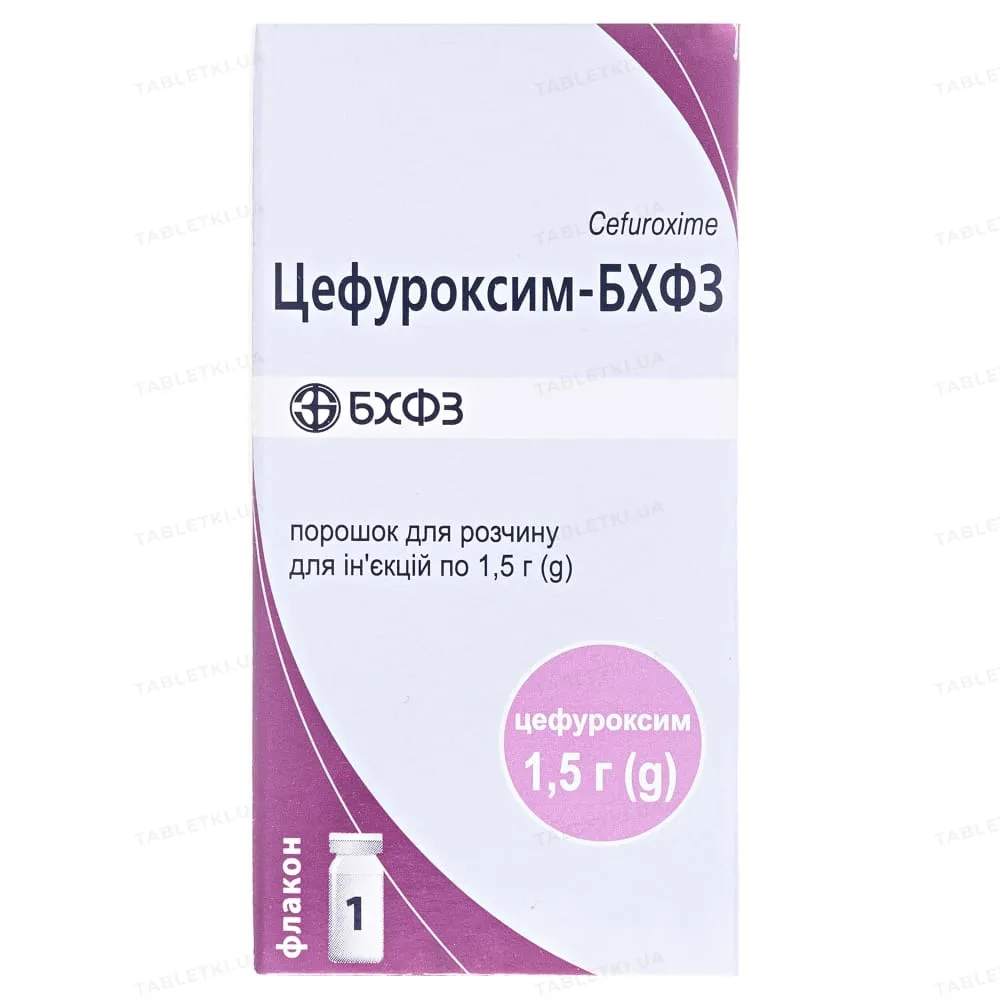
Table of Contents
INSTRUCTIONS for medical use of the medicinal product cefuroxime (CefuroximE)
Composition:
Active substance: cefuroxime;
1 vial contains cefuroxime (as cefuroxime sodium) 0.75 g or 1.5 g.
Pharmaceutical form. Powder for solution for injection.
Main physicochemical characteristics: white or almost white powder.
Pharmacotherapeutic group. Antibacterial agents for systemic use. Second-generation cephalosporins. ATC code J01D C02.
Pharmacological properties.
Pharmacodynamics.
Mechanism of action. Cefuroxime inhibits microbial cell wall synthesis by binding to penicillin-binding proteins (PBPs). This inhibition halts the biosynthesis of the cell wall (peptidoglycan), leading to lysis and death of bacterial cells.
Mechanism of resistance. Bacterial resistance to cefuroxime may be associated with one or more of the following mechanisms:
- hydrolysis by β-lactamases, including extended-spectrum β-lactamases (ESBLs) and AmpC enzymes, which may be induced or stably expressed in certain aerobic Gram-negative bacterial species;
- reduced affinity of PBPs for cefuroxime;
- reduced outer membrane permeability limiting access of cefuroxime to PBPs in Gram-negative bacteria;
- bacterial efflux pump systems.
Organisms that have developed resistance to other injectable cephalosporins are expected to be resistant to cefuroxime. Depending on the resistance mechanism, organisms with acquired resistance to penicillins may exhibit reduced susceptibility or resistance to cefuroxime.
Cefuroxime sodium breakpoints. The minimum inhibitory concentration (MIC) breakpoints for cefuroxime, as defined by the European Committee on Antimicrobial Susceptibility Testing (EUCAST), are provided below.
| Microorganism |
Breakpoints (mg/l) |
|
| Susceptible |
Resistant |
|
| Enterobacteriaceae 1 |
≤82 |
>8 |
| Staphylococcus spp. |
Note3 |
Note3 |
| Streptococcus A, B, C and G |
Note4 |
Note4 |
| Streptococcus pneumoniae |
≤0.5 |
>1 |
| Streptococcus (other) |
≤0.5 |
>0.5 |
| Haemophilus influenzae |
≤1 |
>2 |
| Moraxella catarrhalis |
≤4 |
>8 |
| Non-species-related breakpoints1 |
≤45 |
>85 |
| 1Breakpoints for determining cephalosporin activity against Enterobacteriaceae detect all clinically important resistance mechanisms (including ESBLs and plasmid-mediated AmpC). Some strains producing β-lactamases may be susceptible or moderately resistant to 3rd or 4th generation cephalosporins by these breakpoints and should be reported as detected; thus, the presence or absence of ESBLs alone does not affect susceptibility categorization. In many regions, detection and characterization of ESBLs are recommended or mandatory for infection control purposes. 2Breakpoints apply only to the 1.5 g × 3 daily dose and to strains of E. coli, P. mirabilis, and Klebsiella spp. 3Staphylococcal susceptibility to cephalosporins follows methicillin susceptibility, except for ceftazidime, cefixime, and cefditoren, which lack defined breakpoints and should not be used for treatment of staphylococcal infections. 4Streptococcal susceptibility of groups A, B, C, and G to cephalosporins follows benzylpenicillin susceptibility. 5Breakpoints refer to a total daily intravenous dose of 750 mg × 3 and high-dose regimens of at least 1.5 g × 3. |
||
Microbiological susceptibility. Acquired resistance of individual microorganisms to the antibiotic varies in different regions and changes over time. It is advisable to consult local antibiotic susceptibility data, especially when treating severe infections. If acquired resistance to the antibiotic is known and the benefit of using the medicinal product at least in the treatment of certain types of infections is questionable, consultation with a specialist should be considered.
Cefuroxime generally has in vitro activity against the following microorganisms.
| Susceptible strains |
| Gram-positive aerobes: Staphylococcus aureus (methicillin-susceptible), Streptococcus pyogenes, Streptococcus agalactiae |
| Gram-negative aerobes: Haemophilus parainfluenzae, Moraxella catarrhalis |
| Microorganisms with potential acquired resistance |
| Gram-positive aerobes: Streptococcus pneumoniae, Streptococcus mitis (viridans group) |
| Gram-negative aerobes: Citrobacter spp., excluding C. freundii, Enterobacter spp., excluding E. aerogenes and E. cloacae, Escherichia coli, Haemophilus influenzae, Klebsiella pneumoniae, Proteus mirabilis, Proteus spp., excluding P. penneri and P. vulgaris, Providencia spp., Salmonella spp. |
| Gram-positive anaerobes: Peptostreptococcus spp., Propionibacterium spp. |
| Gram-negative anaerobes: Fusobacterium spp., Bacteroides spp. |
| Microorganisms with intrinsic resistance |
| Gram-positive aerobes: Enterococcus faecalis, Enterococcus faecium |
| Gram-negative aerobes: Acinetobacter spp., Burkholderia cepacia, Campylobacter spp., Citrobacter freundii, Enterobacter aerogenes, Enterobacter cloacae, Morganella morganii, Proteus penneri, Proteus vulgaris, Pseudomonas aeruginosa, Serratia marcescens, Stenotrophomonas maltophilia |
| Gram-positive anaerobes: Clostridium difficile |
| Gram-negative anaerobes: Bacteroides fragilis |
| Others: Chlamydia spp., Mycoplasma spp., Legionella spp. |
All methicillin-resistant S. aureus strains are resistant to cefuroxime.
In vitro, cefuroxime in combination with aminoglycoside antibiotics exerts at least an additive effect, sometimes with evidence of synergy.
Pharmacokinetics
Absorption. After intramuscular (IM) administration of cefuroxime to healthy volunteers, mean peak serum concentrations ranged from 27 to 35 µg/mL at a dose of 750 mg and from 33 to 40 µg/mL at a dose of 1000 mg, reached within 30–60 minutes after administration. Fifteen minutes after intravenous (IV) infusion of doses of 750 mg and 1500 mg, serum concentrations were approximately 50 and 100 µg/mL, respectively.
Following IM or IV administration, AUC and Cmax increased linearly with increasing dose within the single-dose range of 250 mg to 1000 mg. No evidence of accumulation of cefuroxime in serum was observed in healthy volunteers after repeated IV infusions of 1500 mg every 8 hours.
Distribution. Protein binding ranges from 33% to 50%, depending on the method of determination. The mean volume of distribution ranges from 9.3 to 15.8 L/1.73 m² after IM or IV administration within the dose range of 250 mg to 1000 mg. Concentrations of cefuroxime exceeding the MIC for most common pathogenic microorganisms are achieved in tonsillar tissue, nasal sinuses, bronchial mucosa, bone, pleural fluid, joint fluid, synovial fluid, interstitial fluid, bile, sputum, and intraocular fluid. Cefuroxime penetrates across the blood-brain barrier during meningitis.
Biotransformation. Cefuroxime is not metabolized.
Elimination. Cefuroxime is eliminated via glomerular filtration and tubular secretion. The elimination half-life from serum after intramuscular or intravenous injection is approximately 70 minutes. Within 24 hours after administration, the drug is excreted almost completely (85–90%) unchanged in urine. The majority of the drug is excreted within the first 6 hours. Mean renal clearance ranges from 114 to 170 mL/min/1.73 m² after IM or IV injection within the dose range of 250 to 1000 mg.
Special patient groups
Gender. No differences in the pharmacokinetics of cefuroxime were observed between men and women after a single 1000 mg intravenous bolus injection of cefuroxime as cefuroxime sodium.
Elderly patients. After intramuscular or intravenous administration, absorption, distribution, and elimination of cefuroxime in elderly patients are similar to those in younger patients with equivalent renal function. Since elderly patients are more likely to have decreased renal function, dosage selection for this population should be cautious, and renal function should be monitored (see section "Dosage and administration").
Children. The elimination half-life of cefuroxime from serum is significantly prolonged in neonates according to gestational age. However, in infants older than 3 weeks and in children, the elimination half-life from serum of 60–90 minutes is similar to that observed in adults.
Renal impairment. Cefuroxime is primarily eliminated by the kidneys. As with other similar antibiotics, patients with severe renal impairment (e.g., creatinine clearance <20 mL/min) should receive reduced doses of cefuroxime to compensate for slower drug excretion (see section "Dosage and administration"). Cefuroxime is effectively removed by hemodialysis and peritoneal dialysis.
Hepatic impairment. Since cefuroxime is predominantly eliminated by the kidneys, hepatic impairment is not expected to significantly affect the pharmacokinetics of cefuroxime.
Pharmacokinetic/pharmacodynamic interaction. For cephalosporins, the most important pharmacokinetic/pharmacodynamic index correlating with in vivo efficacy is the percentage of the dosing interval (%T) during which the concentration of the free fraction of the drug exceeds the MIC of cefuroxime for specific target strains (i.e., %T > MIC).
Clinical characteristics.
Indications.
Cefuroxime is indicated for the treatment of the infections listed below in adults and children, including neonates (from birth) (see sections "Particular patient populations" and "Pharmacological properties").
- Community-acquired pneumonia.
- Acute exacerbations of chronic bronchitis.
- Complicated urinary tract infections, including pyelonephritis.
- Soft tissue infections: cellulitis, erysipelas, wound infections.
- Intra-abdominal infections (see section "Particular patient populations").
- Prophylaxis of postoperative infections following gastrointestinal surgery, including oesophageal surgery, orthopaedic, gynaecological surgery (including caesarean section) and cardiovascular surgery.
For the treatment and prophylaxis of infections caused by anaerobic microorganisms, cefuroxime should be used in combination with appropriate additional antibacterial agents.
Official recommendations on the appropriate use of antibacterial agents should be taken into account.
Contraindications.
Hypersensitivity to cefuroxime or to any of the excipients.
Hypersensitivity to other cephalosporin antibiotics.
History of severe hypersensitivity (e.g., anaphylactic reactions) to other β-lactam antibiotics (penicillins, monobactams, and carbapenems).
Interaction with other medicinal products and other forms of interaction.
Cefuroxime may affect the gut flora, resulting in reduced reabsorption of estrogens and decreased efficacy of combined oral contraceptives.
Cefuroxime is eliminated by glomerular filtration and tubular secretion. Concomitant administration of probenecid is not recommended. Simultaneous administration of probenecid slows elimination of the antibiotic and leads to increased serum concentrations.
Potentially nephrotoxic agents and loop diuretics.
Cephalosporin antibiotics should be administered with caution at high doses to patients receiving treatment with potent diuretics (such as furosemide) or potentially nephrotoxic agents (such as aminoglycoside antibiotics), since renal function impairment cannot be excluded with such drug combinations.
Other types of interactions.
For plasma glucose measurement, see section "Particular patient populations".
Concomitant use with oral anticoagulants may lead to an increased International Normalized Ratio (INR).
Special precautions for use.
Hypersensitivity reactions. Severe and occasionally fatal hypersensitivity reactions have been reported with beta-lactam antibiotics, including cefuroxime. Hypersensitivity reactions progressing to Kounis syndrome (acute allergic coronary artery spasm that may lead to myocardial infarction — see section "Adverse reactions") have been reported. In case of severe hypersensitivity reactions, cefuroxime therapy must be discontinued immediately and appropriate emergency measures should be initiated.
Prior to initiation of therapy, patients should be questioned about previous hypersensitivity reactions to cefuroxime, other cephalosporins, or other beta-lactam agents. The drug should be administered cautiously in patients with a history of hypersensitivity reactions to other beta-lactam antibiotics.
Concomitant therapy with potent diuretics or aminoglycosides. Cephalosporin antibiotics in high doses should be administered with caution in patients receiving concomitant treatment with potent diuretics such as furosemide or aminoglycosides, as cases of renal function impairment have been reported with such combinations. Renal function should be monitored in these patients, as well as in elderly patients and in patients with existing renal impairment (see section "Dosage and administration").
Overgrowth of resistant microorganisms. Administration of cefuroxime may lead to overgrowth of Candida species. Prolonged use of cefuroxime may result in overgrowth of resistant microorganisms (such as Enterococci, Clostridium difficile), which may necessitate discontinuation of therapy (see section "Adverse reactions").
Cases of pseudomembranous colitis, ranging from mild to life-threatening, have been reported during or after antibiotic therapy. Therefore, this diagnosis should be considered in patients who develop diarrhoea during or after antibiotic use (see section "Adverse reactions"). Discontinuation of cefuroxime therapy and initiation of specific treatment against Clostridium difficile should be considered. Medicinal products that inhibit intestinal peristalsis are not recommended.
Intracameral administration and ocular adverse reactions. Cefuroxime is not intended for intracameral administration. Serious ocular adverse reactions have been reported following intracameral use of sodium cefuroxime intended for intravenous/intramuscular administration. These reactions included macular oedema, retinal oedema, retinal detachment, retinal toxicity, visual disturbances, decreased visual acuity, blurred vision, corneal opacity, and corneal oedema.
Intra-abdominal infections. Due to its spectrum of activity, cefuroxime is not suitable for treatment of infections caused by gram-negative non-fermenting bacteria (see section "Pharmacodynamics").
Severe cutaneous adverse reactions (SCARs). Severe cutaneous adverse reactions, including Stevens–Johnson syndrome (SJS), toxic epidermal necrolysis (TEN), and drug reaction with eosinophilia and systemic symptoms (DRESS syndrome), which were life-threatening or resulted in fatal outcomes, have been reported in association with cefuroxime therapy (see section "Adverse reactions").
Patients should be informed of the signs and symptoms and closely monitored for skin reactions during treatment. If symptoms suggesting such reactions occur, cefuroxime should be discontinued immediately and alternative therapy considered. If a patient develops a serious reaction such as SJS, TEN, or DRESS syndrome during cefuroxime therapy, re-administration of cefuroxime to this patient is absolutely contraindicated.
Effects on diagnostic tests. Positive Coombs test results have been reported during cefuroxime therapy. This phenomenon may interfere with cross-matching of blood (see section "Adverse reactions").
Minor interference with copper reduction methods (Benedict's, Fehling's, Clinitest) may occur. However, this should not lead to false-positive results, as may occur with some other cephalosporins.
Since false-negative results may occur with the ferricyanide test, glucose oxidase or hexokinase methods are recommended for determination of glucose levels in blood/plasma of patients receiving sodium cefuroxime.
Important information on excipients
The medicinal product Cefuroxime (vial 0.75 g) contains 0.042 g of sodium per vial, equivalent to 2.1% of the WHO recommended maximum daily intake of 2 g sodium for an adult.
The medicinal product Cefuroxime (vial 1.5 g) contains 0.083 g of sodium per vial, equivalent to 4.15% of the WHO recommended maximum daily intake of 2 g sodium for an adult.
Use during pregnancy or breastfeeding.
Pregnancy. Data on the use of cefuroxime in pregnant women are limited. Reproductive toxicity was not observed in animal studies. Cefuroxime should be administered to pregnant women only when the potential benefit justifies the potential risk to the fetus. Cefuroxime crosses the placenta and reaches therapeutic concentrations in amniotic fluid and umbilical cord blood after intramuscular or intravenous administration to the mother.
Breastfeeding. Cefuroxime is excreted in human milk in small amounts. Adverse reactions are not expected with therapeutic doses, but the risk of diarrhoea or fungal mucosal infections in the infant cannot be excluded. Therefore, a decision should be made whether to discontinue breastfeeding or to discontinue/abstain from cefuroxime therapy, taking into account the benefit of breastfeeding for the infant and the benefit of therapy for the woman.
Fertility. There are no data on the effect of sodium cefuroxime on fertility in humans. Reproductive function studies in animals did not reveal any effect of this medicinal product on fertility.
Ability to affect reaction speed when driving or operating machinery.
No studies on the effect of cefuroxime on the ability to drive vehicles or operate machinery have been conducted. However, considering the known adverse reactions, cefuroxime is not expected to affect the ability to drive or operate machinery.
Dosage and administration.
Dosage
Table 1. Adults and children with body weight ≥40 kg
| Indications |
Dosage |
| Community-acquired pneumonia and acute exacerbation of chronic bronchitis |
0.75 g every 8 hours (intravenously or intramuscularly) |
| Soft tissue infections: cellulitis, erysipelas, wound infections |
|
| Intra-abdominal infections |
|
| Complicated urinary tract infections, including pyelonephritis |
1.5 g every 8 hours (intravenously or intramuscularly) |
| Severe infections |
0.75 g every 6 hours (intravenously) 1.5 g every 8 hours (intravenously) |
| Prophylaxis of postoperative infections following gastrointestinal surgery, orthopedic and gynecological procedures (including cesarean section) |
1.5 g during induction of anesthesia. May be supplemented with two additional doses of 0.75 g (intramuscularly) given 8 and 16 hours later |
| Prophylaxis of postoperative infections following cardiovascular and esophageal surgery |
1.5 g during induction of anesthesia, followed by 0.75 g (intramuscularly) every 8 hours for additional 24 hours |
Table 2. Children with body weight <40 kg
| Indications |
Infants older than 3 weeks and children with body weight < 40 kg |
Infants up to 3 weeks of age |
| Community-acquired pneumonia |
30 to 100 mg/kg/day (intravenously), divided into 3 or 4 doses; for most infections, the optimal dose is 60 mg/kg/day |
30 to 100 mg/kg/day (intravenously), divided into 2 or 3 doses |
| Complicated urinary tract infections, including pyelonephritis |
||
| Soft tissue infections: cellulitis, erysipelas, wound infections |
||
| Intra-abdominal infections |
Renal function impairment
Cefuroxime is primarily eliminated via the kidneys. Therefore, as with other similar antibiotics, patients with marked renal impairment should be given reduced doses of the drug to compensate for the slower excretion of the active substance.
Table 3. Recommended doses of cefuroxime in renal impairment
| Creatinine clearance |
T½ (hours) |
Dosage (mg) |
| >20 mL/min/1.73 m² |
1.7–2.6 |
No need to reduce the standard dose (0.75–1.5 g three times daily). |
| 10–20 mL/min/1.73 m² |
4.3–6.5 |
0.75 g twice daily |
| <10 mL/min/1.73 m² |
14.8–22.3 |
0.75 g once daily |
| Patients undergoing hemodialysis |
3.75 |
During hemodialysis, administer 0.75 g intravenously or intramuscularly at the end of each dialysis session. In addition to parenteral administration, cefuroxime can be added to peritoneal dialysis fluid (usually 0.25 g per 2 liters of dialysis fluid). |
| Patients with renal impairment undergoing continuous arteriovenous hemodialysis (CAVH) or high-flux hemofiltration (HFH) in intensive care units |
7.9–12.6 (CAVH) |
0.75 g twice daily. Patients undergoing low-flux hemofiltration should follow the dosing regimen appropriate for treatment in renal impairment. |
Hepatic impairment
Cefuroxime is primarily excreted by the kidneys. No influence on the pharmacokinetics of cefuroxime has been observed in patients with hepatic dysfunction.
Method of administration
Cefuroxime should be administered by intravenous injection over 3–5 minutes directly into a vein or via an intravenous infusion line, or by intravenous infusion over 30–60 minutes, or by deep intramuscular injection.
The site for intramuscular injection is the large gluteal muscle, and no more than 0.75 g should be injected at a single site. Doses exceeding 1.5 g should be administered intravenously.
Instructions for dilution of the medicinal product prior to administration
| Additional volumes and concentrations that may be useful when fractional doses are required |
||||
| Container volume |
Routes of administration |
Physical state |
Amount of water to be added (mL) |
Approximate cefuroxime concentration (mg/mL)** |
| 0.75 g powder for solution for injection or infusion |
||||
| 0.75 g |
Intramuscular Intravenous bolus Intravenous infusion |
Suspension Solution Solution |
3 mL At least 6 mL At least 6 mL |
216 116 116 |
| 1.5 g powder for solution for injection or infusion |
||||
| 1.5 g |
Intramuscular Intravenous bolus Intravenous infusion |
Suspension Solution Solution |
6 mL At least 15 mL 15 mL * |
216 94 94 |
* Reconstituted solution for addition to 50 or 100 mL of a compatible infusion fluid (see compatibility below).
** The resulting volume of cefuroxime solution in the reconstituted medium increases due to the displacement factor of the active substance, leading to the listed concentrations in mg/mL.
Compatibility
1.5 g of cefuroxime dissolved in 15 mL of water for injections can be administered together with metronidazole injection (500 mg/100 mL); both drugs retain their activity for 24 hours at temperatures below 25 °C.
1.5 g of cefuroxime is compatible with 1 g of azlocillin (in 15 mL of solvent) or with 5 g (in 50 mL of solvent) for 24 hours at 4 °C and for 6 hours at temperatures up to 25 °C.
Cefuroxime (5 mg/mL) can be stored for 24 hours at 25 °C in 5% or 10% xylitol injection solution.
Cefuroxime is compatible with solutions containing up to 1% lidocaine hydrochloride.
Cefuroxime is compatible with most commonly used intravenous infusion solutions. It remains stable for 24 hours at room temperature in the following solutions: 0.9% sodium chloride injection solution; 5% glucose injection solution; 0.18% sodium chloride with 4% glucose injection solution; 5% glucose with 0.9% sodium chloride injection solution; 5% glucose with 0.45% sodium chloride injection solution; 5% glucose with 0.225% sodium chloride injection solution; 10% glucose injection solution; 10% invert sugar solution in water for injections; Ringer's solution; lactated Ringer's solution; M/6 sodium lactate solution; Hartmann's solution.
The stability of cefuroxime in 0.9% sodium chloride injection solution with 5% glucose is not affected by the presence of sodium hydrocortisone phosphate.
Cefuroxime is also compatible for 24 hours at room temperature when diluted in infusion solutions containing:
- heparin (10 or 50 units/mL) in 0.9% sodium chloride injection solution;
- potassium chloride solution (10 or 40 mEq/L) in 0.9% sodium chloride injection solution.
Any unused medicinal product or waste material must be disposed of in accordance with local requirements.
Children.
Can be administered to children from the first days of life. The safety profile of cefuroxime in children corresponds to that in adult patients.
Overdose.
Neurological complications, including encephalopathy, seizures, and coma, may occur in cases of overdose. Symptoms of overdose may arise if the drug dose has not been appropriately adjusted in patients with impaired renal function (see sections "Dosage and Administration" and "Special Warnings").
Serum cefuroxime levels can be reduced by hemodialysis and peritoneal dialysis.
Adverse Reactions
The most commonly observed adverse reactions are neutropenia, eosinophilia, and transient elevations in liver enzymes or bilirubin levels, particularly in patients with pre-existing liver disease; however, there is no evidence of harmful effects on the liver or injection site reactions.
The frequency of adverse reactions listed below is approximate, as there are insufficient data to determine exact frequencies for most reactions. In addition, the frequency of adverse reactions associated with cefuroxime varies depending on the indication.
Classification of adverse effects from very common to rare is based on data from clinical trials. The frequency of other adverse effects (e.g., <1 in 10,000) is primarily derived from post-marketing data and reflects the reporting rate rather than the true incidence.
All treatment-related adverse reactions are listed below by system organ class, frequency, and severity according to the MedDRA classification. The following frequency classification is used: very common ≥1/10; common ≥1/100 to <1/10; uncommon ≥1/1000 to <1/100; rare ≥1/10,000 to <1/1000; very rare <1/10,000; and frequency not known (cannot be estimated from available data).
| System organ class |
Common |
Uncommon |
Unknown |
| Infections and infestations |
Overgrowth of Candida or Clostridium difficile |
||
| Heart |
Kounis syndrome |
||
| Blood and lymphatic system |
Neutropenia, eosinophilia, decreased hemoglobin levels |
Leukopenia, positive Coombs test |
Thrombocytopenia, hemolytic anemia |
| Immune system |
Drug fever, interstitial nephritis, anaphylaxis, cutaneous vasculitis |
||
| Gastrointestinal system |
Discomfort in the gastrointestinal tract |
Pseudomembranous colitis (see section "Special precautions") |
|
| Liver and biliary system |
Transient increase in liver enzymes |
Transient increase in bilirubin levels |
|
| Skin and subcutaneous tissue |
Skin rash, urticaria, and pruritus |
Multiform erythema, toxic epidermal necrolysis, Stevens-Johnson syndrome, angioneurotic edema, drug reaction with eosinophilia and systemic symptoms (DRESS syndrome) |
|
| Renal and urinary system |
Increased serum creatinine and blood urea nitrogen levels, decreased creatinine clearance (see section "Special precautions") |
||
| General disorders and administration site conditions |
Reactions at the injection site, which may include pain and thrombophlebitis |
||
| Description of selected adverse reactions Cephalosporins as a class have the property of adsorbing onto the surface of erythrocyte membranes and interacting with antibodies, which may lead to a positive Coombs test (which may affect cross-matching blood compatibility) and, very rarely, hemolytic anemia. Transient increases in liver enzymes or serum bilirubin levels were reversible in nature. The likelihood of pain at the intramuscular injection site is greater with higher doses. However, this is unlikely to be a reason for discontinuation of treatment. |
|||
Reporting of adverse reactions following marketing authorization of a medicinal product is important. This enables continuous monitoring of the benefit-risk balance of the medicinal product. Healthcare and pharmaceutical professionals, as well as patients or their legal representatives, should report all suspected adverse reactions and lack of efficacy of the medicinal product via the automated pharmacovigilance information system at the following link: https://aisf.dec.gov.ua.
Shelf life.
Cefuroxime, powder for injection solution 0.75 g or 1.5 g – 2 years.
Water for injections, solvent for parenteral use, 10 ml in ampoule – 4 years.
The shelf life of the final preparation is determined by the component (powder or solvent) with the earlier expiration date.
Storage conditions. Store out of reach of children, in the original packaging, at a temperature not exceeding 25 °C.
After reconstitution, the preparation may be stored for up to 48 hours in a refrigerator (from 2 to 8 °C) or up to 5 hours at a temperature not exceeding 25 °C.
Incompatibilities.
Cefuroxime should not be mixed in the same syringe with aminoglycoside antibiotics.
The pH of 2.74% sodium bicarbonate solution for injection significantly affects the color of the solution; therefore, this solution is not recommended for reconstitution of cefuroxime. However, if necessary, when a patient is receiving intravenous infusion of sodium bicarbonate solution, cefuroxime may be administered directly into the infusion line.
Packaging. 0.75 g of powder in a vial; 1, 5, or 50 vials per pack; or 1 or 5 vials in a blister, 1 blister per pack; 1 vial and 1 ampoule of solvent (water for injections, 10 ml in ampoule) in a blister, 1 blister per pack.
1.5 g of powder in a vial; 1, 5, or 50 vials per pack; or 1 or 5 vials in a blister, 1 blister per pack.
Prescription status. Prescription only.
Manufacturer. Private Joint-Stock Company "Lekhym-Kharkiv". LLC "Lekhym-Obukhiv".
Manufacturer's address and location of its business operations.
36 Severina Pototskoho Street, Kharkiv, Kharkiv Oblast, 61115, Ukraine.
126A Kyivska Street, Obukhiv, Kyiv Oblast, 08700, Ukraine.