Octaplas lg
Ukraine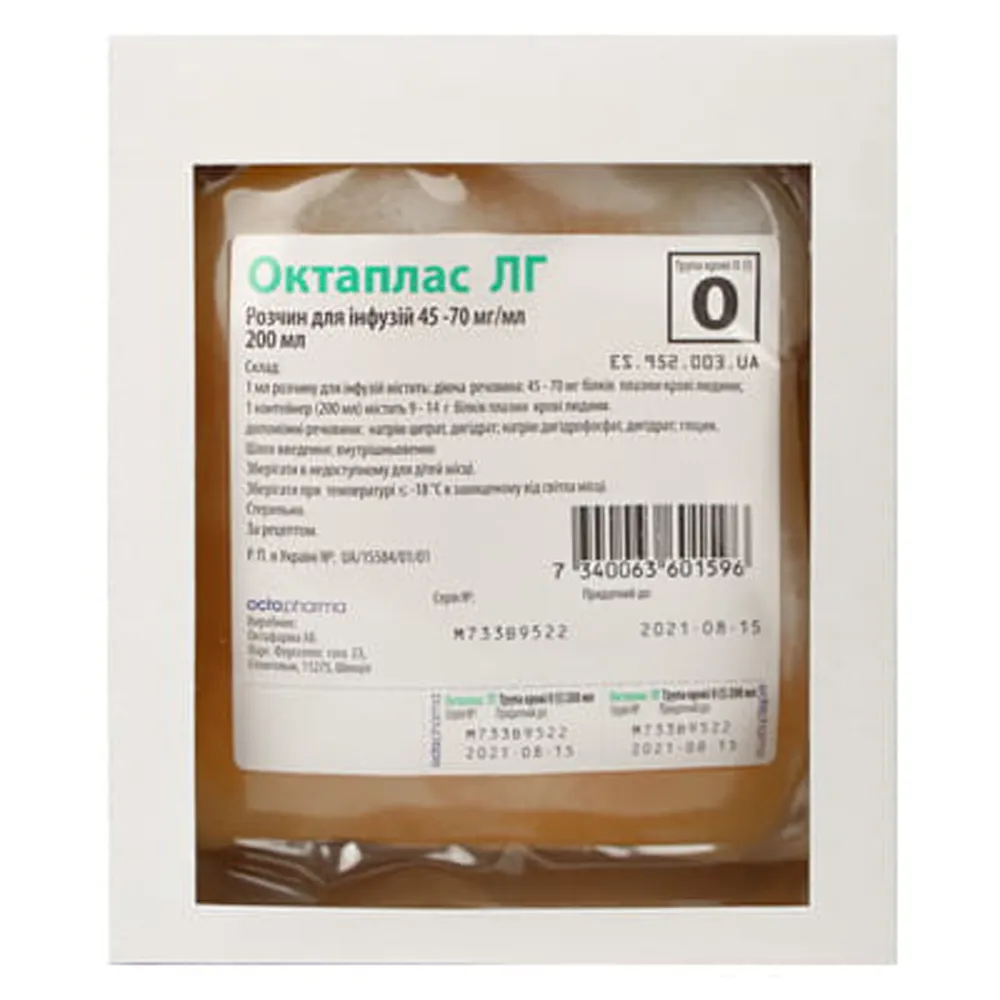
Table of Contents
- INSTRUCTIONS FOR THE MEDICAL USE OF THE MEDICINAL PRODUCT OCTAPLAS LG®
- \*Based on studies involving 100 healthy blood donors and determined as 2.5 and 97.5 percentiles or \*\*Based on the instructions for use provided in the test kit. #Disintegrin and metalloproteinase with thrombospondin type 1 motif, member 13. Also known as von Willebrand factor-cleaving protease (VWFCP). ##Also known as α2-antiplasmin. Clinical trials Clinical trials were open, multicenter, post-registration studies on the safety, tolerability, and efficacy of the drug Octaplas LG involving 37 newborns/infants (from birth to 2 years of age) and 13 children and adolescents (from 2 to 16 years of age). Forty patients underwent cardiac surgery, 5 underwent orthotopic liver transplantation, and 5 required multiple replacements of coagulation factors (4 of these patients had sepsis). In 28 patients who underwent primary shunting (all under 2 years of age), the mean dose was 20.2 ml/kg. In the other 20 patients, the mean initial infusion dose was 16.5 ml/kg in children under 2 years of age and 12.7 ml/kg in children aged 2 years and older. No reports of hyperfibrinolysis- or thromboembolic-related complications considered to be associated with treatment with Octaplas LG were received. The results of coagulation tests performed after infusions of Octaplas LG were within the expected range for patients who required plasma infusion due to bleeding. Pharmacokinetics. Octaplas LG has pharmacokinetic properties similar to fresh frozen plasma (FFP). Viral inactivation is achieved using three (n-butyl) phosphate (TNBP) and octoxynol (Triton X-100). These solvent-detergent reagents are removed during the purification process. The maximum amount of TNBP and octoxynol in the final product is < 2 µg/ml and < 5 µg/ml, respectively. Clinical characteristics. Indications.
- Contraindications. Deficiency of IgA with described antibodies to IgA. Hypersensitivity to the active substance or to any of the components of the drug. Severe protein S deficiency. Special precautions. Octaplas LG should be transported and stored at a temperature ≤ -18 °C. Do not use after the expiry date stated on the packaging. Interaction with other medicinal products and other forms of interaction. Interaction Interactions with other drugs have not been established. Incompatibility Octaplas LG can be mixed with red blood cells and platelets if compatibility according to ABO system of both cellular blood components is observed (administration of the medicinal product should be based on blood group specificity according to the ABO system). Octaplas LG should not be mixed with medicinal products that may inactivate or cause precipitation. Avoid formation of blood clots; solutions containing calcium should not be administered through the same system as the medicinal product Octaplas LG. Special characteristics of use. Octaplas LG should not be used:
- Octaplas LG should be administered with caution in the following cases:
- To reduce the risk of thromboembolic events caused by reduced activity of protein S in the Octaplas LG preparation compared to normal plasma (see section "Pharmacodynamics"), caution should be exercised and appropriate measures taken for all patients at risk of developing thrombotic complications. During plasma replacement procedures, Octaplas LG should only be used to correct coagulation disorders when abnormal bleeding occurs. Viral safety Standard measures to prevent the development of infections associated with the use of medicinal products obtained from human blood or plasma include donor selection, screening of individual donations of donor blood and plasma pools for specific infection markers, and use of effective manufacturing methods for virus inactivation/removal. Despite these measures, the possibility of transmission of infectious agents upon administration of medicinal products derived from human blood or plasma cannot be completely excluded. This also applies to unknown and new viruses and other pathogens. Measures taken are considered effective against enveloped viruses such as HIV, HBV, and HCV, and may have limited effectiveness against non-enveloped viruses, including hepatitis A virus, hepatitis E virus, and parvovirus B19. Infection caused by parvovirus B19 may be dangerous for pregnant women (fetal infection) and for individuals with immunodeficiency or increased erythropoiesis (e.g., hemolytic anemia). Hepatitis E virus may also seriously negatively affect pregnant women. Therefore, Octaplas LG should be administered to patients strictly according to indications. Appropriate vaccination (e.g., against HBV and HAV) should be performed in patients who regularly use medicinal products derived from human blood or plasma. In addition, steps are planned for prion removal. It is recommended to record the name and batch number of the drug each time Octaplas LG is administered to a patient to track the relationship between the patient's condition and the drug batch. Administration according to blood group Administration of the drug Octaplas LG should be based on blood group specificity according to the ABO system. In emergencies, Octaplas LG of blood group AB can be considered as universal plasma, as it can be used for all patients regardless of blood group. The patient should be monitored for at least 20 minutes after administration of the drug. Anaphylactic reactions In case of anaphylactic reaction or shock, infusion of Octaplas LG should be immediately discontinued. During treatment, recommendations for anti-shock therapy should be followed. Monitoring To improve traceability of biological medicinal products, the name and batch number of the administered medicinal product should be clearly recorded. Children. Cases of hypocalcemia, possibly caused by citrate binding, were observed during therapeutic plasma exchange in children (see section "Special characteristics of use"). During such use of Octaplas LG, monitoring of ionized calcium levels is recommended. Effect on serological tests Passive transfer of plasma components with the medicinal product Octaplas LG (e.g., β-human chorionic gonadotropin (β-HCG)) may lead to false laboratory results in the recipient. For example, false-positive pregnancy test results have been reported after passive transfer of β-HCG. This medicinal product contains a maximum of 920 mg of sodium per bag, equivalent to a maximum of 46% of the recommended daily maximum intake of 2 g of sodium for an adult. Use during pregnancy or breastfeeding. The safety of using the drug Octaplas LG in pregnant women has not been established in controlled clinical trials. It is unknown whether Octaplas LG can affect reproductive function. The drug should be administered to pregnant or breastfeeding women only if alternative treatment methods are considered inappropriate. Information on the potential risk of parvovirus B19 and transmission of HEV is provided in the section "Special characteristics of use". Ability to affect reaction speed when driving a vehicle or operating other machinery. After administration of the drug in outpatient settings, the patient should remain at rest for one hour. Octaplas LG does not affect or has a negligible effect on the ability to drive vehicles and operate other machinery. Method of administration and dosage. Dosage Dosage depends on the clinical situation and underlying disease, but 12–15 ml of the drug Octaplas LG/kg body weight is the generally accepted initial dose. This should increase the level of coagulation factor in the patient by approximately 25%. It is important to monitor the response both clinically and by measurement, e.g., activated partial thromboplastin time (APTT), prothrombin time (PT), and/or analysis of specific blood coagulation factors. Dosage in deficiency of blood coagulation factors Adequate hemostatic effect in mild and moderate bleeding or surgery in patients with deficiency of blood coagulation factors is usually achieved after infusion of 5–20 ml of Octaplas LG/kg body weight. This should increase the level of blood coagulation factor in the patient by approximately 10–33%. In cases of severe bleeding or surgery, professional consultation with a hematologist should be sought. Dosage in TTP and bleeding during intensive plasma replacement For therapeutic plasma replacement procedures, professional consultation with a hematologist should be sought. In patients with TTP, the entire volume of plasma required for replacement should be replaced with the drug Octaplas LG. Method of administration Administration of the drug Octaplas LG should be based on blood group specificity according to the ABO system. In emergencies, Octaplas LG of blood group AB can be considered as universal plasma, as it can be used for all patients regardless of blood group. Octaplas LG should be administered by intravenous infusion after thawing, as described below, using an infusion set with a filter. Infusion should be performed under aseptic conditions. There is a possible risk of citrate toxicity when more than 0.020–0.025 mmol of citrate/kg body weight/minute is administered. Therefore, the infusion rate should not exceed 1 ml of the drug Octaplas LG/kg body weight/minute. Citrate toxicity can be minimized by intravenous administration of calcium gluconate into another vein. Octaplas LG is supplied as a frozen solution, which may be (slightly) yellow in color. Thawing options for frozen Octaplas LG Single bag Thaw in the outer wrapper for at least 30 minutes in a circulating water bath at a temperature between 30 and 37 °C. The wrapper can be used to provide additional protection of the contents if necessary. Avoid contamination of the inlet port with water. The minimum thawing time is 30 minutes at 37 °C. The water bath temperature should never exceed 37 °C and should not be lower than 30 °C. The thawing time depends on the number of containers simultaneously in the water bath. If more containers with plasma are thawed in parallel, the thawing time can be extended, but not more than up to 60 minutes. Use of a dry thawing device such as SAHARA-III Place Octaplas LG in the polyamide/polyethylene film bag on the agitation plate according to the manufacturer's instructions and thaw the plasma using the rapid heating function. When the temperature display indicates the blood component temperature of +37 °C, the heating process should be completed and the bag removed. During the thawing process of the drug Octaplas LG using a dry thawing device, it is recommended to use a protocol printer to record the blood component temperature and error messages in case of malfunction. Other Other thawing systems for frozen Octaplas LG may be used provided they are validated for this purpose. The contents of the bag should be heated to approximately 37 °C before infusion. The temperature of the drug Octaplas LG should not exceed 37 °C. Remove the bag and inspect the container for cracks or leaks. Do not shake. After thawing, the solution should be clear or slightly opalescent and should not contain solid or gelatin-like particles. Thawed Octaplas LG cannot be refrozen. Unused medicinal product or waste material should be disposed of in accordance with approved requirements. Children. There is limited data on the use of the drug Octaplas LG in children and adolescents from birth to 16 years of age (see "Special characteristics of use", "Adverse reactions", and "Pharmacological properties"). Overdose. High doses or rapid administration may lead to hypervolemia, pulmonary edema, circulatory overload, and heart failure, as well as cardiovascular effects resulting from citrate toxicity (due to decreased levels of calcium ions), especially in patients with liver function impairment. Adverse reactions. Allergic reactions may rarely be observed. Usually, these are mild allergic reactions characterized by localized or generalized urticaria, erythema, skin redness, and itching. More severe forms may be complicated by hypotension or angioneurotic edema of the face or throat. If other organ systems are involved—cardiovascular, respiratory, or gastrointestinal—the reaction may be considered anaphylactic or anaphylactoid. Anaphylactic reactions may begin very quickly and be severe; the symptom complex may include hypotension, tachycardia, bronchospasm, wheezing (crackles), cough, difficulty breathing, nausea, vomiting, diarrhea, abdominal or back pain. Severe reactions may develop, such as shock, loss of consciousness, respiratory disorders (respiratory failure), and very rarely—death. Citrate toxicity In patients receiving rapid infusion of the drug, patients with liver function impairment, or patients undergoing plasma exchange procedures, symptoms caused by citrate toxicity and corresponding hypocalcemia may be observed, such as: cardiovascular reactions, weakness, anxiety (restlessness), perioral tingling (prickling), paresthesia, nausea, vomiting, spasms, tremor, seizures, hypotension, bradycardia, arrhythmia, QT interval prolongation (on ECG), and/or other electrolyte disturbances (e.g., metabolic alkalosis, hypomagnesemia, hypocalcemia). Undesirable reactions were observed during clinical trials and in the post-marketing period of use of the drug Octaplas LG: The frequency of adverse reactions was assessed according to the following conventional terms: very common (≥ 1/10); common (≥ 1/100 to < 1/10); uncommon (≥ 1/1,000 to < 1/100); rare (≥ 1/10,000 to < 1/1,000); very rare (< 1/10,000), not known (cannot be estimated from available data). Table 2. Adverse reactions observed during the use of the drug Octaplas LG
- \*The table contains terms from the Preferred Terms (PT) of the Medical Dictionary for Regulatory Activities (MedDRA), unless otherwise stated. LLT – Lowest Level Term of MedDRA. Hypocalcemia may occur in children during plasma exchange procedures, particularly in patients with impaired liver function or in cases of high infusion rate. During such administration of Octaplas LG (see section "Method of administration and dosage"), monitoring of ionized calcium levels is recommended (see section "Special precautions for use").
INSTRUCTIONS FOR THE MEDICAL USE OF THE MEDICINAL PRODUCT OCTAPLAS LG®
Composition:
Active substance: human plasma proteins.
1 ml of infusion solution contains 45–70 mg of human blood plasma proteins.
1 container (200 ml) contains 9–14 g of human blood plasma proteins.
Excipients: sodium citrate dihydrate, sodium dihydrogen phosphate dihydrate, glycine.
Pharmaceutical form:
Infusion solution.
Main physicochemical properties:
Thawed plasma is clear or slightly opalescent and does not contain solid or gelatin-like particles.
Pharmaceutical group:
Plasma substitutes and protein fractions.
ATC code: B05AA
Pharmacological properties
Pharmacodynamics
The content and distribution of plasma proteins in Octaplas LG remain at levels comparable to those in the source material—fresh frozen plasma (FFP)—i.e., 45–70 mg/ml. The levels of major blood plasma proteins are within the concentration range found in healthy donors (see Table 1). The average total protein content is 58 mg/ml, with albumin accounting for 50% (29 mg/ml). Immunoglobulin classes G, A, and M are present at concentrations of 8.1, 1.6, and 0.8 mg/ml, respectively.
As a result of solvent-detergent treatment and purification, the content of lipids and lipoproteins is reduced. This reduction is not clinically significant within the indications for Octaplas LG.
During manufacturing, variations in plasma protein levels between donors are balanced, and the functional integrity of plasma proteins is preserved. Octaplas LG has clinical properties similar to fresh frozen plasma from individual donors, but Octaplas LG is more standardized.
The final product contains clotting factors V, VIII, and XI, as well as protein C, protein S, and antithrombin. A minimum of 0.5 IU/ml is ensured for each of the three clotting factors, while inhibitor levels are guaranteed to be equal to or exceed 0.7, 0.3, and 0.2 IU/ml, respectively.
Fibrinogen content ranges from 1.5 to 4.0 mg/ml.
In routine production, all clinically important parameters fall within the 2.5–97.5 percentile range of normal values for single-donor FFP, except for plasmin inhibitor (also known as α2-antiplasmin), whose levels are slightly lower (see Table 1).
Octaplas LG exhibits the same von Willebrand factor multimer pattern as standard plasma.
Table 1. Global coagulation parameters, specific clotting factors, and inhibitors in Octaplas LG
Parameters |
Octaplas LG |
Normal Range* |
Activated partial thromboplastin time [seconds] |
30 ± 1 |
28–41 |
Prothrombin time [seconds] |
11 ± 0 |
10–14** |
Fibrinogen [mg/ml] |
2.6 ± 0.1 |
1.5–4.0** |
Coagulation factor II [IU/ml] |
1.01 ± 0.07 |
0.65–1.54 |
Coagulation factor V [IU/ml] |
0.76 ± 0.05 |
0.54–1.45 |
Coagulation factor VII [IU/ml] |
1.09 ± 0.05 |
0.62–1.65 |
Coagulation factor VIII [IU/ml] |
0.80 ± 0.07 |
0.45–1.68 |
Coagulation factor IX [IU/ml] |
0.88 ± 0.10 |
0.45–1.48 |
Coagulation factor X [IU/ml] |
0.99 ± 0.05 |
0.68–1.48 |
Coagulation factor XI [IU/ml] |
0.88 ± 0.04 |
0.42–1.44 |
Coagulation factor XII [IU/ml] |
1.04 ± 0.08 |
0.40–1.52 |
Coagulation factor XIII [IU/ml] |
1.03 ± 0.06 |
0.65–1.65 |
Antithrombin [IU/ml] |
0.86 ± 0.11 |
0.72–1.45 |
Antithrombin II [IU/ml] |
1.12 ± 0.05 |
0.65–1.35 |
Protein C [IU/ml] |
0.86 ± 0.08 |
0.58–1.64 |
Protein S [IU/ml] |
0.63 ± 0.08 |
0.56–1.68 |
von Willebrand factor ristocetin cofactor [IU/ml] |
0.93 ± 0.08 |
0.45–1.75 |
ADAMTS13 activity# [IU/ml] |
1.13 ± 0.17 |
0.50–1.10** |
Plasminogen [IU/ml] |
0.84 ± 0.06 |
0.68–1.44 |
Antiplasmin## [IU/ml] |
0.61 ± 0.04 |
0.72–1.32 |
*Based on studies involving 100 healthy blood donors and determined as 2.5 and 97.5 percentiles or **Based on the instructions for use provided in the test kit. #Disintegrin and metalloproteinase with thrombospondin type 1 motif, member 13. Also known as von Willebrand factor-cleaving protease (VWFCP). ##Also known as α2-antiplasmin. Clinical trials Clinical trials were open, multicenter, post-registration studies on the safety, tolerability, and efficacy of the drug Octaplas LG involving 37 newborns/infants (from birth to 2 years of age) and 13 children and adolescents (from 2 to 16 years of age). Forty patients underwent cardiac surgery, 5 underwent orthotopic liver transplantation, and 5 required multiple replacements of coagulation factors (4 of these patients had sepsis). In 28 patients who underwent primary shunting (all under 2 years of age), the mean dose was 20.2 ml/kg. In the other 20 patients, the mean initial infusion dose was 16.5 ml/kg in children under 2 years of age and 12.7 ml/kg in children aged 2 years and older. No reports of hyperfibrinolysis- or thromboembolic-related complications considered to be associated with treatment with Octaplas LG were received. The results of coagulation tests performed after infusions of Octaplas LG were within the expected range for patients who required plasma infusion due to bleeding. Pharmacokinetics. Octaplas LG has pharmacokinetic properties similar to fresh frozen plasma (FFP). Viral inactivation is achieved using three (n-butyl) phosphate (TNBP) and octoxynol (Triton X-100). These solvent-detergent reagents are removed during the purification process. The maximum amount of TNBP and octoxynol in the final product is < 2 µg/ml and < 5 µg/ml, respectively. Clinical characteristics. Indications.
- Combined deficiency of blood coagulation factors, particularly coagulopathy due to severe liver insufficiency or massive blood transfusion.
- Replacement therapy in deficiency of blood coagulation factors when a concentrate of a specific factor (e.g., factor V or factor XI) is not available for use, or in emergency situations when precise laboratory diagnosis is not possible.
- Rapid neutralization of the effect of oral anticoagulants (coumarin or indandione type), when prothrombin complex concentrate is not available for use or vitamin K administration is insufficient due to liver function impairment, or in emergency situations.
- Potentially life-threatening bleeding during fibrinolytic therapy using, for example, tissue plasminogen activators in patients who do not respond to conventional measures.
- Therapeutic plasma exchange procedures, including in thrombotic thrombocytopenic purpura (TTP).
Contraindications. Deficiency of IgA with described antibodies to IgA. Hypersensitivity to the active substance or to any of the components of the drug. Severe protein S deficiency. Special precautions. Octaplas LG should be transported and stored at a temperature ≤ -18 °C. Do not use after the expiry date stated on the packaging. Interaction with other medicinal products and other forms of interaction. Interaction Interactions with other drugs have not been established. Incompatibility Octaplas LG can be mixed with red blood cells and platelets if compatibility according to ABO system of both cellular blood components is observed (administration of the medicinal product should be based on blood group specificity according to the ABO system). Octaplas LG should not be mixed with medicinal products that may inactivate or cause precipitation. Avoid formation of blood clots; solutions containing calcium should not be administered through the same system as the medicinal product Octaplas LG. Special characteristics of use. Octaplas LG should not be used:
- for restoration of blood volume;
- in cases of bleeding caused by deficiency of coagulation factors when a specific factor concentrate is available for use;
- for correction of hyperfibrinolysis in liver transplantation or in other conditions of complex hemostasis disorders caused by deficiency of plasminogen inhibitor, also known as α2-antiplasmin.
Octaplas LG should be administered with caution in the following cases:
- IgA deficiency;
- allergy to plasma proteins;
- previous experience of reactions to fresh frozen plasma (FFP) or Octaplas LG;
- overt or latent heart failure;
- pulmonary edema.
To reduce the risk of thromboembolic events caused by reduced activity of protein S in the Octaplas LG preparation compared to normal plasma (see section "Pharmacodynamics"), caution should be exercised and appropriate measures taken for all patients at risk of developing thrombotic complications. During plasma replacement procedures, Octaplas LG should only be used to correct coagulation disorders when abnormal bleeding occurs. Viral safety Standard measures to prevent the development of infections associated with the use of medicinal products obtained from human blood or plasma include donor selection, screening of individual donations of donor blood and plasma pools for specific infection markers, and use of effective manufacturing methods for virus inactivation/removal. Despite these measures, the possibility of transmission of infectious agents upon administration of medicinal products derived from human blood or plasma cannot be completely excluded. This also applies to unknown and new viruses and other pathogens. Measures taken are considered effective against enveloped viruses such as HIV, HBV, and HCV, and may have limited effectiveness against non-enveloped viruses, including hepatitis A virus, hepatitis E virus, and parvovirus B19. Infection caused by parvovirus B19 may be dangerous for pregnant women (fetal infection) and for individuals with immunodeficiency or increased erythropoiesis (e.g., hemolytic anemia). Hepatitis E virus may also seriously negatively affect pregnant women. Therefore, Octaplas LG should be administered to patients strictly according to indications. Appropriate vaccination (e.g., against HBV and HAV) should be performed in patients who regularly use medicinal products derived from human blood or plasma. In addition, steps are planned for prion removal. It is recommended to record the name and batch number of the drug each time Octaplas LG is administered to a patient to track the relationship between the patient's condition and the drug batch. Administration according to blood group Administration of the drug Octaplas LG should be based on blood group specificity according to the ABO system. In emergencies, Octaplas LG of blood group AB can be considered as universal plasma, as it can be used for all patients regardless of blood group. The patient should be monitored for at least 20 minutes after administration of the drug. Anaphylactic reactions In case of anaphylactic reaction or shock, infusion of Octaplas LG should be immediately discontinued. During treatment, recommendations for anti-shock therapy should be followed. Monitoring To improve traceability of biological medicinal products, the name and batch number of the administered medicinal product should be clearly recorded. Children. Cases of hypocalcemia, possibly caused by citrate binding, were observed during therapeutic plasma exchange in children (see section "Special characteristics of use"). During such use of Octaplas LG, monitoring of ionized calcium levels is recommended. Effect on serological tests Passive transfer of plasma components with the medicinal product Octaplas LG (e.g., β-human chorionic gonadotropin (β-HCG)) may lead to false laboratory results in the recipient. For example, false-positive pregnancy test results have been reported after passive transfer of β-HCG. This medicinal product contains a maximum of 920 mg of sodium per bag, equivalent to a maximum of 46% of the recommended daily maximum intake of 2 g of sodium for an adult. Use during pregnancy or breastfeeding. The safety of using the drug Octaplas LG in pregnant women has not been established in controlled clinical trials. It is unknown whether Octaplas LG can affect reproductive function. The drug should be administered to pregnant or breastfeeding women only if alternative treatment methods are considered inappropriate. Information on the potential risk of parvovirus B19 and transmission of HEV is provided in the section "Special characteristics of use". Ability to affect reaction speed when driving a vehicle or operating other machinery. After administration of the drug in outpatient settings, the patient should remain at rest for one hour. Octaplas LG does not affect or has a negligible effect on the ability to drive vehicles and operate other machinery. Method of administration and dosage. Dosage Dosage depends on the clinical situation and underlying disease, but 12–15 ml of the drug Octaplas LG/kg body weight is the generally accepted initial dose. This should increase the level of coagulation factor in the patient by approximately 25%. It is important to monitor the response both clinically and by measurement, e.g., activated partial thromboplastin time (APTT), prothrombin time (PT), and/or analysis of specific blood coagulation factors. Dosage in deficiency of blood coagulation factors Adequate hemostatic effect in mild and moderate bleeding or surgery in patients with deficiency of blood coagulation factors is usually achieved after infusion of 5–20 ml of Octaplas LG/kg body weight. This should increase the level of blood coagulation factor in the patient by approximately 10–33%. In cases of severe bleeding or surgery, professional consultation with a hematologist should be sought. Dosage in TTP and bleeding during intensive plasma replacement For therapeutic plasma replacement procedures, professional consultation with a hematologist should be sought. In patients with TTP, the entire volume of plasma required for replacement should be replaced with the drug Octaplas LG. Method of administration Administration of the drug Octaplas LG should be based on blood group specificity according to the ABO system. In emergencies, Octaplas LG of blood group AB can be considered as universal plasma, as it can be used for all patients regardless of blood group. Octaplas LG should be administered by intravenous infusion after thawing, as described below, using an infusion set with a filter. Infusion should be performed under aseptic conditions. There is a possible risk of citrate toxicity when more than 0.020–0.025 mmol of citrate/kg body weight/minute is administered. Therefore, the infusion rate should not exceed 1 ml of the drug Octaplas LG/kg body weight/minute. Citrate toxicity can be minimized by intravenous administration of calcium gluconate into another vein. Octaplas LG is supplied as a frozen solution, which may be (slightly) yellow in color. Thawing options for frozen Octaplas LG Single bag Thaw in the outer wrapper for at least 30 minutes in a circulating water bath at a temperature between 30 and 37 °C. The wrapper can be used to provide additional protection of the contents if necessary. Avoid contamination of the inlet port with water. The minimum thawing time is 30 minutes at 37 °C. The water bath temperature should never exceed 37 °C and should not be lower than 30 °C. The thawing time depends on the number of containers simultaneously in the water bath. If more containers with plasma are thawed in parallel, the thawing time can be extended, but not more than up to 60 minutes. Use of a dry thawing device such as SAHARA-III Place Octaplas LG in the polyamide/polyethylene film bag on the agitation plate according to the manufacturer's instructions and thaw the plasma using the rapid heating function. When the temperature display indicates the blood component temperature of +37 °C, the heating process should be completed and the bag removed. During the thawing process of the drug Octaplas LG using a dry thawing device, it is recommended to use a protocol printer to record the blood component temperature and error messages in case of malfunction. Other Other thawing systems for frozen Octaplas LG may be used provided they are validated for this purpose. The contents of the bag should be heated to approximately 37 °C before infusion. The temperature of the drug Octaplas LG should not exceed 37 °C. Remove the bag and inspect the container for cracks or leaks. Do not shake. After thawing, the solution should be clear or slightly opalescent and should not contain solid or gelatin-like particles. Thawed Octaplas LG cannot be refrozen. Unused medicinal product or waste material should be disposed of in accordance with approved requirements. Children. There is limited data on the use of the drug Octaplas LG in children and adolescents from birth to 16 years of age (see "Special characteristics of use", "Adverse reactions", and "Pharmacological properties"). Overdose. High doses or rapid administration may lead to hypervolemia, pulmonary edema, circulatory overload, and heart failure, as well as cardiovascular effects resulting from citrate toxicity (due to decreased levels of calcium ions), especially in patients with liver function impairment. Adverse reactions. Allergic reactions may rarely be observed. Usually, these are mild allergic reactions characterized by localized or generalized urticaria, erythema, skin redness, and itching. More severe forms may be complicated by hypotension or angioneurotic edema of the face or throat. If other organ systems are involved—cardiovascular, respiratory, or gastrointestinal—the reaction may be considered anaphylactic or anaphylactoid. Anaphylactic reactions may begin very quickly and be severe; the symptom complex may include hypotension, tachycardia, bronchospasm, wheezing (crackles), cough, difficulty breathing, nausea, vomiting, diarrhea, abdominal or back pain. Severe reactions may develop, such as shock, loss of consciousness, respiratory disorders (respiratory failure), and very rarely—death. Citrate toxicity In patients receiving rapid infusion of the drug, patients with liver function impairment, or patients undergoing plasma exchange procedures, symptoms caused by citrate toxicity and corresponding hypocalcemia may be observed, such as: cardiovascular reactions, weakness, anxiety (restlessness), perioral tingling (prickling), paresthesia, nausea, vomiting, spasms, tremor, seizures, hypotension, bradycardia, arrhythmia, QT interval prolongation (on ECG), and/or other electrolyte disturbances (e.g., metabolic alkalosis, hypomagnesemia, hypocalcemia). Undesirable reactions were observed during clinical trials and in the post-marketing period of use of the drug Octaplas LG: The frequency of adverse reactions was assessed according to the following conventional terms: very common (≥ 1/10); common (≥ 1/100 to < 1/10); uncommon (≥ 1/1,000 to < 1/100); rare (≥ 1/10,000 to < 1/1,000); very rare (< 1/10,000), not known (cannot be estimated from available data). Table 2. Adverse reactions observed during the use of the drug Octaplas LG
System organ class* |
Common (from |
Uncommon (from |
Rare (from |
Very rare |
Disorders of blood and lymphatic system |
haemolytic anaemia, haemorrhagic diathesis |
|||
Disorders of immune system |
anaphylactoid reaction |
hypersensitivity |
anaphylactic shock, |
|
Psychiatric disorders |
anxiety, |
|||
Disorders of nervous system |
hypoaesthesia |
dizziness, |
||
Cardiac disorders |
cardiac arrest, |
|||
Vascular disorders |
thromboembolism (LLT), |
|||
Disorders of respiratory, thoracic and mediastinal systems |
hypoxia |
respiratory failure, pulmonary |
||
Gastrointestinal disorders |
vomiting |
abdominal pain |
||
Disorders of skin and subcutaneous tissue |
urticaria |
rash (erythematous), |
||
Disorders of musculoskeletal and connective tissue |
back pain |
|||
General disorders and administration site reactions |
fever |
chest pain, chest discomfort, |
||
Investigations |
positive antibody test, |
|||
Injury, poisoning and procedural complications |
transfusion-related hyperammonaemia, |
*The table contains terms from the Preferred Terms (PT) of the Medical Dictionary for Regulatory Activities (MedDRA), unless otherwise stated. LLT – Lowest Level Term of MedDRA. Hypocalcemia may occur in children during plasma exchange procedures, particularly in patients with impaired liver function or in cases of high infusion rate. During such administration of Octaplas LG (see section "Method of administration and dosage"), monitoring of ionized calcium levels is recommended (see section "Special precautions for use").
Reporting of suspected adverse reactions
Reporting of suspected adverse reactions after authorization of a medicinal product is important. It allows continued monitoring of the benefit/risk balance of the medicinal product. Healthcare professionals are asked to report any suspected adverse reactions via the national reporting system.
Shelf life
4 years at a temperature ≤ -18 °C, protected from light.
After thawing, Octaplas LG can be stored for up to 5 days at 2–8 °C or up to 8 hours at 20–25 °C.
Once the container has been opened, the product must be used immediately. From a microbiological standpoint, the product should be used immediately, as the method of opening does not exclude the risk of microbial contamination. If not used immediately, responsibility for storage conditions and duration of use lies solely with the end user.
Storage conditions
Store at ≤ -18 °C, protected from light.
Keep out of reach and sight of children.
Incompatibilities
Octaplas LG can be mixed with red blood cells and platelets, provided compatibility between both cellular blood components is ensured according to standard ABO compatibility rules.
Octaplas LG should not be mixed with medicinal products that may inactivate it or cause precipitation.
Avoid formation of blood clots; calcium-containing solutions must not be administered through the same infusion system as Octaplas LG.
Packaging
200 ml of Octaplas LG in a sterile plasticized blood container made of polyvinyl chloride.
1 container in a pouch made of transparent polyamide/polyethylene film.
1 pouch in a cardboard box.
Octaplas LG is packaged in separate containers according to the following blood groups:
Blood group A (II)
Blood group B (III)
Blood group AB (IV)
Blood group O (I)
Prescription status
Prescription only.
Manufacturer
Octapharma AB / Octapharma AB
Lars Forssells gata 23, Stockholm, 11275, Sweden
Lars Forssells gata 23, Stockholm, 11275, Sweden