Efloran
Ukraine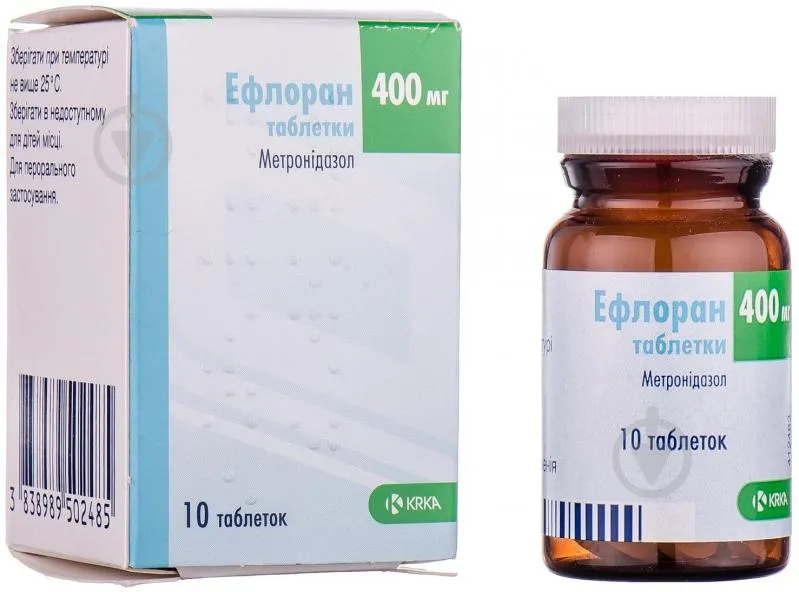
Instructions for Use
INSTRUCTION FOR MEDICAL USE OF THE MEDICINAL PRODUCT Efloran (Efloran®)
Composition:
Active substance: metronidazole;
1 tablet contains 400 mg of metronidazole;
Excipients: lactose monohydrate; povidone; corn starch; microcrystalline cellulose; sodium starch glycolate; talc; magnesium stearate.
Pharmaceutical form. Tablets.
Main physicochemical properties: white to slightly yellowish, round, slightly biconvex tablets with a score line on one side.
Pharmacotherapeutic group.
Antibacterial agents for systemic use. Imidazole derivatives. ATC code J01X D01.
Antiprotozoal agents. Medicinal products for the treatment of amoebiasis and other protozoal diseases. ATC code P01A B01.
Pharmacological properties.
Pharmacodynamics.
Metronidazole – a synthetic antimicrobial agent, a derivative of nitroimidazole, active against anaerobic microorganisms – gram-negative and gram-positive bacteria. It treats certain parasitic infections and has pronounced activity against Giardia and Trichomonas.
Metronidazole acts in several stages: it penetrates into the bacterial cell, where its 5-nitro group is converted into hydroxylamine, leading to suppression of microbial DNA up to a lethal effect; subsequently, cytotoxic metabolites break down into non-toxic, inactive metabolites.
Pharmacokinetics.
Absorption
Maximum serum concentration is nearly the same after intravenous or oral administration; bioavailability ranges from 90% to 100%. The elimination half-life of the active substance is 8 hours.
Distribution
The active substance penetrates well into all tissues, organs, and body fluids; the volume of distribution reaches 80% of body weight.
Within 4–6 hours, metronidazole concentrations in tissues and cerebrospinal fluid reach 80–90% of serum concentrations. Only a small amount – no more than 20% – binds to plasma proteins.
Metabolism
Metronidazole is primarily metabolized in the liver. Mainly oxidative metabolites are formed, which are predominantly excreted in urine as glucuronides.
Presystemic metabolism of the active substance is insignificant. Metabolism is slowed in patients with liver disease. In patients with renal insufficiency, metabolites may accumulate.
Excretion
Unmetabolized metronidazole is primarily excreted in urine. From 6% to 15% of the administered dose is excreted in feces.
Metronidazole and its metabolites are rapidly removed by hemodialysis.
Clinical characteristics.
Indications.
Infections caused by microorganisms sensitive to the drug: amoebiasis; urogenital trichomoniasis; nonspecific vaginitis; giardiasis; surgical infections caused by anaerobic microorganisms sensitive to metronidazole; replacement of intravenous treatment for infections caused by anaerobic microorganisms sensitive to metronidazole.
When using metronidazole, national and international guidelines on appropriate use of antibacterial agents should be taken into account.
Contraindications.
Hypersensitivity to metronidazole or to imidazole group drugs (nitroimidazoles), or to any of the excipients.
Children under 6 years of age, due to the pharmaceutical form (see section "Special precautions for use").
First trimester of pregnancy and breastfeeding period.
Interaction with other medicinal products and other forms of interaction.
Alcohol (as beverage or excipient)
Patients should be advised not to consume alcohol during metronidazole treatment and for at least 48 hours after the last dose due to the possibility of a disulfiram-like reaction (antabuse effect: flushing, erythema, vomiting, tachycardia).
Warfarin and other coumarin anticoagulants
Metronidazole enhances the effect of warfarin and other coumarin anticoagulants; therefore, when used concomitantly, the dose of these agents should be appropriately reduced. Prothrombin time should be monitored. No interaction with heparin.
Disulfiram
Cases of delirium and confusion have been reported in patients taking metronidazole and disulfiram concurrently. There is a risk of developing acute psychotic episodes or confusion, which are reversible upon discontinuation of the drug.
Lithium
When lithium and metronidazole are taken concurrently, lithium retention has been observed in patients, accompanied by signs of renal impairment. Metronidazole may increase plasma lithium levels. The dose of lithium should be reduced or treatment discontinued prior to starting metronidazole. In patients receiving lithium during metronidazole therapy, lithium levels, creatinine, and electrolytes in blood should be monitored.
5-Fluorouracil
Increased toxicity of 5-fluorouracil due to slowed clearance.
Cyclosporine
In patients taking cyclosporine, there is a risk of increased serum cyclosporine levels. Cyclosporine and creatinine plasma concentrations should be monitored if concomitant use with metronidazole is necessary.
Phenytoin and phenobarbital
In patients taking phenytoin or phenobarbital, metronidazole is metabolized faster than usual, and its elimination half-life is reduced to approximately 3 hours. A similar effect may occur with other drugs that induce liver enzymes.
Cimetidine
Concomitant use of cimetidine may in some cases reduce metronidazole excretion and subsequently lead to increased serum concentrations of metronidazole.
Special precautions for use.
Disorders of the skin and subcutaneous tissue.
Severe bullous skin reactions, sometimes fatal, including Stevens-Johnson syndrome (SJS), toxic epidermal necrolysis (TEN), and acute generalized exanthematous pustulosis (AGEP), have been reported with metronidazole use (see section "Adverse reactions").
Most cases of SJS were reported within the first 7 weeks after initiation of metronidazole therapy. Patients should be informed about the signs and symptoms and closely monitored for skin reactions. If symptoms suggestive of SJS, TEN, or AGEP occur (e.g., flu-like symptoms, progressive skin rash, often with blistering or mucosal lesions), treatment must be discontinued immediately (see section "Adverse reactions").
Renal disorders.
In patients with renal impairment, the elimination half-life of metronidazole remains unchanged; therefore, dose adjustment is not required. However, metabolites of metronidazole may accumulate in these patients. The clinical significance of this is unknown.
Metronidazole and its metabolites are removed by hemodialysis within 8 hours. Therefore, metronidazole should be administered immediately after hemodialysis.
Dose adjustment of Efloran is not required in patients with renal insufficiency undergoing continuous ambulatory peritoneal dialysis (CAPD) or intermittent peritoneal dialysis (IPD).
Disorders of the nervous system.
Due to the risk of neurological exacerbation, metronidazole should be used with great caution in patients with active bone marrow disease or severe active or chronic disorders of the peripheral or central nervous system, as well as in elderly patients.
Monitoring.
In case of prolonged metronidazole therapy (more than 10 days), blood tests and liver function tests should be performed. If prolonged therapy is necessary, the physician should consider the possibility of peripheral neuropathy or leukopenia. Both effects are usually reversible. Regular hematological testing and clinical monitoring are recommended to detect signs indicating the development of adverse effects such as central or peripheral neuropathy (paresthesia, ataxia, dizziness, seizures). High doses of metronidazole have been associated with transient epileptiform seizures. Metronidazole should be used cautiously in patients with active central nervous system disorders, except for brain abscess.
Intensive or prolonged metronidazole therapy should only be conducted under careful monitoring of clinical and biological effects and under the supervision of a specialist.
Hepatic disorders.
Since metronidazole is primarily metabolized in the liver, the clearance of metronidazole may be reduced in patients with impaired liver function. The benefit-risk ratio of using metronidazole for the treatment of trichomoniasis should be carefully evaluated in such patients. Significant accumulation of metronidazole may occur in patients with hepatic encephalopathy. Due to increased plasma concentrations of metronidazole, symptoms of encephalopathy may be exacerbated. If necessary, the daily dose may be reduced to one-third and administered once daily.
Cases of rapid onset of severe hepatotoxicity / acute liver failure, including fatal outcomes, have been observed in patients with Cockayne syndrome receiving systemic metronidazole-containing medications. Metronidazole should be used in these patients only if the expected benefit outweighs the risk and no alternative treatment is available.
Liver function should be monitored immediately before starting the drug, during treatment, and after completion of therapy until liver function parameters return to normal or baseline values. If liver function tests during treatment show markedly elevated values, the drug should be discontinued.
Patients with Cockayne syndrome should be advised to immediately inform their physician and discontinue metronidazole if any symptoms suggestive of impaired liver function occur (see section "Adverse reactions").
Alcohol.
Patients should not consume alcohol during metronidazole therapy and for at least 3 days after the last dose due to the potential for a disulfiram-like (antabuse) reaction.
Since data have been published suggesting possible carcinogenic effects of metronidazole, prolonged treatment is not recommended. Metronidazole and its metabolites have been shown to be mutagenic in some non-mammalian cell tests.
Metronidazole is not recommended for patients with porphyria.
Patients should be informed about the possible darkening of urine due to the presence of metronidazole metabolites.
Special warnings regarding certain components of Efloran.
The medicine contains lactose. Patients with rare hereditary problems of lactose intolerance, galactosemia, or glucose-galactose malabsorption should not take this medicine.
Use during pregnancy or breastfeeding.
Pregnancy. The use of this medicinal product is contraindicated during the first trimester of pregnancy. It may be used thereafter only if the benefit to the mother outweighs the potential risks to the fetus.
Breastfeeding. Metronidazole passes into breast milk. Efloran should not be used during breastfeeding.
Ability to affect reaction speed when driving vehicles or operating machinery.
Efloran may have a minor or moderate influence on the ability to drive vehicles or operate machinery, especially when alcohol is consumed during treatment. Patients should be warned about the possible occurrence of somnolence, dizziness, confusion, hallucinations, seizures, and transient visual disturbances. The physician should draw the patient's attention to this and advise against driving vehicles or operating machinery.
Dosage and Administration
Administer orally. This dosage form (400 mg) may be prescribed for children aged 6 years and older, as well as for adults. The tablet may be divided into equal parts.
Swallow tablets whole without chewing, with water, during or after meals.
Prophylaxis of anaerobic infections, particularly during surgical procedures on abdominal organs (mainly colorectal) and gynecological surgeries.
Adults
The adult dose is 400 mg every 8 hours, starting immediately before surgery, followed by intravenous or rectal administration until the patient is able to take tablets orally.
Children
For children aged 6 years and older: 20–30 mg/kg as a single dose 1–2 hours before surgery.
Treatment of anaerobic infections.
Treatment duration is up to 7 days, depending on the patient's condition and type of infection.
Adults
Initial dose: 800 mg, followed by 400 mg every 8 hours.
Children
For children aged 6 years and older: 20–30 mg/kg twice daily. The maximum daily dose is 40 mg/kg, depending on the severity of the infection. Treatment usually lasts for 7 days.
Protozoal and other infections
| Infections |
Treatment duration in days |
Adults and children aged 10 years and older |
Children aged 7 to 10 years |
Children aged 6 to 7 years |
| Urogenital trichomoniasis (to prevent reinfection, the partner must also be treated) |
7 |
2000 mg as a single dose or 200 mg three times daily |
40 mg/kg orally as a single dose or 15–30 mg/kg/day in 2–3 divided doses; do not exceed 2000 mg per day |
|
| 5–7 |
400 mg twice daily |
- |
- |
|
| Bacterial vaginosis |
5–7 |
400 mg twice daily |
- |
- |
| 1 |
2000 mg as a single dose |
- |
- |
|
| Amebiasis |
||||
| Intestinal infections in susceptible patients |
5 |
800 mg three times daily |
400 mg three times daily |
200 mg four times daily |
| Intestinal infections in susceptible patients and chronic amoebic hepatitis |
5–10 |
400 mg three times daily |
200 mg three times daily |
- |
| Amebic liver abscess and other forms of extraintestinal amebiasis |
5 |
400 mg three times daily |
200 mg three times daily |
- |
| Asymptomatic amebiasis (treatment of carriers) |
5–10 |
400–800 mg three times daily |
200–400 mg three times daily |
100–200 mg four times daily |
| Doses may be expressed in milligrams (mg) per kilogram (kg) of body weight: 35–50 mg/kg three times daily for 5–10 days; do not exceed 2400 mg per day. |
||||
| Giardiasis |
3 |
2000 mg as a single dose or |
1000 mg as a single dose |
600–800 mg as a single dose |
| 5 |
400 mg three times daily |
- |
- |
|
| Doses may be expressed in milligrams (mg) per kilogram (kg) of body weight: 15–40 mg/kg 2–4 times daily. |
||||
| Acute ulcerative gingivitis |
3 |
200 mg three times daily |
- |
- |
| Acute dental infections |
3–7 |
200 mg three times daily |
- |
- |
| Leg ulcers and pressure sores |
7 |
400 mg three times daily |
- |
- |
Elderly patients. Efloran is generally well tolerated by elderly patients; however, due to pharmacokinetic studies, it is recommended to use the drug with caution.
When using metronidazole, national and international guidelines on appropriate use of antibacterial agents should be considered.
Helicobacter pylori eradication in children.
Administer as part of combination therapy for 7–14 days at a dose of 20 mg/kg/day, not exceeding 500 mg twice daily. National and international recommendations should be considered when administering the drug.
Use in elderly patients
Caution is recommended, especially with high doses. There is no information regarding dosage adjustment.
Use in patients with renal impairment
Dose adjustment is not required in patients with impaired renal function.
Metronidazole is removed during hemodialysis, and it should be administered after completion of the procedure.
Use in patients with severe hepatic insufficiency
In patients with severe hepatic insufficiency, the dose should be reduced and serum levels of metronidazole should be monitored.
Children.
To be used in children aged 6 years and older.
Overdose.
In cases of overdose, the most common symptoms are nausea, vomiting, dizziness, ataxia, and mild disorientation; in more severe cases, ataxia, paresthesia, and seizures have been reported.
There is no specific antidote. Treatment is symptomatic.
Adverse Reactions
Adverse reactions that may occur during the use of Efloran are listed by organ systems.
The frequency of adverse reactions is defined according to the following categories: very common (≥ 1/10), common (≥ 1/100, < 1/10), uncommon (≥ 1/1000, < 1/100), rare (≥ 1/10,000, < 1/1000), very rare (< 1/10,000), frequency not known (cannot be estimated from available data). Within each frequency group, adverse reactions are listed in order of decreasing severity.
Infections and infestations:
- Uncommon: oral candidiasis and vaginal candidiasis.
Nervous system disorders:
- Uncommon: headache, dizziness, vertigo, increased body temperature, dry mouth sensation;
- Rare: sensory peripheral neuropathy;
- Frequency not known: confusion and subacute cerebellar syndrome (e.g. ataxia, dysarthria, gait disturbances, nystagmus, tremor), which may resolve after discontinuation of the medicinal product. Transient epileptic seizures, aseptic meningitis.
If adverse effects affecting the central nervous system occur, such as seizures, disorientation, excitement, ataxia, etc., the patient must immediately discontinue the medicinal product and consult a physician.
Gastrointestinal disorders:
- Rare: nausea, abdominal pain, metallic taste, anorexia;
- Very rare: vomiting, diarrhea, pancreatitis.
Immune system disorders:
- Rare: hypersensitivity reactions (rash, urticaria, anaphylactic reactions, angioneurotic edema), Herxheimer reaction.
Renal and urinary disorders:
- Rare: dark or reddish-brown urine color (due to metronidazole metabolite), burning sensation in the urethra or vagina.
Skin and subcutaneous tissue disorders:
- Frequency not known: skin itching, pustular eruptions, DRESS, itching, hyperemia, erythema multiforme, SJS or TEN, persistent drug-induced erythema.
Eye disorders:
- Frequency not known: visual disturbances such as diplopia, myopia, transient blurred vision, optic nerve neuropathy/neuritis.
Ear and labyrinth disorders:
- Frequency not known: hearing disturbances/hearing loss (including sensorineural), tinnitus.
Cardiac disorders:
- Rare: ECG changes.
Vascular disorders:
- Rare: thrombophlebitis.
Psychiatric disorders:
- Frequency not known: depressed mood, psychotic reactions with confusion and hallucinations.
Blood and lymphatic system disorders:
- Rare: transient neutropenia;
- Frequency not known: agranulocytosis, thrombocytopenia, pancytopenia, leukopenia.
Hepatobiliary disorders:
- Rare: liver function disturbances;
- Very rare: hepatic encephalopathy, cholestatic hepatitis, jaundice;
- Frequency not known: increased levels of liver enzymes (AST [aspartate aminotransferase], ALT [alanine aminotransferase], alkaline phosphatase), hepatocellular injury.
Cases of severe liver failure requiring liver transplantation have been reported, mainly during concomitant use with other antibiotics.
In patients with Cockayne syndrome, cases of severe irreversible hepatotoxicity / acute liver failure, including fatal cases with rapid progression, have been reported during systemic administration of metronidazole (see section "Special Warnings and Precautions for Use").
Musculoskeletal and connective tissue disorders:
- Frequency not known: myalgia, arthralgia.
Reproductive system and breast disorders:
- Rare: gynecomastia.
Treatment should be discontinued if severe adverse reactions occur.
Reporting of suspected adverse reactions
Reporting of suspected adverse reactions after authorization of the medicinal product is of great importance. It allows continued monitoring of the benefit-risk balance of the medicinal product. Medical and pharmaceutical professionals, as well as patients or their legal representatives, should report all cases of suspected adverse reactions and lack of efficacy via the automated pharmacovigilance information system at the following link: https://aisf.dec.gov.ua.
Shelf life. 5 years.
Storage conditions.
Store at a temperature not exceeding 25 °C. Keep out of reach of children.
Packaging.
10 tablets in a glass bottle in a cardboard box.
Prescription status. Prescription only.
Manufacturer.
KRKA, d.d., Novo mesto, Slovenia.
Manufacturer's address and location of operations.
Smarjeska cesta 6, 8501 Novo mesto, Slovenia.
Frequently Asked Questions
What is Efloran prescribed for?
The drug is used to treat infections caused by certain bacteria and parasites, specifically amoebiasis, giardiasis, urogenital trichomoniasis, non-specific vaginitis, bacterial vaginosis, as well as some surgical infections.
How should Efloran be taken correctly?
Tablets should be swallowed whole, without chewing, and taken with water, during or after meals. The dosage and duration of the course depend on the disease, age, and weight of the patient, and therefore must be prescribed by a physician.
What are the possible side effects of Efloran?
Possible reactions include headache, dizziness, nausea, abdominal pain, a metallic taste in the mouth, darkening of urine color, skin itching, or rash. In rare cases, serious neurological or hepatic disorders, or skin reactions may occur, requiring immediate discontinuation of treatment.
Who should not take this drug?
The drug is contraindicated in individuals with hypersensitivity to metronidazole or imidazole-group drugs, in children under 6 years of age, during the first trimester of pregnancy, and during breastfeeding. It is also not recommended for patients with porphyria or lactose intolerance.
Can alcohol be consumed during treatment?
No, alcohol must not be consumed during the administration of the drug and for at least 48–72 hours after its completion, as this may cause a disulfiram-like reaction (flushing, vomiting, palpitations).
How does the drug interact with other medicines?
Efloran may enhance the effect of anticoagulants (e.g., warfarin), increase blood levels of lithium or cyclosporine, and affect the action of drugs such as phenytoin, phenobarbital, disulfiram, and cimetidine. The physician must be informed about all concomitant medications.
Does the drug affect the ability to drive a vehicle?
The drug may cause drowsiness, dizziness, or visual disturbances; therefore, it is not recommended to drive vehicles or operate machinery during treatment.
Similar Medications
-
Metronidazole
Form: tablets
Active substance Dosage metronidazole 250 mg Manufacturer: JSC "Lubnipharm"
-
Metronidazole-zdorovya
Form: tablets
Active substance Dosage metronidazole 250 mg Manufacturer: LLC "Corporation "Zdorovya" (all manufacturing stages, quality control, batch release)
-
Trichopol®
Form: tablets
Active substance Dosage metronidazole 250 mg Manufacturer: Pharmaceutical Plant "Polpharma" S.A.
This page has been machine-translated and may contain inaccuracies. The original data is available in the manufacturing country's language.
Last data check: July 21, 2026 · Data source: Державний реєстр лікарських засобів України