Agvantar
Ukraine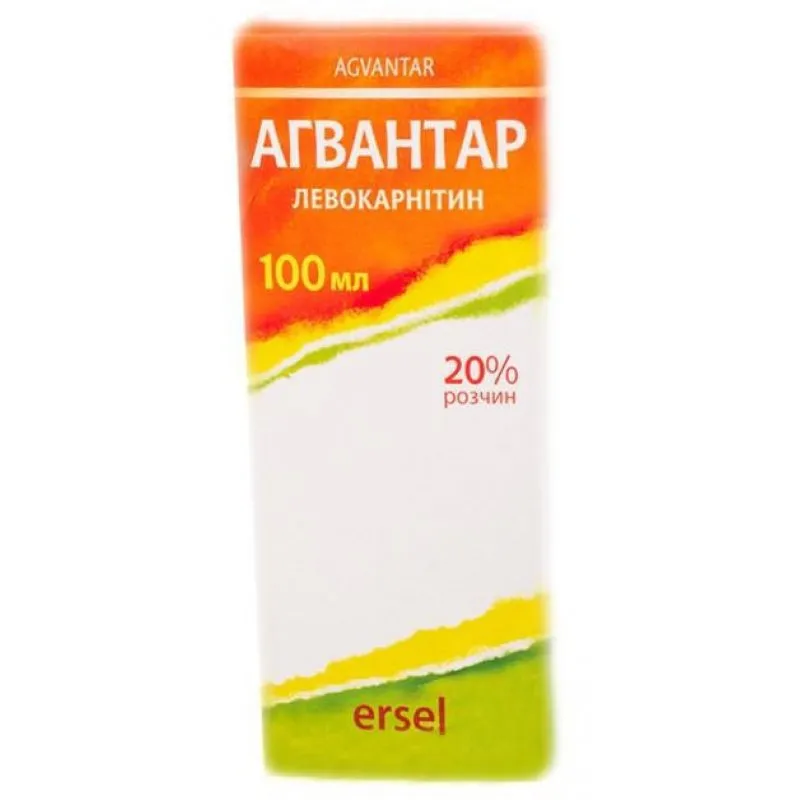
Instructions for Use
Table of Contents
INSTRUCTIONS FOR MEDICAL USE OF THE MEDICINAL PRODUCT AGVANTAR
Composition:
Active substance: levocarnitine;
1 ml of solution contains levocarnitine 200 mg;
Excipients: methylparaben (E 218), propylparaben (E 216), sucrose, sorbitol (E 420), banana flavouring, purified water.
Pharmaceutical form. Oral solution.
Main physicochemical properties: clear, slightly yellowish, viscous solution with a characteristic odour.
Pharmacotherapeutic group.
Amino acids and their derivatives. ATC code A16AA01.
Pharmacological properties.
Pharmacodynamics.
Levocarnitine (L-carnitine) is a vitamin-like substance naturally synthesized in the liver, kidneys, and brain tissue from the amino acids lysine and methionine with the participation of iron and ascorbic acid. In blood plasma, it is present in free form and as acylcarnitine esters. Levocarnitine is the main cofactor in fatty acid metabolism in the heart, liver, and skeletal muscles. It acts as the primary carrier of long-chain fatty acids into mitochondria, where their beta-oxidation to acetyl-CoA occurs, followed by ATP generation. It facilitates the removal of metabolites and toxic substances from the cytoplasm, improves metabolic processes, enhances physical performance, accelerates growth, increases muscle mass, reduces fat content in adipocytes, and promotes normalization of basal metabolism in hyperthyroidism. It reduces symptoms of physical and mental overexertion, exerts neuro-, hepato-, and cardioprotective effects, helps reduce myocardial ischemia and limits the infarct area, lowers blood cholesterol levels, stimulates cellular immunity, and improves attention concentration. Levocarnitine alleviates functional disorders of the nervous system in patients with chronic alcoholism during withdrawal syndrome. During intense physical exertion and sports activities, carnitine increases endurance, raises the pain sensitivity threshold in muscles, and optimizes the function of skeletal and cardiac muscles.
Pharmacokinetics.
After oral administration, the drug is rapidly absorbed from the gastrointestinal tract. Maximum plasma concentration is reached within 3 hours after intake, and the therapeutic concentration remains for 9 hours. The drug is metabolized, forming acyl esters, which are excreted by the kidneys. The elimination half-life after oral administration depends on the dose and ranges from 3 to 6 hours.
Clinical characteristics.
Indications.
Primary (congenital) carnitine deficiency.
Secondary carnitine deficiency.
Contraindications.
Hypersensitivity to the components of the drug.
Interaction with other medicinal products and other forms of interaction.
Concomitant use of glucocorticoids leads to accumulation of levocarnitine in body tissues (except the liver). Other anabolic agents enhance the effect of the drug.
Special precautions for use.
The recommended doses of the drug should not be exceeded. If adverse effects occur, the drug should be discontinued. When prescribing Agvantar solution to patients with diabetes mellitus, it is necessary to consider that the formulation contains sucrose.
Prolonged oral administration of high doses of levocarnitine to patients with severe renal function impairment or end-stage renal disease (ESRD) is not recommended, as it may lead to accumulation in the blood of potentially toxic metabolites, trimethylamine (TMA) and trimethylamine N-oxide (TMAO), due to insufficient renal excretion. Such accumulation leads to increased TMA excretion in urine.
If you have an intolerance to certain sugars, consult your doctor before taking this medicinal product.
Contains 2 g of sucrose per dose (5 ml). Use with caution in patients with diabetes mellitus.
Energy value of 1 g of sorbitol: 2.6 kcal.
May be harmful to teeth.
Use during pregnancy or breastfeeding.
Teratogenic or embryotoxic effects of the drug have not been reported. However, due to the lack of adequate controlled clinical studies, the use of the drug during pregnancy is possible only when the expected benefit to the mother outweighs the potential risk to the fetus.
If it is necessary to use Agvantar during breastfeeding, breastfeeding should be discontinued for the duration of treatment with this drug.
Ability to affect the speed of reactions when driving or operating machinery.
Does not affect.
Method of administration and dosage.
The dosage and duration of treatment are determined individually by the physician depending on the patient's age and the nosological form of the disease. Agvantar should be taken orally, 30 minutes before meals. Use the provided dosing syringe or a measuring cup for accurate dosing. For adults, the initial dose is 1 g per day (5 ml), gradually increasing the dose depending on the patient's condition and tolerability. The usual daily dose of Agvantar for adults is 1–3 g (5–15 ml), divided into 1–3 doses. The maximum daily dose for adults is 6 g (30 ml).
For children, Agvantar should be initiated at a dose of 50 mg/kg per day. The usual pediatric doses are 50–100 mg/kg per day (see table).
Table
| Children (age) |
Single dose |
Number of doses per day |
| Newborns |
100 mg (0.5 ml) |
2-3 |
| Up to 1 year |
100-200 mg (0.5-1 ml) |
2-3 |
| 1-3 years |
200-400 mg (1-2 ml) |
3 |
| 4-6 years |
400-600 mg (2-3 ml) |
3 |
| 7-11 years |
500-800 mg (2.5-4 ml) |
3 |
| From 12 years |
800-1000 mg (4-5 ml) |
3 |
The maximum daily dose is 3 g. The average treatment course for adults and children is 1–3 months. If necessary, the treatment course can be repeated. In cases of primary and secondary carnitine deficiency, the drug should be taken continuously or until the cause of the deficiency is eliminated.
Children.
Agvantar can be used in children (full-term and preterm newborns) from the first day of life.
Overdose.
There is no data on overdose.
Side effects.
Gastrointestinal system : dyspeptic disorders, epigastric pain, nausea, vomiting, diarrhoea.
Immune system : may occasionally cause allergic reactions (possibly delayed-type) in cases of individual intolerance.
Other : body odour.
Seizure episodes have been reported in patients both with and without prior seizure activity. In patients with previous seizure activity, an increase in frequency and/or severity of seizures has been observed.
The presence of sorbitol (E 420) in the formulation may exert a mild laxative effect.
Treatment : symptomatic.
Shelf life. 2 years.
Storage conditions.
Store at a temperature not exceeding 25 °C.
Keep out of reach of children.
Packaging.
30 ml or 100 ml in a polyethylene terephthalate container, with a dosing syringe and/or measuring cup, packed in a cardboard box.
Category of supply. Over-the-counter (without prescription).
Manufacturer.
Chanel Medical.
Manufacturer's address and place of business.
Dublin Road, Letterkenny, Co. Donegal, Ireland.
Marketing Authorisation Holder.
TOV "Ersel Pharma Ukraine".
Address of the Marketing Authorisation Holder.
21030, Vinnitsia, Prospect Yunosti, 20/73, Ukraine.
INSTRUCTIONS
for medical use of the medicinal product
AGVANTAR
Composition:
active substance: levocarnitine;
1 ml of solution contains levocarnitine 200 mg;
excipients: methylparaben (E 218), propylparaben (E 216), sucrose, sorbitol (E 420), banana flavour, purified water.
Pharmaceutical form. Oral solution.
Basic physicochemical properties: clear, slightly yellowish, viscous solution with a characteristic odour.
Pharmacotherapeutic group.
Amino acids and their derivatives. ATC code A16AA01.
Pharmacological Properties
Pharmacodynamics
Levocarnitine (L-carnitine) is a vitamin-like substance naturally synthesized in the liver, kidneys, and brain tissue from the amino acids lysine and methionine, with the participation of iron and ascorbic acid. In blood plasma, it is present in free form and as acylcarnitine esters. Levocarnitine is the principal cofactor in fatty acid metabolism in the heart, liver, and skeletal muscles. It acts as the main transporter of long-chain fatty acids into mitochondria, where their beta-oxidation to acetyl-CoA occurs, followed by ATP production. It promotes the removal of metabolites and toxic substances from the cytoplasm, improves metabolic processes, enhances physical performance, accelerates growth, increases muscle mass, reduces fat content in adipocytes, and helps normalize basal metabolism in hyperthyroidism. It reduces symptoms of physical and mental overexertion, exerts neuro-, hepato-, and cardioprotective effects, contributes to reducing myocardial ischemia and limiting the infarct zone, lowers blood cholesterol levels, stimulates cellular immunity, and improves concentration. Levocarnitine eliminates functional disorders of the nervous system in patients with chronic alcoholism during withdrawal syndrome. During intense physical exertion and sports activities, carnitine increases endurance, raises the pain sensitivity threshold in muscles, and optimizes the function of skeletal and cardiac muscles.
Pharmacokinetics
After oral administration, the drug is rapidly absorbed from the gastrointestinal tract. Maximum plasma concentration is reached within 3 hours after intake. The therapeutic concentration persists for 9 hours. The drug is metabolized, forming acyl esters, which are excreted by the kidneys. The elimination half-life after oral administration ranges from 3 to 6 hours, depending on the dose.
Clinical characteristics.
Indications.
Primary (congenital) carnitine deficiency.
Secondary carnitine deficiency.
Contraindications.
Hypersensitivity to the components of the drug.
Interaction with other medicinal products and other types of interactions.
Concomitant use of glucocorticoids leads to accumulation of levocarnitine in body tissues (except the liver). Other anabolic agents enhance the effect of the drug.
Special precautions for use
Do not exceed the recommended doses of the drug. If adverse effects occur, the drug should be discontinued. When prescribing Agvantar solution to patients with diabetes mellitus, it should be taken into account that the formulation contains sucrose.
Long-term oral administration of high doses of levocarnitine is not recommended for patients with severe renal function impairment or end-stage renal disease (ESRD), as it may lead to accumulation in the blood of potentially toxic metabolites, trimethylamine (TMA) and trimethylamine N-oxide (TMAO), due to insufficient renal excretion. This accumulation leads to increased TMA levels in urine.
If you have an intolerance to certain sugars, consult your doctor before taking this medicinal product.
Contains 2 g of sucrose per dose (5 ml). Use with caution in patients with diabetes mellitus.
Energy value of 1 g of sorbitol – 2.6 kcal.
May be harmful to teeth.
Use during pregnancy or breastfeeding.
No teratogenic or embryotoxic effects of the drug have been reported. However, due to the lack of adequate controlled clinical studies, the use of the drug during pregnancy is possible only when the expected benefit to the mother outweighs the potential risk to the fetus.
If it is necessary to use Agvantar during breastfeeding, breastfeeding should be discontinued for the duration of treatment with this drug.
Effect on the ability to drive vehicles or operate machinery
Has no effect.
Method of administration and dosage.
The physician determines the dosage and duration of treatment individually, depending on the patient's age and the nosological form of the disease. Agvantar should be taken orally, 30 minutes before meals. Use the provided dosing syringe or measuring cup for accurate dosing.
For adults, the initial dose is 1 g per day (5 ml), gradually increasing the dose depending on the patient's condition and tolerability. The usual daily dose of Agvantar for adults is 1–3 g (5–15 ml), divided into 1–3 doses. The maximum daily dose for adults is 6 g (30 ml).
For children, treatment should start with a dose of 50 mg/kg per day. The usual pediatric doses are 50–100 mg/kg per day (see table).
Table
| Children (age) |
Single dose |
Number of doses per day |
| Newborns |
100 mg (0.5 ml) |
2-3 |
| Under 1 year |
100-200 mg (0.5-1 ml) |
2-3 |
| 1-3 years |
200-400 mg (1-2 ml) |
3 |
| 4-6 years |
400-600 mg (2-3 ml) |
3 |
| 7-11 years |
500-800 mg (2.5-4 ml) |
3 |
| From 12 years |
800-1000 mg (4-5 ml) |
3 |
The maximum daily dose is 3 g. The average treatment course for adults and children is 1–3 months. If necessary, the treatment course may be repeated. In cases of primary and secondary carnitine deficiency, the drug should be taken continuously or until the cause of the deficiency is eliminated.
Children.
Agvantar can be used in children (full-term and preterm newborns) from the first day of life.
Overdose.
There is no data on overdose.
Adverse Reactions
Gastrointestinal system: dyspeptic disorders, epigastric pain, nausea, vomiting, diarrhea.
Immune system: may occasionally cause allergic reactions (possibly delayed-type) in individuals with hypersensitivity.
Other: body odour.
Seizure episodes have been reported in patients both with and without prior seizure activity. In patients with previous seizure activity, an increase in frequency and/or severity of seizures has been observed.
The presence of sorbitol (E 420) in the formulation may exert a mild laxative effect.
Treatment is symptomatic.
Shelf life: 2 years.
Storage conditions:
Store at a temperature not exceeding 25 °C.
Keep out of reach and sight of children.
Packaging:
30 ml or 100 ml in a polyethylene terephthalate container, with a dosing syringe and/or measuring cup, packed in a cardboard box.
Supply category: Over-the-counter (without prescription).
Manufacturer:
JSC "Tekhnolog".
Manufacturer's address and location of business activity:
8, Stara Prorizna Street, Uman, Cherkasy region, 20300, Ukraine.
Marketing Authorisation Holder:
LLC "Ersel Pharma Ukraina".
Address of the Marketing Authorisation Holder:
20/73, Yunosti Avenue, Vinnytsia, 21030, Ukraine.
Frequently Asked Questions
What is Agvantar prescribed for?
The drug is prescribed for primary (congenital) and secondary carnitine deficiency.
How should Agvantar be taken correctly?
The solution should be taken orally 30 minutes before meals. Use a special syringe or a measuring cup for accurate dosing. The dosage and duration of treatment must be determined by a physician.
What are the available dosages of Agvantar for adults?
Adults are usually prescribed 1 to 3 g per day (5–15 ml), dividing this amount into 1–3 doses. The maximum allowable dose is 6 g (30 ml) per day.
Can children take this drug?
Yes, the drug can be used in children from the first day of life. The dosage depends on age: for example, newborns are prescribed 0.5 ml 2–3 times a day, and children aged 12 years and older are prescribed 4 to 5 ml 3 times a day.
Who should not take this drug?
The drug should not be taken in case of hypersensitivity to its components. Patients with diabetes mellitus should be cautious, as the composition contains sucrose. Long-term administration of high doses is also not recommended for people with severe renal impairment.
What are the possible side effects?
Possible gastrointestinal disorders (nausea, vomiting, diarrhea, abdominal pain), allergic reactions, changes in body odor, or a mild laxative effect. Cases of seizures have also been recorded.
How does the drug interact with other medicines?
When taken simultaneously with glucocorticoids, levocarnitine may accumulate in body tissues. Other anabolic agents may enhance the effect of the drug.
Similar Medications
-
Almiba
Form: solution, oral
Active substance Dosage levocarnitine 100 mg/ml Manufacturer: Anfarm Ellas S.A.
-
Cardonat l-carnitine
Form: solution, oral
Active substance Dosage levocarnitine 200 mg/ml Manufacturer: Sperko Ukraine, Ukraine (full production cycle, batch release; quality control)
-
Cartan
Form: solution, oral
Active substance Dosage levocarnitine 100 mg/ml Manufacturer: DEMO SA Pharmaceutical Industry
-
Metacartin
Form: solution, oral
Active substance Dosage levocarnitine 2 g/10 ml Manufacturer: World Medicine Ilac San. Ve Tij. A.S.
-
Metacartin
Form: solution, oral
Active substance Dosage levocarnitine 1 g/10 ml Manufacturer: WORLD MEDICINE ILAC SAN. VE TIC. A.S.
-
Steatel
Form: solution, oral
Active substance Dosage levocarnitine 100 mg/ml Manufacturer: HELP S.A.
This page has been machine-translated and may contain inaccuracies. The original data is available in the manufacturing country's language.
Last data check: July 21, 2026 · Data source: Державний реєстр лікарських засобів України