Sodium chloride 0,9% fresenius
Poland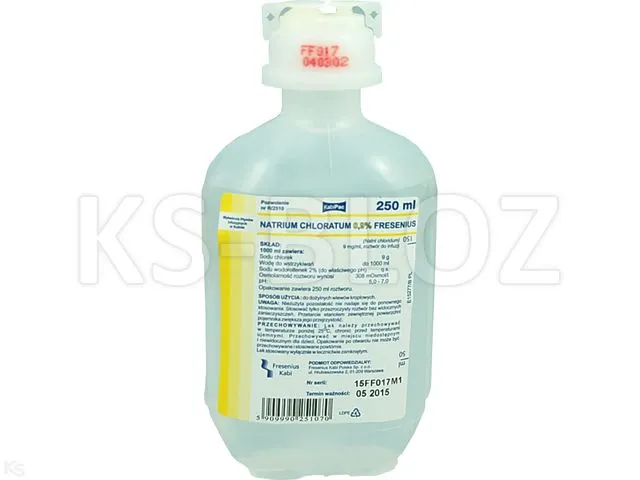
Instructions for Use
Table of Contents
- 1. What NATRIUM CHLORATUM 0,9% FRESENIUS is and what it is used for
- 2. Important information before using the medicine NATRIUM CHLORATUM 0,9% FRESENIUS
- 3. How to use NATRIUM CHLORATUM 0,9% FRESENIUS
- 4. Possible adverse reactions
- 5. How to store NATRIUM CHLORATUM 0,9% FRESENIUS
- 6. Contents of the package and other information
- Information intended exclusively for medical professionals:
Patient Information Leaflet
NATRIUM CHLORATUM 0,9% FRESENIUS, 9 mg/ml, infusion solution
Sodium chloride
Please read all of this leaflet carefully before receiving this medicine, as it contains
important information for you.
Keep this leaflet, as you may need to read it again.
If you have any further questions, please ask your doctor, pharmacist or nurse.
This medicine has been prescribed for a specific individual. Do not pass it on to others. It may harm someone else, even if their symptoms are the same.
If you experience any side effects, including any not listed in this leaflet, tell your doctor, pharmacist or nurse. See section 4.
Contents of the leaflet
- What NATRIUM CHLORATUM 0,9% FRESENIUS is and what it is used for
- What you need to know before you are given NATRIUM CHLORATUM 0,9% FRESENIUS
- How to use NATRIUM CHLORATUM 0,9% FRESENIUS
- Possible side effects
- How to store NATRIUM CHLORATUM 0,9% FRESENIUS
- Contents of the pack and other information
1. What NATRIUM CHLORATUM 0,9% FRESENIUS is and what it is used for
NATRIUM CHLORATUM 0,9% FRESENIUS is a physiological saline solution, providing water and electrolytes (sodium and chloride). It is administered intravenously.
The average daily water requirement in adults ranges from 2 to 3 litres.
Sodium regulates the body's water balance, controls muscle contractions and relaxations, including that of the heart muscle, and is essential for the function of various enzymes.
Chloride is a component of digestive secretions in the gastrointestinal tract (gastric juice and saliva), and participates in regulating the body's water balance and acid-base equilibrium.
Sodium in combination with chloride maintains proper fluid balance in the body and helps maintain normal acid-base balance.
Indications:
- Parenteral fluid and electrolyte replacement (sodium and chloride);
- Dilution and dissolution of electrolyte concentrates and medicinal products;
- A volume of 1000 ml may be used as an irrigation solution during surgical procedures or as a test solution for dialysis equipment.
2. Important information before using the medicine NATRIUM CHLORATUM 0,9% FRESENIUS
When not to use the medicine NATRIUM CHLORATUM 0,9% FRESENIUS
Before administering this medicine, consider contraindications related to the substance being dissolved or diluted and administered to the patient.
Do not use the medicine:
- if the patient is allergic to the substance dissolved or diluted in NATRIUM CHLORATUM 0,9% FRESENIUS;
- if the patient is overhydrated (has excess fluid in the body).
Use of the medicine may be inappropriate:
- if the patient has too high a concentration of sodium and chloride in the blood;
- if the patient has too low a concentration of potassium in the blood;
- if the patient has acidosis (accumulation in the blood of excessive amounts of acidic substances);
- in situations when the patient should restrict sodium intake (restrict salt in diet) due to: congestive heart failure, generalized edema, pulmonary edema, hypertension, preeclampsia (a circulatory disorder occurring in pregnant women), or severe renal insufficiency; inform the physician about this;
- in newborns for water deficiency correction (use only to correct electrolyte imbalances).
Warnings and precautions
The medicine should be used with caution if the patient:
- has congestive heart failure;
- has severe renal insufficiency; in patients with impaired kidney function, the medicine may cause sodium retention in the body;
- has edema (caused by sodium retention in the body);
- is being treated with corticosteroids or corticotropin (see section: NATRIUM CHLORATUM 0,9% FRESENIUS and other medicines).
During prolonged administration of NATRIUM CHLORATUM 0,9% FRESENIUS, the physician will monitor the patient's condition and order blood tests (to check for disturbances in fluid balance, electrolyte concentrations, and acid-base balance).
NATRIUM CHLORATUM 0,9% FRESENIUS and other medicines
Inform the physician or pharmacist about all medicines currently or recently taken by the patient, as well as any medicines the patient plans to use.
Concurrent use of NATRIUM CHLORATUM 0,9% FRESENIUS with the following medicines is not recommended, as they may increase sodium levels in the body:
- non-steroidal anti-inflammatory drugs (e.g. ibuprofen, diclofenac);
- carbenoxolone (a medicine used in the treatment of oral ulcers);
- corticosteroids (also known as steroids, medicines used in the treatment of, among others, rheumatic diseases);
- corticotropin (a pituitary hormone).
Pregnancy and breastfeeding
If the patient is pregnant or breastfeeding, suspects she may be pregnant, or plans to become pregnant, she should consult a physician or pharmacist before using this medicine.
NATRIUM CHLORATUM 0,9% FRESENIUS may be administered to women during pregnancy and while breastfeeding.
Driving and operating machinery
Not applicable.
3. How to use NATRIUM CHLORATUM 0,9% FRESENIUS
This medicine is administered only by medical personnel. Do not use the medicine yourself. If in
doubt, consult your doctor.
The dose is determined individually by a doctor for each patient depending on age, body weight, and
clinical condition.
Use of a higher than recommended dose of NATRIUM CHLORATUM 0,9% FRESENIUS
If a higher than recommended dose has been administered, inform the doctor or nurse immediately.
This may cause adverse reactions (see section 4: Possible side effects).
If you have any further doubts regarding the use of this medicine, consult your doctor or nurse.
4. Possible adverse reactions
Like all medicines, this medicine can cause adverse reactions, although not everyone will experience them.
Frequency unknown (frequency cannot be determined from available data):
- Administration of too large a volume of NATRIUM CHLORATUM 0,9% FRESENIUS may cause:
- increased blood concentration of sodium and chloride,
- acidosis (accumulation in the blood of excessive amounts of acidic substances),
- worsening of symptoms of heart failure and pulmonary edema (especially in patients with cardiovascular diseases), such as dyspnea, fatigue, swelling of the lower limbs, and irregular heartbeat.
- At the site of administration, the following may occur:
- irritation of the vein,
- thrombophlebitis (formation of inflammation and small blood clots in the vein, manifested by palpable hardening of the vein, redness around it, pain, and tenderness).
Reporting of adverse reactions
If any adverse symptoms occur, including any adverse symptoms not listed in this
leaflet, inform a doctor, pharmacist, or nurse. Adverse reactions can be
reported directly to the Department of Monitoring Adverse Drug Reactions of the Office for Registration of Medicinal Products, Medical Devices and Biocidal Products
Al. Jerozolimskie 181C
02-222 Warsaw
tel.: + 48 22 49 21 301
fax: + 48 22 49 21 309
website: https://smz.ezdrowie.gov.pl
Adverse reactions can also be reported to the marketing authorization holder.
Reporting adverse reactions allows the collection of additional information on the safety of the medicine.
5. How to store NATRIUM CHLORATUM 0,9% FRESENIUS
Keep this medicine out of the sight and reach of children.
Polyethylene container KabiPac with cap:
Do not freeze.
Polypropylene container KabiClear with cap, polypropylene bag of type " free flex ", " free flex +", or
" free flex ProDapt", glass bottle:
Store below 25°C. Do not freeze.
Once opened, the container must not be stored and reused. Unused residue of the medicine
is not suitable for further use.
Do not use this medicine after the expiry date stated on the packaging. The expiry date refers to the last day of the stated month.
Do not use this medicine if contamination, change in colour or damage to the packaging occurs.
Medicines must not be disposed of via the sewage system or household waste. Ask a pharmacist how to dispose of medicines no longer in use. Such measures will help protect the environment.
6. Contents of the package and other information
What NATRIUM CHLORATUM 0,9% FRESENIUS contains
- The active substance is sodium chloride.
1000 ml of solution contains 9 g of sodium chloride.
- Other components are: water for injections, sodium hydroxide (for pH adjustment), and hydrochloric acid (for pH adjustment).
The osmolarity of the solution is 308 mOsmol/l, pH: 4.5 – 7.0.
What NATRIUM CHLORATUM 0,9% FRESENIUS looks like and contents of the pack
The medicine is a clear, colourless solution.
Medicine pack sizes:
- Polyethylene container KabiPac with cap – 100 ml, 250 ml, 500 ml, 1000 ml;
- Polyethylene container KabiPac with cap – 40 x 100 ml, 20 x 250 ml, 10 x 500 ml, 20 x 500 ml, 10 x 1000 ml, in a cardboard box;
- Polypropylene container KabiClear with cap – 100 ml, 250 ml, 500 ml, 1000 ml;
- Polypropylene container KabiClear with cap – 40 x 100 ml, 20 x 250 ml, 10 x 500 ml, 20 x 500 ml, 10 x 1000 ml, in a cardboard box;
- Polypropylene bag type "free flex" or "free flex +" (with non-piercing port) – 50 ml, 100 ml, 250 ml, 500 ml, 1000 ml;
- Polypropylene bag type "free flex" or "free flex +" (with non-piercing port) – 60 x 50 ml, 50 x 100 ml, 30 x 250 ml, 20 x 500 ml, 10 x 1000 ml, in a cardboard box;
- Polypropylene bag type "free flex ProDapt" (with non-piercing port) – 60 x 50 ml, 50 x 100 ml, 30 x 250 ml, in a cardboard box;
- Glass bottle – 250 ml, 500 ml;
- Glass bottle – 12 x 250 ml, 12 x 500 ml, in a cardboard box.
Marketing Authorisation Holder and Manufacturer
Marketing Authorisation Holder
Fresenius Kabi Polska Sp. z o.o.
Al. Jerozolimskie 134
02-305 Warsaw
Manufacturer
Fresenius Kabi Polska Sp. z o.o.
Infusion Solutions Manufacturing Plant
ul. Sienkiewicza 25
99-300 Kutno
Fresenius Kabi Italia S.r.l.
Via Camagre 41
37063 Isola della Scala - Verona
Italy
Fresenius Kabi France
6, Rue du Rempart
B.P. 611
27400 Louviers Cedex
France
Fresenius Kabi Deutschland GmbH
Freseniusstraße 1
D-61169 Friedberg
Germany
For further information, please contact the Marketing Authorisation Holder:
Fresenius Kabi Polska Sp. z o.o.
Al. Jerozolimskie 134
02-305 Warsaw
tel.: + 48 22 345 67 89
Information intended exclusively for medical professionals:
Dosage and administration
The dosage is determined individually by a physician according to the patient's age, body weight, and clinical condition.
In severe sodium deficiency, 2 to 3 liters of NATRIUM CHLORATUM 0.9% FRESENIUS may be administered over 2–3 hours, followed by slower infusion.
Excessive administration of potassium-free solutions may cause significant hypokalemia.
Intravenous administration of these solutions may lead to fluid overload and decreased serum concentration of certain electrolytes, overhydration, circulatory congestion, or pulmonary edema.
The risk of fluid overload causing circulatory congestion is directly proportional to the electrolyte concentration in these solutions.
Overdose
In cases of overhydration or overload with dissolved substances, the patient's clinical condition should be assessed and appropriate treatment initiated.
Interactions with other medicinal products and other forms of interaction
As with all parenterally administered drugs, compatibility of other medicinal products added to the NATRIUM CHLORATUM 0.9% FRESENIUS solution must be verified.
Concomitant administration of sodium-retaining drugs such as non-steroidal anti-inflammatory drugs (NSAIDs), carbenoxolone, corticosteroids, and corticotropin may increase the risk of sodium excess.
When adding other medicinal products to NATRIUM CHLORATUM 0.9% FRESENIUS, the resulting solution should be administered immediately.
Possible changes in coloration should be carefully observed.
Preparation for use
Use only clear, transparent solutions.
Any unused portion of the medicinal product must not be retained for later use.
Do not use the medicinal product if particulate matter or discoloration is observed, or if the container is damaged.
Handle in accordance with aseptic principles.
Instructions for use of the polypropylene bag type "free*flex*" and "free*flex* +":
- Before use, inspect the appearance of the bag and solution – the solution should be clear and free from particulate matter (do not use damaged or previously used bags).
- Preparation for infusion:
a) Remove the bag from the outer packaging.
b) Remove the plastic cover/plug from the larger dark blue port (infusion port) with the arrow pointing outward from the packaging.
c) Connect the infusion set. - Adding medicinal product to the container:
a) Remove the bag from the outer packaging.
b) Remove the plastic cover/plug from the smaller port for injection (white for the "free*flex*" bag, light blue for the "free*flex* +" bag) with the arrow pointing inward toward the packaging, then add the medicinal product:- Into the "free*flex*" bag via syringe with a needle.
- Into the "free*flex* +" bag via a luer-lock syringe screwed directly into the injection port, or via a standard syringe with a needle.
- Using the freeflex+ transfer adapter designed for direct transfer of medication from a vial into the container.
Note: Ports are sterile and do not require disinfection prior to first use.
Medical devices intended for administration and addition of medicinal products must be used in accordance with their instructions for use. After adding a medicinal product, the resulting solution must be thoroughly mixed, and it must be ensured that no precipitate has formed.
Instructions for use of KabiPac and KabiClear container types:
- Before use, inspect the appearance of the container and solution – the solution should be clear and free from particulate matter (do not use damaged or previously used containers).
- Preparation for infusion:
a) Place the KabiPac/KabiClear container on a stable, level surface.
b) Remove the plastic cover/plug from the larger port (infusion port) with the arrow pointing outward from the packaging.
c) Insert the spike of the infusion set vertically into the infusion port, gently rotating the set with one hand while holding the neck of the container with the other. - Adding medicinal product to the container:
a) Place the KabiPac/KabiClear container on a stable, level surface.
b) Remove the plastic cover/plug from the smaller port (injection port) with the arrow pointing inward toward the packaging, then insert the needle into the center of the injection port and add the medicinal product to the KabiPac/KabiClear container.
Note: Ports are sterile and do not require disinfection prior to first use.
Medical devices intended for administration and addition of medicinal products must be used in accordance with their instructions for use. After adding a medicinal product, the resulting solution must be thoroughly mixed, and it must be ensured that no precipitate has formed.
Pharmaceutical incompatibilities
The compatibility of other medicinal products added to the NATRIUM CHLORATUM 0.9% FRESENIUS solution must be verified.
Storage conditions
After opening, the container must not be stored and reused. From a microbiological standpoint, the medicinal product should be used immediately. Otherwise, the user is responsible for the storage conditions and duration of any remaining solution in the container.
Polyethylene container KabiPac with cap: Do not freeze.
Polypropylene container KabiClear with cap, polypropylene bag type "free*flex*", "free*flex* +", or "free*flex* ProDapt", glass bottle: Store below 25°C. Do not freeze.
Disposal of unused medicinal product or waste
Any unused residues of the medicinal product or waste materials must be disposed of in accordance with local regulations.
Similar Medications
-
Kalii chloridum 0.15% + natrii chloridum 0.9% kabi
Form: solution for infusion
Active substance Dosage Potassium chloride 1.5 mg/ml Sodium chloride 9 mg/ml Manufacturer: Fresenius Kabi Deutschland GmbH Labesfal – Laboratórios Almiro, S.A.
-
Kalii chloridum 0.3% + natrii chloridum 0.9% kabi
Form: solution for infusion
Active substance Dosage Potassium chloride 3 mg/ml Sodium chloride 9 mg/ml Manufacturer: Fresenius Kabi Deutschland GmbH Labesfal – Laboratórios Almiro, S.A.
-
Optilyte
Form: solution for infusion
Active substance Dosage sodium chloride 5.75 g sodium acetate trihydrate 4.62 g disodium citrate dihydrate 0.9 g calcium chloride dihydrate 0.26 g potassium chloride 0.38 g magnesium chloride hexahydrate 0.2 g Manufacturer: Fresenius Kabi Polska Sp. z o.o.
-
Potassium chloride 0,15% + sodium chloride 0,9% b. braun
Form: solution for infusion
Active substance Dosage Potassium chloride 1,5 g/1000 ml Sodium chloride 9.0 g/1000 ml Manufacturer: B. Braun Medical S.A., B. Braun Melsungen AG
-
Potassium chloride 0,3% + sodium chloride 0,9% b. braun
Form: solution for infusion
Active substance Dosage Potassium chloride 3,0 g/1000 ml Sodium chloride 9.0 g/1000 ml Manufacturer: B. Braun Medical S.A., B. Braun Melsungen AG
-
Ringer's solution
Form: solution for infusion
Active substance Dosage sodium chloride 8.6 g potassium chloride 0.3 g calcium chloride 0.33 g Manufacturer: B. Braun Avitum AG, B. Braun Medical S.A., B. Braun Melsungen AG
-
Ringer's solution fresenius
Form: solution for infusion
Active substance Dosage sodium chloride 8.6 mg potassium chloride 0.3 mg calcium chloride 0.33 mg Manufacturer: Fresenius Kabi Polska Sp. z o.o.
-
Ringer's solution with lactates fresenius
Form: solution for infusion
Active substance Dosage sodium chloride 6 g/1000 ml potassium chloride 0.4 g/1000 ml calcium chloride dihydrate 0.27 g/1000 ml sodium lactate 6.34 g/1000 ml Manufacturer: Fresenius Kabi Polska Sp. z o.o.
-
Sodium chloride aptapharma
Form: solution for infusion
Active substance Dosage sodium chloride 9 mg/ml Manufacturer: Eurolife Healthcare Hungary Kft.
-
Sterofundin iso
Form: solution for infusion
Active substance Dosage sodium chloride 6.799 g calcium chloride dihydrate 0.3675 g magnesium chloride hexahydrate 0.2033 g malic acid 0.671 g potassium chloride 0.2984 g sodium acetate trihydrate 3.266 g Manufacturer: B. Braun Avitum AG, B. Braun Medical S.A., B. Braun Melsungen AG
-
Venolyte
Form: solution for infusion
Active substance Dosage Sodium acetate trihydrate 4.63 g Sodium chloride 6.02 g Potassium chloride 0.3 g Magnesium chloride hexahydrate 0.3 g Manufacturer: Fresenius Kabi Deutschland GmbH Fresenius Kabi France
This page has been machine-translated and may contain inaccuracies. The original data is available in the manufacturing country's language.
Last data check: June 04, 2026 · Data source: Rejestr Produktów Leczniczych (URPL)