Ringer's solution with lactates fresenius
Poland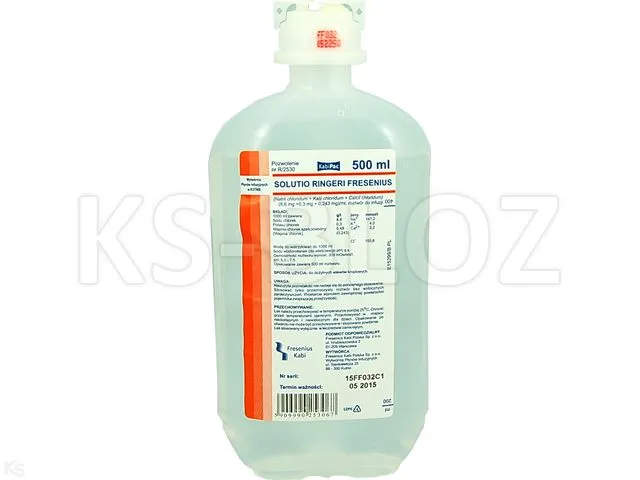
Table of Contents
- Package leaflet: Information for the user
- 1. What RINGERS LACTATE SOLUTION FRESENIUS is and what it is used for
- 2. Important information before using the medicinal product RINGER'S LACTATE SOLUTION
- 3. HOW TO USE RINGER'S SOLUTION WITH LACTATE FRESENIUS
- 4. Possible adverse reactions
- 5. How to store RINGERS LACTATE SOLUTION FRESENIUS
- 6. Contents of the packaging and other information
- Information intended exclusively for medical professionals:
Package leaflet: Information for the user
RINGERS LACTATE SOLUTION FRESENIUS, infusion solution
compound product
Please read all of this leaflet carefully before use, as it contains
important information for the patient.
- Keep this leaflet, as you may need to read it again.
- If you have any questions, please consult your doctor, pharmacist, or nurse.
- This medicine has been prescribed for a specific individual. Do not pass it on to others. The medicine may harm another person, even if their symptoms are the same.
- If any adverse reactions occur in the patient, including any adverse reactions not listed in this leaflet, inform your doctor, pharmacist, or nurse. See section 4.
Leaflet contents
- What RINGERS LACTATE SOLUTION FRESENIUS is and what it is used for
- Important information before use of RINGERS LACTATE SOLUTION FRESENIUS
- How to use RINGERS LACTATE SOLUTION FRESENIUS
- Possible adverse effects
- How to store RINGERS LACTATE SOLUTION FRESENIUS
- Contents of the pack and other information
1. What RINGERS LACTATE SOLUTION FRESENIUS is and what it is used for
RINGERS LACTATE SOLUTION FRESENIUS is an aqueous solution of mineral salts (sodium, potassium, calcium) and organic acid salts (sodium lactate), administered to restore intravascular volume and correct water and electrolyte imbalances in the body. The composition of this solution closely resembles that of extracellular fluid in the body. The product is administered intravenously.
Indications:
- Dehydration, regardless of cause (vomiting, diarrhoea, fistulae, etc.);
- Hypovolemia (reduced blood volume in the circulatory system) due to:
- Burns;
- Loss of water and/or electrolytes following surgical procedures;
- Hemorrhagic shock – for initial restoration of intravascular volume.
RINGERS LACTATE SOLUTION FRESENIUS may be used to dilute and dissolve electrolyte concentrates and other medicinal products, provided there is no incompatibility.
2. Important information before using the medicinal product RINGER'S LACTATE SOLUTION
FRESENIUS
When not to use RINGER'S LACTATE SOLUTION FRESENIUS
Do not use RINGER'S LACTATE SOLUTION FRESENIUS:
- if the patient is allergic to the active substances or to any of the other components of this medicinal product (listed in section 6);
- if the patient has excess fluid in the body (is fluid-overloaded);
- in the treatment of lactic acidosis (accumulation of lactic acid in the body).
Use of the medicinal product may be contraindicated:
- if the patient has congestive heart failure (heart function disorders manifested, among others, by ankle swelling, pulmonary edema);
- if the patient has too high blood levels of sodium, chloride, potassium, or calcium;
- in situations when the patient should restrict sodium intake (e.g. due to severe renal failure, pulmonary edema);
- concomitantly with cardiac glycosides and potassium-sparing diuretics (see section "RINGER'S LACTATE SOLUTION FRESENIUS and other medicinal products");
- if the patient has liver failure;
- if the patient has elevated blood lactate levels.
Warnings and precautions
While administering RINGER'S LACTATE SOLUTION FRESENIUS, the physician will monitor the patient's condition and order blood tests (to check for possible disturbances in fluid balance, electrolyte concentrations, and acid-base balance), especially if the patient:
- has congestive heart failure;
- has severe renal failure;
- has edema caused by sodium retention in the body;
- is being treated with corticosteroids and their derivatives (see section "RINGER'S LACTATE SOLUTION FRESENIUS and other medicinal products").
RINGER'S LACTATE SOLUTION FRESENIUS will be administered cautiously due to the risk of:
- complications related to the volume of infused solution and the amount of electrolytes administered;
- circulatory overload with pulmonary edema (especially in patients with congestive heart failure or severe renal failure);
- metabolic alkalosis due to the presence of lactate ions;
- impaired utilization of lactate ions in patients with liver dysfunction, particularly in those with liver failure, in whom lactate ion concentration is increased.
Before starting treatment with RINGER'S LACTATE SOLUTION FRESENIUS, inform the physician or nurse if:
- the patient has heart failure;
- the patient has respiratory failure;
- the patient has a condition that may cause increased vasopressin levels (a hormone regulating water content in the body). In the above-mentioned cases, the medicinal product should be administered under special supervision.
Elevated vasopressin levels in the body may occur:
- if the patient has experienced an acute or serious illness;
- if the patient experiences severe pain;
- if the patient has undergone surgery;
- if the patient has an infection, burn, or central nervous system disease;
- if the patient has diseases affecting heart, liver, or kidney function;
- if the patient is taking certain medicinal products. This may increase the risk of low blood sodium levels, which may lead to headache, nausea, seizures, lethargy, coma, cerebral edema, and death. Cerebral edema increases the risk of death and brain damage. Increased risk of cerebral edema occurs in:
- children;
- women (particularly those of reproductive age);
- patients with disorders of cerebrospinal fluid volume, which may be caused by meningitis, intracranial hemorrhage, or brain injury.
Patients should be closely monitored. In cases where proper regulation of blood water content is disturbed due to increased secretion of antidiuretic hormone (ADH), infusion of low-salt concentration fluids (hypotonic solutions) may lead to low blood sodium levels (hyponatremia). This may cause headache, nausea, seizures, drowsiness, coma, cerebral edema, and death. Therefore, occurrence of these symptoms (severe symptomatic encephalopathy with hyponatremia) is considered life-threatening.
The physician will recommend monitoring blood potassium levels in patients at risk of hyperkalemia (elevated potassium levels), e.g. in severe renal failure, due to the potassium content of the medicinal product.
The physician will not recommend using RINGER'S LACTATE SOLUTION FRESENIUS during blood transfusion through the same set due to its calcium content and the risk of coagulation.
RINGER'S LACTATE SOLUTION FRESENIUS and other medicinal products
Inform the physician or pharmacist about all medicinal products currently or recently used by the patient, as well as those the patient plans to use.
Do not use the following medicinal products concomitantly with RINGER'S LACTATE SOLUTION FRESENIUS:
- cardiac glycosides (medicinal products used in the treatment of heart failure) due to the risk of severe or life-threatening cardiac rhythm disturbances (arrhythmias), especially if the patient has low blood potassium levels;
- potassium-sparing diuretics (amiloride, potassium canrenoate, spironolactone, triamterene) due to the risk of life-threatening hyperkalemia (elevated blood potassium levels), particularly in patients with impaired kidney function.
Exercise particular caution when using the following medicinal products concomitantly with RINGER'S LACTATE SOLUTION FRESENIUS:
- thiazide diuretics (medicinal products increasing urine production, e.g. hydrochlorothiazide) due to the risk of increased blood calcium levels caused by reduced urinary calcium excretion;
- angiotensin-converting enzyme inhibitors (medicinal products used in the treatment of arterial hypertension) due to the risk of life-threatening hyperkalemia, particularly in patients with impaired kidney function;
- tacrolimus (a medicinal product used, among others, in the treatment of atopic dermatitis) due to the risk of life-threatening hyperkalemia, particularly in patients with impaired kidney function;
- corticosteroids (also known as steroids, medicinal products used, among others, in the treatment of rheumatic disease);
- corticotropin (a pituitary hormone).
It is especially important to inform the physician if the patient is taking certain medicinal products affecting the action of vasopressin hormone, including:
- antidiabetic medicinal products (chlorpropamide);
- cholesterol-lowering medicinal products (clofibrate);
- antiepileptic medicinal products (carbamazepine);
- medicinal products with a chemical structure similar to amphetamine (including MDMA);
- certain antineoplastic medicinal products (vincristine, ifosfamide, cyclophosphamide);
- selective serotonin reuptake inhibitors (used in the treatment of depression);
- antipsychotic medicinal products;
- opioids used in the treatment of severe pain;
- analgesic and/or anti-inflammatory medicinal products (also known as non-steroidal anti-inflammatory drugs, NSAIDs);
- medicinal products mimicking or enhancing the action of vasopresin, such as desmopressin (used in the treatment of excessive thirst and urination), terlipressin (used in the treatment of esophageal bleeding), and oxytocin (used to induce labor);
- other medicinal products increasing the risk of hyponatremia, including all diuretics and anticonvulsant medicinal products such as oxcarbazepine.
Due to its calcium content, RINGER'S LACTATE SOLUTION FRESENIUS must not be mixed with solutions containing carbonates, oxalates, or phosphates.
Pregnancy and breastfeeding
If the patient is pregnant or breastfeeding, suspects she may be pregnant, or is planning to have a child, she should consult a physician or pharmacist before using this medicinal product.
RINGER'S LACTATE SOLUTION FRESENIUS may be administered during pregnancy and while breastfeeding only if the physician considers it necessary. In such cases, water and electrolyte balance must be monitored.
Particular caution should be exercised when administering this medicinal product to pregnant women during labor, especially in combination with oxytocin (a hormone used to induce labor and reduce bleeding), due to the risk of hyponatremia.
Driving and operating machinery
No data available.
3. HOW TO USE RINGER'S SOLUTION WITH LACTATE FRESENIUS
This medicinal product is administered exclusively by medical personnel. Self-administration of this medicine is not permitted.
In case of doubt, consult a physician.
Dosage is determined individually by the physician for each patient, depending on clinical condition, age, body weight, and laboratory test results. Detailed information is provided in the section:
Information intended exclusively for healthcare professionals.
The physician will monitor fluid volume in the body, blood pH, urine flow, and electrolyte concentrations (particularly sodium) in the blood (especially in patients with high vasopressin hormone levels or in patients taking other medicines that enhance vasopressin activity), both at the beginning and during the infusion.
USE OF A HIGHER THAN RECOMMENDED DOSE OF RINGER'S SOLUTION WITH LACTATE FRESENIUS
If a higher than recommended dose is administered, inform the physician or nurse immediately.
Administration of a higher than recommended dose may result in:
- fluid overload (excess fluid in the body);
- overload with substances dissolved in RINGER'S SOLUTION WITH LACTATE FRESENIUS.
If you have any further questions regarding the use of this medicine, consult your physician or nurse.
4. Possible adverse reactions
Like all medicines, this medicine can cause adverse reactions, although not everyone will experience them.
Very common (may affect more than 1 in 10 patients):
- allergic reactions, sometimes serious, such as localised or generalised urticaria, rash and erythema, pruritus, skin swelling, facial and/or laryngeal swelling (Quincke's oedema);
- electrolyte disturbances;
- respiratory system symptoms: nasal congestion, cough, sneezing, bronchospasm and/or breathing difficulties.
Common (may affect up to 1 in 10 patients):
- feeling of restlessness;
- heart failure in patients with impaired cardiac function or pulmonary oedema;
- chest pressure;
- chest pain associated with increased heart rate (tachycardia) or decreased heart rate (bradycardia);
- pruritus;
- fluid overload.
Uncommon (may affect up to 1 in 100 patients):
- seizures (caused by alkalosis).
Frequency not known (cannot be estimated from available data):
- oedema caused by fluid overload or sodium overload;
- when large quantities of the medicine are administered, dilution of blood components may occur, e.g. coagulation factors and other plasma proteins, as well as decreased haematocrit (a parameter assessed in blood tests);
- low sodium levels in blood (hyponatraemia), which may lead to brain damage and death due to cerebral oedema (see section "Warnings and precautions").
Several cases of panic have been reported.
The following adverse effects related to the administration technique may occur:
- increased body temperature;
- infection at the site of administration;
- phlebitis (inflammation and small blood clots characterised by palpable vein hardening, redness around the vein, pain and tenderness);
- thrombophlebitis spreading from the puncture site;
- extravasation (leakage of the medicine outside the vein);
- hypervolaemia (excessive blood volume in the circulatory system).
If adverse reactions occur, the physician will immediately stop the infusion, assess the patient's condition, and initiate appropriate treatment.
Reporting of adverse reactions
If any adverse symptoms occur, including any adverse symptoms not listed in this leaflet, inform your doctor, pharmacist or nurse. Adverse reactions can be reported directly to the Department of Monitoring Adverse Drug Reactions of the Office for Registration of Medicinal Products, Medical Devices and Biocidal Products
Al. Jerozolimskie 181C
02-222 Warsaw
Phone: +48 22 49 21 301
Fax: +48 22 49 21 309
Website: https://smz.ezdrowie.gov.pl
Adverse reactions can also be reported to the marketing authorisation holder.
Reporting adverse reactions helps to provide more information on the safety of the medicine.
5. How to store RINGERS LACTATE SOLUTION FRESENIUS
Keep the medicine out of the sight and reach of children.
Do not freeze.
Use only clear solution.
Do not use this medicine if you notice any contamination or discoloration, or if the packaging is damaged.
Any unused portion of the medicine is not suitable for further use. Handle in accordance with aseptic techniques.
Do not use this medicine after the expiry date stated on the container. The expiry date refers to the last day of the stated month. The labelling on the packaging shows: EXP - expiry date, Lot - batch number.
Medicines must not be disposed of via wastewater or household waste. Ask your pharmacist how to dispose of medicines no longer required. Such measures will help protect the environment.
6. Contents of the packaging and other information
What PŁYN RINGERA Z MLECZANAMI FRESENIUS contains
The active substances in this medicinal product are: sodium chloride, potassium chloride, calcium chloride dihydrate, sodium lactate.
1000 ml of solution contains:
Sodium chloride (Natrii chloridum) 6.00 g
Potassium chloride (Kalii chloridum) 0.40 g
Calcium chloride dihydrate (Calcii chloridum dihydricum) 0.27 g
Sodium lactate (Natrii lactate) 6.34 g
Ions:
Na 131.0 mmol/1000 ml
K 5.36 mmol/1000 ml
Ca 1.84 mmol/1000 ml
C H O 28.3 mmol/1000 ml
Cl - 112.0 mmol/1000 ml
Other components (excipients) are: water for injections, hydrochloric acid (for pH adjustment), and sodium hydroxide (for pH adjustment).
The osmolarity of the solution is 278.5 mOsmol/l, pH: 5.0 – 7.0.
What PŁYN RINGERA Z MLECZANAMI FRESENIUS looks like and contents of the packaging
The medicinal product is a clear, transparent liquid.
Packaging:
- Polyethylene container KabiPac with closure – 100 ml, 250 ml, 500 ml, 1000 ml;
- Polyethylene container KabiPac with closure – 40 x 100 ml, 20 x 250 ml, 10 x 500 ml, 20 x 500 ml, 10 x 1000 ml, in a cardboard box;
- Polypropylene container KabiClear with closure – 100 ml, 250 ml, 500 ml, 1000 ml;
- Polypropylene container KabiClear with closure – 40 x 100 ml, 20 x 250 ml, 10 x 500 ml, 20 x 500 ml, 10 x 1000 ml, in a cardboard box.
Not all pack sizes may be marketed.
Marketing Authorisation Holder and Manufacturer
Marketing Authorisation Holder
Fresenius Kabi Polska Sp. z o.o.
Al. Jerozolimskie 134
02-305 Warsaw
Manufacturer
Fresenius Kabi Polska Sp. z o.o.
ul. Sienkiewicza 25
99-300 Kutno
For further information, please contact the Marketing Authorisation Holder:
Fresenius Kabi Polska Sp. z o.o.
Al. Jerozolimskie 134
02-305 Warsaw
Tel.: +48 22 345 67 89
Information intended exclusively for medical professionals:
Dosage and method of administration
Dosage
The dosage is determined by the physician according to the patient's clinical condition, age, body weight, and laboratory test results. The daily dose depends on the patient's requirement for fluids and electrolytes.
The usual infusion rate is 2.5 ml/kg body weight/hour administered intravenously.
The daily dose should not exceed 40 ml/kg body weight.
The maximum daily dose depends on the patient's requirement for fluids and electrolytes.
The maximum infusion rate depends on the patient's clinical condition and is determined by the physician.
Method of administration
Intravenous administration. May be administered via peripheral veins.
Do not administer intramuscularly.
Due to the risk of hospital-acquired hyponatremia, monitoring of serum electrolyte concentrations and acid-base balance may be necessary before and during administration of the medicinal product. Particular attention should be paid to serum sodium concentration in patients with non-osmotic stimulation of vasopressin secretion (syndrome of inappropriate antidiuretic hormone secretion – SIADH) and in patients receiving concomitant treatment with vasopressin agonists.
Monitoring of serum sodium concentration is particularly important during administration of hypotonic fluids relative to physiological osmotic pressure.
The rate and volume of infusion depend on the patient's age, body weight, and clinical condition (e.g. burns, surgery, head injuries, infections). Therefore, in children, concomitant therapy should be determined by a specialist physician experienced in intravenous fluid therapy in pediatric patients.
Overdose
Overdose or excessively rapid administration may lead to fluid overload and sodium overload, resulting in the risk of peripheral, pulmonary, and cerebral edema. Electrolyte imbalances and acid-base disturbances may occur.
Excessive potassium administration may lead to hyperkalemia, especially in patients with impaired renal function. Symptoms include: paresthesia in the extremities, muscle weakness, paralysis, cardiac arrhythmias, heart block, cardiac arrest, and confusion.
Excessive administration of calcium salts may lead to hypercalcemia. Symptoms of hypercalcemia include: anorexia, nausea, vomiting, constipation, abdominal pain, muscle weakness, psychiatric disturbances, excessive thirst, polyuria, nephrocalcinosis, nephrolithiasis, and in severe cases, cardiac arrhythmias and coma. Too rapid intravenous infusion of calcium salts may cause multiple symptoms of hypercalcemia, as well as chalky taste in the mouth, hot flushes, and peripheral vasodilation. Mild, asymptomatic hypercalcemia usually resolves after discontinuation of calcium and other similarly acting drugs, such as vitamin D. In cases of acute hypercalcemia, immediate treatment is required (e.g. loop diuretics, hemodialysis, calcitonin, bisphosphonates, sodium edetate).
Excessive administration of lactate may lead to metabolic alkalosis. Metabolic alkalosis may be accompanied by hypokalemia. Symptoms may include: mood changes, fatigue, dyspnea, muscle weakness, and irregular heartbeat. Increased muscle tension, tremors, and tetany may worsen, particularly in patients with hypocalcemia. Treatment of metabolic alkalosis caused by lactate overdose primarily involves restoration of water and electrolyte balance. Particularly important may be the correction of deficiencies in calcium, chloride, and potassium.
If overdose involves drugs added to the infusion solution, subjective and objective symptoms of overdose will depend on the properties of the added component.
In case of accidental administration of an excessive volume of solution, the infusion should be discontinued and the patient should be monitored for subjective and objective symptoms indicating overdose of the administered medicinal product. If necessary, appropriate symptomatic and supportive treatment should be initiated.
Interactions with other medicinal products and other forms of interaction
Interactions with calcium
Concomitant use with cardiac glycosides is contraindicated due to the risk of severe or life-threatening cardiac arrhythmias, especially in patients with hypokalemia.
Particular caution is required when co-administering thiazide diuretics due to the risk of hypercalcemia caused by reduced urinary excretion of calcium.
Interactions with potassium
Combination with potassium-sparing diuretics (amiloride, potassium canrenoate, spironolactone, triamterene), used either as monotherapy or in combination, is contraindicated due to the risk of life-threatening hyperkalemia, particularly in patients with impaired renal function (additive hyperkalemic effect).
Combination of PŁYN RINGERA Z MLECZANAMI FRESENIUS is not recommended with:
- angiotensin-converting enzyme (ACE) inhibitors due to the risk of life-threatening hyperkalemia, particularly in patients with impaired renal function (additive hyperkalemic effect);
- tacrolimus due to the risk of life-threatening hyperkalemia, particularly in patients with impaired renal function (additive hyperkalemic effect);
- corticosteroids and corticotropin.
Drugs enhancing vasopressor effects
The following drugs enhance vasopressor effects, leading to reduced renal excretion of electrolyte-free water and may increase the risk of hospital-acquired hyponatremia following inadequately balanced fluid therapy:
- Drugs stimulating vasopressin release, e.g. chlorpropamide, clofibrate, carbamazepine, vincristine, selective serotonin reuptake inhibitors, 3,4-methylenedioxy-N-methamphetamine, ifosfamide, antipsychotics, narcotics.
- Drugs enhancing vasopressin action, e.g. chlorpropamide, NSAIDs, cyclophosphamide.
- Vasopressin analogs, e.g. desmopressin, oxytocin, vasopressin, terlipressin.
Other drugs that increase the risk of hyponatremia include all diuretics and antiepileptic drugs such as oxcarbazepine.
Preparation of the medicinal product for administration
Use only clear solutions.
Do not use this medicinal product if contamination or discoloration is observed, or if the packaging is damaged.
Any unused residue of the medicinal product is not suitable for further use.
Follow aseptic principles.
Instructions for use of KabiPac and KabiClear container types:
- Before use, inspect the container and solution visually – the solution should be clear and free from particulate matter (do not use containers that are damaged and/or previously used).
- Preparing the infusion: a) Place the KabiPac/KabiClear container on a stable, flat surface. b) Remove the plastic cover/cap from the larger port (infusion port) with the arrow pointing outward from the package. c) Insert the infusion set spike vertically into the infusion port, gently rotating the set with one hand while holding the neck of the container with the other.
- Adding medicinal product to the container: a) Place the KabiPac/KabiClear container on a stable, flat surface. b) Remove the plastic cover/cap from the smaller port (injection port) with the arrow pointing inward toward the package, then insert the needle into the center of the injection port and add the medicinal product to the KabiPac/KabiClear container.
Note: Ports are sterile and do not require disinfection before first use.
Medical devices intended for administration and addition of medicinal products should be used in accordance with their instructions for use. The solution resulting from the addition of a medicinal product should be thoroughly mixed, and it should be ensured that no precipitation has occurred.
Pharmaceutical incompatibilities
PŁYN RINGERA Z MLECZANAMI FRESENIUS contains calcium ions and should not be administered simultaneously with blood transfusion through the same set due to the risk of coagulation.
Potential incompatibilities with medicinal products added to PŁYN RINGERA Z MLECZANAMI FRESENIUS should be considered, paying attention to possible changes in color and/or formation of precipitates, insoluble complexes, or crystals. Information on the medicinal product to be added should also be reviewed.
For example, PŁYN RINGERA Z MLECZANAMI FRESENIUS is incompatible with medicinal products containing carbonates, oxalates, phosphates, aminocaproic acid, amphotericin B, metaraminol bitartrate, cefamandole, cortisone acetate, diethylstilbestrol, erythromycin, etamivan, ethyl alcohol, oxytetracycline, sodium thiopental, and disodium edetate.
Additionally, partial incompatibilities with PŁYN RINGERA Z MLECZANAMI FRESENIUS are observed with the following medicinal products:
- tetracycline – remains stable for 12 hours;
- sodium salt of ampicillin:
- at concentrations of 2% to 3% – stable for 4 hours;
- at concentrations >3% – must be administered within 1 hour;
- minocycline – remains stable for 12 hours;
- doxycycline – remains stable for 6 hours.
The above list of substances is not complete.
Before adding another medicinal product, verify whether its effective pH range is compatible with that of PŁYN RINGERA Z MLECZANAMI FRESENIUS.
When other medicinal products are added to PŁYN RINGERA Z MLECZANAMI FRESENIUS, the mixture should be administered immediately.
Disposal of unused medicinal product
Any unused residues or waste material of the medicinal product should be disposed of in accordance with local regulations.