Dexaven
Poland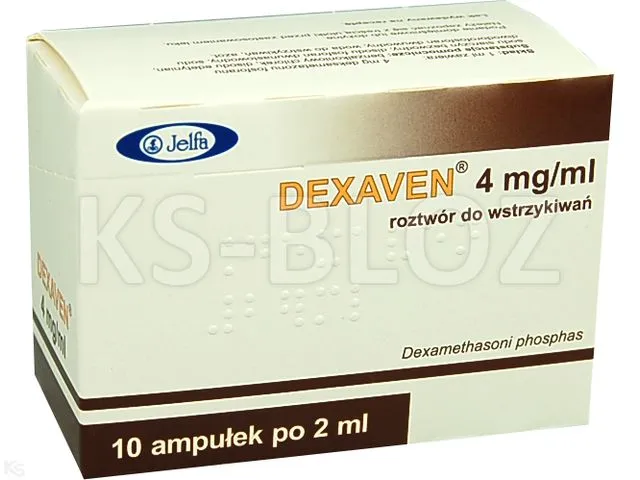
Instructions for Use
Patient Information Leaflet
Dexaven, 4 mg/ml, solution for injection
Dexamethasone phosphate
Please read all of this leaflet carefully before using this medicine, because it contains
important information for you.
- Keep this leaflet, as you may need to read it again.
- If you have any further questions, please ask your doctor, pharmacist or nurse.
- This medicine has been prescribed for a specific individual. Do not pass it on to others. It may harm them even if their symptoms are the same.
- If you experience any adverse effects, including any not listed in this leaflet, tell your doctor, pharmacist or nurse. See section 4.
Leaflet Contents
- What Dexaven is and what it is used for
- Important information before using Dexaven
- How to use Dexaven
- Possible side effects
- How to store Dexaven
- Contents of the pack and other information
1. What Dexaven is and what it is used for
Dexaven injection solution contains dexamethasone phosphate, in the form of water-soluble and body fluid-soluble dexamethasone sodium phosphate.
Dexamethasone is a synthetic glucocorticoid (a type of corticosteroid hormone). It exerts very potent and long-lasting anti-inflammatory, antiallergic and immunosuppressive effects, while lacking mineralocorticoid activity (hormonal influence on the body's mineral components).
Dexaven may be used in adults and children aged one month and older in the following conditions:
- Treatment of acute, life-threatening conditions requiring administration of glucocorticoids (e.g. shock of various etiologies, cerebral edema, laryngeal and vocal cord edema, acute allergic reactions, severe bronchospastic states such as status asthmaticus, bronchial asthma during infection, chronic bronchitis, Addisonian crisis).
- Clinical situations requiring glucocorticoid therapy to treat and/or alleviate symptoms of the underlying disease or its complications.
- Prevention of nausea and vomiting induced by chemotherapy or radiotherapy, and of other adverse effects and complications associated with anticancer therapy that can be prevented or alleviated by glucocorticoids.
- Prevention and treatment of complications following surgical procedures, primarily nausea and vomiting, which can be prevented or alleviated by glucocorticoids.
Additionally, Dexaven is used in the treatment of COVID-19 in adult and adolescent patients (aged 12 years and older weighing at least 40 kg) who require oxygen therapy.
2. Important information before using Dexaven
When not to use Dexaven
- if the patient is allergic to dexamethasone or other corticosteroids or to any of the other ingredients of this medicine (listed in section 6);
- if the patient has systemic infections, unless anti-infective treatment is being administered;
- intramuscularly, if the patient has idiopathic thrombocytopenic purpura;
- intra-articularly, if the patient has:
- infection within or adjacent to the joint requiring treatment,
- bacterial arthritis,
- joint instability requiring treatment,
- bleeding tendency (spontaneous or drug-induced due to anticoagulants),
- periarticular calcification,
- avascular necrosis of bone,
- tendon rupture,
- Charcot’s joint.
- intralesionally without additional causal treatment in the presence of infections at the site of administration.
There are no contraindications to the use of Dexaven in acute, life-threatening conditions, especially if short-term use (24–36 hours) is anticipated.
Warnings and precautions
Do not discontinue any other steroid medications unless advised by a physician.
Dexamethasone should not be used in patients with COVID-19 who do not require oxygen supplementation or mechanical ventilation, due to lack of therapeutic benefit and risk of worsening clinical condition in this patient group.
Discuss the use of Dexaven with your doctor, pharmacist, or nurse before starting treatment.
General precautions regarding the use of steroid medications in specific diseases, masking of infections, concomitant medications, etc., should be followed according to current guidelines.
The medicine should only be used as directed by a physician and in the prescribed doses.
Psychiatric disturbances such as euphoria, insomnia, mood and personality changes, severe depression, or even psychotic symptoms may occur during treatment with Dexaven. Inform your doctor if you or a close family member have a history of emotional instability, psychotic tendencies, or conditions such as depression or bipolar disorder. These conditions may be exacerbated by Dexaven.
Glucocorticosteroids may mask certain signs of inflammation, and new infections may develop during their use. While using glucocorticosteroids, resistance to infections may decrease and localization of infection may be difficult.
Do not get vaccinated during treatment, as immune responses are suppressed and antibody production may be impaired.
Inform your doctor about past infectious diseases such as chickenpox or measles, received vaccinations, or exposure to any of these diseases.
During dexamethasone treatment, avoid exposure to viral diseases (e.g. chickenpox, measles), especially if you have not had them before.
Frequent clinical monitoring is recommended during treatment in the following conditions:
- suppurative infections;
- active or latent peptic ulcer;
- osteoporosis (especially in postmenopausal women);
- arterial hypertension;
- congestive heart failure;
- diabetes mellitus;
- current or past severe manic-depressive psychosis (especially steroid-induced psychosis);
- past history of tuberculosis;
- glaucoma (also if present in family history);
- liver damage or cirrhosis;
- renal insufficiency;
- epilepsy;
- gastrointestinal mucosal ulceration;
- recent intestinal anastomosis;
- predisposition to thrombophlebitis;
- ulcerative colitis;
- intestinal diverticulosis;
- myasthenia (rapid fatigue and weakness of skeletal muscles);
- herpes eye infection threatening corneal perforation;
- hypothyroidism.
Severe allergic reactions such as laryngeal edema, urticaria, or bronchospasm may occur after administration of Dexaven, especially in patients with a history of allergic reactions.
Intra-articular administration of Dexaven increases the risk of joint infections. Prolonged and repeated use of glucocorticosteroids in weight-bearing joints may worsen degenerative joint changes. One possible reason is overuse of the affected joint after relief of pain or other symptoms.
If blurred vision or other visual disturbances occur, contact your doctor.
Contact your doctor if symptoms of tumor lysis syndrome occur, such as muscle cramps, muscle weakness, confusion, visual disturbances, or loss of vision, and rapid breathing, especially if the patient has a hematological malignancy.
Exercise caution when using Dexaven in children.
Monitor growth and development carefully during long-term glucocorticosteroid therapy in children.
Available data indicate long-term adverse events affecting neurological development in preterm infants with chronic lung disease who received early treatment (<96 hours) at an initial dose of 0.25 mg/kg body weight twice daily.
If dexamethasone is administered to a premature infant, cardiac function and structure must be monitored.
Adverse effects following glucocorticosteroid use may be more severe in elderly patients, particularly concerning osteoporosis, hypertension, hypokalemia, diabetes, susceptibility to infections, and skin thinning.
Dexaven and other medicines
Inform your doctor or pharmacist about all medicines currently used or recently used, including those obtained without a prescription, as well as any medicines you plan to use.
Some medicines may enhance the effect of Dexaven, and your doctor may need to closely monitor your condition (including certain HIV medications: ritonavir, cobicistat).
In emergency, life-threatening situations requiring immediate dexamethasone injection, especially for short-term use, drug interactions are generally not considered.
If dexamethasone is used long-term, the effects of concomitantly administered medicines may be reduced or enhanced.
The metabolism of dexamethasone may be accelerated, and its therapeutic effect reduced, when used concomitantly with:
- phenobarbital (sedative);
- rifampicin (antituberculosis agent);
- rifabutin (bactericidal agent);
- carbamazepine (antiepileptic);
- phenylbutazone (anti-inflammatory and analgesic);
- phenytoin (anticonvulsant and antiarrhythmic);
- primidone (antiepileptic);
- aminoglutethimide (anticancer agent);
- ephedrine (ingredient in cold remedies).
The effect of dexamethasone may be increased when used concomitantly with:
- estrogens (female sex hormones);
- oral contraceptives;
- medicinal products containing CYP3A4 inhibitors such as ketoconazole and itraconazole (antifungal agents).
Dexamethasone increases:
- potassium loss when used concomitantly with acetazolamide (used e.g. in glaucoma and epilepsy), carbenoxolone (used in peptic ulcer disease), diuretics, and laxatives;
- toxicity of concurrently administered cardiac glycosides;
- risk of edema when used concomitantly with anabolic steroids;
- adverse effects of nonsteroidal anti-inflammatory drugs (NSAIDs), especially their gastrointestinal effects;
- renal clearance of salicylates.
Dexamethasone decreases:
- serum concentrations of nonsteroidal anti-inflammatory drugs, thereby reducing their efficacy;
- immune response to vaccines and toxoids due to immunosuppressive effects;
- plasma praziquantel (used in parasitic infections) concentration by half. Dexamethasone may decrease (less commonly increase) the effect of coumarin derivatives (oral anticoagulants), requiring dose adjustment and monitoring of blood parameters. After corticosteroid use, the TSH response to protirelin may be reduced.
Fluoroquinolones (a class of antibiotics) may increase the risk of tendon-related adverse effects.
Pregnancy, breastfeeding, and fertility
If the patient is pregnant, breastfeeding, suspects she may be pregnant, or plans to become pregnant, she should consult her doctor or pharmacist before using this medicine.
Pregnancy
Dexaven should only be used during pregnancy if, in the physician’s opinion, the benefit to the mother outweighs the potential risk to the fetus. Newborns of mothers who received high doses of dexamethasone during pregnancy should be monitored for risk of adrenal insufficiency.
Newborns of mothers treated with Dexaven near the end of pregnancy may have low blood sugar levels after birth.
Breastfeeding
Glucocorticosteroids pass into breast milk and may impair growth, suppress endogenous glucocorticosteroid production, and cause other adverse effects in newborns and infants. Breastfeeding should be discontinued during treatment with Dexaven.
Fertility
There are no data on the effect of dexamethasone on fertility in humans.
Driving and operating machinery
Dexaven has no effect or a negligible effect on the ability to drive and operate machinery.
Dexaven contains 0.1 mg of benzalkonium chloride in each 1 ml, corresponding to 0.1 mg/1 ml in Dexaven 4 mg/ml and 0.2 mg/2 ml in Dexaven 8 mg/2 ml.
Dexaven contains less than 1 mmol (23 mg) of sodium per ampoule (1 ml and 2 ml), meaning the medicine is considered "sodium-free".
3. How to use Dexaven
This medicine should always be used as directed by the physician. The doctor will decide how long
dexamethasone should be administered. In case of doubt, consult your doctor.
The medicine is administered by intravenous injection, intramuscular injection, or intravenous infusion.
Intramuscular administration should be deep, into a large muscle mass. The medicine may also be administered
subconjunctivally or intralesionally. The injection should be performed slowly.
Immediately before intravenous infusion, the contents of the ampoule should be diluted with isotonic
sodium chloride solution (0.9%) or 5% glucose solution.
The additional sodium content contributed by the diluent must be taken into account.
The duration of treatment depends on the indication and is determined by the physician.
Depending on the severity of the disease, the patient's response to treatment, and special circumstances (e.g.
stress in the patient), the doctor will establish an individual treatment regimen for each patient, which must be
strictly followed.
Usually, initial doses are higher. After achieving the desired therapeutic effect, the dose is gradually reduced
to the lowest dose that maintains the beneficial therapeutic effect, or until discontinuation of the medicine.
Adults
Unless otherwise prescribed, the recommended dose is 4 to 16 mg per day; exceptionally up to 32 mg per
day. Typically, a single dose is 4 to 8 mg.
If necessary, the dose may be repeated at appropriate intervals several times a day.
However, in life-threatening emergencies (e.g. anaphylactic shock, acute asthma attack), significantly higher
doses may be required.
Treatment of cerebral edema: administer 10 mg intravenously, followed by 4 mg intramuscularly every
6 hours until symptoms resolve. Response is usually achieved within 12–24 hours.
Subsequently, after 2–4 days, the dosage may be reduced, and after 5–7 days, treatment may be gradually
discontinued.
For use in the treatment of Covid-19
In the treatment of COVID-19 disease, a dose of 6 mg intravenously for up to 10 days should be used.
In adolescents (aged 12 years or older), it is recommended to administer 6 mg intravenously once daily for
up to 10 days.
Local administration by infiltration and injection usually requires a dose of 4 to 8 mg. A dose of 2 mg is
sufficient for injection into small joints.
In the prevention of nausea and vomiting induced by chemotherapy or radiotherapy, as well as other
adverse effects and complications associated with anticancer therapy, the optimal dose of dexamethasone
has not been established. Typically, 8 to 20 mg intravenously is administered before chemotherapy. In some
cases, an additional intravenous or oral dose of dexamethasone was given after 24–72 hours. The medicine
should be used according to the dosing schedule specified in chemotherapy protocols.
For the prevention and treatment of complications of surgical procedures, particularly nausea and vomiting,
the recommended dose is 4 to 5 mg of dexamethasone administered intravenously. The physician will determine
the dosage according to the patient's condition.
Use in children and adolescents
Dosage requirements are variable and may be adjusted according to individual patient needs. Usually,
0.2 to 0.4 mg/kg body weight per day.
After prolonged use, the medicine should be discontinued gradually.
Use of Dexaven in elderly patients
Adverse effects following administration of glucocorticosteroids may be more severe in elderly patients,
particularly in those with osteoporosis, arterial hypertension, hypokalemia, diabetes, susceptibility to infections,
and skin thinning. To avoid life-threatening reactions, such patients should receive special care.
Use of a higher than recommended dose of Dexaven
In case of administration of a higher than recommended dose, consult a doctor immediately.
Missed dose of Dexaven
Do not administer a double dose to make up for a missed dose.
Discontinuation of Dexaven
The medicine should always be used according to the regimen prescribed by the physician. Do not discontinue
treatment with Dexaven without consulting your doctor, as abrupt discontinuation may pose a life-threatening
risk.
Do not discontinue systemic corticosteroids in patients who are already receiving systemic (oral) corticosteroids
for other reasons (e.g. patients with chronic obstructive pulmonary disease (COPD)) but who do not require
oxygen supplementation.
If you have any further questions regarding the use of this medicine, consult your doctor, pharmacist, or nurse.
4. Possible adverse reactions
Like all medicines, this medicine can cause adverse reactions, although not everybody will experience them.
The medicine is well tolerated when used short-term, and adverse reactions are unlikely to occur with short-term use, but may be reported during long-term treatment.
However, the possibility of adverse reactions caused by glucocorticoid therapy should always be considered.
Adverse reactions with unknown frequency (frequency cannot be estimated from the available data):
Musculoskeletal and connective tissue disorders: sterile necrosis of the femoral and humeral head, muscle weakness, steroid-induced myopathy, loss of muscle mass, osteoporosis, spontaneous fractures including compression fractures of the spine and pathological fractures of long bones.
Gastrointestinal disorders: nausea, vomiting, loss of appetite which may lead to weight loss, increased appetite which may lead to weight gain, diarrhoea or constipation, abdominal distension, gastric irritation and oesophagitis with ulceration, peptic ulcer with possible perforation and haemorrhage, perforation of the small and large intestine, particularly in inflammatory bowel diseases, pancreatitis.
Skin and subcutaneous tissue disorders: impaired wound healing, skin thinning which becomes fragile and susceptible to damage, petechiae and haemorrhagic eruptions, facial erythema, striae, hirsutism (excessive male-pattern hair growth in women), acneiform eruptions, decreased reactivity in skin tests, hypersensitivity reactions such as allergic dermatitis, urticaria, angioedema.
Parenteral administration of glucocorticoids may cause hypo- or hyperpigmentation (decreased or increased skin pigmentation), scarring, skin induration, decreased pain sensation, atrophy of the skin or subcutaneous tissue, and sterile abscesses at the injection site.
Nervous system disorders: seizures, neuritis, paraesthesia; after discontinuation of glucocorticoids, increased intracranial pressure with papilledema (pseudotumor cerebri) may occur.
Endocrine disorders: menstrual irregularities, Cushing's syndrome symptoms, growth suppression in children, secondary suppression of the hypothalamic-pituitary-adrenal axis, decreased carbohydrate tolerance, unmasking of latent diabetes mellitus, and increased insulin or oral antidiabetic drug requirements in diabetic patients.
Eye disorders: increased intraocular pressure, secondary glaucoma, exophthalmos, optic nerve damage, posterior subcapsular cataract, visual disturbances, vision loss, blurred vision, exacerbation of viral and fungal eye infections.
Metabolism and nutrition disorders: negative nitrogen balance due to enhanced protein catabolism, sodium retention, fluid retention, potassium loss, hypokalemic alkalosis, hypocalcemia, hyperglycemia.
Psychiatric disorders: dizziness and headache, hallucinations, psychoses, euphoria, mood changes, symptoms of pseudotumor cerebri due to increased intracranial pressure and papilledema.
Vascular disorders: thromboembolism, fat embolism, hypercholesterolemia, accelerated atherosclerosis, necrotizing vasculitis, thrombophlebitis.
Cardiac disorders: arrhythmias or ECG changes related to potassium deficiency, syncope, exacerbation of arterial hypertension, cardiac rupture as a consequence of recent myocardial infarction, sudden cardiac arrest, congestive heart failure, arterial hypertension, thickening of the heart muscle (hypertrophic cardiomyopathy) in preterm infants, which usually resolves after discontinuation of treatment.
Blood and lymphatic system disorders: leukocytosis, thrombocytopenia, lymphopenia.
General disorders and administration site conditions: exacerbation or masking of infection symptoms, insomnia, anaphylactic reactions, burning and tingling sensations which may occur after intravenous administration of glucocorticoids.
Withdrawal syndrome
Occurs after abrupt discontinuation of dexamethasone following prolonged use. It is caused by acute adrenal insufficiency and may be life-threatening. The withdrawal syndrome may also include: muscle pain, joint pain, fever, rhinitis, conjunctivitis, painful skin nodules, and weight loss.
Reporting of adverse reactions
If any adverse reactions occur, including any not listed in this leaflet, inform your doctor, pharmacist, or nurse.
Adverse reactions can be reported directly to the Department of Monitoring Adverse Drug Reactions of the Office for Registration of Medicinal Products, Medical Devices and Biocidal Products:
Al. Jerozolimskie 181C, 02-222 Warsaw, tel.: 22 49-21-301, fax: 22 49-21-309,
Website: https://smz.ezdrowie.gov.pl
Adverse reactions can also be reported to the marketing authorization holder. Reporting adverse reactions helps to provide more information on the safety of the medicine.
5. How to store Dexaven
Store below 25°C. Keep in the original packaging to protect from light.
The medicine should be stored out of sight and reach of children.
Do not use this medicine after the expiry date stated on the carton after: Expiry. The expiry date refers to the last day of the month indicated.
Medicines should not be disposed of via wastewater or household waste. Ask your pharmacist how to dispose of medicines no longer required. Such practices help protect the environment.
After dilution in infusion fluids (see section 6.6 of the characteristics), chemical and physical stability has been demonstrated for 24 hours at 25°C. From a microbiological standpoint, the product should be used immediately, unless the method of opening/dilution prevents microbial contamination. If the product is not used immediately, the responsibility for storage duration and conditions lies with the user.
6. Contents of the pack and other information
What Dexaven contains
- The active substance is dexamethasone sodium phosphate. 1 ml of solution contains 4 mg of dexamethasone sodium phosphate.
- The other ingredients are: benzalkonium chloride, disodium edetate, disodium phosphate dodecahydrate, sodium dihydrogen phosphate dihydrate, water for injections, nitrogen.
What Dexaven looks like and contents of the pack
Dexaven is a colourless or pale yellow, clear solution.
Packaging: amber glass ampoules in a cardboard box.
Available pack sizes:
5 ampoules of 1 ml
10 ampoules of 1 ml
10 ampoules of 2 ml
Marketing Authorisation Holder and Manufacturer
Marketing Authorisation Holder
Bausch Health Ireland Limited
3013 Lake Drive
Citywest Business Campus
Dublin 24, D24PPT3
Ireland
Tel: +48 17 865 51 00
Manufacturer
Przedsiębiorstwo Farmaceutyczne Jelfa S.A.
58-500 Jelenia Góra, ul. Wincentego Pola 21
Similar Medications
-
Demezon
Form: solution for injection
Active substance Dosage dexamethasone sodium phosphate 4.372 mg/ml Manufacturer: mibe GmbH Pharmaceuticals Sun-Farm Sp. z o.o.
-
Demezon
Form: solution for injection
Active substance Dosage dexamethasone sodium phosphate 8.744 mg/ml Manufacturer: mibe GmbH Pharmaceuticals Sun-Farm Sp. z o.o.
-
Dexamethasone hameln
Form: solution for injection
Active substance Dosage dexamethasone sodium phosphate 4.37 mg/ml Manufacturer: hameln rds s.r.o.
-
Dexamethasone phosphate sf
Form: solution for injection
Active substance Dosage dexamethasone sodium phosphate 4.372 mg/ml Manufacturer: mibe GmbH Pharmaceuticals Sun-Farm Sp. z o.o.
This page has been machine-translated and may contain inaccuracies. The original data is available in the manufacturing country's language.
Last data check: June 04, 2026 · Data source: Rejestr Produktów Leczniczych (URPL)