Demezon
Poland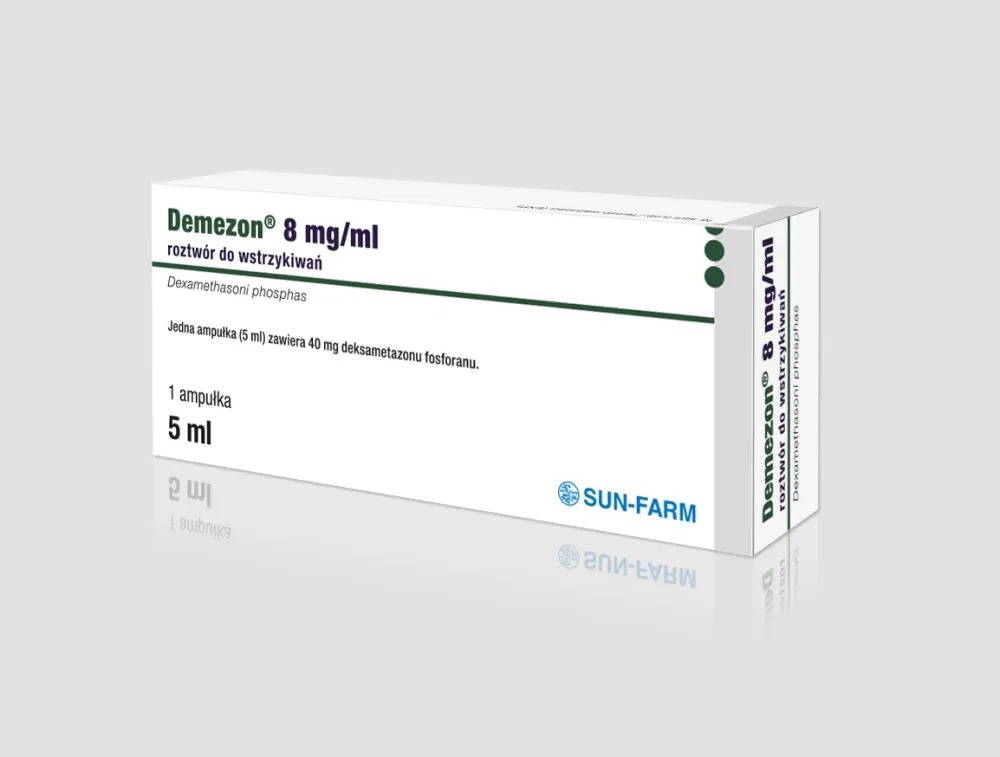
Table of Contents
- Package leaflet: Information for the patient
- 1. What Demezon is and what it is used for
- 2. Important information before using Demezon
- 3. How to use Demezon
- 4. Possible adverse effects
- 5. How to store Demezon
- 6. Contents of the package and other information
- Information intended exclusively for medical professionals:
Package leaflet: Information for the patient
Demezon, 4 mg/ml, solution for injection
Dexamethasoni phosphas
Please read carefully the entire leaflet before using this medicine, as it contains
important information for the patient.
- Keep this leaflet, so that you can read it again if necessary.
- Consult your doctor or pharmacist if you have any questions.
- This medicine has been prescribed for a specific individual. Do not share it with others. This medicine may harm another person, even if their symptoms are the same.
- If the patient experiences any adverse reactions, including any adverse reactions not listed in this leaflet, inform the doctor or pharmacist immediately. See section 4.
Table of contents of the leaflet
- What Demezon is and what it is used for
- Important information before using Demezon
- How to use Demezon
- Possible side effects
- How to store Demezon
- Contents of the package and other information
1. What Demezon is and what it is used for
Demezon solution for injection contains dexamethasone phosphate. Dexamethasone
is a synthetic glucocorticoid (a type of corticosteroid hormone produced by the adrenal cortex). It exerts a very strong and
long-lasting anti-inflammatory, antiallergic, and immunosuppressive effect.
Demezon is used in the treatment of acute, life-threatening conditions requiring administration of
glucocorticoids, as well as in clinical situations requiring glucocorticoid therapy for the treatment and (or) relief of symptoms of the underlying disease.
2. Important information before using Demezon
When not to use Demezon:
- if the patient is allergic to dexamethasone, other corticosteroids, or any of the other ingredients of this medicine (listed in section 6);
- if the patient has a systemic infection, unless appropriate causal treatment has been initiated;
- intramuscularly, if the patient has idiopathic thrombocytopenic purpura;
- intra-articularly, in cases where the patient has: infection within or in the immediate vicinity of the joint requiring treatment, bacterial arthritis, joint instability requiring treatment, bleeding disorders, periarticular calcifications, avascular necrosis of bone, tendon rupture, or Charcot joint;
- intralesionally without additional causal treatment, in the presence of infections at the site of administration. In acute, life-threatening conditions, there are no contraindications to the use of the medicine, especially if short-term administration (24–36 hours) is anticipated.
Warnings and precautions
Psychiatric disturbances may occur during treatment with Demezon, ranging from euphoria, insomnia, mood and personality changes, severe depression, to psychotic symptoms. Inform your doctor about any history of emotional instability, psychotic tendencies, or psychiatric disorders such as depression or bipolar disorder in the patient or in close family members. These conditions may worsen under the influence of Demezon.
Glucocorticosteroids may mask certain signs of inflammation, and new infections may develop during their use. During treatment with glucocorticosteroids, reduced immunity and difficulty localizing infections may occur.
During treatment with Demezon, live viral vaccines (e.g. smallpox, measles) should not be administered due to the risk of neurological complications and ineffective immunization.
Inform your doctor about past infectious diseases such as chickenpox or measles, received vaccinations, or exposure to any of these diseases. During dexamethasone treatment, avoid exposure to viral diseases (e.g. chickenpox, measles), especially if these diseases have not been previously contracted.
Special caution is required when using Demezon in the following conditions (inform your doctor about them before starting treatment with Demezon, even if they occurred in the past):
- osteoporosis (especially high risk in postmenopausal women),
- arterial hypertension or congestive heart failure,
- severe psychiatric disorders (particularly if they occurred after previous steroid treatment), currently present or in the past,
- diabetes (or family history of diabetes),
- past history of tuberculosis, as glucocorticosteroids may reactivate the disease,
- glaucoma (or family history of glaucoma),
- steroid-induced muscle weakness in the past,
- liver failure,
- kidney failure,
- epilepsy,
- peptic ulcers,
- migraine,
- certain parasitic diseases, especially amoebiasis,
- growth retardation,
- Cushing's syndrome,
- tumor lysis syndrome symptoms such as muscle cramps, muscle weakness, confusion, visual disturbances or vision loss, and rapid breathing, in patients with hematological malignancies.
During treatment with high doses of the medicine, pulse rate may be lower than usual.
Severe allergic reactions such as laryngeal edema, urticaria, or bronchospasm may occur after administration of Demezon, especially in patients with a history of allergic reactions.
When using Demezon locally, consider the possibility of adverse effects and interactions similar to those seen with systemic administration.
Intra-articular administration of Demezon increases the risk of joint infections. Prolonged and repeated use of glucocorticosteroids in weight-bearing joints may worsen degenerative joint changes. One possible reason is overuse of the affected joint after relief of pain or other symptoms.
Use of this medicine may trigger a crisis in pheochromocytoma (Pheochromocytoma crisis), which may be fatal. Pheochromocytoma is a rare adrenal gland tumor. A crisis may present as headache, excessive sweating, palpitations, and increased blood pressure. If these symptoms occur, the patient should contact a doctor immediately.
Before starting Demezon, consult a doctor if pheochromocytoma (an adrenal gland tumor) is suspected or diagnosed.
If the patient experiences blurred vision or other visual disturbances, contact a doctor.
If dexamethasone is administered to a premature infant, cardiac function and structure must be monitored.
Children and adolescents
Exercise caution when using Demezon in children.
Carefully monitor growth and development in children during long-term glucocorticosteroid therapy.
Premature infants
Available data indicate long-term adverse events affecting neurological development in premature infants with chronic lung disease following early treatment (<96 hours) at an initial dose of 0.25 mg/kg body weight twice daily.
Newborns
Warnings regarding the use of Demezon in newborns are described in the section "Demezon contains sodium and propylene glycol" at the end of this section.
Elderly patients
Adverse effects may be more severe in elderly patients, particularly concerning osteoporosis, hypertension, hypokalemia (low blood potassium), diabetes, susceptibility to infections, and skin thinning.
Use as a doping agent
Use of Demezon may result in positive doping test results.
Demezon with other medicines
Inform your doctor about all medicines currently or recently taken, including those available without a prescription.
Some medicines may enhance the effect of Demezon, and your doctor may need to closely monitor your condition when taking such medicines (including certain HIV medications: ritonavir, cobicistat).
In particular, inform your doctor if you are taking any of the following medicines, due to their potential to affect Demezon or be affected by Demezon:
- phenytoin, carbamazepine, primidone, phenobarbital (medicines used in epilepsy treatment),
- rifampicin, rifabutin (antibiotics used in tuberculosis treatment),
- ketoconazole, itraconazole (medicines used in fungal infection treatment),
- medicines used in diabetes treatment, including insulin,
- antihypertensive and diuretic medicines,
- cardiac glycosides (medicines used in heart failure treatment),
- anticoagulant coumarin derivatives (warfarin, acenocoumarol),
- oral contraceptives containing estrogen and progestogen,
- non-steroidal anti-inflammatory drugs (NSAIDs), such as acetylsalicylic acid (aspirin), ibuprofen, indomethacin,
- laxatives,
- medicines used in myasthenia gravis treatment,
- muscle relaxants (non-depolarizing neuromuscular blocking agents), e.g. pancuronium,
- atropine and anticholinergic medicines (used to increase intraocular pressure),
- fluoroquinolones (a group of antibiotics),
- cyclosporine (an immunosuppressive medicine),
- protirelin (a hormone produced by the hypothalamus in the brain),
- chloroquine, hydroxychloroquine, mefloquine (medicines used in malaria and rheumatic disease treatment),
- praziquantel (a medicine used in parasitic infection treatment),
- aminoglutethimide (an anticancer medicine),
- acetazolamide (a medicine used, among others, in glaucoma and epilepsy treatment),
- carbenoxolone (a medicine used in peptic ulcer treatment),
- ephedrine (a medicine used, among others, topically to constrict blood vessels in inflammatory conditions of nasal mucosa).
Demezon may suppress skin reactions in allergy tests.
Pregnancy and breastfeeding
If the patient is pregnant or breastfeeding, suspects she may be pregnant, or plans to become pregnant, she should consult a doctor or pharmacist before using this medicine.
The medicine should only be used if, in the doctor’s opinion, the benefits to the mother outweigh the potential risks to the fetus. Newborns born to mothers who received high doses of glucocorticosteroids during pregnancy should be monitored for the risk of adrenal insufficiency.
Glucocorticosteroids pass into breast milk and may impair growth, endogenous glucocorticosteroid production, and cause other adverse effects in newborns and infants. Breastfeeding mothers are advised to discontinue breastfeeding during treatment with Demezon.
Newborns of mothers who received Demezon near the end of pregnancy may have low blood sugar levels after birth.
Driving and operating machinery
Currently, there are no data indicating an effect of the medicine on driving or operating machinery.
Demezon contains sodium and propylene glycol.
The medicine contains less than 1 mmol (23 mg) of sodium per ampoule, meaning the medicine is considered "sodium-free".
Demezon contains 20 mg of propylene glycol per 1 ml ampoule and 40 mg of propylene glycol per 2 ml ampoule, corresponding to 20 mg/ml.
Before administering the medicine to a child under 4 weeks of age, consult a doctor or pharmacist, especially if the child is taking other medicines containing propylene glycol or alcohol.
Due to the presence of propylene glycol, the medicine may cause skin irritation.
3. How to use Demezon
This medicine should always be used according to the doctor's instructions. If in doubt, consult
your doctor or pharmacist.
Depending on the severity of the disease, the patient's response to treatment, and special circumstances (e.g.
patient stress), the doctor will determine an individual treatment regimen for each patient, which must be strictly
followed.
Adults
Unless otherwise prescribed, the recommended dose is 4 to 16 mg per day, exceptionally up to 32 mg
per day. Usually, a single dose ranges from 4 to 8 mg. If necessary, this dose may be
repeated at appropriate intervals, several times a day.
However, in life-threatening emergencies (e.g. anaphylactic shock, acute asthma attack),
significantly higher doses may be required.
Typically, initial doses are higher and are gradually reduced after achieving the desired therapeutic effect
down to the lowest dose that maintains the beneficial therapeutic effect, or until discontinuation of the drug.
Treatment involving local infiltration or injection usually requires a dose of 4 to 8 mg. A dose of 2 mg is sufficient for injection into small joints.
Use in children
Dosing requirements are variable and may be adjusted according to individual patient needs. Usually 0.2 to 0.4 mg/kg body weight per day.
Use in elderly patients
Use of the medicinal product in elderly patients does not require special dosing,
but the doctor will take into account the increased susceptibility of elderly patients to adverse reactions when determining the dose.
In cases of hypothyroidism or liver cirrhosis, relatively small doses may be sufficient, or dose reduction may be required.
Abrupt discontinuation of treatment may lead to acute adrenal insufficiency. For this reason, if discontinuation of the drug is anticipated, the dose should be gradually reduced.
Method and duration of administration
The medicine is administered by intravenous injection or infusion. If intravenous administration is not possible,
the product may be administered intramuscularly. Intramuscular injection should be deep, into a large muscle mass.
The product may also be administered by infiltration or intra-articularly.
The duration of treatment depends on the indication and is determined by the doctor.
Use of a higher than recommended dose of Demezon
Demezon is generally well tolerated, even when large amounts are used for a short period. No special precautions are required. If the patient notices the appearance of severe or unusual adverse reactions, they should consult a doctor.
Missed dose of Demezon
A missed dose should be administered later the same day, and the next day the patient should continue with the dose prescribed by the doctor. If several doses are missed, a relapse of the treated disease or worsening of symptoms may occur. In such cases, the patient should consult the doctor, who will review the treatment regimen and adjust it appropriately if necessary.
Do not use a double dose to make up for a missed dose.
Stopping use of Demezon
The medicine should always be used according to the regimen prescribed by the doctor. Do not stop using Demezon without consulting your doctor, as sudden discontinuation of treatment may pose a life-threatening risk.
If you have any further doubts regarding the use of this medicine, consult your doctor or pharmacist.
4. Possible adverse effects
Like all medicines, this medicine can cause adverse effects, although not everyone will experience them.
The risk of adverse effects with short-term treatment with dexamethasone is low. However, short-term treatment with high doses requires monitoring of electrolyte changes, development of oedema, possible increase in blood pressure, heart failure, cardiac rhythm disturbances (arrhythmias), or seizures, and clinical signs of infection should also be anticipated. Monitoring is also required for reduced glucose tolerance as well as the occurrence of gastric and intestinal ulcers (often stress-related), which may be less apparent due to corticosteroid treatment. In very rare cases, Demezon may cause allergic reactions, even anaphylactic shock.
However, during long-term use, particularly with high doses, adverse effects of varying severity may be expected.
Infections and parasitic infestations
Masking of infections, occurrence or worsening of viral, fungal, bacterial, and parasitic infections, as well as infections caused by opportunistic pathogens; activation of Enterobius vermicularis (pinworm) infection.
Blood and lymphatic system disorders
Changes in blood morphology (increased number of white blood cells or all blood cells, decreased number of certain types of white blood cells).
Immune system disorders
Hypersensitivity reactions (e.g. drug rash), severe anaphylactic reactions such as cardiac arrhythmias, bronchospasm (constriction of smooth muscles in the bronchi), abnormally high or low blood pressure, circulatory collapse, cardiac arrest, immunosuppression.
Endocrine disorders
Development of so-called Cushing's syndrome (typical symptoms include moon face, truncal obesity, and facial redness), impaired function or atrophy of the adrenal cortex.
Metabolism and nutrition disorders
Weight gain, increased blood glucose concentration, diabetes, increased blood lipid levels (cholesterol and triglycerides), increased sodium concentration with tissue oedema, potassium deficiency due to increased potassium excretion (which may lead to cardiac arrhythmias), increased appetite.
Psychiatric disorders
Depression, irritability, euphoria, increased drive, psychosis, mania, hallucinations, mood changes, anxiety, sleep disturbances, suicidal thoughts (suicide risk).
Nervous system disorders
Increased intracranial pressure, emergence of symptoms of previously unrecognized epilepsy, increased frequency of seizures in patients with diagnosed epilepsy.
Eye disorders
Increased intraocular pressure (glaucoma), cataract, worsening of corneal ulcers, occurrence or worsening of viral, fungal, and bacterial eye infections, worsening of bacterial corneal ulceration, ptosis (drooping eyelid), dilatation of the pupil, conjunctival oedema, scleral perforation (white part of the eye), visual disturbances, loss of vision; in rare cases, reversible ocular proptosis (bulging eye), corneal perforation in cases of pre-existing corneal inflammation, blurred vision.
Cardiac disorders
Thickening of the heart muscle (hypertrophic cardiomyopathy) in premature infants, which usually resolves after discontinuation of treatment (frequency unknown).
Vascular disorders
Hypertension, increased risk of atherosclerosis and thrombosis, vasculitis (including as withdrawal syndrome after long-term treatment), increased capillary fragility.
Respiratory, thoracic and mediastinal disorders
Hiccups
Gastrointestinal disorders
Gastric and intestinal ulcers, gastrointestinal bleeding, pancreatitis, epigastric discomfort.
Skin and subcutaneous tissue disorders
Striae, thinning of the skin ("parchment skin"), dilation of blood vessels, tendency to bruising, petechiae or superficial haemorrhages, excessive hair growth, acne, inflammatory skin changes on the face, especially around the mouth, nose, and eyes, skin pigmentation changes.
Musculoskeletal and connective tissue disorders
Muscle disorders, muscle weakness, muscle atrophy, and osteoporosis, which are dose-dependent and may also occur during short-term treatment; other forms of bone degeneration (bone necrosis), tendon disorders, tendonitis, tendon rupture, fat accumulation in the spine (subepidermal lipomatosis), growth suppression in children.
Note:
Withdrawal syndrome, manifesting among others as muscle pain and joint pain, may occur if the dose is reduced too quickly after long-term treatment.
Reproductive system and breast disorders
Disorders of sex hormone secretion leading to irregular menstrual bleeding or absence of menstruation, hirsutism (male-pattern hair growth) in women, impotence.
General disorders and administration site conditions
Delayed wound healing.
Local administration:
Local irritation and intolerance symptoms (feeling of warmth, prolonged pain) may occur. Skin and subcutaneous tissue atrophy at the injection site cannot be excluded if corticosteroids are not injected precisely into the joint cavity.
Management
If any adverse effects occur, whether listed in this leaflet or not, consult a doctor or pharmacist. Do not discontinue treatment without consulting a doctor.
If gastrointestinal disturbances, back or shoulder pain, hip joint area pain, psychiatric disturbances, noticeable changes in blood glucose concentration (in diabetic patients), or any other disturbances occur, contact a doctor immediately.
Reporting of adverse effects
If any adverse effects occur, including those not listed in this leaflet, inform your doctor or pharmacist. Adverse effects can be reported directly to the Department of Monitoring Adverse Drug Reactions, Office for Registration of Medicinal Products, Medical Devices and Biocidal Products
Al. Jerozolimskie 181C
02-222 Warsaw
Phone: +48 22 49 21 301
Fax: +48 22 49 21 309
Website: https://smz.ezdrowie.gov.pl
Adverse effects can also be reported to the marketing authorization holder.
Reporting adverse effects helps to provide more information on the safety of the medicine.
5. How to store Demezon
Keep this medicine out of sight and reach of children.
Do not store above 25 °C.
Do not store in the refrigerator or freeze.
Store in the outer packaging to protect from light.
Do not use this medicine after the expiry date stated on the container. The expiry date refers to the last day of the stated month.
Medicines must not be disposed of via wastewater or household waste. Ask your pharmacist how to dispose of medicines no longer required. Such measures help protect the environment.
6. Contents of the package and other information
What Demezon contains
- The active substance is dexamethasone sodium phosphate. 1 ml of solution contains 4 mg of dexamethasone phosphate.
- Other components are: edetate disodium, propylene glycol, sodium chloride, sodium hydroxide, water for injections.
What Demezon looks like and contents of the pack
Demezon is available in colourless ampoules containing 1 ml or 2 ml of a clear, colourless or almost colourless solution for injection, packed in a cardboard box.
Pack sizes:
10 or 20 ampoules with 1 ml of solution.
10 or 20 ampoules with 2 ml of solution.
Not all pack sizes may be marketed.
Marketing Authorisation Holder and Manufacturer
Marketing Authorisation Holder
SUN-FARM Sp. z o.o.
ul. Dolna 21
05-092 Łomianki
tel. +48 22 350 66 69
Manufacturer
mibe GmbH Arzneimittel
Münchener Straße 15
06796 Brehna
Germany
SUN-FARM Sp. z o.o.
ul. Dolna 21
05-092 Łomianki
Information intended exclusively for medical professionals:
Administration route:
The medicinal product is administered by intravenous injection or infusion. If intravenous administration is not feasible, the product may be given intramuscularly. Intramuscular administration should be deep, into a large muscle mass.
Intravenous injection of high doses of glucocorticoids should be performed slowly over several minutes, as it may occasionally cause a life-threatening condition.
The product may also be administered subcutaneously or intra-articularly.
Intra-articular injections are considered procedures involving open joints and must be performed exclusively under sterile conditions. A single intra-articular injection is usually sufficient to effectively relieve symptoms. If a subsequent injection becomes necessary, it should not be administered earlier than 3–4 weeks after the previous one. The number of injections into a single joint should be limited to 3–4. Medical evaluation of joints is recommended, especially after repeated injections.
Demezon may be administered subcutaneously in areas most intensely affected by pain or at tendon insertion sites. Note: Do not inject into tendons. Repeated injections at short intervals should be avoided. Strict aseptic technique must be maintained.
Guidelines on solution suitability
Only a clear, transparent solution should be used. The contents of the ampoule are intended for single use only. Any unused portion of the solution must be discarded.
Immediately before infusion, the ampoule contents should be diluted in isotonic sodium chloride solution or 5% glucose solution.
Storage conditions:
See section 5 "How to store Demezon".
After opening: use immediately.
After dilution in infusion fluids, chemical and physical stability has been demonstrated for 24 hours at 25°C. Do not store in a refrigerator. For microbiological reasons, the product should be used immediately, unless the method of opening/dilution prevents microbial contamination. If the product is not used immediately, the user is responsible for the duration and conditions of storage.