Reagila
Italy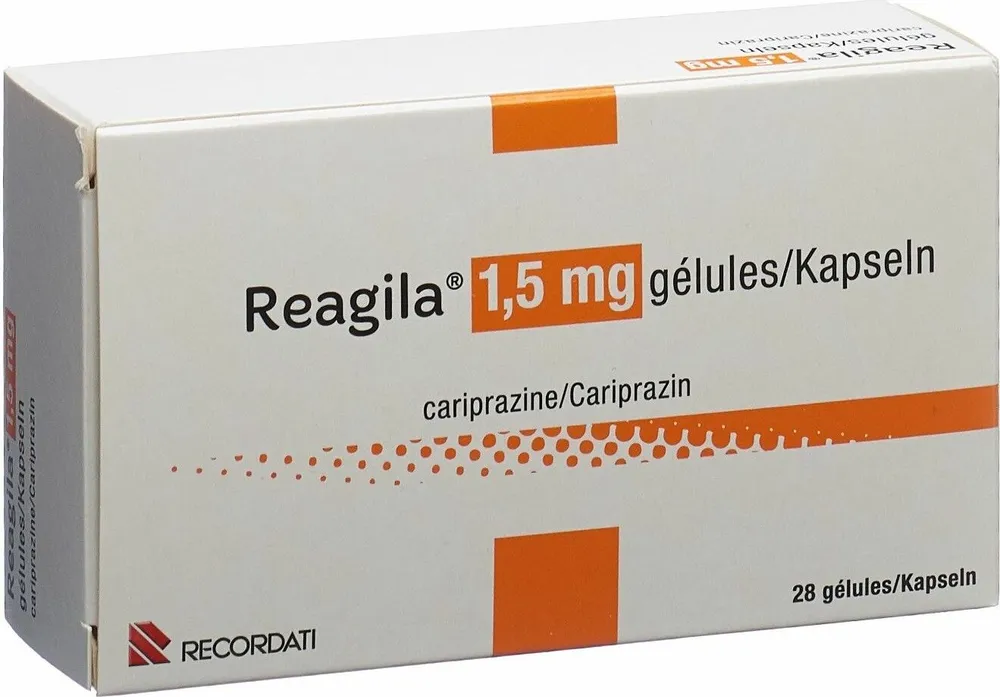
Table of Contents
- Package leaflet: Information for the user
- Reagila 1.5 mg hard capsules, 3 mg hard capsules, 4.5 mg hard capsules, 6 mg hard capsules
- 1. What Reagila is and what it is used for
- 2. What you should know before taking Reagila
- 3. How to take Reagila
- 4. Possible side effects
- 5. How to store Reagila
- 6. Package contents and other information
- 1. What Reagila is and what it is used for
- 2. What you should know before taking Reagila
- 3. How to take Reagila
- 4. Possible side effects
- 5. How to store Reagila
- 6. Package contents and other information
Package leaflet: Information for the user
Reagila 1.5 mg hard capsules, 3 mg hard capsules, 4.5 mg hard capsules, 6 mg hard capsules
cariprazine
Please read all of this leaflet carefully before you start taking this medicine because it contains important information for you.
- Keep this leaflet. You may need to read it again.
- If you have any questions, ask your doctor or pharmacist.
- This medicine has been prescribed for you only. Do not give it to other people, even if their symptoms are the same as yours, as it may be harmful.
- If you experience any side effect, including those not listed in this leaflet, tell your doctor. See section 4.
Contents of this leaflet
- What Reagila is and what it is used for
- What you need to know before taking Reagila
- How to take Reagila
- Possible side effects
- How to store Reagila
- Contents of the pack and other information
1. What Reagila is and what it is used for
Reagila contains the active substance cariprazine and belongs to a group of medicines called antipsychotics. It is used to treat adults with schizophrenia.
Schizophrenia is a condition characterised by symptoms such as hearing, seeing or perceiving things that are not present (hallucinations), suspicious behaviour, false beliefs, disorganised speech and behaviour, and emotional flatness. People with this condition may also feel depressed, guilty, anxious or tense, or may be unable to initiate or continue planned activities, may have reduced desire to speak, and may show lack of emotional response to situations that would normally provoke feelings in others.
2. What you should know before taking Reagila
Do not take Reagila
- if you are allergic to cariprazine or to any of the other ingredients of this medicine (listed in section 6).
- if you are taking medicines used to treat:
- hepatitis caused by hepatitis C virus (medicines containing boceprevir and telaprevir)
- bacterial infections (medicines containing clarithromycin, telithromycin and nafcillin)
- tuberculosis (medicines containing rifampicin)
- human immunodeficiency virus (HIV) infections (medicines containing cobicistat, indinavir, nelfinavir, ritonavir, saquinavir, efavirenz and etravirine)
- fungal infections (medicines containing itraconazole, posaconazole and voriconazole)
- Cushing's syndrome – when the body produces an excess of cortisol (medicines containing ketoconazole)
- depression (herbal therapy containing St. John’s wort (Hypericum perforatum) and medicines containing nefazodone)
- epilepsy and seizures (medicines containing carbamazepine, phenobarbital and phenytoin)
- insomnia (medicines containing modafinil)
- high blood pressure in the lungs (medicines containing bosentan).
Warnings and precautions
Tell your doctor immediately:
- if you have thoughts or feelings about harming yourself or committing suicide. Suicidal thoughts and behaviours are more likely at the beginning of treatment.
- if you experience a combination of fever, sweating, rapid breathing, muscle stiffness and confusion or drowsiness (these could be signs of neuroleptic malignant syndrome).
Talk to your doctor or pharmacist before taking Reagila, or during treatment, if you:
- have experienced or begin to experience restlessness and inability to sit still. These symptoms may occur early during treatment with Reagila. Inform your doctor if this happens.
- have experienced or begin to experience abnormal, involuntary movements, most commonly of the tongue or face. Inform your doctor if this happens.
- experience vision changes. Your doctor may advise you to see an ophthalmologist.
- have irregular heartbeats or if anyone else in your family has a history of irregular heartbeats (including so-called QT prolongation seen on electrocardiogram (ECG)), and inform your doctor if you are taking other medicines, as they could cause or worsen this ECG change.
- have high or low blood pressure, or cardiovascular disease. Your doctor should monitor your blood pressure regularly.
- feel dizzy when standing up due to a drop in blood pressure, which may lead to fainting.
- have a history of blood clots, or if anyone in your family has a history of blood clots, as antipsychotic medicines have been associated with blood clot formation.
- have a history of stroke, particularly if you are elderly or know you have other risk factors for stroke. Inform your doctor immediately if you notice signs of stroke.
- have dementia (loss of memory and other mental abilities), particularly if you are elderly.
- have Parkinson’s disease.
- have diabetes or risk factors for diabetes (e.g. obesity or a family history of diabetes). Your doctor should regularly monitor your blood sugar levels, as Reagila may increase them. Signs of high blood sugar levels include excessive thirst, passing large amounts of urine, increased appetite and feeling weak.
- have a history of seizures or epilepsy.
Weight gain
Reagila may cause significant weight gain, which could affect your health. Your doctor will therefore monitor your weight regularly.
Children and adolescents
This medicine is not recommended for children and adolescents under 18 years of age due to lack of data in these patient groups.
Other medicines and Reagila
Inform your doctor or pharmacist if you are taking, have recently taken or might take any other medicines. You must not take certain medicines together with Reagila (see section “Do not take Reagila”).
- Taking Reagila together with other medicines may require dose adjustments of Reagila or the other medicine. These include medicines used to treat:
- heart conditions (e.g., digoxin, verapamil, diltiazem),
- blood clotting (anticoagulants (medicines that prevent blood clots), e.g., dabigatran),
- bacterial infections (e.g., erythromycin),
- fungal infections (e.g., fluconazole). Reagila should be used with caution in combination with other medicines that affect mental function. Reagila with food, drinks and alcohol Do not drink grapefruit juice during treatment with Reagila. Alcohol consumption should be avoided while taking Reagila.
Pregnancy and breastfeeding
Women of childbearing potential/Contraception
Women of childbearing potential must use an effective method of contraception during treatment with Reagila. Contraception should continue for at least 10 weeks after the last dose of Reagila, even after stopping treatment. This is because the medicine will continue to remain in your body after the last dose.
Pregnancy
Do not take this medicine during pregnancy unless your doctor tells you to.
If your doctor decides that you should take this medicine during pregnancy, your baby will be closely monitored after birth. This is because the following symptoms may occur in newborns whose mothers have used this medicine during the third trimester (last three months) of pregnancy:
- tremors, muscle stiffness and/or weakness, drowsiness, agitation, breathing difficulties, feeding problems. If your baby develops any of these symptoms, contact your doctor.
Breastfeeding
Do not breastfeed while taking Reagila, as a risk to the infant cannot be excluded. Consult your doctor for advice.
Driving and using machines
There is a low to moderate risk that this medicine may affect your ability to drive or use machinery. Drowsiness, dizziness and vision problems may occur during treatment with this medicine (see section 4). Do not drive or operate any tools or machinery until you are certain that this medicine does not negatively affect you.
Reagila 3 mg, 4.5 mg, 6 mg hard capsules contain Allura Red AC (E 129).
Allura Red AC is a colouring agent which may cause allergic reactions.
3. How to take Reagila
Take this medicine exactly as your doctor has told you. If you have any doubts, consult your doctor or pharmacist.
The recommended starting dose is 1.5 mg once daily by mouth. Your doctor may then gradually adjust the dose in steps of 1.5 mg, depending on how well the treatment works for you.
The maximum dose must not exceed 6 mg once daily.
Take Reagila at the same time each day, with or without food.
If you were taking another medicine to treat schizophrenia before starting Reagila, your doctor will decide whether the previous antipsychotic should be gradually or immediately discontinued and how the dose of Reagila should be adjusted. Your doctor will also advise you on what to do if you switch from Reagila to another medicine.
Patients with kidney or liver problems
If you have severe kidney or liver problems, Reagila may not be suitable for you. Please consult your doctor.
Elderly patients
Your doctor will carefully choose the dose appropriate for your needs.
Reagila must not be used in elderly patients with dementia (memory loss).
If you take more Reagila than you should
If you take more Reagila than your doctor has recommended, or if, for example, a child has accidentally taken it, contact your doctor or go to the nearest hospital immediately. Bring the medicine pack with you.
You may experience dizziness due to low blood pressure, or have irregular heartbeats, feel sleepy, tired, or have abnormal body movements and find it difficult to stand or walk.
If you forget to take Reagila
If you forget to take a dose, take it as soon as you remember. However, if it is almost time for your next dose, skip the missed dose and continue with your regular schedule.
Do not take a double dose to make up for the forgotten dose.
If you forget two or more doses, contact your doctor.
If you stop taking Reagila
If you stop taking this medicine, you will lose the benefits of treatment. Even if you feel better, do not change or stop your daily dose of Reagila unless instructed by your doctor, as symptoms may return.
If you have any questions about the use of this medicine, consult your doctor.
4. Possible side effects
Like all medicines, this medicine can cause side effects, although not everyone gets them.
Immediately tell your doctor if you have:
- a severe allergic reaction presenting as fever, swelling of the mouth, face, lips or tongue, shortness of breath, itching, rash and sometimes a drop in blood pressure. (Rare adverse reaction)
- a combination of fever, sweating, muscle stiffness, and drowsiness. These may be signs of a condition known as neuroleptic malignant syndrome. (Adverse reaction frequency not known)
- unexplained muscle pain, muscle cramps, or muscle weakness. These may be signs of muscle damage, which can lead to very serious kidney problems. (Rare adverse reaction)
- symptoms related to blood clots in the veins, especially in the legs (symptoms include swelling, pain and redness in the leg), which may travel through blood vessels to the lungs causing chest pain and breathing difficulties. (Adverse reaction frequency not known)
- thoughts or feelings of wanting to harm yourself or of suicide, suicide attempt. (Uncommon adverse reaction)
Other side effects
Very common side effects (may affect more than 1 in 10 people)
- feeling restless and unable to sit still
- parkinsonism, a medical condition with various symptoms including reduced or slow movements, slowed thinking, resistance when bending limbs (cogwheel rigidity), shuffling gait, tremors, reduced or absent facial expression, muscle stiffness, drooling.
Common side effects (may affect up to 1 in 10 people)
- anxiety
- drowsiness, sleep difficulties, abnormal dreams, nightmares, sleepwalking
- dizziness
- involuntary twisting movements and abnormal postures
- excessive teeth grinding or clenched jaw, drooling, persistent blinking in response to tapping the forehead (an abnormal reflex), movement problems, tongue movement disorder (these are called extrapyramidal symptoms)
- blurred vision
- high blood pressure
- fast or irregular heartbeat
- increased or decreased appetite
- nausea, vomiting, constipation
- weight gain
- tiredness
- the following may be observed in laboratory tests: ° increased liver enzymes ° increased blood creatine phosphokinase levels ° abnormal levels of lipids (e.g. cholesterol and/or fats) in the blood
Uncommon side effects (may affect up to 1 in 100 people)
- depression
- sudden and severe confusion
- feeling dizzy
- unpleasant or abnormal sensations to touch
- drowsiness, lack of energy or lack of interest in doing things
- involuntary movements, most commonly of the tongue or face. These may occur after short- or long-term use.
- increased or decreased sexual desire, erectile problems
- eye irritation, high eye pressure, poor vision
- difficulty focusing when looking at distant or near objects
- low blood pressure
- abnormal ECG, abnormal nerve impulses in the heart
- slow or irregular heartbeat
- hiccup
- heartburn
- thirst
- pain when urinating
- frequent and abnormally large amounts of urination
- itching, rash
- diabetes
- the following may be observed in laboratory tests: ° abnormal sodium levels in the blood ° increased blood glucose (blood sugar), increased blood bilirubin ° anaemia (reduced red blood cell levels) ° increased levels of a type of white blood cells ° decreased levels of thyroid-stimulating hormone (TSH) in the blood
Rare side effects (may affect up to 1 in 1,000 people)
- seizures
- memory loss, language disorder
- eye discomfort in bright light
- clouding of the lens in the eye causing reduced vision (cataract)
- difficulty swallowing
- reduced levels of a type of white blood cells, which may make you more susceptible to infections
- underactive thyroid gland.
Side effects with unknown frequency (frequency cannot be estimated from available data)
- liver inflammation (pain in the upper right part of the abdomen, yellowing of the eyes and skin, weakness, fever)
Reporting of side effects
If you get any side effects, including any not listed in this leaflet, talk to your doctor. You can also report side effects directly via the national reporting system listed in Annex V. Reporting side effects can help provide more information on the safety of this medicine.
5. How to store Reagila
Keep this medicine out of the sight and reach of children.
Do not use this medicine after the expiry date which is stated on the carton after "EXP" and on the
blister after "EXP". The expiry date refers to the last day of that month.
Keep the container in the outer packaging to protect it from light.
This medicine does not require any special storage conditions regarding temperature.
Do not dispose of medicines via wastewater or household waste. Ask your pharmacist how to
dispose of medicines you no longer use. This will help protect the environment.
6. Package contents and other information
What Reagila contains
- The active substance is cariprazine. Reagila 1.5 mg: Each hard capsule contains cariprazine hydrochloride equivalent to 1.5 mg of cariprazine. Reagila 3 mg: Each hard capsule contains cariprazine hydrochloride equivalent to 3 mg of cariprazine. Reagila 4.5 mg: Each hard capsule contains cariprazine hydrochloride equivalent to 4.5 mg of cariprazine. Reagila 6 mg: Each hard capsule contains cariprazine hydrochloride equivalent to 6 mg of cariprazine.
- The excipients are:
Reagila 1.5 mg hard capsules: pregelatinized starch (maize), magnesium stearate, titanium dioxide (E 171), gelatin, black ink (shellac, black iron oxide (E 172), propylene glycol, potassium hydroxide).
Reagila 3 mg hard capsules: pregelatinized starch (maize), magnesium stearate, Allura red AC (E 129), brilliant blue FCF (E 133), titanium dioxide (E 171), yellow iron oxide (E 172), gelatin, black ink (shellac, black iron oxide (E 172), propylene glycol, potassium hydroxide) (see also section 2 – Reagila 3 mg, 4.5 mg, 6 mg hard capsules contain Allura red AC (E 129)).
Reagila 4.5 mg hard capsules: pregelatinized starch (maize), magnesium stearate, Allura red AC (E 129), brilliant blue FCF (E 133), titanium dioxide (E 171), yellow iron oxide (E 172), gelatin, white ink (shellac, titanium dioxide (E 171), propylene glycol, simethicone) (see also section 2 – Reagila 3 mg, 4.5 mg, 6 mg hard capsules contain Allura red AC (E 129)).
Reagila 6 mg hard capsules: pregelatinized starch (maize), magnesium stearate, brilliant blue FCF (E 133), Allura red AC (E 129), titanium dioxide (E 171), gelatin, black ink (shellac, black iron oxide (E 172), propylene glycol, potassium hydroxide) (see also section 2 – Reagila 3 mg, 4.5 mg, 6 mg hard capsules contain Allura red AC (E 129)).
Description of the appearance of Reagila and package contents
- Reagila 1.5 mg hard capsules: Size 4 hard gelatin capsule (approximately 14.3 mm in length) with an opaque white cap and an opaque white body, printed with "GR 1.5" on the body in black ink. The capsules are filled with white to off-white powder.
- Reagila 3 mg hard capsules: Size 4 hard gelatin capsule (approximately 14.3 mm in length) with an opaque green cap and an opaque white body, printed with "GR 3" on the body in black ink. The capsules are filled with white to off-white powder.
- Reagila 4.5 mg hard capsules: Size 4 hard gelatin capsule (approximately 14.3 mm in length) with an opaque green cap and an opaque green body, printed with "GR 4.5" on the body in white ink. The capsules are filled with white to off-white powder.
- Reagila 6 mg hard capsules: Size 3 hard gelatin capsule (approximately 15.9 mm in length) with an opaque purple cap and an opaque white body, printed with "GR 6" on the body in black ink. The capsules are filled with white to off-white powder.
Reagila 1.5 mg and Reagila 3 mg hard capsules are available in packs containing 7, 14, 21, 28, 30, 49, 56, 60, 84, 90 or 98 hard capsules.
Reagila 4.5 mg and Reagila 6 mg hard capsules are available in packs containing 7, 21, 28, 30, 49, 56, 60, 84, 90 or 98 hard capsules.
Not all pack sizes may be marketed.
Marketing Authorisation Holder and Manufacturer
Gedeon Richter Plc.
Gyömrői út 19-21.
1103 Budapest
Hungary
For further information about this medicine, please contact the local representative of the Marketing Authorisation Holder:
België/Belgique/Belgien Lietuva
Recordati BV Gedeon Richter Plc. atstovybė Lietuvoje
Tél/Tel: +32 2 461 01 36 Tel: +370 5 261 01 54
България Luxembourg/Luxemburg
ТП „Гедеон Рихтер АД” Recordati BV
Teл.: + 359 2 8129063 Tél/Tel: + 32 2 461 01 36 (Belgique/Belgien)
Česká republika Magyarország
Gedeon Richter Marketing ČR, s.r.o. Richter Gedeon Nyrt.
Tel: +420 261 141 200 Tel: +36 1 505 7032
Danmark Malta
Recordati AB Recordati Ireland Limited
Tlf: +46 8 545 80 230 (Sverige) Tel: + 353 21 4379400 (Ireland)
Deutschland Nederland
Recordati Pharma GMBH Recordati BV
Tel: + 49 731 70470 Tel: + 32 2 461 01 36 (België)
Eesti Norge
Richter Gedeon Eesti filiaal Recordati AB
Tel: +372 608 5301 Tlf: + 46 8 545 80 230 (Sverige)
Ελλάδα Österreich
Recordati Hellas Pharmaceuticals S.A. Recordati Austria GmbH
Τηλ: + 30 210-6773822 Tel: + 43 676 353 0 262
España Polska
Casen Recordati S.L. GEDEON RICHTER POLSKA Sp. z o.o.
Tel: + 34 91 659 15 50 Tel.: + 48 (22)755 96 48
France Portugal
Bouchara-Recordati S.A.S. Jaba Recordati S.A.
Tél: + 33 1 45 19 10 00 Tel: + 351 21 432 95 00
Hrvatska România
Gedeon Richter Croatia d.o.o. Gedeon Richter România S.A.
Tel: + 385 1 5625 712 Tel: +40-265-257 011
Ireland Slovenija
Recordati Ireland Limited Gedeon Richter d.o.o.
Tel: + 353 21 4379400 Tel: + +386 8 205 68 70
Ísland Slovenská republika
Recordati AB Gedeon Richter Slovakia, s.r.o.
Sími: +46 8 545 80 230 (Svíþjóð) Tel: +421 2 5020 5801
Italia Suomi/Finland
RECORDATI S.p.A. Recordati AB
Tel: + 39 02 487871 Puh/Tel: +46 8 545 80 230 (Ruotsi/Sverige)
Κύπρος Sverige
C.G. PAPALOISOU LTD. Recordati AB
Τηλ: + 357 22 490305 Tel: +46 8 545 80 230
Latvija United Kingdom (Northern Ireland)
Gedeon Richter Plc. pārstāvniecība Latvijā Recordati Pharmaceuticals Ltd.
Tel: +371 67845338 Tel: + 44 1491 576336
Other sources of information
Detailed and up-to-date information on this medicine is available by scanning the QR code below and on the outer carton with a smartphone.
The same information is also available at the internet address: www.reagila.com
'QR code to be included' + www.reagila.com
More detailed information on this medicine is available on the website of the European Medicines Agency, http://www.ema.europa.eu .
Patient Information Leaflet
Reagila 1.5 mg orodispersible tablets
Reagila 3 mg orodispersible tablets
Reagila 4.5 mg orodispersible tablets
Reagila 6 mg orodispersible tablets
cariprazine
Read this leaflet carefully before taking this medicine because it contains important information for you.
- Keep this leaflet. You may need to read it again.
- If you have any questions, ask your doctor or pharmacist.
- This medicine has been prescribed for you only. Do not give it to other people, even if they have the same symptoms as yours, as it may be harmful.
- If you experience any side effects, including those not listed in this leaflet, tell your doctor. See section 4.
Contents of this leaflet
- What Reagila is and what it is used for
- What you need to know before taking Reagila
- How to take Reagila
- Possible side effects
- How to store Reagila
- Contents of the pack and other information
1. What Reagila is and what it is used for
Reagila contains the active substance cariprazine and belongs to a group of medicines called antipsychotics. It is used to treat schizophrenia in adults.
Schizophrenia is a condition characterized by symptoms such as hearing, seeing, or perceiving things that are not present (hallucinations), suspicious behaviour, false beliefs, disorganised speech and behaviour, and emotional flatness. People with this condition may also feel depressed, guilty, anxious or tense, or may be unable to initiate or continue planned activities, may have no desire to speak, and may show lack of emotional response to situations that would normally provoke feelings in others.
2. What you should know before taking Reagila
Do not take Reagila
- if you are allergic to cariprazine or to any of the other ingredients of this medicine (listed in section 6).
- if you are taking medicines used to treat:
- hepatitis caused by the hepatitis C virus (medicines containing boceprevir and telaprevir)
- bacterial infections (medicines containing clarithromycin, telithromycin and nafcillin)
- tuberculosis (medicines containing rifampicin)
- human immunodeficiency virus (HIV) infections (medicines containing cobicistat, indinavir, nelfinavir, ritonavir, saquinavir, efavirenz and etravirine)
- fungal infections (medicines containing itraconazole, posaconazole and voriconazole)
- Cushing's syndrome – when the body produces excess cortisol (medicines containing ketoconazole)
- depression (herbal therapy containing St. John’s wort (Hypericum perforatum) and medicines containing nefazodone)
- epilepsy and seizures (medicines containing carbamazepine, phenobarbital and phenytoin)
- insomnia (medicines containing modafinil)
- high blood pressure in the lungs (medicines containing bosentan).
Warnings and precautions
Tell your doctor immediately:
- if you have thoughts or feelings about harming yourself or about suicide. Suicidal thoughts and behaviours are more likely at the beginning of treatment.
- if you experience a combination of fever, sweating, rapid breathing, muscle stiffness and confusion or drowsiness (these could be signs of neuroleptic malignant syndrome).
Talk to your doctor or pharmacist before taking Reagila, or during treatment, if you:
- have experienced or start to experience restlessness and inability to sit still. These symptoms may occur early during treatment with Reagila. Inform your doctor if this happens.
- have experienced or start to experience abnormal, involuntary movements, most commonly of the tongue or face. Inform your doctor if this happens.
- experience reduced vision. Your doctor may advise you to see an ophthalmologist.
- have irregular heartbeats or if someone else in your family has a history of irregular heartbeats (including so-called QT prolongation seen on electrocardiogram (ECG)), and inform your doctor if you are taking other medicines, as they could cause or worsen this ECG change.
- have high or low blood pressure, or cardiovascular disease. Your doctor should monitor your blood pressure regularly.
- feel dizzy when standing up due to a drop in blood pressure, which may lead to fainting.
- have a history of blood clots, or if someone in your family has a history of blood clots, as antipsychotic medicines have been associated with blood clot formation.
- have a history of stroke, particularly if you are elderly or know you have other risk factors for stroke. Inform your doctor immediately if you notice signs of stroke.
- have dementia (loss of memory and other mental abilities), particularly if you are elderly.
- have Parkinson’s disease.
- have diabetes or risk factors for diabetes (e.g. obesity or a family history of diabetes). Your doctor should monitor your blood sugar regularly, as Reagila may increase it. Signs of high blood sugar include excessive thirst, passing large amounts of urine, increased appetite and feeling weak.
- have a history of seizures or epilepsy.
Weight gain
Reagila may cause significant weight gain, which could affect your health. Your doctor will therefore monitor your weight regularly.
Children and adolescents
This medicine is not recommended for children and adolescents under 18 years of age due to lack of data in these patient groups.
Other medicines and Reagila
Inform your doctor or pharmacist if you are taking, have recently taken or might take any other medicines. You must not take certain medicines together with Reagila (see section “Do not take Reagila”).
- Taking Reagila together with other medicines may require a dose adjustment of Reagila or the other medicine. These include medicines used to treat:
- heart conditions (e.g., digoxin, verapamil, diltiazem),
- blood clotting (anticoagulants (medicines that prevent blood clots), e.g., dabigatran),
- bacterial infections (e.g., erythromycin),
- fungal infections (e.g., fluconazole). Reagila should be used with caution in combination with other medicines that affect mental function. Reagila with food, drinks and alcohol Do not drink grapefruit juice during treatment with Reagila. Alcohol consumption should be avoided when taking Reagila.
Pregnancy and breastfeeding
Women of childbearing potential/Contraception
Women of childbearing potential must use an effective method of contraception during treatment with Reagila. Contraception should continue for at least 10 weeks after your last dose of Reagila, even after stopping treatment. This is because the medicine will continue to remain in your body after the last dose.
Pregnancy
Do not take this medicine during pregnancy unless your doctor tells you to.
If your doctor decides that you should take this medicine during pregnancy, your baby will be closely monitored after birth. This is because the following symptoms may occur in newborns whose mothers have used this medicine during the third trimester (the last three months) of pregnancy.
- tremors, muscle stiffness and/or weakness, drowsiness, restlessness, breathing difficulties, feeding problems. If your baby develops any of these symptoms, contact your doctor.
Breastfeeding
Do not breastfeed while taking Reagila, as a risk to the infant cannot be excluded. Consult your doctor for advice.
Driving and using machines
There is a low to moderate risk that this medicine may affect your ability to drive and use machines. Drowsiness, dizziness and vision problems may occur during treatment with this medicine (see section 4). Do not drive or use any tools or machinery until you are sure that this medicine does not affect you negatively.
Reagila orodispersible tablets contain sodium
This medicine contains less than 1 mmol of sodium (23 mg) per orodispersible tablet, i.e., it is essentially “sodium-free”.
3. How to take Reagila
Take this medicine exactly as your doctor has told you. If you are not sure, consult your doctor or pharmacist.
The recommended starting dose is 1.5 mg once daily by mouth. Your doctor may subsequently adjust the dose slowly, in increments of 1.5 mg, depending on how well the treatment works for you.
The maximum dose must not exceed 6 mg once daily.
Take Reagila at the same time every day, with or without food.
Do not open the blister pack until it is time to take the tablet. Separate one unit from the strip along the perforated lines and peel back the foil to expose the tablet. Do not push the tablet through the foil, as this may damage it.
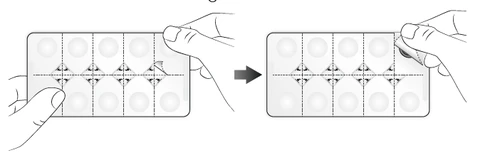
After opening the blister, immediately remove the orodispersible tablet with dry hands and place the entire tablet on the tongue. The tablet will rapidly disintegrate in saliva. Do not chew or swallow the tablet whole; wait for it to dissolve in the mouth.
Alternatively, the tablet may be dispersed in water and the resulting suspension drunk. In this case, the contents of the glass should be stirred carefully to avoid undissolved residue settling at the bottom.
If you were previously taking another medicine to treat schizophrenia, your doctor will decide whether the previous antipsychotic should be gradually or immediately discontinued and how the dose of Reagila should be adjusted. Your doctor will also advise you on how to proceed if switching from Reagila to another medicine.
Patients with kidney or liver problems
Reagila may not be suitable for you if you have severe kidney or liver problems. Please consult your doctor.
Elderly patients
Your doctor will carefully select the appropriate dose according to your needs.
Reagila must not be used in elderly patients with dementia (memory loss).
If you take more Reagila than you should
If you take more Reagila than your doctor has recommended, or if, for example, a child accidentally takes it, contact your doctor or go to the nearest hospital immediately, and bring the medicine pack with you.
You may experience dizziness due to low blood pressure, irregular heartbeats, drowsiness, tiredness, abnormal body movements, or difficulty standing or walking.
If you forget to take Reagila
If you forget to take a dose, take it as soon as you remember. However, if it is almost time for your next dose, skip the missed dose and continue with your regular schedule.
Do not take a double dose to make up for the forgotten dose.
If you forget two or more doses, contact your doctor.
If you stop taking Reagila
If you stop taking this medicine, you will lose the medicine’s effects. Even if you feel better, do not change or stop your daily dose of Reagila unless your doctor tells you to, because your symptoms may return.
If you have any doubts about how to use this medicine, consult your doctor.
4. Possible side effects
Like all medicines, this medicine can cause side effects, although not everyone gets them.
Tell your doctor immediately if you experience:
-
a severe allergic reaction with symptoms such as fever, swelling of the mouth, face, lips or tongue,
shortness of breath, itching, rash and sometimes a drop in blood pressure. (Rare side effect) -
a combination of fever, sweating, muscle stiffness and drowsiness. These may be signs of a condition called neuroleptic malignant syndrome. (Side effect with unknown frequency)
-
unexplained muscle pain, muscle cramps or muscle weakness. These may be signs of muscle damage, which can lead to very serious kidney problems. (Rare side effect)
-
symptoms related to blood clots in the veins, especially in the legs (symptoms include swelling, pain and redness of the leg), which may travel through blood vessels to the lungs causing chest pain and difficulty breathing. (Side effect with unknown frequency)
-
thoughts or feelings about harming yourself or suicide, or a suicide attempt. (Uncommon side effect)
Other side effects
Very common side effects (may affect more than 1 in 10 people)
- feeling restless and unable to stay still
- parkinsonism, a medical condition with various symptoms including reduced or slow movements, slowed thinking, resistance when bending limbs (cogwheel rigidity), shuffling gait, tremors, reduced or absent facial expression, muscle stiffness, drooling
Common side effects (may affect up to 1 in 10 people)
- anxiety
- drowsiness, sleep difficulties, abnormal dreams, nightmares, sleepwalking
- dizziness
- involuntary twisting movements and abnormal postures
- excessive teeth grinding or clenched jaw, drooling, persistent blinking in response to tapping the forehead (an abnormal reflex), movement problems, tongue movement disorder (these are known as extrapyramidal symptoms)
- blurred vision
- high blood pressure
- fast or irregular heartbeat
- increased or decreased appetite
- nausea, vomiting, constipation
- weight gain
- fatigue
- the following may be observed in laboratory tests:
° increased liver enzymes
° increased blood creatine phosphokinase levels
° abnormal levels of lipids (e.g. cholesterol and/or fat) in the blood
Uncommon side effects (may affect up to 1 in 100 people)
- depression
- sudden and severe confusion
- feeling dizzy
- unpleasant or unusual sensations to touch
- drowsiness, lack of energy or lack of interest in doing things
- involuntary movements, most commonly of the tongue or face. These may occur after short- or long-term use.
- increased or decreased sex drive, erectile problems
- eye irritation, increased eye pressure, poor vision
- difficulty focusing when looking at distant or near objects
- low blood pressure
- abnormal ECG, abnormal nerve impulses in the heart
- slow or irregular heartbeat
- hiccups
- heartburn
- thirst
- pain when urinating
- abnormally frequent and excessive urination
- itching, rash
- diabetes
- the following may be observed in laboratory tests:
° abnormal blood sodium levels
° increased blood glucose (hyperglycaemia), increased blood bilirubin
° anaemia (reduced red blood cell levels)
° increased levels of a type of white blood cells
° decreased levels of thyroid-stimulating hormone (TSH) in the blood
Rare side effects (may affect up to 1 in 1,000 people)
- seizures
- memory loss, language disorder
- eye discomfort in bright light
- clouding of the lens in the eye causing reduced vision (cataract)
- difficulty swallowing
- reduced levels of a type of white blood cells, which may make you more susceptible to infections
- underactive thyroid gland
Side effects with unknown frequency (frequency cannot be estimated from available data)
- inflammation of the liver (pain in the upper right part of the abdomen, yellowing of the eyes and skin, weakness, fever)
Reporting of side effects
If you get any side effect, including those not listed in this leaflet, talk to your doctor. You can also report side effects directly via the national reporting system listed in Annex V. By reporting side effects, you can help provide more information on the safety of this medicine.
5. How to store Reagila
Keep this medicine out of the sight and reach of children.
Do not use this medicine after the expiry date which is stated on the carton after EXP and on the
blister after EXP. The expiry date refers to the last day of that month.
Keep the tablets in their original packaging to protect them from moisture.
This medicine does not require any special storage conditions regarding temperature.
Do not dispose of medicines via wastewater or household waste. Ask your pharmacist how to
dispose of medicines you no longer use. This will help protect the environment.
6. Package contents and other information
What Reagila contains
- The active substance is cariprazine. Reagila 1.5 mg: Each orodispersible tablet contains cariprazine hydrochloride equivalent to 1.5 mg of cariprazine. Reagila 3 mg: Each orodispersible tablet contains cariprazine hydrochloride equivalent to 3 mg of cariprazine. Reagila 4.5 mg: Each orodispersible tablet contains cariprazine hydrochloride equivalent to 4.5 mg of cariprazine. Reagila 6 mg: Each orodispersible tablet contains cariprazine hydrochloride equivalent to 6 mg of cariprazine.
- The other ingredients are: Mannitol (E 421), maize starch, sodium starch glycolate (type A), malic acid (E 296), sodium stearyl fumarate (E 485), silicon dioxide (E 551) (See also section 2 - Reagila orodispersible tablets contain sodium).
Description of the appearance of Reagila and the contents of the pack
- Reagila 1.5 mg orodispersible tablets: Triangular, biconvex tablet, white or almost white. The tablet diameter is approximately 8 mm and the thickness is approximately 3–4 mm. One side is engraved with “C2”, the other side is unmarked.
- Reagila 3 mg orodispersible tablets: Round, biconvex tablet, white or almost white. The tablet diameter is approximately 7 mm and the thickness is approximately 3–4 mm. One side is engraved with “C3”, the other side is unmarked.
- Reagila 4.5 mg orodispersible tablets: Square, biconvex tablet, white or almost white. The tablet diameter is approximately 7 mm and the thickness is approximately 3–4 mm. One side is engraved with “C4”, the other side is unmarked.
- Reagila 6 mg orodispersible tablets: Oval, biconvex tablet, white or almost white. The tablet width is approximately 5 mm, length 8.5 mm, and thickness approximately 3–4 mm. One side is engraved with “CI”, the other side is unmarked.
Reagila 1.5 mg, 3 mg, 4.5 mg and 6 mg orodispersible tablets are available in packs containing 28 or 30 orodispersible tablets.
Not all pack sizes may be marketed.
Marketing Authorisation Holder and Manufacturer
Gedeon Richter Plc.
Gyömrői út 19-21.
1103 Budapest
Hungary
For further information about this medicinal product, please contact the local representative of the Marketing Authorisation Holder:
België/Belgique/Belgien/Danmark/Deutschland/Lietuva/Elláda/España/France/Ireland/Ísland/Italia/Kýpros/Luxembourg/Luxemburg/Magyarország/Malta/Nederland/Norge/Österreich/Portugal/Suomi/Finland/Sverige/United Kingdom (Northern Ireland)
Richter Gedeon Nyrt.
Tél/Tel/Tlf/Τηλ/Sími/Puh: +36 1 505 7032
Bulgaria
TP „Gedeon Richter AD”
Tel: +359 2 8129063
Polska
GEDEON RICHTER POLSKA Sp. z o.o.
Tel: +48 (22) 755 96 48
Česká republika
Gedeon Richter Marketing ČR, s.r.o.
Tel: +420 261 141 200
România
Gedeon Richter România S.A.
Tel: +40-265-257 011
Eesti
Richter Gedeon Eesti filiaal
Tel: +372 608 5301
Slovenija
Gedeon Richter d.o.o.
Tel: +386 8 205 68 70
Hrvatska
Gedeon Richter Croatia d.o.o.
Tel: +385 1 5625 712
Slovenská republika
Gedeon Richter Slovakia, s.r.o.
Tel: +421 2 5020 5801
Latvija
Gedeon Richter Plc. pārstāvniecība Latvijā
Tel: +371 67845338
Other sources of information
Detailed and up-to-date information on this medicinal product is available by scanning the QR code below and on the outer packaging with a smartphone.
The same information is also available at the following internet address: www.reagila.com
'QR code to be included' + www.reagila.com
More detailed information on this medicinal product is available on the website of the European Medicines Agency: http://www.ema.europa.eu