Microser
Italy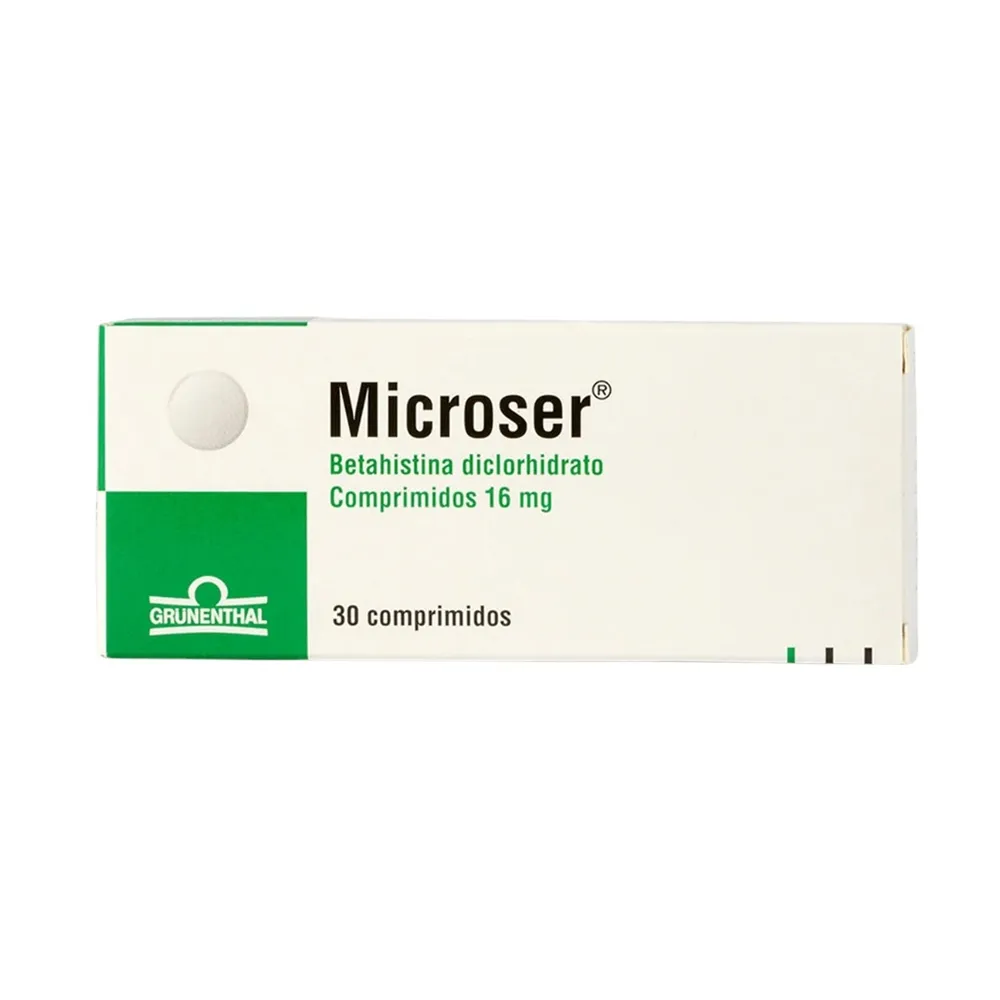
Instructions for Use
Table of Contents
Package leaflet: Information for the patient
MICROSER 8 mg tablets, 16 mg tablets, 24 mg tablets, 12.5 mg/mL oral drops, solution
Betahistine dihydrochloride
Please read all of this leaflet carefully before taking this medicine because it contains
important information for you.
- Keep this leaflet. You may need to read it again.
- If you have any questions, ask your doctor or pharmacist.
- This medicine has been prescribed for you only. Do not give it to others, even if their symptoms are the same as yours, as it could be harmful.
- If you experience any adverse reaction, including those not listed in this leaflet, contact your doctor, pharmacist, or nurse. See section 4.
Contents of this leaflet:
- What Microser is and what it is used for
- What you need to know before taking Microser
- How to take Microser
- Possible side effects
- How to store Microser
- Contents of the pack and other information
1. What MICROSER is and what it is used for
Microser contains the active substance betahistine, which belongs to a group of medicines called
histamine analogues. It is used to treat the symptoms of Ménière's syndrome, such as:
- dizziness (vertigo)
- ringing in the ears (tinnitus)
- hearing loss.
This medicine works by improving blood flow in the inner ear. This reduces the increase in pressure.
2. What you should know before taking MICROSER
Do not take Microser if
- you are allergic to betahistine or to any of the other ingredients of this medicine (listed in section 6)
- you have high blood pressure caused by an adrenal gland tumour (pheochromocytoma)
- you have a stomach ulcer (peptic or gastric)
Warnings and precautions
Talk to your doctor before taking Microser if:
- you have asthma
- you have previously had a stomach ulcer
- you accidentally inhale Microser oral drops, which could theoretically cause breathing difficulties (bronchospasm) and a drop in blood pressure
- you have skin redness with itching, rash, or hay fever
- you have low blood pressure
Children and adolescents
Microser is not recommended for children and adolescents under 18 years of age due to lack of data on safety and efficacy.
Elderly
Microser can be used at the recommended doses described in section 3. How to take MICROSER
Other medicines and Microser
Tell your doctor or pharmacist if you are taking, have recently taken, or might take any other medicines.
In particular, inform your doctor or pharmacist if you are taking any of the following medicines:
- antihistamines, which could theoretically reduce the effect of Microser
- monoamine oxidase inhibitors (used to treat depression), which could affect levels of Microser
Microser with food and drink
Take the tablets or oral drops solution with or after meals. Microser may cause mild stomach disturbances (listed in section 4). Taking Microser with food may help reduce these disturbances.
Pregnancy and breastfeeding
Pregnancy
If you are pregnant, think you might be pregnant, are planning to become pregnant, or are breastfeeding, ask your doctor or pharmacist for advice before taking this medicine.
Do not take Microser during pregnancy unless your doctor has decided it is necessary.
Breastfeeding
It is not known whether Microser passes into breast milk. Do not take Microser while breastfeeding unless your doctor tells you to do so.
Driving and using machines
Clinical studies show that Microser appears to have no effect on the ability to drive or operate machinery. However, please bear in mind that the condition for which you are being treated with Microser may cause dizziness or general discomfort.
Microser oral drops contain ethanol (alcohol)
This medicine contains 32 mg of alcohol (ethanol) per dose (0.64 ml) and 128 mg in the maximum daily dose, equivalent to 5 g/100 ml. The amount of alcohol in 0.64 ml of this medicine is equivalent to less than 0.8 ml of beer or 0.32 ml of wine. The small amount of alcohol in this medicine will not produce significant effects.
Microser oral drops contain benzoic acid (E210)
This medicine contains 0.96 mg of benzoic acid per dose (0.64 ml), equivalent to 1.5 mg/ml. Benzoic acid may increase jaundice (yellowing of the skin and eyes) in newborns up to 4 weeks of age (see sections "Children and adolescents" and "Pregnancy and breastfeeding").
Microser oral drops contain sodium
This medicine contains less than 1 mmol (23 mg) of sodium per dose (0.64 ml), i.e. essentially "sodium-free".
3. How to take MICROSER
Take this medicine exactly as directed by your doctor or pharmacist. If
you have any doubts, consult your doctor or pharmacist.
The recommended dose is:
Microser 8 mg tablets: 2-4 tablets per day
Microser 16 mg tablets: 2-3 tablets per day
Microser 24 mg tablets: 1 tablet twice daily
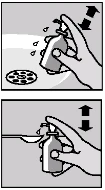
Microser oral drops, solution (with dosing device): 1 spray (0.64 mL of solution, equivalent to 8
mg of betahistine), diluted in water, 2-4 times daily.
How to use the dosing device:
 |
|
Use in children and adolescents
Microser must not be used in children and adolescents under 18 years of age.
If you take more Microser than you should
Contact your doctor as soon as possible or go to the nearest hospital. Symptoms of
overdose include nausea, drowsiness, abdominal pain, seizures, and pulmonary and
cardiac complications.
If you forget to take Microser
Wait until it is time for your next dose. Do not take a double dose to make up for
the missed tablet or dose.
If you stop taking Microser
If you have any doubts about the use of this medicine, consult your doctor or pharmacist.
4. Possible side effects
Like all medicines, this medicine may cause side effects, although not everybody gets them.
The following side effects have been observed:
Common (may affect up to 1 in 10 people): headache, nausea (feeling of discomfort),
digestive difficulties (dyspepsia)
Rare (may affect less than 1 in 1,000 people)
- Worsening of pre-existing bronchial asthma, palpitations
Frequency not known (frequency cannot be estimated from the available data)
- Dizziness
- Abnormal sense of touch (dysesthesia)
- Tremor
- Shortness of breath (dyspnea)
- Stomach bleeding (gastrointestinal hemorrhage)
- Stomach ache, stomach swelling, abdominal distension
- Vomiting (feeling of discomfort)
- Increased liver enzymes (detected by blood tests)
- Skin rash, itching or swelling (urticaria, pruritus)
- Swelling (edema)
- Hypersensitivity reaction (allergy)
Following the instructions contained in this leaflet reduces the risk of side effects.
Reporting of side effects
If you experience any side effect, including those not listed in this leaflet, please inform your doctor or pharmacist. You may also report side effects directly via the national reporting system at https://www.aifa.gov.it/content/segnalazioni-reazioni-avverse.
By reporting side effects, you can help provide more information on the safety of this medicine.
5. How to store MICROSER
Keep this medicine out of the sight and reach of children.
Do not use this medicine after the expiry date stated on the carton or bottle after EXP. The expiry date refers to the last day of that month.
After opening, Microser oral drops solution must be used within 6 months. Do not store above 25°C.
Do not dispose of any medicine via wastewater or household waste. Ask your pharmacist how to dispose of medicines you no longer use. This will help protect the environment.
6. Package contents and other information
What Microser contains
The active substance is betahistine dihydrochloride.
- Microser 8 mg tablets contain 8 mg of betahistine
- Microser 16 mg tablets contain 16 mg of betahistine
- Microser 24 mg tablets contain 24 mg of betahistine
- Microser oral drops solution contains 12.5 mg of betahistine per 1 mL.
The other ingredients are:
Tablets
Microcrystalline cellulose, mannitol, precipitated silica, talc, anhydrous citric acid.
Oral drops solution
Glycerol, alcohol, aminoacetic acid, sodium saccharin, benzoic acid (E210), sodium edetate, propyl gallate, orange flavour, purified water.
Description of the appearance of Microser and contents of the pack
Microser 8 mg tablets are packaged in blisters containing 30, 40 or 50 tablets
Microser 16 mg tablets are packaged in blisters containing 20 or 30 tablets
Microser 24 mg tablets are packaged in blisters containing 20 or 30 tablets
Microser 12.5 mg/mL oral drops solution: the solution is supplied in a 30 mL bottle with a dosing device.
Marketing Authorisation Holder and Manufacturer
GRÜNENTHAL ITALIA S.r.l.
Via Vittor Pisani 16 - 20124 Milan, Italy
Manufacturer
8 mg, 16 mg and 24 mg tablets:
FARMACEUTICI FORMENTI S.p.A.
Production site: Origgio (VA)
Via Di Vittorio 2
Italy
STADA Arzneimittel AG
Stadastraße 2-18
61118 Bad Vilbel
Germany
Oral drops solution:
FARMACEUTICI FORMENTI S.p.A.
Production site: Origgio (VA)
Via Di Vittorio 2
Italy
Grünenthal GmbH - 52224 Stolberg (Germany)
STADA Arzneimittel AG
Stadastraße 2-18 - 61118 Bad Vilbel - Germany
Similar Medications
-
Averbet
Form: tablets
Active substance Dosage BETAHISTINE HYDROCHLORIDE — Manufacturer: TECNIGEN S.R.L.
-
Betahistine Accord
Form: tablets
Active substance Dosage BETAHISTINE DIHYDROCHLORIDE — Manufacturer: ACCORD HEALTHCARE, S.L.U.
-
Betahistine Aurobindo
Form: tablets
Active substance Dosage BETAHISTINE HYDROCHLORIDE — Manufacturer: AUROBINDO PHARMA (ITALIA) S.R.L.
-
Betahistine Doc Generici
Form: tablets
Active substance Dosage BETAHISTINE DIHYDROCHLORIDE — Manufacturer: DOC GENERICI SRL
-
Betahistine Doc Generici
Form: tablets
Active substance Dosage BETAHISTINE DIHYDROCHLORIDE — Manufacturer: DOC GENERICI SRL
-
Betahistine Stada
Form: tablets
Active substance Dosage BETAHISTINE — Manufacturer: EG S.P.A.
-
Bevart
Form: tablets
Active substance Dosage BETAHISTINE DIHYDROCHLORIDE — Manufacturer: FARTO S.R.L. - FARMACO BIOCHIMICO TOSCANO
-
Fortamid
Form: tablets
Active substance Dosage BETAHISTINE DIHYDROCHLORIDE — Manufacturer: FARMACEUTICI FORMENTI S.P.A.
-
Sincrover
Form: tablets
Active substance Dosage BETAHISTINE DIHYDROCHLORIDE — Manufacturer: LABORATORIO FARMACEUTICO C.T. S.R.L.
-
Vertiserc
Form: tablets
Active substance Dosage BETAHISTINE DIHYDROCHLORIDE — Manufacturer: VIATRIS ITALIA S.R.L.
This page has been machine-translated and may contain inaccuracies. The original data is available in the manufacturing country's language.
Last data check: May 11, 2026 · Data source: Agenzia Italiana del Farmaco (AIFA)