Vertiserc
Italy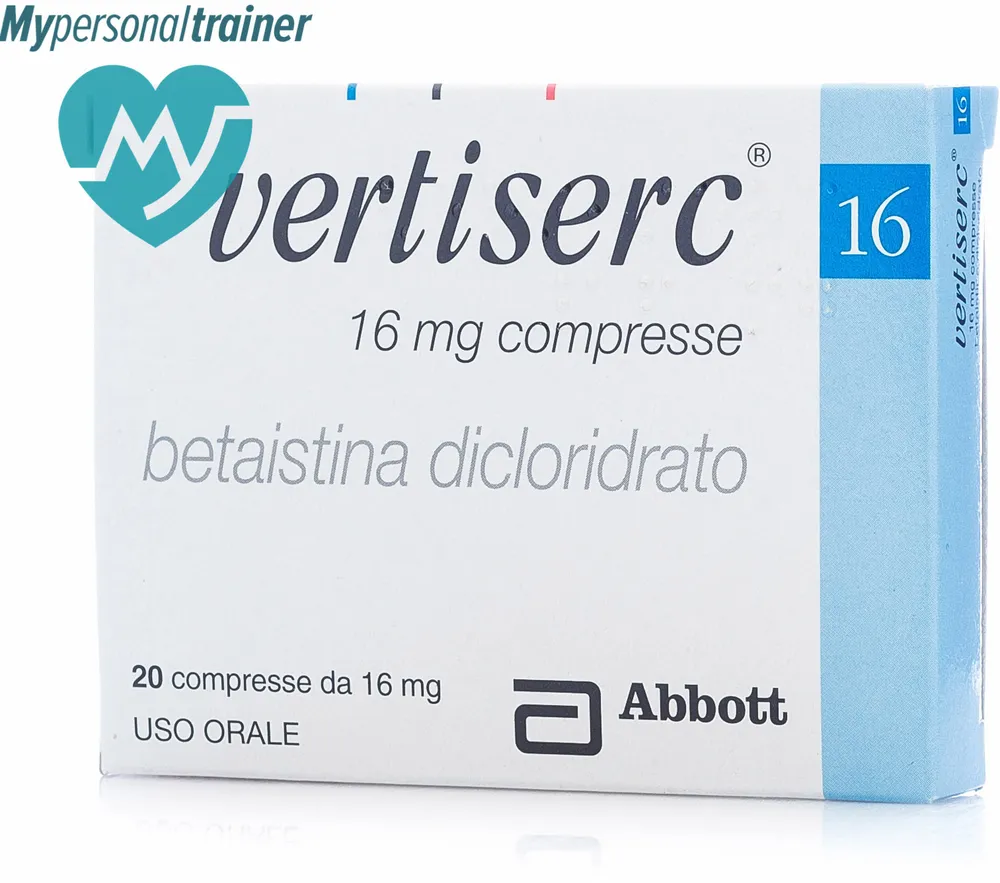
Table of Contents
- PACKAGE LEAFLET: INFORMATION FOR THE USER
- VERTISERC 8 mg tablets, 16 mg tablets, 24 mg tablets
- 1. What VERTISERC is and what it is used for
- 2. What you need to know before taking VERTISERC
- 3. How to use VERTISERC
- 4. Possible side effects
- 5. How to store VERTISERC
- 6. Package contents and other information
PACKAGE LEAFLET: INFORMATION FOR THE USER
VERTISERC 8 mg tablets, 16 mg tablets, 24 mg tablets
betahistine dihydrochloride
Please read this leaflet carefully before taking this medicine because it contains important information for you.
- Keep this leaflet. You may need to read it again.
- If you have any questions, ask your doctor or pharmacist.
- This medicine has been prescribed for you. Do not give it to others, even if their symptoms are the same as yours, as it may be harmful.
- If you experience any side effects, including those not listed in this leaflet, tell your doctor or pharmacist. See section 4.
Contents of this leaflet:
- What VERTISERC is and what it is used for
- What you need to know before taking VERTISERC
- How to take VERTISERC
- Possible side effects
- How to store VERTISERC
- Contents of the pack and other information
1. What VERTISERC is and what it is used for
What VERTISERC is
VERTISERC contains betahistine. VERTISERC is a histamine-like medicine.
What VERTISERC is used for
Ménière's syndrome, the symptoms of which include:
- sensation of dizziness (vertigo) and feeling unwell (nausea or vomiting)
- ringing in the ears (tinnitus)
- hearing loss or hearing difficulties
The sensation of dizziness (called "vestibular vertigo") occurs when the inner ear, which controls the sense of balance, is not functioning properly.
How VERTISERC works
VERTISERC works by improving blood flow in the inner ear. This action reduces the increase in pressure.
2. What you need to know before taking VERTISERC
Do not use VERTISERC
- If you are allergic to the active substance or to any of the other ingredients of this medicine (listed in section 6)
- If your doctor has told you that you have peptic ulcer (gastroduodenal ulcer)
- If your doctor has told you that you have a tumor of the adrenal glands (called "pheochromocytoma")
- In pediatric patients
- Generally contraindicated during pregnancy
If any of the conditions listed above apply to you (or if you have any doubts), consult your doctor or
pharmacist before taking VERTISERC.
Warnings and precautions
Before taking VERTISERC, consult your doctor or pharmacist:
- if you have had a peptic ulcer in the past
- if you suffer from asthma
If any of the conditions listed above apply to you (or if you have any doubts), speak to your doctor or
pharmacist before taking VERTISERC. Your doctor may wish to monitor you more closely while you are
taking VERTISERC.
Children and adolescents
VERTISERC is not recommended for children and adolescents under 18 years of age.
Other medicines and VERTISERC
Inform your doctor or pharmacist if you are taking, have recently taken, or might take
any other medicines.
In particular, inform your doctor or pharmacist if you are taking any of the following medicines:
- antihistamines – these could, in theory, reduce the effect of VERTISERC. In addition, VERTISERC could reduce the effect of antihistamines.
- monoamine oxidase inhibitors – used to treat depression or Parkinson's disease. These may increase the level of VERTISERC. If any of the conditions listed above apply to you (or if you have any doubts), consult your doctor or pharmacist before taking VERTISERC.
VERTISERC with food and drink
You may take the tablets during or between meals. However, VERTISERC may cause mild
gastrointestinal disturbances (listed in section 4). Taking VERTISERC with food may
help reduce such disturbances.
Pregnancy and breastfeeding
Ask your doctor or pharmacist for advice before taking any medicine.
It is not known whether VERTISERC has effects on the fetus:
- discontinue treatment with VERTISERC and inform your doctor if you are pregnant, think you may be pregnant, or are planning to become pregnant.
- do not take VERTISERC during pregnancy unless your doctor has decided it is necessary.
It is not known whether VERTISERC is excreted in breast milk:
- do not breastfeed while taking VERTISERC unless your doctor instructs you to do so.
Driving and using machines
VERTISERC does not appear to affect the ability to drive or use tools or machinery.
However, keep in mind that the medical condition for which you are being treated with VERTISERC may cause dizziness or malaise and could affect your ability to drive or use machinery.
3. How to use VERTISERC
Use this medicine exactly as prescribed by your doctor.
If you have any doubts, consult your doctor or pharmacist.
- Your doctor will adjust the dose according to your individual response.
- Continue taking the medicine. It may take some time before the effect of the medicine starts.
VERTISERC 8 mg, 16 mg and 24 mg tablets
How to take the tablets
- Swallow the tablet with water.
- You may take the tablet during or regardless of meals. However, VERTISERC may cause mild stomach disturbances (listed in section 4). Taking VERTISERC with food may help reduce such disturbances.
How many tablets to take
VERTISERC tablets are available in three strengths: 8 mg, 16 mg and 24 mg. The usual dose is:
| 8 mg tablets | 16 mg tablets | 24 mg tablets |
| 1-2 tablets three times a day | 1 tablet two to three times a day | 1 tablet twice a day |
If you take more than one tablet a day, divide the tablets evenly throughout the day.
For example, take one tablet in the morning and one in the evening.
Try to take the tablets at the same time each day. This will ensure a constant amount of medicine in your body.
Taking the tablets at the same time every day will also help you remember to take the medicine.
If you use more VERTISERC than you should
If you use more VERTISERC than you should, you may experience nausea, drowsiness, or stomach discomfort.
If you are concerned, contact your doctor.
If you forget to take VERTISERC
- If you forget to take a dose, skip the missed dose. Take the next dose at your usual time.
- Do not take a double dose to make up for the forgotten dose.
If you stop treatment with VERTISERC
Do not stop treatment with VERTISERC without consulting your doctor, even if you start to feel better.
If you have any doubts about using this product, consult your doctor or pharmacist.
4. Possible side effects
Like all medicines, VERTISERC can cause side effects, although not everybody will experience them.
The following side effects may occur with this medicine:
Allergic reactions
If an allergic reaction occurs, stop treatment with VERTISERC and consult your doctor or go to hospital immediately. Symptoms may include:
- skin rash with red or granular skin, or inflamed and itchy skin
- swelling of the face, lips, tongue or throat
- drop in blood pressure
- loss of consciousness
- breathing difficulties
Stop taking VERTISERC and contact your doctor or go to hospital immediately if you notice any of the symptoms described above.
Other side effects include:
Common (may affect up to 1 in 10 people)
- feeling nauseous
- indigestion (dyspepsia)
- headache
Other side effects reported with the use of VERTISERC include:
- mild stomach disturbances, such as vomiting, stomach pain, abdominal discomfort and bloating. Taking VERTISERC with food may help reduce these disturbances.
Reporting of side effects
If you experience any side effect, including those not listed in this leaflet, talk to your doctor or pharmacist. You can also report side effects directly via the national reporting system at https://www.aifa.gov.it/content/segnalazioni-reazioni-avverse.
By reporting side effects, you can help provide more information on the safety of this medicine.
5. How to store VERTISERC
Keep this medicine out of the sight and reach of children.
VERTISERC tablets do not require any special storage precautions.
Do not use this medicine after the expiry date stated on the packaging after EXP. The expiry date refers to the last day of the month.
Do not dispose of medicines via wastewater or household waste. Ask your pharmacist how to dispose of medicines you no longer use. This will help protect the environment.
6. Package contents and other information
What VERTISERC contains:
- The active substance is betahistine dihydrochloride. Each tablet contains 8, 16 or 24 milligrams (mg) of betahistine dihydrochloride.
- The excipients of the tablets are: microcrystalline cellulose, mannitol (E421), citric acid, anhydrous colloidal silica and talc.
Description of the appearance of VERTISERC and contents of the pack
- VERTISERC 8 mg are round, flat tablets, white to off-white in colour, with bevelled edges, 7 mm in diameter, and imprinted with "256" on one side of the tablet.
- VERTISERC 16 mg are round, biconvex tablets, white to off-white in colour, with bevelled edges, 8.5 mm in diameter, with a breakline and imprinted with "267" on one side of the tablet on both sides of the breakline. The tablet can be divided into two equal parts.
- VERTISERC 24 mg are round, biconvex tablets, white to off-white in colour, with bevelled edges, 10 mm in diameter, with a breakline and imprinted with "289" on one side of the tablet on both sides of the breakline. The breakline is intended only to facilitate tablet breaking for easier swallowing and not for dividing the tablet into equal doses.
- VERTISERC tablets are available in packs of 50 tablets (8 mg), or 20 or 50 tablets (16 mg), or 20 tablets (24 mg). The tablets are packaged in PVC/PVDC-aluminum blisters.
Not all pack sizes may be marketed.
Marketing Authorization Holder
Viatris Italia S.r.l.
Via Vittor Pisani, 20
20124 Milano
Manufacturer
Mylan Laboratories SAS, Route de Belleville – Lieu dit Maillard, Châtillon sur Chalaronne, France