Imreplys
ItalyTable of Contents
Patient Information Leaflet
Imreplys 250 micrograms powder for injectable solution
sargramostim
This medicinal product is subject to additional monitoring. This will allow rapid identification of new safety information. You can help by reporting any side effects you may experience while taking this medicine. See the end of section 4 for information on how to report side effects.
Please read all of this leaflet carefully before using this medicine, as it contains important information for you.
- Keep this leaflet. You may need to read it again.
- If you have any questions, ask your doctor, pharmacist, nurse, or healthcare professional.
- This medicine has been prescribed for you only. Do not give it to others, even if their symptoms appear to be the same as yours, as it may be harmful.
- If you experience any side effects, including those not listed in this leaflet, contact your doctor, pharmacist, nurse, or healthcare professional. See section 4.
Contents of this leaflet
- What Imreplys is and what it is used for
- What you need to know before using Imreplys
- How to use Imreplys
- Possible side effects
- How to store Imreplys
- Contents of the pack and other information
1. What Imreplys is and what it is used for
Imreplys contains the active substance sargramostim, which is similar to a natural protein in the body called granulocyte-macrophage colony-stimulating factor (GM-CSF). GM-CSF helps the bone marrow produce white blood cells and platelets, which are essential for fighting infections and healing injuries. This medicine is used to treat adults and children from birth onwards who have been suddenly exposed to high levels of radiation. This condition is known as the haematopoietic sub-syndrome of acute radiation syndrome (H-ARS). Radiation exposure can severely reduce white blood cell counts (increasing the risk of infection), platelet counts (leading to bleeding), and red blood cells, causing anaemia and potential organ damage.
Sargramostim has also been shown to improve blood cell counts in patients with certain blood cancers undergoing chemotherapy or after bone marrow transplantation. Like cancer patients, individuals exposed to radiation and who develop H-ARS will have a weakened immune system and reduced blood cell counts.
2. What you need to know before using Imreplys
Do not use Imreplys:
- if you are allergic to sargramostim or to any of the other ingredients of this medicine (listed in section 6).
- if you have previously experienced a severe allergic reaction, including anaphylaxis, to human GM-CSF (sargramostim) or to other products derived from yeast.
Warnings and precautions
Talk to your doctor, pharmacist, nurse, or healthcare provider before using Imreplys.
A systemic allergic reaction is an uncommon but serious side effect of Imreplys and may include whole-body rash, hives, difficulty breathing, rapid pulse, sweating, and feeling faint. In severe cases, a systemic allergic reaction can be potentially life-threatening. If you suspect you are experiencing a systemic allergic reaction to Imreplys, stop taking Imreplys immediately and contact a doctor, pharmacist, nurse, or healthcare provider right away.
Acute or sudden exposure to high-dose radiation can be a potentially life-threatening condition. The potential benefit of Imreplys in reducing the risk of death due to high-dose radiation exposure should be weighed against the possible risks of taking the medicine.
Some side effects of Imreplys may also be symptoms of radiation exposure or of other treatments you have received. Contact a doctor, pharmacist, nurse, or healthcare provider immediately if, after taking Imreplys, you:
- develop a fever above 38 °C
- notice any signs of infection, including chills, sore throat, or congestion (such as a stuffy nose)
- have trouble breathing, or develop wheezing, fainting, widespread rash, hives, or feel you are having an allergic reaction
- experience a sudden weight gain or other signs of fluid retention, such as swelling in the legs or feet
- develop chest pain or discomfort, or a rapid or irregular pulse
If you have any doubts about other side effects or symptoms you may experience, contact a doctor, pharmacist, nurse, or healthcare provider.
During treatment with sargramostim, your blood counts should be monitored by a doctor, pharmacist, nurse, or healthcare provider, if possible. Based on your test results, your dose of Imreplys may be adjusted or your treatment with Imreplys may be stopped.
If you have a tumor, and especially if you are currently undergoing treatment for a tumor, contact your oncologist as soon as possible after radiation exposure, regardless of whether you have started Imreplys or not.
Other medicines and Imreplys
Tell your doctor, pharmacist, nurse, or healthcare provider if you are taking, have recently taken, or might take any other medicines.
Pregnancy and breastfeeding
If you are pregnant, suspect you may be pregnant, planning to become pregnant, or are breastfeeding, consult your doctor, pharmacist, or nurse before taking this medicine.
Your doctor will evaluate the benefits and risks of using Imreplys for you and your unborn or breastfed child.
It is not known whether sargramostim may harm the unborn child.
Driving and using machines
No effects on the ability to drive vehicles or operate machinery have been reported during treatment with Imreplys.
3. How to use Imreplys
Use this medicine exactly as instructed by your doctor, pharmacist,
nurse, or other healthcare professional, and consult them if you have any doubts.
Administration of Imreplys must occur as soon as possible after acute exposure to high doses
of radiation.
The recommended dose to be injected under the skin (subcutaneous injection) of Imreplys is as follows:
- 7 micrograms/kg in children and adolescents weighing more than 40 kg and in adults
- 10 micrograms/kg in children and adolescents weighing between 15 and 40 kg
- 12 micrograms/kg in neonates, infants, or children weighing less than 15 kg
Your doctor, pharmacist, nurse, or healthcare professional will tell you the correct volume to inject
for you or your child.
Your doctor, pharmacist, nurse, or healthcare professional will inform you for how long you or your
child should receive treatment with Imreplys, until blood cell counts have sufficiently improved, as determined by blood tests. If blood tests to determine blood cell counts are not available, Imreplys may be discontinued after 23 consecutive days of administration.
| Individual patient dose (mcg) | Individual patient dose (mcg) = weight (kg) × dose in mcg/kg •When calculating the initial dose, always use the actual body weight at the start of treatment. •Divide the total mcg by 250 mcg/mL to determine the number of mL required. | ||
| Example for an adult or child/adolescent >40 kg (80 kg body weight) | Individual patient dose (mcg) = 80 kg × 7 mcg/kg = 560 mcg 560 mcg of Imreplys will be required, i.e. 2 full vials of Imreplys and part of a third vial (any remaining medication in the third vial must be discarded). 560 mcg ÷ 250 mcg/mL = 2.2 mL. Therefore, a 3 mL syringe may be required. | ||
| Example for a child or adolescent 15–40 kg (20 kg body weight) | Individual patient dose (mcg) = 20 kg × 10 mcg/kg = 200 mcg 200 mcg of Imreplys will be required, i.e. part of one vial of Imreplys (any remaining medication in the vial must be discarded). 200 mcg ÷ 250 mcg/mL = 0.80 mL. Therefore, a 1 mL syringe may be required. | ||
| Example for a neonate, infant, or child <15 kg (5 kg body weight) | Individual patient dose (mcg) = 5 kg × 12 mcg/kg = 60 mcg 60 mcg of Imreplys will be required, i.e. part of one vial of Imreplys (any remaining medication in the vial must be discarded). 60 mcg ÷ 250 mcg/mL = 0.24 mL. Therefore, a 1 mL syringe may be required. | ||
| Your dose | Individual patient dose (mcg) = ___kg × ___mcg/kg = ___mcg ___ mcg of Imreplys will be required (___ full vials and [1 or none] part of a vial [discard any remaining medication if part of a vial is used]). ___ mcg ÷ 250 mcg/mL = ___ mL. Therefore, a _____ mL syringe may be required. | ||
If you inject more Imreplys than you should
Contact a doctor, pharmacist, nurse, or healthcare professional as soon as possible. A healthcare
professional may wish to monitor you.
If you forget a dose of Imreplys
Do not take a double dose to make up for the forgotten dose.
4. Possible side effects
Like all medicines, this medicine can cause side effects, although not everyone gets them.
Some patients taking sargramostim may experience unwanted side effects, most of which are mild to moderate and not serious.
The most serious side effect is a severe allergic reaction (including anaphylaxis); if this occurs, stop taking Imreplys and contact a doctor, pharmacist, nurse, or healthcare professional immediately.
Other important side effects include high fever (over 38 °C), signs of infection (such as chills, sore throat, congestion, runny nose), difficulty breathing or wheezing, feeling faint, widespread rash or hives, or other signs of an allergic reaction, sudden weight gain, swelling of the legs or feet, or other signs of fluid retention, chest pain, chest discomfort, or rapid or irregular pulse. If you experience any of these side effects, contact a doctor, pharmacist, nurse, or healthcare professional immediately.
Very common side effects (may affect more than 1 in 10 people):
Diarrhea, vomiting, feeling of flu, feeling of tiredness or weakness, muscle aches, abnormal blood test results, headache, back pain, weight loss, stomach pain, gastrointestinal bleeding, bone pain, stomach discomfort, presence of blood in vomit, joint pain, general body aches, sore throat, feeling of tension or anxiety, bleeding in the eye.
You may also experience a mild fever (less than 38 °C) 1 to 4 hours after an injection, or experience swelling, redness, and/or discomfort at the site where Imreplys is injected. The skin may become red, painful, or swollen. This may indicate a reaction at the injection site. Usually, this does not require discontinuation of sargramostim. If a reaction at the injection site occurs, contact a doctor, pharmacist, nurse, or other healthcare professional. To help prevent further injection site reactions, the following measures may be taken:
- Remove Imreplys vials and water for injectable preparations from the refrigerator at least 30 minutes before scheduling the injection, and allow them to reach room temperature before injection
- Use a different injection site each time the injection is administered
- Avoid rubbing the skin before or after the injection
Common side effects (may affect up to 1 in 10 people):
Dilation of blood vessels.
If you have any questions about these or other side effects, contact a doctor, pharmacist, nurse, or other healthcare professional.
Reporting of side effects
If you experience any side effect, including those not listed in this leaflet, speak to your doctor, pharmacist, nurse, or other healthcare professional. You can also report side effects directly via the national reporting system listed in Annex V.
By reporting side effects, you can help provide more information on the safety of this medicine.
5. How to store Imreplys
Keep this medicine out of the sight and reach of children.
Do not use this medicine after the expiry date stated on the carton and vial after
Exp.
The expiry date refers to the last day of that month.
Store in a refrigerator (2 °C – 8 °C).
Do not freeze.
Keep vials in the original outer packaging to protect the medicine from light.
Special precautions:
- Unopened vials are stable for up to 1 year at temperatures up to 25 °C if protected from light.
- Unopened vials are stable for up to 1 month at temperatures up to 40 °C if protected from light.
- Do not expose to more than 1 Gy of ionizing radiation. Unopened vials exposed to up to 1 Gy of ionizing radiation are stable for up to 2 weeks at temperatures up to 40 °C if protected from light.
If refrigeration is not available, the sealed product may be stored at room temperature (15 °C – 25 °C) for up to 1 year. Sealed Imreplys vials that have been exposed to temperatures above 25 °C and not exceeding 40 °C may be stored for 1 month.
After dilution with water for injections, Imreplys solution may be stored in the refrigerator (2 °C – 8 °C) for a maximum of 24 hours.
Do not dispose of any medicine via wastewater or household waste. Ask your pharmacist how to dispose of medicines no longer in use. This will help protect the environment.
6. Package contents and other information
What Imreplys contains
- The active substance is sargramostim. Each glass vial contains 250 mcg of sargramostim. After reconstitution, 1 mL contains 250 mcg of sargramostim.
- The other excipients are mannitol (E421), sucrose, tromethamine, and hydrochloric acid.
Description of the appearance of Imreplys and contents of the pack
Imreplys powder for injectable solution (powder for injectable preparation) is a white lyophilized powder supplied in a box containing five single-dose glass vials of 250 mcg.
Marketing Authorization Holder
Partner Therapeutics Ltd.,
28 - 32 Pembroke Street Upper,
Dublin 2, Ireland.
D02NT28
Ireland
+353.1264.1754
[email protected]
Manufacturer
Paesel + Lorei GmbH & Co KG
Nordring 11
D-47495 Rheinberg
Germany
Other sources of information
More detailed information on this medicinal product is available on the website of the European Medicines Agency: https://www.ema.europa.eu
How to prepare and inject Imreplys
Imreplys will be injected under the skin (subcutaneous injection). Your doctor, pharmacist, nurse, or other healthcare professional will tell you the volume (in mL) to inject.
Follow all instructions provided by your doctor, pharmacist, nurse, or other healthcare professional.
Do not change your dose or stop Imreplys unless instructed to do so by a doctor, pharmacist, nurse, or other healthcare professional.
Imreplys vials are for single use only.
Depending on the patient's weight, more than one vial of Imreplys may be required per dose. For example, if an adult patient weighs 80 kg, three vials of Imreplys will be needed, and each vial will require water for injections to dissolve the drug.
Below is a list of items to be used that are not included in the Imreplys pack but are essential for correct administration:
- Water for injections in a vial or ampoule (this is a special type of water specifically manufactured for use in preparing injectable drugs).
- A disposable syringe and needle to add water for injections to dissolve Imreplys in the vial. If using a glass ampoule containing water for injections, a filter needle must be used.
- A disposable syringe and needle to inject the dose of Imreplys solution once the drug has been dissolved with water for injections. Please note that when selecting the correct syringe, it is important to ensure that the syringe size is appropriate for the volume of medication to be injected. Typical syringe sizes (total volume) are 2 mL, 3 mL, and 5 mL.
- Alcohol swabs to clean the skin at the injection site and to clean the top of the vial(s) and/or ampoule(s).
- Cotton ball or gauze
- Adhesive plaster
- Sharps container for disposal of needles and syringes
Caregiver/self-administration
Imreplys may be self-administered or administered by a caregiver.
Complete instructions for the preparation and administration of the reconstituted Imreplys vial are provided in the package leaflet, section 3, “How to use Imreplys”.
The Imreplys vial(s) and administration supplies must be kept out of the reach of children.
Step 1: Preparation
Wash your hands thoroughly with soap and water. Dry them with a clean towel.
Check the expiry date on the Imreplys vial and other materials to ensure that the product(s) have not expired.
For each dose, place Imreplys and water for injections on a clean, well-lit surface and allow them to reach room temperature before preparing an injection.
- Do not attempt to heat the products using heat sources such as hot water or microwave.
- Do not leave the Imreplys vial(s) in direct light. Keep the vial(s) in the box until ready for use.
- Do not shake Imreplys.
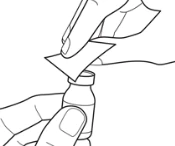
Remove the dark blue plastic closure cap(s) from the
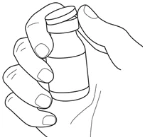
Imreplys vial and the closure cap(s) from the water for injections vial(s). Do not remove the vial stoppers. Do not remove the silver metal ring around the top (or tops) of the vial (or vials).
The figure illustrates this step for one Imreplys vial.
If using one or more ampoules of water for injections, clean them with an alcohol swab before opening. To open a glass ampoule, hold it upright. Ensure all liquid has drained from the neck. If not, gently tap the top of the ampoule until the liquid flows back inside. If there is a dot on the ampoule, ensure it faces away from you. Use gauze or a paper towel to hold the top of the ampoule, protecting your fingers. Hold the ampoule in one hand and, using the other, snap the neck away from you. If using a plastic ampoule, twist the top until it comes off.
Clean the stopper of each vial with a new alcohol swab
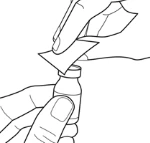
for each vial. Allow the vial to air-dry naturally (do not blow on it).
Step 2. Drawing up water for injections into a syringe
Repeat steps 2 and 3 for each Imreplys vial required for the dose,
as prescribed by your doctor, pharmacist, nurse, or other healthcare professional.
Locate the needle and syringe to draw up the water for injections.
If using a glass ampoule, use a filter needle. If the needle is not attached to the syringe, attach it to the syringe while the cap is still on.
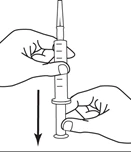
If using a water for injections vial:
Remove the needle cap by pulling it away from your body. Avoid letting the needle touch anything. Pull back the plunger of the syringe to add 1 mL of air into the syringe.
Without tilting the needle, insert it into the center of the rubber stopper of the
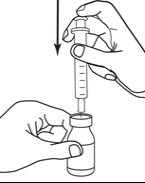
water for injections vial.
Push the syringe plunger down to inject all the air from the syringe into the vial. Keep your finger on the plunger to prevent air from returning to the syringe.
Turn the vial upside down while keeping the needle inserted. Ensure the liquid covers the tip of the needle.
Holding the vial upside down, slowly pull back the syringe plunger
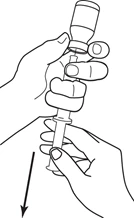
until 1 mL of water for injections is drawn into the syringe barrel, before removing the syringe and needle from the vial.
If there are air bubbles in the syringe, gently tap the syringe barrel with your finger until the air bubbles rise to the needle end. Gently push the plunger upward to expel the air bubbles from the syringe. Repeat as needed until the syringe contains 1 mL of water for injections without air bubbles.
Remove the syringe with attached needle from the vial, discard the vial, and proceed to step 3.
If using a water for injections ampoule:
Remove the filter needle cap by pulling it away from your body. Avoid letting the needle touch anything.
Insert the filter needle directly into the water for injections ampoule.
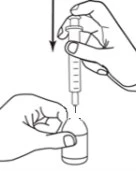
Ensure the liquid covers the tip of the filter needle.
Slowly pull back the syringe plunger until 1 mL of water for injections is drawn into the syringe barrel. If there are air bubbles in the syringe, remove the syringe with the attached filter needle from the ampoule and point it upward. Gently tap the syringe barrel with your finger until the air bubbles rise
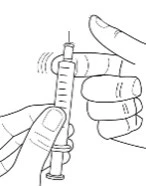
to the needle end. Gently push the plunger upward to expel the air bubbles from the syringe. Repeat as needed until the syringe contains 1 mL of water for injections without air bubbles. Remove the filter needle from the syringe. Attach a new needle (filter not required) for the next step. Discard the ampoule and proceed to step 3.
Step 3. Dissolving Imreplys powder with the water for injections drawn up in step 2.
Attach the needle to the syringe containing water for injections
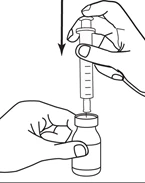
and insert it through the center of the rubber stopper on the Imreplys vial cap.
Slowly push the syringe plunger down until all the water for injections from the syringe is transferred into the Imreplys vial.
Completely remove the syringe and needle from the Imreplys vial and dispose of them in the sharps container.
Holding the Imreplys vial upright on a flat surface, gently rotate it in circular motions until the powder
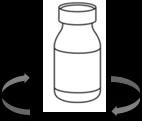
is completely dissolved and the solution is clear and colorless. Do not shake the vial. Once reconstituted, it must be stored in the refrigerator at 2–8 °C and used within 24 hours. Do not store above 8 °C. Do not freeze.
Repeat steps 2 and 3 for each Imreplys vial required for the dose,
as prescribed by your doctor, pharmacist, nurse, or other healthcare professional.
Step 4. Drawing up the Imreplys solution into a syringe
Review the prescription to confirm the volume (mL) of Imreplys solution to be injected subcutaneously.
Place the vial(s) of Imreplys solution on a flat surface. If the vial(s) are cold, allow them to warm to
room temperature for at least 30 minutes.
Clean the Imreplys vial stopper with a new alcohol swab. Allow it to air-dry.
Locate the needle and syringe to draw up the Imreplys solution. If the needle is not attached to the syringe, attach it to the syringe with the cap still on.
Remove the needle cap by pulling it away from your body. Avoid letting the needle touch anything.
Hold the Imreplys solution vial(s) upright
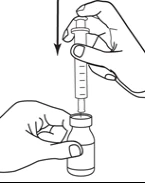
on a flat surface and insert the needle perpendicularly into the center of the stopper.
If necessary, turn the vial upside down while keeping the needle inserted. Ensure
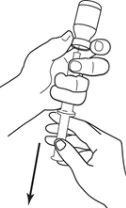
the Imreplys solution covers the needle tip.
Slowly pull back the syringe plunger to fill the barrel to the correct amount (in mL) corresponding to the dose specified in the prescription. More than one Imreplys solution vial may be required.
Keep the needle in the vial and check for air bubbles in the
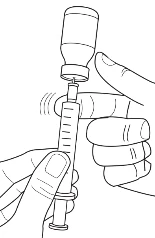
syringe.
If there are air bubbles in the syringe, gently tap the syringe barrel with your finger until the air bubbles rise to the top. Gently press the plunger to expel the air bubbles from the syringe.
While keeping the needle tip in the liquid, pull the plunger to the number on the syringe barrel corresponding to your dose (in mL). Repeat as needed.
Double-check to ensure you have the correct dose in the syringe. It is important to use the exact dose prescribed by a doctor, pharmacist, nurse, or other healthcare professional.
DO NOT remove the needle from the vial. Lay the vial horizontally on its side, with the needle still inserted.
Step 5: Selecting and preparing an injection site
Using an alcohol swab, clean the area around the intended injection site. Allow the skin to dry. Do not touch this area again before the injection.
Do not use the same injection site as the previous injection. Avoid injecting into areas where the skin is burned or ulcerated, painful, bruised, red, or hardened. Avoid injecting into areas with scars or stretch marks.
The following sites may be used for injection:
- Thigh
- Abdominal area (abdomen), except for the area within a 5 cm radius around the navel
- Outer area of the upper arm (only if the injection is administered by someone else)
The preferred administration site for neonates and pediatric patients is the thigh.
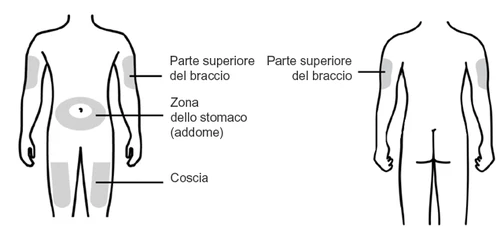
Step 6: Injecting the Imreplys solution under the skin (subcutaneously)
Remove the syringe with the attached needle containing the prescribed dose of Imreplys from the vial.
Pinch the skin at the injection site between the thumb and index finger of one hand. Be careful not to touch the exact spot where the injection will be given. Keep the skin pinched during the injection.
Hold the syringe with the other hand. Insert the needle quickly into the skin at an angle of 45–90 degrees. The faster the needle is inserted into the pinched skin, the less discomfort or pain you will feel.
With slow, steady pressure, push the syringe plunger until all the Imreplys solution is injected.
After completion, gently withdraw the needle from the skin.
If bleeding occurs, cover the site with a cotton ball or gauze. If needed, apply an adhesive plaster over the cotton ball or gauze.
Do not rub the injection site.
Step 7: Proper disposal
Dispose of all materials as follows:
After single use
- Immediately dispose of the syringe with needle into a sharps container.
- Immediately dispose of the used Imreplys vial into a designated waste container.
- Ensure all other materials are disposed of in appropriate containers.
The syringe, needle, Imreplys vial, and water for injections must NEVER be reused.
If you do not have a sharps disposal container, you may use a household container that is puncture-resistant and leak-proof.
Important: Always keep the sharps disposal container out of the reach of children.
ANNEX IV
CONCLUSIONS ON THE GRANTING OF THE MARKETING AUTHORISATION UNDER EXCEPTIONAL CIRCUMSTANCES PRESENTED
BY THE EUROPEAN MEDICINES AGENCY
Conclusions presented by the European Medicines Agency on:
- Granting of marketing authorisation under exceptional circumstances Following evaluation of the marketing authorisation application, the Committee for Medicinal Products for Human Use (CHMP) considers that the benefit-risk balance is favourable to recommend granting of marketing authorisation under exceptional circumstances, as further described in the European Public Assessment Report (EPAR).