Timoftol 2.5 mg/ml eye drops solution
Spain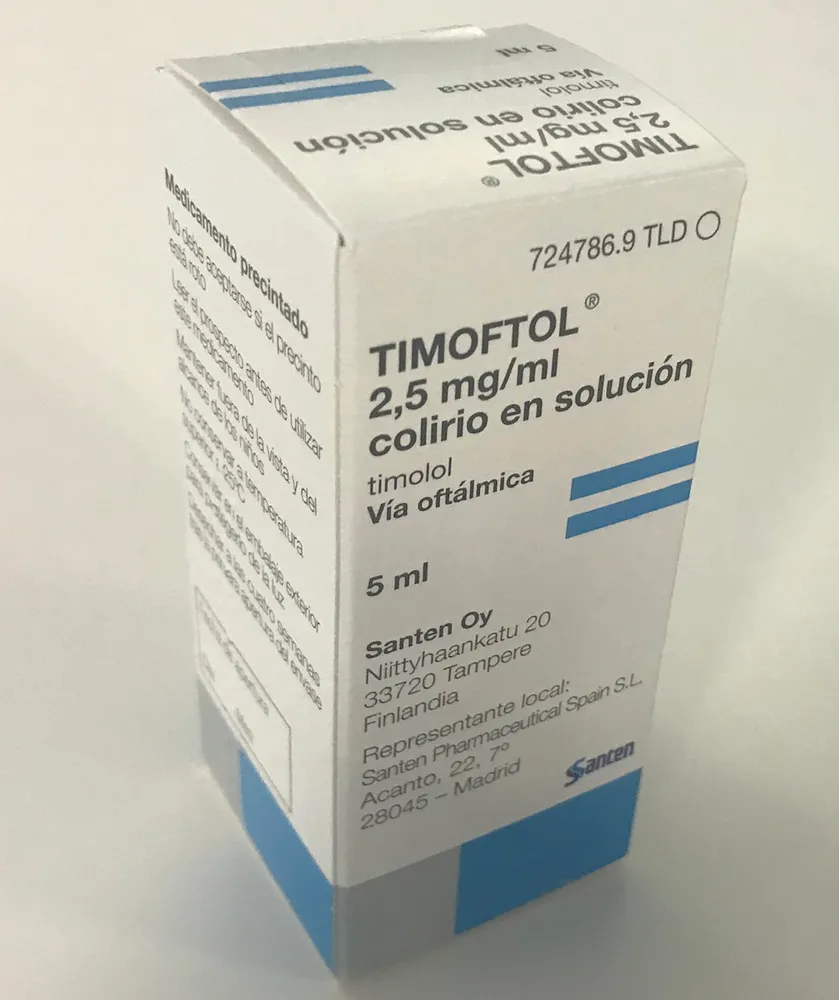
Instructions for Use
Patient Information Leaflet
Introduction
Patient Information Leaflet
TIMOFTOL 2.5 mg/ml eye drops solution
Timolol
Read the entire leaflet carefully before you start using this medicine, as it contains important information for you.
- Keep this leaflet as you may need to read it again.
- If you have any questions, ask your doctor or pharmacist.
- This medicine has been prescribed for you only and must not be given to other people, even if they have the same symptoms as you, because it may harm them.
- If you experience any adverse effects, consult your doctor or pharmacist, even if they are effects not listed in this leaflet. See section 4.
Leaflet Contents
- What TIMOFTOL is and what it is used for
- What you need to know before using TIMOFTOL
- How to use TIMOFTOL
- Possible side effects
- How to store TIMOFTOL
- Contents of the pack and other information
1. What TIMOFTOL is and what it is used for
Timoftol is an ophthalmic beta-blocking agent belonging to the group of medications known as topical antiglaucoma drugs.
This medicine is indicated to reduce elevated intraocular pressure in:
- ocular hypertension
- chronic open-angle glaucoma (including aphakic patients)
- some patients with secondary glaucoma.
2. What you need to know before using TIMOFTOL
Do not use TIMOFTOL
- If you are allergic (hypersensitive) to timolol, beta-blockers, or any of the other components of Timoftol (listed in section 6).
- If you currently have or have previously had certain serious breathing problems such as asthma.
- If you currently have or have previously had chronic obstructive pulmonary disease (a serious lung condition that may cause wheezing, difficulty breathing, and/or persistent cough).
- If you have certain heart conditions (such as slow or irregular heartbeat), sinus bradycardia (heart rate below 60 beats per minute), second- or third-degree atrioventricular block, overt heart failure, or cardiogenic shock.
- If you have corneal dystrophy (a degenerative disorder of the cornea).
- If you have severe allergic rhinitis and bronchial hyperreactivity.
Warnings and precautions
Talk to your doctor before starting to use Timoftol.
Take special care with Timoftol.
Before using this medicine, inform your doctor if you currently have or have previously had:
- Heart problems such as coronary heart disease (symptoms include chest pain or tightness, shortness of breath, or suffocation), heart failure, or low blood pressure
- Heart rhythm disorders (such as slow or irregular heartbeat)
- Circulatory problems (such as Raynaud's disease or Raynaud's syndrome)
- Respiratory or lung problems (such as asthma or chronic obstructive pulmonary disease)
- Diabetes or other blood sugar problems, as timolol may mask the signs and symptoms of low blood sugar
- Overactive thyroid or thyroid disease, as timolol may mask its signs and symptoms
Tell your doctor before undergoing surgery that you are using Timoftol, as it may alter the effects of certain medications used during anesthesia.
Also inform your doctor about any allergies or other medications you are taking.
Timolol may be absorbed through the eye into the bloodstream, and adverse effects similar to those seen with oral beta-blockers may occur.
- If you are taking oral beta-blockers or monoamine oxidase inhibitor (MAOI) antidepressants, inform your doctor, as these may increase the effects of Timoftol.
- It is not recommended to use two topical beta-blockers simultaneously.
- If you have sinus disease, Prinzmetal's angina, untreated pheochromocytoma, metabolic acidosis, severe peripheral circulatory disorders (Raynaud's disease), or low blood pressure.
- If you wear contact lenses, use of Timoftol is not recommended, as it increases the risk of developing intolerance to the lenses.
As with any glaucoma treatment, it is advisable that your doctor regularly monitor your eye pressure and corneal condition.
Use in athletes
This medicine contains timolol, which may cause a positive result in doping control tests.
Children
In general, eye drops containing timolol solution should be used with caution in young patients. In newborns, infants, and young children, timolol should be used with extreme caution. Discontinue use of this medicine immediately if coughing, wheezing, abnormal breathing, or breathing pauses (apnea) occur. Inform your doctor immediately. A portable apnea monitor may be helpful.
Timolol has been studied in infants and children aged between 12 days and 5 years who had elevated eye pressure or diagnosed glaucoma. For further information, consult your doctor.
Use of TIMOFTOL with other medicines
Tell your doctor or pharmacist if you are taking, have recently taken, or might need to take any other medicines, including those obtained without a prescription.
Certain medicines may interact with Timoftol, including other eye drops used to treat glaucoma, and in such cases it may be necessary to adjust the dose or discontinue treatment with one or both medicines. It is important to inform your doctor if you are taking any of the following medicines:
- Oral beta-blockers or medicines that lower blood pressure, as they may increase the effects of timolol on intraocular pressure.
- Clonidine, as stopping clonidine treatment may lead to rebound high blood pressure.
- Medicines used to treat heart rhythm disorders, such as disopyramide, quinidine (also used to treat certain types of malaria), and amiodarone, as timolol may enhance their effects.
- Medicines for diabetes (insulin and oral antidiabetics), as timolol may mask certain signs of hypoglycemia (low blood sugar), such as tachycardia (rapid heartbeat).
- Anesthetics.
- Medicines for stomach ulcers such as cimetidine.
- Alcohol.
- Epinephrine, as it may cause pupil dilation (mydriasis) when used together with timolol.
- Medicines for depression, such as fluoxetine or paroxetine.
Pregnancy and breastfeeding
If you are pregnant or breastfeeding, think you may be pregnant, or plan to become pregnant, consult your doctor or pharmacist before using this medicine.
Do not use Timoftol if you are pregnant unless your doctor considers it necessary. Due to the potential for adverse effects on the fetus, your doctor will assess the benefit-risk balance of administering Timoftol.
Do not use Timoftol if you are breastfeeding. Timolol may pass into breast milk. Because of the potential for adverse effects, your doctor will decide whether to discontinue Timoftol treatment or to stop breastfeeding.
Driving and use of machines
Timoftol may cause dizziness, fatigue, or blurred vision, which may affect your ability to drive or operate machinery.
TIMOFTOL contains benzalkonium chloride and phosphates
This medicine contains 0.11 mg of benzalkonium chloride per ml.
Benzalkonium chloride may be absorbed by soft contact lenses and may alter the color of contact lenses. Remove contact lenses before using this medicine and wait 15 minutes before reinserting them.
Benzalkonium chloride may cause eye irritation, especially if you have dry eye or other corneal conditions (the transparent layer at the front of the eye). Consult your doctor if you experience a foreign body sensation, stinging, or eye pain after using this medicine.
This medicine contains 29.21 mg of disodium hydrogen phosphate dodecahydrate and 8.15 mg of sodium dihydrogen phosphate dihydrate per ml. If you have severe damage to the transparent layer at the front of the eye (cornea), treatment with phosphates may, in very rare cases, lead to cloudy corneal deposits due to calcium.
3. How to use TIMOFTOL
Follow exactly the instructions for use of this medicine as given by your doctor. If in doubt, consult your doctor or pharmacist again.
Remember to use the medicine.
Your doctor will determine the dose and duration of treatment with Timoftol. Do not stop treatment prematurely, as this would end its beneficial effect.
Timoftol is an eye drop for ophthalmic administration.
The usual dose is one drop of Timoftol 2.5 mg/ml in the affected eye(s) twice daily. If the response is not satisfactory, your doctor may increase the dose to one drop of Timoftol 5 mg/ml in the affected eye(s) twice daily.
Your doctor will periodically evaluate your response to Timoftol treatment and decide whether it is necessary to combine it with other available medications to reduce intraocular pressure.
If you are using other eye drops at the same time, you should wait at least 10 minutes between applications to prevent the active ingredients from being washed out of the eye.
If this eye drop is replacing a previous glaucoma treatment or is used in combination with other medications, your doctor will advise you on the appropriate regimen to follow.
If you feel that the effect of Timoftol is too strong or too weak, inform your doctor or pharmacist.
Use in children and adolescents
Before using timolol, a complete medical examination should be performed. Your doctor will carefully assess the benefits versus the risks before initiating timolol treatment. If the benefits outweigh the risks, it is recommended to start with the lowest available concentration of the active substance once daily.
If intraocular pressure is not sufficiently controlled with this concentration, administration twice daily with a 12-hour interval between doses may be required. Patients should be closely monitored, especially newborns, for one to two hours after the first dose, with careful observation for adverse effects until surgery is performed. In children, a concentration of 1 mg/ml of active substance may be sufficient to control intraocular pressure, if available.
Duration of treatment
In the paediatric population, Timoftol will be prescribed as a temporary treatment.
Method of administration
Only one drop of Timoftol should be instilled per administration.
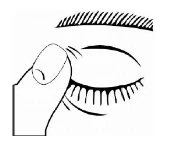
After instillation, keep the eyes closed for as long as possible (e.g., 3 to 5 minutes) and press with a finger on the inner corner of the eye near the nose to prevent the timolol drop from diffusing into the body.
Instructions for use
Do not use the container if the plastic security strip around the neck of the container is missing or broken. When opening the container for the first time, remove the plastic security strip.
[for containers other than OCUMETER PLUS:]
Each time you use Timoftol:
| |
| |
|
|
|
|
|
|
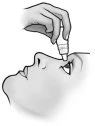
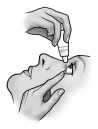
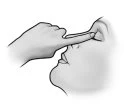
[for OCUMETER PLUS containers only:]
- Before using the medicine for the first time, make sure that the Security Strip on the front of the bottle is intact. When the bottle has not yet been opened, it is normal for there to be a gap between the bottle and the cap.
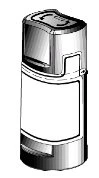
Opening Arrows ?
Security Strip ?
- Wash your hands. When opening the bottle for the first time, remove the Security Strip to break the seal.
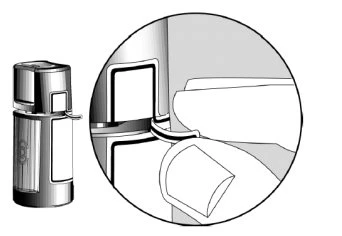
Gap ?
Area to Press with
Finger ?
- To open the bottle, unscrew the cap by turning it in the direction indicated by the arrows on the top of the cap. Do not pull the cap straight upwards. Pulling the cap upwards will prevent the dispenser from working properly.
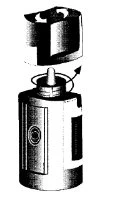
Area to Press with
Finger ?
- Tilt your head backwards and gently pull down the lower eyelid to create a small space between the eyelid and the eye.
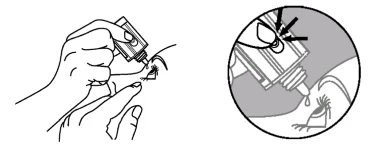
- Turn the bottle upside down and gently press with your thumb or index finger on the “Area to Press with Finger” (as shown in the following figure) to dispense a single drop into the eye, according to your doctor's instructions.
Area to Press with
Finger
DO NOT TOUCH THE EYE OR EYELID WITH THE TIP OF THE DROPPER CAP.
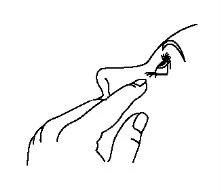
- After using Timoftol, press your finger at the inner corner of the eye next to the nose (as shown in the following figure) for 2 minutes. This helps keep Timoftol in the eye and prevents timolol from spreading into the rest of the body.
- If, after opening for the first time, it is difficult to dispense the drop, replace the cap and squeeze (DO NOT SQUEEZE TOO HARD) and then remove the cap by turning it in the opposite direction, as indicated by the arrows on the top of the cap.
- Repeat steps 4 and 5 in the other eye if your doctor has instructed you to do so.
- Close the cap by turning it until it touches the rim of the bottle. For proper closure, the arrow on the left side of the cap must align with the arrow on the left side of the bottle label. Do not overtighten, as this may damage the bottle and cap.
- The dispenser tip is designed to deliver a single drop; therefore, DO NOT enlarge the hole at the tip of the dispenser.
- After all doses have been used, a small amount of Timoftol will remain in the bottle. This is normal, as an extra amount of Timoftol has been added so that you receive the full amount prescribed by your doctor. Do not attempt to remove the remaining medicine from the bottle.
Ophthalmic medicines, if used improperly, can become contaminated with common bacteria known to cause eye infections. Using contaminated eye solutions may lead to serious eye disorders and subsequent vision loss. If you suspect your medication may be contaminated, or if you develop an eye infection, contact your doctor immediately regarding continued use of that bottle.
If you use more TIMOFTOL than you should
If you have used more Timoftol than prescribed, contact your doctor or pharmacist immediately.
The most common symptoms of timolol overdose are: dizziness, headache, shortness of breath, decreased heart rate, low blood pressure, heart failure, and/or cardiac arrest.
In case of overdose or accidental ingestion, contact your doctor, pharmacist, or call the Toxicology Information Service at 91.562.04.20 immediately, indicating the medication and the amount used.
If you forget to use TIMOFTOL
Do not use a double dose to make up for missed doses.
Use Timoftol as directed by your doctor. If you miss a dose, take it as soon as possible. However, if it is almost time for your next dose, skip the missed dose and return to your regular dosing schedule.
4. Possible adverse effects
Like all medicines, Timoftol may cause adverse effects, although not everyone experiences them.
You can usually continue using the eye drops unless the effects are severe. If you are concerned, consult your doctor or pharmacist. Do not stop using Timoftol without first discussing it with your doctor.
The following adverse effects have been observed with the administration of timolol via the ophthalmic route:
Frequent (may affect up to 1 in 10 patients):
- headache
- signs and symptoms of ocular irritation (e.g., burning sensation, stinging, itching, conjunctivitis, tearing, redness), eyelid inflammation, corneal inflammation, decreased corneal sensitivity, and dry eyes
Uncommon (may affect up to 1 in 100 patients):
- depression
- dizziness, fainting
- visual disturbances such as refractive changes
- slow heart rate (bradycardia)
- difficulty breathing (dyspnea)
- nausea, indigestion (dyspepsia)
- tiredness/fatigue
Rare (may affect up to 1 in 1,000 patients):
- signs and symptoms of allergic reactions including angioedema (swelling beneath the skin in areas such as the face and extremities, which may obstruct the airways and cause difficulty swallowing or breathing), urticaria or itchy rash, localized and generalized rash, anaphylaxis (a severe allergic reaction that may be life-threatening)
- insomnia (difficulty sleeping), nightmares, memory loss
- tingling sensation or pins and needles, worsening of signs and symptoms of myasthenia gravis (a muscle disorder), decreased sexual appetite (decreased libido), stroke (cerebrovascular accident), cerebral ischemia (reduced blood supply to the brain)
- drooping upper eyelid (resulting in the eye being half-closed), double vision (diplopia), choroidal detachment (detachment of the vascular layer beneath the retina after filtration surgery, which may cause visual disturbances)
- ringing in the ears (tinnitus)
- chest pain, palpitations, swelling, irregular heartbeat, congestive heart failure (a condition characterized by difficulty breathing and swelling of the feet and legs due to fluid accumulation), heart block, cardiac arrest
- low blood pressure, Raynaud's phenomenon (a blood vessel disorder usually affecting fingers and toes), pain or discomfort in a limb when starting to walk, cold hands and feet
- breathing difficulties and constriction of the airways (predominantly in patients with pre-existing bronchospastic disease), cough
- diarrhea, dry mouth
- hair loss, psoriasiform skin rash or exacerbation of psoriasis
- inflammatory disease with fever, weakness, joint pain, and skin lesions (systemic lupus erythematosus)
- Peyronie's disease (which may cause marked curvature of the penis)
Frequency not known (cannot be estimated from available data):
- hallucinations
As with other medications applied to the eyes, timolol can pass into the bloodstream. This may cause adverse effects similar to those observed with beta-blockers administered orally or by injection. Adverse effects following topical ophthalmic administration are less frequent than with oral or injectable administration. The adverse effects listed below include those reported within the class of beta-blockers used to treat ocular diseases:
- Generalized allergic reactions including swelling beneath the skin in areas such as the face and extremities, which may obstruct the airways and cause difficulty swallowing or breathing, urticaria or itchy rash, localized and generalized rash, itching, severe allergic reaction that may be life-threatening.
- Low blood sugar levels.
- Difficulty sleeping (insomnia), depression, nightmares, memory loss.
- Fainting, stroke (cerebrovascular accident), reduced blood supply to the brain, worsening of signs and symptoms of myasthenia gravis (a muscle disorder), dizziness, unusual sensations such as tingling and headache.
- Signs and symptoms of ocular irritation (e.g., burning, stinging, itching, tearing, redness), eyelid inflammation, corneal inflammation, blurred vision, detachment of the vascular layer beneath the retina after filtration surgery (which may cause visual disturbances), decreased corneal sensitivity, dry eyes, corneal erosion (damage to the front layer of the eyeball), drooping upper eyelid (resulting in the eye being half-closed), double vision.
- Slow heart rate, palpitations, chest pain, edema (fluid accumulation), changes in the speed or rhythm of the heartbeat, congestive heart failure (a condition characterized by difficulty breathing and swelling of the feet and legs due to fluid accumulation), any cardiac rhythm disorder, heart block, cardiac arrest.
- Low blood pressure, Raynaud's phenomenon, cold hands and feet.
- Constriction of the airways (predominant in patients with pre-existing disease), difficulty breathing, cough.
- Taste disturbances, nausea, indigestion, diarrhea, dry mouth, abdominal pain, vomiting.
- Hair loss, silvery-white skin rash (psoriasiform rash) or worsening of psoriasis, skin rash.
- Muscle pain not caused by exercise.
- Sexual dysfunction, decreased libido.
- Muscle weakness/tiredness.
Reporting of adverse effects:
If you experience any adverse effect, consult your doctor or pharmacist, even if it is a possible adverse effect not listed in this leaflet. You may also report them directly through the Spanish Pharmacovigilance System for Human Medicines: https://www.notificaram.es. By reporting adverse effects, you can help provide more information on the safety of this medicine.
5. Storage of TIMOFTOL
Keep this medicine out of the sight and reach of children.
Do not store above 25 ºC.
Store in the original packaging to protect from light.
Do not use this medicine after the expiry date stated on the container following the abbreviation EXP.
The expiry date refers to the last day of the month indicated.
Discard four weeks after opening the container.
Medicines must not be disposed of via wastewater or household waste. Dispose of containers and unused medicines at the SIGRE Point at your pharmacy. If in doubt, ask your pharmacist how to dispose of containers and medicines you no longer need. This will help protect the environment.
6. Contents of the pack and other information
Composition of TIMOFTOL
- The active substance is timolol. Each ml of Timoftol contains 3.4 mg of timolol maleate, equivalent to 2.5 mg of timolol.
- The other components are sodium dihydrogen phosphate dihydrate, disodium hydrogen phosphate dodecahydrate, sodium hydroxide, benzalkonium chloride, and water for injections.
Appearance of the medicinal product and contents of the pack
Timoftol is presented as an eye drop solution, a clear, colourless or slightly yellow liquid.
It is available in two alternative pack types:
- A bottle with a dropper cap containing 5 ml of solution.
- An Ocumeter Plus ophthalmic dispenser containing 3 ml of solution.
Only certain pack sizes may be marketed.
Marketing Authorization Holder and Manufacturer
Marketing Authorization Holder
Santen Oy
Niittyhaankatu 20
33720 Tampere
Finland
Manufacturer
Laboratoires Merck Sharp & Dohme Chibret (“MIRABEL PLANT”)
Route de Marsat, RIOM
63963 Clermont-Ferrand, Cedex 9, France
Or
Santen Oy
Kelloportinkatu 1
33100 Tampere
Finland
Local Representative
Santen Pharmaceutical Spain S.L.
Acanto, 22, 7th floor
28045 – Madrid
Spain
Date of the most recent review of this leaflet: April 2020
Detailed and up-to-date information on this medicinal product is available on the website of the Spanish Agency of Medicines and Medical Devices (AEMPS) http://www.aemps.gob.es/.
Similar Medications
-
Cusimolol 5 mg/ml eye drops solution
Form: solution, ophthalmic
Active substance Dosage TIMOLOL 5 mg Manufacturer: Immedica Pharma Ab
-
Timabak 2.5 mg/ml eye drops in solution
Form: solution, ophthalmic
Active substance Dosage TIMOLOL MALEATE 343 mg Manufacturer: Laboratorios Thea S.A.
-
Timoftol 5 mg/ml eye drops solution
Form: solution, ophthalmic
Active substance Dosage TIMOLOL MALEATE 6,83 mg Manufacturer: Santen Oy
This page has been machine-translated and may contain inaccuracies. The original data is available in the manufacturing country's language.
Last data check: May 18, 2026 · Data source: CIMA — AEMPS