Timabak 2.5 mg/ml eye drops in solution
Spain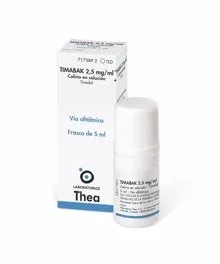
Table of Contents
- Patient Information Leaflet
- Introduction
- 1. What TIMABAK 2.5 mg/ml is and what it is used for
- 2. What you need to know before using TIMABAK 2.5 mg/ml
- **Do not use Timabak:**
- 3. How to use TIMABAK 2.5 mg/ml
- 4. Possible adverse effects
- 5. Storage of TIMABAK 2.5 mg/ml
- 6. Contents of the container and additional information
- **Composition of Timabak**
- **Appearance of the product and contents of the pack**
- ***Marketing Authorization Holder***
- ***Manufacturer***
Patient Information Leaflet
Introduction
Patient Information Leaflet
TIMABAK 2.5 mg/ml eye drops solution
Timolol
Read the entire leaflet carefully before you start using this medicine, as it contains important information for you.
- Keep this leaflet as you may need to read it again. If you have any questions, ask your doctor or pharmacist.
- This medicine has been prescribed for you only. Do not give it to other people, even if they have the same symptoms as you, because it could harm them.
- If you experience any adverse effects, talk to your doctor, pharmacist, or nurse, even if the effects are not listed in this leaflet. See section 4.
Leaflet Contents
- What TIMABAK 2.5 mg/ml is and what it is used for
- What you need to know before using TIMABAK 2.5 mg/ml
- How to use TIMABAK 2.5 mg/ml
- Possible side effects
- How to store TIMABAK 2.5 mg/ml
- Contents of the pack and other information
1. What TIMABAK 2.5 mg/ml is and what it is used for
Timabak is an ophthalmic solution for topical ocular administration.
The active substance, timolol, is a beta-blocking agent belonging to the group of medications known as topical antiglaucoma drugs.
This medicine is indicated for the reduction of elevated intraocular pressure in:
- ocular hypertension
- chronic open-angle glaucoma (including aphakic patients).
2. What you need to know before using TIMABAK 2.5 mg/ml
Do not use Timabak:
- If you are allergic to timolol, to other beta-blockers, or to any of the other ingredients of this medicine (listed in section 6).
- If you have or have had breathing problems such as asthma or severe chronic obstructive bronchitis (a serious lung disease that may cause wheezing, difficulty breathing, and/or persistent cough).
Warnings and precautions
Consult your doctor or pharmacist before starting to use Timabak. Before using this medicine, inform your doctor if you have or have had:
- coronary heart disease (symptoms include chest pain or tightness, shortness of breath, or suffocation), heart failure, hypotension (low blood pressure)
- heart rhythm disorders such as bradycardia (slow pulse)
- breathing problems, asthma, or chronic obstructive pulmonary disease
- peripheral arterial disease such as Raynaud's disease or Raynaud's syndrome (circulatory disorders)
- diabetes, as timolol may mask the signs and symptoms of low blood sugar
- overactive thyroid gland, since timolol may mask its signs and symptoms
- untreated pheochromocytoma (a hormone-producing tumor causing severe low blood pressure)
Before undergoing surgical anesthesia, inform your doctor that you are using Timabak, as timolol may alter the effects of medications used during anesthesia.
If you wear contact lenses, the use of Timabak is not recommended, as it increases the risk of developing intolerance to contact lenses.
Children
As a general rule, eye drops containing timolol solution should be used with caution in young patients. In newborns, infants, and young children, timolol should be used with extreme caution. This medicine must be stopped immediately if coughing, wheezing, abnormal breathing, or abnormal breathing pauses (apnea) occur. Inform your doctor immediately. A portable apnea monitor may be helpful.
Timolol has been studied in infants and children aged between 12 days and 5 years who had elevated eye pressure or had been diagnosed with glaucoma. For further information, consult your doctor.
Use of Timabak with other medicines
Timabak may affect or be affected by other medicines you are taking, including other eye drops for the treatment of glaucoma.
Inform your doctor if you are using or plan to use medicines to lower blood pressure, medicines for heart conditions, or medicines to treat diabetes.
Tell your doctor or pharmacist if you are taking, have recently taken, or might need to take any other medicines.
Inform your doctor if you are taking quinidine (used to treat heart problems and some types of malaria) or antidepressant medicines such as fluoxetine or paroxetine.
Pregnancy and breastfeeding
Pregnancy
Do not use Timabak if you are pregnant, unless your doctor considers it necessary.
Breastfeeding
Do not use Timabak if you are breastfeeding. Timolol maleate may pass into breast milk.
If you are pregnant or breastfeeding, think you may be pregnant, or plan to become pregnant, consult your doctor or pharmacist before using this medicine.
Driving and using machines
Timabak may cause dizziness, fatigue, or blurred vision, which may affect your ability to drive or operate machinery.
Timabak contains phosphates
This medicine contains 0.407 mg of phosphates per drop, equivalent to 12.7 mg/ml.
If you have severe corneal damage (the transparent layer at the front of the eye), treatment with phosphates, in very rare cases, may cause blurred vision due to calcium accumulation.
Athletes
Athletes are advised that Timabak contains a component that may lead to a positive analytical result in doping control tests.
3. How to use TIMABAK 2.5 mg/ml
Follow exactly the instructions for administration of this medicine as given by your doctor or pharmacist. If in doubt, consult your doctor or pharmacist again.
Remember to use your medication.
The recommended dose is to start treatment with one drop of Timabak 2.5 mg/ml twice daily in the affected eye(s). If the response is not satisfactory, treatment will be changed to one drop of Timabak 5 mg/ml twice daily in the affected eye(s). Your doctor will periodically evaluate your response to Timabak and decide whether it is necessary to complement it with other available medications to reduce intraocular pressure.
If you are using other eye drops at the same time, you should wait at least five minutes between applications to allow the active ingredients to be cleared from the eye.
If this eye drop is replacing a previous glaucoma treatment or is used in combination with other medications, your doctor will instruct you on the procedure to follow.
Use in children
Posology:
Before using timolol, a complete medical examination should be performed. Your doctor will carefully evaluate the benefits versus the risks before planning treatment with timolol. If the benefits outweigh the risks, it is recommended to use once daily the lowest available concentration of active substance.
In the case of "use in children", a 0.1% concentration of active substance may be sufficient to control intraocular pressure. If pressure is not adequately controlled with this concentration, administration twice daily with 12 hours between doses may be required. Patients should be closely monitored, especially newborns, for one to two hours after the first administration, with careful observation for the appearance of adverse effects until surgery is performed.
Method of administration:
Only one drop of timolol should be instilled per administration.
After instillation, keep the eyes closed for as long as possible (e.g., 3 to 5 minutes) and press with a finger on the inner corner of the eye (near the nose) to prevent the timolol drop from spreading into the body.
Treatment duration:
In children, it will be prescribed as a temporary treatment.
Instructions for use
To ensure proper functioning of the system, follow these steps before the first instillation:
- Wash your hands thoroughly before applying the drops and avoid any contact of the dropper tip with fingers, the surface of the eye, or any other surface.
- Check that the seal on the container is intact.
- Open the container by unscrewing the cap.
- Instill one drop into the eye while looking upward and pulling the lower eyelid downward.
- The drop release time is longer than that of a conventional eye drop container.
- After applying Timabak, press with a finger on the inner corner of the eye (near the nose) for 2 minutes. This will help prevent timolol from being distributed throughout the body.
- Reseal the bottle after each use.
If you use more Timabak than you should:
If you have used more Timabak than you should, consult your doctor or pharmacist immediately.
The most common symptoms in case of overdose with beta-blockers are dizziness, headache, shortness of breath, decreased heart rate, low blood pressure, heart failure, and/or cardiac arrest.
In case of overdose or accidental ingestion, go immediately to a medical center or call the Toxicology Information Service at telephone 91.562.04.20, indicating the medication and the amount used.
If you forget to use Timabak:
Do not use a double dose to make up for missed doses.
If you stop using Timabak:
Your doctor will indicate the duration of your treatment with Timabak. Do not stop treatment prematurely, as this would cause the beneficial effect to cease.
If you have any further questions about the use of this medicine, ask your doctor or pharmacist.
4. Possible adverse effects
Like all medicines, this medicine may cause adverse effects, although not everyone will experience them.
If you experience any adverse effects, consult your doctor or pharmacist, even if they are adverse effects not listed in this leaflet.
You can usually continue using the drops unless the effects are severe. If you are concerned, speak to your doctor or pharmacist. Do not stop using Timabak without first discussing it with your doctor.
As with other eye medications, timolol may be absorbed into the bloodstream. This may cause adverse effects similar to those observed with beta-blockers administered orally or by injection. Adverse effects following ophthalmic topical administration are less frequent than with oral or injectable administration. The list of adverse effects below includes those reported within the class of beta-blockers used to treat ocular diseases:
- generalized allergic reactions including angioedema, urticaria, local or generalized rashes, pruritus, anaphylactic reaction (a sudden and severe allergic reaction that may be life-threatening),
- hypoglycemia (low blood sugar),
- insomnia, depression, nightmares, memory loss, hallucinations (frequency not known),
- syncope (loss of consciousness), stroke, cerebral ischemia (reduced blood flow to the brain), worsening of signs and symptoms of myasthenia gravis (a muscle disorder), dizziness, numbness of the limbs, and headache,
- signs and symptoms of ocular irritation (e.g., burning sensation, stinging, itching, conjunctivitis, tearing, redness), blepharitis, keratitis, blurred vision, and choroidal detachment following filtration surgery, decreased corneal sensitivity, dry eyes, corneal erosion (damage to the outer layer of the eye), drooping of the upper eyelid, double vision,
- slow heartbeat, chest pain, palpitations, edema (fluid accumulation), irregular heartbeat, congestive heart failure (a condition characterized by difficulty breathing and swelling of the feet and legs due to fluid buildup), atrioventricular block, cardiac arrest, heart failure,
- hypotension, Raynaud's phenomenon, coldness of hands and feet,
- bronchospasm (particularly in patients with pre-existing bronchospastic disease), breathing difficulty, cough,
- taste disturbances, nausea, indigestion, diarrhea, dry mouth, abdominal pain, vomiting,
- hair loss, psoriasiform rashes or worsening of psoriasis, skin rashes,
- muscle pain,
- sexual disorders, decreased libido, impotence,
- weakness/muscle fatigue.
Reporting of adverse effects
If you experience any adverse effects, consult your doctor, pharmacist, or nurse, even if they are possible adverse effects not listed in this leaflet. You can also report them directly via the Spanish Pharmacovigilance System for Human Medicines: www.notificaram.es. By reporting adverse effects, you can help provide more information on the safety of this medicine.
5. Storage of TIMABAK 2.5 mg/ml
Keep this medicine out of the sight and reach of children. Do not store at temperatures above 25°C.
Do not use this medicine after the expiry date stated on the packaging after EXP. The expiry date refers to the last day of the month indicated. Do not use the container more than 8 weeks after first opening.
Medicines must not be disposed of via wastewater or household waste. Dispose of unused containers and medicines at the SIGRE collection point at your pharmacy. If in doubt, ask your pharmacist how to dispose of containers and medicines you no longer need. This will help protect the environment.
6. Contents of the container and additional information
Composition of Timabak
-
The active substance is timolol (as maleate). Each milliliter of solution contains 2.5 mg of timolol.
-
The other components are sodium hydrogen phosphate dodecahydrate, disodium hydrogen phosphate dihydrate, and Water for Injections.
Appearance of the product and contents of the pack
The product is a colourless, transparent, preservative-free solution.
It is supplied in a 5 ml multidose container.
The Timabak eye drop container incorporates a new technology for sterile delivery of the product, known as the ABAK system.
Marketing Authorization Holder and Manufacturer
Marketing Authorization Holder
Laboratorios Thea S.A.,
C/ Enric Granados, nº 86-88, 2nd floor,
08008 - Barcelona
Manufacturer
Excelvision
07100 Annonay (France)
FARMILA - THEA FARMACEUTICI, S.P.A.
Via Enrico Fermi, 50 - Settimo Milanese (Milan) Italy
Date of the most recent review of this leaflet: December 2019
Detailed information on this medicinal product is available on the website of the Spanish Agency of Medicines and Health Products (AEMPS): http://www.aemps.es/