Taptiqom 15 micrograms/ml + 5 mg/ml solution for ophthalmic use
Spain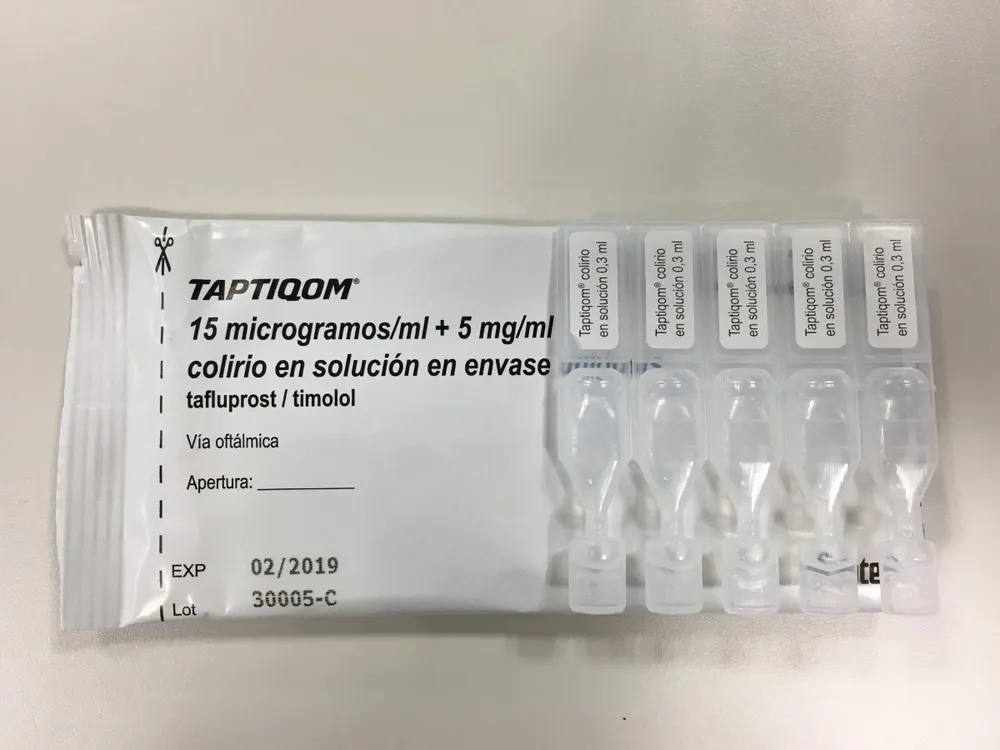
Instructions for Use
Package leaflet: Information for the user
Introduction
Package leaflet: Information for the patient
Taptiqom 15 micrograms/ml + 5 mg/ml eye drops solution
tafluprost/timolol
Read all of this leaflet carefully before you start using this medicine because it contains important information for you.
- Keep this leaflet, as you may need to read it again.
- If you have any questions, ask your doctor, pharmacist or nurse.
- This medicine has been prescribed for you only, and you should not give it to other people, even if they have the same symptoms as you, because it may harm them.
- If you experience any adverse reactions, consult your doctor, pharmacist or nurse, even if they are adverse reactions not listed in this leaflet. See section 4.
Contents of the leaflet
- What Taptiqom is and what it is used for
- What you need to know before using Taptiqom
- How to use Taptiqom
- Possible side effects
- How to store Taptiqom
- Contents of the pack and other information
1. What Taptiqom is and what it is used for
What type of medicine is it and how does it work?
Taptiqom eye drops solution contains tafluprost and timolol. Tafluprost is a medicine belonging to the group called prostaglandin analogues, and timolol belongs to a group of medicines called beta-blockers. Tafluprost and timolol work together to reduce intraocular pressure. Taptiqom is used when the pressure inside the eye is too high.
What is your medicine used for?
Taptiqom is used to treat a type of glaucoma called open-angle glaucoma, and a condition also known as ocular hypertension in adults. Both conditions are associated with increased pressure in the eye and may occasionally affect your vision.
2. What you need to know before using Taptiqom
Do not use Taptiqom:
- if you are allergic to tafluprost, timolol, beta-blockers, or any of the other ingredients of this medicine (listed in section 6).
- if you have or have previously had breathing problems such as asthma, severe chronic obstructive bronchitis (a serious lung disease that may cause wheezing, difficulty breathing, or prolonged coughing).
- if you have a slow heart rate, heart failure, or heart rhythm disorders (irregular heartbeat).
Warnings and precautions
Talk to your doctor, pharmacist, or nurse before starting to use Taptiqom.
Before using this medicine, inform your doctor if you have or have had:
- heart disease (symptoms may include chest pain or tightness, breathing difficulties, or suffocation), heart failure, or low blood pressure
- heart rhythm disorders, such as slow heartbeat
- breathing problems, asthma, or chronic obstructive pulmonary disease
- poor blood circulation (such as Raynaud's disease or Raynaud's syndrome)
- diabetes, as timolol may mask the signs and symptoms of hypoglycemia
- overactive thyroid gland, as timolol may mask signs and symptoms of thyroid disorders
- any allergies or anaphylactic reactions
- myasthenia gravis (a serious condition causing muscle weakness)
- other eye conditions, such as corneal disease (the transparent tissue covering the front of the eye) or a condition requiring eye surgery.
Inform your doctor if you have:
- kidney problems
- liver problems.
Please note that Taptiqom may cause the following effects, some of which may be permanent:
Taptiqom may
- increase the length, thickness, color, or density of your eyelashes and cause unusual eyelash hair growth on your eyelids.
- cause darkening of the skin around the eyes. Wipe away any excess solution from the skin to reduce the risk of skin darkening.
- change the color of your iris (the colored part of your eye). If Taptiqom is used in only one eye, the treated eye may permanently become a different color from the other eye.
- cause hair growth in areas where the solution repeatedly comes into contact with the skin surface.
If you are undergoing surgery, inform your doctor that you are using Taptiqom, as timolol may alter the effects of certain medications used during anesthesia.
Children and adolescents
Taptiqom is not recommended for children and adolescents under 18 years of age due to lack of safety and efficacy data in this age group.
Taking Taptiqom with other medicines
Tell your doctor or pharmacist if you are taking, have recently taken, or might need to take any other medicines.
Taptiqom may affect, or be affected by, other medicines you are taking.
In particular, inform your doctor if you use/take or plan to use/take:
- other eye drops for the treatment of glaucoma
- medicines to lower blood pressure
- heart medications
- medicines for the treatment of diabetes
- quinidine (used to treat heart conditions and certain types of malaria)
- antidepressants known as fluoxetine or paroxetine.
If you use other eye medications, wait at least 5 minutes between instilling Taptiqom and the other medication.
Contact lenses
Remove contact lenses before administering the drops and wait at least 15 minutes before reinserting them.
Pregnancy, breastfeeding, and fertility
If you are pregnant or breastfeeding, think you may be pregnant, or are planning to become pregnant, consult your doctor before using this medicine. If you are a woman who can become pregnant, you should use an effective method of contraception during treatment with Taptiqom. Do not use Taptiqom if you are pregnant, except if specifically instructed by your doctor. Do not use Taptiqom if you are breastfeeding. Consult your doctor.
Driving and use of machines
Some adverse effects associated with Taptiqom, such as blurred vision, may affect your ability to drive or operate machinery. Do not drive or operate machinery until you feel well and your vision is clear.
Taptiqom contains phosphates
This medicine contains 1.3 mg of phosphates per ml.
If you have severe damage to the cornea (the transparent layer at the front of the eye), treatment with phosphates may, in very rare cases, cause blurred vision due to calcium accumulation.
3. How to use Taptiqom
Follow exactly the administration instructions for this medicine as given by your doctor or pharmacist. If in doubt, consult your doctor or pharmacist again.
The recommended dose is one drop of Taptiqom daily in the affected eye or eyes. Do not instill more drops or use it more often than instructed by your doctor. If you do, Taptiqom may lose effectiveness. Use Taptiqom in both eyes only if your doctor has specifically instructed you to do so.
For topical ophthalmic use only. Do not ingest.
Do not let the multidose container touch the eye or surrounding area. This could damage the eye. It could also become contaminated with bacteria that may cause eye infections, which in turn could lead to eye damage, including loss of vision. To avoid possible contamination of the multidose container, avoid letting the tip touch any surface.
Instructions for use:
When using it for the first time, before applying a drop into the eye, first practice using the bottle by slowly squeezing it to release one drop outside the eye.
Once you are confident that you can release a single drop each time, choose the most comfortable position for instilling the drops (you may sit, lie on your back, or stand in front of a mirror).
When starting a new bottle:
Do not use the bottle if the plastic ring around the neck of the bottle is missing or broken. Write the date you opened the bottle in the space provided for the date on the outer carton.
Each time you use Taptiqom:
|
|
|
|
Take special care to avoid the dropper tip touching your eye, the skin around the eye, or your fingers to prevent possible contamination of the solution.
Please note that there may be a slight delay between squeezing the bottle and the drop falling. Do not squeeze too hard. |
|
|
|
|
|
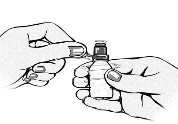
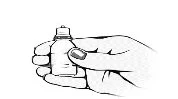
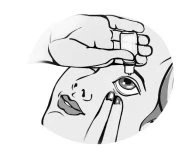

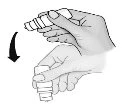
There will be a residual volume of approximately 1 ml that cannot be administered. Do not attempt to empty the vial.
If the drop misses the eye, try again.
If your doctor has instructed you to apply drops to both eyes, repeat steps 7 to 9 for the other eye.
If you are using other eye medications, wait at least 5 minutes between applying Taptiqom and the other medication.
If you use more Taptiqom than you should, you may feel dizzy or experience headache, heart discomfort, or breathing problems. If necessary, consult a doctor.
If you accidentally swallow the medicine, consult a doctor or pharmacist, or call the Toxicology Information Service at telephone number 91 562 04 20, indicating the medication and the amount ingested.
If you forget to use Taptiqom, apply one single drop as soon as you remember, and then resume your normal routine. However, if it is almost time for your next dose, skip the missed dose. Do not use a double dose to make up for a missed dose.
Do not stop using Taptiqom without consulting your doctor. If you interrupt treatment with Taptiqom, eye pressure will rise again, which could lead to permanent eye damage.
If you have any further questions about the use of this medicine, ask your doctor, pharmacist, or nurse.
4. Possible adverse effects
Like all medicines, this medicine may cause adverse effects, although not everyone experiences them. Most of the adverse effects are not serious.
You can usually continue using the drops unless the effects are severe. If in doubt, consult a doctor or pharmacist.
Known adverse effects of Taptiqom are:
Frequent adverse effects (may affect up to 1 in 10 people):
Eye disorders
Itching of the eyes. Eye irritation. Eye pain. Redness of the eyes. Changes in length, thickness, and density of eyelashes. Foreign body sensation in the eye. Discoloration of eyelashes. Light sensitivity. Blurred vision.
Uncommon adverse effects (may affect up to 1 in 100 people):
Nervous system disorders
Headache.
Eye disorders
Dry eyes. Redness of the eyelids. Small inflamed areas at points on the surface of the eye. Watery eyes. Swelling of the eyelids. Tired eyes. Inflammation of the eyelids. Intraocular inflammation. Eye discomfort. Ocular allergy. Eye inflammation. Abnormal sensation in the eye.
The following additional adverse effects have been observed with the medicines that make up Taptiqom (tafluprost and timolol) and may therefore also occur when using Taptiqom:
The following side effects have been observed with tafluprost:
Eye disorders
Reduced ability of the eye to see fine details. Change in iris color (may be permanent). Change in skin color around the eyes. Inflammation of the membranes on the surface of the eye. Ocular discharge. Pigmentation of the membranes on the surface of the eye. Follicles on the membranes of the surface of the eye. Sunken eye. Iritis/uveitis (inflammation of the colored part of the eye). Macular edema/cystoid macular edema (inflammation of the retina inside the eye leading to worsening of vision).
Skin disorders
Unusual eyelash growth.
Effects on the respiratory system
Worsening of asthma, respiratory failure.
The following side effects have been observed with timolol:
Immune system disorders
Allergic reactions, including subcutaneous inflammation, urticaria, and rashes. Sudden potentially life-threatening allergic reaction. Itching.
Metabolism and nutrition disorders
Hypoglycemia.
Psychiatric disorders
Depression. Sleep disorders. Nightmares. Memory loss. Nervousness. Hallucinations.
Nervous system disorders
Dizziness. Weakness. Unusual sensations (such as tingling and pricking). Worsening of signs and symptoms of myasthenia gravis (a muscle disorder). Stroke. Reduced blood flow to the brain.
Eye disorders
Corneal inflammation. Reduced corneal sensitivity. Visual disturbances, including refractive changes (sometimes due to discontinuation of miotic therapy). Drooping of the upper eyelid. Double vision. Blurred vision and detachment of the layer beneath the retina containing blood vessels, following filtration surgery, which may cause visual disturbances. Corneal erosion.
Ear disorders
Tinnitus (ringing in the ears).
Cardiac disorders
Slow heartbeat. Chest pain. Palpitations. Edema (fluid accumulation). Changes in heart rate or rhythm. Congestive heart failure (heart disease with breathing difficulty and swelling of feet and legs due to fluid accumulation). A type of heart rhythm disorder. Myocardial infarction. Heart failure.
Vascular disorders
Low blood pressure. Claudication. Raynaud's phenomenon, cold hands and feet.
Respiratory disorders
Constriction of the airways in the lungs (especially in patients with pre-existing disease). Breathing difficulty. Cough.
Gastrointestinal disorders
Nausea. Indigestion. Diarrhea. Dry mouth. Taste disturbances. Abdominal pain. Vomiting.
Skin disorders
Hair loss. Skin rash with silvery appearance (psoriasiform rash) or worsening of psoriasis. Skin rash.
Musculoskeletal and connective tissue disorders
Muscle pain not caused by exercise. Joint pain.
Reproductive system and breast disorders
La Peyronie's disease (which may cause penile curvature). Sexual dysfunction. Reduced libido.
General disorders
Muscle weakness/fatigue. Thirst.
Reporting of adverse effects
If you experience any adverse effects, talk to your doctor, pharmacist, or nurse, even if they are possible adverse effects not listed in this leaflet. You can also report them directly via the Spanish Pharmacovigilance System for Human Medicines: https;//www.notificaram.es. By reporting adverse effects, you can help provide more information on the safety of this medicine.
5. Storage of Taptiqom
Keep this medicine out of the sight and reach of children.
Do not use this medicine after the expiry date stated on the label of the vial and carton after "EXP". The expiry date refers to the last day of the month indicated.
Store unopened vials in a refrigerator (between 2 and 8 °C). Do not freeze.
Keep the vial in the original packaging to protect it from light.
After opening the vial:
- Do not store above 25°C. Do not freeze.
- Keep the vial in the original carton to protect it from light.
- After first opening, to prevent infections, the vial must be discarded after a maximum of 3 months. The 3 ml fill volume vial is intended for use within 1 month, the 5 ml vial within 2 months, and the 7 ml vial within 3 months.
Medicines must not be disposed of via wastewater or household waste. Return unused medicines and their packaging to the SIGRE collection point at your pharmacy. If you have any doubts, ask your pharmacist how to dispose of medicines and packaging that you no longer need. This will help protect the environment.
6. Contents of the pack and other information
Composition of Taptiqom
- The active substances are tafluprost and timolol. 1 ml of solution contains 15 micrograms of tafluprost and 5 mg of timolol (as maleate).
- The other components are glycerol, disodium phosphate dodecahydrate, edetate disodium, polysorbate 80, hydrochloric acid and/or sodium hydroxide, and water for injections.
Nature of the product and contents of the container
Taptiqom is a transparent, colourless liquid (solution), practically free from visible particles. It is supplied in a container containing 1 transparent plastic bottle with 3 ml, 5 ml or 7 ml, or 3 transparent plastic bottles with 3 ml of solution each. The plastic bottles are closed with caps.
Only certain pack sizes may be marketed.
Marketing Authorisation Holder and Manufacturer
Marketing Authorisation Holder
Santen Oy
Niittyhaankatu 20
33720 Tampere
Finland
Manufacturer
Santen Oy
Kelloportinkatu 1
33100 Tampere
Finland
For further information on this medicinal product, please contact the local representative of the Marketing Authorisation Holder:
Santen Pharmaceutical Spain S.L.
Acanto, 22, 7º
28045 – Madrid
Date of the most recent revision of this leaflet: November 2021
Detailed and up-to-date information on this medicinal product is available on the website of the Spanish Agency of Medicines and Medical Devices (Agencia Española de Medicamentos y Productos Sanitarios - AEMPS) http://www.aemps.gob.es/
Similar Medications
-
Bapiri 0.3 mg + 5 mg/ml eye drops solution
Form: solution, ophthalmic
Active substance Dosage BIMATOPROST 0,3 mg/ml TIMOLOL MALEATE 6,83 mg/ml Manufacturer: Brill Pharma S.L.
-
Bimatoprost/timolol Zentiva 0.3 mg/ml + 5 mg/ml eye drops solution
Form: solution, ophthalmic
Active substance Dosage BIMATOPROST 0,3 mg/ml TIMOLOL MALEATE 6,8 mg/ml Manufacturer: Zentiva K.S.
-
Combigan 2 mg/ml + 5 mg/ml solution for ophthalmic use
Form: solution, ophthalmic
Active substance Dosage BRIMONIDINE 1,3 mg TIMOLOL MALEATE 6,8 mg Manufacturer: Abbvie Spain, S.L.U.
-
Cosduo 20 mg/ml + 5 mg/ml eye drops solution
Form: solution, ophthalmic
Active substance Dosage TIMOLOL MALEATE 6,83 mg DORZOLAMIDE HYDROCHLORIDE 22,26 mg Manufacturer: Santen Oy
-
Cosopt 20 mg/ml + 5 mg/ml eye drops in solution
Form: solution, ophthalmic
Active substance Dosage TIMOLOL MALEATE 6,83 mg DORZOLAMIDE HYDROCHLORIDE 22,26 mg Manufacturer: Santen Oy
-
Cosopt PF 20 mg/ml + 5 mg/ml eye drops in solution
Form: solution, ophthalmic
Active substance Dosage DORZOLAMIDE HYDROCHLORIDE 22,26 mg TIMOLOL MALEATE 6,83 mg Manufacturer: Santen Oy
-
Dorzolamide/timolol Aurovitas 20 mg/ml + 5 mg/ml eye drops solution
Form: solution, ophthalmic
Active substance Dosage DORZOLAMIDE HYDROCHLORIDE 111,30 mg TIMOLOL MALEATE 34,15 mg Manufacturer: Aurovitas Spain, S.A.U.
-
Dorzolamide/timolol Stada 20 mg/ml + 5 mg/ml eye drops solution
Form: solution, ophthalmic
Active substance Dosage TIMOLOL MALEATE 34,15 mg DORZOLAMIDE HYDROCHLORIDE 111,3 mg Manufacturer: Laboratorio Stada S.L.
-
Dorzolamide/timolol Viatris 20 mg/ml + 5 mg/ml eye drops
Form: solution, ophthalmic
Active substance Dosage DORZOLAMIDE HYDROCHLORIDE 111,30 mg TIMOLOL MALEATE 34,15 mg Manufacturer: Viatris Limited
-
Dorzolamide/timolol Vir 20 mg/ml + 5 mg/ml eye drops solution
Form: solution, ophthalmic
Active substance Dosage DORZOLAMIDE 20 mg TIMOLOL 5 mg Manufacturer: Industria Quimica Y Farmaceutica Vir S.A.
-
Duokopt 20 mg/ml + 5 mg/ml solution for eye drops
Form: solution, ophthalmic
Active substance Dosage DORZOLAMIDE HYDROCHLORIDE 2,225 g TIMOLOL MALEATE 0,683 g Manufacturer: Laboratoires Thea
-
Duotrav 40 micrograms/ml + 5 mg/ml solution for eye drops
Form: solution, ophthalmic
Active substance Dosage TRAVOPROST 40 µg TIMOLOL 5 mg Manufacturer: Novartis Europharm Limited
This page has been machine-translated and may contain inaccuracies. The original data is available in the manufacturing country's language.
Last data check: May 18, 2026 · Data source: CIMA — AEMPS