Paroxetine Vir 20 mg film-coated tablets EFG
Spain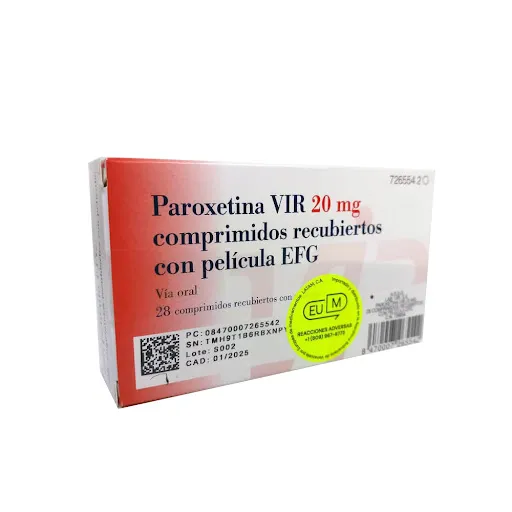
Instructions for Use
Package leaflet: Information for the user
Introduction
Paroxetina Vir 20 mg film-coated tablets EFG
Paroxetine
Read the entire leaflet carefully before you start taking this medicine.
- Keep this leaflet. You may need to read it again.
- If you have any questions, ask your doctor or pharmacist.
- This medicine has been prescribed for you only and must not be given to other people, even if they have the same symptoms as yours, as it may harm them.
- If you experience any adverse reactions, consult your doctor or pharmacist, even if they are adverse reactions not listed in this leaflet. See section 4.
Leaflet contents
- What Paroxetina Vir is and what it is used for
- What you need to know before taking Paroxetina Vir
- How to take Paroxetina Vir
- Possible side effects
- How to store Paroxetina Vir
- Contents of the pack and other information
1. What Paroxetina Vir is and what it is used for
Paroxetina Vir belongs to a group of medicines called antidepressants and acts on the central nervous system.
Paroxetina Vir is indicated for:
- Treatment of depression.
- Treatment of obsessive-compulsive disorder.
- Treatment of panic disorder.
- Treatment of social phobia.
- Treatment of generalized anxiety disorder.
2. What you need to know before taking Paroxetina Vir
Do not take Paroxetina Vir:
- If you are allergic to paroxetine or any of the ingredients of this medicine listed in section 6.
- If you are being treated with a medicine called thioridazine or with a type of antidepressant known as monoamine oxidase inhibitors (MAOIs), or if you have been treated with such medicines within the last two weeks.
Warnings and precautions
Talk to your doctor or pharmacist before taking Paroxetina Vir:
- If you have any kidney, liver, or heart problems.
- If you have had manic episodes.
- If you have epilepsy or suffer from seizures.
- If you have diabetes.
- If you have a condition causing increased eye pressure (glaucoma).
- If you bruise easily or bleed easily, are taking any medicine that may increase bleeding, or if you are pregnant (see "Pregnancy").
- If you are taking antipsychotics (for the treatment of mental illnesses).
- If you are taking any product containing St. John's wort.
Take special care with Paroxetina Vir if you are over 65 years of age, as this medicine may reduce the amount of sodium in your blood and cause drowsiness and muscle weakness. If you experience these symptoms, please consult your doctor as soon as possible.
Some medicines in the same class as Paroxetina Vir (called SSRIs/SNRIs) may cause symptoms of sexual dysfunction (see section 4). In some cases, these symptoms may persist after stopping treatment.
Like other medicines of this type, you will not feel immediate relief from your symptoms. Improvement usually begins within a few weeks. Sometimes, symptoms of depression or other psychiatric conditions may include thoughts of self-harm or suicide. These symptoms may persist or worsen until the full antidepressant effect of the medicine is achieved. Inform your doctor immediately or go to the nearest hospital if you experience dangerous thoughts or feelings during the initial phase of treatment or at any time during treatment.
Children and adolescents
Paroxetine should not be used to treat children and adolescents under 18 years of age.
Also, you should know that in patients under 18 years of age, there is an increased risk of adverse effects such as suicide attempts, suicidal thoughts, and hostility (mainly aggression, confrontational behavior, and irritability) when taking paroxetine. Nevertheless, your doctor may prescribe paroxetine to patients under 18 years of age if they consider it to be in the patient's best interest. If your doctor has prescribed paroxetine to you or your child under 18 years of age and you wish to discuss this decision, speak to your doctor. You must inform your doctor if any of the symptoms listed above appear or worsen while you or your child under 18 years of age are taking paroxetine. The long-term effects of paroxetine on safety regarding growth, maturation, and cognitive and behavioral development in this age group have not yet been established.
In clinical studies of paroxetine in patients under 18 years of age, common adverse effects (affecting less than 1 in 10 children or adolescents) included: increased suicidal thoughts and suicide attempts, self-harm attempts, hostile, aggressive, or uncooperative behavior, loss of appetite, tremors, abnormal sweating, hyperactivity (excessive energy), agitation, emotional instability (including crying and mood changes), and unexpected bruising or bleeding (such as nosebleeds). These effects were also observed, although less frequently, in patients included in these studies who did not take paroxetine.
When stopping treatment with paroxetine, some patients under 18 years of age reported adverse effects in these studies. These effects were very similar to those observed in adults who discontinued paroxetine treatment (see section 3). In addition, patients under 18 years of age frequently experienced (affecting less than 1 in 10) stomach pain, nervousness, and emotional instability (including crying, mood changes, self-harm attempts, suicidal thoughts, and suicide attempts).
Suicidal thoughts and worsening of depression or anxiety disorder
If you are depressed and/or have anxiety disorders, you may sometimes have thoughts of harming yourself or of suicide. These may increase at the beginning of treatment with antidepressants, as all these medicines take time to work—usually about two weeks, but sometimes longer.
This is more likely to happen if:
- You have previously had thoughts of suicide or self-harm.
- You are a young adult. Clinical trial data show an increased risk of suicidal behavior in antidepressant-treated psychiatric patients under 25 years of age.
- You have thoughts of harming yourself or of suicide at any time, consult your doctor or go to the hospital immediately.
It may be helpful for you to tell a family member or close friend that you are depressed or have anxiety disorders, and ask them to read this leaflet. You may also ask them to inform you if they think your depression or anxiety is worsening, or if they are concerned about changes in your behavior.
Important adverse effects observed with paroxetine
Some patients taking paroxetine develop a condition called akathisia, feeling restless and unable to sit still or remain motionless. Other patients develop a condition called "serotonin syndrome," which may cause one or more of the following symptoms: confusion, restlessness, sweating, tremor, chills, hallucinations (strange visions or sounds), sudden jerky movements, or increased heart rate. Contact your doctor if you experience any of these symptoms. For more information on this or other adverse effects of paroxetine, see section 4.
Other medicines and Paroxetina Vir
Inform your doctor or pharmacist if you are taking, have recently taken, or might need to take any other medicines, including those obtained without a prescription.
In particular, Paroxetina Vir may alter the effect of the following medicines:
- Other antidepressants.
- Medicines used to treat mental illnesses (antipsychotics).
- Medicines used to treat epilepsy.
- Lithium, used to treat mania.
- Cimetidine (used for stomach discomfort).
- Procyclidine, used to treat Parkinson's disease.
- Medicines containing tryptophan.
- Medicines that may increase the risk of bleeding or affect blood clotting (e.g., oral anticoagulants, acetylsalicylic acid, and others).
- Some medicines used to treat patients with irregular heartbeats (arrhythmias).
- Metoprolol, used to treat high blood pressure, irregular heartbeats (arrhythmias), and angina.
- Migraine treatments.
- Tramadol (used for pain).
- Antibacterials (linezolid).
- Inhibitors of metabolism.
Taking Paroxetina Vir with food and drinks
As with all medicines of this type, it is advisable to avoid alcohol while taking Paroxetina Vir.
Take your medicine in the morning, preferably with breakfast. Swallow the tablets whole with water, and preferably with food. Do not chew the tablets.
Pregnancy and breastfeeding
Consult your doctor or pharmacist before taking any medicine. Do not take Paroxetina Vir during pregnancy or while breastfeeding unless your doctor advises you to do so.
Pregnancy
Inform your doctor immediately if you find out you are pregnant or if you are planning to become pregnant. Your doctor may recommend gradually discontinuing treatment with Paroxetina Vir or continuing treatment. Some studies have suggested a possible increased risk of heart defects in newborns whose mothers took Paroxetina Vir during the first months of pregnancy. These studies showed that less than 2% of children whose mothers took paroxetine during early pregnancy had heart problems, compared to 1% in the general population.
If you take Paroxetina Vir in the late stages of pregnancy, there may be an increased risk of heavy vaginal bleeding shortly after delivery, especially if you have a history of bleeding disorders. Your doctor or midwife should be aware that you are taking Paroxetina Vir so they can advise you accordingly.
Driving and using machines
During treatment with Paroxetina Vir, you may feel drowsy or dizzy. Do not drive or operate tools or machinery until you know how Paroxetina Vir affects you.
3. How to take Paroxetina Vir
Follow exactly the dosing instructions provided in this leaflet or those given by your doctor or pharmacist. If in doubt, consult your doctor or pharmacist.
Do not forget to take your medicine.
Your doctor will decide whether your dose needs to be increased or decreased during treatment, as well as the duration of treatment.
It is recommended to take Paroxetina Vir once daily in the morning with breakfast. The tablets should be swallowed whole with water and preferably with food. The tablets must not be chewed.
You should continue taking your medicine even if you do not notice improvement, as it may take several weeks for the medicine to start working.
Adults
Depression
The recommended dose is 1 tablet (20 milligrams) daily in adults, which may be increased up to 50 milligrams daily.
Obsessive-compulsive disorder
The recommended dose is 2 tablets (40 milligrams) daily, starting treatment at 20 milligrams daily, up to a maximum of 60 milligrams daily.
Panic disorder
The recommended dose is 2 tablets (40 milligrams) daily, starting treatment at 10 milligrams daily, up to a maximum of 60 milligrams daily.
Social phobia
The recommended dose is 1 tablet (20 milligrams) daily in adults, which may be increased up to 50 milligrams daily.
Generalized anxiety disorder
The recommended dose is 1 tablet (20 milligrams) daily, which may be increased up to 50 milligrams daily.
Elderly patients
The recommended starting doses are the same as for adults. In this patient group, the maximum dose is 40 milligrams daily.
Children and adolescents
The use of Paroxetina Vir is not recommended in children under 18 years of age (see section 2).
Patients with renal or hepatic impairment
If you have renal or hepatic impairment, you should take lower doses than usual. Inform your doctor if you have any kidney or liver problems before starting treatment.
If you think that the effect of Paroxetina Vir is too strong or too weak, inform your doctor or pharmacist.
If you take more Paroxetina Vir than you should
If you have taken more Paroxetina Vir than you should, contact your doctor or pharmacist or the Toxicology Information Service immediately, telephone: 915 620 420, indicating the medicine and the amount taken.
Follow the dosing schedule prescribed by your doctor. It is unlikely that taking more than one dose will be dangerous, even if the entire contents of a package are consumed. However, if this occurs, contact your doctor without delay or reach out to the nearest hospital emergency service.
Treatment includes the standard supportive measures used in cases of overdose with any antidepressant. Gastric contents should be emptied by inducing vomiting, gastric lavage, or both. After gastric evacuation, 20 to 30 grams of activated charcoal should be administered every 4 to 6 hours during the first 24 hours after ingestion. Supportive treatment with monitoring of vital signs and close observation of the patient is also recommended.
If you forget to take Paroxetina Vir
Do not take a double dose to make up for missed doses.
If you forget to take Paroxetina Vir, take it as soon as you remember, and then take your next dose at the usual time the following day.
If you forget to take Paroxetina Vir for the entire day, do not take a double dose the next day.
If you stop taking Paroxetina Vir
If treatment with Paroxetina Vir is stopped abruptly, withdrawal symptoms may occur, such as dizziness, sensory disturbances, headache, sleep disturbances, agitation or anxiety, nausea, and sweating. These symptoms are usually mild to moderate in severity and resolve spontaneously. Your doctor will advise you on how to gradually discontinue treatment to help prevent these symptoms.
Children may experience additional symptoms during discontinuation, such as abdominal pain, restlessness, and mood changes.
4. Possible adverse effects
Like all medicines, this medicine can cause adverse effects, although not everyone will experience them.
Some patients may experience these effects during treatment or when stopping treatment.
Possible adverse effects during treatment
Some people may be allergic to certain medicines, although this occurs very rarely (less than 1 in 10,000 people). If you experience any of the following symptoms while taking Paroxetina Vir, inform your doctor immediately or go to the nearest hospital:
- Swelling of the face, eyelids, lips, mouth, or tongue.
- Skin rash or hives (itching of the skin) anywhere on the body.
- Difficulty breathing or swallowing.
If you notice any adverse reaction listed below, whether or not it may be related to Paroxetina Vir, consult your doctor or pharmacist.
The adverse effects that may occur very commonly (more than 1 in 10 people) when taking Paroxetina Vir are:
- Nausea. This effect may be reduced by taking the medicine in the morning after breakfast.
- Sexual dysfunction (lack of orgasm, and in men, abnormal erection and ejaculation).
The following adverse effects may occur commonly (more than 1 in 100 and less than 1 in 10 people):
- Decreased appetite.
- Insomnia (lack of sleep) or drowsiness.
- Dizziness, tremor.
- Blurred vision.
- Yawning.
- Dry mouth, diarrhea, constipation.
- Sweating, weakness.
- Weight gain.
The adverse effects that may occur uncommonly (more than 1 in 1,000 and less than 1 in 100 people) during treatment with Paroxetina Vir include:
- Bruising (bluish discoloration due to blood accumulation under the skin), mucosal bleeding.
- Confusion.
- Hallucinations.
- Extrapyramidal effects (movement and coordination disorders).
- Sinus tachycardia (abnormal heart rhythm).
- Transient increases or decreases in blood pressure, usually in patients with high blood pressure or anxiety.
- Skin rashes (skin spots), skin itching.
- Urinary retention.
- Decreased white blood cell count.
The adverse effects that may occur rarely (more than 1 in 10,000 and less than 1 in 1,000 people) during treatment with Paroxetina Vir include:
- Hyponatremia (reduced sodium levels in the blood), especially in elderly patients, which may cause symptoms such as weakness and drowsiness (feeling sleepy).
- Seizures.
- Manic reactions (euphoria).
- Vaginal bleeding, bleeding from the stomach mucosa. Agitation.
- Anxiety.
- Panic attacks.
- Bradycardia (reduced heart rate). Increased liver enzymes.
- Galactorrhea (excessive or abundant milk secretion). Involuntary body movements, including facial movements.
- Muscle and joint pain.
The adverse effects that may occur very rarely (less than 1 in 10,000 people) are:
- Serotonin syndrome; symptoms may include agitation, confusion, diaphoresis (abnormal sweating), hallucinations, hyperreflexia (increased reflex response), myoclonus (involuntary muscle jerks), chills, tachycardia, and tremor.
- Liver effects such as hepatitis (liver inflammation), sometimes associated with jaundice (yellowing of the skin and mucous membranes) and/or liver failure.
- Photosensitivity (sensitivity to sunlight).
- Syndrome of inappropriate antidiuretic hormone secretion (SIADH) (a hormone that causes).
- Fluid and water retention, leading to fatigue, weakness, or confusion).
- Acute glaucoma (high pressure inside the eye).
- Peripheral edema (fluid retention in the extremities).
- Bleeding from the stomach mucosa.
- Thrombocytopenia (reduced platelet count in the blood).
- Priapism (abnormal and prolonged penile erection).
Adverse effects with unknown frequency:
- Teeth grinding.
- Inflammation of the colon (causing diarrhea).
- Heavy vaginal bleeding shortly after childbirth (postpartum hemorrhage); see "Pregnancy" in section 2 for more information.
Possible adverse effects when stopping treatment
Studies have shown that 3 out of 10 people reported symptoms when stopping treatment with Paroxetina Vir, compared to 2 out of 10 patients when stopping placebo treatment. These symptoms are more likely to occur if you have been taking Paroxetina Vir for a long time, are in a dose-increase phase, or if the dose is reduced too quickly. In most cases, symptoms resolve on their own within two weeks.
Your doctor will advise you to stop treatment with Paroxetina Vir gradually, which reduces the likelihood of experiencing adverse effects. Consult your doctor if you experience severe adverse effects when stopping treatment with Paroxetina Vir; your doctor may recommend continuing your treatment and reducing it more slowly. Experiencing adverse effects does not mean you cannot stop your treatment.
Among the adverse effects that may occur frequently (more than 1 in 100 and less than 1 in 10 people) when stopping treatment are:
- Dizziness, instability.
- Sensory disturbances, including tingling, burning sensations, and less frequently, electric shock-like sensations (even in the head).
- Sleep disturbances (including vivid dreams, nightmares, insomnia). Anxiety.
- Headache.
Among the adverse effects that may occur uncommonly (more than 1 in 1,000 and less than 1 in 100 people) when stopping treatment are:
- Nausea.
- Sweating (including night sweats).
- Agitation.
- Tremor.
- Confusion.
- Emotional instability.
- Visual disturbances.
- Palpitations.
- Diarrhea.
- Irritability.
The adverse effects that occur more frequently (more than 1 in 100 and less than 1 in 10) in children and adolescents under 18 years of age are:
- Decreased appetite.
- Tremor (uncontrollable shaking).
- Abnormal sweating.
- Hyperactivity.
- Hostile/unfriendly behavior (mainly in children under 12 years with obsessions and compulsive disorders).
- Agitation.
- Emotional instability, including crying, mood swings, self-harm attempts, suicidal thoughts and attempts (mainly observed in adolescent depression studies).
Additional adverse effects frequently observed in children and adolescents under 18 years who discontinue treatment with Paroxetina Vir are: emotional instability (including crying, mood swings, self-harm attempts, suicidal thoughts and attempts), abdominal pain, and nervousness.
If any of these symptoms become bothersome or worsen, inform your doctor.
If you notice any other adverse reaction not described in this leaflet, consult your doctor or pharmacist.
Reporting of adverse effects
If you experience any type of adverse effect, consult your doctor, pharmacist, or nurse, even if it is a possible adverse effect not listed in this leaflet. You can also report them directly through the Spanish Pharmacovigilance System for Human Medicines. Website: www.notificaram.es. By reporting adverse effects, you can help provide more information on the safety of this medicine.
5. Storage of Paroxetine Vir
Keep this medicine out of the reach and sight of children.
No special storage conditions are required.
Do not use this medicine after the expiry date stated on the packaging after EXP. The expiry date refers to the last day of the month indicated.
Medicines must not be disposed of via wastewater or household waste. Dispose of containers and unused medicines at the SIGRE collection point at your pharmacy. If in doubt, ask your pharmacist how to properly dispose of containers and medicines you no longer need. This will help protect the environment.
6. Contents of the pack and other information
Composition of Paroxetina Vir
-
The active substance is paroxetine (hydrochloride).
-
The other components (excipients) are:
-
Core: sodium starch glycolate, microcrystalline cellulose, magnesium stearate and mannitol.
-
Coating: Opadry White (partially hydrolyzed polyvinyl alcohol, titanium dioxide (E 171), xanthan gum (E 415), soy lecithin (E 322), talc) and polymethacrylate.
Appearance of the product and pack contents
Paroxetina Vir is available as film-coated tablets in packs containing 14, 28, 30 and 56 tablets.
Marketing Authorization Holder and Manufacturer
Industria Química y Farmacéutica VIR, S.A.
C/Laguna 66-70, Polígono Industrial URTINSA II
28923 Alcorcón (Madrid)
Spain
This leaflet was last reviewed in December 2020
Detailed and up-to-date information on this medicinal product is available on the website of the Spanish Agency for Medicines and Health Products (AEMPS) http://www.aemps.gob.es
Similar Medications
-
Daparox 20 mg film-coated tablets
Form: tablets, film-coated
Active substance Dosage PAROXETINE 20,00 mg Manufacturer: Angelini Pharma Espana S.L.
-
Frosinor 20 mg film-coated tablets
Form: tablets, film-coated
Active substance Dosage PAROXETINE HYDROCHLORIDE 20 mg Manufacturer: Glaxosmithkline S.A.
-
Motivan 20 mg film-coated tablets
Form: tablets, film-coated
Active substance Dosage PAROXETINE HYDROCHLORIDE 20 mg Manufacturer: Glaxosmithkline S.A.
-
Paroxetine Almus 20 mg film-coated tablets EFG
Form: tablets, film-coated
Active substance Dosage PAROXETINE HYDROCHLORIDE 22,22 mg Manufacturer: Almus Farmaceutica S.A.U.
-
Paroxetine Almus Pharma 20 mg film-coated tablets EFG
Form: tablets, film-coated
Active substance Dosage PAROXETINE HYDROCHLORIDE 22,22 mg Manufacturer: Almus Farmaceutica S.A.U.
-
Paroxetine Alter 20 mg film-coated tablets EFG
Form: tablets, film-coated
Active substance Dosage PAROXETINE HYDROCHLORIDE 22,2 mg Manufacturer: Laboratorios Alter S.A.
-
Paroxetine Aurovitas 20 mg film-coated tablets EFG
Form: tablets, film-coated
Active substance Dosage PAROXETINE HYDROCHLORIDE HEMIHYDRATE 22,20 mg Manufacturer: Aurovitas Spain, S.A.U.
-
Paroxetine Aurovitas 30 mg film-coated tablets
Form: tablets, film-coated
Active substance Dosage PAROXETINE HYDROCHLORIDE HEMIHYDRATE 33,30 mg Manufacturer: Aurovitas Spain, S.A.U.
-
Paroxetine Bluepharma 20 mg film-coated tablets EFG
Form: tablets, film-coated
Active substance Dosage PAROXETINE HYDROCHLORIDE 22,22 mg Manufacturer: Bluepharma Industria Farmaceutica S.A.
-
Paroxetine Cinfa 20 mg film-coated tablets EFG
Form: tablets, film-coated
Active substance Dosage PAROXETINE HYDROCHLORIDE 22,2 mg Manufacturer: Laboratorios Cinfa S.A.
-
Paroxetine Davurgama 20 mg film-coated tablets EFG
Form: tablets, film-coated
Active substance Dosage PAROXETINE HYDROCHLORIDE 22,22 mg Manufacturer: Teva B.V.
-
Paroxetine Kern Pharma 20 mg film-coated tablets EFG
Form: tablets, film-coated
Active substance Dosage PAROXETINE HYDROCHLORIDE HEMIHYDRATE 22,76 mg Manufacturer: Kern Pharma S.L.
This page has been machine-translated and may contain inaccuracies. The original data is available in the manufacturing country's language.
Last data check: May 18, 2026 · Data source: CIMA — AEMPS