Motivan 20 mg film-coated tablets
Spain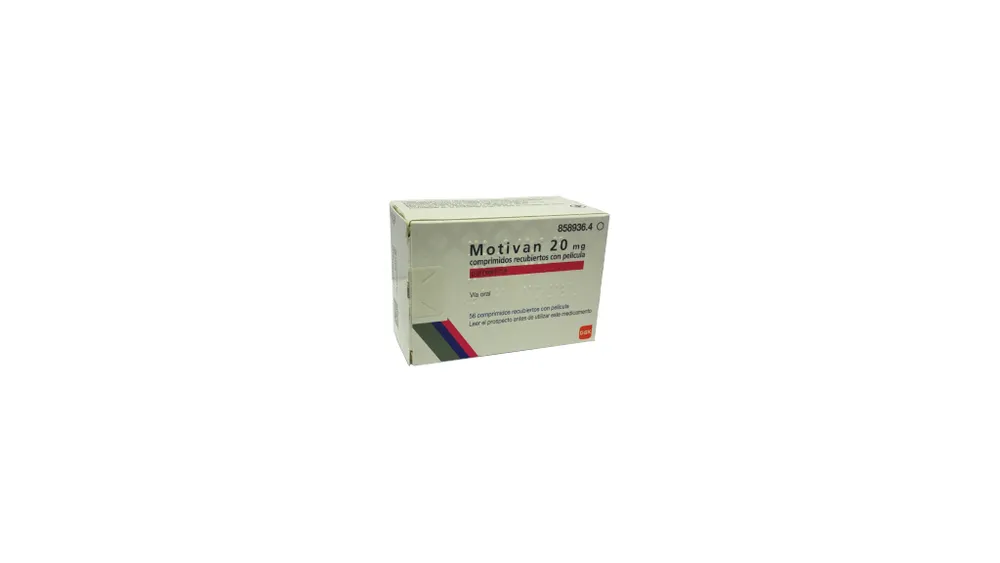
Table of Contents
Patient Information Leaflet
Introduction
Patient Information Leaflet
Motivan 20 mg film-coated tablets
paroxetine (as hemihydrochloride hydrate)
Read the entire leaflet carefully before you start taking this medicine, as it contains important information for you.
- Keep this leaflet, as you may need to read it again.
- If you have any questions, ask your doctor or pharmacist.
- This medicine has been prescribed for you only, and you should not give it to other people, even if they have the same symptoms as you, because it may harm them.
- If you experience any adverse effects, consult your doctor or pharmacist, even if these effects are not listed in this leaflet. See section 4.
Leaflet Contents
- What Motivan is and what it is used for
- What you need to know before taking Motivan
- How to take Motivan
- Possible side effects
- How to store Motivan
- Contents of the pack and other information
1. What Motivan is and what it is used for
Motivan is used for the treatment of depression and/or anxiety disorders in adults. The anxiety disorders for which Motivan is indicated are: obsessive-compulsive disorder (obsessive, repetitive thoughts with uncontrollable behavior), panic disorder (panic attacks, including those caused by agoraphobia, which is fear of open spaces), social anxiety disorder (fear of or avoidance of social situations), post-traumatic stress disorder (anxiety caused by a traumatic event), and generalized anxiety disorder (chronically feeling excessive anxiety and nervousness).
Motivan belongs to a group of medicines called selective serotonin reuptake inhibitors (SSRIs). The precise mechanism of action of Motivan and other SSRIs is not fully understood, but they exert their effect by increasing the level of serotonin in the brain. Properly treating depression or anxiety disorder is important to help you feel better.
2. What you need to know before taking Motivan
Do not take Motivan
- if you are being treated with medicines known as monoamine oxidase inhibitors (MAOIs) (including moclobemide and methylene blue chloride (methylene blue)), or if you have taken any of these medicines within the last two weeks. Your doctor will advise you on how to start taking Motivan after stopping the MAOI
- if you are taking an antipsychotic medicine called thioridazine or the antipsychotic called pimozide
- if you are allergic to paroxetine or to any of the other ingredients of this medicine (listed in section 6).
If you are in any of these situations, inform your doctor and do not take Motivan.
Warnings and precautions
Talk to your doctor or pharmacist before taking Motivan
-
if you are taking other medicines (see section Other medicines and Motivan)
-
if you are taking tamoxifen for the treatment of breast cancer (or fertility problems). Motivan may make tamoxifen less effective, so your doctor should recommend taking another antidepressant
-
if you have any kidney, liver, or heart problems
-
if you have an abnormality in your heart rhythm seen on an electrocardiogram (ECG) known as QT interval prolongation
-
if you have a family history of QT interval prolongation, heart conditions such as heart failure, low heart rate, or low levels of potassium or magnesium
-
if you have epilepsy or experience seizures or epileptic fits
-
if you have had manic episodes (excessively active thoughts or behavior)
-
if you are receiving electroconvulsive therapy (ECT)
-
if you are prone to bleeding or bruising, or are taking any medicine that may increase the risk of bleeding (including medicines such as warfarin (acenocoumarol), antipsychotics such as perphenazine or clozapine, tricyclic antidepressants, medicines for pain and inflammation called non-steroidal anti-inflammatory drugs (NSAIDs), such as acetylsalicylic acid, ibuprofen, celecoxib, etodolac, diclofenac, meloxicam)
-
if you have diabetes
-
if you are on a low-sodium diet
-
if you have glaucoma (increased eye pressure)
-
if you are pregnant or planning to become pregnant (see section Pregnancy, breastfeeding and fertility)
-
if you are under 18 years of age (see section Children and adolescents under 18 years of age).
If you are in any of these situations and have not yet consulted your doctor**, ask your doctor about how to take Motivan**.
Children and adolescents under 18 years of age
Motivan should not be used to treat children and adolescents under 18 years of age. You should also be aware that in patients under 18 years of age, there is an increased risk of adverse effects such as suicide attempts, suicidal thoughts, and hostility (mainly aggression, confrontational behavior, and irritability) when taking Motivan. Nevertheless, your doctor may prescribe Motivan to patients under 18 years of age if they consider it appropriate. If your doctor has prescribed Motivan to you or your child under 18 years of age and you wish to discuss this decision, speak to your doctor. Inform your doctor if any of the symptoms listed above appear or worsen while you or your child under 18 years of age are taking Motivan. The long-term effects of Motivan on safety regarding growth, maturation, and cognitive and behavioral development in this age group have not yet been established.
In clinical studies of Motivan in patients under 18 years of age, the following common adverse effects (affecting less than 1 in 10 children or adolescents) were observed: increased suicidal thoughts and suicide attempts, self-harm attempts, hostile, aggressive, or uncooperative behavior, loss of appetite, tremors, abnormal sweating, hyperactivity (excessive energy), agitation, emotional lability (including crying and mood swings), and unexplained bruising or bleeding (such as nosebleeds). These effects were also observed, although less frequently, in patients in these studies who did not take Motivan.
When stopping treatment with Motivan, some patients under 18 years of age in these studies reported withdrawal symptoms. These symptoms were very similar to those observed in adults discontinuing Motivan (see section 3). In addition, patients under 18 years of age frequently experienced (affecting less than 1 in 10) stomach pain, nervousness, and emotional lability (including crying, mood changes, self-harm attempts, and suicidal thoughts and attempts).
Suicidal thoughts and worsening of depression or anxiety disorder
If you are depressed and/or have anxiety disorders, you may sometimes have thoughts of harming yourself or committing suicide. These may increase at the beginning of treatment with antidepressants, as all these medicines take time to work—usually about two weeks, but sometimes longer.
You are more likely to experience this
- if you have previously had suicidal thoughts or thoughts of self-harm
- if you are a young adult. Clinical trial data show an increased risk of suicidal behavior in psychiatric patients under 25 years of age treated with antidepressants.
If you have thoughts of self-harm or suicide at any time, contact your doctor or go to hospital immediately.
It may be helpful for you to explain to a family member or close friend that you are depressed or have anxiety disorders, and ask them to read this leaflet. You may also ask them to inform you if they think your depression or anxiety is worsening, or if they are concerned about changes in your behavior.
Important adverse effects observed with Motivan
Some patients taking Motivan develop a condition called akathisia and feel restless and unable to sit still. Other patients develop a condition known as serotonin syndrome or neuroleptic malignant syndrome, and may experience one or more of the following symptoms: feeling very agitated or irritable, confusion, restlessness, feeling hot, sweating, tremor, chills, hallucinations (strange visions or sounds), muscle stiffness, sudden jerky movements, or increased heart rate. Symptoms may worsen and lead to loss of consciousness. Contact your doctor if you experience any of these symptoms. For more information about this or other adverse effects of Motivan, see section 4.
Some medicines in the same class as Motivan (known as SSRIs) may cause sexual dysfunction symptoms (see section 4). In some cases, these symptoms persist after stopping treatment.
Other medicines and Motivan
Some medicines may alter the effect of Motivan or make it more likely that certain adverse effects occur. Motivan may also alter the effect of some medicines. For example:
- Medicines known as monoamine oxidase inhibitors (MAOIs) (including moclobemide and methylene blue chloride (methylene blue)). See section Do not take Motivan.
- Medicines known to increase the risk of changes in the heart's electrical activity (e.g., the antipsychotics thioridazine or pimozide). See section Do not take Motivan.
- Acetylsalicylic acid, ibuprofen, and other medicines called non-steroidal anti-inflammatory drugs (NSAIDs) such as celecoxib, etodolac, diclofenac, and meloxicam, used to treat pain and inflammation.
- Tramadol, buprenorphine, and meperidine, analgesics.
- Buprenorphine combined with naloxone, used as opioid addiction replacement therapy.
- Medicines called triptans, such as sumatriptan, used to treat migraine.
- Other antidepressants, including other selective serotonin reuptake inhibitors and tricyclic antidepressants such as clomipramine, nortriptyline, and desipramine.
- A dietary supplement called tryptophan.
- Mivacurium and suxamethonium (used in anesthesia).
- Medicines such as lithium, risperidone, perphenazine, clozapine (antipsychotics) used to treat certain psychiatric disorders.
- Fentanyl, used in anesthesia or for treating chronic pain.
- A combination of fosamprenavir and ritonavir, used to treat human immunodeficiency virus (HIV) infection.
- St. John’s wort, a herbal remedy used to treat depression.
- Phenobarbital, phenytoin, sodium valproate, or carbamazepine, used to treat seizures or epilepsy.
- Atomoxetine, a medicine used to treat attention deficit hyperactivity disorder (ADHD).
- Procyclidine, used to relieve tremor, especially in Parkinson’s disease.
- Warfarin and other medicines (called anticoagulants) used to thin the blood.
- Propafenone, flecainide, and medicines used to treat heart rhythm disorders.
- Metoprolol, a beta-blocker used to treat high blood pressure and heart disorders.
- Pravastatin, used to treat high cholesterol.
- Rifampicin, used to treat tuberculosis (TB) and leprosy.
- Linezolid, an antibiotic.
- Tamoxifen, used to treat breast cancer (or fertility problems).
If you are taking or have recently taken any of these medicines, inform your doctor and ask what you should do. Your doctor may decide to adjust the dose or prescribe a different medicine.
Inform your doctor or pharmacist if you are taking, have recently taken, or might need to take any other medicines, including those obtained without a prescription.
Taking Motivan with food, drinks, and alcohol
Do not consume alcohol while taking Motivan. Alcohol may worsen your symptoms or adverse effects.
Taking Motivan in the morning with food may reduce the likelihood of nausea.
Pregnancy, breastfeeding and fertility
If you are pregnant or breastfeeding, think you may be pregnant, or plan to become pregnant, consult your doctor or pharmacist before using this medicine.
Some studies have shown an increased risk of birth defects, particularly those affecting the heart, in newborns whose mothers took Motivan during the first months of pregnancy. In the general population, approximately 1 in 100 newborns is born with a heart defect. This rate increased to 2 in 100 newborns in mothers who took Motivan. Your doctor, in consultation with you, may switch you to another treatment or gradually discontinue Motivan during pregnancy. However, depending on your individual circumstances, your doctor may recommend continuing Motivan.
Ensure your doctor or midwife knows that you are taking Motivan. If you take Motivan in late pregnancy, there may be an increased risk of heavy vaginal bleeding shortly after childbirth, especially if you have a history of bleeding disorders. Your doctor or midwife should be aware that you are taking Motivan so they can provide appropriate advice. Medicines like Motivan may increase the risk of a serious condition called persistent pulmonary hypertension of the newborn (PPHN) when taken during pregnancy, particularly in the later stages. In newborns with PPHN, the pressure in the blood vessels between the heart and lungs is very high.
If you take Motivan during the third trimester of pregnancy, your newborn may also experience other symptoms, usually beginning within the first 24 hours after birth. These symptoms may include:
- difficulty breathing
- bluish skin or appearing too hot or too cold
- blue lips
- vomiting or feeding difficulties
- extreme tiredness, difficulty sleeping, or frequent crying
- muscle stiffness or floppiness
- tremors, localized tremors, or seizures
- exaggerated reflexes.
If your baby shows any of these symptoms at birth, or if you are concerned about your newborn’s health, contact your doctor or midwife, who will advise you.
Motivan passes into breast milk in very small amounts. Consult your doctor if you are taking Motivan before starting breastfeeding. Your doctor, in consultation with you, may advise continuing breastfeeding while taking Motivan.
Animal studies have shown that paroxetine reduces sperm quality. This could theoretically affect fertility in humans, but this effect has not yet been observed in people.
Driving and using machines
Some of the adverse effects that Motivan may cause include dizziness, confusion, drowsiness, or blurred vision. If you experience any of these effects, do not drive or operate machinery.
Motivan contains sodium
This medicine contains less than 23 mg of sodium (1 mmol) per tablet; therefore, it is essentially “sodium-free”.
3. How to take Motivan
Follow exactly the instructions for use of this medicine provided by your doctor or pharmacist. If you have any doubts, consult your doctor or pharmacist again.
Sometimes you may need to take more than one tablet or half a tablet. The following table will show you how many tablets you should take:
Dosage | Number of tablets to take |
10 mg | Half a tablet |
20 mg | One tablet |
30 mg | One and a half tablets |
40 mg | Two tablets |
50 mg | Two and a half tablets |
60 mg | Three tablets |
The normal doses for the different indications are detailed in the following table:
Initial daily dose | Recommended daily dose | Maximum daily dose | |
Depression | 20 mg | 20 mg | 50 mg |
Obsessive-compulsive disorder | 20 mg | 40 mg | 60 mg |
Panic disorder | 10 mg | 40 mg | 60 mg |
Social anxiety disorder | 20 mg | 20 mg | 50 mg |
Post-traumatic stress disorder | 20 mg | 20 mg | 50 mg |
Generalized anxiety disorder | 20 mg | 20 mg | 50 mg |
Your doctor will tell you what dose to take when you start treatment with Motivan. Most people begin to feel better after a couple of weeks. If you do not start to feel better after this time, consult your doctor, who will advise you on what to do. Your doctor may decide to gradually increase your dose, in increments of 10 mg, up to the maximum daily dose.
Take the tablets in the morning, with food.
The tablets should be swallowed with water.
The tablets must not be chewed.
Your doctor will determine how long your treatment should last. This period may extend for several months or even longer.
Elderly patients
The maximum dose for people over 65 years of age is 40 mg per day.
Patients with kidney or liver problems
If you have severe hepatic or renal insufficiency, your doctor may recommend that you take lower doses of Motivan than usual.
If you take more Motivan than you should
In case of overdose or accidental ingestion, contact your doctor or pharmacist immediately, or call the Toxicology Information Service at telephone number: 91 562 04 20, indicating the medication and the amount ingested.
Never take more tablets than your doctor has recommended.
A person who has taken an overdose of Motivan may experience some of the symptoms listed in section 4 Possible side effects, or one of the following symptoms: fever, involuntary muscle contractions.
If you forget to take Motivan
Take your medication at the same time every day.
If you forget a dose and remember before going to bed, take it immediately. Take the next dose at your usual time.
If you remember during the night or the following day, skip the missed dose. You may experience some withdrawal symptoms, but they should disappear after taking the next dose at your usual time.
Do not take a double dose to make up for missed doses.
What to do if you do not feel better
Motivan will not improve your symptoms immediately; all antidepressants take time to work. Some people begin to feel better after a couple of weeks, but others may require more time. Some people taking antidepressants feel worse before they start to feel better. If you do not begin to feel better after a couple of weeks, inform your doctor, who will advise you on what to do. Your doctor may have scheduled a follow-up appointment approximately 2 weeks after starting your treatment.
If you stop treatment with Motivan
Do not stop treatment until your doctor tells you to do so.
When stopping treatment with Motivan, your doctor will instruct you on how to gradually reduce the dose over a period of several weeks or months, which will help reduce the risk of experiencing withdrawal symptoms. One way to do this is by gradually reducing your dose of Motivan by 10 mg each week. Most people find that any possible symptoms that occur when stopping Motivan are mild and disappear on their own within two weeks. For others, these symptoms may be more severe or last longer.
If you experience withdrawal-related effects while stopping your treatment, your doctor may decide that you should stop more slowly. If you experience severe withdrawal symptoms, please consult your doctor. They may advise you to restart treatment and then stop again more gradually.
Even if you experience withdrawal-related effects, you may still be able to stop your treatment with Motivan.
Possible withdrawal effects when stopping treatment
Studies have shown that 3 out of every 10 patients experience one or more symptoms when stopping treatment with Motivan. Some of these effects occur more frequently than others.
Frequent adverse effects
May affect up to 1 in 10 people
- Feeling dizzy, unsteady, or having balance disturbances.
- Tingling, burning sensations, and less frequently, electric shock-like sensations, even in the head; tinnitus (ringing, buzzing, hissing, or other persistent noises in the ears).
- Sleep disturbances (very vivid dreams, nightmares, inability to sleep).
- Anxiety.
- Headaches.
Uncommon adverse effects
May affect up to 1 in 100 people
- Nausea (vomiting).
- Sweating (including night sweats).
- Restlessness or agitation.
- Tremor.
- Confusion or disorientation.
- Diarrhea (loose stools).
- Feeling overly sensitive or irritable.
- Visual disturbances.
- Rapid or very strong heartbeats (palpitations).
Consult your doctor if you are concerned about withdrawal effects from Motivan.
If you have any other questions about the use of this medicine, ask your doctor or pharmacist.
4. Possible adverse effects
Like all medicines, this medicine can cause adverse effects, although not everyone gets them. Adverse effects are more likely to occur during the first weeks of treatment with Motivan.
Inform your doctor if you experience any of the adverse effects listed below during treatment with Motivan.
You may need to consult your doctor or go to hospital immediately.
Uncommon adverse effects
May affect up to 1 in 100 people
- If you have unusual bruising or bleeding, such as blood in vomit or stools, contact your doctor or go to hospital immediately.
- If you are unable to urinate, contact your doctor or go to hospital immediately.
Rare adverse effects
May affect up to 1 in 1,000 people
- If you experience seizures (epileptic fits), contact your doctor or go to hospital immediately.
- If you feel restless, unable to sit still or remain motionless, known as akathisia. Increasing the dose of Motivan may worsen your symptoms. If you feel this way, consult your doctor.
- Tiredness, weakness, confusion, and muscle pain, stiffness, and lack of coordination. This may be due to low sodium levels in the blood. If you have these symptoms, consult your doctor.
Very rare adverse effects
May affect up to 1 in 10,000 people
- Allergic reactions to Motivan that can be severe.
If you develop a rash with redness and lumps, swelling of the face, eyelids, lips, mouth or tongue, itching, or difficulty breathing (shortness of breath) or swallowing, and a feeling of weakness or dizziness that may lead to collapse or loss of consciousness, contact your doctor or go to hospital immediately.
- If you notice any or all of the following symptoms, you may be experiencing serotonin syndrome or neuroleptic malignant syndrome. Symptoms include: feeling very agitated or irritable, confusion, restlessness, feeling hot, sweating, tremor, chills, hallucinations (strange sounds or visions), muscle rigidity, sudden jerky movements, or rapid heartbeat. Severity may increase and lead to loss of consciousness. If you feel this way, consult your doctor.
- Acute glaucoma.
If you develop eye pain and blurred vision, consult your doctor.
Frequency not known
Frequency cannot be estimated from the available data
- Some people have experienced thoughts of harming themselves or of suicide while taking Motivan or shortly after stopping treatment (see Suicidal thoughts and worsening of depression or anxiety disorder in section 2).
- Some people have experienced aggression while taking Motivan.
- Heavy vaginal bleeding shortly after childbirth (postpartum haemorrhage); see Pregnancy, breastfeeding and fertility in section 2 for more information.
If you experience these adverse effects, contact your doctor.
Other possible adverse effects during treatment:
Very common adverse effects
May affect more than 1 in 10 people
- Feeling unwell (nausea). This effect may be reduced by taking your medicine in the morning after breakfast.
- Changes in sexual desire or function, for example, lack of orgasm, and in men, abnormal erection and ejaculation.
Common adverse effects
May affect up to 1 in 10 people
- Increased blood cholesterol levels.
- Decreased appetite.
- Difficulty sleeping (insomnia) or drowsiness.
- Abnormal dreams (including nightmares).
- Dizziness, tremors.
- Headache.
- Difficulty concentrating.
- Agitation.
- Unusual weakness.
- Blurred vision.
- Yawning, dry mouth.
- Diarrhoea or constipation.
- Vomiting.
- Weight gain.
- Sweating.
Uncommon adverse effects
May affect up to 1 in 100 people
-
Transient increases in blood pressure, or transient decreases in blood pressure that may cause dizziness or fainting when standing up quickly.
-
Faster than normal heartbeat.
-
Lack of movement, stiffness, tremor, or abnormal movements of the mouth and tongue.
-
Pupil dilation.
-
Skin rash.
-
Itching.
-
Confusion.
-
Hallucinations (strange sounds or visions).
-
Inability to urinate (urinary retention) or urinary incontinence (uncontrolled and involuntary urination).
-
If you are a diabetic patient, you may notice loss of control of your blood sugar levels while taking Motivan. Consult your doctor about adjusting your insulin or diabetes medication dosage.
-
Decreased white blood cell count.
Rare adverse effects
May affect up to 1 in 1,000 people
- Abnormal breast milk secretion in men and women.
- Decreased heart rate.
- Liver effects seen in laboratory tests indicating liver function abnormalities.
- Panic attacks.
- Very active behaviours or thoughts (mania).
- Feeling detached from oneself (depersonalization).
- Anxiety.
- Irresistible urge to move the legs (Restless Legs Syndrome).
- Joint or muscle pain.
- Increased blood levels of a hormone called prolactin.
- Menstrual cycle disturbances (including heavy or irregular periods, bleeding between periods, and absence or delay of periods).
Very rare adverse effects
May affect up to 1 in 10,000 people
- Skin rash with blister formation, appearing as small target-like lesions (dark central spots surrounded by a pale area, with a dark ring around it), known as erythema multiforme.
- Widespread rash with blisters and peeling of the skin, especially around the mouth, nose, eyes and genitals (Stevens-Johnson syndrome).
- Widespread rash affecting large areas of the body with blisters and skin peeling (toxic epidermal necrolysis).
- Liver disorders causing yellowing of the skin or whites of the eyes.
- Syndrome of inappropriate antidiuretic hormone secretion (SIADH), a condition in which the body retains excess water and sodium (salt) levels decrease due to inappropriate chemical signals. Patients with SIADH may feel severely ill or may have no symptoms.
- Water or fluid retention (causing swelling of arms or legs).
- Sensitivity to sunlight.
- Painful and prolonged penile erection.
- Decreased platelet count in blood.
Frequency not known
Frequency cannot be estimated from the available data
- Inflammation of the colon (causing diarrhoea).
- Teeth grinding.
Some patients have experienced ringing, buzzing, hissing, whistling, or other persistent noises in the ears (tinnitus) when taking Motivan.
It has been observed that people taking medicines like Motivan have an increased risk of bone fractures.
Reporting of adverse effects
If you experience any adverse effect, talk to your doctor or pharmacist, even if it is a possible adverse effect not listed in this leaflet. You can also report them directly via the Spanish Pharmacovigilance System for Human Medicines: www.notificaRAM.es. By reporting adverse effects, you can help provide more information on the safety of this medicine.
5. Storage of Motivan
Keep this medicine out of the sight and reach of children.
Do not use this medicine after the expiry date (EXP) shown on the packaging. The expiry date refers to the last day of the month indicated.
Do not store above 30°C. Keep in the original packaging to protect from light.
If you are taking half a tablet, take care to store it safely in the container.
Medicines must not be disposed of via wastewater drains or household waste. Dispose of unused medicines and their packaging at the SIGRE collection point at your pharmacy. If in doubt, ask your pharmacist how to dispose of medicines and packaging you no longer need. This will help protect the environment.
6. Contents of the pack and other information
Composition of Motivan
The active substance is paroxetine (20 mg) as paroxetine hydrochloride hemihydrate.
The other components are:
In the tablet core: calcium hydrogen phosphate dihydrate (E341), magnesium stearate (E470b) and sodium carboxymethyl starch (type A) from potato.
In the tablet coating: hypromellose (E464), titanium dioxide (E171), macrogol 400 and polysorbate 80 (E433).
Appearance of the product and contents of the pack
Motivan 20 mg film-coated tablets are white, oval-shaped tablets marked with "20" on one side and a score line on the other. Each Motivan pack contains child-resistant blisters of 4, 10, 14, 20, 28, 30, 50, 56, 60, 98, 100, 250 or 500 tablets.
Only certain pack sizes may be marketed.
Marketing Authorization Holder:
GlaxoSmithKline, S.A.
P.T.M. C/ Severo Ochoa, 2
28760 Tres Cantos (Madrid)
Tel: +34 900 202 700
Manufacturer:
Delpharm Poznan Spólka Akcyjna
ul. Grunwaldzka 18
60-322 Poznan
Poland
This medicinal product is authorized in the European Economic Area member states under the following names:
Netherlands | Paroxetine GSK |
Spain | Motivan |
You can request further information about your condition by contacting a patient support organization. Please consult your doctor.
Date of the most recent review of this leaflet: December 2023.
Up-to-date detailed information on this medicinal product is available on the website of the Spanish Agency of Medicines and Medical Devices (AEMPS) http://www.aemps.gob.es/