Dolostop Plus 500 mg/150 mg film-coated tablets
Spain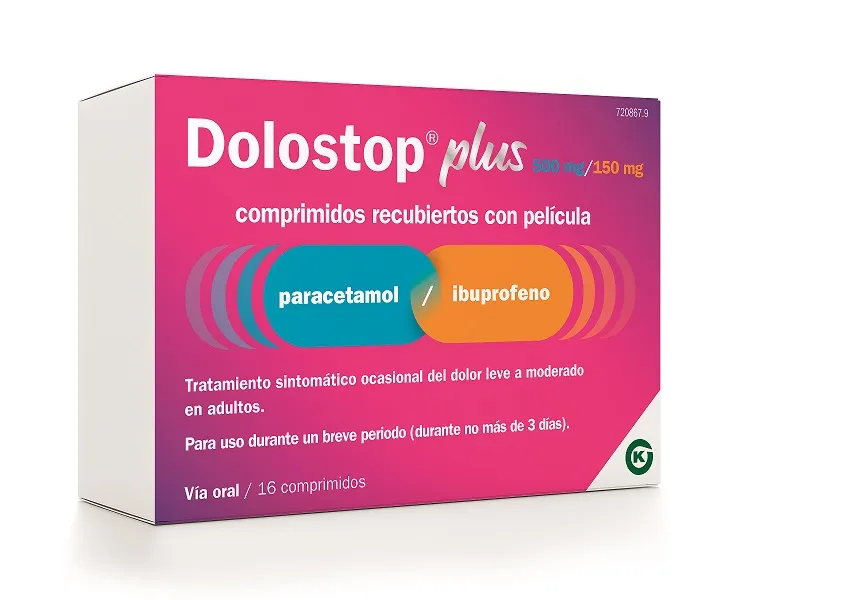
Instructions for Use
Table of Contents
- Introduction
- **Read the entire leaflet carefully before starting to use this medicine, as it contains important information for you.**
- 1. What Dolostop Plus is and what it is used for
- 2. What you need to know before starting to take Dolostop Plus
- **Do not take Dolostop Plus:**
- **Warnings and precautions**
- Allergic reactions to ibuprofen have been reported, including symptoms such as breathing difficulties, swelling of the face and neck area (angioedema), and chest pain. Stop using Dolostop Plus immediately and contact your doctor or emergency medical services right away if you experience any of these symptoms.
- **Children and adolescents**
- **Other medicines and Dolostop Plus**
- **Pregnancy, breastfeeding and fertility**
- **Driving and operating machinery**
- **Dolostop Plus contains lactose:**
- 3. How to take Dolostop Plus
- The recommended dose is:
- **Adults:** The usual dose is one tablet (500 mg paracetamol and 150 mg ibuprofen) or two tablets (1000 mg paracetamol and 300 mg ibuprofen) every six hours as needed, up to a maximum of six tablets in 24 hours.
- **Use in children and adolescents (under 18 years of age)**
- **If you take more Dolostop Plus than you should**
- **If you forget to take Dolostop Plus**
- 4. Possible adverse effects
- Discontinue treatment with Dolostop Plus and seek immediate medical attention if you notice any of the following symptoms:
- - Generalized skin rash, elevated body temperature, and swollen lymph nodes (DRESS syndrome).
- - Generalized, red, scaly rash with bumps under the skin and blisters, accompanied by fever. Symptoms usually appear at the beginning of treatment (acute generalized exanthematous pustulosis).
- **If any of the following serious adverse effects occur, stop taking Dolostop Plus immediately and contact your doctor or go to the nearest hospital emergency department:**
- **Other possible adverse effects are:**
- Frequent (may affect up to 1 in 10 people):
- **Reporting of Adverse Effects**
- 5. Storage of Dolostop Plus
- 6. Contents of the container and additional information
- **Composition of Dolostop Plus 500mg/150mg film-coated tablets**
- **Appearance of Dolostop Plus and contents of the pack**
- **Marketing Authorization Holder**
- **This medicinal product is authorized in the European Economic Area member states under the following names:**
Patient Information Leaflet
Introduction
Package Leaflet: Information for the Patient
Dolostop Plus 500 mg/150 mg Film-coated Tablets
paracetamol/ibuprofen
Read the entire leaflet carefully before starting to use this medicine, as it contains important information for you.
Follow exactly the instructions for taking the medicine provided in this leaflet or those given by your doctor or pharmacist.
- Keep this leaflet, as you may need to read it again.
- If you need advice or more information, consult your pharmacist.
- If you experience any adverse effects, consult your doctor or pharmacist, even if they are adverse effects not listed in this leaflet. See section 4.
- Do not take this medicine for more than 3 days.
- You should consult a doctor if you worsen or do not improve within 3 days.
Leaflet contents
- What Dolostop Plus is and what it is used for
- What you need to know before taking Dolostop Plus
- How to take Dolostop Plus
- Possible adverse effects
- Storage of Dolostop Plus
- Contents of the pack and other information
1. What Dolostop Plus is and what it is used for
This medicine contains paracetamol and ibuprofen.
Paracetamol prevents pain signals from reaching the brain.
Ibuprofen belongs to a group of medicines known as non-steroidal anti-inflammatory drugs (NSAIDs). It relieves pain and reduces inflammation (swelling, redness, or pain).
Dolostop Plus is used for the occasional symptomatic treatment of mild to moderate pain.
If you have any doubts, consult your doctor or pharmacist.
You should consult a doctor if your condition worsens or does not improve after 3 days.
2. What you need to know before starting to take Dolostop Plus
Do not take Dolostop Plus:
- if you are allergic to the active substances or to any of the other components of this medicine (listed in section 6).
- if you have a history of gastrointestinal bleeding or perforation related to previous treatment with NSAIDs.
- if you currently have or have had recurrent peptic ulcer (i.e., stomach or duodenal ulcer) or bleeding (two or more distinct episodes of ulceration or hemorrhage diagnosed).
- if you regularly consume large amounts of alcohol.
- if you have severe heart failure, liver failure, or kidney failure.
- if you have cerebral hemorrhage or any other active bleeding.
- if you have blood clotting disorders.
- if you suffer from asthma, urticaria, or allergic-type reactions after taking acetylsalicylic acid or other NSAIDs.
- during the last three months of pregnancy.
- if you are under 18 years of age.
Warnings and precautions
Talk to your doctor or pharmacist before taking this medicine.
Anti-inflammatory and analgesic medicines, such as ibuprofen, may be associated with a small increased risk of having a heart attack or stroke, especially when used at high doses. Do not exceed the recommended dose or duration of treatment.
Allergic reactions to ibuprofen have been reported, including symptoms such as breathing difficulties, swelling of the face and neck area (angioedema), and chest pain. Stop using Dolostop Plus immediately and contact your doctor or emergency medical services right away if you experience any of these symptoms.
You should discuss treatment with your doctor or pharmacist before taking this medicine if:
- you have heart problems, such as heart failure or angina (chest pain), if you have had a heart attack, surgical revascularization, peripheral arterial disease (poor circulation in legs or feet due to narrowing or blockage of arteries), or any type of stroke (including "mini-strokes" or transient ischaemic attack "TIA").
- you have high blood pressure, diabetes, high cholesterol, a family history of heart disease or stroke, or if you are a smoker.
Inform your doctor or pharmacist if:
-
you have liver disease, hepatitis, kidney disease, or difficulty urinating.
-
you use drugs.
-
you are pregnant or trying to become pregnant.
-
you are breastfeeding or plan to breastfeed.
-
you currently have an infection; see the “Infections” section below.
-
you are scheduled for surgery.
-
you have or have had any other medical conditions such as:
-
gastric acidity, indigestion, stomach ulcer, or any other stomach problem.
-
vomiting blood or rectal bleeding.
-
severe skin reactions such as exfoliative dermatitis, toxic epidermal necrolysis, and Stevens-Johnson syndrome.
-
asthma.
-
vision problems.
-
a tendency to bleed or other blood disorders.
-
intestinal disorders such as ulcerative colitis or Crohn's disease.
-
swelling of the ankles or feet.
-
diarrhoea.
-
a hereditary or acquired genetic disorder affecting certain enzymes, presenting with neurological complications, skin problems, or occasionally both—namely porphyria.
-
smallpox.
-
autoimmune diseases such as systemic lupus erythematosus or other connective tissue disorders.
Skin reactions
Take special care with Dolostop Plus:
Serious skin reactions have been reported with ibuprofen, including exfoliative dermatitis, erythema multiforme, Stevens-Johnson syndrome, toxic epidermal necrolysis, drug reaction with eosinophilia and systemic symptoms (DRESS syndrome), and acute generalized exanthematous pustulosis (AGEP). Discontinue treatment with Dolostop Plus and seek immediate medical attention if you notice any symptoms related to these serious skin reactions described in section 4.
Infections
Ibuprofen may mask signs of infection such as fever and pain. Therefore, this medicine may delay appropriate treatment of the infection, potentially increasing the risk of complications. This has been observed in bacterial pneumonia and bacterial skin infections associated with chickenpox. If you take this medicine while having an infection and infection symptoms persist or worsen, consult a doctor without delay.
To avoid the risk of overdose:
- check that other medicines do not contain paracetamol,
- respect the recommended maximum doses (see section 3).
Do not consume alcoholic beverages while using this medicine. Combining alcohol with this medicine may cause liver damage.
This product belongs to a group of medicines (NSAIDs) that may affect fertility in women. This effect is reversible upon discontinuation of the medicine.
Prolonged use of painkillers may cause headaches, which should not be treated by increasing the dose of the medicine.
Use of this medicine may interfere with urine test results for the detection of 5-hydroxyindoleacetic acid (5HIAA), leading to false-positive results. To avoid false results, do not take this medicine or any other products containing paracetamol for several hours before or during urine sample collection.
During treatment with Dolostop Plus, inform your doctor immediately if:
- you have serious conditions such as severe kidney failure or sepsis (when bacteria and their toxins circulate in the blood, causing organ damage), or if you suffer from malnutrition, chronic alcoholism, or are also taking flucloxacillin (an antibiotic). A serious condition called metabolic acidosis (an abnormality in blood and body fluids) has been reported in patients under these circumstances when paracetamol is used regularly over a prolonged period or when paracetamol is taken together with flucloxacillin. Symptoms of metabolic acidosis may include: severe breathing difficulties with deep and rapid breathing, drowsiness, feeling unwell (nausea), and vomiting.
Children and adolescents
This medicinal product is contraindicated in children and adolescents (under 18 years of age).
Other medicines and Dolostop Plus
Inform your doctor or pharmacist if you are taking, have recently taken, or might need to take any other medicines.
This medicine may affect, or be affected by, other medicines. For example:
- anticoagulant medicines (i.e., agents that thin the blood and prevent clotting, such as aspirin/acetylsalicylic acid, warfarin, and ticlopidine).
- medicines that reduce high blood pressure (ACE inhibitors such as captopril, beta-blockers such as atenolol, and angiotensin II receptor antagonists such as losartan).
- medicines used to treat epilepsy or seizures.
- chloramphenicol, an antibiotic used to treat ear and eye infections.
- probenecid, a medicine used to treat gout.
- zidovudine, a medicine used to treat HIV (the virus that causes acquired immunodeficiency syndrome).
- medicines used to treat tuberculosis, such as isoniazid.
- salicylates or other NSAIDs.
- diuretics.
- lithium, a medicine used to treat certain types of depression.
- methotrexate, a medicine used to treat arthritis and certain types of cancer.
- corticosteroids, such as prednisone, cortisone.
- metoclopramide, propantheline, antidepressants with anticholinergic properties, and narcotic analgesics.
- cholestyramine, a medicine used to reduce elevated serum lipid levels.
- tacrolimus or cyclosporine, immunosuppressive drugs used after organ transplantation.
- sulfonylureas, a medicine used to treat diabetes.
- certain antibiotics (such as quinolone antibiotics or cotrimoxazole).
- cardiac glycosides, medicines used to strengthen the heart.
- flucloxacillin (antibiotic), due to a serious risk of blood and fluid abnormalities (called metabolic acidosis) requiring urgent treatment (see section 2).
Some other medicines may also affect, or be affected by, treatment with Dolostop Plus. Therefore, you should always seek advice from your doctor or pharmacist before taking paracetamol/ibuprofen with other medicines.
Your doctor and pharmacist have further information on these and other medicines that you should use carefully or avoid while taking this medicine.
Pregnancy, breastfeeding and fertility
If you are pregnant or breastfeeding, think you may be pregnant or are planning to become pregnant, consult your doctor or pharmacist before using this medicine.
Do not take this medicine during the last three months of pregnancy, as it may harm the fetus or cause problems during childbirth. It may cause kidney and heart problems in your unborn baby. It may affect your bleeding tendency and that of your baby, and may delay or prolong labour beyond expected duration. You should not take this medicine during the first six months of pregnancy unless clearly necessary and as directed by your doctor.
If treatment is needed during this period or while trying to become pregnant, you should take the lowest possible dose for the shortest possible time. From week 20 of pregnancy, this medicine may cause kidney problems in your unborn baby if taken for more than a few days, which may lead to low levels of amniotic fluid surrounding the baby (oligohydramnios) or narrowing of a blood vessel (ductus arteriosus) in the baby's heart. If you require treatment for longer than a few days, your doctor may recommend additional monitoring.
This medicine may impair female fertility and is not recommended for women attempting to conceive.
Driving and operating machinery
Exercise caution when driving or operating machinery until you know how this medication affects you.
Dolostop Plus contains lactose:
If your doctor has informed you of an intolerance to certain sugars, consult with him before taking this medicine.
3. How to take Dolostop Plus
Follow exactly the instructions for use provided in this leaflet or those indicated by your doctor or pharmacist. In case of doubt, consult your doctor or pharmacist. Do not take it for more than 3 days.
The lowest effective dose should be used for the shortest possible time needed to relieve symptoms. If you have an infection, consult a doctor promptly if symptoms (such as fever and pain) persist or worsen (see section 2).
The recommended dose is:
Adults: The usual dose is one tablet (500 mg paracetamol and 150 mg ibuprofen) or two tablets (1000 mg paracetamol and 300 mg ibuprofen) every six hours as needed, up to a maximum of six tablets in 24 hours.
Use the lowest effective dose for the shortest time necessary to relieve symptoms. Consult your doctor if symptoms persist or worsen, or if the medicine is needed for more than 3 days.
Do not take more than 6 tablets in a 24-hour period.
If your doctor prescribes a different dose, follow the instructions provided by your doctor.
Take this medicine with a full glass of water. The score line is intended only for ease of swallowing and not for dividing the tablet into equal doses.
Use in children and adolescents (under 18 years of age)
This medicine is contraindicated in children and adolescents (under 18 years of age).
If you take more Dolostop Plus than you should
Seek immediate medical advice if you have taken an excessive amount of this medicine, even if you feel well. This is because an excessive amount of paracetamol may cause severe delayed liver damage. Do this even if you do not have any symptoms of discomfort or poisoning. You may require urgent medical care.
If you have taken more Dolostop Plus than prescribed, or if a child has accidentally ingested the medicine, contact your doctor or pharmacist immediately, go to the nearest hospital, or call the Toxicology Information Service at 91 562 04 20, indicating the medicine and the amount ingested, to assess the risk and receive advice on the measures to be taken.
Symptoms of overdose may include nausea, stomach pain, vomiting (which may contain blood-stained sputum), headache, ringing in the ears, confusion, and involuntary eye movements. At high doses, symptoms such as drowsiness, chest pain, palpitations, loss of consciousness, seizures (mainly in children), weakness, dizziness, blood in the urine, low blood potassium levels, chills, and breathing difficulties have been reported.
If you forget to take Dolostop Plus
If it is almost time for your next dose, skip the missed dose and take the next dose at the scheduled time. Otherwise, take it as soon as you remember, and then continue taking the tablets as usual.
Do not take a double dose to make up for a missed dose.
If you are unsure whether or not to take the missed dose, speak with your doctor or pharmacist.
4. Possible adverse effects
Like all medicines, this medicine may cause adverse effects, although not everyone will experience them.
If any of the adverse effects worsens, or if you notice any adverse effects not listed in this leaflet, inform your doctor or pharmacist.
Chest pain, which may be a sign of a potentially serious allergic reaction called Kounis syndrome.
Discontinue treatment with Dolostop Plus and seek immediate medical attention if you notice any of the following symptoms:
- Non-elevated red spots, target-shaped or circular, on the trunk, often with blisters in the center, skin peeling, and ulcers in the mouth, throat, nose, genitals, and eyes. These severe skin rashes may be preceded by fever and flu-like symptoms [exfoliative dermatitis, erythema multiforme, Stevens-Johnson syndrome, toxic epidermal necrolysis].
- Generalized skin rash, elevated body temperature, and swollen lymph nodes (DRESS syndrome).
- Generalized, red, scaly rash with bumps under the skin and blisters, accompanied by fever. Symptoms usually appear at the beginning of treatment (acute generalized exanthematous pustulosis).
If any of the following serious adverse effects occur, stop taking Dolostop Plus immediately and contact your doctor or go to the nearest hospital emergency department:
Frequent:
- vomiting blood or material resembling coffee grounds.
- rectal bleeding, black and sticky stools, or bloody diarrhea.
- swelling of the face, lips, or tongue, which may cause difficulty swallowing or breathing.
Very rare:
- asthma, wheezing, shortness of breath.
- sudden or severe itching, skin rash, hives.
- severe rash with blisters and bleeding in the lips, eyes, mouth, nose, and genitals (Stevens-Johnson syndrome). Very rare cases of serious skin reactions have been reported.
- worsening of existing severe skin infections (you may notice rash, blistering, skin discoloration, fever, drowsiness, diarrhea, and malaise) or worsening of other infections, including chickenpox or shingles, or severe infection with destruction (necrosis) of subcutaneous tissue and muscle, blister formation, and skin peeling.
- fever, general malaise, nausea, stomach pain, headache, and neck stiffness.
Other possible adverse effects are:
Frequent (may affect up to 1 in 10 people):
- nausea or vomiting.
- loss of appetite.
- heartburn or pain in the upper stomach.
- cramps, gas, constipation or diarrhea, slight gastrointestinal bleeding.
- skin rashes, skin itching.
- headache.
- dizziness.
- feeling nervous.
- ringing in the ears.
- unusual weight gain, swelling and fluid retention, swelling of the ankles or legs (edema).
Uncommon (may affect up to 1 in 100 people):
- decrease in red blood cells, nosebleeds, and heavier menstrual periods.
- allergic reactions: skin rash, fatigue, joint pain (e.g., serum sickness, lupus erythematosus syndrome, Henoch-Schönlein vasculitis, angioedema).
- enlargement of breast tissue in men; low blood sugar levels.
- insomnia.
- changes in mood, such as depression, confusion, nervousness.
- eye problems such as blurred vision (reversible), red and irritated eyes, itching.
- increased mucus thickness.
- severe pain or tenderness in the stomach; peptic or digestive ulcer.
- inflammation of the intestine and worsening of colon inflammation (colitis) and gastrointestinal tract (Crohn's disease), as well as complications of colonic diverticula (perforation or fistula).
- inability to completely empty the bladder (urinary retention).
- abnormal laboratory test results (blood test results and liver and kidney enzyme tests).
Rare (may affect up to 1 in 1,000 people):
- tingling in hands and feet.
- abnormal dreams, seeing things (hallucinations).
- kidney tissue damage (especially with prolonged use).
- elevated blood levels of uric acid (hyperuricemia).
Very rare (may affect up to 1 in 10,000 people):
- low potassium levels: weakness, fatigue, muscle cramps (hypokalemia).
- signs of anemia, such as tiredness, headaches, shortness of breath, and pale appearance.
- bleeding or bruising more easily than normal, red or purple spots under the skin.
- severe or persistent headache.
- sensation of spinning (vertigo).
- rapid or irregular heartbeat, also known as palpitations.
- increased blood pressure and possible heart problems.
- inflammation of the esophagus.
- yellowing of the skin or eyes, also known as jaundice.
- liver damage (especially with prolonged use).
- hair loss.
- increased sweating.
- signs of frequent or serious infections such as fever, severe chills, sore throat, or mouth ulcers.
Not known (cannot be estimated from available data):
- a serious skin reaction known as DRESS syndrome may occur. Symptoms of DRESS syndrome include: skin rash, swollen lymph nodes, and elevated eosinophils (a type of white blood cell).
- widespread red, scaly rash with bumps under the skin and blisters mainly located in skin folds, trunk, and upper limbs, accompanied by fever at the beginning of treatment (acute generalized exanthematous pustulosis). Stop taking this medicine if you experience these symptoms and seek immediate medical attention. See also section 2.
- skin becomes sensitive to light.
- a serious condition that may cause the blood to become more acidic (called metabolic acidosis) in patients with severe illness who are using paracetamol (see section 2).
The list above includes serious adverse effects that may require medical attention. Serious adverse effects are rare with low doses of this medicine and when used for a short period.
Reporting of Adverse Effects
If you experience adverse effects, consult your doctor or pharmacist, even if they are adverse effects not listed in this leaflet. You can also report them directly through the Spanish Pharmacovigilance System for Human Medicinal Products: www.notificaram.es. By reporting adverse effects, you can help provide more information on the safety of this medicine.
5. Storage of Dolostop Plus
Keep this medicine out of the sight and reach of children.
This medicine does not require any special storage temperature. Store in the original blister packaging to protect it from light.
Do not use this medicine after the expiry date stated on the carton and on the blister after EXP. The expiry date refers to the last day of the month indicated.
Do not use this medicine if you notice that the packaging is damaged or shows signs of tampering.
Medicines must not be disposed of via wastewater or household waste. Dispose of unused medicines and their packaging at the SIGRE Point located at your pharmacy. If in doubt, ask your pharmacist how to dispose of medicines and packaging you no longer need. This will help protect the environment.
6. Contents of the container and additional information
Composition of Dolostop Plus 500mg/150mg film-coated tablets
The active substances are 500 mg of paracetamol and 150 mg of ibuprofen per tablet.
The other components of the tablet core are: corn starch, pregelatinized corn starch, microcrystalline cellulose, sodium croscarmellose, magnesium stearate, talc; and in the tablet coating: Opadry white (containing hypromellose (E464), monohydrate lactose (see section 2), titanium dioxide (E171), macrogol/PEG 4000 and sodium citrate (E331)) and talc.
Appearance of Dolostop Plus and contents of the pack
Film-coated tablets, white in colour, capsule-shaped and 19 mm long, with a score mark on one side and plain on the other. The score mark is intended solely for ease of splitting and swallowing, but not for dividing into equal doses.
Each pack contains 8, 10, 16, 20, 24, 30 or 32 film-coated tablets in blister packs. Only certain pack sizes may be marketed.
Marketing Authorization Holder
Kern Pharma, S.L.
Venus, 72 – Pol. Ind. Colón II
08228 Terrassa – Barcelona
Spain
Manufacturer Responsible
Alterno Labs d.o.o,
Brnciceva ulica 29, Ljubljana-Crnuce, 1231,
Slovenia
This medicinal product is authorized in the European Economic Area member states under the following names:
Portugal: Dolostop Duo 500 mg/150 mg film-coated tablets
Date of the most recent review of this leaflet: December 2024
"Detailed information about this medicine is available on the website of the Spanish Agency for Medicines and Health Products (AEMPS) http://www.aemps.gob.es/"
Similar Medications
-
Antidol Dual 500 mg/200 mg film-coated tablets
Form: tablets, film-coated
Active substance Dosage PARACETAMOL 500 mg IBUPROFEN 200 mg Manufacturer: Laboratorios Cinfa S.A.
-
Dalsydol Duo 500 mg/200 mg film-coated tablets
Form: tablets, film-coated
Active substance Dosage PARACETAMOL 500 mg IBUPROFEN 200 mg Manufacturer: Viatris Healthcare Limited
-
Gelocatil Plus 500 mg/65 mg film-coated tablets
Form: tablets, film-coated
Active substance Dosage PARACETAMOL 500 mg CAFEINA 65 mg Manufacturer: Ferrer Internacional S.A.
-
Paracetamol/ibuprofen Sandoz Care 500 mg/200 mg film-coated tablets
Form: tablets, film-coated
Active substance Dosage IBUPROFEN 200 mg PARACETAMOL 500 mg Manufacturer: Sandoz Farmaceutica S.A.
-
Voltaduo 500 mg/200 mg film-coated tablets
Form: tablets, film-coated
Active substance Dosage PARACETAMOL 500 mg IBUPROFEN 200 mg Manufacturer: Haleon Spain S.A.
This page has been machine-translated and may contain inaccuracies. The original data is available in the manufacturing country's language.
Last data check: May 18, 2026 · Data source: CIMA — AEMPS