Dalsydol Duo 500 mg/200 mg film-coated tablets
Spain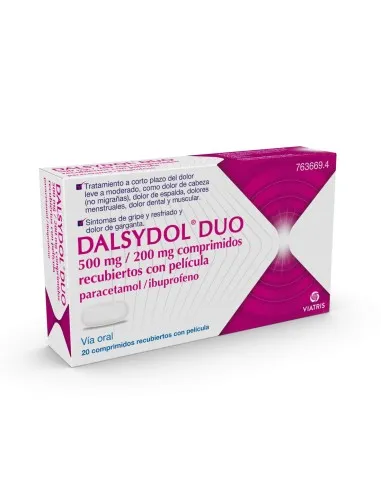
Table of Contents
- Patient Information Leaflet
- Introduction
- **Read the entire leaflet carefully before starting to take this medicine, as it contains important information for you**
- Follow exactly the instructions for use provided in this leaflet or as directed by your doctor or pharmacist.
- **Package leaflet contents**
- 1. What Dalsydol Duo is and what it is used for
- 2. What you need to know before starting to take Dalsydol Duo
- **Do not take DalsydolDuo if you**
- Consult your doctor or pharmacist before starting to take this medicine if you:
- **Other medicines and DalsydolDuo**
- **Do not take Dalsydol Duo with**
- **Use of DalsydolDuo with food, beverages, and alcohol**
- **Pregnancy, breastfeeding and fertility**
- 3. How to take Dalsydol Duo
- 4. Possible adverse effects
- **Other possible adverse effects**
- **Reporting of adverse reactions**
- 5. Storage of Dalsydol Duo
- 6. Contents of the pack and other information
- **Composition of DalsydolDuo**
- **Appearance of DalsydolDuo and contents of the pack**
Patient Information Leaflet
Introduction
Patient Information Leaflet
DalsydolDuo 500mg/200mg film-coated tablets
paracetamol/ibuprofen
Read the entire leaflet carefully before starting to take this medicine, as it contains important information for you
Follow exactly the instructions for use provided in this leaflet or as directed by your doctor or pharmacist.
- Keep this leaflet, as you may need to read it again.
- If you need advice or more information, consult your pharmacist.
- If you experience adverse effects, consult your doctor or pharmacist, even if they are effects not listed in this leaflet. See section 4.
- You should consult a doctor if you worsen or do not improve after 3 days.
Package leaflet contents
- What Dalsydol Duo is and what it is used for
- What you need to know before taking Dalsydol Duo
- How to take Dalsydol Duo
- Possible side effects
- Storage of Dalsydol Duo
- Package contents and additional information
1. What Dalsydol Duo is and what it is used for
Dalsydol Duo contains two active substances, which are paracetamol and ibuprofen.
Ibuprofen belongs to a group of medicines known as non-steroidal anti-inflammatory drugs (NSAIDs). NSAIDs work by reducing pain and inflammation.
Paracetamol is an analgesic that works differently from ibuprofen to relieve pain.
This medicine is used in adults for the short-term symptomatic treatment of mild to moderate pain, such as headache (not migraines), back pain, menstrual pain, dental and muscular pain, cold and flu symptoms, and sore throat.
This medicine is particularly indicated for pain requiring stronger analgesia than paracetamol or ibuprofen alone.
You should consult a doctor if your condition worsens or does not improve after 3 days.
2. What you need to know before starting to take Dalsydol Duo
Do not take DalsydolDuo if you
- are already taking any other medicine containing paracetamol;
- are taking any other painkiller, including ibuprofen, high-dose acetylsalicylic acid (more than 75 mg per day), or other non-steroidal anti-inflammatory drugs (NSAIDs), including specific cyclooxygenase-2 (COX-2) inhibitors;
- are allergic to ibuprofen, paracetamol, or any of the other ingredients of this medicine (listed in section 6);
- have previously experienced an allergic reaction, such as difficulty breathing, asthma attack, nasal mucosa swelling, rash, or swelling (angioedema) of the face, lips, tongue, or throat, or skin reactions after taking acetylsalicylic acid or other NSAID painkillers;
- have or have ever had a peptic ulcer or recurrent gastrointestinal bleeding (in the stomach or duodenum, the first part of the small intestine) (at least two distinct episodes of bleeding confirmed, or one ulcer);
- have previously had gastrointestinal bleeding, ulceration, or perforation caused by treatment with an NSAID;
- have blood clotting disorders;
- suffer from severe heart failure, severe liver or severe kidney failure;
- are in the third trimester of pregnancy.
Warnings and precautions
Consult your doctor or pharmacist before starting to take this medicine if you:
- are an elderly patient;
- have an infection (see the section "Infections" below);
- have asthma or have had asthma;
- have kidney, heart, liver or intestinal problems;
- have systemic lupus erythematosus (SLE), an immune system disorder affecting connective tissue that causes joint pain, skin changes, and dysfunction of other organs, or another mixed connective tissue disease;
- have gastrointestinal disorders or chronic inflammatory bowel disease (e.g., ulcerative colitis, Crohn's disease);
- are in the first 6 months of pregnancy or are breastfeeding;
- are planning to become pregnant.
Anti-inflammatory/analgesic medicines such as ibuprofen may be associated with a small increased risk of heart attack or stroke, especially when used at high doses. Do not exceed the recommended dose or duration of treatment.
During treatment with Dalsydol Duo, inform your doctor immediately if you develop a serious illness, including severe renal failure or sepsis (when bacteria and their toxins circulate in the blood causing organ damage), or if you suffer from malnutrition, chronic alcoholism, or are taking flucloxacillin (an antibiotic). A serious condition called metabolic acidosis (an abnormality in blood and body fluids) has been reported in patients under these circumstances when paracetamol is used regularly over a prolonged period or when paracetamol is taken together with flucloxacillin. Symptoms of metabolic acidosis may include: severe breathing difficulties with rapid and deep breathing, drowsiness, feeling unwell (nausea), and discomfort (vomiting).
Discuss your treatment with your doctor or pharmacist before starting to take this medicine if you:
- have heart problems, such as heart failure, angina (chest pain), or if you have had or currently have a heart attack, coronary artery bypass surgery, coronary artery disease (poor circulation in legs or feet due to narrowed or blocked arteries), or any type of stroke (such as "mini-stroke" or transient ischemic attack “TIA”);
- have high blood pressure, diabetes, high cholesterol, a family history of heart disease or stroke, or if you are a smoker.
- Consult your doctor before using this medicine if you suffer from any of the above-mentioned conditions.
Infections
This medicine may mask signs of infection such as fever and pain. Therefore, using this medicine may delay appropriate treatment of the infection, potentially increasing the risk of complications. This has been observed in cases of bacterial pneumonia and bacterial skin infections associated with chickenpox. If you take this medicine while having an infection and infection symptoms persist or worsen, consult a doctor immediately.
Skin reactions
- Serious skin reactions have been reported in association with treatment using this medicine. You must stop taking this medicine and seek immediate medical attention if you develop any skin rash, lesions of mucous membranes, blisters, or other signs of allergy, or if you develop generalized fever-related erythema accompanied by pustules, as these may be early signs of a very serious skin reaction. See section 4.
- Elderly population
- Elderly patients are at higher risk of side effects when taking NSAIDs, particularly those related to the stomach and intestines.
- Patients with a history of gastrointestinal toxicity, especially elderly patients, should report any unusual abdominal symptoms (particularly gastrointestinal bleeding), especially during the initial stages of treatment.
- Children and adolescents
This medicine should not be given to children or adolescents under 18 years of age.
Other medicines and DalsydolDuo
Inform your doctor or pharmacist if you are taking, have recently taken, or might need to take any other medicine.
Do not take Dalsydol Duo with
- other medicines that contain paracetamol;
- other medicines that contain NSAIDs such as acetylsalicylic acid (at doses above 75 mg per day), ibuprofen, or other NSAIDs, including selective cyclooxygenase-2 (COX-2) inhibitors.
Special caution is required, as some medicines may interact with this medicine, for example:
- tablets containing corticosteroids, used to relieve inflamed areas of the body (e.g., cortisone, prednisone);
- antibiotics (e.g., chloramphenicol or quinolones);
- the antibiotic (flucloxacillin) due to a serious risk of disturbance in blood and body fluids (called metabolic acidosis) that must be urgently treated (see above);
- medicines for nausea (e.g., metoclopramide, domperidone);
- heart stimulants (e.g., glycosides);
- medicines for high cholesterol (e.g., cholestyramine);
- diuretics, medicines that help eliminate excess water;
- medicines to suppress the immune system (e.g., methotrexate, cyclosporine, tacrolimus);
- medicines to treat mania and bipolar disorders or depression (e.g., lithium or SSRIs);
- mifepristone (used to terminate pregnancy);
- HIV medicines (e.g., zidovudine).
This medicine may affect or be affected by other medicines.
For example:
- medicines that are anticoagulants (i.e., prevent blood clotting, e.g., acetylsalicylic acid, warfarin, ticlopidine);
- medicines that reduce hypertension (ACE inhibitors such as captopril, beta-blockers such as atenolol, angiotensin II receptor antagonists such as losartan).
Some other medicines may also affect or be affected by treatment with this medicine. Therefore, you should consult your doctor or pharmacist before using this medicine with other medicines.
Use of DalsydolDuo with food, beverages, and alcohol
Do not drink alcohol during treatment, due to the possibility of increased risk of liver damage.
Pregnancy, breastfeeding and fertility
If you are pregnant or breastfeeding, think you may be pregnant or are planning to become pregnant, consult your doctor or pharmacist before using this medicine.
Do not take this medicine during the last trimester of pregnancy, as it may harm the unborn baby or cause complications during delivery. It may cause kidney and heart problems in the unborn baby. It may also increase the risk of bleeding for both you and your baby, and may delay or prolong labour.
Take special care if you are in the first 6 months of pregnancy. You should not take this medicine during the first 6 months of pregnancy unless absolutely necessary and advised by your doctor. If treatment is required during this period or while trying to become pregnant, the lowest possible dose should be used for the shortest possible time. If taken for several days starting from week 20 of pregnancy onwards, this medicine may cause kidney problems in the unborn baby, which could lead to low levels of amniotic fluid surrounding the baby (oligohydramnios) or narrowing of a blood vessel (ductus arteriosus) in the baby's heart. If you require treatment for more than a few days, your doctor may recommend additional monitoring.
This medicine may be used during breastfeeding if used for short-term treatment at the recommended dose.
This medicine may make it more difficult to become pregnant.
Ibuprofen belongs to a group of medicines that may affect female fertility. This effect is reversible when treatment is stopped. Inform your doctor if you are planning to become pregnant or if you have difficulty becoming pregnant.
Driving and using machines
This medicine may cause dizziness, difficulty concentrating, visual disturbances and drowsiness in some people.
Keep this in mind when activities requiring a high level of alertness are necessary, such as driving. Be cautious when driving or operating machinery until you know how this medicine affects you.
3. How to take Dalsydol Duo
Follow exactly the instructions for use provided in this leaflet or those given by your doctor or pharmacist. If in doubt, consult your doctor or pharmacist.
For oral use only and short-term treatment only.
The lowest effective dose should be used for the shortest duration necessary to relieve symptoms. Do not take this medicine for more than 3 days. If your symptoms worsen or persist, especially if you have an infection with symptoms such as fever and pain, consult your doctor without delay.
Adults: The recommended dose is one tablet with water and food, up to a maximum of 3 times daily.
Allow at least 6 hours between doses.
If symptoms are not controlled with a single tablet, up to two tablets may be taken no more than three times a day. Due to the presence of paracetamol, the individual dose of two tablets is intended for patients with a body weight of 60 kg or more.
Do not take more than six tablets within a 24-hour period (equivalent to 3,000 mg of paracetamol and 1,200 mg of ibuprofen per day).
If you have mild to moderate hepatic or renal impairment or are elderly, your doctor will advise you on the correct dose, which will be the lowest possible. Do not take this medicine if you have hepatic or renal insufficiency.
Use in children and adolescents
This medicine must not be administered to children or adolescents under 18 years of age.
Method of administration
The tablets should be taken with a glass of water.
To reduce the likelihood of side effects, take this medicine with food.
If you take more Dalsydol Duo than you should
If you have taken more Dalsydol Duo than you should, or if a child has accidentally ingested this medicine, consult a doctor or pharmacist immediately, go to the nearest hospital for advice on the risks and necessary measures, or call the Toxicology Information Service at telephone number 91 562 04 20, indicating the medicine and the amount ingested.
Symptoms of overdose may include: nausea, stomach pain, vomiting (which may contain blood-stained sputum), headache, tinnitus, confusion, and involuntary eye movements. At high doses, drowsiness, chest pain, palpitations, loss of consciousness, seizures (mainly in children), weakness, dizziness, blood in the urine, low blood potassium levels, chills, and breathing difficulties have been reported.
Consult your doctor immediately if you have taken too much of this medicine, even if you feel well. This is because an excessive amount of paracetamol may cause delayed, severe liver damage.
If you forget to take Dalsydol Duo
Do not take a double dose to make up for missed doses. If you forget to take a dose, take it as soon as you remember, then take the next dose at least 6 hours after the previous one.
If you have any further questions about the use of this medicine, ask your doctor or pharmacist.
4. Possible adverse effects
Like all medicines, this medicine can cause adverse effects, although not everyone will experience them.
STOP TAKING the medicine and contact your doctor immediately if you experience:
- signs of gastrointestinal bleeding (severe stomach pain, vomiting blood or vomit resembling coffee grounds, blood in stools, black tarry stools) (uncommon);
- signs of inflammation of the lining of the brain such as: neck stiffness, headache, nausea or vomiting, fever, or confusion (very rare);
- signs of a severe allergic reaction. Symptoms include swelling of the face, tongue, and throat, difficulty breathing, rapid heartbeat, and low blood pressure (very rare);
- asthma, wheezing, shortness of breath (very rare);
- serious skin reactions with blistering such as erythema multiforme, Stevens-Johnson syndrome, and toxic epidermal necrolysis (very rare);
- a serious skin reaction known as DRESS syndrome. Symptoms of DRESS include: skin rash, fever, swollen lymph nodes, and increased eosinophils (a type of white blood cell) (frequency not known);
- a serious skin reaction known as AGEP (acute generalized exanthematous pustulosis). This is a widespread red, scaly rash with bumps under the skin and blisters, mainly affecting skin folds, trunk, and upper limbs, accompanied by fever at the start of treatment (very rare).
Other possible adverse effects
Common (may affect up to 1 in 10 people):
- stomach pain or discomfort, indigestion, nausea or vomiting, diarrhoea,
- elevated liver enzyme levels (detected in blood tests),
- excessive sweating,
- fluid retention with swelling of ankles or legs (oedema).
Uncommon (may affect up to 1 in 100 people):
- headache and dizziness,
- flatulence and constipation,
- reduction in red blood cell count or increase in platelet count (blood-clotting cells), leading to bleeding, bruising, and unexplained nosebleeds,
- abnormal laboratory test results (blood test results, liver and kidney enzymes),
- worsening of colitis and Crohn's disease,
- stomach burning (gastritis),
- inflammation of the pancreas accompanied by severe upper abdominal pain radiating to the back, and vomiting (pancreatitis),
- skin rash, itching (pruritus),
- mouth ulcers.
Rare (may affect up to 1 in 1,000 people):
- tingling in hands and feet.
Very rare (may affect up to 1 in 10,000 people):
- reduction in blood cells (causing sore throat, mouth ulcers, flu-like symptoms, severe fatigue, unexplained bleeding and bruising, and nosebleeds),
- visual disturbances, ringing in the ears (tinnitus), sensation of spinning (vertigo),
- confusion, depression, hallucinations,
- fatigue, general feeling of malaise,
- skin becomes sensitive to light (photosensitivity),
- high blood pressure (hypertension),
- liver problems (causing yellowing of the skin and whites of the eyes),
- kidney problems (causing increased or decreased urination, swelling of the legs),
- heart failure (causing shortness of breath, swelling),
- inflammation of the optic nerve and somnolence.
Not known (cannot be estimated from available data):
- serious condition that may make the blood more acidic (called metabolic acidosis), in patients with severe illnesses using paracetamol (see section 2).
Medicines such as paracetamol/ibuprofen may be associated with a small increased risk of heart attack (myocardial infarction) or stroke (see section 2).
Reporting of adverse reactions
If you experience any type of adverse reaction, consult your doctor or pharmacist, even if it is a possible adverse reaction not listed in this leaflet. You may also report them directly through the Spanish Pharmacovigilance System for Human Medicinal Products, www.notificaRAM.es.
By reporting adverse reactions, you can help provide more information on the safety of this medicine.
5. Storage of Dalsydol Duo
Keep this medicine out of the sight and reach of children.
Do not use this medicine after the expiry date stated on the carton and blister after "EXP" or "CAD". The expiry date refers to the last day of the month indicated.
Store in the original packaging to protect from light.
Medicines must not be disposed of via wastewater or household waste. Dispose of unused medicines and their containers at the SIGRE collection point at your pharmacy. If you are unsure, ask your pharmacist how to properly dispose of unused medicines and their packaging. This will help protect the environment.
6. Contents of the pack and other information
Composition of DalsydolDuo
The active substances are paracetamol and ibuprofen. Each film-coated tablet contains 500 mg of paracetamol and 200 mg of ibuprofen.
The other components are:
Tablet core: maize starch, crospovidone (type A) (E1202), colloidal anhydrous silica (E551), povidone K-30 (E1201), pregelatinized maize starch, talc (E553b), stearic acid (50).
Coating material: poly(vinyl alcohol) (E1203), talc (E553b), macrogol 3350 (E1521), titanium dioxide (E171).
Appearance of DalsydolDuo and contents of the pack
The tablets are white to off-white, oval-shaped, film-coated tablets with dimensions of 19.7 mm × 9.2 mm.
They are available in cardboard boxes containing 10, 12, 16, or 20 film-coated tablets in blister packs.
Only certain pack sizes may be marketed.
Marketing Authorization Holder
Viatris Healthcare Limited
Damastown Industrial Park
Mulhuddart, Dublin 15
Dublin
Ireland
Manufacturer
Rontis Hellas Medical and Pharmaceutical Products S.A.
P.O. Box 3012 Larissa Industrial Area
Larissa, 41500
Greece
For more information about this medicinal product, please contact the local representative of the Marketing Authorization Holder:
Viatris Pharmaceuticals, S.L.
C/ General Aranaz, 86
28027 Madrid
Spain
This medicinal product is authorized in the European Economic Area member states under the following names:
Czech Republic: Brufen Combi 500 mg/200 mg potahované tablety
Denmark: Paracetamol/Ibuprofen Viatris 200 mg/500 mg filmovertrukne tabletter
Italy: Brufeduo
Norway: Ibuprofen/Paracetamol Viatris 200 mg/500 mg filmdrasjerte tabletter
Slovakia: Brufen Combi 500 mg/200 mg filmom obalené tablety
Spain: Dalsydol Duo 500 mg/200 mg comprimidos recubiertos con película
Date of latest review of this leaflet: May 2025
Detailed information about this medicinal product is available on the website of the Spanish Agency of Medicines and Health Products (AEMPS): http://www.aemps.gob.es/