Dioflav 500 mg film-coated tablets
Spain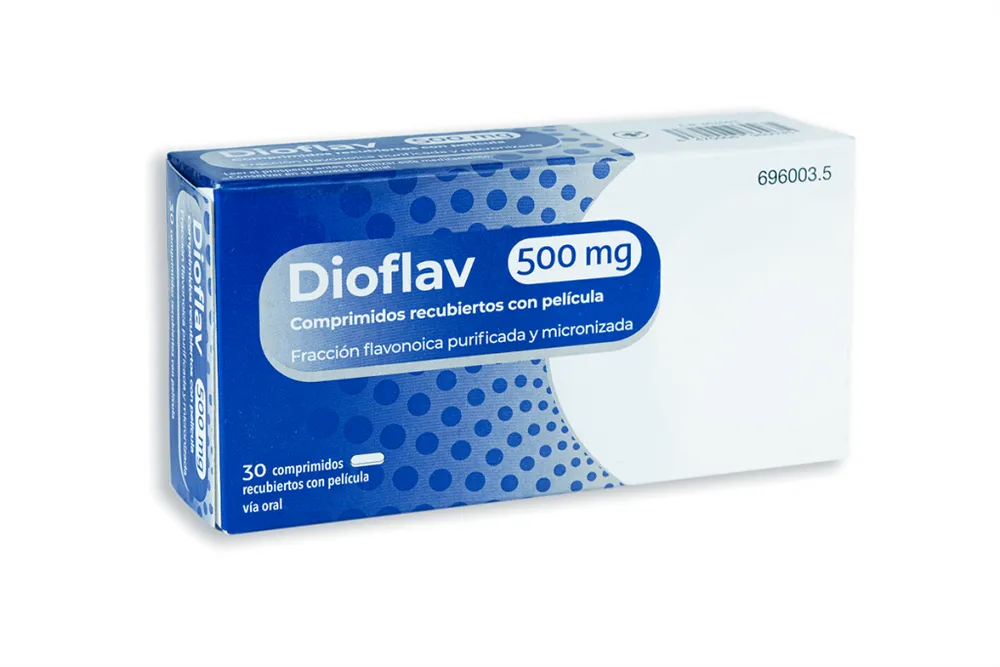
Instructions for Use
Table of Contents
- Introduction
- **Read the entire leaflet carefully before you start taking this medicine, as it contains important information for you.**
- 1. What Dioflav is and what it is used for
- 2. What you need to know before starting to take Dioflav
- 3. How to take Dioflav
- 4. Possible adverse effects
- 5. Storage of Dioflav
- 6. Contents of the pack and other information
- **Appearance of the product and contents of the pack:**
Package leaflet: Information for the user
Introduction
Package leaflet: information for the user
Dioflav 500 mg film-coated tablets
diosmin
Read the entire leaflet carefully before you start taking this medicine, as it contains important information for you.
Follow exactly the instructions for taking this medicine as described in this leaflet or as advised by your doctor or pharmacist.
- Keep this leaflet, as you may need to read it again.
- If you need advice or more information, consult your pharmacist.
- If you experience any adverse effects, consult your doctor or pharmacist, even if they are effects not listed in this leaflet. See section 4.
- You should consult a doctor if your condition worsens or if you do not improve after 2 weeks.
Contents of the leaflet
- What Dioflav is and what it is used for
- What you need to know before taking Dioflav
- How to take Dioflav
- Possible adverse effects
- How to store Dioflav
- Contents of the pack and other information
1. What Dioflav is and what it is used for
Dioflav is a venotonic medication: it increases venous tone and capillary (small blood vessels) resistance.
It is indicated in adults for the relief of symptoms related to mild venous insufficiency in the lower limbs, such as pain, heaviness, tightness, tingling, and itching in legs with varicose veins or swollen legs.
You should consult a doctor if your condition worsens or does not improve after 2 weeks of treatment.
2. What you need to know before starting to take Dioflav
Do not take Dioflav
If you are allergic to diosmin, to other flavonoids, or to any of the other components of this medicine (listed in section 6).
Warnings and precautions
Consult your doctor or pharmacist before starting to take Dioflav.
Do not use for prolonged periods without medical supervision.
Children and adolescents
Dioflav is not indicated for use in children and adolescents (under 18 years of age).
Other medicines and Dioflav
Inform your doctor or pharmacist if you are taking, have recently taken, or might need to take any other medicines.
No interactions with food or other medicines are known. However, you should never take another medicine on your own initiative without first consulting your doctor.
Pregnancy and breastfeeding
If you are pregnant or breastfeeding, think you might be pregnant, or are planning to become pregnant, consult your doctor or pharmacist before using this medicine.
Pregnancy
There is no evidence of harmful effects in humans. However, caution should be exercised when using diosmin during pregnancy, carefully weighing the potential benefit of this medicine against any possible risks.
Breastfeeding
It is not known whether the medicine passes into breast milk; therefore, its use during breastfeeding is not recommended.
Driving and using machines
No effects on the ability to drive or operate machinery have been reported with Dioflav.
Dioflav contains lactose and sodium
If your doctor has informed you that you have an intolerance to certain sugars, consult him before taking this medicine.
This medicine contains less than 1 mmol of sodium (23 mg) per tablet; hence, it is essentially “sodium-free”.
3. How to take Dioflav
Follow exactly the instructions for use provided in this leaflet or those given by your doctor or pharmacist. If in doubt, consult your doctor or pharmacist.
Adults
The recommended dose is 2 tablets per day, divided into two doses: one tablet at midday and one in the evening, taken with meals.
If symptoms do not improve or worsen within the first 2 weeks of treatment, you should consult your doctor.
Under medical advice, treatment may continue with the same daily dose (2 tablets daily) for up to 2–3 months.
If you take more Dioflav than you should:
In case of overdose or accidental ingestion, contact your doctor or pharmacist immediately or call the Toxicology Information Service at telephone number: 91 562 04 20, indicating the medication and the amount ingested.
If you forget to take Dioflav:
It is important to take this medicine every day. However, if you forget to take one or more doses of Dioflav, take the next dose as soon as you remember, and then continue with the prescribed treatment.
Do not take a double dose to make up for forgotten doses.
If you have any further questions about the use of this medicine, ask your doctor or pharmacist.
4. Possible adverse effects
Like all medicines, this medicine can cause adverse effects, although not everybody gets them.
These adverse effects include:
- Common (may affect up to 1 in 10 people): gastrointestinal disorders (diarrhea, indigestion, nausea, vomiting).
- Uncommon (may affect up to 1 in 100 people): colitis.
- Rare (may affect up to 1 in 1,000 people): disorders of the nervous system (dizziness, headache, malaise) and skin reactions (rash, pruritus, urticaria).
- Frequency not known (cannot be estimated from the available data): abdominal pain, isolated swelling of the face, lips and eyelids. Very rarely, Quincke's oedema (rapid swelling of tissues such as the face, lips, mouth, tongue or throat, which may cause difficulty in breathing).
Reporting of adverse effects
If you experience any type of adverse effect, consult your doctor or pharmacist, even if it is a possible adverse effect not listed in this leaflet. You may also report them directly through the national reporting system included in the Spanish System for Pharmacovigilance of Human Medicines: https://www.notificaram.es. By reporting adverse effects, you can help provide more information on the safety of this medicine.
5. Storage of Dioflav
Keep out of the sight and reach of children.
Store in the original packaging to protect from light.
Do not use this medicine after the expiry date stated on the container after “EXP”. The expiry date is the last day of the month indicated.
Medicines should not be disposed of via wastewater or household waste. Dispose of unused medicines and their containers at the SIGRE Point at your pharmacy. If you are in doubt, ask your pharmacist how to dispose of unused medicines and their containers. This will help protect the environment.
6. Contents of the pack and other information
Composition of Dioflav:
The active substance is diosmin (500 mg per tablet).
The other components are:
- Tablet core: microcrystalline cellulose (E-460), gelatin, sodium carboxymethyl starch from potato, talc and magnesium stearate.
- Tablet coating: lactose monohydrate, hypromellose, titanium dioxide, macrogol 4000, yellow iron oxide (E-172) and red iron oxide (E-172).
Appearance of the product and contents of the pack:
Film-coated tablets, biconvex, oblong, salmon-coloured, marked with “D500” on one side.
Each pack contains 30 or 60 tablets.
Only certain pack sizes may be marketed.
Marketing Authorization Holder
Towa Pharmaceutical, S.A.
C/ de Sant Martí, 75-97
08107 Martorelles (Barcelona)
Spain
Manufacturer responsible:
Laboratorios Cinfa, S.A.
Olaz-Chipi, 10 - Areta Industrial Estate
31620 Huarte-Pamplona (Navarra), Spain
This leaflet was approved in December 2023
Detailed information on this medicine is available on the website of the Spanish Agency of Medicines and Health Products (AEMPS) www.aemps.gob.es/
Similar Medications
-
Diosmin Cinfalab 1.000 mg film-coated tablets
Form: tablets, film-coated
Active substance Dosage DIOSMINA 1000 mg Manufacturer: Laboratorios Cinfa S.A.
-
Diosmina Kern Pharma 500 mg film-coated tablets
Form: tablets, film-coated
Active substance Dosage DIOSMINA 500 mg Manufacturer: Kern Pharma S.L.
-
Variliv diosmin 500 mg film-coated tablets
Form: tablets, film-coated
Active substance Dosage DIOSMINA 500 mg Manufacturer: Laboratorios Cinfa S.A.
-
Variliv diosmina forte 1.000 mg film-coated tablets
Form: tablets, film-coated
Active substance Dosage DIOSMINA 1.000 mg Manufacturer: Laboratorios Cinfa S.A.
-
Venoruton diosmin 500 mg film-coated tablets
Form: tablets, film-coated
Active substance Dosage DIOSMINA 500 mg Manufacturer: Laboratorio Stada S.L.
This page has been machine-translated and may contain inaccuracies. The original data is available in the manufacturing country's language.
Last data check: May 18, 2026 · Data source: CIMA — AEMPS