Diosmin Cinfalab 1.000 mg film-coated tablets
Spain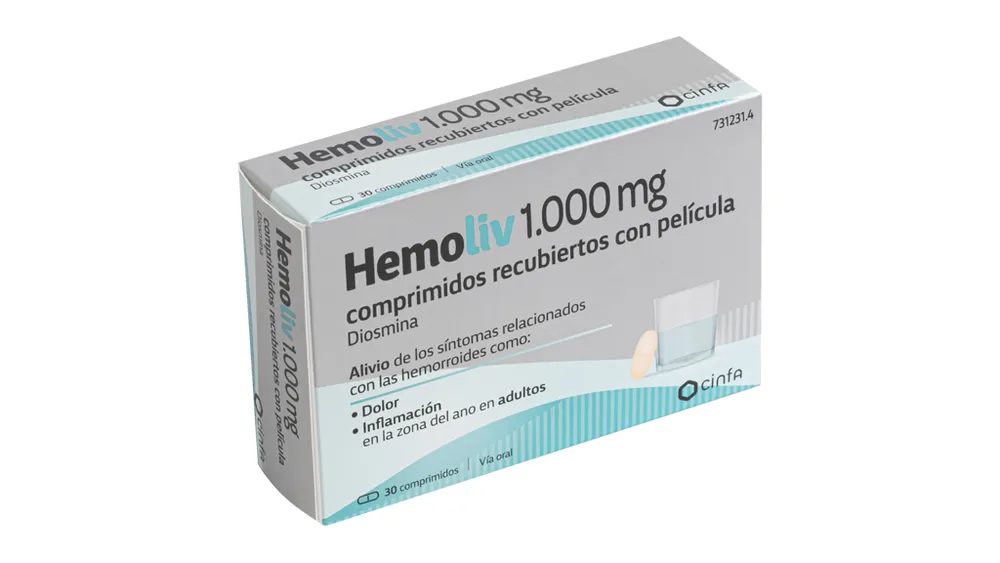
Table of Contents
- Package leaflet: Information for the user
- Introduction
- 1. What is Diosmina cinfalab and what is it used for
- 2. What you need to know before starting to take Diosmina cinfalab
- 3. How to take Diosmina cinfalab
- 4. Possible adverse effects
- 5. Storage of Diosmina cinfalab
- 6. Contents of the pack and other information
Package leaflet: Information for the user
Introduction
Package leaflet: information for the user
Diosmina cinfalab 1,000 mg film-coated tablets
Diosmin
Read all of this leaflet carefully before you start taking this medicine, because it contains important information for you.
Follow exactly the instructions for administration provided in this leaflet or as directed by your doctor or pharmacist.
- Keep this leaflet, as you may need to refer to it again.
- If you need advice or further information, consult your pharmacist.
- If you experience any adverse effects, consult your doctor or pharmacist, even if they are effects not listed in this leaflet. See section 4.
- You should consult a doctor if your condition worsens or if you do not improve after 1 week.
Contents of the leaflet
- What Diosmina cinfalab is and what it is used for
- What you need to know before taking Diosmina cinfalab
- How to take Diosmina cinfalab
- Possible adverse effects
- How to store Diosmina cinfalab
- Contents of the pack and other information
1. What is Diosmina cinfalab and what is it used for
Diosmina cinfalab is a venotonic medicinal product: it increases venous tone and capillary resistance (small blood vessels).
It is indicated for the relief of symptoms related to haemorrhoids, such as pain or inflammation in the anal area in adults.
You should consult a doctor if symptoms worsen or do not improve after 1 week of treatment.
2. What you need to know before starting to take Diosmina cinfalab
Do not take Diosmina cinfalab
If you are allergic to diosmin, to other flavonoids, or to any of the other components of this medicine (listed in section 6).
Warnings and precautions
Talk to your doctor or pharmacist before starting to take Diosmina cinfalab.
If symptoms persist for more than 7 days, you should consult your doctor.
Children and adolescents
Diosmina cinfalab is not indicated for use in children and adolescents (under 18 years of age).
Other medicines and Diosmina cinfalab
Inform your doctor or pharmacist if you are taking, have recently taken, or might need to take any other medicines.
No interactions with food or other medicines are known. Nevertheless, you should never take another medicine on your own initiative without first consulting your doctor.
Pregnancy and breastfeeding
If you are pregnant or breastfeeding, think you may be pregnant, or are planning to become pregnant, consult your doctor or pharmacist before using this medicine.
Pregnancy
As a precautionary measure, it is preferable to avoid using Diosmina cinfalab during pregnancy.
Breastfeeding
Breastfeeding is not recommended during treatment due to the lack of data on the excretion of the medicine in breast milk.
Driving and using machines
No effects on the ability to drive or operate machinery have been reported with Diosmina cinfalab.
Diosmina cinfalab contains lactose.
If your doctor has informed you of an intolerance to certain sugars, consult with him before taking this medicine.
Diosmina cinfalab contains sodium.
This medicine contains less than 23 mg of sodium (1 mmol) per tablet; hence, it is essentially “sodium-free”.
3. How to take Diosmina cinfalab
Follow exactly the administration instructions provided in this leaflet or those given by your doctor or pharmacist. If in doubt, ask your doctor or pharmacist.
Adults:
The recommended dose is 3 tablets daily for the first four days, followed by 2 tablets daily for the next three days. After this, a maintenance dose of 1 tablet daily may be taken. The tablets should be taken with water to facilitate swallowing.
The tablet can be divided into equal doses.
If symptoms do not improve or worsen during the first week of treatment, you should consult your doctor.
If you take more Diosmina cinfalab than you should
In case of overdose or accidental ingestion, consult your doctor or pharmacist immediately or call the Toxicology Information Service at 91 562 04 20, indicating the medication and the amount ingested.
If you forget to take Diosmina cinfalab
It is important to take this medicine every day. However, if you forget to take one or more doses of Diosmina cinfalab, take a dose as soon as you remember and then continue with your regular treatment.
Do not take a double dose to make up for forgotten doses.
4. Possible adverse effects
Like all medicines, this medicine can cause adverse effects, although not everyone experiences them.
These adverse effects include:
- Frequent (may affect up to 1 in 10 patients): gastrointestinal disorders (diarrhea, indigestion, nausea, vomiting).
- Uncommon (may affect up to 1 in 100 patients): colitis.
- Rare (may affect up to 1 in 1,000 patients): nervous system disorders (dizziness, headache, malaise) and skin reactions (rash, pruritus, urticaria).
- Frequency not known (cannot be estimated from the available data): abdominal pain, isolated swelling of the face, lips and eyelids. Exceptionally, angioedema (Quincke's edema) (rapid swelling of tissues such as the face, lips, mouth, tongue or throat, which may cause difficulty in breathing).
Reporting of adverse effects
If you experience any type of adverse effect, consult your doctor or pharmacist, even if it is a possible adverse effect not listed in this leaflet. You may also report them directly via the Spanish Pharmacovigilance System for Human Medicines: https://www.notificaram.es/. By reporting adverse effects, you can help provide more information on the safety of this medicine.
5. Storage of Diosmina cinfalab
Keep this medicine out of sight and reach of children.
Do not use this medicine after the expiry date stated on the packaging after EXP. The expiry date refers to the last day of the month indicated.
Store in the original packaging to protect from light.
Medicines must not be disposed of via wastewater or household waste. Dispose of containers and unused medicines at the SIGRE Point located at your pharmacy. If in doubt, ask your pharmacist how to dispose of unused medicines and their containers. This will help protect the environment.
6. Contents of the pack and other information
Composition of Diosmina cinfalab
-
The active substance is diosmin (1,000 mg per tablet).
-
The other components are:
Tablet core: microcrystalline cellulose (E-460), gelatin, sodium carboxymethyl starch (type A) (from potato), talc, and magnesium stearate.
Tablet coating: Opadry OY-L-28900 white (lactose monohydrate, hypromellose, titanium dioxide, polyethylene glycol 4000), yellow iron oxide (E-172), and red iron oxide (E-172).
Appearance of the product and contents of the container
Film-coated tablets, biconvex, oblong, scored, salmon-colored, marked with the code “D1000” on one side.
The tablets are packaged in unit-dose blisters made of PVC-PVDC/aluminum. Each pack contains 30 tablets.
Marketing Authorization Holder and Manufacturer
Laboratorios Cinfa, S.A.
Carretera Olaz-Chipi, 10. Polígono Industrial Areta
31620 Huarte (Navarra) - Spain
Date of the most recent revision of this leaflet: June 2021
Detailed and up-to-date information on this medicinal product is available on the website of the Spanish Agency of Medicines and Medical Devices (AEMPS) http://www.aemps.gob.es/