Zopercin
Ukraine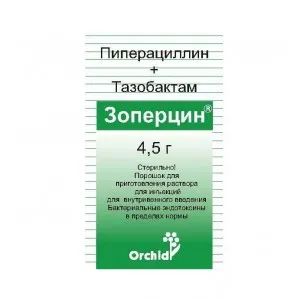
Table of Contents
INSTRUCTIONS FOR MEDICAL USE OF THE MEDICINAL PRODUCT ZOPERCIN® (ZOPERCIN)
Composition:
Active substances: piperacillin, tazobactam;
1 vial contains: piperacillin sodium USP (sterile), calculated as piperacillin 4 g; tazobactam sodium (sterile), calculated as tazobactam USP 0.5 g; and 9.4 mEq (216 mg) of sodium;
Excipients: none.
Pharmaceutical form. Powder for solution for injection.
Main physicochemical properties: white or almost white crystalline powder; the resulting solution is clear, colorless or slightly yellowish, free from foreign particles visible to the naked eye; pH of the solution is 5–7.
Pharmacotherapeutic group.
Combinations of penicillins, including β-lactamase inhibitors. ATC code J01CR05.
Pharmacological Properties
A combination antibacterial agent containing piperacillin, a broad-spectrum semi-synthetic antibiotic, and tazobactam, an inhibitor of most β-lactamases.
Pharmacodynamics. The mechanism of action of sodium piperacillin is due to inhibition of cell wall synthesis; the drug exhibits bactericidal activity. Sodium tazobactam is a β-lactamase inhibitor of Richmond-Sykes Class II: penicillinases and cephalosporinases. At recommended doses, tazobactam does not induce chromosomal β-lactamases.
The presence of tazobactam significantly extends the spectrum of piperacillin activity. The drug is active against most strains of microorganisms producing β-lactamases and resistant to piperacillin alone. The agent is active against a wide range of bacteria:
Susceptible aerobic gram-positive bacteria: Brevibacterium spp., Corynebacterium xerosis, Corynebacterium spp., Enterococcus durans, Enterococcus faecalis, Enterococcus spp., Gemella haemolysans, Gemella morbillorum, Lactococcus lactis cremoris, Listeria monocytogenes, Propionibacterium granulosum, Propionibacterium spp., Staphylococcus aureus (methicillin-sensitive), Staphylococcus epidermidis, Staphylococcus haemolyticus, Staphylococcus hominis, Staphylococcus saprophyticus, Staphylococcus sciuri, Staphylococcus xylosus, Staphylococcus spp. (coagulase-negative), Streptococcus agalactiae, Streptococcus anginosus, Streptococcus β-haemolytic group A, Streptococcus β-haemolytic group D, Streptococcus constellatus, Streptococcus gordonii, Streptococcus intermedius, Streptococcus milleri, Streptococcus milleri-group, Streptococcus mitis, Streptococcus morbillorum, Streptococcus oralis, Streptococcus pneumoniae, Streptococcus pyogenes, Streptococcus sanguis, Streptococcus viridans, Streptococcus viridans group, Streptococcus spp.;
Susceptible aerobic gram-negative bacteria: Acinetobacter anitratus, Acinetobacter lwoffii, Aeromonas sobria, Alcaligenes spp., Branhamella catarrhalis, Burkholderia cepacia, Citrobacter diversus, Citrobacter farmeri, Citrobacter freundii, Citrobacter koseri, Citrobacter spp., Eikenella corrodens, Enterobacter agglomerans, Enterobacter cloacae, Enterobacter spp., Escherichia coli, Escherichia hermannii, Escherichia vulneris, Haemophilus influenzae, Haemophilus parainfluenzae, Haemophilus spp., Klebsiella ornithinolytica, Klebsiella oxytoca, Klebsiella pneumoniae, Klebsiella spp., Morganella morganii, Pasteurella multocida, Proteus, indole positive, Proteus mirabilis, Proteus vulgaris, Proteus spp., Providencia stuartii, Providencia species, Pseudomonas aeruginosa, Pseudomonas fluorescens, Pseudomonas putida, Pseudomonas spp., Salmonella arizonae, Salmonella species, Serratia liquefaciens, Serratia marcescens, Serratia odorifera, Serratia spp., Shigella boydii, Shigella dysenteriae, Shigella flexneri, Shigella sonnei;
Susceptible anaerobic gram-positive bacteria: Bifidobacterium spp., Clostridium bifermentans, Clostridium butyricum, Clostridium cadaveris, Clostridium clostridiforme, Clostridium difficile, Clostridium hastiforme, Clostridium limosum, Clostridium perfringens, Clostridium ramosum, Clostridium tertium, Clostridium spp., Eubacterium aerofaciens, Eubacterium lentum, Eubacterium spp., Peptococcus asaccharolyticus, Peptococcus spp., Peptostreptococcus anaerobius, Peptostreptococcus magnus, Peptostreptococcus micros, Peptostreptococcus prevotii, Peptostreptococcus species;
Susceptible anaerobic gram-negative bacteria: Bacteroides caccae, Bacteroides capillosus, Bacteroides distasonis, Bacteroides fragilis, Bacteroides fragilis group, Bacteroides ovatus, Bacteroides putredinis, Bacteroides stercoris, Bacteroides thetaiotaomicron, Bacteroides uniformis, Bacteroides ureolyticus, Bacteroides vulgatus, Bacteroides spp., Fusobacterium necrophorum, Fusobacterium nucleatum, Fusobacterium varium, Fusobacterium spp., Porphyromonas asaccharolytica, Porphyromonas gingivalis, Porphyromonas species, Prevotella bivia, Prevotella disiens, Prevotella intermedia, Prevotella melaninogenica, Prevotella oralis, Prevotella spp.;
Intermediate susceptibility (aerobic gram-positive bacteria): Enterococcus avium, Enterococcus faecium, Propionibacterium acnes;
Intermediate susceptibility (aerobic gram-negative bacteria): Acinetobacter baumannii, Acinetobacter calcoaceticus, Acinetobacter spp., Enterobacter aerogenes, Pseudomonas stutzeri, Stenotrophomonas maltophilia;
Resistant aerobic gram-positive bacteria: Corynebacterium jeikeium, Staphylococcus aureus (methicillin-resistant), Staphylococcus coagulase-negative (methicillin-resistant);
Resistant aerobic gram-negative bacteria: Legionella spp., Stenotrophomonas maltophilia.
The criterion for the activity of piperacillin/tazobactam is the minimal inhibitory concentration (MIC).
The method of serial dilutions in liquid media allows determination of the minimal inhibitory concentration (MIC).
Table 1.
| Microorganisms |
susceptible |
intermediate |
resistant |
| Enterobacteriaceae |
< 16 mg/l |
32-64 mg/l |
> 128 mg/l |
| Pseudomonas spp. |
< 64 mg/l |
- |
> 128 mg/l |
| Staphylococcus spp. |
< 8 mg/l |
- |
> 16 mg/l |
| * Streptococcus spp. |
< 1 mg/l |
- |
> 2 mg/l |
| Anaerobes |
< 32 mg/l |
64 mg/l |
> 128 mg/l |
* The prevalence of acquired resistance may vary geographically and over time for individual species.
Breakpoint values according to the recommendations of the European Committee on Antimicrobial Susceptibility Testing (data based on determination of bacterial growth at breakpoint concentrations for piperacillin/tazobactam (2009-12-02, v 1)).
Table 2.
| Microorganisms |
susceptible |
resistant |
| Enterobacteriaceae |
8 |
16 |
| Pseudomonas |
16 |
16 |
| Anaerobic gram-positive and gram-negative bacteria |
8 |
16 |
| Range of minimum inhibitory concentration (MIC) values of piperacillin/tazobactam, not associated with a specific bacterial species. |
4 |
16 |
Streptococci isolates sensitive to penicillin may be considered sensitive to piperacillin and oxacillin.
Pharmacokinetics. All pharmacokinetic parameters were similar following both separate and combined administration of piperacillin and tazobactam.
Adsorption. After intravenous administration, maximum plasma concentrations of piperacillin and tazobactam are achieved almost immediately. Following administration of 4 g of piperacillin sodium, the maximum plasma concentration is 298 μg/mL.
After administration of 500 mg of tazobactam sodium, the maximum plasma concentration is 34 μg/mL.
Uptake. Maximum plasma concentration (Cmax) is achieved immediately after intravenous injection.
Distribution. Protein binding is observed for both piperacillin and tazobactam and is approximately 30%. Piperacillin and tazobactam are widely distributed into tissues, including lungs, female reproductive organs (uterus, ovaries, fallopian tubes), gallbladder, bile, intestinal mucosa, and interstitial fluid. Tissue concentrations generally range from 50% to 100% compared to plasma levels. Distribution of piperacillin and tazobactam into cerebrospinal fluid is low in the absence of meningeal inflammation.
Biotransformation. Piperacillin is metabolized to a desethyl metabolite, which exhibits weak microbiological activity. Tazobactam is metabolized to a single microbiologically inactive metabolite.
Metabolism. Piperacillin is metabolized to a desethyl metabolite, which exhibits antimicrobial activity. Tazobactam is metabolized to a single metabolite that lacks pharmacological and antibacterial activity.
Elimination. After single or multiple doses of piperacillin/tazobactam in healthy volunteers, the plasma elimination half-life ranged from 0.7 to 1.2 hours. Dose and infusion duration did not affect this parameter. The elimination half-life of both piperacillin and tazobactam increased with decreased renal clearance.
Administration of tazobactam did not significantly affect the pharmacokinetics of piperacillin. Piperacillin reduces the elimination rate of tazobactam. Both piperacillin and tazobactam are eliminated by the kidneys via glomerular filtration and tubular secretion. Piperacillin is rapidly eliminated as it is a hydrophilic drug. Approximately 68% of the dose is excreted in urine. Tazobactam and its metabolites are primarily (about 80%) eliminated by the kidneys.
Patients with impaired renal function. The elimination half-life of piperacillin and tazobactam increases as creatinine clearance decreases. The half-life increases two- and four-fold for piperacillin and tazobactam, respectively, when creatinine clearance is less than 20 mL/min, compared to patients with normal renal function. Hemodialysis removes 30–50% of Zopercin® and an additional 5% of the tazobactam dose as metabolite. Peritoneal dialysis removes 6–21% of piperacillin and tazobactam, respectively, and an additional 18% of tazobactam as metabolite.
Patients with impaired hepatic function. In patients with impaired liver function, plasma concentrations of piperacillin and tazobactam increase. The elimination half-life of piperacillin and tazobactam increases by approximately 25% and 18%, respectively, in patients with liver cirrhosis compared to healthy volunteers. However, dosage adjustment of the drug is not required in patients with impaired liver function.
Pediatric patients. The pharmacokinetics of Zopercin® were studied in children with intra-abdominal and other types of infections. In each age group, renal excretion of piperacillin and tazobactam accounted for approximately 70% and 80%, respectively, similar to that observed in adults.
Clinical characteristics.
Indications.
Zopercin® is indicated for the treatment of the following infections in adults and children aged 2 years and older.
Adults and adolescents.
- Severe pneumonia, including nosocomial and ventilator-associated pneumonia;
- Complicated urinary tract infections (including pyelonephritis);
- Complicated intra-abdominal infections;
- Complicated skin and soft tissue infections (including diabetic foot syndrome).
Treatment of patients with bacteremia associated or likely associated with any of the above-mentioned infections.
Zopercin® may be used for the treatment of patients with febrile neutropenia, likely caused by a bacterial infection.
Children aged 2–12 years.
- Complicated intra-abdominal infections.
Zopercin® may be used for the treatment of children with febrile neutropenia, likely caused by a bacterial infection.
Attention should be paid to official guidelines on the appropriate use of antibacterial agents.
Contraindications.
Hypersensitivity reactions to any penicillins, cephalosporins, or β-lactamase inhibitors.
Special safety precautions.
Serious and sometimes fatal hypersensitivity reactions (anaphylactic/anaphylactoid, including shock) have been reported during therapy with penicillin-group agents, including Zopercin®. Patients with a history of hypersensitivity to multiple allergens are most susceptible to such reactions.
Severe reactions have also been reported during treatment with cephalosporins in patients with a history of penicillin hypersensitivity. If allergic reactions occur during therapy with Zopercin®, the drug should be discontinued immediately. Serious hypersensitivity reactions may require administration of epinephrine or other emergency measures.
Prior to initiating therapy with Zopercin®, a thorough patient history should be obtained regarding previous allergic reactions to penicillins, cephalosporins, and other allergens.
In case of severe, persistent diarrhea, pseudomembranous colitis, which may be life-threatening and is caused by antibiotic-associated microorganisms, should be considered.
Symptoms may appear during or after antibacterial therapy. In such cases, the drug should be discontinued immediately and appropriate treatment initiated (e.g., oral metronidazole or vancomycin). Antiperistaltic agents are contraindicated.
Interaction with other medicinal products and other forms of interaction.
Probenecid. Concomitant administration of probenecid and Zopercin® results in prolonged elimination half-life and reduced renal clearance of both piperacillin and tazobactam. However, this does not affect the maximum plasma concentration of either agent.
Antibiotics. Piperacillin alone or in combination with tazobactam does not cause clinically significant changes in the pharmacokinetics of tobramycin in patients with normal renal function or mild to moderate renal impairment. Tobramycin administration did not significantly alter the pharmacokinetics of piperacillin, tazobactam, or metabolite M1. No clinically significant interaction between the pharmacokinetics of Zopercin® and vancomycin has been observed in healthy adult volunteers with normal renal function.
Due to physical incompatibility between aminoglycosides and beta-lactam antibiotics in vitro, Zopercin® and aminoglycosides must not be mixed. They should be administered separately. When combination therapy is prescribed, the powder for injection solution of Zopercin® and the aminoglycoside should be reconstituted and diluted separately.
Anticoagulants. When used concomitantly with heparin, oral anticoagulants, and other agents affecting the blood coagulation system, including platelet function, coagulation tests should be monitored regularly.
Vecuronium. Concomitant administration of piperacillin with vecuronium results in prolonged neuromuscular blockade. Due to a similar mechanism of action, neuromuscular blockade induced by any non-depolarizing neuromuscular blocking agent may be prolonged by piperacillin administration. This should be considered when using Zopercin® during surgical procedures.
Methotrexate. Piperacillin may reduce methotrexate elimination. Serum methotrexate levels should be monitored in patients receiving methotrexate.
Effect on laboratory tests. As with other penicillin-group agents, administration of Zopercin® may result in false-positive urine glucose tests (when using reduction methods). Enzymatic glucose oxidase-based tests for glucose detection are recommended.
Positive results in the Platelia Aspergillus ELISA (enzyme-linked immunosorbent assay) test by Bio-Rad Laboratories have been reported in patients receiving Zopercin® injections, despite no subsequent diagnosis of aspergillosis. Cross-reactions with non-aspergillus polysaccharides and polyfuranoses in the Platelia Aspergillus ELISA test by Bio-Rad Laboratories have also been reported. Therefore, positive test results in patients receiving Zopercin® should be interpreted cautiously and confirmed by other diagnostic methods.
Special precautions for use.
Since leukopenia and neutropenia may develop during prolonged therapy, periodic monitoring of blood parameters is recommended.
When high doses of the drug are administered (especially in patients with impaired renal function), neurological complications such as seizures may occur, similar to those observed with other penicillin-class antibiotics. During long-term treatment, renal and hepatic function should be periodically monitored.
In some patients receiving beta-lactam antibiotics, symptoms of bleeding have been observed. Such reactions were sometimes associated with coagulation disorders, including blood clotting time, platelet aggregation, and prothrombin time. These abnormalities were most frequently observed in patients with renal impairment. If bleeding occurs, antibiotic administration should be discontinued and appropriate treatment initiated.
As with other antibiotics, one should always remain alert to the possibility of needing to provide emergency interventions, particularly during prolonged treatment.
Microbiological testing may be required to detect any superinfection. Appropriate measures should be taken if signs of superinfection appear.
As with other penicillin-class antibiotics, exceeding recommended doses may lead to neuromuscular excitability or seizures in patients.
Zopercin® contains 216 mg (9.4 mEq) of sodium per 4.5 g vial; therefore, administration of the drug may increase the total body sodium load. This should be taken into account in patients on a low-sodium diet.
Hypokalemia may develop in patients with low potassium levels or in those receiving potassium-depleting agents. In such patients, periodic monitoring of electrolyte balance is necessary.
Slight elevations in liver function test parameters may occur.
Antimicrobial agents administered in high doses over a short period for the treatment of gonorrhea may mask or delay the symptoms of syphilis. Therefore, patients with gonorrhea should be tested for syphilis prior to initiating treatment. In patients with primary lesions, dark-field microscopy should be performed, and serological tests should be repeated at 6 weeks and 3 months.
When penicillins (particularly piperacillin) are used in patients with cystic fibrosis, fever and rash may occur.
Use during pregnancy or breastfeeding
Pregnancy. There are currently no adequate and well-controlled studies of piperacillin/tazobactam combination, or of piperacillin or tazobactam alone, conducted in pregnant women. Zopercin® crosses the placenta. The drug should be used during pregnancy only if the potential benefit justifies the potential risk to the woman and the fetus.
Breastfeeding period. Piperacillin is excreted in breast milk in low concentrations; the concentration of tazobactam in breast milk has not been studied. Breastfeeding is not recommended during treatment.
Effect on ability to drive or operate machinery.
The effect of the drug on the ability to drive or operate machinery has not been established.
Administration and Dosage
The medicinal product should be administered slowly by intravenous infusion over more than 30 minutes.
The dose and frequency of administration of Zopercin® depend on the severity and location of the infection, as well as the likely causative pathogens.
Adults and children aged 12 years and older (with body weight over 50 kg) with normal renal function. The usual dose for adults and children aged 12 years and older is 4.5 g of Zopercin® (4 g piperacillin / 0.5 g tazobactam) every 8 hours.
In neutropenic patients and in severe pneumonia, the recommended dose of Zopercin® (4 g piperacillin / 0.5 g tazobactam) is 4.5 g every 6 hours.
This dosing regimen may also be used for the treatment of patients with other complicated conditions associated with acute infection.
Recommended administration frequencies for adult and adolescent patients are listed in Table 3.
Table 3.
| Frequency of administration |
Indications |
| Every 6 hours |
Severe pneumonia |
| Febrile neutropenia in adults, likely due to bacterial infection. |
|
| Every 8 hours |
Complicated urinary tract infections (including pyelonephritis). |
| Complicated intra-abdominal infections. |
|
| Complicated skin and soft tissue infections (including diabetic foot syndrome). |
Geriatric patients with normal renal function. Piperacillin and tazobactam may be administered to geriatric patients in the same dosage as for adults, except for patients with renal impairment (see below).
Renal impairment in adults, geriatric patients, and children. For patients with renal impairment, the intravenous dose of the drug should be adjusted according to the degree of renal function impairment (each patient must be carefully monitored for signs of toxicity; the drug dose and dosing interval should be adjusted accordingly; see Table 4).
Table 4.
| Creatinine clearance (mL/min) |
Recommended dose of piperacillin/tazobactam |
| ≥ 40 |
No dose adjustment required |
| 20-40 |
Daily dose: 12 g/1.5 g. |
| <20 |
Daily dose: 8 g/1 g. |
Due to hemodialysis removing 30–50 % of piperacillin within 4 hours, an additional dose of 2 g/0.25 g of piperacillin/tazobactam should be administered after each dialysis session. For patients with renal and hepatic insufficiency, monitoring of serum piperacillin/tazobactam levels will ensure adequate dose adjustment.
Children aged 2 to 12 years with normal renal function and body weight less than 50 kg.
Neutropenia. The dose should be adjusted to 90 mg/kg (80 mg piperacillin/10 mg tazobactam) administered every 6 hours in combination with aminoglycosides, not exceeding 4.5 g (4 g piperacillin/0.5 g tazobactam) every 6 hours.
Complicated intra-abdominal infections. For treatment of children aged 2 to 12 years, the dose should be adjusted to 112.5 mg/kg (100 mg piperacillin/12.5 mg tazobactam) administered every 8 hours, not exceeding 4.5 g (4 g piperacillin/0.5 g tazobactam) every 8 hours.
Since experience with Zopercin® in pediatric patients is limited, it is primarily used in this population for the treatment of neutropenia or complicated forms of acute appendicitis.
Renal insufficiency in children up to 12 years of age. In children with renal insufficiency, the intravenous dose of the drug should be adjusted according to the renal function status (see Table 5).
Table 5.
| Creatinine clearance (mL/min) |
Recommended dose of piperacillin/tazobactam |
| >50 |
No dose adjustment required. |
| ≤20-40 |
70 mg piperacillin / 8.75 mg tazobactam / kg every 8 hours |
For children with body weight <50 kg undergoing hemodialysis, an additional dose of 40 mg piperacillin/5 mg tazobactam per kg should be administered after each dialysis session.
Patients should be carefully monitored and observed for symptoms of drug toxicity. The dose and dosing interval should be adjusted accordingly.
Use in children under 2 years of age. The safety and efficacy of this medicinal product in children under 2 years of age have not been established. There are no published data from controlled clinical trials.
Patients with hepatic impairment. In most cases, dose adjustment is not required.
If necessary, in patients with renal and hepatic impairment, measuring serum levels of piperacillin and tazobactam allows appropriate dose adjustment.
Duration of treatment. The duration of treatment should be determined based on the patient's condition, severity of infection, results of bacteriological examination, and current regulatory documents and guidelines on rational antibiotic therapy.
Typically, the duration of treatment course ranges from 5 to 14 days.
Instructions for solution preparation.
The contents of a vial containing 4 g/0.5 g of piperacillin/tazobactam should be reconstituted with 20 mL of one of the following diluents.
After reconstitution, the solution should be further diluted to the desired volume (from 50 mL to 150 mL) using one of the following diluents:
- ● 0.9% sodium chloride injection solution;
- ● 5% aqueous glucose solution;
- sterile water for injection (maximum recommended volume for a single dose is 50 mL).
The prepared solution should preferably be used immediately.
Volume displacement. 1 gram of piperacillin/tazobactam crystalline powder has a volume displacement of 0.7 mL.
The medicinal product containing 4 g/0.5 g of piperacillin/tazobactam has a volume displacement of 3.15 mL.
Table 6.
| Dosage of piperacillin/tazobactam |
Required solvent volume* |
Final infusion volume of piperacillin/tazobactam (0.9 % sodium chloride) |
Final infusion concentration of piperacillin/tazobactam |
| 4 g/0.5 g |
20 ml |
100 ml |
45 mg/ml |
| 150 ml |
30 mg/ml |
*Sterile water for injection, 0.9% sodium chloride solution for injection, 5% glucose solution.
Instructions for monitoring during infusion to be performed by a healthcare professional.
-
The injection site should be wiped with a disinfectant solution (to ensure sterility); the infusion system should not be used for more than 24 hours.
-
The infusion bottle must be labeled with the patient’s full name, name and amount of the added diluent, date and time of preparation, and, if possible, the expiration date or time.
-
The intravenous infusion process should be monitored periodically. If cloudiness, crystallization, discoloration, or any other signs of drug interaction or contamination occur, the infusion must be discontinued.
-
The duration of intravenous infusion should be at least 30 minutes.
If the prepared solution is not used immediately, the healthcare professional responsible for subsequent administration is responsible for the storage conditions and duration until administration.
Any unused solution must be disposed of (destroyed).
Children. The drug is indicated for children aged 2 years and older.
Overdose.
Symptoms. Overdose cases have been reported in post-marketing studies. Most of these cases, which were accompanied by nausea, vomiting, and diarrhea, occurred following administration of the usual recommended doses. Nervous system and muscular excitation or seizures may occur in patients receiving doses exceeding the recommended intravenous doses (especially in patients with renal impairment).
Treatment. In case of overdose, further administration of piperacillin/tazobactam should be discontinued. There is no known specific antidote.
Treatment is supportive and symptomatic, depending on the patient’s condition. In emergency situations, intensive care measures should be implemented, similar to those used in piperacillin overdose.
Excess serum concentrations of piperacillin or tazobactam can be reduced by hemodialysis.
In case of motor excitation or seizures, anticonvulsant agents (e.g., diazepam or barbiturates) may be administered.
In case of severe anaphylactic reactions, standard emergency measures should be initiated.
Adverse Reactions
The most commonly reported adverse reactions to the drug (≥ 1% – ≤ 10%) are: diarrhea, nausea, vomiting, and rash.
Adverse reactions are listed by frequency of occurrence: very common (≥ 1/10); common (≥ 1/100 – < 1/10); uncommon (≥ 1/1000 – < 1/100); rare (≥ 1/10,000 – < 1/1000); very rare (< 1/10,000); and not known (cannot be estimated from available data).
Infections and infestations. Common: candidiasis superinfection.
Blood and lymphatic system disorders. Common: thrombocytopenia, leukopenia, neutropenia. Rare: anemia, bleeding manifestations (including purpura, epistaxis, prolonged bleeding time), eosinophilia, hemolytic anemia. Very rare: agranulocytosis, positive direct Coombs test, pancytopenia, prolonged partial thromboplastin time, prolonged prothrombin time, thrombocytosis.
Immune system disorders. Uncommon: hypersensitivity reactions. Rare: anaphylactic/anaphylactoid reactions (including shock).
Metabolism and nutrition disorders. Very rare: hypoalbuminemia, hypoglycemia, hypoproteinemia, hypokalemia.
Nervous system disorders. Uncommon: headache, insomnia. Rare: muscle weakness, hallucinations, seizures, dry mouth.
Cardiac disorders. Uncommon: arterial hypotension, phlebitis, thrombophlebitis. Rare: flushing.
Gastrointestinal disorders. Common: diarrhea, nausea, vomiting. Uncommon: constipation, dyspepsia, jaundice, stomatitis. Rare: abdominal pain, pseudomembranous colitis, hepatitis.
Hepatobiliary disorders. Uncommon: increased levels of ALT and AST. Rare: increased levels of bilirubin, alkaline phosphatase, gamma-glutamyl transferase, hepatitis.
Skin and subcutaneous tissue disorders. Common: rash. Uncommon: pruritus, urticaria, erythema. Rare: bullous dermatitis, erythema multiforme, increased sweating, eczema, exanthema. Very rare: Stevens–Johnson syndrome, toxic epidermal necrolysis.
Musculoskeletal and connective tissue disorders. Rare: arthralgia, myalgia.
Renal and urinary disorders. Uncommon: increased blood creatinine levels. Rare: interstitial nephritis, renal failure. Very rare: increased blood urea nitrogen levels.
General disorders and administration site conditions. Uncommon: fever, local reactions. Rare: chills, fatigue, edema.
Treatment with piperacillin in patients with cystic fibrosis has been associated with increased incidence of fever and rash.
High doses of beta-lactam antibiotics, particularly in patients with renal impairment, may lead to encephalopathy (altered consciousness, myoclonia, seizures).
Shelf life. 24 months (2 years).
Storage conditions. Store the powder in the original packaging at a temperature not exceeding 25 °C, in a place inaccessible to children.
The freshly prepared solution for intravenous administration is stable for 24 hours if stored at a temperature not exceeding 25 °C, or for 48 hours if stored at 2–8 °C.
Incompatibility.
In vitro mixing of beta-lactam antibiotics with aminoglycosides may result in physical incompatibility of aminoglycosides.
Zopercin® must not be mixed with other medicinal products in the same syringe or infusion bottle, as compatibility has not been established.
Piperacillin/tazobactam should be administered separately via an infusion system, without mixing with other medicinal products, until compatibility is proven.
Due to the chemical instability of Zopercin®, concomitant use with solutions containing only sodium bicarbonate is not recommended.
Ringer's lactate solution (Hartmann's solution) is incompatible with Zopercin®.
Zopercin® should not be added to blood products or albumin hydrolysate.
Packaging. 4.5 g of powder in a 30 ml clear glass vial. 1 vial per cardboard box.
Prescription status. Prescription only.
Manufacturer.
Astral Steritech Private Limited.
Manufacturer's address.
911, Gidc, Makarpura, Vadodara, Gujarat 390010, India (IND).
Marketing authorization holder.
Orchid Pharma Limited.
Address of the marketing authorization holder.
Orchid Towers, 313, Valluvar Kottam High Road, Nungambakkam, Chennai – 600 034, India.