Zolmigren
Ukraine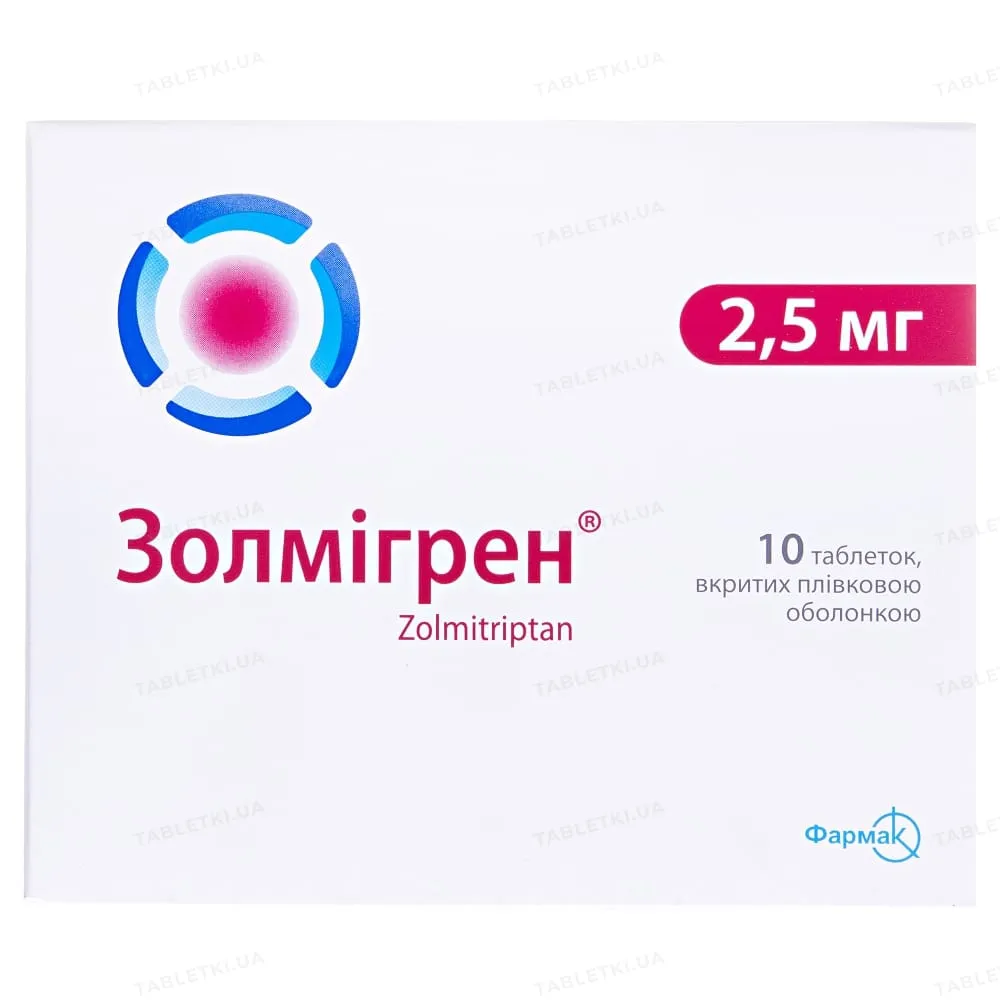
Table of Contents
INSTRUCTIONS FOR MEDICAL USE OF THE MEDICINAL PRODUCT ZOLMIGREN® (ZOLMIGREN)
Composition:
Active substance: zolmitriptan;
One tablet contains zolmitriptan equivalent to 100% substance 2.5 mg;
Excipients: lactose monohydrate, microcrystalline cellulose 102, sodium starch glycolate (type A), magnesium stearate;
Coating composition: Sepifilm 752 Blanc (hydroxypropylmethylcellulose, microcrystalline cellulose, polyethylene glycol (macrogol 40), titanium dioxide (E 171)), yellow iron oxide (E 172).
Pharmaceutical form. Film-coated tablets.
Main physicochemical properties: round, biconvex film-coated tablets of pale brown-yellow color.
Pharmacotherapeutic group. Medicinal products used in migraine. Selective serotonin 5-HT1 receptor agonists. Zolmitriptan. ATC code N02CC03.
Pharmacological Properties
Pharmacodynamics
Zolmitriptan is a selective agonist of human recombinant 5-HT1B/1D serotonin receptors in blood vessels. It has moderate affinity for serotonin 5-HT1A receptors and lacks significant affinity or pharmacological activity at 5-HT2-, 5-HT3-, 5-HT4-serotonin receptors, α1-, α2-, β1-adrenergic receptors, H1-, H2-histamine receptors, M-cholinergic receptors, and D1-, D2-dopaminergic receptors. The drug causes vasoconstriction primarily of cranial vessels and inhibits the release of neuropeptides, including vasoactive intestinal peptide, which is the main effector transmitter of reflex activation causing vasodilation underlying the pathogenesis of migraine. It stops the development of a migraine attack without exerting direct analgesic action. Along with suppressing the migraine attack, it reduces nausea, vomiting (especially during left-sided attacks), photophobia, and phonophobia. In addition to its peripheral effects, zolmitriptan acts on brainstem centers associated with migraine, which explains the sustained and repeated therapeutic effect when treating a series of several migraine attacks in a single patient. It is highly effective in the comprehensive treatment of migraine status (a series of several severe, consecutive migraine attacks lasting 2–5 days). It relieves menstrually associated migraine. High doses have a sedative effect and may cause drowsiness.
The effect of the drug begins within 15–20 minutes and reaches its maximum within 1 hour after administration. The maximal effect is observed when the drug is taken during the onset phase of the attack.
Pharmacokinetics
After oral administration, zolmitriptan is well absorbed from the gastrointestinal tract. Drug absorption is independent of food intake. The mean absolute bioavailability is approximately 40%. Plasma protein binding is 25%. Time to reach maximum concentration (Tmax) is 1 hour, and therapeutic plasma concentrations are maintained for the next 4–6 hours. No drug accumulation occurs with repeated dosing. Zolmitriptan undergoes extensive hepatic biotransformation, forming an N-desmethyl metabolite with 2–6 times greater pharmacological activity than the parent compound, as well as several inactive metabolites. Three main metabolites of zolmitriptan are known: indoleacetic acid (the primary metabolite in plasma and urine), and N-oxide and N-desmethyl analogs. The N-desmethyl metabolite is pharmacologically active, while the other two are inactive. In healthy subjects, following a single dose, zolmitriptan and its active N-desmethyl metabolite exhibit dose-proportional AUC and Cmax over the dose range of 2.5 to 50 mg. Plasma concentrations of the N-desmethyl metabolite are approximately two-fold lower than those of the parent drug, but it may enhance the therapeutic effect of zolmitriptan.
The drug is eliminated primarily via the kidneys as metabolites, with about 30% excreted unchanged through the intestine. After intravenous administration, total plasma clearance averages approximately 10 mL/min/kg, of which one-third is renal clearance. Renal clearance exceeds the glomerular filtration rate, indicating active tubular secretion. The volume of distribution after intravenous administration is 2.4 L/kg. The mean elimination half-life (T1/2) of zolmitriptan is 2.5–3 hours. The half-life of its metabolites is similar, indicating that their elimination is limited by the rate of formation.
In patients with moderate to severe renal impairment, renal clearance of zolmitriptan and its metabolites is 7–8 times lower compared to healthy volunteers, and the elimination half-life increases by 1 hour (to 3–3.5 hours), while the bioavailability of zolmitriptan and its active metabolite increases only by 16% and 35%, respectively. These values remain within the range observed in healthy volunteers.
In hepatic impairment, zolmitriptan metabolism is reduced proportionally to the degree of impairment.
Studies evaluating the impact of liver disease on zolmitriptan pharmacokinetics showed that AUC and Cmax were increased by 94% and 50%, respectively, in patients with moderate hepatic impairment, and by 226% and 47%, respectively, in patients with severe hepatic impairment, compared to healthy volunteers. The contribution of metabolites, including the active metabolite, was reduced. AUC and Cmax of the N-desmethyl metabolite decreased by 33% and 44%, respectively, in patients with moderate hepatic impairment and by 82% and 90%, respectively, in those with severe hepatic impairment.
The elimination half-life (T1/2) of zolmitriptan in plasma was 4.7 hours in healthy volunteers, 7.3 hours in patients with moderate hepatic impairment, and 12 hours in patients with severe hepatic disease. Corresponding T1/2 values for the N-desmethyl metabolite were 5.7, 7.5, and 7.8 hours, respectively.
In a study involving a small group of healthy subjects, no pharmacokinetic interaction was observed with ergotamine. Co-administration of zolmitriptan with ergotamine/caffeine was well tolerated and did not lead to an increase in adverse reactions or changes in blood pressure compared to zolmitriptan alone.
Following administration of rifampicin, no clinically significant differences in the pharmacokinetics of zolmitriptan or its active metabolite were observed.
Selegiline (a MAO-B inhibitor) and fluoxetine (a selective serotonin reuptake inhibitor) did not affect the pharmacokinetic parameters of zolmitriptan.
The pharmacokinetics of zolmitriptan in healthy elderly individuals is similar to that in healthy young adults.
Clinical characteristics.
Indications.
Acute treatment of migraine attacks with or without aura.
Contraindications.
- Hypersensitivity to the active substance or any of the excipients.
- Uncontrolled hypertension.
- Ischemic heart disease. Angiospastic angina (Prinzmetal's angina).
- History of cerebrovascular disorders or transient ischemic attack (TIA).
- Concomitant use of ergotamine, ergotamine derivatives, sumatriptan, naratriptan, or other 5HT1B/1D receptor agonists.
Interaction with other medicinal products and other forms of interaction.
There is no evidence that concomitant use of medications for migraine prophylaxis affects the efficacy or adverse effects of Zolmigren® (e.g., beta-blockers, oral dihydroergotamine, and pizotifen).
Combination of the drug with caffeine, rifampicin, and propranolol is acceptable.
No changes in pharmacokinetics or tolerability of Zolmigren® were observed during acute symptomatic treatment with paracetamol, metoclopramide, and ergotamine. Other 5HT1B/1D agonists should not be administered within 24 hours after taking Zolmigren®.
Based on data obtained from studies in healthy volunteers, there was no pharmacokinetic interaction or clinically significant interaction between zolmitriptan and ergotamine. However, since a theoretical risk of coronary spasm exists, Zolmigren® should be administered no earlier than 24 hours after the use of ergotamine-containing medications. Conversely, ergotamine-containing medications should be administered no earlier than 6 hours after the use of Zolmigren®.
After administration of moclobemide, a specific inhibitor of monoamine oxidase A (MAO-A), a slight increase (26%) in the AUC (area under the curve) of zolmitriptan and a threefold increase in the AUC of its active metabolite were observed. Therefore, patients taking MAO-A inhibitors should receive zolmitriptan at a dose not exceeding 5 mg per day.
After administration of cimetidine, a general inhibitor of P450 enzymes, the elimination half-life of zolmitriptan increased by 44% and AUC by 48%. In addition, cimetidine doubled the elimination half-life and AUC of the active N-dimethylated metabolite (183C91). Therefore, patients taking cimetidine should receive zolmitriptan at a dose not exceeding 5 mg per day.
Based on the overall interaction profile, the possibility of interaction with specific inhibitors of CYP1A2 cannot be excluded. Therefore, when using such compounds as fluvoxamine and quinolones (e.g., ciprofloxacin), dosage reduction is also recommended.
Fluoxetine does not affect the pharmacokinetic parameters of zolmitriptan. Therapeutic doses of selective serotonin reuptake inhibitors (SSRIs)—fluoxetine, sertraline, paroxetine, and citalopram—do not inhibit CYP1A2. However, cases of serotonin syndrome have been reported following concomitant use of triptans and SSRIs (e.g., fluoxetine, paroxetine, sertraline) and serotonin-norepinephrine reuptake inhibitors (SNRIs) (e.g., venlafaxine, duloxetine) (see section "Special precautions").
Concomitant use of 5HT1B/1D receptor agonists and medicinal products containing St. John's wort (Hypericum perforatum) may result in a dynamic interaction that could lead to an increased risk of adverse effects.
Special precautions for use.
The drug should be used only when a diagnosis of migraine has been clearly established. Prior to initiating treatment for headache, other neurological conditions should be ruled out in patients who have not previously been diagnosed with migraine, as well as in those with atypical symptoms despite an established diagnosis of migraine.
There are no data on the use of the medicinal product Zomigren® in hemiplegic or basilar migraine.
It should be noted that patients suffering from migraine have an increased risk of cerebrovascular disorders.
Cerebral hemorrhage, subarachnoid hemorrhage, stroke, and other cerebrovascular events may occur in patients taking 5HT1B/1D agonists.
Zolmigren® should not be prescribed to patients with symptoms of Wolff–Parkinson–White syndrome or arrhythmias associated with other accessory cardiac conduction pathways.
In isolated cases, as with other 5HT1B/1D agonists, coronary artery spasm, angina pectoris, and myocardial infarction may occur. Zolmigren® should not be used in patients with risk factors for ischemic heart disease without prior evaluation for cardiovascular disorders. However, such evaluation cannot identify all patients with underlying heart disease, and serious cardiac events have occurred in patients with no history of cardiovascular disorders.
As with other 5HT1B/1D agonists, after administration of zolmitriptan, patients may experience a sensation of heaviness, pressure, or tightness in the chest area. If chest pain or symptoms suggestive of ischemic heart disease occur, Zolmigren® should be discontinued and the patient should be evaluated.
As with other 5HT1B/1D agonists, transient increases in blood pressure may occur in patients both with and without a history of hypertension. Such increases in blood pressure have very rarely been associated with serious clinical manifestations.
As with other 5HT1B/1D agonists, rare cases of anaphylaxis/anaphylactoid reactions have been observed in patients receiving zolmitriptan.
Cases of serotonin syndrome have been reported following concomitant use of triptans and selective serotonin reuptake inhibitors (SSRIs) or serotonin-norepinephrine reuptake inhibitors (SNRIs). Serotonin syndrome is a potentially life-threatening condition and may include signs and symptoms such as mental status changes (e.g., agitation, hallucinations, coma), autonomic instability (e.g., tachycardia, labile blood pressure, hyperthermia), neuromuscular abnormalities (e.g., hyperreflexia, incoordination), and/or gastrointestinal symptoms (e.g., nausea, vomiting, diarrhea). If concomitant use of the medicinal product Zolmigren® with SSRIs or SNRIs is clinically warranted, careful patient monitoring is recommended, particularly at the beginning of treatment and during dose escalation.
Excessive use of medications for the acute treatment of migraine attacks may lead to increased headache frequency, which may require discontinuation of treatment. In such cases, treatment should be stopped and medical advice should be sought.
Zolmigren® contains lactose. If you have been diagnosed with an intolerance to certain sugars, consult your doctor before taking this medicinal product.
Use during pregnancy or breastfeeding.
Pregnancy
The safety of zolmitriptan use during pregnancy has not been established. Animal studies have not revealed a direct teratogenic effect. Zolmigren® may be used during pregnancy only if the potential therapeutic benefit to the mother outweighs the potential risk to the fetus/child.
Breastfeeding
Studies have shown that zolmitriptan penetrates into the milk of lactating animals. There are no data regarding the penetration of zolmitriptan into human breast milk. Therefore, the use of the drug during breastfeeding should be approached with caution.
Ability to affect reaction speed when driving or operating machinery.
In a study involving a small group of healthy volunteers who received zolmitriptan at doses up to 20 mg, no significant effect on psychomotor test performance was observed. Zolmigren® has no effect or negligible effect on the ability to drive vehicles or operate machinery.
However, drivers and individuals whose work involves high levels of attention should be warned that during a migraine attack, drowsiness may occur.
Dosage and Administration
The medicinal product is not intended for prophylactic use to prevent migraine attacks. The effectiveness of treatment does not depend on the time elapsed between the onset of a migraine attack and administration of Zolmigren®; however, it is recommended to administer the drug as early as possible after the onset of an attack.
For adults, the recommended dose is 1 tablet (2.5 mg of zolmitriptan). If symptoms persist or recur within 24 hours, a second dose of 1 tablet (2.5 mg of zolmitriptan) may be required. If needed, the second dose may be taken no sooner than 2 hours after the first dose.
If the 2.5 mg dose is insufficiently effective, the single dose may be increased to 5 mg (maximum single dose). The maximum daily dose is 10 mg.
In patients who respond to treatment, significant efficacy is typically observed within 1 hour after administration of the medicinal product.
Hepatic impairment
Metabolism of zolmitriptan is reduced in patients with hepatic impairment. Dose adjustment is not required in patients with mild hepatic dysfunction. In patients with moderate to severe hepatic impairment, the total daily dose should not exceed 5 mg.
Renal impairment
Dose adjustment is not required in patients with creatinine clearance above 15 ml/min.
Patients aged 65 years and older
The safety and efficacy of zolmitriptan in patients aged 65 years and older have not been established. Therefore, zolmitriptan is not recommended for use in this patient population.
Interactions requiring dose adjustment (see section "Interaction with other medicinal products and other types of interactions")
In patients taking MAO-A inhibitors, zolmitriptan should be administered at a maximum daily dose of 5 mg.
The maximum recommended daily dose of zolmitriptan in patients taking cimetidine is 5 mg.
A maximum daily dose of 5 mg of zolmitriptan is recommended for patients taking specific CYP1A2 inhibitors such as fluvoxamine and quinolones (e.g., ciprofloxacin).
Children
Use in children (under 18 years of age) is not recommended.
Overdose
Symptoms. Sedative effects were observed in volunteers who received a single dose of 50 mg of zolmitriptan.
Treatment. The elimination half-life of zolmitriptan is 2.5 to 3 hours; therefore, patients should be observed for at least 15 hours after overdose or until symptoms resolve. There is no specific antidote.
In cases of severe intoxication, intensive care procedures are recommended, including maintenance of airway patency, adequate oxygenation and ventilation, and monitoring and support of cardiovascular function.
It is unknown how hemodialysis or peritoneal dialysis affects zolmitriptan plasma concentrations.
Adverse reactions.
Adverse effects are usually mild in nature, transient, and occur within 4 hours after taking the medication. They do not become more frequent upon repeated administration and resolve spontaneously without additional treatment.
Adverse effects are classified by frequency of occurrence as follows: very common (≥ 1/10); common (≥ 1/100 to < 1/10); uncommon (≥ 1/1,000 to < 1/100); rare (≥ 1/10,000 to < 1/1,000); very rare (< 1/10,000); not known (cannot be estimated from available data).
Immune system disorders: rare – hypersensitivity reactions, angioedema, and anaphylactic reactions.
Cardiac disorders: common – palpitations; uncommon – tachycardia; very rare – myocardial infarction, angina pectoris, coronary spasm.
Vascular disorders: uncommon – transient increase in systemic arterial pressure, slight elevation of blood pressure.
Nervous system disorders: common – sensory disturbances, dizziness, headache, hyperesthesia, paresthesia, somnolence, feeling of warmth.
Gastrointestinal disorders: common – abdominal pain, nausea, vomiting, dry mouth, dysphagia; very rare – diarrhea with blood, intestinal infarction or necrosis, ischemic events in the gastrointestinal tract, ischemic colitis, splenic infarction.
Skin and subcutaneous tissue disorders: rare – angioedema, urticaria.
Renal and urinary disorders: uncommon – polyuria, increased frequency of urination; very rare – imperative urges to urinate.
Musculoskeletal and connective tissue disorders: common – muscle weakness, muscle pain.
General disorders and administration site conditions: common – asthenia, sensation of heaviness, tightness, pain, or pressure in the throat, neck, chest, and extremities.
Shelf life. 3 years.
Do not use the medication after the expiry date stated on the packaging.
Storage conditions.
Store in the original packaging at a temperature not exceeding 25°C.
Keep out of reach of children.
Packaging. 2 or 10 tablets per blister. 1 blister per carton.
Prescription status. Prescription only.
Manufacturer. JSC "Farmak".
Manufacturer's address and place of business.
74, Kyrylivska Street, Kyiv, 04080, Ukraine.