Zolevista
Ukraine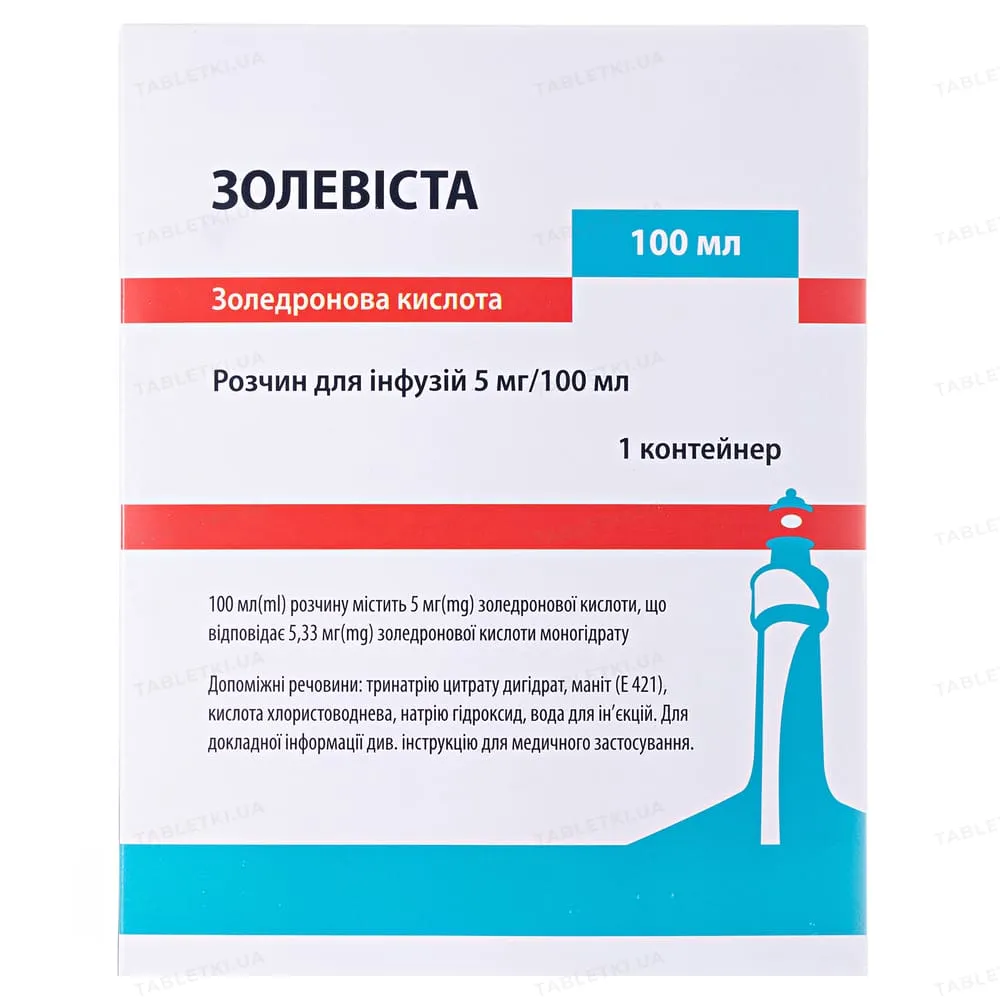
Table of Contents
INSTRUCTIONS FOR MEDICAL USE OF THE MEDICINAL PRODUCT ZOLEVISTA (ZOLEVISTA)
Composition:
Active substance: zoledronic acid;
100 ml of solution contains 5 mg of zoledronic acid, equivalent to 5.33 mg of zoledronic acid monohydrate;
Excipients: trisodium citrate dihydrate, mannitol (E 421), hydrochloric acid, sodium hydroxide, water for injections.
Pharmaceutical form. Infusion solution.
Main physicochemical properties: clear, colorless solution.
Pharmacotherapeutic group. Drugs affecting bone structure and mineralization. Bisphosphonates. ATC code M05B A08.
Pharmacological Properties
Pharmacodynamics
Zoledronic acid belongs to a new class of bisphosphonates that specifically act on bone tissue. It is one of the most potent inhibitors of osteoclastic bone resorption known to date.
The selective action of bisphosphonates on bone is based on their high affinity for mineralized bone tissue; however, the molecular mechanism leading to inhibition of osteoclast activity has not been fully elucidated. Animal studies have shown that zoledronic acid inhibits bone resorption without adversely affecting bone formation, mineralization, or mechanical properties of bone.
In addition to inhibiting osteoclastic bone resorption, zoledronic acid exerts direct antitumor effects on cultured human myeloma and breast cancer cells by inhibiting cell proliferation and inducing apoptosis. This suggests that zoledronic acid may possess antimetastatic properties. The following properties have been demonstrated in preclinical studies:
In vivo: inhibition of osteoclastic bone resorption acting on the microcrystalline matrix structure of bone, resulting in reduced tumor growth; antiangiogenic effect (action on blood vessels leading to decreased tumor blood supply); analgesic effect.
In vitro: inhibition of osteoblast proliferation; cytostatic and pro-apoptotic effects on tumor cells; synergistic cytostatic effect with other antineoplastic agents; anti-adhesive and anti-invasive effects.
Pharmacokinetics
Pharmacokinetic data in patients with bone metastases were obtained after single and repeated 5- and 15-minute infusions of 2, 4, 8, and 16 mg zoledronic acid administered to 64 patients. Pharmacokinetic parameters were independent of drug dose.
Following the initiation of zoledronic acid infusion, plasma concentrations of the drug rapidly increase, reaching peak levels at the end of the infusion. Subsequently, concentrations decline rapidly to 10% of peak levels within 4 hours and to <1% of peak levels within 24 hours, followed by a prolonged period of low concentrations not exceeding 0.1% of peak levels until the next infusion on day 28.
After intravenous administration, zoledronic acid is eliminated via the kidneys in three phases: rapid biphasic elimination from systemic circulation with half-lives t½α = 0.24 hours and t½β = 1.87 hours, followed by a prolonged terminal phase with half-life t½γ = 146 hours. No drug accumulation was observed in plasma with repeated dosing every 28 days. Zoledronic acid is not metabolized and is excreted unchanged by the kidneys. Within the first 24 hours, 39±16% of the administered dose is recovered in urine. The remainder of the drug is primarily bound to bone tissue. Subsequently, zoledronic acid is slowly released from bone back into systemic circulation and eliminated renally. Total systemic clearance of the drug is 5.04±2.5 L/hour and is independent of dose, gender, age, race, or body weight. Increasing the infusion duration from 5 to 15 minutes reduces the zoledronic acid concentration by 30% at the end of infusion but does not affect the plasma concentration-time curve (AUC).
Inter-patient variability in the pharmacokinetic parameters of zoledronic acid was high, consistent with observations for other bisphosphonates.
Pharmacokinetic data for zoledronic acid in patients with hypercalcemia or hepatic insufficiency are lacking. In vitro data indicate that zoledronic acid does not inhibit human cytochrome P450 enzymes and is not subject to biotransformation. Animal experimental studies show that less than 3% of the administered dose is excreted in feces, suggesting that hepatic function is unlikely to influence the pharmacokinetics of zoledronic acid.
Renal clearance of zoledronic acid correlates with creatinine clearance, with renal clearance averaging 75±33% of creatinine clearance. In 64 oncology patients included in the study, creatinine clearance averaged 84±29 mL/min (range: 22–143 mL/min). Analysis of patient subgroups showed that relative zoledronic acid clearance was 37% and 72% of normal at creatinine clearance values of 20 mL/min (severe renal impairment) and 50 mL/min (moderate renal impairment), respectively. However, pharmacokinetic data in patients with severe renal impairment (<30 mL/min) are limited.
Zoledronic acid shows low affinity for blood cellular components. Plasma protein binding is low, with unbound fractions ranging from 60% at 2 ng/mL to 77% at 2000 ng/mL of zoledronic acid.
Clinical characteristics.
Indications.
- Treatment of osteoporosis in postmenopausal women and in men at increased risk of fractures, including individuals with a recent low-trauma hip fracture.
- Treatment of glucocorticoid-induced osteoporosis in postmenopausal women and in men at increased risk of fractures.
- Treatment of Paget's bone disease in adults.
Contraindications.
Hypersensitivity to the active substance or to any of the excipients of the medicinal product, or hypersensitivity to bisphosphonates.
Hypocalcemia.
Severe renal impairment with creatinine clearance <35 mL/min.
Pregnancy or breastfeeding.
Interaction with other medicinal products and other forms of interaction.
Specific drug interaction studies with zoledronic acid have not been conducted. Zoledronic acid is not systemically metabolized and does not affect human cytochrome P450 enzymes in vitro. Zoledronic acid is only slightly bound to plasma proteins (binding is approximately 43–55%), therefore interactions due to displacement by other highly protein-bound drugs are unlikely.
Zoledronic acid is eliminated via renal excretion. Caution should be exercised when administering Zevista in combination with medicinal products that may significantly affect renal function (e.g., aminoglycosides or diuretics, which may cause dehydration).
In patients with impaired renal function, systemic exposure to concurrently administered medicinal products that are primarily eliminated via the kidneys may be increased.
Special precautions for use.
The use of Zoledevist in patients with severe renal impairment (creatinine clearance <35 mL/min) is contraindicated due to the risk of renal failure in this patient population. Renal function deterioration has been observed after administration of zoledronic acid, particularly in patients with pre-existing renal dysfunction or other risk factors, including advanced age, concomitant use of nephrotoxic medicinal products, concomitant diuretic therapy, or dehydration occurring after administration of zoledronic acid. Renal function deterioration has been reported in patients after a single dose of zoledronic acid. Renal failure requiring dialysis or resulting in fatal outcomes has been observed rarely in patients with pre-existing renal dysfunction or other risk factors described above.
To minimize the risk of renal adverse reactions, the following precautions should be considered:
- Creatinine clearance adjusted for body weight should be determined before each administration of Zoledevist using the Cockcroft-Gault formula;
- Transient increases in serum creatinine levels may be greater in patients with pre-existing renal dysfunction;
- Monitoring of serum creatinine levels is recommended in patients at risk;
- Zoledevist should be used with caution when administered concomitantly with other medicinal products that may affect renal function;
- Patients, especially elderly patients and those taking diuretics, should be adequately hydrated prior to administration of Zoledevist;
- The single dose of Zoledevist should not exceed 5 mg, and the infusion duration should be no less than 15 minutes.
Pre-existing hypocalcemia must be corrected with adequate calcium and vitamin D supplementation prior to initiating therapy with Zoledevist. Other disturbances in mineral metabolism, such as hypoparathyroidism or impaired intestinal calcium absorption, also require effective treatment. Physicians should closely monitor such patients. Enhanced bone remodeling is characteristic of Paget's disease with bone involvement. Due to the rapid onset of zoledronic acid’s effect on bone remodeling, transient hypocalcemia, sometimes with clinical manifestations, may occur, typically reaching its peak within the first 10 days after Zoledevist infusion. Adequate concurrent intake of calcium and vitamin D is recommended during Zoledevist therapy. Additionally, patients with Paget's disease should receive sufficient supplemental calcium intake, providing at least 500 mg of elemental calcium twice daily for 10 days following Zoledevist administration. Patients should be informed about symptoms of hypocalcemia and adequate monitoring should be ensured throughout the risk period. In patients with Paget's disease, serum calcium levels should be measured prior to Zoledevist infusion.
Rare cases of severe and sometimes disabling bone, joint, and/or muscle pain have been reported in patients receiving bisphosphonates, including zoledronic acid.
Osteonecrosis of the jaw.
Post-marketing reports have described osteonecrosis of the jaw in patients receiving zoledronic acid for osteoporosis.
Initiation or resumption of treatment should be delayed in patients with unhealed open soft tissue lesions in the oral cavity. Prior to starting Zoledevist therapy, patients with concomitant risk factors should undergo a dental examination with appropriate preventive dental treatment and individual benefit-risk assessment.
When evaluating the risk of developing osteonecrosis of the jaw, the following factors should be considered:
- Potency of the bone resorption-inhibiting medicinal product (higher risk with highly potent compounds), route of administration (higher risk with parenteral administration), and cumulative dose of bone resorption therapy;
- Cancer, comorbid conditions (such as anemia, coagulopathy, infection), smoking;
- Concomitant therapies: corticosteroids, chemotherapy, angiogenesis inhibitors, head and neck radiation therapy;
- Poor oral hygiene, periodontal disease, ill-fitting dentures, history of dental disease, invasive dental procedures such as tooth extractions. All patients are recommended to maintain proper oral and dental hygiene, undergo regular dental check-ups, and promptly report any oral symptoms such as loose teeth, pain or swelling, non-healing ulcers, or discharge during treatment with zoledronic acid. Invasive dental procedures should be performed cautiously during treatment, avoiding direct proximity to the site of zoledronic acid administration.
Treatment plans for patients who develop osteonecrosis of the jaw should be developed in close collaboration between the physician and a dentist or oral surgeon experienced in managing patients with osteonecrosis of the jaw. Temporary discontinuation of zoledronic acid until normalization of the condition and maximal reduction of risk factors should be considered.
Osteonecrosis of the external auditory canal.
Osteonecrosis of the external auditory canal has been reported with bisphosphonate use, primarily during long-term therapy. Potential risk factors for osteonecrosis of the external auditory canal include steroid and chemotherapy use and/or local risk factors such as infections or trauma. Osteonecrosis of the external auditory canal should be considered in patients receiving bisphosphonates who present with otologic symptoms, including chronic ear infections.
Atypical femoral fractures.
Atypical subtrochanteric and diaphyseal femoral fractures have been reported in patients receiving bisphosphonate therapy, primarily those undergoing long-term treatment for osteoporosis. These transverse or short oblique fractures with a short fracture line may occur anywhere along the femur, from below the lesser trochanter to above the supracondylar flare. These fractures occur with minimal or no trauma, and in some patients, pain in the groin or thigh, often accompanied by radiological signs of stress fracture, may precede the complete femoral fracture by weeks or months. Fractures are often bilateral; therefore, patients receiving bisphosphonate therapy who have confirmed diaphyseal femoral fractures should also be evaluated for the contralateral femur. Delayed healing of such fractures has been observed. The decision to discontinue bisphosphonate therapy in patients suspected of having atypical femoral fractures should be considered after careful patient evaluation, taking into account individual benefit-risk assessment. During bisphosphonate therapy, patients should be advised to report any thigh, hip, or groin pain, and all patients presenting with such symptoms should be evaluated for incomplete femoral fracture.
General.
Risk of acute-phase reactions.
Acute-phase reactions or post-dose symptoms, including fever, myalgia, flu-like symptoms, arthralgia, and headache, have been reported, most of which occur within three days after zoledronic acid administration. Acute-phase reactions may sometimes be severe or prolonged. The frequency of symptoms occurring within the first three days after drug administration can be reduced by taking paracetamol or ibuprofen immediately after Zoledevist infusion. It may also be advisable to delay treatment if the patient is clinically unstable due to an acute medical condition and significant acute-phase reactions (see section "Adverse reactions").
For oncology indications, other medicinal products containing zoledronic acid as the active substance are available. Patients receiving Zoledevist should not concurrently receive such medicinal products or any other bisphosphonates, as the cumulative effect of these substances is unknown.
Important information on excipients.
1 mL of solution contains 0.08 mg (8 mg/100 mL) of sodium. The sodium content should be taken into account in patients on a sodium-restricted diet.
Use during pregnancy or breastfeeding.
Pregnancy.
Zoledevist is contraindicated during pregnancy. Data on the use of zoledronic acid for treating pregnant women are lacking. Animal studies have demonstrated toxic effects of the drug on reproductive function, including developmental abnormalities. The potential risk to humans is unknown.
Breastfeeding.
It is unknown whether zoledronic acid is excreted in human breast milk. Zoledevist is contraindicated during breastfeeding.
Women of reproductive potential.
Zoledevist is not recommended for use in women of reproductive potential.
Fertility. An exaggerated pharmacological effect has been observed, considered to be related to inhibition of skeletal calcium mobilization. Study results do not allow definitive conclusions regarding the effect of zoledronic acid on human fertility.
Effect on the ability to drive and use machines.
Adverse reactions such as dizziness may affect the ability to drive or operate machinery.
Administration and Dosage
Dosage
Zoledvista should be administered under conditions of adequate patient hydration. This is particularly important for elderly patients (≥65 years of age) and patients receiving diuretics. Adequate intake of calcium and vitamin D is recommended during treatment with Zoledvista.
Osteoporosis
Treatment of postmenopausal osteoporosis, male osteoporosis, and glucocorticoid-induced osteoporosis: the recommended dose is one 5 mg intravenous infusion of Zoledvista per year.
The optimal duration of bisphosphonate treatment for osteoporosis has not been established. The need for continued treatment should be periodically reassessed by evaluating the individual benefit-risk ratio for each patient, especially after 5 or more years of treatment.
For patients with recent low-trauma femoral fracture, administration of Zoledvista is recommended two or more weeks after surgery for femoral fracture. Prior to the first administration of Zoledvista, patients with recent low-trauma femoral fracture should receive a vitamin D loading dose of 50,000 to 125,000 IU orally or intramuscularly.
Paget’s Disease
The medicinal product should be prescribed only by physicians experienced in the treatment of Paget’s disease with bone involvement. The recommended dose is one 5 mg intravenous infusion of Zoledvista. Additionally, patients with Paget’s disease require supplementary calcium, at least 500 mg of elemental calcium twice daily for at least 10 days following Zoledvista administration.
Re-treatment in Paget’s Disease
After initiation of treatment with zoledronic acid for Paget’s disease, a prolonged remission period is observed in patients who respond to therapy. Re-treatment consists of an additional 5 mg intravenous infusion of Zoledvista administered to patients who have relapsed, with an interval of 1 year or longer after initial treatment. Data on re-treatment of Paget’s disease are limited.
Special Patient Groups
Patients with Renal Impairment
The use of Zoledvista in patients with renal impairment and creatinine clearance <35 mL/min is not recommended. Dose adjustment is not required for patients with creatinine clearance >35 mL/min.
Patients with Hepatic Impairment
Dose adjustment is not required.
Elderly Patients (≥65 years)
Dose adjustment is not required, as the bioavailability, distribution, and elimination of the medicinal product in elderly patients are similar to those in younger patients.
Instructions for Use of the Medicinal Product
Zoledvista should be administered slowly through a separate infusion line equipped with an air vent and at a constant infusion rate. The administration time should be no less than 15 minutes.
Any unused portion or waste should be disposed of according to local requirements. Only a clear, particle-free solution without discoloration should be used. If the solution has been refrigerated, it should be allowed to reach room temperature before administration. Aseptic techniques must be followed during preparation of the intravenous infusion solution. The medicinal product is for single use only. From a microbiological standpoint, the solution should be used immediately. If necessary, the solution may be stored for up to 24 hours at 2–8 °C.
Children
Zoledvista is not recommended for use in children and adolescents (under 18 years of age) due to insufficient data on safety and efficacy in this age group.
Overdose
Clinical experience with acute overdose of zoledronic acid is limited.
Symptoms: Patients who receive a dose exceeding the recommended amount should be under continuous medical supervision, as renal function impairment (including renal failure) and changes in serum electrolyte levels (including calcium (clinically significant hypocalcemia), phosphate, and magnesium) may occur.
Treatment: In the event of hypocalcemia, calcium gluconate infusion should be administered as clinically indicated. Treatment is symptomatic.
Side effects.
The following adverse reactions are systematized according to MedDRA organ system classes and frequency: very common (≥1/10), common (≥1/100, <1/10), uncommon (≥1/1000, <1/100), rare (≥1/10,000, <1/1000), very rare (<1/10,000), frequency not known (cannot be estimated from available data). Within each frequency group, adverse reactions are listed in order of decreasing severity.
Infections and infestations:
uncommon – influenza, nasopharyngitis.
Blood and lymphatic system disorders:
uncommon – anemia.
Immune system disorders:
frequency not known** – hypersensitivity reactions, including rare cases of bronchospasm, urticaria, and angioedema, and very rare cases of anaphylactic reactions/shock.
Metabolism and nutrition disorders:
common – hypocalcemia*;
uncommon – decreased appetite;
rare – hypophosphatemia.
Psychiatric disorders:
uncommon – insomnia.
Nervous system disorders:
common – headache, dizziness;
uncommon – lethargy, paraesthesia, somnolence, tremor, syncope, taste disturbance.
Eye disorders:
common – eye hyperemia;
uncommon – conjunctivitis, eye pain;
rare – uveitis, episcleritis, iritis;
frequency not known** – scleritis and eye inflammation.
Ear and labyrinth disorders:
uncommon – vertigo.
Cardiac disorders:
common – atrial fibrillation;
uncommon – palpitations, onset of atrial flutter, arterial hypertension, hot flushes;
frequency not known** – hypotension (in some patients with risk factors).
Respiratory, thoracic and mediastinal disorders:
uncommon – cough, dyspnea.
Gastrointestinal disorders:
common – nausea, vomiting, diarrhea;
uncommon – dyspepsia, epigastric pain, abdominal pain, gastroesophageal reflux disease, constipation, dry mouth, esophagitis, toothache, gastritis#.
Skin and subcutaneous tissue disorders:
uncommon – rash, hyperhidrosis, pruritus, erythema.
Musculoskeletal and connective tissue disorders:
common – myalgia, arthralgia, bone pain, back pain, limb pain;
uncommon – neck pain, musculoskeletal stiffness, joint swelling, muscle spasms, shoulder pain, chest musculoskeletal pain, musculoskeletal pain, joint stiffness, arthritis, muscle weakness;
rare – atypical subtrochanteric and diaphyseal femoral fractures† (a class effect of bisphosphonates);
very rare – external auditory canal osteonecrosis (adverse reactions typical of bisphosphonates);
frequency not known** – osteonecrosis of the jaw.
Renal and urinary disorders:
uncommon – increased blood creatinine, polyuria, proteinuria;
frequency not known** – renal impairment. Rare cases of renal failure requiring hemodialysis and rare fatal cases have been observed in patients with pre-existing renal dysfunction or other risk factors such as advanced age, concomitant use of nephrotoxic drugs, concomitant diuretic therapy, or post-infusion dehydration. Tubulointerstitial nephritis.
Laboratory investigations:
common – increased C-reactive protein levels;
uncommon – decreased blood calcium levels.
General disorders and administration site conditions:
very common – pyrexia;
common – influenza-like symptoms, chills, fatigue, asthenia, pain, malaise, administration site reaction;
uncommon – peripheral edema, thirst, acute-phase reaction, non-cardiac chest pain;
frequency not known** – secondary dehydration associated with symptoms such as fever, vomiting, and diarrhea developing after administration of the medicinal product.
Observed in patients concurrently receiving glucocorticoids.
* Common only in Paget’s disease.
** Based on post-marketing experience. Frequency cannot be estimated from available data.
† Identified during the post-marketing period.
Class effects.
Renal function impairment.
Worsening of renal function has been reported with the use of zoledronic acid. Based on safety data analysis from registration trials of zoledronic acid for prevention of skeletal-related events in patients with advanced malignancies, the incidence of renal function disorders considered related to zoledronic acid was as follows: multiple myeloma (3.2%), prostate cancer (3.1%), breast cancer (4.3%), lung cancer and other solid tumors (3.2%). Factors that may increase the risk of renal function impairment include dehydration, pre-existing renal impairment, multiple courses of treatment with zoledronic acid or other bisphosphonates, concomitant use of other nephrotoxic agents, or shortening of the recommended infusion time. Cases of worsening renal function, progression of renal failure, and need for hemodialysis have been reported after the first or single administration of 4 mg zoledronic acid.
Hypocalcemia.
In clinical trials of osteoporosis, approximately 0.2% of patients experienced a notable decrease in serum calcium levels (below 1.87 mmol/L) after administration of zoledronic acid. No cases of symptomatic hypocalcemia were observed.
In Paget’s disease trials, symptomatic hypocalcemia occurred in approximately 1% of patients; all cases were transient.
Transient asymptomatic decreases in calcium levels below the normal range (below 2.10 mmol/L) were observed in 2.3% of patients receiving zoledronic acid in a large clinical trial, compared to 21% of patients receiving zoledronic acid in Paget’s disease trials. The incidence of hypocalcemia was significantly lower after subsequent doses of the drug.
In postmenopausal osteoporosis trials aimed at preventing clinical fractures, post-fracture hip fracture trials, and Paget’s disease trials, all patients received appropriate vitamin D and calcium supplementation. In the trial on prevention of clinical fractures after recent hip fracture, vitamin D levels were not routinely measured, but most patients received a loading dose of vitamin D prior to zoledronic acid administration.
Acute-phase reactions.
These adverse reactions include fever, myalgia, headache, limb pain, nausea, vomiting, diarrhea, and arthralgia, as well as arthritis associated with joint swelling, which may occur within the first 3 days after zoledronic acid infusion. These reactions are referred to as "flu-like" syndrome or "post-dose" syndrome.
Local reactions. Local reactions at the infusion site (0.7%) have been reported: redness, swelling, and/or pain after administration of zoledronic acid.
Osteonecrosis of the jaw. Cases of jaw necrosis have been observed predominantly in cancer patients receiving bone resorption-inhibiting drugs, including zoledronic acid.
Reporting of suspected adverse reactions.
Reporting suspected adverse reactions after medicinal product authorization is important. It allows continued monitoring of the benefit-risk balance of the medicinal product. Healthcare professionals are required to report any suspected adverse reactions via the national reporting system.
Shelf life. 30 months.
Storage conditions.
Store in the original packaging at a temperature not exceeding 25 °C. Keep out of the reach of children.
Incompatibilities.
This medicinal product must not be mixed with infusion solutions containing calcium. It must not be mixed or administered intravenously with any other medicinal products through the same infusion system.
Packaging.
100 ml in a container within a protective pouch, in a cardboard box.
Prescription status. Prescription only.
Manufacturer.
ALTA PHARMACEUTICALS, S.A.
Manufacturer's address and place of business.
Polígono Industrial de Bernedo, s/n, Bernedo, Álava, 01118, Spain.