Zodak
Ukraine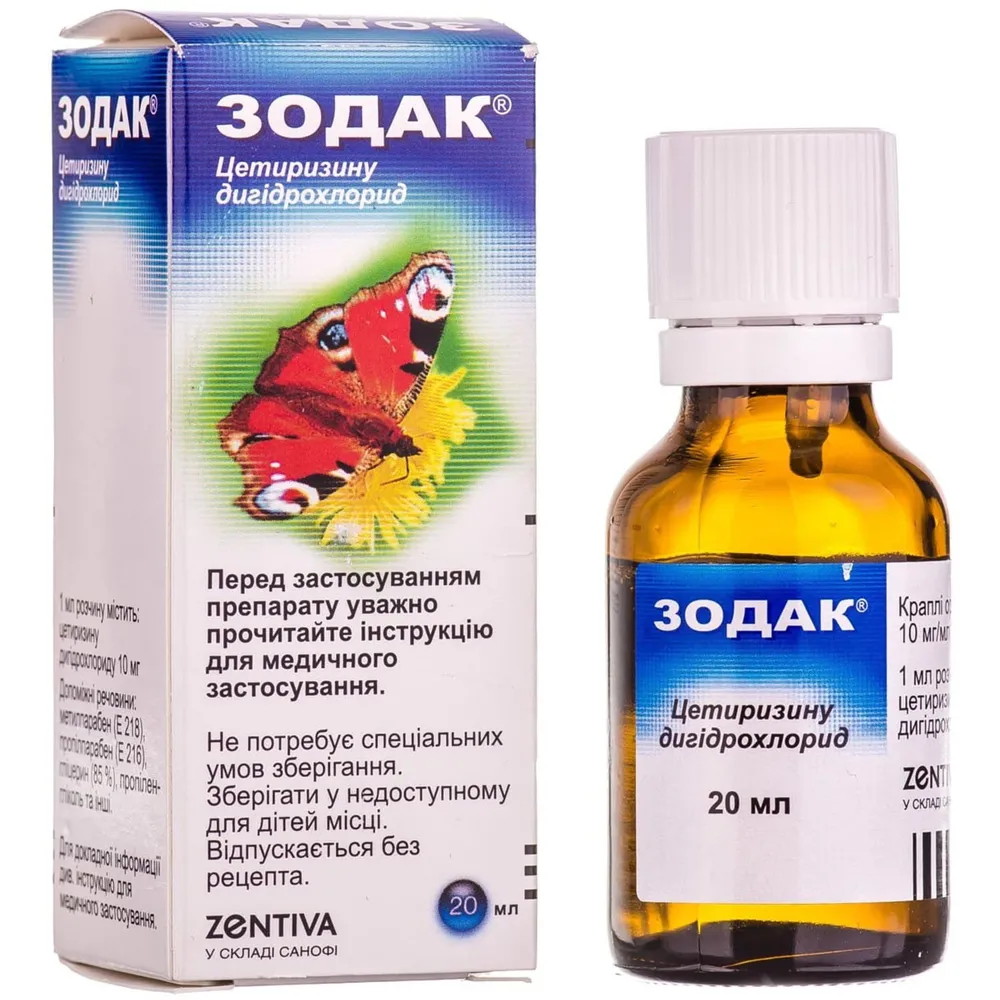
Table of Contents
INSTRUCTIONS FOR MEDICAL USE OF THE MEDICINAL PRODUCT ZODAC® (ZODAC®)
Composition:
Active substance: cetirizine dihydrochloride;
1 ml of solution contains cetirizine dihydrochloride 10 mg;
Excipients: methylparaben (E 218); propylparaben (E 216); glycerin (85%); propylene glycol; sodium saccharin; sodium acetate trihydrate; glacial acetic acid; purified water.
Medicinal form. Oral drops.
Main physicochemical properties: clear, colorless or slightly yellowish solution.
Pharmacotherapeutic group. Antihistamines for systemic use. Piperazine derivatives. ATC code R06A E07.
Pharmacological Properties
Pharmacodynamics
Cetirizine, a metabolite of hydroxyzine in humans, is a potent and selective antagonist of peripheral H1-receptors. In vitro receptor binding studies showed no affinity for receptors other than H1-receptors. In addition to its H1-receptor antagonistic effect, cetirizine exerts anti-allergic activity: at doses of 10 mg once or twice daily, the drug inhibits the late-phase recruitment of inflammatory cells, particularly eosinophils, in the skin and conjunctiva of individuals exposed to antigen; at a dose of 30 mg/day, it inhibits eosinophil influx in bronchoalveolar fluid during the late-phase bronchoconstriction induced by inhaled allergens in patients with bronchial asthma. Furthermore, cetirizine inhibits the late-phase inflammatory response induced by intradermal administration of kallikrein in patients with chronic urticaria. It also reduces the expression of adhesion molecules such as ICAM-1 and VCAM-1, which are markers of allergic inflammation.
Studies in healthy volunteers have shown that cetirizine at doses of 5 and 10 mg potently inhibits histamine-induced wheal and flare reactions in the skin, although no correlation with efficacy has been demonstrated. After a single 10 mg dose, onset of action occurs within 20 minutes in 50% of individuals and within 1 hour in 95% of individuals. The effect lasts for at least 24 hours after a single dose. In a 35-day study in children aged 5 to 12 years, no tolerance to the antihistaminic effect of cetirizine (suppression of wheal and flare reactions) was observed. When cetirizine treatment is discontinued after repeated administration, normal skin reactivity to histamine is restored within 3 days.
In a 6-week, placebo-controlled study involving 186 patients with allergic rhinitis and concomitant mild to moderate bronchial asthma, treatment with cetirizine 10 mg once daily improved rhinitis symptoms without affecting lung function. This study confirms the safety of cetirizine use in patients with mild to moderate bronchial asthma.
In a placebo-controlled study, administration of cetirizine at a high daily dose of 60 mg for 7 days did not cause statistically significant QT interval prolongation.
At recommended doses, cetirizine improves the condition of patients with perennial and seasonal allergic rhinitis.
Pharmacokinetics
The steady-state maximum plasma concentration is approximately 300 ng/mL and is reached within 1 ± 0.5 hours. No accumulation of cetirizine was observed after administration of a 10 mg daily dose for 10 days. The distribution of pharmacokinetic parameters such as peak concentration (Cmax) and area under the curve (AUC) is consistent among healthy volunteers.
The extent of cetirizine absorption is not reduced when taken with food, although the rate of absorption is decreased. The extent of bioavailability is similar when cetirizine is administered as a solution, capsules, or tablets. The apparent volume of distribution is 0.5 L/kg. Plasma protein binding of cetirizine is 93 ± 0.3%. Cetirizine does not affect warfarin binding to plasma proteins.
Cetirizine undergoes minimal first-pass metabolism. Approximately two-thirds of the dose is excreted unchanged in urine. The terminal elimination half-life is approximately 10 hours. Cetirizine exhibits linear kinetics over the dose range of 5 to 60 mg.
Special Patient Groups
Elderly patients: After a single oral dose of 10 mg, the elimination half-life increased by almost 50%, and clearance decreased by approximately 40% in 16 elderly subjects compared to younger individuals. The reduced clearance of cetirizine in elderly volunteers was associated with impaired renal function.
Children: The elimination half-life of cetirizine is approximately 6 hours in children aged 6–12 years and 5 hours in children aged 2–6 years. In children aged 6 to 24 months, this value is reduced to 3.1 hours.
Patients with renal impairment: The pharmacokinetics of the drug were similar in patients with mild renal impairment (creatinine clearance >40 mL/min) and healthy volunteers. In patients with moderate renal impairment, the elimination half-life increased threefold and clearance decreased by 70% compared to healthy volunteers. In patients undergoing hemodialysis (creatinine clearance 7 mL/min), administration of a 10 mg oral dose of cetirizine resulted in a threefold increase in elimination half-life and a 70% reduction in clearance compared to healthy volunteers. Cetirizine is poorly eliminated by hemodialysis. Dose adjustment is required for patients with moderate to severe renal impairment.
Patients with hepatic impairment: In patients with chronic liver disease (hepatocellular, cholestatic, and biliary cirrhosis), administration of a single 10 or 20 mg dose of cetirizine resulted in a 50% increase in elimination half-life and a 40% reduction in clearance compared to healthy volunteers. Dose adjustment in patients with hepatic impairment is necessary only if they also have concomitant renal impairment.
Clinical characteristics.
Indications.
The medicinal product is indicated for the relief of nasal and ocular symptoms of seasonal and perennial allergic rhinitis and chronic idiopathic urticaria in adults and children aged 2 years and older.
Contraindications.
Hypersensitivity to cetirizine, to any component of the medicinal product, to hydroxyzine or any piperazine derivatives in medical history.
Severe renal impairment with creatinine clearance less than 10 ml/min.
Interaction with other medicinal products and other forms of interaction.
Given the pharmacokinetic and pharmacodynamic properties of cetirizine and its safety profile, no interactions are expected for this antihistamine. Throughout the period of drug interaction studies, particularly with pseudoephedrine or theophylline at a dose of 400 mg per day, no pharmacodynamic or statistically significant pharmacokinetic interactions were observed.
Pharmacokinetic interaction studies have been conducted with cetirizine and pseudoephedrine, antipyrine, cimetidine, ketoconazole, erythromycin, and azithromycin—no pharmacokinetic interactions were observed. In a study of multiple dosing of theophylline (400 mg once daily) and cetirizine, a slight (16%) reduction in cetirizine clearance was observed, while theophylline distribution remained unchanged with concomitant administration of cetirizine.
Studies of cetirizine used concomitantly with cimetidine, glipizide, diazepam, and pseudoephedrine showed no evidence of adverse pharmacodynamic interactions.
Studies of cetirizine used concomitantly with azithromycin, erythromycin, ketoconazole, theophylline, and pseudoephedrine showed no evidence of adverse clinical interactions. Furthermore, concomitant administration of cetirizine with macrolides or ketoconazole has never led to clinically significant changes on ECG.
In a study of multiple dosing of ritonavir (600 mg twice daily) and cetirizine (10 mg daily), cetirizine exposure increased by approximately 40%, while ritonavir distribution was slightly altered (–11%) with concomitant administration of cetirizine.
The extent of cetirizine absorption is not reduced when taken with food, although the rate of absorption is delayed by 1 hour.
In sensitive patients, concomitant intake of alcohol or other central nervous system depressants may cause additional impairment of attention and worsening of performance, although cetirizine does not potentiate the effect of alcohol (at blood alcohol levels of 0.5 g/L).
Special precautions for use
No clinically significant interactions with alcohol have been observed when administered at therapeutic doses (at blood alcohol levels of 0.5 g/L). However, concomitant use of alcohol is not recommended.
Use with caution in patients predisposed to urinary retention (e.g., spinal cord injury, prostate hyperplasia), as cetirizine may increase the risk of urinary retention.
The drug should be prescribed with caution to patients with epilepsy or those at risk of seizures.
Antihistamines suppress skin allergic reactions; therefore, administration of the drug should be discontinued at least 3 days before conducting skin allergy tests (elimination period).
Use with caution in patients with chronic renal insufficiency (dose adjustment required) and in elderly patients with renal impairment (possible reduction in glomerular filtration rate).
Methylparaben and propylparaben contained in the formulation may cause allergic reactions (possibly delayed).
Pruritus and/or urticaria may occur after discontinuation of cetirizine, even if these symptoms were not present before treatment initiation. In some cases, symptoms may be severe and may require re-treatment after discontinuation.
Pediatric population
The use of the drug in infants and children under 2 years of age is not recommended.
Use during pregnancy or breastfeeding
Pregnancy. There is insufficient data on the effects of the drug during pregnancy. Animal studies do not indicate any direct or indirect harmful effects on pregnancy, embryonic/fetal development, parturition, or postnatal development. The drug should be prescribed to pregnant women only if, in the opinion of the physician, the benefit outweighs the potential risk to the fetus.
Breastfeeding period. Cetirizine passes into breast milk at concentrations ranging from 25% to 90% of plasma concentrations, depending on the time interval after drug administration. Therefore, the drug should be used with caution in breastfeeding women.
Fertility. Limited data are available regarding effects on human fertility; however, no adverse effects have been reported. Animal studies have not shown any harmful effects on fertility.
Ability to affect reaction speed when driving vehicles or operating machinery.
Objective assessment of the ability to drive, presence of hidden drowsiness, and ability to work on an assembly line showed no clinically significant effect of the drug when used at the recommended dose of 10 mg.
Patients who drive vehicles, perform potentially hazardous work, or operate machinery should not exceed the recommended doses and should consider their individual response to the drug.
In sensitive patients, concomitant use of the drug with other agents that depress the central nervous system may lead to additional impairment of attention and reduced performance.
Dosage and method of administration.
Administer orally.
Children aged 2 to 6 years: 2.5 mg twice daily (5 drops twice daily).
Children aged 6 to 12 years: 5 mg twice daily (10 drops twice daily).
Adults and children aged 12 years and older: 10 mg once daily (20 drops).
Special patient groups
Elderly patients. Dose adjustment is not required (provided normal renal function).
Patients with renal impairment (moderate and severe). Dosing should be individualized depending on renal function status. The dose should be adjusted according to the table below. To use the table, the patient's creatinine clearance (CrCl) in mL/min must be determined. CrCl (mL/min) can be estimated from serum creatinine (mg/dL) using the following formula:
| CC = |
[140 – age (in years)] × body weight (kg) 72 × serum creatinine (mg/dL) |
(× 0.85 for women) |
Dosage adjustment for adult patients with renal function impairment
| Group |
Creatinine clearance (mL/min) |
Dosage and frequency |
| Normal function |
≥ 80 |
10 mg once daily |
| Mild impairment |
50–79 |
10 mg once daily |
| Moderate impairment |
30–49 |
5 mg once daily |
| Severe impairment |
< 30 |
5 mg every 2 days |
| End-stage renal disease – patients undergoing dialysis |
< 10 |
Contraindicated |
For children with impaired kidney function, dosage should be individually adjusted depending on the patient's creatinine clearance value, age and body weight.
Patients with impaired liver function. There is no need for dose adjustment in case of impaired liver function alone.
Patients with impaired liver and kidney function. Dose adjustment is recommended (see section above «Patients with impaired kidney function»).
The duration of treatment is determined individually by the physician depending on the course of the disease.
Method of administration.
The medicinal product should be dropped onto a spoon or dissolved in water and taken orally.
If dilution is used, it is important to consider, especially when administering to children, that the volume of water to which the drops are added should correspond to the amount of liquid the patient can swallow. The diluted solution should be taken immediately.
Children.
The drug is indicated for children aged 2 years and older.
Overdose.
Symptoms. Symptoms observed after significant overdose of cetirizine are mainly related to effects on the central nervous system or to effects indicating anticholinergic activity. Adverse effects reported after ingestion of doses at least 5 times higher than the recommended daily dose include: confusion, diarrhea, vertigo, increased fatigue, headache, malaise, mydriasis, itching, restlessness, sedation, somnolence, stupor, tachycardia, tremor, urinary retention.
Treatment. There is no specific antidote for cetirizine. Symptomatic and supportive therapy is recommended in case of overdose. Gastric lavage should be performed as soon as possible after drug intake. Cetirizine is not effectively removed by dialysis.
Adverse reactions.
Clinical studies have shown that cetirizine, when used at recommended doses, has minimal central nervous system effects, including somnolence, increased fatigue, vertigo, and headache. In some cases, paradoxical stimulation of the central nervous system has been reported.
Methylparahydroxybenzoate and propylparahydroxybenzoate, components of oral drops, may cause allergic reactions (possibly delayed).
Although cetirizine is a selective antagonist of peripheral H1-receptors and exhibits almost no anticholinergic activity, isolated cases of urinary retention, accommodation disorders of the eye, and dry mouth have been reported.
Cases of liver function impairment characterized by elevated liver enzyme levels and increased bilirubin levels have been reported. The condition usually normalized after discontinuation of the drug.
In double-blind, controlled clinical trials comparing cetirizine with placebo or with recommended doses (10 mg daily for cetirizine) of other antihistamines, and providing quantitative safety data, more than 3200 patients received cetirizine.
In placebo-controlled studies, the following adverse effects occurred in at least 1.0% of patients treated with cetirizine at a dose of 10 mg:
| Undesirable effect (according to WHO terminology) |
Cetirizine 10 mg (n = 3260) |
Placebo (n = 3061) |
| General disorders increased fatigue |
1.63 % |
0.95 % |
| Nervous system disorders dizziness headache |
1.10 % 7.42 % |
0.98 % 8.07 % |
| Gastrointestinal disorders stomach pain dry mouth nausea |
0.98 % 2.09 % 1.07 % |
1.08 % 0.82 % 1.14 % |
| Psychiatric disorders drowsiness |
9.63 % |
5.00 % |
| Respiratory system disorders pharyngitis pharyngitis |
1.29 % |
1.34 % |
| Central and peripheral nervous system disorders dizziness headache |
1.10 % 7.42 % |
0.98 % 8.07 % |
Although somnolence occurred statistically more frequently than in the placebo group, in most cases it was mild or moderate. Other studies have shown that in healthy young volunteers, administration of the drug at the recommended daily dose does not affect normal daily activities.
Adverse reactions observed in placebo-controlled studies in at least 1% of children aged 6 months to 12 years:
| Undesirable effect (according to WHO Adverse Reaction Terminology) |
Cetirizine (n = 1656) |
Placebo (n = 1294) |
| Gastrointestinal disorders diarrhea |
1.0 % |
0.6 % |
| Psychiatric disorders sleepiness |
1.8 % |
1.4 % |
| Respiratory system disorders rhinitis |
1.4 % |
1.1 % |
| General disorders increased fatigue |
1.0 % |
0.3 % |
Post-marketing observations.
Adverse effects are listed by organ systems according to MedDRA and by frequency.
Frequency is defined as follows: very common (≥1/10); common (≥1/100 to <1/10); uncommon (≥1/1000 to <1/100); rare (≥1/10000 to <1/1000); very rare (<1/10000); frequency not known (cannot be estimated from available data).
Investigations
Rare: weight gain.
Cardiac disorders
Rare: tachycardia.
Blood and lymphatic system disorders
Very rare: thrombocytopenia.
Nervous system disorders
Uncommon: paraesthesia.
Rare: convulsions.
Very rare: dysgeusia, dyskinesia, dystonia, syncope, tremor.
Frequency not known: amnesia, memory impairment.
Eye disorders
Very rare: accommodation disorder of the lens, blurred vision, ocular movement disorders.
Ear and labyrinth disorders
Frequency not known: vertigo.
Gastrointestinal disorders
Uncommon: diarrhoea.
Renal and urinary disorders
Very rare: dysuria, enuresis.
Frequency not known: urinary retention.
Skin and subcutaneous tissue disorders
Uncommon: pruritus, rash.
Rare: urticaria.
Very rare: angioedema, fixed drug eruption, localised drug eruptions.
Frequency not known: acute generalized exanthematous pustulosis.
After discontinuation of cetirizine, cases of pruritus and/or urticaria have been reported.
General disorders
Uncommon: asthenia, feeling of fatigue.
Rare: oedema.
Musculoskeletal and connective tissue disorders
Frequency not known: arthralgia.
Immune system disorders
Rare: hypersensitivity.
Very rare: anaphylactic shock.
Frequency not known: allergic reactions (possibly delayed).
Hepatobiliary disorders
Rare: liver function abnormalities (increased levels of transaminases, alkaline phosphatase, γ-glutamyltransferase and bilirubin).
Frequency not known: hepatitis.
Psychiatric disorders
Uncommon: anxiety.
Rare: aggression, confusion, depression, hallucinations, insomnia.
Very rare: nervous tic.
Frequency not known: suicidal thoughts, nightmares.
Metabolism and nutrition disorders
Frequency not known: increased appetite.
Reporting of suspected adverse reactions
Reporting suspected adverse reactions after marketing authorization is important. It allows ongoing monitoring of the benefit/risk balance of the medicinal product. Healthcare professionals should report any suspected adverse reactions via the national pharmacovigilance system.
Shelf life.
3 years.
Storage conditions.
No special storage conditions required. Keep out of reach and sight of children.
Packaging.
20 mL of solution in a bottle with dropper. 1 bottle per cardboard box.
Authorization category.
Over-the-counter.
Manufacturer.
A. Nattermann und Cie. GmbH.
Manufacturer's address.
Nattermannallee 1, 50829 Cologne, North Rhine-Westphalia, Germany.
Marketing Authorization Holder.
Opella Health Ukraine LLC, Ukraine.
Address of the Marketing Authorization Holder.
48-50A Zhyljanska St., Kyiv, 01033, Ukraine.