Zelboraf
Ukraine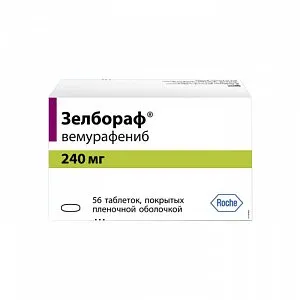
Table of Contents
INSTRUCTIONS FOR MEDICAL USE OF THE MEDICINAL PRODUCT Zelboraf® (Zelboraf®)
Composition:
Active substance: vemurafenib;
One tablet contains 240 mg of vemurafenib as a co-precipitate of vemurafenib and hypromellose acetate succinate (in a 3:7 ratio);
Excipients: colloidal anhydrous silicon dioxide, sodium croscarmellose, hydroxypropylcellulose, magnesium stearate;
Tablet coating: polyvinyl alcohol, titanium dioxide (E 171), macrogol 3350, talc, iron oxide red (E 172).
Pharmaceutical form. Film-coated tablets.
Main physicochemical characteristics: oval, biconvex film-coated tablets ranging in color from pink-white to orange-white, with "VEM" engraved on one side.
Pharmacotherapeutic group.
Antineoplastic agents. Protein kinase inhibitors. B-Raf serine-threonine kinase (BRAF) inhibitors.
ATC code L01E C01
Pharmacological properties.
Pharmacodynamics.
Mechanism of action and pharmacodynamic effects
Vemurafenib is an inhibitor of serine-threonine kinase encoded by the BRAF gene. Mutations in the BRAF gene lead to constitutive activation of BRAF proteins, which may result in cell proliferation in the absence of associated growth factors.
Preclinical data obtained from biochemical assays indicate that vemurafenib is a potent inhibitor of BRAF kinases with activating mutations at codon 600 (Table 1).
Table 1. Kinase inhibitory activity of vemurafenib against various BRAF kinases
| Kinase |
Expected frequency of V600 mutations in melanoma* |
Half-maximal inhibitory concentration (IC50, nmol) |
| BRAFV600E |
87.3% |
10 |
| BRAFV600K |
7.9% |
7 |
| BRAFV600R |
1% |
9 |
| BRAFV600D |
<0.2% |
7 |
| BRAFV600G |
<0.1% |
8 |
| BRAFV600M |
<0.1% |
7 |
| BRAFV600A |
<0.1% |
14 |
| BRAFWT |
No data available |
39 |
* Calculated based on 16,403 cases of melanoma with annotated BRAF codon 600 mutations in the COSMIC database, release 71 (November 2014).
This inhibitory effect was confirmed by ERK phosphorylation assay and cellular anti-proliferative assay using available melanoma cell lines expressing V600-mutant BRAF. Results from the cellular anti-proliferative assay indicate that the 50% inhibitory concentration (IC50) against V600-mutant cell lines (V600E, V600R, V600D, and V600K mutant cell lines) ranged from 0.016 to 1.131 µM, whereas the IC50 against wild-type BRAF cell lines was 12.06 and 14.32 µM, respectively.
Determination of BRAF Mutation Status
Prior to initiating treatment with Zelboraf**®**, the presence of the BRAF V600 mutation in tumor cells must be confirmed using a validated test method. In phase II and III clinical studies, detection of the BRAF V600 mutation was performed using real-time polymerase chain reaction (Cobas® 4800 BRAF V600 Mutation Test).
Clinical Efficacy
The efficacy of Zelboraf**®** was evaluated in a phase III clinical study (NO25026) involving 336 patients and in a phase II clinical study (NP22657) involving 132 patients. All patients had metastatic melanoma with a BRAF V600 mutation (confirmed by Cobas® 4800 BRAF V600 Mutation Test).
Previously Untreated Patients (NO25026)
A total of 675 patients with unresectable or metastatic melanoma harboring the BRAF V600 mutation and who had not received prior therapy were randomized to receive either Zelboraf**®** (960 mg twice daily) (n=337) or dacarbazine (1000 mg/m² on day 1 of every 3 weeks) (n=338). The co-primary efficacy endpoints in the study were overall survival and progression-free survival. Statistically and clinically significant improvements in the co-primary efficacy endpoints were observed for overall survival (p<0.0001) and progression-free survival (p<0.0001) (unstratified log-rank test). The difference in progression-free survival was substantial, with 5.3 months in the Zelboraf**®** treatment group compared to 1.6 months in the dacarbazine group; hazard ratio 0.26 (p<0.0001). The confirmed overall response rate was 48.4% in the Zelboraf**®** group compared to 5.5% in the dacarbazine group.
Patients Who Had Received At Least One Prior Systemic Therapy (NP22657)
In an uncontrolled, multicenter, international phase II study involving 132 patients with metastatic melanoma with a BRAF V600 mutation who had received at least one prior systemic therapy, the primary endpoint of response rate was 53% (confirmed response rate assessed by an independent review committee), with a median follow-up of 12.9 months. Median overall survival was 15.9 months. The rate of overall survival at 6 months was 77% and at 12 months was 58%.
Pharmacokinetics
Vemurafenib belongs to Class IV of the Biopharmaceutics Classification System (characterized by low solubility and low permeability). Pharmacokinetic parameters of vemurafenib were evaluated using non-compartmental analysis in phase I and phase III studies (20 patients receiving 960 mg twice daily for 15 days, and 204 patients who reached steady state after 22 days of treatment), as well as through population pharmacokinetic analysis of pooled data from 458 patients, of whom 457 were of White race.
Absorption
The steady-state bioavailability ranged from 32% to 115% (mean 64%) relative to an intravenous microdose. These data were obtained in a phase I study without controlled feeding conditions in 4 patients with BRAF V600-positive malignancies.
Vemurafenib is absorbed with a median Tmax of approximately 4 hours after a single 960 mg dose (4 tablets of 240 mg).
Vemurafenib exhibits high inter-individual variability. In a phase II study, AUC0–8h and Cmax on Day 1 were 22.1 ± 12.7 µg·h/mL and 4.1 ± 2.3 µg/mL, respectively. With repeated dosing of vemurafenib twice daily, accumulation of the drug occurs. According to non-compartmental analysis, on Day 15/Day 1, the accumulation ratio ranged from 15- to 17-fold for AUC and from 13- to 14-fold for Cmax, with steady-state AUC0–8h and Cmax being 380.2 ± 143.6 µg·h/mL and 56.7 ± 21.8 µg/mL, respectively.
Food (high-fat meal) increases the relative bioavailability of a single 960 mg dose of vemurafenib. The geometric mean ratios (fed vs. fasting) for Cmax and AUC were 2.5 and 4.6–5.1, respectively. The median Tmax increased from 4 to 7.5 hours when vemurafenib was administered with food.
It is currently unknown whether food affects vemurafenib exposure at steady state. Administration of vemurafenib on an empty stomach may result in substantially lower steady-state exposure compared to administration with food or shortly after a meal. However, occasional administration of vemurafenib on an empty stomach is expected to have minimal impact on steady-state exposure due to the high accumulation of vemurafenib at steady state. Safety and efficacy data were obtained from pilot studies in patients who took vemurafenib with or without food.
Differences in exposure may occur due to variations in gastrointestinal content and volume, pH, motility, transit time, and bile composition.
At steady state, the average plasma exposure of vemurafenib is stable over the 24-hour dosing interval, as evidenced by a mean ratio of 1.13 between plasma concentrations immediately before and 2–4 hours after the morning dose.
Following oral administration, the population absorption rate constant in patients with metastatic melanoma is estimated to be 0.19 h−1 (with 101% inter-individual variability).
Distribution
The observed volume of distribution of vemurafenib in patients with metastatic melanoma is 91 L (with 64.8% inter-individual variability). The drug is highly bound to human plasma proteins in vitro (>99%).
Metabolism
The relative quantitative contributions of vemurafenib and its metabolites were studied in a human mass balance study following a single oral dose of 14C-labeled vemurafenib. CYP3A4 is the primary enzyme responsible for the metabolism of vemurafenib in vitro. Conjugative metabolites (glucuronidation and glycosylation) have also been identified in humans. However, the drug is predominantly present unchanged in plasma (95%). Although metabolism does not lead to significant levels of metabolites in plasma, the importance of metabolism for elimination cannot be excluded.
Elimination
The observed clearance of vemurafenib in patients with metastatic melanoma is 29.3 L/h (inter-individual variability of 31.9%). The elimination half-life of vemurafenib, based on population pharmacokinetic analysis, is 51.6 hours (range between 5th and 95th percentiles: 29.8–119.5 hours).
In a human mass balance study, approximately 95% of the dose was recovered within 18 days following oral administration of vemurafenib. The majority of vemurafenib-related material (94%) was recovered in feces and a minor portion (1%) in urine. Renal excretion is not a major route of elimination, whereas biliary excretion of unchanged compound may be an important elimination pathway. Vemurafenib is both a substrate and an inhibitor of P-gp in vitro.
Pharmacokinetics in Special Patient Populations
Elderly Patients: Population pharmacokinetic analysis indicates that patient age has no statistically significant effect on the pharmacokinetic parameters of vemurafenib.
Gender Differences: Population pharmacokinetic analysis showed that the observed clearance in males was 17% higher and the volume of distribution 48% higher than in females. It is unclear whether this is due to gender or body size. However, this difference is not considered large enough to warrant dose adjustments based on body size or gender.
Patients with Renal Impairment: Population pharmacokinetic analysis of data from clinical studies in patients with metastatic melanoma showed that mild to moderate renal impairment (creatinine clearance >40 mL/min) does not affect the clearance of vemurafenib. There are no data available for patients with severe renal impairment (see sections "Dosage and Administration" and "Special Warnings and Precautions for Use").
Patients with Hepatic Impairment: Based on preclinical data and mass balance studies, vemurafenib is primarily eliminated via the liver in humans. In population pharmacokinetic analysis using data from clinical studies in patients with metastatic melanoma, increases in AST, ALT, and total bilirubin levels up to three times the upper limit of normal did not affect the clearance of vemurafenib. There is insufficient data to determine the effect of metabolic or excretory hepatic impairment on the pharmacokinetics of vemurafenib (see sections "Dosage and Administration" and "Special Warnings and Precautions for Use").
Pediatric Patients: Pharmacokinetic studies of vemurafenib have not been conducted in children and adolescents.
Clinical characteristics.
Indications.
Monotherapy for unresectable or metastatic melanoma with BRAF V600 mutation detected in tumor cells.
Contraindications.
Hypersensitivity to vemurafenib and other components of the medicinal product.
Interaction with other medicinal products and other forms of interaction.
Effect of vemurafenib on other medicinal products
Results from in vivo drug interaction studies in patients with metastatic melanoma demonstrated that vemurafenib is a moderate inhibitor of CYP1A2 and an inducer of CYP3A4.
Concomitant use of vemurafenib and medicinal products with a narrow therapeutic index that are metabolized by CYP1A2 (such as agomelatine, alosetron, duloxetine, melatonin, ramelteon, tacrine, tizanidine, theophylline) is not recommended. If concomitant use cannot be avoided, caution should be exercised, as vemurafenib may increase plasma exposure of drugs that are CYP1A2 substrates. Dose reduction of CYP1A2 substrate drugs should be considered when used concomitantly with vemurafenib, if clinically indicated. Concomitant administration of vemurafenib increased plasma exposure (AUC) of caffeine (a CYP1A2 substrate) by 2.6-fold. In another clinical study, vemurafenib increased Cmax and AUC of tizanidine (a single 2 mg dose), a CYP1A2 substrate, by approximately 2.2 and 4.7 times, respectively.
Concomitant use of vemurafenib and medicinal products with a narrow therapeutic index that are metabolized by CYP3A4 is not recommended. If concomitant use cannot be avoided, it should be noted that vemurafenib may reduce plasma concentrations of CYP3A4 substrates, potentially decreasing their efficacy. Due to this interaction, the effectiveness of hormonal contraceptives metabolized by CYP3A4 and used concomitantly with vemurafenib may be reduced. Dose adjustment of CYP3A4 substrates with a narrow therapeutic range should be considered if clinically indicated (see sections "Special warnings and precautions for use" and "Use during pregnancy and lactation"). In a clinical study, concomitant administration of vemurafenib resulted in a mean 39% reduction in AUC of midazolam (a CYP3A4 substrate), with a maximum reduction of up to 80%.
In vitro studies showed weak induction of CYP2B6 at a vemurafenib concentration of 10 µmol/L. It is currently unknown whether vemurafenib at plasma concentrations of 100 µmol/L in patients at steady state (approximately 50 µg/mL) reduces plasma concentrations of concomitantly administered CYP2B6 substrates such as bupropion.
Concomitant administration with vemurafenib increased AUC of S-warfarin (a CYP2C9 substrate) by 18%. Caution should be exercised, and additional monitoring of the international normalized ratio (INR) should be considered when co-administering vemurafenib and warfarin (see section "Special warnings and precautions for use").
In vitro, vemurafenib moderately inhibited CYP2C8. The in vivo relevance of these data is unknown, but a risk of clinically significant effects with concomitant use of CYP2C8 substrates cannot be excluded. Caution should be exercised when co-administering vemurafenib with CYP2C8 substrates that have a narrow therapeutic index, as vemurafenib may increase concentrations of these drugs.
Due to the long half-life of vemurafenib, the maximum inhibitory effect of vemurafenib on a co-administered drug may not be observed until day 8 of treatment.
After discontinuation of vemurafenib therapy, an 8-day washout period may be necessary to avoid interactions with subsequent treatments.
Radiation therapy
Enhanced toxicity due to radiation therapy has been reported in patients receiving vemurafenib (see sections "Special warnings and precautions for use" and "Undesirable effects"). In most cases, patients received radiation therapy regimens equal to or greater than 2 Gy/day (hypofractionated regimens).
Effect of vemurafenib on transport systems of other substances
In vitro studies have shown that vemurafenib is an inhibitor of efflux transporters – P-glycoprotein (P-gp) and breast cancer resistance protein (BCRP).
A clinical drug interaction study demonstrated that multiple oral doses of vemurafenib (960 mg twice daily) increased exposure after oral administration of a single dose of the P-gp substrate digoxin by approximately 1.8-fold and 1.5-fold for AUClast and Cmax, respectively. Caution should be exercised when co-administering vemurafenib with P-gp substrates (e.g., aliskiren, ambrisentan, colchicine, dabigatran etexilate, digoxin, everolimus, fexofenadine, lapatinib, maraviroc, nilotinib, posaconazole, ranolazine, sirolimus, sitagliptin, talinolol, topotecan). Dose reduction of the concomitantly administered drug should be considered if clinically indicated. Additional monitoring of drug levels should be considered for P-gp substrates with a narrow therapeutic range (e.g., digoxin, dabigatran etexilate, aliskiren) (see section "Special warnings and precautions for use").
It is unknown how vemurafenib affects medicinal products that are BCRP substrates.
An increase in exposure of drugs transported by BCRP (e.g., methotrexate, mitoxantrone, rosuvastatin) cannot be excluded.
Many anticancer drugs are BCRP substrates, and therefore, a theoretical risk of interaction with vemurafenib exists.
The potential effect of vemurafenib on other transporters is currently unknown.
Effect of medicinal products on vemurafenib in concomitant use
Results from in vitro studies indicate that CYP3A4 metabolism and glucuronidation are responsible for the metabolism of vemurafenib. Biliary excretion is another important elimination pathway for vemurafenib. In vitro studies have shown that vemurafenib is a substrate of efflux transporters – P-gp and BCRP. It is currently unknown whether vemurafenib is a substrate of other transporter proteins. Concomitant use of strong CYP3A4 inhibitors or inducers, or inhibitors/inducers of transporter protein activity, may affect vemurafenib concentrations.
Concomitant administration of itraconazole, a potent CYP3A4/P-gp inhibitor, resulted in an approximately 40% increase in steady-state AUC of vemurafenib. Vemurafenib should be used with caution in combination with strong inhibitors of CYP3A4, glucuronidation, and/or transporter proteins (e.g., ritonavir, saquinavir, telithromycin, ketoconazole, itraconazole, voriconazole, posaconazole, nefazodone, atazanavir). The safety of use in patients receiving concomitant therapy with such drugs should be closely monitored, and dose adjustments should be made if clinically indicated (see Table 2 in section "Dosage and administration").
In a clinical study, concomitant administration of a single 960 mg dose of vemurafenib with rifampicin significantly reduced plasma exposure of vemurafenib by approximately 40%.
Concomitant use with strong inducers of P-gp, glucuronidation, and/or CYP3A4 (e.g., rifampicin, rifabutin, carbamazepine, phenytoin, or St. John’s wort) may lead to subtherapeutic exposure to vemurafenib. Therefore, concomitant use of vemurafenib with strong inducers of P-gp, glucuronidation, and/or CYP3A4 should be avoided.
The effect of P-gp and BCRP inhibitors that are not strong CYP3A4 inhibitors is unknown. Medicinal products affecting P-gp (e.g., verapamil, cyclosporine, quinidine) or BCRP (e.g., cyclosporine, gefitinib) may influence the pharmacokinetics of vemurafenib.
Special precautions for use.
Prior to initiating treatment with Zelboraf**®**, the presence of the BRAF V600 mutation in tumor cells must be confirmed using a validated testing method. The efficacy and safety of vemurafenib in patients with tumors expressing non-V600E and non-V600K BRAF mutations have not been established (see section "Pharmacodynamics"). Vemurafenib should not be used in patients with malignant melanoma harboring wild-type BRAF.
Hypersensitivity reactions
Severe hypersensitivity reactions, including anaphylactic reactions, have been reported during treatment with Zelboraf**®** (see sections "Contraindications" and "Side effects"). Severe hypersensitivity reactions may include Stevens-Johnson syndrome, generalized rash, erythema, and hypotension. In case of severe hypersensitivity reactions, Zelboraf**®** treatment must be permanently discontinued.
Dermatological reactions
Severe dermatological reactions have been reported in pivotal clinical trials in patients receiving vemurafenib, including rare cases of Stevens-Johnson syndrome and toxic epidermal necrolysis. Cases of drug rash with eosinophilia and systemic symptoms (DRESS syndrome) have also been reported during treatment with Zelboraf**®** (see section "Side effects"). For patients who experience a severe dermatological reaction, treatment with vemurafenib should be permanently discontinued.
Enhanced toxicity of ionizing radiation
Cases of localized inflammatory reactions in previously irradiated areas and radiation sensitization have been reported in patients receiving radiotherapy before, during, or after treatment with vemurafenib. In most cases, skin lesions occurred, and in some cases, internal organ damage with fatal outcomes was observed (see sections "Interaction with other medicinal products and other forms of interaction" and "Side effects"). Vemurafenib should be used with caution during or after radiotherapy.
QT interval prolongation
QT interval prolongation, proportional to the duration of treatment, was observed in an uncontrolled, open-label Phase II QT interval study in previously treated patients with metastatic melanoma (see section "Side effects"). QT interval prolongation may increase the risk of ventricular arrhythmias, including torsades de pointes. Treatment with vemurafenib is not recommended in patients with uncorrected electrolyte imbalances (including magnesium) and congenital long QT syndrome, as well as in patients taking medications known to prolong the QT interval.
An ECG and electrolyte assessment (including magnesium) should be performed before starting treatment, one month after initiating vemurafenib therapy, and after each dose modification. Thereafter, ECG monitoring and electrolyte measurements should be repeated monthly for the first 3 months and then every 3 months or more frequently if clinically indicated, particularly in patients with moderate to severe hepatic impairment. Treatment with Zelboraf**®** should not be initiated if the corrected QT interval exceeds 500 ms. If the corrected QT interval exceeds 500 ms during treatment, temporary interruption of Zelboraf**®** is recommended, along with correction of electrolyte imbalances (including magnesium) and management of cardiac risk factors for QT prolongation (e.g., congestive heart failure, bradyarrhythmias). Reinitiation of treatment should not occur until the QT interval is below 500 ms, and reinitiation should be at a reduced dose as described in Table 3. If, after correction of concomitant risk factors, the corrected QT interval remains above 500 ms and exceeds the baseline value (recorded before starting treatment) by more than 60 ms, Zelboraf**®** should be permanently discontinued.
Ophthalmological reactions
Serious ophthalmological reactions, including uveitis, iritis, and retinal vein occlusion, have been reported. Routine monitoring for ophthalmological reactions should be performed in patients.
Squamous cell carcinoma of the skin
Cases of squamous cell carcinoma of the skin, including those classified as keratoacanthoma and mixed keratoacanthoma, have been reported in patients receiving Zelboraf**®** (see section "Side effects"). All patients should undergo a dermatological examination before starting treatment and periodically during therapy. Any suspicious skin lesions should be surgically removed, the patient referred to a dermatologist, and managed according to local standards of care. Skin monitoring should be performed monthly during treatment and for 6 months after treatment for squamous cell carcinoma of the skin. If squamous cell carcinoma of the skin develops, continuation of treatment without dose adjustment is recommended. Skin monitoring should continue for 6 months after discontinuation of Zelboraf**®** or until initiation of another anticancer therapy. Patients should be informed to report any skin changes to their physician.
Squamous cell carcinoma at other sites
Non-cutaneous squamous cell carcinoma has not been reported in clinical studies of vemurafenib in patients with melanoma. Before initiating treatment, a head and neck examination (including at minimum visual inspection of the oral mucosa and palpation of lymph nodes) should be performed and repeated every 3 months during treatment. Additionally, a baseline chest CT scan should be performed before treatment initiation and repeated every 6 months during treatment.
Examination of the anal region and pelvic organs (in women) is recommended before and at the end of vemurafenib treatment, or whenever clinically indicated.
After discontinuation of Zelboraf**®**, screening for non-cutaneous squamous cell carcinomas should continue for up to 6 months or until initiation of another anticancer therapy. Any pathological findings should be managed according to standard clinical practice.
New primary melanoma lesions
Cases of new primary melanoma lesions have been reported in clinical studies. These cases were managed by surgical excision, and patients continued treatment without dose adjustment. Skin monitoring should be performed as described above for squamous cell carcinoma of the skin.
Other malignancies
Due to its mechanism of action, vemurafenib may promote progression of cancers associated with RAS gene mutations (see section "Side effects"). The benefits and risks should be carefully weighed before prescribing vemurafenib to patients with RAS mutation-associated cancers, including those in the patient's medical history.
Pancreatitis
Cases of pancreatitis have been reported in individuals receiving vemurafenib therapy. Unexplained abdominal pain should be promptly investigated (including measurement of serum amylase and lipase levels). Patients should be carefully monitored after an episode of pancreatitis before reinitiating vemurafenib therapy.
Hepatic injury
Hepatic injury, including severe cases, has been reported during treatment with Zelboraf**®** (see section "Side effects"). Liver enzymes (transaminases and alkaline phosphatase) and bilirubin levels should be assessed before starting treatment and monitored monthly or more frequently if clinically indicated during therapy. If abnormal laboratory parameters are detected, dose reduction, interruption, or discontinuation of the drug should be considered (see sections "Dosage and administration" and "Special precautions for use").
Renal toxicity
Renal toxicity has been reported with vemurafenib use, ranging from elevated serum creatinine levels to acute interstitial nephritis and acute tubular necrosis. Serum creatinine levels should be measured before starting treatment and monitored during therapy as clinically indicated (see sections "Dosage and administration" and "Side effects").
Hepatic impairment
No initial dose adjustment of vemurafenib is required in patients with hepatic impairment. Patients with mild hepatic impairment due to liver metastases without hyperbilirubinemia should be monitored according to general recommendations. Data in patients with moderate and severe hepatic impairment are very limited. Exposure to the drug may increase in patients with moderate and severe hepatic impairment (see section "Pharmacokinetics"). Therefore, close monitoring is recommended, especially during the first few weeks of treatment, due to possible drug accumulation over several weeks. Additionally, monthly ECG monitoring is recommended during the first 3 months of treatment.
Renal impairment
No initial dose adjustment of vemurafenib is required in patients with mild to moderate renal impairment. Data in patients with severe renal impairment are very limited (see section "Pharmacokinetics"). Vemurafenib should be used with caution in patients with severe renal impairment, with careful monitoring of their clinical status.
Photosensitivity
Photosensitivity reactions of varying severity have been reported in patients receiving Zelboraf**®** in clinical trials (see section "Side effects"). All patients should avoid sun exposure during treatment. When outdoors, patients should wear protective clothing and use sunscreens with UVA/UVB filters and lip balm (sun protection factor ≥ 30) to prevent sunburn.
For Grade 2 (intolerance) or higher photosensitivity reactions, dose modification is recommended (see section "Dosage and administration").
Dupuytren's contracture and plantar fascial fibromatosis
Dupuytren's contracture and plantar fascial fibromatosis have been reported during treatment with vemurafenib. Most cases were mild to moderate, but severe, disabling Dupuytren's contracture has also been reported (see section "Side effects").
Management of these conditions may include dose reduction, temporary treatment interruption, or discontinuation (see section "Dosage and administration").
Effect of vemurafenib on other medicinal products
Vemurafenib may increase plasma exposure of drugs primarily metabolized by CYP1A2 and decrease plasma exposure of drugs primarily metabolized by CYP3A4. Concomitant use of vemurafenib with drugs having a narrow therapeutic index that are substrates of CYP1A2 or CYP3A4 is not recommended. Dose adjustments of drugs primarily metabolized by CYP1A2 and CYP3A4 should be considered before initiating concomitant therapy with vemurafenib, depending on their therapeutic index (see sections "Interaction with other medicinal products and other forms of interaction" and "Use during pregnancy or breastfeeding").
Caution and additional monitoring of the international normalized ratio (INR) are advised when vemurafenib is used concomitantly with warfarin.
Vemurafenib may increase plasma exposure of drugs that are P-gp substrates. Caution is recommended when coadministering vemurafenib with P-gp substrates. Dose reduction and/or additional monitoring of plasma levels should be considered for P-gp substrates with a narrow therapeutic range (e.g., digoxin, dabigatran etexilate, aliskiren) when used concomitantly with vemurafenib (see section "Interaction with other medicinal products and other forms of interaction").
Effect of other medicinal products on vemurafenib
Concomitant use of strong inducers of CYP3A4, P-gp, and glucuronidation (e.g., rifampicin, rifabutin, carbamazepine, phenytoin, St. John’s wort) should be avoided if possible, as their coadministration may reduce vemurafenib exposure (see section "Interaction with other medicinal products and other forms of interaction"). Alternative treatments with lower induction potential should be considered to maintain vemurafenib efficacy. Caution is advised when coadministering vemurafenib with potent CYP3A4/P-gp inhibitors. Safety should be closely monitored, and dose adjustments should be considered if clinically indicated (see Table 2 in section "Dosage and administration").
Concomitant use with ipilimumab
In a Phase I study, asymptomatic elevations in transaminases (ALT/AST > 5 × upper limit of normal) and bilirubin (total bilirubin > 3 × upper limit of normal) of Grade III were reported with concomitant use of ipilimumab (3 mg/kg) and vemurafenib (960 mg twice daily or 720 mg twice daily). Based on these preliminary data, concomitant use of ipilimumab and vemurafenib is not recommended.
Disposal of unused or expired medicinal product:
Environmental contamination should be minimized. The medicinal product must not be disposed of via wastewater or household waste. Disposal should be performed via a designated "waste collection system" if available.
Use during pregnancy or breastfeeding.
Women of childbearing potential must use reliable contraception methods throughout the treatment course and for at least 6 months after treatment completion.
Vemurafenib may reduce the efficacy of hormonal contraceptives (see section "Interaction with other medicinal products and other forms of interaction").
There are no data on the use of vemurafenib in pregnant women.
No signs of teratogenicity of Zelboraf**®** were observed in preclinical studies in rats. Animal studies have shown that vemurafenib crosses the placenta. Due to its mechanism of action, vemurafenib may cause fetal harm when administered to pregnant women. Zelboraf**®** should be prescribed to pregnant women only if the potential benefit to the mother outweighs the potential risk to the fetus.
It is unknown whether vemurafenib is excreted in human breast milk. The risk of adverse effects on the newborn/infant cannot be excluded during breastfeeding. The decision to discontinue breastfeeding or to discontinue Zelboraf**®** therapy should be based on the assessment of the benefit of breastfeeding for the child and the benefit of the drug for the mother.
No specific fertility studies with vemurafenib have been conducted in animals. However, histopathological changes in reproductive organs of male and female rats and dogs were not observed in repeat-dose toxicity studies.
Ability to affect reaction speed when driving or operating machinery.
Vemurafenib has a minor influence on the ability to drive and operate machinery. Patients should be informed about the possible occurrence of weakness or visual disturbances, which may necessitate refraining from driving.
Dosage and Administration
Treatment with vemurafenib should be initiated and supervised by a qualified physician experienced in prescribing anticancer medicinal products.
Prior to initiating treatment with Zelboraf**®**, the presence of the BRAF V600 mutation in tumor cells must be confirmed using a validated test method (see sections "Special Warnings and Precautions for Use" and "Pharmacodynamics").
The recommended dose of vemurafenib is 960 mg (4 tablets of 240 mg) twice daily; the total daily dose is 1,920 mg. Vemurafenib can be taken with or without food; however, consecutive daily doses should not be administered on an empty stomach (see section "Pharmacokinetics").
Vemurafenib is intended for oral administration. Tablets should be swallowed whole with water and must not be chewed or crushed.
Duration of Treatment
Vemurafenib therapy should be continued until disease progression or until unacceptable toxicity occurs (see Tables 2 and 3).
Missed Dose
If a dose is missed, it may be taken later to maintain the twice-daily dosing schedule, provided that the interval between the missed dose and the next scheduled dose is at least 4 hours. Patients should not take both doses simultaneously.
Vomiting
If vomiting occurs after administration of vemurafenib, an additional dose of Zelboraf**®** should not be taken; however, treatment should continue according to the regular schedule.
Dose Adjustment
Dose reduction, temporary interruption of treatment, and/or permanent discontinuation of vemurafenib may be required in the event of adverse reactions or QTc interval prolongation (see Tables 2 and 3).
The dose of the drug should not be reduced below 480 mg twice daily.
Dose modification or interruption is not recommended in cases of cutaneous squamous cell carcinoma.
Table 2. Dose adjustment according to the severity of adverse reactions
| Severity of adverse events (SAE)* |
Recommended vemurafenib dose adjustment |
| Grade I or II (tolerable) |
Continue treatment at a dose of 960 mg twice daily. |
| Grade II (intolerable) or Grade III |
|
| First occurrence of any Grade 2 or 3 adverse event |
Interrupt treatment until adverse event severity decreases to Grade 0–1. Resume treatment at a dose of 720 mg twice daily (or at 480 mg twice daily if the dose has already been reduced). |
| Second occurrence of any Grade II or III adverse event or persistence after temporary treatment interruption |
Interrupt treatment until adverse event severity decreases to Grade 0–1. Resume treatment at a dose of 480 mg twice daily (or discontinue the drug permanently if the dose has already been reduced to 480 mg twice daily). |
| Third occurrence of any Grade II or III adverse event or persistence after second dose reduction |
Permanently discontinue the drug. |
| Grade IV |
|
| First occurrence of any Grade IV adverse event |
Permanently discontinue the drug or interrupt treatment until adverse event severity decreases to Grade 0–1. |
| Second occurrence of any Grade IV adverse event or persistence of any Grade 4 adverse event after first dose reduction |
Permanently discontinue the drug. |
* Intensity of clinical adverse events according to the Common Terminology Criteria for Adverse Events version 4.0 (CTCAE).
Exposure-dependent QT interval prolongation was observed in an uncontrolled, open-label phase II study in previously treated patients with metastatic melanoma. Management of QT interval prolongation may require specific monitoring measures (see section "Special Instructions").
Table 3. Dose adjustment according to QT interval prolongation
| QTc values |
Recommended vemurafenib dose modification |
| Baseline QTc interval > 500 ms |
Treatment is not recommended. |
| QTc prolongation meeting both criteria: > 500 ms and change from baseline > 60 ms |
Permanently discontinue the drug. |
| 1st episode of QTc prolongation > 500 ms during treatment and change from baseline remains < 60 ms |
Temporarily interrupt treatment until QTc decreases to below 500 ms. See monitoring measures in section "Special Instructions". Resume treatment at a dose of 720 mg twice daily (or at 480 mg twice daily if the dose has already been reduced). |
| 2nd episode of QTc prolongation > 500 ms during treatment and change from baseline remains < 60 ms |
Temporarily interrupt treatment until QTc decreases to below 500 ms. See monitoring measures in section "Special Instructions". Resume treatment at a dose of 480 mg twice daily (or permanently discontinue the drug if the dose has already been reduced to 480 mg twice daily). |
| 3rd episode of QTc prolongation > 500 ms during treatment and change from baseline remains < 60 ms |
Permanently discontinue the drug. |
Dosage recommendations
Elderly patients: no special dose adjustment is required for patients aged ≥ 65 years.
Renal impairment: limited data are available on the use of the medicinal product in patients with renal insufficiency. The risk of increased exposure in patients with severe renal impairment cannot be excluded. Patients with severe renal impairment should be closely monitored (see sections "Special warnings and precautions for use" and "Pharmacokinetics").
Hepatic impairment: limited data are available on the use of the medicinal product in patients with hepatic insufficiency. Since vemurafenib is eliminated via the liver, increased exposure may occur in patients with moderate or severe hepatic impairment; therefore, such patients should be closely monitored (see sections "Special warnings and precautions for use" and "Pharmacokinetics").
Patients of non-European race: safety and efficacy have not been established. Data are lacking.
Children
The safety and efficacy of vemurafenib in children under 18 years of age have not been established. Current available data are presented in sections "Adverse reactions" and "Pharmacokinetics"; however, no dosage recommendations can be provided.
Overdose
There is no specific antidote that can be used in cases of overdose with Zelboraf**®**. If adverse reactions occur, symptomatic treatment should be administered. Dose-limiting toxic effects of vemurafenib include skin rash with pruritus and fatigue. Cases of overdose have not been reported in clinical trials with vemurafenib. In case of suspected overdose, administration of vemurafenib should be discontinued and supportive therapy initiated.
Adverse Reactions
The most common adverse reactions of any grade (>30%) reported during vemurafenib treatment are arthralgia, fatigue, rash, photosensitivity reaction, alopecia, nausea, diarrhea, headache, pruritus, vomiting, skin papilloma, and hyperkeratosis.
The most common Grade 3 adverse reactions (≥5%) were cutaneous squamous cell carcinoma, keratoacanthoma, rash, arthralgia, and increased gamma-glutamyl transferase (GGT) levels. Cutaneous squamous cell carcinoma was most commonly managed by local excision.
Adverse reactions in patients with melanoma are listed by system organ classes according to the Medical Dictionary for Regulatory Activities (MedDRA) terminology and classified by frequency and severity as follows: very common (≥1/10), common (≥1/100 and <1/10), uncommon (≥1/1,000 and <1/100), rare (≥1/10,000 and <1/1,000), very rare (<1/10,000).
Adverse reactions were recorded in 468 patients across two clinical studies: a randomized, open-label Phase III study in adult patients with unresectable or Stage IV melanoma and BRAF V600 mutation, and a single-arm Phase II study in patients with Stage IV melanoma and BRAF V600 mutation who had received at least one prior systemic therapy. Additionally, adverse reactions were reported from safety reports of all clinical trials and post-marketing sources. The adverse reactions listed below were most frequently observed in Phase II and Phase III clinical trials. Toxicity was assessed using the NCI CTCAE criteria, version 4.0 (Common Terminology Criteria for Adverse Events). Within each category, adverse reactions are listed in descending order of severity.
Adverse reactions observed in patients treated with vemurafenib in Phase II or Phase III studies, as well as events reported from safety reports of all studies(1) and post-marketing sources(2)
Infections and infestations: common – folliculitis.
Benign, malignant and unspecified neoplasms (including cysts and polyps): very common – cutaneous squamous cell carcinoma(d), keratoacanthoma, seborrheic keratosis, skin papilloma; common – basal cell carcinoma, new primary melanoma(3); uncommon – non-cutaneous squamous cell carcinoma(1)(3); rare – progression of pre-existing chronic myelomonocytic leukemia (2)(4), pancreatic adenocarcinoma(5).
Blood and lymphatic system disorders: common – neutropenia, thrombocytopenia(6).
Immune system disorders: rare – sarcoidosis(1)(2)(j).
Metabolism and nutrition disorders: very common – decreased appetite.
Nervous system disorders: very common – headache, taste disturbance, dizziness; common – seventh cranial nerve paralysis, peripheral neuropathy.
Eye disorders: common – uveitis; uncommon – retinal vein occlusion, iridocyclitis.
Vascular disorders: common – vasculitis.
Respiratory, thoracic and mediastinal disorders: very common – cough.
Gastrointestinal disorders: very common – diarrhea, vomiting, nausea, constipation; common – stomatitis; uncommon – pancreatitis(2).
Hepatobiliary disorders: uncommon – hepatic injury(1)(2)(g).
Skin and subcutaneous tissue disorders: very common – photosensitivity reaction, actinic keratosis, rash, maculopapular rash, pruritus, hyperkeratosis, erythema, alopecia, dry skin, sunburn, hand-foot erythrodysesthesia syndrome; common – papular rash, panniculitis (including erythema nodosum); uncommon – follicular keratosis, toxic epidermal necrolysis(e), Stevens-Johnson syndrome(f); rare – drug reaction with eosinophilia and systemic symptoms (DRESS syndrome)(1)(2).
Musculoskeletal and connective tissue disorders: very common – arthralgia, myalgia, limb pain, musculoskeletal pain, back pain; common – arthritis; uncommon – plantar fascial fibromatosis(1)(2), Dupuytren’s contracture(1)(2).
Renal and urinary disorders: rare – acute interstitial nephritis(1)(2)(h), acute tubular necrosis(1)(2)(h).
General disorders and administration site conditions: very common – fatigue, hyperthermia, peripheral edema, asthenia.
Investigations: common – increased ALT(c), increased AST(c), increased alkaline phosphatase(c), increased GGT(c), increased bilirubin(c), weight decreased, QT interval prolonged, increased blood creatinine(1)(2)(h).
Injury, poisoning and procedural complications: common – enhanced toxicity of ionizing radiation(1)(2)(i).
- Events from safety reports of all studies.
- Events from post-marketing sources.
- A causal relationship between drug use and adverse event is considered at least possible.
- Progression of pre-existing chronic myelomonocytic leukemia with NRAS mutation.
- Progression of pre-existing pancreatic adenocarcinoma with KRAS mutation.
- Calculated based on Phase II and Phase III studies.
- Progression of pre-existing pancreatic adenocarcinoma with KRAS mutation.
- Progression of pre-existing chronic myelomonocytic leukemia with NRAS mutation.
- A causal relationship between drug use and adverse event is considered at least possible.
- Events from post-marketing sources.
Selected adverse reactions
(c) Increased liver enzymes
The following changes in liver enzyme levels observed in the Phase III clinical trial refer to the proportion of patients with changes from baseline to Grade III or IV: very common – increased GGT; common – increased ALT, increased alkaline phosphatase, increased bilirubin; uncommon – increased AST.
In Phase III clinical trials, changes in liver enzyme levels from baseline to Grade III or IV were observed: GGT increased in 11.5% of patients, alkaline phosphatase in 2.9%, and bilirubin in 1.9%.
No increases in ALT, alkaline phosphatase, or bilirubin to Grade IV severity were observed.
(g) Hepatic injury
Based on criteria for drug-induced liver injury developed by an international expert working group of physicians and scientists, hepatic injury was defined by one of the following laboratory abnormalities:
- ≥ 5 × upper limit of normal (ULN) for ALT
- ≥ 2 × ULN for alkaline phosphatase (in the absence of other causes for elevated alkaline phosphatase)
- ≥ 3 × ULN for ALT with simultaneous bilirubin concentration > 2 × ULN
(d) Cutaneous squamous cell carcinoma
The incidence of cutaneous squamous cell carcinoma in patients receiving Zelboraf**®** across various studies was approximately 20%. In most cases, after histopathological analysis performed at an independent central dermatopathology laboratory, the lesions were classified as keratoacanthoma or mixed keratoacanthoma (52%). Among neoplasms classified as "other" (43%), benign skin lesions predominated (e.g., common wart, actinic keratosis, benign keratosis, cyst/benign cyst). Cutaneous squamous cell carcinoma typically developed early during therapy, with a median time to first occurrence of 7–8 weeks. Approximately 33% of patients diagnosed with cutaneous squamous cell carcinoma experienced recurrences, with a median time to recurrence of 6 weeks. In reported cases, treatment of cutaneous squamous cell carcinoma was generally surgical. After surgical removal of the tumor, patients could continue treatment without dose adjustment (see sections “Dosage and administration” and “Special precautions”).
Non-cutaneous squamous cell carcinoma
Cases of squamous cell carcinoma not located on the skin were observed in patients enrolled in clinical trials of vemurafenib. Management of this condition is described in the section “Special precautions”.
New primary melanoma
New primary melanoma was reported in clinical trials. In reported cases, treatment was surgical. After surgical removal of the tumor, patients could continue treatment without dose adjustment. Skin lesions should be monitored (see section “Special precautions”).
(i) Enhanced toxicity of ionizing radiation
Cases of local inflammatory reactions in previously irradiated areas, radiation dermatitis, radiation pneumonitis, radiation esophagitis, radiation proctitis, radiation hepatitis, radiation cystitis, and radiation necrosis have been reported.
In a Phase III clinical trial (MO25515, N = 3219), a higher incidence of enhanced toxicity of ionizing radiation was reported in patients who received radiotherapy before and during vemurafenib treatment (9.1%), compared to those who received radiotherapy concurrently with vemurafenib (5.2%) or before vemurafenib treatment (1.5%).
(e) Hypersensitivity reactions
Serious hypersensitivity reactions, including anaphylactic reactions, have been reported with vemurafenib. Serious hypersensitivity reactions included Stevens-Johnson syndrome, generalized rash, chills, erythema, and hypotension. In the event of severe hypersensitivity reactions, vemurafenib treatment should be permanently discontinued (see section “Special precautions”).
(f) Skin reactions
Severe skin reactions have been reported in patients receiving vemurafenib, including rare cases of Stevens-Johnson syndrome and toxic epidermal necrolysis in a pilot clinical study. In the event of severe skin reactions, vemurafenib treatment should be permanently discontinued.
Prolongation of QT interval
Centralized analysis of ECG parameters recorded during an open-label, uncontrolled Phase II QT sub-study in 132 patients receiving Zelboraf**®** 960 mg twice daily (NP22657) revealed a time-dependent increase in corrected QT interval. The mean increase in corrected QT interval after the first month of treatment remained stable between 12 and 15 ms. The most pronounced mean increase in corrected QT interval (15.1 ms; upper limit of 95% confidence interval: 17.7 ms) occurred within the first 6 months of therapy (n = 90 patients). In two patients (1.5%), the absolute corrected QT interval exceeded 500 ms (Grade III according to Common Terminology Criteria for Adverse Events), and in only one patient (0.8%) did the increase in corrected QT interval from baseline exceed 60 ms (see section “Special precautions”).
(h) Acute kidney injury
Cases of renal toxicity ranging from increased creatinine levels to acute interstitial nephritis and acute tubular necrosis have been reported with vemurafenib use, some occurring in the context of dehydration. Increases in serum creatinine were predominantly mild (>1–1.5 × ULN) to moderate (>1.5–3 × ULN) and, according to observations, were reversible (see Table 4).
Table 4. Changes in creatinine levels from baseline in the Phase III study+
| Vemurafenib (%) |
Dacarbazine (%) |
|
| Worsening from baseline ≥ Grade 1 to any grade |
27.9 |
6.1 |
| Worsening from baseline ≥ Grade 1 to Grade 3 or higher |
1.2 |
1.1 |
|
0.3 |
0.4 |
|
0.9 |
0.8 |
Table 5: Cases of acute kidney injury in the phase III study
| Vemurafenib (%) |
Dacarbazine (%) |
|
| Acute renal injury cases* |
10.0 |
1.4 |
| Acute renal injury cases associated with dehydration |
5.5 |
1.0 |
| Dose modified due to acute renal injury |
2.1 |
0 |
Data in percentages reflect cases from the total number of patients exposed to each medicinal product.
* Includes acute kidney injury, renal function impairment, and laboratory findings indicative of acute kidney injury.
(j) Sarcoidosis
Sarcoidosis has been reported in patients receiving vemurafenib, mostly with skin, lung, and eye involvement. In most cases, treatment with vemurafenib was continued, with sarcoidosis either resolving or persisting.
Special patient groups
Elderly patients
In the Phase III study, 94 (28%) of 336 patients with unresectable or metastatic melanoma receiving vemurafenib were aged ≥65 years. Elderly patients (≥65 years) have a higher likelihood of developing adverse reactions, including cutaneous squamous cell carcinoma, decreased appetite, and cardiac disorders.
Gender differences
During clinical trials of vemurafenib, the following Grade 3 adverse reactions were reported more frequently in women: rash, arthralgia, and photosensitivity.
Children
The safety of vemurafenib in children and adolescents has not been established. In clinical studies involving six adolescent patients, no new safety signals were identified.
Shelf life.
3 years.
Storage conditions.
Keep out of reach and sight of children. Store at temperatures not exceeding 30°C, in the original packaging, in a dry place protected from moisture.
Packaging.
8 tablets in a blister, 7 blisters in a cardboard package.
Prescription category.
Prescription only
Manufacturer.
F. Hoffmann-La Roche Ltd
Manufacturer's address and place of business.
Grenzacherstrasse 124, 4058 Basel, Switzerland