Zavicefta
Ukraine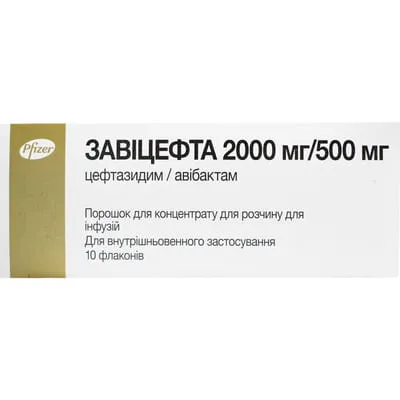
Table of Contents
INSTRUCTIONS FOR MEDICAL USE OF THE MEDICINAL PRODUCT ZAVICEFTA (ZAVICEFTA)
Composition:
Active substances: ceftazidime, avibactam;
One vial contains 2329.7 mg of ceftazidime pentahydrate, equivalent to 2000 mg of ceftazidime, and 543.5 mg of sodium avibactam, equivalent to 500 mg of avibactam;
Excipient: anhydrous sodium carbonate.
Pharmaceutical form. Powder for concentrate for solution for infusion.
Main physicochemical properties: powder from white to pale yellow color.
Pharmacotherapeutic group. Antibacterials for systemic use. Other beta-lactam antibiotics. Third-generation cephalosporins. ATC code J01D D52.
Pharmacological Properties.
Pharmacodynamics.
Mechanism of action
Ceftazidime inhibits the synthesis of bacterial cell wall peptidoglycan by binding to penicillin-binding proteins (PBPs), leading to lysis and bacterial cell death. Avibactam is a non-beta-lactam beta-lactamase inhibitor. Avibactam forms a covalent bond with the enzyme that is resistant to hydrolysis. It inhibits Ambler class A and C beta-lactamases and some class D beta-lactamases, including extended-spectrum beta-lactamases (ESBLs), KPC, OXA-48 carbapenemases, and AmpC enzymes. Avibactam does not inhibit class B beta-lactamases (metallo-beta-lactamases) and is unable to inhibit many class D beta-lactamases.
Resistance
Bacterial resistance mechanisms that may potentially affect the activity of ceftazidime/avibactam include mutant or acquired PBPs, reduced outer membrane permeability to avibactam or ceftazidime, active efflux of avibactam or ceftazidime, and beta-lactamases resistant to inhibition by avibactam capable of hydrolyzing ceftazidime.
Antibacterial activity in combination with other antibacterial agents
No synergy or antagonism was observed in vitro when ceftazidime/avibactam was used concomitantly with metronidazole, tobramycin, levofloxacin, vancomycin, linezolid, colistin, or tigecycline.
Susceptibility testing breakpoints
Minimum inhibitory concentration (MIC) breakpoints for ceftazidime/avibactam, as defined by the European Committee on Antimicrobial Susceptibility Testing (EUCAST) during clinical trials, are available at https://www.ema.europa.eu/documents/other/minimum-inhibitory-concentration-mic-breakpoints_en.xlsx
Pharmacokinetic/pharmacodynamic relationship
The antibacterial activity of ceftazidime against specific pathogens correlates best with the percentage of time during the dosing interval that free drug concentrations exceed the MIC of ceftazidime/avibactam (%ƒT > MIC for ceftazidime/avibactam). For avibactam, the pharmacokinetic/pharmacodynamic index is the percentage of time during the dosing interval that free drug concentrations remain above a threshold concentration (%ƒT > Ct).
Clinical efficacy against specific pathogens
Clinical studies have demonstrated efficacy of the drug against bacteria shown to be susceptible to ceftazidime/avibactam in vitro (see list below by indication).
Complicated intra-abdominal infections
Gram-negative microorganisms:
-
Citrobacter freundii
-
Enterobacter cloacae
-
Escherichia coli
-
Klebsiella oxytoca
-
Klebsiella pneumoniae
-
Pseudomonas aeruginosa
Complicated urinary tract infections
Gram-negative microorganisms:
-
Escherichia coli
-
Klebsiella pneumoniae
-
Proteus mirabilis
-
Enterobacter cloacae
-
Pseudomonas aeruginosa
Hospital-acquired pneumonia, including ventilator-associated pneumonia (VAP)
Gram-negative microorganisms:
- Enterobacter cloacae
- Escherichia coli
- Klebsiella pneumoniae
- Proteus mirabilis
- Serratia marcescens
- Pseudomonas aeruginosa
Clinical efficacy of ceftazidime/avibactam against the following pathogens relevant to approved indications has not been established; however, in vitro data suggest susceptibility to ceftazidime/avibactam in the absence of acquired resistance mechanisms.
Gram-negative microorganisms:
- Citrobacter koseri
- Enterobacter aerogenes
- Morganella morganii
- Proteus vulgaris
- Providencia rettgeri
The following microorganisms are resistant to ceftazidime/avibactam in vitro:
- Staphylococcus aureus (methicillin-susceptible and methicillin-resistant)
- Anaerobes
- Enterococcus spp.
- Stenotrophomonas maltophilia
- Acinetobacter spp.
Paediatric population
The use of Zavicefta in children aged from 3 months to < 18 years was evaluated in two phase 2, simple, blinded, randomized, comparative clinical studies: one in patients with complicated intra-abdominal infections and another in patients with complicated urinary tract infections. The primary objective of each study was to assess the safety and tolerability of ceftazidime/avibactam (+/– metronidazole). Secondary objectives included evaluation of pharmacokinetics and efficacy; efficacy was a descriptive endpoint in both studies. The rate of clinical cure in children with complicated intra-abdominal infection (cIAI) at the test-of-cure visit (ITT population) was 91.8% (56/61) with Zavicefta compared to 95.5% (21/22) with meropenem. The rate of microbiological eradication in children with complicated urinary tract infections at the test-of-cure visit (ITT population) was 79.6% (43/54) with Zavicefta compared to 60.9% (14/23) with cefepime.
The European Medicines Agency has deferred the obligation to submit results of Zavicefta studies in one or more paediatric subgroups for the treatment of complicated intra-abdominal infections, complicated urinary tract infections, pneumonia, and infections caused by Gram-negative bacteria (see section "Posology and method of administration" for information on paediatric use).
Pharmacokinetics.
Distribution
The plasma protein binding of ceftazidime and avibactam is approximately 10% and 8%, respectively. The steady-state volumes of distribution of ceftazidime and avibactam were approximately 17 L and 22 L, respectively, in healthy adult volunteers after multiple doses of ceftazidime/avibactam 2000 mg/500 mg administered as a 2-hour infusion every 8 hours. Ceftazidime and avibactam penetrate into human epithelial lining fluid at concentrations approximately 30% of plasma concentrations, with similar concentration-time profiles in epithelial lining fluid and plasma.
Penetration of ceftazidime across the intact blood-brain barrier is low. In meningitis, concentrations in cerebrospinal fluid reach 4–20 mg/L or higher. Clinical studies on avibactam penetration across the blood-brain barrier have not been conducted; however, in rabbits with meningitis, exposure of ceftazidime and avibactam in cerebrospinal fluid was 43% and 38% of plasma AUC, respectively. Ceftazidime crosses the placenta readily and is excreted in breast milk.
Biotransformation
Ceftazidime is not metabolized. No metabolism of avibactam was observed in human liver preparations (microsomes and hepatocytes). Unchanged avibactam was the major drug component in human plasma and urine after administration of [14C]-avibactam.
Elimination
The elimination half-life (t1/2) of ceftazidime and avibactam after intravenous administration is approximately 2 hours. Ceftazidime is excreted unchanged by the kidneys via glomerular filtration; approximately 80–90% of the dose is recovered in urine within 24 hours. Avibactam is excreted unchanged by the kidneys, with a renal clearance of approximately 158 mL/min, indicating active tubular secretion in addition to glomerular filtration; approximately 97% of the dose is excreted renally, with 95% within 12 hours. Less than 1% of ceftazidime is excreted via the liver, and less than 0.25% of avibactam is excreted via the intestine.
Linearity/Non-linearity
The pharmacokinetic parameters of ceftazidime and avibactam after single intravenous doses are approximately linear over the dose range studied (50 mg to 2000 mg). After multiple intravenous infusions of ceftazidime/avibactam 2000 mg/500 mg every 8 hours for 11 days in healthy adult volunteers with normal renal function, no significant accumulation of ceftazidime or avibactam was observed.
Special patient populations
Renal impairment
In patients with moderate and severe renal impairment, elimination of ceftazidime and avibactam is reduced. The AUC of avibactam is increased on average by 3.8-fold and 7-fold in patients with moderate and severe renal impairment, respectively (see section "Posology and method of administration").
Hepatic impairment
Mild to moderate hepatic impairment did not affect the pharmacokinetic parameters of ceftazidime in patients receiving 2000 mg intravenously every 8 hours for 5 days, provided renal function was normal. Pharmacokinetic parameters of ceftazidime in patients with severe hepatic impairment have not been studied. Pharmacokinetic parameters of avibactam in patients with any degree of hepatic impairment have not been studied.
Since neither ceftazidime nor avibactam undergoes significant hepatic metabolism, systemic clearance of either active substance is not substantially impaired in hepatic impairment.
Elderly patients (≥ 65 years)
In elderly patients, a reduction in ceftazidime clearance was observed, primarily due to age-related decline in renal clearance. After intravenous bolus administration of 2000 mg ceftazidime every 12 hours in patients aged ≥ 80 years, the mean elimination half-life ranged from 3.5 to 4 hours.
After a single 500 mg intravenous infusion of avibactam over 30 minutes, the elimination half-life of avibactam was prolonged in elderly patients, likely due to age-related decline in renal clearance.
Paediatric population
Pharmacokinetics of ceftazidime and avibactam were studied in children aged from 3 months to < 18 years with confirmed or suspected infections, after a single dose of ceftazidime 50 mg/kg and avibactam 12.5 mg/kg in patients with body weight < 40 kg, or Zavicefta 2000 mg/500 mg (ceftazidime 2000 mg and avibactam 500 mg) in patients with body weight ≥ 40 kg. Plasma concentrations of ceftazidime and avibactam were comparable across all four age groups in the study (3 months to < 2 years, 2 to < 6 years, 6 to < 12 years, and 12 to < 18 years). AUC0–t and Cmax values for ceftazidime and avibactam in the two older cohorts (children aged 6 to < 18 years) undergoing intensive pharmacokinetic sampling were similar to those observed in healthy adults with normal renal function receiving Zavicefta 2000 mg/500 mg. Data from this study and two phase 2 paediatric studies in patients with complicated intra-abdominal infections and complicated urinary tract infections were combined with pharmacokinetic data from adults (phases 1–3) to update the population pharmacokinetic model used to evaluate achievement of target pharmacokinetic/pharmacodynamic parameters. The results of these simulations demonstrated that the recommended dosing regimens for children with complicated intra-abdominal infections, complicated urinary tract infections, hospital-acquired pneumonia/VAP-associated pneumonia, including dose adjustments for patients with renal impairment, achieve systemic exposure and pharmacokinetic/pharmacodynamic parameters comparable to those in adult patients receiving the approved dose of Zavicefta 2000 mg/500 mg infused over 2 hours every 8 hours.
Experience with ceftazidime and avibactam for treatment of children aged 3 to < 6 months is limited. The recommended dosing regimens are based on simulations using final population pharmacokinetic models. Simulations showed that the recommended regimens achieve drug exposure comparable to other age groups, with pharmacokinetic/pharmacodynamic parameter values > 90% of target. Based on data from completed paediatric clinical studies, no evidence of excessive or insufficient drug exposure was observed with the recommended dosing regimens in patients aged 3 to < 6 months.
Additionally, data are very limited in children aged 3 months to < 2 years with renal impairment (CrCL ≤ 50 mL/min/1.73 m²), and there are no data from completed clinical studies in children with severe renal impairment. Population pharmacokinetic models for ceftazidime and avibactam were used to simulate use in patients with renal impairment.
Gender and race
Gender and race have no clinically significant effect on the pharmacokinetics of ceftazidime/avibactam.
Clinical characteristics.
Indications.
Zavicefta is indicated for the treatment of the following infections in adults and children aged 3 months and older (see sections "Dosage and administration" and "Pharmacodynamics"):
- complicated intra-abdominal infections;
- complicated urinary tract infections, including pyelonephritis;
- hospital-acquired pneumonia, including ventilator-associated pneumonia.
Treatment of adult patients with bacteremia that occurs in association with, or is likely related to, any of the above-mentioned infections.
Zavicefta is also indicated for the treatment of infections caused by aerobic Gram-negative microorganisms in adults and children aged 3 months and older who have limited treatment options (see sections "Dosage and administration", "Special precautions", "Pharmacodynamics").
Official guidelines on the appropriate use of antibacterial agents should be taken into account.
Contraindications.
Hypersensitivity to the active substance or to any of the excipients of the medicinal product.
Hypersensitivity to any other antibacterial agent of the cephalosporin group.
Severe hypersensitivity reactions (e.g., anaphylactic reactions, severe skin reactions) to any other type of beta-lactam antibacterial agent (e.g., penicillins, monobactams, or carbapenems).
Interaction with other medicinal products and other forms of interaction.
In vitro, avibactam is a substrate of OAT1 and OAT3 transporters, which may facilitate its active uptake from the bloodstream and thus its excretion. Probenecid (a potent OAT inhibitor) inhibits this uptake by 56–70% in vitro and may therefore affect avibactam elimination when co-administered. Clinical studies on the interaction between avibactam and probenecid have not been conducted; therefore, the concomitant use of avibactam with probenecid is not recommended.
In vitro, avibactam does not significantly inhibit cytochrome P450 isoenzymes. Avibactam and ceftazidime, at clinically relevant concentrations, do not induce cytochrome P450 isoenzymes in vitro. Avibactam and ceftazidime do not inhibit major renal and hepatic transporters within the clinically relevant exposure range; therefore, the likelihood of drug interactions via these mechanisms is considered low.
Clinical data have demonstrated no interaction between ceftazidime and avibactam, or between ceftazidime/avibactam and metronidazole.
Other types of medicinal interactions
The use of cephalosporins in high doses in combination with nephrotoxic agents, such as aminoglycosides or potent diuretics (e.g., furosemide), may adversely affect renal function (see section "Special precautions").
Chloramphenicol is an in vitro antagonist of ceftazidime and other cephalosporins. The clinical significance of this phenomenon is unknown; however, due to the potential for in vivo antagonism, concomitant use of these agents should be avoided.
Special precautions for use.
Hypersensitivity reactions
Severe, and sometimes fatal, hypersensitivity reactions may occur (see sections "Contraindications" and "Side effects"). If an allergic reaction occurs, treatment with Zavicefta must be discontinued immediately and appropriate emergency measures should be initiated.
There have been reports of hypersensitivity reactions progressing to Kounis syndrome—a severe allergic coronary artery spasm that may lead to myocardial infarction (see section "Side effects").
Prior to initiating treatment with Zavicefta, it is essential to determine whether the patient has a history of hypersensitivity reactions to ceftazidime, other cephalosporins, or other beta-lactam antibiotics. Caution should be exercised when prescribing ceftazidime/avibactam to patients with a history of mild hypersensitivity reactions to penicillins, monobactams, or carbapenems.
Clostridioides difficile-associated diarrhea
Cases of Clostridioides difficile-associated diarrhea have been reported during treatment with ceftazidime/avibactam, with severity ranging from mild to life-threatening. Therefore, it is important to consider this diagnosis in patients who develop diarrhea during or after treatment with Zavicefta (see section "Side effects").
Consideration should be given to discontinuing Zavicefta and initiating specific treatment against Clostridioides difficile. Medicinal products that inhibit intestinal motility should not be administered.
Renal function impairment
Ceftazidime and avibactam are eliminated via the kidneys; therefore, dosage adjustment is required according to the degree of renal impairment (see section "Dosage and administration"). Neurological disorders, including tremor, myoclonus, non-convulsive epileptic status, seizures, encephalopathy, and coma, have occasionally been observed in patients with renal impairment who received ceftazidime at doses not adjusted for impaired renal function.
In patients with renal impairment, careful monitoring of calculated creatinine clearance is recommended. In some patients, calculated creatinine clearance may change rapidly, particularly at the beginning of treatment for infection.
Nephrotoxicity
Concomitant use of cephalosporins in high doses with nephrotoxic agents such as aminoglycosides or potent diuretics (e.g., furosemide) may adversely affect kidney function.
Direct antiglobulin test (DAT or Coombs test) seroconversion and potential risk of hemolytic anemia
A positive direct antiglobulin test (DAT or Coombs test) may occur during treatment with ceftazidime/avibactam, potentially interfering with blood compatibility testing and/or causing drug-induced immune hemolytic anemia (see section "Side effects"). Although seroconversion in the DAT has frequently been observed in patients receiving Zavicefta in clinical trials (estimated seroconversion rate in phase 3 studies ranged from 3.2% to 20.8% in patients with a negative Coombs test at baseline and at least one subsequent test), no signs of hemolysis were observed in these patients during treatment. However, the possibility of hemolytic anemia associated with Zavicefta therapy cannot be excluded. Therefore, patients who develop anemia during or after completion of treatment with Zavicefta should be evaluated to rule out hemolytic anemia.
Limited clinical data base
The clinical efficacy and safety of Zavicefta have been studied in complicated intra-abdominal infections, complicated urinary tract infections, hospital-acquired pneumonia, including ventilator-associated pneumonia.
Complicated intra-abdominal infections in adults
In two studies of patients with complicated intra-abdominal infections, the most common diagnosis was appendiceal perforation or periappendiceal abscess (approximately 42%). Approximately 87% of patients had an APACHE II score ≤ 10, and bacteremia was present at baseline in 4%. Mortality was reported in 2.1% (18 of 857) of patients receiving Zavicefta plus metronidazole and in 1.4% (12 of 863) of patients receiving meropenem.
In the subgroup with baseline creatinine clearance between 30 and 50 mL/min, mortality was 16.7% (9 of 54) in patients receiving Zavicefta plus metronidazole and 6.8% (4 of 59) in those receiving meropenem. Patients with creatinine clearance between 30 and 50 mL/min received a lower dose of Zavicefta than recommended for this subgroup.
Complicated urinary tract infections in adults
A total of 1091 patients with complicated urinary tract infections were included in two studies, of whom 381 (34.9%) had complicated urinary tract infections without pyelonephritis and 710 (65.1%) had acute pyelonephritis (mMITT population). Overall, 81 patients (7.4%) with complicated urinary tract infections had bacteremia at baseline.
Hospital-acquired pneumonia, including ventilator-associated pneumonia, in adults
In one study involving adult patients with hospital-acquired pneumonia, 280 of 808 (34.7%) patients had ventilator-associated pneumonia and 40 of 808 (5%) had bacteremia at baseline.
Patients with limited treatment options
The use of ceftazidime/avibactam for treating patients with Gram-negative aerobic infections when treatment options are limited is based on experience with ceftazidime as monotherapy and analysis of pharmacokinetic/pharmacodynamic data for ceftazidime/avibactam (see section "Pharmacodynamics").
Spectrum of activity of ceftazidime/avibactam
Ceftazidime has little or no activity against most Gram-positive microorganisms and anaerobes (see sections "Dosage and administration" and "Pharmacodynamics"). Additional antibacterial agents should be used if involvement of these microorganisms in the infection is confirmed or suspected.
The inhibitory spectrum of avibactam includes many enzymes capable of inactivating ceftazidime, including class A and class C beta-lactamases according to the Ambler classification. Avibactam does not inhibit class B enzymes (metallo-beta-lactamases) and is generally unable to inhibit many class D beta-lactamases (see section "Pharmacodynamics").
Non-susceptible microorganisms
Prolonged use may lead to overgrowth of non-susceptible microorganisms (such as enterococci, fungi), which may require discontinuation of treatment or other appropriate interventions.
Effect on laboratory test results
Ceftazidime does not interfere with enzymatic methods for detecting glucosuria but may interfere with tests using copper reduction methods (Benedict's, Fehling's, Clinitest), resulting in false-positive results.
Sodium-restricted diet
Each vial of the medicinal product contains approximately 146 mg of sodium, equivalent to 7.3% of the WHO recommended maximum daily intake of 2 g sodium for adults.
The maximum daily dose of this medicinal product is equivalent to 22% of the WHO recommended maximum daily sodium intake. Zavicefta is considered a high-sodium medicinal product. This should be taken into account when administering Zavicefta to patients on a sodium-restricted diet.
Zavicefta may be reconstituted with sodium-containing solutions (see section "Dosage and administration"). This should be considered when determining the total amount of sodium the patient will receive.
Children
There is a potential risk of overdose, particularly in children aged 3 months to less than 12 months. Care should be taken when calculating the volume of dose to be administered (see sections "Overdose" and "Dosage and administration").
Use during pregnancy or breastfeeding.
Pregnancy
Animal studies with ceftazidime have shown no direct or indirect adverse effects on pregnancy, fetal development, parturition, or postnatal development. Reproductive toxicity of avibactam was observed in animal studies, but no teratogenic effects were noted.
Zavicefta may be used during pregnancy only if the potential benefit justifies the potential risk to the fetus.
Breastfeeding
Ceftazidime passes into human milk in small amounts. It is unknown whether avibactam passes into human milk. Risk to newborns/infants cannot be excluded. The decision whether to discontinue breastfeeding or to discontinue/abstain from ceftazidime/avibactam therapy should be based on the benefit of breastfeeding to the child and the benefit of therapy to the mother.
Fertility
The effect of ceftazidime/avibactam on human fertility has not been studied. There are no data on the effect of ceftazidime on animal fertility. In animal studies, avibactam showed no harmful effect on fertility.
Ability to affect reaction speed when driving or operating machinery.
Side effects (e.g., dizziness) that may occur during treatment with Zavicefta can affect the ability to drive or operate machinery (see section "Side effects").
Method of Administration and Dosage
Zavicefta is recommended for the treatment of infections caused by aerobic Gram-negative microorganisms in adults and children aged 3 months and older who have limited treatment options, and should only be used after consultation with a physician experienced in the management of infectious diseases (see section "Special Warnings and Precautions").
Dosage
Dose for adult patients with creatinine clearance (CrCL) > 50 mL/min
Table 1 provides recommendations for intravenous dosing of the medicinal product in adults with estimated creatinine clearance (CrCL) > 50 mL/min (see sections "Special Warnings and Precautions" and "Pharmacodynamics").
Table 1
Recommended dosing regimen for adults with estimated CrCL > 50 mL/min1
| Type of infection |
Ceftazidime/avibactam dose |
Frequency of administration |
Infusion duration |
Duration of treatment |
| Complicated intra-abdominal infection2,3 |
2 g/0.5 g |
Every 8 hours |
2 hours |
5–14 days |
| Complicated urinary tract infections, including pyelonephritis3 |
2 g/0.5 g |
Every 8 hours |
2 hours |
5–10 days4 |
| Hospital-acquired pneumonia, including ventilator-associated pneumonia3 |
2 g/0.5 g |
Every 8 hours |
2 hours |
7–14 days |
| Bacteremia arising from any of the above-mentioned infections or suspected to be related to these infections |
2 g/0.5 g |
Every 8 hours |
2 hours |
Treatment duration depends on the site of infection |
| Infections due to Gram-negative aerobic microorganisms in patients with limited antibacterial treatment options2,3 |
2 g/0.5 g |
Every 8 hours |
2 hours |
Dependent on severity of infection, pathogen(s), and clinical and bacteriological course of disease5 |
1 Creatinine clearance is calculated using the Cockcroft–Gault formula.
2 In confirmed or suspected involvement of anaerobic pathogens in the infectious process, the drug should be used in combination with metronidazole.
3 In confirmed or suspected involvement of Gram-positive pathogens in the infectious process, the drug should be used in combination with an antibacterial agent effective against these microorganisms.
4 The indicated duration of treatment may include a period of intravenous therapy with Zaviceftho followed by transition to an appropriate oral antibacterial agent.
5 Experience with use of Zaviceftho for more than 14 days is very limited.
Dosing for pediatric patients with creatinine clearance (CrCL) > 50 mL/min/1.73 m²
Table 2 provides recommendations for intravenous dosing of the drug in pediatric patients with calculated creatinine clearance (CrCL) > 50 mL/min/1.73 m² (see sections "Use in Specific Populations" and "Pharmacodynamics").
Table 2
Recommended dosing regimen for pediatric patients with calculated CrCL1 > 50 mL/min/1.73 m²
| Infection type |
Age group |
Dose of ceftazidime/ avibactam7 |
Dosing frequency |
Infusion duration |
Treatment duration |
| Complicated intra-abdominal infections2,3 OR Complicated urinary tract infections, including pyelonephritis3, OR Hospital-acquired pneumonia/ventilator-associated pneumonia3, OR Infections caused by Gram-negative aerobic microorganisms in patients with limited treatment options2,3 |
from 6 months to < 18 years |
50 mg/kg/12.5 mg/kg up to a maximum of 2 g/0.5 g |
Every 8 hours |
2 hours |
Complicated intra-abdominal infections: 5–14 days Complicated urinary tract infections4: 5–14 days Hospital-acquired pneumonia/ventilator-associated pneumonia: 7–14 days Limited treatment options: depending on severity of infection, pathogen(s), and clinical and bacteriological course of disease5 |
| Every 8 hours |
2 hours |
||||
| From 3 to < 6 months6 |
40 mg/kg/10 mg/kg |
Every 8 hours |
2 hours |
1 Creatinine clearance in children is calculated using the Schwartz formula.
2 In confirmed or suspected involvement of anaerobic pathogenic microorganisms in the infectious process, the drug should be used in combination with metronidazole.
3 In confirmed or suspected involvement of gram-positive pathogenic microorganisms in the infectious process, the drug should be used in combination with an antibacterial medicinal product effective against these microorganisms.
4 The indicated duration of treatment may include intravenous therapy with Zavicefta followed by transition to the necessary oral medicinal product.
5 Experience with use of Zavicefta for more than 14 days is very limited.
6 Experience with use of Zavicefta for treatment of children aged from 3 to < 6 months is limited (see section "Pharmacokinetics").
7 Ceftazidime/avibactam is a fixed-ratio combination product with a 4:1 ratio. Dosing recommendations are based on only one component—ceftazidime (see "Method of administration" below).
Special patient groups
Elderly patients
No dose adjustment is required for elderly patients (see section "Pharmacokinetics").
Renal impairment
Dose adjustment of the drug is not required in patients with mild renal impairment (calculated creatinine clearance > 50 ml/min to ≤ 80 ml/min) (see section "Pharmacokinetics").
Table 3 shows the recommended dose adjustment of the drug in adult patients with calculated creatinine clearance ≤ 50 ml/min (see sections "Special precautions" and "Pharmacokinetics").
Dose for adult patients with CrCL ≤ 50 ml/min
Table 3
Recommended dosing regimen for adults with calculated CrCL1 ≤ 50 ml/min
| Age group |
Calculated CrCL (mL/min) |
Ceftazidime/ avibactam dose2,4 |
Dosing frequency |
Infusion duration |
| Adults |
31–50 |
1 g/0.25 g |
Every 8 hours |
2 hours |
| 16–30 |
0.75 g/0.1875 g |
Every 12 hours |
||
| 6–15 |
Every 24 hours |
|||
| End-stage renal disease, including patients on hemodialysis3 |
Every 48 hours |
1 Creatinine clearance is calculated using the Cockcroft-Gault formula.
2 Dosing recommendations are based on pharmacokinetic modelling (see section "Pharmacokinetics").
3 Ceftazidime and avibactam are removed during haemodialysis (see sections "Overdose" and "Pharmacokinetics"). On haemodialysis days, Zaviceft should be administered after completion of the haemodialysis procedure.
4 Ceftazidime/avibactam is a fixed-ratio combination product (4:1). Dosing recommendations are based on one component only – ceftazidime (see "Method of administration" below).
Tables 4 and 5 show the recommended dose adjustment for paediatric patients with calculated CrCL ≤ 50 mL/min/1.73 m² according to different age groups (see sections "Special warnings and precautions for use" and "Pharmacokinetics").
Dosing for paediatric patients aged ≥ 2 years with CrCl ≤ 50 mL/min/1.73 m²
Table 4
Recommended dosing regimen for paediatric patients with calculated CrCL1 ≤ 50 mL/min/1.73 m²
| Age group |
Calculated CrCL (mL/min/1.73 m²) |
Ceftazidime/ avibactam dose2,4 |
Frequency of administration |
Infusion duration |
| Children from 2 years to < 18 years |
31–50 |
25 mg/kg / 6.25 mg/kg up to a maximum of 1 g / 0.25 g |
Every 8 hours |
2 hours |
| 16–30 |
18.75 mg/kg / 4.7 mg/kg up to a maximum of 0.75 g / 0.1875 g |
Every 12 hours |
||
| 6–15 |
Every 24 hours |
|||
| End-stage renal disease, including patients on hemodialysis3 |
Every 48 hours |
1 Creatinine clearance is calculated using the Schwartz formula.
2 Dosing recommendations are based on pharmacokinetic modelling (see section "Pharmacokinetics").
3 Ceftazidime and avibactam are removed during haemodialysis (see sections "Overdose" and "Pharmacokinetics"). On haemodialysis days, Zaviceft should be administered after completion of the haemodialysis procedure.
4 Ceftazidime/avibactam is a fixed-ratio combination product with a 4:1 ratio. Dosing recommendations are based on one component only – ceftazidime (see "Method of administration" below).
Dosing for paediatric patients aged < 2 years with CrCl ≤ 50 mL/min/1.73 m²
Table 5
Recommended dosing regimen for paediatric patients with calculated CrCL1 ≤ 50 mL/min/1.73 m²
| Age group |
Calculated CrCL (mL/min/1.73 m²) |
Dose of ceftazidime/ avibactam2,3 |
Dosing frequency |
Infusion duration |
| from 3 to < 6 months |
from 31 to 50 |
20 mg/kg /5 mg/kg |
Every 8 hours |
2 hours |
| from 6 months to < 2 years |
25 mg/kg /6.25 mg/kg |
Every 8 hours |
||
| from 3 to < 6 months |
from 16 to 30 |
15 mg/kg /3.75 mg/kg |
Every 12 hours |
|
| from 6 months to < 2 years |
18.75 mg/kg /4.7 mg/kg |
Every 12 hours |
||
| 1 Calculated using the Schwartz formula. 2 Dosing recommendations are based on pharmacokinetic modeling (see section “Pharmacokinetics”). 3 Ceftazidime/avibactam is a fixed-ratio combination product (4:1). Dosing recommendations are based on one component only – ceftazidime (see “Method of administration” below). |
||||
There is insufficient information to recommend a dosing regimen for children under 2 years of age with creatinine clearance < 16 ml/min/1.73 m².
Hepatic impairment
No dose adjustment is required for patients with hepatic impairment (see section "Pharmacokinetics").
Children
The safety and efficacy of Zavicefta in children under 3 months of age have not been established. Data are lacking.
Method of administration
Intravenous infusion
Zavicefta is administered by intravenous infusion over 120 minutes in the appropriate volume for infusion therapy.
The powder must be reconstituted with water for injections, and the resulting concentrate should be diluted immediately before use. The reconstituted infusion solution is pale yellow in color and free from particulate matter.
Zavicefta (ceftazidime/avibactam) is a combination medicinal product; each vial contains 2 g of ceftazidime and 0.5 g of avibactam in a fixed 4:1 ratio. Dosing recommendations are based on one component only – ceftazidime.
Standard aseptic techniques should be used during preparation and administration of the solution. Doses may be prepared in a suitably sized intravenous bag or in an infusion syringe.
Parenteral medicinal products should be visually inspected for particulate matter prior to administration.
Each vial is for single use only.
Any unused medicinal product or waste material must be disposed of in accordance with local requirements.
The total time from the start of powder reconstitution to completion of preparation of the intravenous infusion solution should not exceed 30 minutes.
Instructions for preparation of doses for adults and children in an INFUSION BAG or INFUSION SYRINGE
NOTE. The procedure described below outlines steps to prepare an infusion solution with a final ceftazidime concentration of 8–40 mg/ml. All calculations must be completed prior to beginning the steps outlined below. For use in children aged 3 to 12 months, detailed steps for preparing a 20 mg/ml concentration (sufficient for most scenarios) are also provided.
-
Prepare the reconstituted solution (167.3 mg/ml ceftazidime):
- Insert the needle of a syringe through the vial stopper and add 10 ml of sterile water for injections to the vial.
- Remove the needle and shake the vial until a clear solution is obtained.
- After the product has dissolved, insert a venting needle through the vial stopper to reduce internal pressure (this is important to maintain sterility of the product).
-
Prepare the final infusion solution (final concentration should be 8–40 mg/ml ceftazidime):
- Infusion bag: Further dilute the reconstituted solution by transferring the appropriately calculated volume of reconstituted solution into an infusion bag containing one of the following: sodium chloride 9 mg/ml (0.9%) solution for injection; dextrose 50 mg/ml (5%) solution for injection; or lactated Ringer's solution.
- Infusion syringe: Further dilute the reconstituted solution by transferring the appropriately calculated volume of reconstituted solution into an infusion syringe in combination with an adequate volume of diluent (sodium chloride 9 mg/ml (0.9%) solution for injection, or dextrose 50 mg/ml (5%) solution for injection). See Table 6 below.
Table 6
Preparation of Zavicefta doses for adults and children in an INFUSION BAG or INFUSION SYRINGE
| Dose of Zavicef (ceftazidime)1 |
Volume to be withdrawn from reconstituted vial |
Final volume after dilution in infusion bag2 |
Final volume in infusion syringe |
| 2 g |
Entire contents (approximately 12 mL) |
From 50 mL to 250 mL |
50 mL |
| 1 g |
6 mL |
From 25 mL to 125 mL |
From 25 mL to 50 mL |
| 0.75 g |
4.5 mL |
From 19 mL to 93 mL |
From 19 mL to 50 mL |
| All other doses |
Volume (mL) calculated based on required dose: Dose (mg ceftazidime) ÷ 167.3 mg/mL ceftazidime |
Volume (mL) will vary depending on the size of available infusion bag and desired final concentration (should be 8–40 mg/mL ceftazidime) |
Volume (mL) will vary depending on the size of available infusion syringe and desired final concentration (should be 8–40 mg/mL ceftazidime) |
1 Based on ceftazidime only.
2 Dilute to a final ceftazidime concentration of 8 mg/mL to ensure stability during administration for up to 12 hours at 2–8 °C, followed by an additional 4 hours at a temperature not exceeding 25 °C (i.e., dilute a 2 g ceftazidime dose in 250 mL, a 1 g ceftazidime dose in 125 mL, a 0.75 g ceftazidime dose in 93 mL, etc.). All other ceftazidime concentrations (from >8 mg/mL up to 40 mg/mL) are stable during administration for up to 4 hours at a temperature not exceeding 25 °C.
Preparation of Zaviceft for administration to children aged 3 to 12 months in an INFUSION SYRINGE
NOTE. The procedure below describes the steps for preparing an infusion solution with a final ceftazidime concentration of 20 mg/mL (suitable for most scenarios). Alternative concentrations may be prepared, but the final ceftazidime concentration range must be 8–40 mg/mL.
- Prepare the reconstituted solution (167.3 mg/mL ceftazidime):
- Insert the syringe needle through the vial stopper and add 10 mL of sterile water for injection into the vial.
- Withdraw the needle and shake the vial until a clear solution is obtained.
- After the drug has dissolved, insert an air-removal needle into the vial stopper to reduce internal pressure (this is important for maintaining sterility of the preparation).
- Prepare the final infusion solution with a final concentration of 20 mg/mL ceftazidime:
- Further dilute the reconstituted solution by transferring an appropriately calculated volume of the reconstituted solution into an infusion syringe, combined with a sufficient volume of diluent (sodium chloride 9 mg/mL (0.9%) solution for injection, or dextrose 50 mg/mL (5%) solution for injection).
- See Table 7, 8, or 9 below to verify calculations. The values provided are approximate, as rounding to the nearest syringe calibration mark of the appropriate size may be necessary. Note that the tables do not include all possible calculated doses, but may be used to estimate approximate volumes for calculation verification.
Table 7
Preparation of Zaviceft (final concentration 20 mg/mL ceftazidime) for children aged 3 to 12 months with creatinine clearance (CrCL) > 50 mL/min/1.73 m²
| Age of patient and dose of Zavicef (mg/kg)1 |
Body weight (kg) |
Dose (mg ceftazidime) |
Volume of reconstituted solution to be withdrawn from vial (ml) |
Volume of diluent to be added for mixing (ml) |
| from 6 months to 12 months 50 mg/kg ceftazidime |
5 |
250 |
1.5 |
11 |
| 6 |
300 |
1.8 |
13 |
|
| 7 |
350 |
2.1 |
15 |
|
| 8 |
400 |
2.4 |
18 |
|
| 9 |
450 |
2.7 |
20 |
|
| 10 |
500 |
3 |
22 |
|
| 11 |
550 |
3.3 |
24 |
|
| 12 |
600 |
3.6 |
27 |
|
| from 3 months to < 6 months 40 mg/kg ceftazidime |
4 |
160 |
1 |
7.4 |
| 5 |
200 |
1.2 |
8.8 |
|
| 6 |
240 |
1.4 |
10 |
|
| 7 |
280 |
1.7 |
13 |
|
| 8 |
320 |
1.9 |
14 |
|
| 9 |
360 |
2.2 |
16 |
|
| 10 |
400 |
2.4 |
18 |
1 Based on ceftazidime only.
Table 8
Preparation of Zavicef (final concentration 20 mg/ml ceftazidime) for children aged 3 to 12 months with CrCL of 31 to 50 ml/min/1.73 m²
| Age of patient and dose of Zavicef (mg/kg)1 |
Body weight (kg) |
Dose (mg of ceftazidime) |
Volume of reconstituted solution to be withdrawn from vial (ml) |
Volume of diluent added for mixing (ml) |
| from 6 months to 12 months 25 mg/kg ceftazidime |
5 |
125 |
0.75 |
5.5 |
| 6 |
150 |
0.9 |
6.6 |
|
| 7 |
175 |
1 |
7.4 |
|
| 8 |
200 |
1.2 |
8.8 |
|
| 9 |
225 |
1.3 |
9.6 |
|
| 10 |
250 |
1.5 |
11 |
|
| 11 |
275 |
1.6 |
12 |
|
| 12 |
300 |
1.8 |
13 |
|
| from 3 months to < 6 months 20 mg/kg ceftazidime |
4 |
80 |
0.48 |
3.5 |
| 5 |
100 |
0.6 |
4.4 |
|
| 6 |
120 |
0.72 |
5.3 |
|
| 7 |
140 |
0.84 |
6.2 |
|
| 8 |
160 |
1 |
7.4 |
|
| 9 |
180 |
1.1 |
8.1 |
|
| 10 |
200 |
1.2 |
8.8 |
1 Based on ceftazidime only.
Table 9
Preparation of Zavicef (final concentration 20 mg/mL ceftazidime) for children aged 3 to 12 months with CrCL from 16 to 30 mL/min/1.73 m²
| Age of patient and dose of Zavicef (mg/kg)1 |
Body weight (kg) |
Dose (mg ceftazidime) |
Volume of reconstituted solution to be withdrawn from vial (ml) |
Volume of diluent to be added for mixing (ml) |
| from 6 months to 12 months 18.75 mg/kg ceftazidime |
5 |
93.75 |
0.56 |
4.1 |
| 6 |
112.5 |
0.67 |
4.9 |
|
| 7 |
131.25 |
0.78 |
5.7 |
|
| 8 |
150 |
0.9 |
6.6 |
|
| 9 |
168.75 |
1 |
7.4 |
|
| 10 |
187.5 |
1.1 |
8.1 |
|
| 11 |
206.25 |
1.2 |
8.8 |
|
| 12 |
225 |
1.3 |
9.6 |
|
| from 3 months to < 6 months 15 mg/kg ceftazidime |
4 |
60 |
0.36 |
2.7 |
| 5 |
75 |
0.45 |
3.3 |
|
| 6 |
90 |
0.54 |
4 |
|
| 7 |
105 |
0.63 |
4.6 |
|
| 8 |
120 |
0.72 |
5.3 |
|
| 9 |
135 |
0.81 |
6 |
|
| 10 |
150 |
0.9 |
6.6 |
1 Based on ceftazidime only.
Overdose.
Overdose of ceftazidime/avibactam may lead to neurologic disturbances caused by ceftazidime, including encephalopathy, seizures, and coma.
The serum concentration of ceftazidime can be reduced by hemodialysis or peritoneal dialysis. During a 4-hour hemodialysis session, 55% of the avibactam dose was eliminated.
Adverse Reactions
Summary of Safety Profile
In seven Phase 2 and 3 clinical trials, 2024 adult patients received Zavicefta. The most common adverse reactions reported in ≥ 5% of patients receiving Zavicefta were positive direct Coombs test, nausea, and diarrhea. Nausea and diarrhea were generally mild or moderate in severity.
The adverse reactions listed below were reported either during ceftazidime monotherapy and/or observed in Phase 2 and 3 clinical trials with Zavicefta. Adverse reactions are classified by frequency and by system organ class. The frequency of adverse reactions and/or potentially clinically significant laboratory abnormalities are categorized as follows: very common (≥ 1/10), common (≥ 1/100 to < 1/10), uncommon (≥ 1/1,000 to < 1/100), rare (≥ 1/10,000 to < 1/1,000), very rare (< 1/10,000), frequency not known (cannot be estimated from available data).
Infections and infestations: common – candidiasis (including vulvovaginal candidiasis and oral candidiasis); uncommon – Clostridioides difficile-associated colitis, pseudomembranous colitis.
Blood and lymphatic system disorders: very common – positive direct Coombs test; common – eosinophilia, thrombocytosis, thrombocytopenia; uncommon – neutropenia, leukopenia, lymphocytosis; frequency not known – agranulocytosis, haemolytic anaemia.
Immune system disorders: frequency not known – anaphylactic reaction.
Nervous system disorders: common – headache, dizziness; uncommon – paraesthesia.
Cardiac disorders: frequency not known – Kounis syndrome (acute coronary syndrome associated with allergic reaction, reported in the post-marketing period).
Gastrointestinal disorders: common – diarrhea, abdominal pain, nausea, vomiting; uncommon – dysgeusia.
Hepatobiliary disorders: common – increased alanine aminotransferase, increased aspartate aminotransferase, increased alkaline phosphatase, increased gamma-glutamyl transferase, increased blood lactate dehydrogenase; frequency not known – jaundice.
Skin and subcutaneous tissue disorders: common – maculopapular rash, urticaria, pruritus; frequency not known – toxic epidermal necrolysis, Stevens-Johnson syndrome, erythema multiforme, angioneurotic oedema, drug reaction with eosinophilia and systemic symptoms (DRESS syndrome).
Renal and urinary disorders: uncommon – increased blood creatinine, increased blood urea, acute kidney injury; very rare – tubulointerstitial nephritis.
General disorders and administration site conditions: common – thrombosis at injection site, phlebitis at injection site, pyrexia.
Pediatric population
The safety assessment in pediatric patients is based on data from two studies in which 61 patients (aged from 3 years to less than 18 years) with complicated intra-abdominal infections and 67 patients with complicated urinary tract infections (aged from 3 months to less than 18 years) received Zavicefta. Overall, the safety profile in these 128 pediatric patients was similar to that observed in adult patients with complicated intra-abdominal infections and complicated urinary tract infections.
Reporting of suspected adverse reactions
Reporting suspected adverse reactions after marketing authorization is important. It allows continued monitoring of the benefit-risk balance of the medicinal product. Healthcare professionals and patients are encouraged to report any suspected adverse reactions and lack of efficacy via the automated pharmacovigilance information system at: https://aisf.dec.gov.ua.
Shelf life. 3 years.
Storage conditions.
Store at a temperature not exceeding 30 °C. Keep in the original packaging to protect from light. Keep out of the reach of children.
After reconstitution
The reconstituted solution should be used immediately.
After dilution
Infusion bags
If the intravenous solution is prepared with diluents listed in the section "Instructions for use, handling and disposal" (ceftazidime concentration 8 mg/mL), chemical and physical stability during use (from the initial puncture of the vial stopper) is up to 12 hours at 2–8 °C, followed by up to 4 hours at a temperature not exceeding 25 °C.
If the intravenous solution is prepared with diluents listed in the section "Instructions for use, handling and disposal" (ceftazidime concentration > 8 mg/mL up to 40 mg/mL), chemical and physical stability during use (from the initial puncture of the vial stopper) is up to 4 hours at a temperature not exceeding 25 °C.
From a microbiological standpoint, the medicinal product should be used immediately unless reconstitution and dilution have been carried out under validated, controlled, aseptic conditions. If not used immediately, the responsibility for the duration and conditions of storage during use, which must not exceed the limits stated above, rests with the user.
Infusion syringes
Chemical and physical stability during use (from the initial puncture of the vial stopper) is up to 6 hours at a temperature not exceeding 25 °C.
From a microbiological standpoint, the medicinal product should be used immediately unless reconstitution and dilution have been carried out under validated, controlled, aseptic conditions. If not used immediately, the responsibility for the duration and conditions of storage during use, which must not exceed 6 hours at a temperature not exceeding 25 °C, rests with the user.
Incompatibilities
Compatibility of Zavicefta with other medicinal products has not been established. Zavicefta should not be mixed with solutions containing other medicinal products or physically added to such solutions.
Zavicefta should not be mixed with other medicinal products except those specified in the section "Instructions for use, handling and disposal".
Packaging. 10 vials with powder in a cardboard box.
Prescription status. Prescription only.
Manufacturer.
ACS Dobfar S.p.A.
Address of the manufacturer and location of business operations.
Via A. Fleming, 2 – 37135 Verona (VR), Italy.